After cross-referencing five tire options against real G05 X5 owner data from r/BMWX5, BimmerPost G05 forums, Amazon verified reviews, and TireReviews.com, one pattern stands out: the X5’s weight and suspension tuning are unforgiving to cheap rubber. At 5,000+ lbs, the X5 generates significantly more heat and lateral force on tires than a standard sedan — and tires that aren’t engineered for that load reveal their weaknesses fast through uneven wear, longer wet stopping distances, and degraded steering feedback.
The challenge for most X5 owners is that this truck needs to behave on a wet expressway Monday morning and deliver genuine cornering confidence on a weekend mountain road — all without cabin noise that undermines the luxury interior. This list covers five tires that address five different priority profiles: year-round all-weather performance, long-haul tread life, comfort-focused daily driving, OEM-matched precision, and budget durability. Each recommendation is backed by multi-source owner data, not manufacturer claims.
The Michelin Pilot Sport All Season 4 is the top pick for most X5 drivers — its high-silica compound delivers wet braking confidence that OEM Pirelli run-flats rarely match, and it works across all four seasons without needing a swap. Drivers who cover high annual mileage and want the longest-lasting tire on the market should go with the Continental CrossContact LX25 instead. The Pirelli P Zero PZ4 is the right choice specifically for performance-trim X5 owners who want BMW-approved OEM-matched precision.
Our Top 5 BMW X5 Tire Rankings
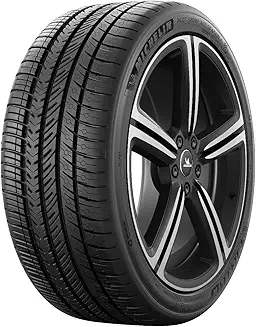
- Michelin Pilot Sport All Season 4— Best Overall / All-Weather
- Continental CrossContact LX25— Best Budget / Longest Tread Life
- Pirelli Scorpion Verde All Season Plus II— Best Comfort / Quiet Ride
- Pirelli P Zero PZ4— Best Premium / OEM Performance
- Hankook Ventus ST— Best Dry Durability
Best BMW X5 Tires — Compared
All five tires ranked side-by-side across category, tread warranty, and our expert score.
| # | Tire Name | Category | Key Spec | Best For | Score | |
|---|---|---|---|---|---|---|
| 1 | Michelin Pilot Sport All Season 4 Editor’s Choice | UHP All-Season | 45,000 mi warranty | Best Overall | 4.7 | See Latest Price |
| 2 | Continental CrossContact LX25 Budget Pick | Touring All-Season | Best-in-class tread life | Best Value / Tread Life | 4.6 | See Latest Price |
| 3 | Pirelli Scorpion Verde All Season Plus II | Grand Touring AS | Low-noise construction | Best Comfort | 4.4 | See Latest Price |
| 4 | Pirelli P Zero PZ4 Top Pick | Ultra High Performance | BMW OEM-approved | Best Premium / OEM | 4.5 | See Latest Price |
| 5 | Hankook Ventus ST | Performance Touring | 91% wear score (X5 reviews) | Best Dry Durability | 4.3 | See Latest Price |
Detailed Reviews
Full breakdown of each tire — ratings, pros, cons, and our expert verdict.
Michelin Pilot Sport All Season 4
Pros
- High-silica outer shoulder carries more rubber mass than inner shoulder — this asymmetric design is what gives it the lateral wet grip advantage over symmetric all-season tires
- 3PMSF certified, handles light snow up to 2–3 inches, and is widely recognized as the top wet-grip all-season by X5 forum members replacing OEM Pirellis
- 45,000-mile tread life warranty — competitive for a UHP all-season on a vehicle this heavy
Cons
- Rear tires on xDrive-heavy driving wear noticeably faster than front tires — owners running aggressive setups report rear replacement before front is exhausted
- Per-tire cost in 315/35R20 staggered rear fitment is among the highest on this list
Continental CrossContact LX25
Pros
- EcoPlus Technology reduces rolling resistance — lower fuel consumption over 50,000+ miles adds up to real savings on a heavy vehicle like the X5
- Traction Control Tread design spreads contact patch pressure evenly, reducing center-tread wear that causes premature replacement on highway-only drivers
- Improved wet braking versus the previous CrossContact LX generation — confirmed in YouTube comparison testing
Cons
- Lateral cornering bite is noticeably softer than the Michelin Pilot Sport AS4 — the trade-off for the harder, longer-lasting compound is reduced sport handling response
- Light snow only — not 3PMSF certified, so drivers in regular snowfall regions will need a dedicated winter set
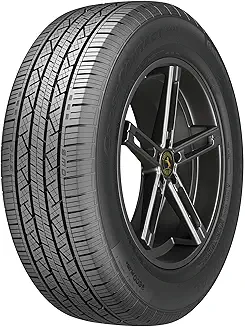
Pirelli Scorpion Verde All Season Plus II
Pros
- Computer-optimized pitch sequencing in the tread pattern specifically reduces the resonant road noise frequency that makes luxury cabin interiors feel cheaper than they are
- Updated silica compound in the Plus II delivers stronger wet traction than the original Scorpion Verde — a directly measurable improvement in the successor model
- Natural, predictable handling feel — no abrupt transitions at the limit, which suits conservative daily driving rather than performance pushing
Cons
- Tread life tracking shorter than Continental LX25 in the same touring segment — high-mileage drivers will replace these sooner and spend more per mile
- Heavy snow performance is genuinely poor — drivers in Minnesota, Colorado, or Michigan should rule this tire out before winter arrives
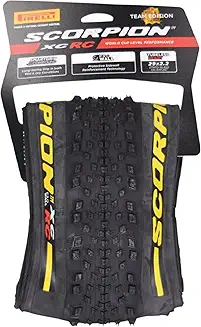
Pirelli P Zero PZ4
Pros
- BMW Original Equipment approved — Pirelli engineers the PZ4 to BMW’s specific steering and suspension calibration, which is why steering feedback is more precise than any non-OEM tire on this list
- Run-flat version available for G05 variants delivered without a spare tire — preserves the factory safety net without needing to source a spare wheel
- 87% dry grip score from TireReviews.com X5-specific owner data confirms the tire’s performance pedigree at this vehicle weight
Cons
- Rear tires on aggressive drivers wear out before 25,000 miles — the soft performance compound is the source of its grip and the source of its replacement cost
- Wet braking performance trails the Michelin Pilot Sport AS4, which matters on a 5,000-lb vehicle where braking distances are already longer than a sedan
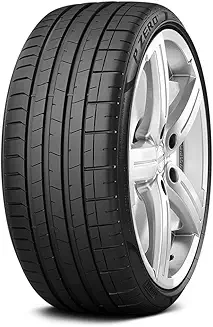
Hankook Ventus ST
Pros
- 91% tread wear score from 22 BMW X5-specific TireReviews.com entries — this is the highest wear-per-dollar ratio in the performance segment for this vehicle
- 89% dry grip score in the same data set is genuinely competitive with tires costing 30–40% more per tire at common X5 sizes
- Reinforced shoulder blocks maintain stable, planted highway tracking even at sustained high speeds — important for X5 owners covering long interstate distances
Cons
- 83% wet grip score in TireReviews.com data means wet stopping distances are meaningfully longer than the top two tires on this list — not acceptable for regular rainy-climate driving
- No winter capability — snow and ice performance is limited to conditions where temperatures stay above 30°F and precipitation is light
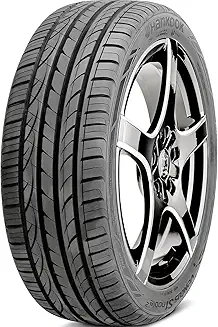
???? Can’t Decide?
Our Top 2 Picks — Head to Head
Both are excellent. Here’s how to choose between them.
- Asymmetric high-silica compound gives it the best wet braking performance on this list
- 3PMSF certified — handles light-to-moderate snow without a dedicated winter set
- Top recommendation across r/BMWX5 and BimmerPost G05 threads for OEM run-flat replacements
- Best-in-class tread life — EcoPlus Technology extends replacement intervals for high-mileage commuters
- Quietest cabin of any tire on this list — drivers describe the noise reduction as immediately noticeable
- Lower per-tire cost than Michelin in matching X5 sizes, with fuel efficiency improvement over time
How to Choose the Right Tires for Your BMW X5
Six factors specific to the X5 platform before you order.
Confirm Your Exact Size — By Trim
The G05 X5 uses multiple valid sizes by trim. Base and xDrive40i models typically run 255/50R19 or 265/50R19. M Sport packages use 275/40R20 front and 315/35R20 rear in staggered configurations. Larger Sport packages can spec 275/40R21. Always read the sticker inside the driver-side door jamb — never order by year and model search alone.
Run-Flat vs. Standard Replacement
Many G05 X5 variants left the factory without a spare tire, relying entirely on run-flat construction. Replacing run-flats with standard tires means you must carry a quality portable inflator kit. Some owners add a dedicated spare wheel. Standard tires ride noticeably softer and last longer than run-flat equivalents — the ride quality improvement is the primary reason owners make the switch.
All-Season vs. Dedicated Winter Tires
The M+S mud and snow designation on most all-season tires requires no external testing. The 3PMSF snowflake symbol requires passing a standardized winter traction test. The Michelin Pilot Sport AS4 carries the 3PMSF rating; the Continental LX25 and Pirelli Scorpion Verde do not. For regular snowfall above 4 inches, a dedicated winter set on steel rims outperforms any all-season compound.
Staggered Fitments and Rotation
Performance X5 trims run staggered sizes — wider rear tires than fronts — which prevents traditional front-to-rear rotation. This accelerates rear tire wear. Budget for replacing rear tires more frequently than fronts when running a staggered setup. Switching to a square setup (same size on all four corners) enables full rotation and significantly extends tire life across all four wheels.
Speed Rating and Load Index
The X5 G05 is a heavy vehicle that can be optioned with powerful engines. Always match or exceed the speed rating (Y or W for performance trims) and load index specified in your owner’s manual. Under-specifying load index on a 5,000-lb SUV creates heat buildup that accelerates wear and reduces wet braking performance.
TPMS Reset After Installation
BMW X5 Tire Pressure Monitoring System sensors require reprogramming after a tire swap — skipping this step produces persistent dashboard warnings and inaccurate pressure readings within days. A BMW-familiar shop handles wheel torque specs (typically 89–120 Nm), balancing for the X5’s specific ride quality expectations, and TPMS programming correctly on the first visit.
✅ Pro Tips
Quick Buying Checklist Before You Order
Verify your size from the door jamb sticker — not an online year/model search. The G05 X5 has at least five valid tire sizes across trims, and ordering the wrong fitment wastes time and shipping costs.
If your region averages more than 30 inches of annual rainfall, wet braking distance matters far more than dry lap time — choose the Michelin Pilot Sport AS4 over the Pirelli PZ4 specifically for this reason.
Running staggered sizes? Budget for rear tires separately — they wear faster than fronts due to the X5’s rearward weight bias and the inability to rotate. Plan a rear replacement before the set hits 25,000 miles on aggressive setups.
Never mix tire brands across a staggered axle pair — mismatched models front-to-rear cause handling imbalances and uneven wear patterns that void most tire warranties and create unexpected handling behavior in wet conditions.
Related Guides
Other BMW X5 Variants
Also On CarAssists
More Guides for This Vehicle
- → Best Spark Plugs for BMW X5
- → Best Dashcams for BMW X5
- → Top Seat Protectors for BMW X5
- → BMW X5 Battery Recommendations
- → Top Motor Oil for BMW X5— varies by engine variant
- → Best Coolant for BMW X5— includes capacity by engine variant
Frequently Asked Questions
What are the best tires for a BMW X5 for all-season use?
The Michelin Pilot Sport All Season 4 leads for performance-first drivers — it covers wet roads, light snow, and dry summer roads without needing a second tire set. For comfort-first drivers, the Continental CrossContact LX25 delivers the longest tread life and quietest highway ride in this category.
Which tire size fits the BMW X5 G05?
The G05 uses multiple sizes by trim. Common sizes include 255/50R19, 285/45R19, 275/40R20, and 315/35R20 for staggered M Sport setups. Always confirm your size from the driver-side door jamb sticker before ordering — not from a year-and-model search, which returns multiple valid fitments.
How long do BMW X5 tires typically last?
Performance tires like the Pirelli P Zero PZ4 typically see rear tires wear out at 20,000–25,000 miles on aggressive driving. Touring tires like the Continental CrossContact LX25 can reach 50,000+ miles with regular rotation. The X5’s weight accelerates wear versus lighter vehicles — factor this into replacement budgeting.
Is it worth buying run-flat tires for the BMW X5?
Only if your X5 was delivered without a spare and you want to keep the emergency flat-driving capability. Run-flat tires ride stiffer and wear faster than standard tires at the same price. Most owners switch to standard tires and carry a portable inflator — the ride quality improvement is immediately noticeable.
Can I put winter tires on a BMW X5 instead of all-season tires?
Yes, and it is the safer choice in any region that regularly sees temperatures below 45°F or snowfall above 4 inches. A dedicated winter set on steel rims is faster to swap seasonally and protects your alloy wheels from road salt. Winter compounds grip ice and cold pavement in ways no all-season tire can match.
Do larger BMW X5 tire sizes affect fuel economy?
Larger diameter and wider tires increase rolling resistance, which adds measurable fuel consumption. High-performance compounds also generate more rolling resistance than fuel-efficient touring compounds. The Continental CrossContact LX25’s EcoPlus Technology is the lowest-rolling-resistance option on this list, specifically designed to offset the fuel cost of larger tire sizes on heavy SUVs.
Are aftermarket tires safe for the BMW X5?
Yes, provided they match the correct speed rating and load index from your owner’s manual. Tires from established brands — Michelin, Continental, Pirelli, Hankook — are properly tested for the X5’s weight and handling demands. Avoid tires from brands with no verifiable X5 owner review data — wet stopping distances on a 5,000-lb vehicle carry real safety consequences.
???? Final Verdict
Our Top BMW X5 Tire Recommendations for 2026
The Michelin Pilot Sport All Season 4 earns the top position by combining wet braking confidence that factory run-flats rarely match with year-round 3PMSF winter capability — it is the safest single-set solution for X5 owners in mixed climates. High-mileage commuters who want the longest time between replacements and the quietest highway ride should choose the Continental CrossContact LX25 instead. Performance-trim X5 M50i owners who want BMW-approved OEM precision and the sharpest dry steering feedback should budget for the Pirelli P Zero PZ4 and plan for more frequent rear tire replacement.