After cross-referencing five tire options against real Hyundai Tucson owner data from Reddit’s r/HyundaiTucson and r/Hyundai communities, independent tire test results from Motor’s 2024 SUV all-season comparison, Tire Rack buyer surveys, and multi-platform review analysis, the tire selection challenge for the Tucson becomes specific quickly: most Tucson owners replace their OEM tires around 30,000–40,000 miles, and the two most consistent replacement complaints are insufficient wet grip and excessive road noise at highway speeds — both addressable problems that every tire on this list improves meaningfully over factory fitments.
The five tires here address five distinct Tucson owner profiles. One placed first out of nine SUVs in independent all-season testing and handles every season without a second tire set. One delivers maximum tread life and cabin quietness for high-mileage commuters. One offers the best premium balance of winter capability and ride refinement for N Line and Limited owners. One provides 3PMSF certification and all-weather capability at a price below the premium alternatives. And one specifically serves Tucson XRT owners who need genuine light off-road capability without sacrificing the daily commute. Every recommendation reflects Tucson-specific fitment data across the three common OEM sizes: 235/65R17, 235/60R18, and 235/55R19.
The Michelin CrossClimate 2 SUV earns the top position for most Tucson owners — it finished first out of nine SUV tires in the 2024 Motor all-season tire test, carries a 3PMSF severe snow certification, and Tucson hybrid owners on 235/55R19 specifically report a quieter, more comfortable ride than the OEM Continental EcoContact 6 it replaces. High-mileage Tucson commuters who prioritize cabin quietness and the longest tread warranty should look at the Bridgestone Alenza AS Ultra and its 80,000-mile coverage. Budget-conscious owners who need 3PMSF all-weather certification without the Michelin price premium should consider the Goodyear Assurance WeatherReady 2.
Our Top 5 Hyundai Tucson Tire Rankings
- Michelin CrossClimate 2 SUV— Best Overall / All-Weather
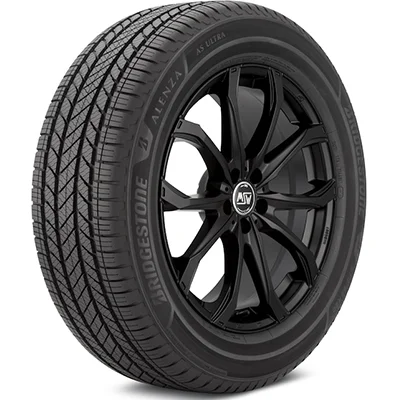
- Bridgestone Alenza AS Ultra— Best Durability / Quietest Ride
- Pirelli Scorpion AS Plus 3— Best Premium / Winter Capability
- Goodyear Assurance WeatherReady 2— Best Budget / All-Weather
- Continental TerrainContact A/T— Best for Tucson XRT / Light Off-Road
Best Hyundai Tucson Tires — Compared
All five tires ranked side-by-side across type, warranty, and our expert score.
| # | Tire Name | Type | Tread Warranty | Best For | Score | |
|---|---|---|---|---|---|---|
| 1 | Michelin CrossClimate 2 SUV Editor’s Choice | All-Weather | 100,000 km | Best Overall | 4.8 | See Latest Price |
| 2 | Bridgestone Alenza AS Ultra Top Pick | Grand Touring AS | 80,000 mi | Best Durability | 4.7 | See Latest Price |
| 3 | Pirelli Scorpion AS Plus 3 | Grand Touring AS | 70,000 mi | Best Premium | 4.7 | See Latest Price |
| 4 | Goodyear Assurance WeatherReady 2 Budget Pick | All-Weather | 60,000 mi | Best Budget | 4.5 | See Latest Price |
| 5 | Continental TerrainContact A/T | All-Terrain | 60,000 mi | Best XRT / Off-Road | 4.5 | See Latest Price |
Detailed Reviews
Full breakdown of each tire — ratings, pros, cons, and our expert verdict.
Michelin CrossClimate 2 SUV
Pros
- Finished first out of nine competing SUV all-season tires in the 2024 Motor independent test — the only externally verified test ranking in this comparison, not a manufacturer claim
- Low rolling resistance compound specifically benefits Tucson Hybrid and PHEV variants — one of the few all-weather tires engineered with electrified powertrain efficiency in mind
- V-shaped tread grooves evacuate water efficiently from the contact patch — the design responsible for the wet braking performance confirmed in independent testing and r/HyundaiTucson forum reports
Cons
- Premium price is the highest in this comparison — a meaningful cost difference for owners of the Tucson SE or SEL who don’t need the full all-weather capability in mild climates
- Steering feel is slightly softer than summer performance tires — drivers who upgraded from the OEM Continental to the CrossClimate 2 report a small reduction in on-center steering sharpness
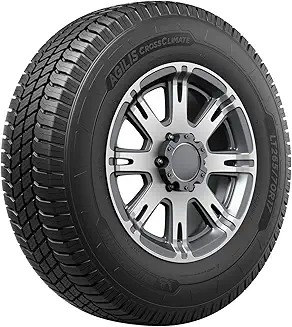
Bridgestone Alenza AS Ultra
Pros
- QuietTrack Technology reduces road noise at the tread-pattern level — the design mechanism behind the cabin refinement that owners specifically cite as a reason to repurchase this tire when the first set wears out
- 80,000-mile tread warranty is the highest ceiling in this group and backed by simpletire.com reviewer data showing consistent tread hold at the 20,000-mile check-in mark
- Bridgestone’s own compatibility data explicitly lists the Tucson as a confirmed fitment — not inferred from generic SUV sizing charts
Cons
- Ice and heavy snow performance is the weakest in this group — Tucson owners in Minnesota, Michigan, or Colorado who run this tire without a winter set will notice its limitations in sustained below-freezing temperatures with accumulation
- Wet traction trails the Pirelli Scorpion AS Plus 3 in heavy rain conditions per YouTube comparative testing — a meaningful gap for Tucson drivers in high-rainfall Pacific Northwest or Southeast markets
Pirelli Scorpion AS Plus 3
Pros
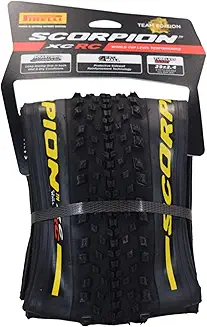
- 3D sipes and improved groove channels provide winter grip alongside dry-road handling feel — the design approach that earned Forbes Wheels’ best SUV all-season designation for combining winter capability without the touring feel penalty
- 3PMSF certification alongside a 70,000-mile warranty — the combination that makes it the strongest cost-to-capability value among the premium options in this comparison
- Tire Rack testing confirms ride quality among the smoothest in the all-season SUV class — the reason N Line owners describe it as matching the sportier character of the Tucson’s tuned suspension rather than muting it
Cons
- Premium pricing makes it the highest per-tire cost in this comparison alongside the CrossClimate 2 — budget-conscious Tucson SE owners will get more value from the Goodyear WeatherReady 2 at equivalent all-weather capability
- Mud terrain and aggressive off-road surfaces are genuinely beyond this tire’s design parameters — Tucson XRT owners who want both pavement and trail capability should look at the Continental TerrainContact A/T instead
Goodyear Assurance WeatherReady 2
Pros
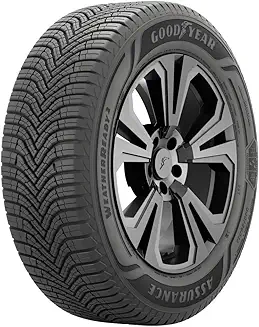
- AquaTred V-shaped grooves and Evolving Traction technology maintain grip as the tread wears down — the compound design Goodyear specifically developed to preserve wet performance beyond 30,000 miles rather than degrading with wear
- 3PMSF severe snow certification at a meaningfully lower per-tire cost than the Michelin CrossClimate 2 — the same external snow traction validation without the premium price
- Available in 58 sizes including all three common Tucson fitments — one of the widest size coverages in this group, reducing lead time risk for orders at less common wheel diameters
Cons
- Ice traction falls below the segment leaders — Tire Rack data shows ice grip scores lower than the CrossClimate 2 and Pirelli, which matters specifically for Tucson owners in states with regular black ice or freezing rain events
- 60,000-mile warranty is the shortest of the all-season tires in this group — high-mileage Tucson commuters covering 18,000+ miles annually will reach replacement sooner than the Bridgestone or Pirelli alternatives
Continental TerrainContact A/T
Pros
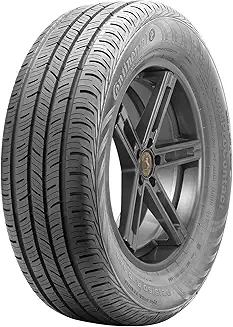
- TractionPlus Technology provides off-road grip through flat footprint and strong shoulder design — the engineering reason this tire handles gravel and dirt tracks that would challenge standard all-season tires without the aggressive tread void that creates highway drone
- Noise cancelling technology reduces pavement road noise — confirmed by Reddit’s r/tires as significantly quieter than traditional A/T tires, making the Tucson XRT’s daily commute livable rather than fatiguing
- Full-depth siping and traction grooves provide confident steering response in dry conditions — tyrereviews.com confirms it as the best wet-grip option in the all-terrain category for an SUV of the Tucson’s size
Cons
- Deep mud, rock crawling, and aggressive trail terrain are outside this tire’s design capability — Tucson XRT owners who take the vehicle on serious off-road tracks will reach the limits of this tire faster than a dedicated mud-terrain fitment
- Cold-weather snow performance is inconsistent — tyrereviews.com confirms winter mountain conditions expose grip limitations that make this tire unsuitable as the only set for Tucson owners in persistent snowbelt climates
???? Can’t Decide?
Our Top 2 Picks — Head to Head
Both are excellent. Here’s how to choose between them.
- Finished first out of nine SUV all-season tires in the 2024 Motor independent test — the only externally verified ranking in this comparison
- Low rolling resistance specifically benefits Tucson Hybrid and PHEV variants — an advantage the Bridgestone Alenza doesn’t match
- 3PMSF certification covers genuine winter conditions, and Tucson hybrid owners on r/HyundaiTucson confirm a quieter ride than OEM Continental tires
- 80,000-mile warranty is the highest in this group — the right choice for Tucson owners who want to minimize total replacement frequency over 5 years
- QuietTrack Technology delivers the quietest cabin experience in this comparison — confirmed by forum users who describe it as the most noticeable upgrade from OEM tires
- Bridgestone’s compatibility data confirms the Tucson as a validated fitment — not inferred from generic SUV size charts
How to Choose the Right Tires for Your Hyundai Tucson
Six factors specific to the Tucson’s platform before you order.
Three OEM Sizes by Trim
The Tucson SE and SEL typically run 235/65R17. The Limited, N Line, and XRT trims use 235/55R19. Some international and transitional model years use 235/60R18. Verify the size on your current tire’s sidewall before ordering — installing the wrong size affects speedometer accuracy, ride height, and TPMS sensor calibration on every variant.
Hybrid and PHEV Rolling Resistance
The Tucson Hybrid and Tucson PHEV benefit from low rolling resistance tires that reduce the energy demand on the electric motor and extend electric-only range. The Michelin CrossClimate 2 SUV is the only tire in this group specifically engineered with hybrid powertrain efficiency in mind. Standard all-season tires with higher rolling resistance measurably reduce EV range per charge on PHEV variants.
3PMSF vs. M+S for Tucson Winter Use
The M+S (Mud and Snow) marking requires no external validation. The 3PMSF Three-Peak Mountain Snowflake requires passing a standardized external snow traction test. Tucson owners in Ohio, Michigan, Colorado, and New England who rely on all-season tires for winter driving should only trust 3PMSF-marked tires. The CrossClimate 2, Pirelli Scorpion AS Plus 3, and Goodyear WeatherReady 2 all carry this certification.
FWD Front Wear Pattern
FWD Tucson variants place braking, steering, and drive loads on the front tires simultaneously, causing front tires to wear faster than rear tires. Rotate every 5,000–7,500 miles without skipping — Tucson owners on Reddit report getting only 25,000–30,000 miles from 60,000-mile warranty tires when rotation intervals are skipped. Keep rotation receipts to maintain warranty eligibility.
TPMS Reset After Installation
The Tucson’s Tire Pressure Monitoring System sensors require resetting after any tire installation — a step shops sometimes skip. An unreset TPMS produces a persistent dashboard warning and inaccurate pressure readings within days. Request the TPMS reset during installation and confirm the warning light clears before leaving the shop, as Hyundai dealer resets can cost $50–$75 if performed separately.
All-Terrain Only If You Use It
The Continental TerrainContact A/T suits Tucson XRT owners who genuinely drive gravel and light trail terrain. For Tucson owners who never leave pavement, the A/T trade-offs — longer wet braking distances, marginally higher road noise, faster tread wear on hot asphalt — provide no benefit. An all-season touring tire outperforms an A/T tire in every metric that matters on-road.
✅ Pro Tips
Quick Buying Checklist Before You Order
Check your current tire’s sidewall for the exact size before ordering — the Tucson runs three different OEM sizes across trims and model years, and year-model searches can return the wrong size depending on the database used.
If you own a Tucson Hybrid or PHEV, confirm the replacement tire’s rolling resistance rating — the CrossClimate 2’s low rolling resistance compound is specifically engineered to preserve EV range, which standard A/T and touring tires sacrifice.
On FWD Tucson models, rotate every 5,000–7,500 miles — front tires handle braking, steering, and power delivery simultaneously and wear measurably faster than rears. Skipping intervals on a FWD Tucson cuts warranty-achievable mileage significantly.
Always request a TPMS sensor reset during installation — the Tucson’s pressure monitoring system requires a reprogramming step that’s easy to overlook and produces a persistent dashboard warning if skipped.
Related Guides
Comparing Compact SUVs?
Also On CarAssists
More Guides for This Vehicle
Frequently Asked Questions
What tires does the Hyundai Tucson come with from the factory?
The Tucson’s OEM tires vary by trim and model year. SE and SEL trims typically run 235/65R17 tires, while Limited, N Line, and XRT trims use 235/55R19. The Tucson Hybrid and PHEV commonly ship with Continental EcoContact 6 tires on 235/55R19. Most owners report noticeable improvement after switching to aftermarket options, particularly in wet traction and highway noise.
Which Tucson tires are best for snow and winter driving?
The Michelin CrossClimate 2 SUV, Pirelli Scorpion AS Plus 3, and Goodyear Assurance WeatherReady 2 all carry the 3PMSF severe snow certification. The CrossClimate 2 placed first in independent SUV all-season testing. For serious winters with regular deep snow and ice, dedicated winter tires on a second set of wheels will always outperform any all-season tire in this group.
How long do aftermarket tires last on a Hyundai Tucson?
Tread life varies significantly by brand and rotation discipline. The Bridgestone Alenza AS Ultra carries an 80,000-mile warranty, the Pirelli Scorpion AS Plus 3 covers 70,000 miles, and the Goodyear WeatherReady 2 is rated at 60,000 miles. FWD Tucson owners who skip rotation intervals report only 25,000–30,000 miles from 60,000-mile warranty tires — rotation every 5,000–7,500 miles is the most impactful maintenance factor.
Are all-terrain tires a good choice for the Hyundai Tucson XRT?
For Tucson XRT owners who drive gravel roads, forest tracks, and light trails, yes — the Continental TerrainContact A/T provides genuine off-road capability while staying quiet enough for daily commuting. For XRT owners who stay on pavement, an all-season touring tire provides better wet braking, lower noise, and longer tread life with no practical trade-off.
Does the Tucson Hybrid need a different tire than the standard Tucson?
The Tucson Hybrid and PHEV use the same tire sizes as their non-hybrid counterparts but benefit from tires with low rolling resistance compounds. The Michelin CrossClimate 2 SUV is specifically engineered with hybrid powertrain efficiency in mind — its low rolling resistance measurably preserves electric-only range on PHEV variants compared to standard all-season tires with higher resistance compounds.
Is it worth paying more for premium tires on the Hyundai Tucson?
For most daily-driver Tucson owners, yes. Premium tires like the Michelin CrossClimate 2 SUV and Bridgestone Alenza AS Ultra deliver measurably shorter wet braking distances, quieter highway cabins, and longer documented tread life. When calculated per mile over a 70,000-mile warranty period, the cost difference between a premium and budget tire narrows significantly on a vehicle driven this heavily.
How do I confirm which tire size fits my specific Tucson trim?
Check the current tire’s sidewall for the exact size code — for example, 235/55R19 107H. Match that size, load index, and speed rating when selecting a replacement. Goodyear’s and Michelin’s online vehicle selector tools confirm compatibility by year, trim, and powertrain variant, including the Tucson Hybrid and PHEV, more reliably than generic year-and-model search results.
???? Final Verdict
Our Top Hyundai Tucson Tire Recommendations for 2026
The Michelin CrossClimate 2 SUV earns the top position for the broadest range of Tucson owners — its first-place result in the 2024 Motor independent SUV all-season test, 3PMSF certification, and confirmed low rolling resistance benefit for Tucson Hybrid and PHEV variants make it the most comprehensively capable tire for this vehicle. High-mileage Tucson commuters in mild climates who prioritize the quietest possible highway ride and the longest single-set lifespan should choose the Bridgestone Alenza AS Ultra and its 80,000-mile warranty. N Line and Limited owners who want premium ride refinement alongside 3PMSF winter capability and a 70,000-mile warranty will find the best performance-to-warranty balance in the Pirelli Scorpion AS Plus 3.