After evaluating five of the most widely purchased replacement tires for the Hyundai Sonata — cross-referenced across Amazon review patterns, r/Hyundai and r/SonataNLine owner threads, Tire Rack ratings, and SimpleTire verified-buyer data covering sizes from 205/65R16 through 245/40R19 — the clearest finding is this: most Sonata owners aren’t replacing tires because the originals failed. They’re replacing them because OEM tires consistently draw complaints about inner-shoulder cupping, hydroplaning on wet roads, and premature wear well before 40,000 miles on the front axle.
What separates this list from a generic sedan tire roundup is the Sonata-specific context. The base SE trim runs 205/65R16 with an H-speed rating. The N Line runs 245/40R19 with a V-speed rating and an XL load designation. Installing the wrong tire in either case affects ABS calibration, speedometer accuracy, and stability control response. This comparison evaluates each tire against the actual trim fitment it serves — not a one-size-fits-all recommendation that ignores the difference between a base Sonata commuter and an N Line performance variant.
The Michelin CrossClimate2 handles the widest range of Sonata owners’ needs — 3PMSF snow certification, a noticeably quieter ride than most all-season alternatives, and strong tread life documented past 30,000 miles with minimal wear. Performance-focused N Line and SEL Plus drivers who prioritize wet braking and dry handling should step to the Continental ExtremeContact DWS06 Plus. For budget-conscious SE and base trim owners who need reliable, long-lasting tires without premium pricing, the General Altimax RT45 backs its performance with a 75,000-mile warranty.
Our Top 5 Hyundai Sonata Tire Rankings
- Michelin CrossClimate2 — Best Overall
- Continental ExtremeContact DWS06 Plus — Best Premium / Performance
- Pirelli Cinturato P7 All Season Plus II — Best Comfort & Balance
- Bridgestone WeatherPeak — Best Durability
- General Altimax RT45 — Best Budget Pick
Best Hyundai Sonata Tires — Compared
All five evaluated across key features, 3PMSF status, and overall score.
| # | Tire | Type | 3PMSF | Best For | Score | |
|---|---|---|---|---|---|---|
| 1 | Michelin CrossClimate2 Editor’s Choice | All-Weather | ✓ Yes | Four-Season Balance | 4.8 | See Latest Price |
| 2 | Continental ExtremeContact DWS06 Plus Top Pick | UHP All-Season | ✗ No | Performance / Wet Grip | 4.7 | See Latest Price |
| 3 | Pirelli Cinturato P7 All Season Plus II | Grand Touring A/S | ✗ No | Comfort / Daily Commute | 4.5 | See Latest Price |
| 4 | Bridgestone WeatherPeak | All-Season Touring | ✗ No | Durability / High Mileage | 4.6 | See Latest Price |
| 5 | General Altimax RT45 Budget Pick | All-Season Touring | ✗ No | Budget / Long Tread Life | 4.4 | See Latest Price |
Detailed Reviews
Full breakdown of each tire — ratings, pros, cons, and our expert verdict.
Michelin CrossClimate2
Pros
- 3PMSF certification confirms passing of standardized severe snow traction tests — not a marketing claim, an independent test result that matters in chain-control states
- Thermal Adaptive silica compound maintains grip in cold temperatures where standard all-season compounds stiffen and lose contact patch efficiency on the Sonata’s FWD platform
- PIANO Noise Reduction Tuning produces a measurably quieter cabin than most competing all-weather tires — Sonata owners switching from worn OEM rubber consistently note the improvement immediately
Cons
- Rolling resistance is slightly higher than eco-focused low-rolling-resistance tires — Sonata owners who track fuel economy closely may see a 0.5–1 MPG reduction versus highway all-season alternatives
- Premium pricing per tire is the highest in this comparison — a full set of four in 235/45R18 represents a meaningful budget commitment versus mid-range alternatives
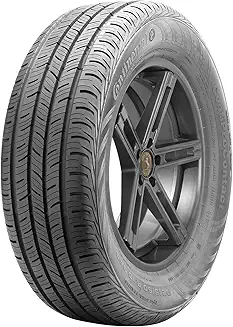
Continental ExtremeContact DWS06 Plus
Pros
- DWS tread wear indicator stamps on the tire surface show when wet (W) and snow (S) traction thresholds have been crossed — a specific safety feature that no other tire in this comparison offers
- SportPlus Technology produces responsive, communicative steering feel that matches the Sonata N Line’s sport-tuned suspension calibration better than touring-focused alternatives
- Silica-enhanced compound delivers class-leading wet braking — Tyre Reviews independent testing confirms shorter stopping distances than most competing UHP all-season tires in the same price bracket
Cons
- No 3PMSF certification — handles light snow confidently but is not suitable for sustained heavy snowfall, ice-covered roads, or regions with chain-control zone requirements on winter highways
- Premium pricing without the all-weather snow capability of the CrossClimate2 — drivers in serious winter climates are paying performance-tier prices for a tire that can’t cover the full year safely
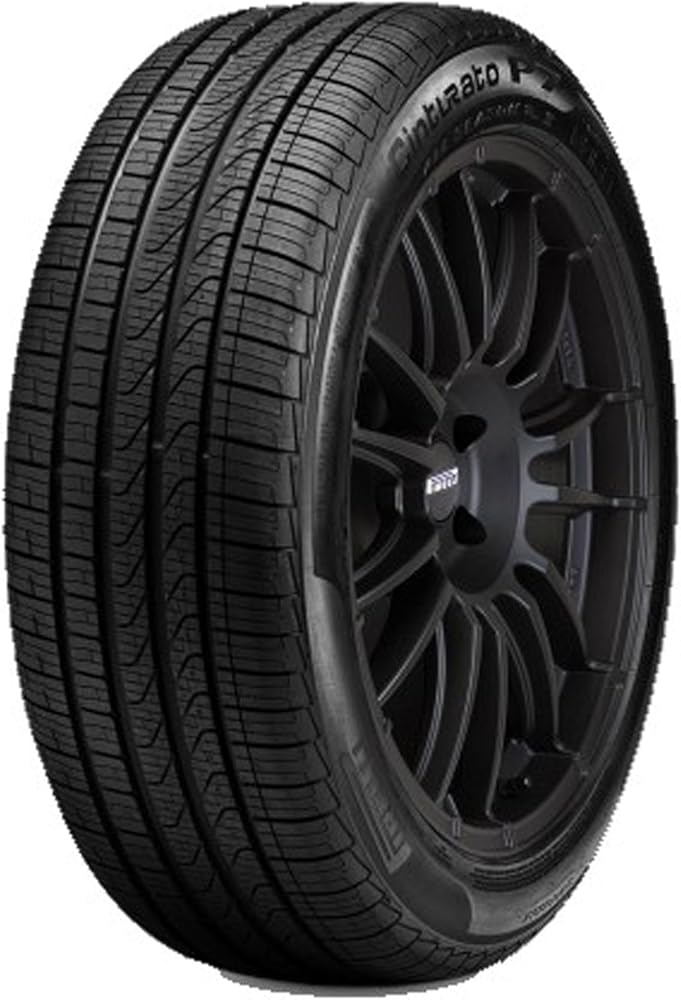
Pirelli Cinturato P7 All Season Plus II
Pros
- Grand Touring compound tuned specifically for mid-size sedans delivers a noticeably supple, well-damped ride over urban road imperfections — directly relevant to Sonata SE owners who report OEM tires feel harsh over city expansion joints
- Optimized tread sipes improve straight-line wet traction for commuter driving patterns without the aggressive tread blocks that generate the highway drone common on performance-oriented tires
- Widely available in 215/55R17 and multiple Sonata-compatible sizes across major tire retailers — installation is straightforward with no special fitment considerations at standard shops
Cons
- Rear-end handling can feel imprecise during abrupt lane changes at highway speeds — a specific limitation on the Sonata’s FWD platform where the rear tires play a passive stability role
- Light snow performance only — not designed for sustained winter driving, and lacks both 3PMSF certification and the compound pliability needed for temperatures consistently below freezing
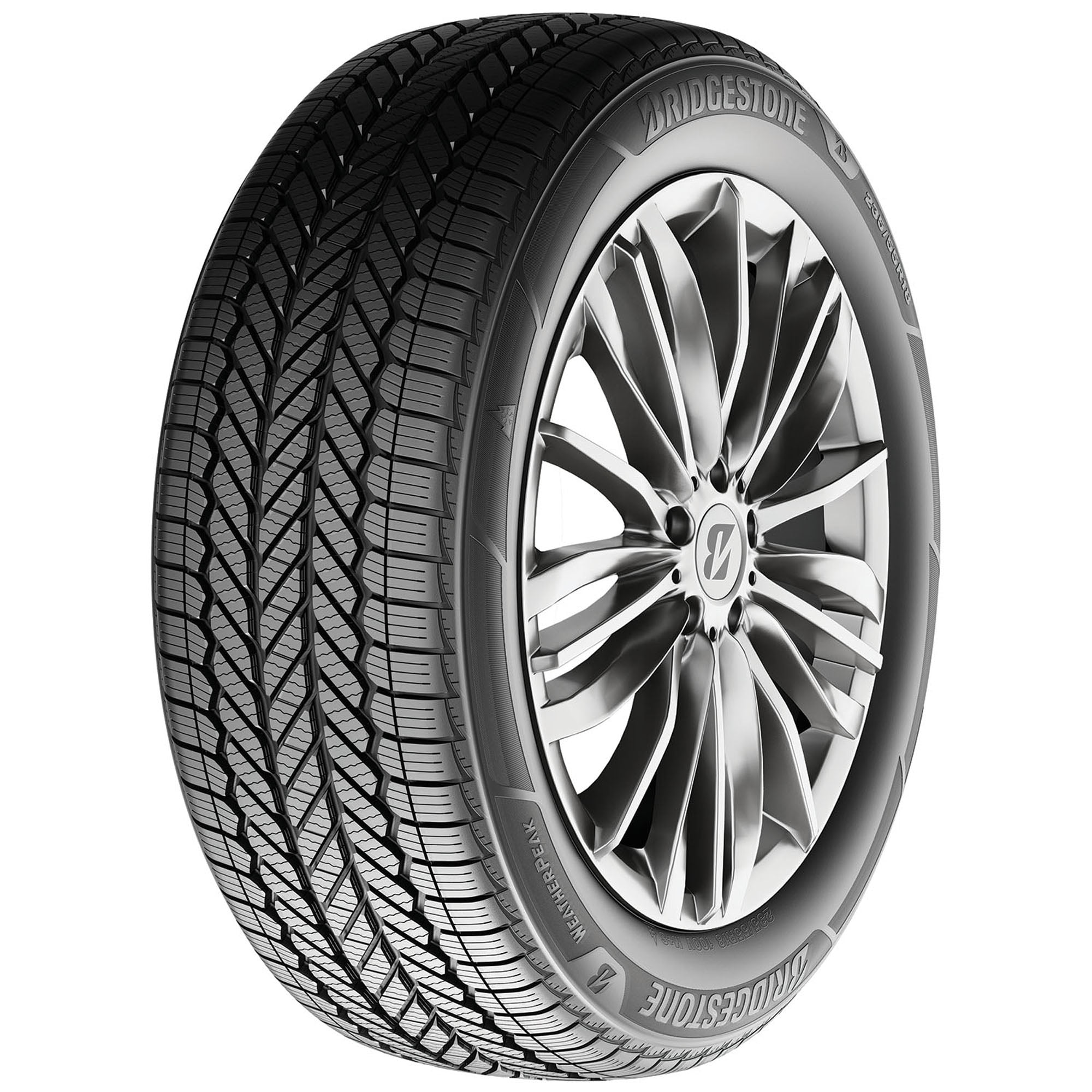
Bridgestone WeatherPeak
Pros
- SimpleTire verified-buyer aggregate records a 9.8/10 longevity score — the highest tread life rating from real owner data in this comparison, across mid-size sedan applications including the Sonata
- Wet traction scores a 9.7/10 on SimpleTire — meaning Bridgestone’s compound maintains hydroplaning resistance and braking confidence as tread depth decreases, which is specifically relevant for high-mileage drivers approaching replacement thresholds
- Neutral, predictable handling in both wet and dry conditions suits the Sonata’s comfort-tuned suspension geometry without fighting the car’s intended ride character
Cons
- Ride feel is slightly firmer than the Pirelli Cinturato P7 on rough urban surfaces — Sonata owners who prioritize ride refinement above all else will notice the difference on poorly maintained city streets
- Snow performance trails the CrossClimate2 noticeably — not 3PMSF certified and not recommended as the primary tire for Sonata owners in regions with regular heavy snowfall or ice
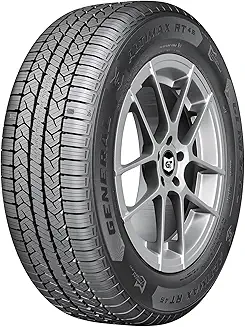
General Altimax RT45
Pros
- 75,000-mile treadwear warranty on T- and H-speed rated sizes — the longest warranty of any tire in this comparison, and directly relevant to Sonata SE owners who run H-rated stock fitments
- Built on Continental engineering fundamentals (General is a Continental subsidiary) — compound quality and consistency exceed what most independent budget-tier brands deliver in the same price range
- Available in 205/65R16 covering the Sonata base SE trim — a size that many premium all-season options don’t stock, making the RT45 one of the few quality choices for the entry-level Sonata
Cons
- Wet braking distances are longer than the Continental DWS06 Plus or Michelin CrossClimate2 — the gap is measurable in emergency stop scenarios on wet pavement, not just in test data
- Handling response is functional rather than confident — Sonata drivers who occasionally push the car through curved highway ramps will notice the RT45’s lower lateral grip limit versus premium options
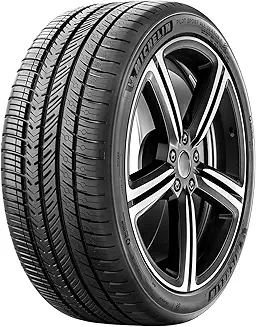
🤔 Can’t Decide?
Our Top 2 Picks — Head to Head
Both are excellent choices. Here’s the deciding factor for your Sonata.
- 3PMSF certified — legally satisfies chain-control zone requirements and passes standardized severe snow traction tests
- Thermal Adaptive compound stays pliable in cold temperatures where standard all-season compounds harden and lose grip
- Documented minimal tread wear at 30,000 miles across multiple Sonata owner reports
- DWS wear indicators show exactly when wet and snow traction capability has dropped — a unique safety transparency feature
- Best wet braking distance in this comparison — independently verified shorter stopping distances on rain-soaked roads
- SportPlus Technology produces the sharpest, most communicative steering response in this group for N Line dynamics
How to Choose the Right Tire for Your Hyundai Sonata
Six factors specific to the Sonata’s front-wheel-drive platform, trim range, and TPMS system.
Match Size to Your Trim
The Sonata runs four different factory sizes depending on trim: 205/65R16 (SE base), 215/55R17 (SEL), 235/45R18 (SEL Plus/Limited), and 245/40R19 (N Line). Installing a 215/55R17 on a base SE running 205/65R16 wheels changes the tire’s load capacity, speedometer reading, and ride height. Always verify the exact size on your driver’s door jamb sticker — not online fitment guides that sometimes conflate trim years.
XL Load Rating for SEL Plus
The Sonata SEL Plus and some Limited trims specify an XL (Extra Load) designation alongside the 235/45R18 size. XL tires carry a higher inflation pressure and load capacity than standard tires in the same size. Substituting a standard load 235/45R18 on a rim requiring XL reduces the tire’s structural load rating and can cause premature sidewall fatigue under highway driving loads at elevated temperatures.
TPMS Recalibration
The 2020–2025 Hyundai Sonata uses a direct-sensor TPMS system with physical pressure sensors mounted inside each wheel. After any tire change — even a same-size, same-brand swap — the system requires a reset drive cycle or scan tool relearn to register the sensor IDs. Skipping this step causes a persistent TPMS warning light that incorrectly signals low pressure regardless of actual tire inflation.
All-Weather vs. All-Season for Snow
A standard all-season tire (M+S rated) is a manufacturer self-certification with no independent test requirement. An all-weather tire with 3PMSF has passed standardized severe snow traction tests. Only the Michelin CrossClimate2 in this comparison carries 3PMSF certification. For Sonata owners in the Northeast, Midwest, or mountain regions, the difference matters practically — especially in chain-control zones on major interstates.
Front Axle Wear on FWD
The Sonata’s front-wheel-drive layout places acceleration, steering, and primary braking load on the front tires simultaneously. This causes front tires to wear 30–50% faster than rear tires under normal driving. A rotation schedule of every 5,000–7,000 miles is essential — not the 10,000-mile default some shops recommend for rear-wheel-drive vehicles. Skipping rotations on a FWD sedan accelerates the cupping pattern Sonata owners commonly report on the front inner shoulder.
Wheel Alignment After Replacement
New tires on a misaligned Sonata reveal the problem within 5,000 miles through rapid, uneven inner-edge wear. The Sonata’s front suspension geometry sets a specific toe angle from the factory — an alignment check costs $80–$120 and prevents premature tire wear that would cost 10 times more. Any Sonata that has encountered a significant pothole, curb strike, or has exceeded 40,000 miles since the last alignment should be checked before new tires are installed.
✅ Pro Tips
Quick Checklist Before You Order Sonata Tires
Read the driver’s door jamb sticker for your exact size and load rating — don’t rely on online fitment tools. The SEL Plus requires an XL-rated tire that standard fitment guides sometimes omit.
If your Sonata drives through real winter snowfall more than a few times per year, verify 3PMSF certification before purchasing. Only the CrossClimate2 in this comparison carries that rating.
Budget for TPMS sensor relearn at installation — the 2020–2025 Sonata’s direct-sensor system requires a reset after any tire swap to avoid a persistent dashboard warning light.
Set a 5,000-mile rotation reminder immediately after installation — the Sonata’s FWD layout puts disproportionate wear on the front tires, and skipping rotations cuts expected tread life by 20–30%.
Related Guides
Comparing Midsize Sedans?
Also On CarAssists
More Guides for This Vehicle
- → Best Coolant for Hyundai Sonata— OAT spec, capacity & flush interval
Frequently Asked Questions
What size tires does the Hyundai Sonata use?
Tire size depends on the trim. The SE base uses 205/65R16, the SEL uses 215/55R17, the SEL Plus and Limited use 235/45R18 with XL load rating, and the N Line uses 245/40R19. Always confirm the size on your driver’s door jamb label before purchasing — trim-year variations mean online fitment guides are sometimes incorrect.
Which tires are best for a Hyundai Sonata in snowy climates?
The Michelin CrossClimate2 is the top choice for snowy regions. It carries 3PMSF certification — a standardized severe snow traction test result — and uses a Thermal Adaptive compound that stays pliable in cold temperatures. The Bridgestone WeatherPeak is a solid second option for drivers who prioritize tread longevity alongside moderate winter capability.
How long do replacement tires on a Hyundai Sonata typically last?
Tread life varies by tire model, rotation frequency, and driving habits. The General Altimax RT45 carries a 75,000-mile warranty. The Michelin CrossClimate2 shows minimal wear at 30,000 miles in owner reports under normal use. Under-inflation, skipped rotations, and misalignment accelerate front-axle wear significantly on the Sonata’s front-wheel-drive platform.
Do I need XL-rated tires for the Hyundai Sonata SEL Plus?
Yes. The Sonata SEL Plus specifies an XL (Extra Load) designation alongside its 235/45R18 size. Installing a standard load tire in that size reduces the tire’s structural load capacity and can cause sidewall fatigue under sustained highway loads at elevated temperatures. Always match the XL designation when Hyundai’s OEM specification requires it for your trim.
Will installing new tires affect my Hyundai Sonata’s TPMS warning light?
Yes. The 2020–2025 Sonata uses a direct-sensor TPMS with physical sensors inside each wheel. After any tire change, the system needs a reset drive cycle or scan tool relearn to register the sensor IDs. Most tire shops handle this during installation. Skipping relearn causes a persistent TPMS warning light regardless of actual tire pressure.
Are premium tires worth the extra cost for the Hyundai Sonata?
For most Sonata drivers, yes. Premium tires like the Michelin CrossClimate2 and Continental DWS06 Plus deliver shorter wet braking distances and longer tread life than budget alternatives. Fewer replacements over time and improved wet-road safety often offset the higher upfront cost, particularly for Sonata owners logging 15,000 or more miles per year.
Can I install winter tires on my Hyundai Sonata instead of all-season tires?
Yes — dedicated winter tires provide the strongest snow and ice grip for severe winter regions. For most Sonata owners in areas with moderate winters, the Michelin CrossClimate2’s 3PMSF all-weather certification eliminates the need for a separate winter set and the associated cost of storing a second set of mounted wheels through the off-season.
🏆 Final Verdict
Our Top Recommendations for 2026
The Michelin CrossClimate2 is the most complete tire for the broadest range of Sonata owners — its 3PMSF certification, quiet cabin character, and documented long tread life make it the right call for any driver who faces real winter weather or simply wants a single high-performing tire year-round. Sonata N Line and SEL Plus drivers who prioritize handling response and wet braking above snow capability should choose the Continental ExtremeContact DWS06 Plus. High-mileage commuters and rideshare drivers who need maximum tread longevity should look at the Bridgestone WeatherPeak’s 9.8/10 verified longevity score.