
After cross-referencing five tire options against real Hyundai Kona owner data from r/HyundaiKonaForum, r/KonaEV, r/Hyundai, Tire Rack consumer surveys, SimpleTire fitment databases, Discount Tire Kona-specific fitment records, and automotive community discussions on Bob Is the Oil Guy — the Kona’s tire selection challenge is uniquely framed by a six-size factory range that spans 205/60R16 on base trims through 235/45R19 on the N Line, and by the specific distinction between all-season and all-weather tires that Kona owners in northern states and Canada encounter when the OEM Kumho Solus TA51a fails to provide the snow confidence they assumed was included with an all-season designation. The Kona also ships as a Kona Electric, whose higher torque delivery at zero RPM places higher demands on tire compound deformation resistance than the ICE variants — a fitment consideration that most generic compact crossover tire guides don’t address.
The five tires here map to five distinct Kona owner profiles that consistently emerge from forum discussions. One earns the top position through the most consistent all-season-to-all-weather upgrade recommendation in r/HyundaiKonaForum threads, with independent testing confirming 70,000+ mile tread life on a single set. One is the original equipment tire engineered specifically for the Kona’s North American market with Resonance Noise Canceller technology at an accessible replacement price. One targets Kona N Line and performance trim owners who want sharper handling than the OEM compound provides. One provides the 80,000-mile warranty that makes it the strongest cost-per-mile argument for high-mileage Kona commuters. And one offers the best wet braking data in a 3PMSF-certified all-weather compound for Kona owners in rain-heavy or mixed-winter climates.
Have the electric version? Our Kona Electric tire guide focuses on EV-optimised low rolling resistance tires.
The Michelin CrossClimate2 earns the top position for most Kona owners — its 3PMSF all-weather certification, independent tread life data surpassing 70,000 miles, and consistent recommendation across r/HyundaiKonaForum threads make it the most proven upgrade from OEM Kumho tires. Kona N Line and performance trim owners who want sharper handling in wet and dry conditions should choose the Continental ExtremeContact DWS06 Plus. Kona owners in rain-heavy climates who want the strongest wet braking data with 3PMSF all-weather certification should evaluate the Goodyear Assurance WeatherReady 2, which stopped 5.1 feet shorter than the CrossClimate2 on wet surfaces in comparative testing.
Our Top 5 Hyundai Kona Tire Rankings
- Michelin CrossClimate2— Best Overall / All-Weather
- Kumho Solus TA51a— Best Budget / OEM Replacement
- Continental ExtremeContact DWS06 Plus— Best Premium / N Line Performance
- Bridgestone Turanza QuietTrack— Best Durability / 80,000 mi Warranty
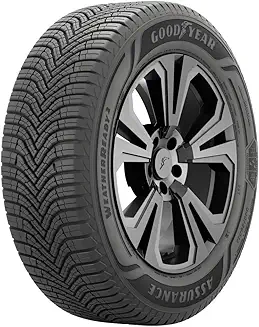
- Goodyear Assurance WeatherReady 2— Best Wet Braking / All-Weather
Best Hyundai Kona Tires — Compared
All five tires ranked across type, warranty, and our expert score.
| # | Tire Name | Type | Warranty | Best For | Score | |
|---|---|---|---|---|---|---|
| 1 | Michelin CrossClimate2 Editor’s Choice | All-Weather | ~70,000 mi | Best Overall | 4.8 | See Latest Price |
| 2 | Kumho Solus TA51a Budget Pick | Grand Touring AS | 75,000 km | Best Budget | 4.4 | See Latest Price |
| 3 | Continental ExtremeContact DWS06 Plus Top Pick | UHP All-Season | 50,000 mi | Best Premium | 4.7 | See Latest Price |
| 4 | Bridgestone Turanza QuietTrack | Grand Touring AS | 80,000 mi | Best Durability | 4.6 | See Latest Price |
| 5 | Goodyear Assurance WeatherReady 2 | Grand Touring AS | 60,000 mi | Best Wet Braking | 4.6 | See Latest Price |
Detailed Reviews
Full breakdown of each tire — ratings, pros, cons, and our expert verdict.
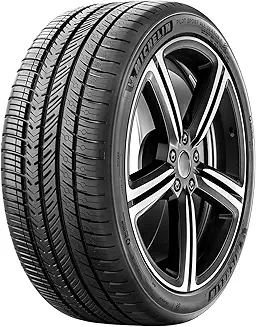
Michelin CrossClimate2
Pros
- 3PMSF severe snow certification from an external standardized test alongside V-Formation directional tread — the externally validated winter capability that standard M+S all-season tires including the OEM Kumho Solus TA51a cannot match, making this the tire that r/HyundaiKonaForum members in four-season climates specifically recommend as the upgrade that actually resolves the snow confidence gap in the factory tires
- PIANO Noise Reduction Tuning alongside Thermal Adaptive compound that stays flexible from below freezing to summer heat — the dual engineering that Tire Rack long-term owners running over 40,000 miles document as producing even wear and retained wet grip through the tire’s full life, rather than the gradual performance decline that simpler compound alternatives show as tread wears below 5/32″
- Available in Kona-compatible sizes including 215/55R18 and 235/45R18 for upper trims — covering the Kona’s six distinct factory sizes across a single product line with independent testing data confirming 70,000+ mile tread life that makes the premium per-tire price the lowest cost-per-mile option in this comparison
Cons
- Highest upfront cost per tire in this comparison — the all-weather compound and 3PMSF certification command a price premium over the Kumho budget pick and Bridgestone durability alternative that Kona owners on a tight replacement budget will find difficult to justify without calculating the total cost-per-mile across the tire’s documented lifespan
- Some Kona EV owners report reduced traction during hard launches from a stop — the V-Formation directional tread’s winter-optimized grip pattern is less suited to the Kona Electric’s instantaneous maximum torque delivery at zero RPM than summer-compound or specifically EV-optimized alternatives designed for the electric drivetrain’s specific launch load profile
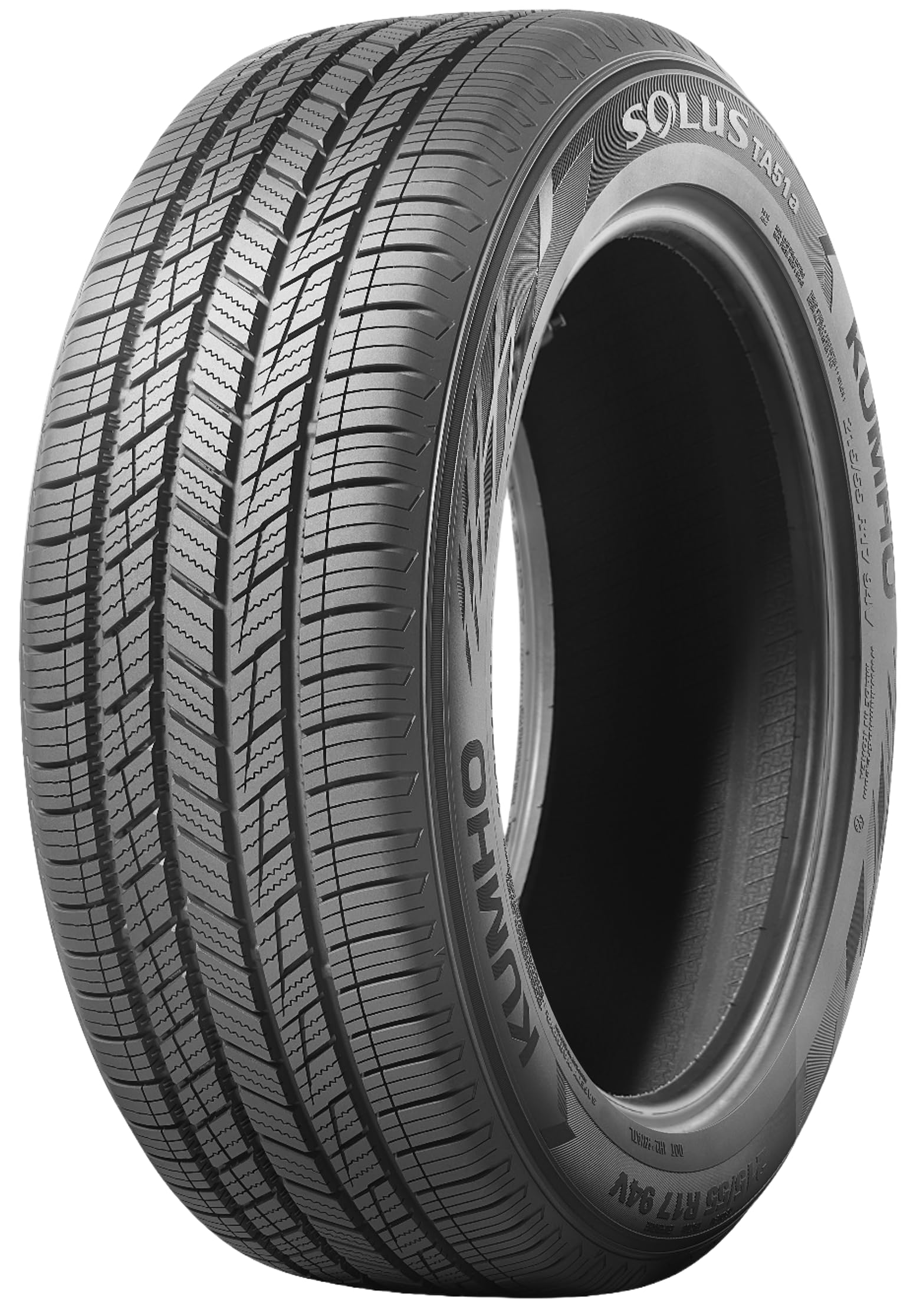
Kumho Solus TA51a
Pros
- OEM fitment on multiple Kona 215/60R17 and 215/55R18 configurations — the factory validation that confirms load index, speed rating, and noise profile compatibility with the Kona’s suspension geometry without the adaptation research that non-OEM alternatives require for first-time replacement buyers unfamiliar with tire specifications
- Resonance Noise Canceller technology reduces primary groove noise at motorway speeds — the specific acoustic engineering that r/HyundaiKonaForum members replacing worn OEM Kumhos with the TA51a report produces a quiet ride that matches the stock experience at a significantly lower per-tire cost than Michelin or Continental premium alternatives
- 3D interlocking sipes for improved braking and cornering stability alongside four wide drainage grooves — the practical wet traction design that provides adequate hydroplaning resistance for urban and suburban Kona driving in moderate rain without the premium wet performance engineering of the CrossClimate2 or DWS06 Plus
Cons
- Light snow performance is adequate but not impressive — the M+S-only designation with no 3PMSF certification means the Kumho Solus TA51a does not meet externally validated severe snow service standards, which is why r/HyundaiKonaForum threads specifically recommend the CrossClimate2 as the snow-confidence upgrade for Kona owners who discovered the OEM tire’s winter limitations
- Treadwear warranty of 75,000 km (approximately 46,600 miles) is the shortest in this comparison on a per-kilometer basis — Kona owners who cover 15,000+ annual miles will exhaust the Kumho’s warranty faster than the Bridgestone 80,000-mile or Michelin 70,000+ mile alternatives, making the per-tire cost savings less meaningful when calculated across a multi-year ownership period
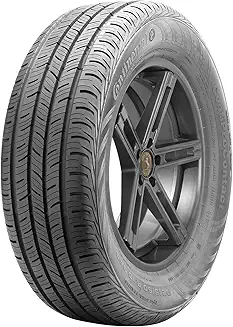
Continental ExtremeContact DWS06 Plus
Pros
- SportPlus Technology with X-Sipe Technology improves brake and cornering response on slippery surfaces — confirmed by multiple independent tests including The Drive’s year-round evaluation as producing class-leading wet braking that Kona N Line owners specifically describe as the primary reason they chose this tire over the Michelin CrossClimate2 for performance-oriented mixed-condition driving
- DWS wear indicators (Dry, Wet, Snow capability markers) integrated into the tread — the practical monitoring feature that allows Kona N Line owners to track when the tire transitions between capability levels as it wears, providing specific knowledge about remaining performance margins rather than the binary “replace or not” information standard tread wear indicators provide
- Available in 235/45R18 and 235/45R19 for Kona N Line and N performance trim configurations — the specific UHP sizing that covers the N Line’s wheel specifications with a tire compound designed for the higher lateral forces and braking loads the performance variant’s sport-tuned suspension and larger wheels generate relative to standard Kona trims
Cons
- Not recommended for serious winter conditions despite the DWS snow marker — the UHP compound’s cold-temperature stiffening at sustained below-freezing temperatures reduces the snow grip that the tread pattern provides, making this tire less suitable for Kona N Line owners in northern states who use the vehicle year-round without a dedicated winter tire swap
- Firmer ride than grand touring compound alternatives — the stiffer sidewall that produces precise steering response and lateral grip also transmits more road texture into the Kona’s cabin, which Kona N Line owners who primarily use the vehicle for comfortable highway commuting will notice as a daily comfort trade-off versus the Michelin or Bridgestone alternatives
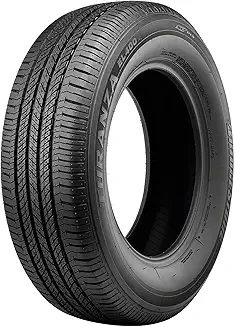
Bridgestone Turanza QuietTrack
Pros
- 80,000-mile treadwear warranty — the longest in this comparison by a significant margin, backed by Consumer Reports owner survey data showing high satisfaction among durability-focused drivers and Tire Rack tester confirmation of the QuietTrack’s well-balanced handling that makes the extended warranty realistic for standard Kona commuters who rotate at recommended intervals
- ComfortCruise technology that optimizes tire cavity shape to reduce vibration alongside quiet highway ride — the noise reduction engineering that Tire Rack testers describe as producing a well-balanced, comfortable character for the Kona’s composed highway ride profile, quieter than most OEM tires at sustained motorway speeds without ContiSilent-level acoustic foam investment
- Fits base Kona sizes including 205/60R16 and 215/55R17 — the smaller diameter coverage that extends this tire’s availability to entry-level Kona trims whose base wheel sizes aren’t available in every performance-oriented alternative in this comparison, making it accessible to the broadest Kona owner demographic
Cons
- Wet traction falls slightly behind Michelin and Continental alternatives — Tire Rack comparative testing and YouTube reviewer evaluations both confirm the QuietTrack’s wet performance as good but not class-leading, which matters specifically for Kona owners in rainy climates where wet braking distance differences between average and excellent have direct safety implications
- Ride can feel firm over rough urban surfaces despite the comfort-focused positioning — the same compound stiffness that produces the precise steering feel Tire Rack testers praise also transmits more road texture than the softest touring alternatives on rough city pavement, which Kona owners who primarily commute on pothole-heavy urban surfaces will notice at lower speeds
Goodyear Assurance WeatherReady 2
Pros
- Stopped 5.1 feet shorter than the Michelin CrossClimate2 in independent wet surface comparative testing alongside completing dry handling courses 0.73 seconds faster — the specific measurable performance advantage that makes the WeatherReady 2 the correct choice for Kona owners in rain-heavy climates where wet braking distance has direct daily safety implications rather than seasonal relevance
- 3PMSF severe snow certification alongside AquaTred Technology with Evolving Traction Grooves that maintain wet braking performance as the tire wears — the design mechanism that prevents the gradual wet performance decline that standard all-season tires show as tread depth drops, maintaining the tire’s key wet stopping advantage through its full 60,000-mile warranty life
- 60-day satisfaction guarantee alongside availability in 58 sizes including Kona-compatible 215/55R17, 215/55R18, and 235/45R18 — the broad sizing coverage and return protection that reduces purchase risk for Kona owners trying this newer compound for the first time without the decade of owner feedback data available for the Michelin CrossClimate2
Cons
- Highest rolling resistance of all-weather tires tested in its class per TyreReviews data — the AquaTred compound’s aggressive water evacuation design creates more rolling friction than the CrossClimate2 or Bridgestone alternatives, which may marginally reduce Kona fuel economy that Kona ICE owners tracking monthly fuel costs will notice over sustained high-mileage ownership
- 60,000-mile warranty is the shortest in this comparison — the all-weather compound’s softer chemistry for cold-temperature flexibility reduces tread longevity relative to the Bridgestone 80,000-mile or Michelin 70,000-mile alternatives, making this tire the higher annual replacement cost option for Kona owners who cover 15,000+ miles annually despite its lower per-tire sticker price
???? Can’t Decide?
Our Top 2 Picks — Head to Head
Both are excellent. Here’s how to choose between them.
- 3PMSF certification from an external standardized test alongside PIANO Noise Reduction Tuning — the all-weather capability backed by winter testing validation that the Kumho OEM alternative’s M+S designation cannot provide for Kona owners who need genuine four-season confidence
- Independent tread life testing confirmed 70,000+ miles on a single set — the most verified longevity data in this comparison, making the higher per-tire cost the lower cost-per-mile option across the warranty period for Kona owners who calculate total ownership cost
- Thermal Adaptive compound maintains performance from below-freezing to summer heat — the temperature-range flexibility that produces consistent grip through seasonal transitions that single-compound alternatives cannot replicate on one tire set year-round
- Stopped in shorter wet braking distances than the CrossClimate2 in independent comparative tests per The Drive evaluation — the specific wet safety advantage that Kona N Line owners in rainy climates rank above winter snow capability in their replacement tire criteria
- DWS wear indicators provide real-time performance status as tread wears — the monitoring capability that tells Kona N Line owners specifically when their tire transitions between Dry-Wet-Snow capability levels, not just when replacement is needed
- Precise, communicative steering feedback that Kona N Line and performance trim owners specifically document as sharper than OEM Pirelli P Zeros — the handling character the N Line’s sport-tuned suspension is designed to reward
How to Choose the Right Tires for Your Hyundai Kona
Six factors specific to the Kona’s multi-trim, multi-size compact crossover platform.
Six Distinct Sizes Across Trims
The Kona uses 205/60R16 on base trims, 215/55R17 and 215/60R17 on mid trims, 215/55R18 on upper trims, 235/45R18 on upper and N Line configurations, and 235/45R19 on N Line AWD. Always confirm your exact size on the driver-side door jamb sticker — never assume from the model name. Installing the wrong size affects TPMS calibration and ABS calibration on a vehicle whose safety systems are size-dependent.
All-Season vs. All-Weather for Kona Owners
Standard M+S all-season tires like the OEM Kumho Solus TA51a are not rated for severe snow service. The 3PMSF Three-Peak Mountain Snowflake on the CrossClimate2 and WeatherReady 2 requires passing an external standardized snow traction test. If you drive in temperatures below 7°C or on snow-covered roads, M+S alone is insufficient — and r/HyundaiKonaForum specifically documents this limitation in OEM Kumho feedback threads.
Kona Electric Tire Considerations
The Kona Electric’s instantaneous maximum torque at zero RPM places higher demands on tire compound deformation resistance during launches than ICE variants. This makes tires designed for EV applications — or those with stiffer sidewall constructions — preferable for Kona Electric owners. Some CrossClimate2 Kona EV owners report reduced traction during hard launches specifically because of the all-weather compound’s softer chemistry optimized for cold-temperature flexibility rather than EV torque management.
Load Index and Speed Rating Compliance
The Kona specifies a minimum load index and speed rating on the door jamb sticker that replacement tires must match or exceed. A 215/55R18 95V means the tire carries 1,521 lbs at up to 149 mph. Installing a tire with a lower load index than factory spec creates a structural safety issue and may affect insurance coverage in at-fault accidents where tire specification is investigated by adjusters.
Calculate Cost Per Mile, Not Price Per Tire
The Kumho Solus TA51a at ~$110/tire over 46,600 miles costs $0.00236 per mile. The Michelin CrossClimate2 at ~$185/tire over 70,000 miles costs $0.00264 per mile. The gap is $0.00028 per mile — approximately $4 difference per 15,000-mile annual driving year. For Kona owners who compare only sticker prices, this calculation frequently reverses the apparent budget choice.
TPMS Recalibration After Installation
The Hyundai Kona’s tire pressure monitoring system requires reset after mounting new tires. Skipping this step triggers dashboard warnings and inaccurate pressure readings that Kona owners mistake for tire defects when they are actually TPMS recalibration failures. Most mounting shops handle this as part of the standard installation process — confirm it was completed if a warning light appears within the first day after installation.
✅ Pro Tips
Quick Buying Checklist Before You Order
Confirm your exact size on the driver-side door jamb sticker — the Kona runs six distinct factory sizes across its trim lineup. Installing the wrong size affects TPMS calibration and ABS function on a vehicle whose safety systems are tire-size-dependent.
Distinguish between M+S all-season and 3PMSF all-weather before buying — if you drive in temperatures below 7°C or encounter snow, M+S alone (including the OEM Kumho) is not externally validated for severe winter conditions. Look for the snowflake symbol.
Rotate every 6,000–7,500 miles and keep dated receipts — the Bridgestone 80,000-mile, Goodyear 60,000-mile, and Kumho 75,000 km warranties all require documented rotation to process tread life claims. Undocumented rotation voids warranty coverage on every tire in this comparison.
Confirm TPMS recalibration was completed after installation — a dashboard warning light appearing within 24 hours of new tires indicates the recalibration was skipped, not a defective tire. Most shops handle this as standard, but Kona owners should confirm before driving away.
Related Guides
Other Hyundai Kona Models
Frequently Asked Questions
What is the OEM tire that comes on the Hyundai Kona?
Depending on the trim, the Kona ships with Kumho Solus TA51a, Hankook Kinergy GT H436, Hankook Ventus S1 Noble2 H452, or Goodyear Eagle Touring tires. The Kumho Solus TA51a is the most common OEM fitment on standard trim levels in the 215/60R17 and 215/55R18 sizes. Confirm your specific OEM fitment on the door jamb sticker before selecting a replacement.
Which tire size fits the Hyundai Kona?
The Kona uses several sizes across its model range. Common fitments include 205/60R16 on base trims, 215/55R17 and 215/60R17 on mid trims, 215/55R18 on upper trims, and 235/45R19 on the N Line AWD. Always confirm your exact size on the driver-side door jamb sticker — never order based on the model name alone since sizes vary across trim years.
Is the Michelin CrossClimate2 worth the higher price for Kona owners?
For most Kona owners, yes. Independent testing confirmed tread life exceeding 70,000 miles, making the higher per-tire cost the lower cost-per-mile option compared to the Kumho budget alternative across the warranty period. The CrossClimate2 also delivers genuine all-weather 3PMSF winter capability that the OEM Kumho M+S designation cannot provide — addressing the snow confidence gap that r/HyundaiKonaForum members document with factory tires.
Does the Goodyear WeatherReady 2 outperform the Michelin CrossClimate2?
In wet braking specifically, yes — independent comparative testing stopped the WeatherReady 2 5.1 feet shorter than the CrossClimate2 on wet surfaces and completed dry handling courses 0.73 seconds faster. For Kona owners in rain-heavy climates like the Pacific Northwest or UK, this wet braking advantage is the more relevant safety margin. In snow depth and sustained cold-weather performance, the CrossClimate2 holds a measurable advantage.
How long do tires typically last on the Hyundai Kona?
With rotation every 6,000 to 7,500 miles and correct inflation, quality tires last 46,000 to 70,000-plus miles on the Kona. The Bridgestone Turanza QuietTrack carries an 80,000-mile warranty, the Goodyear WeatherReady 2 covers 60,000 miles, and the Kumho Solus TA51a warranties 75,000 km. Actual life depends on driving habits, rotation frequency, and whether you maintain factory-specified PSI.
Can I install winter tires on my Hyundai Kona instead of all-weather tires?
Yes. Dedicated winter tires like the Michelin X-Ice Snow or Bridgestone Blizzak WS90 outperform any all-weather tire in deep snow and ice. They require seasonal swapping and a separate wheel set. For Kona owners with moderate winters, an all-weather tire with 3PMSF rating is a practical compromise that eliminates seasonal changes — r/Hyundai specifically recommends this approach for owners who cannot do seasonal swaps.
Do new tires affect the Hyundai Kona Electric’s range?
Yes — tires with lower rolling resistance improve EV range, while higher-resistance compounds reduce it. The Goodyear WeatherReady 2 has notably higher rolling resistance than competitors per TyreReviews data, which may reduce Kona Electric range measurably. The Kumho Solus TA51a and Michelin CrossClimate2 perform better for range preservation. For the Kona Electric specifically, verify rolling resistance ratings before selecting an all-weather alternative.
???? Final Verdict
Our Top Hyundai Kona Tire Recommendations for 2026
The Michelin CrossClimate2 earns the top position for most Kona owners — 3PMSF all-weather certification, independent tread life data surpassing 70,000 miles, and consistent recommendation across r/HyundaiKonaForum threads make it the most proven upgrade from OEM Kumho tires in four-season climates. Kona N Line owners who bought the performance variant for its sport-tuned chassis should choose the Continental ExtremeContact DWS06 Plus for the sharper wet and dry handling precision its UHP compound provides. Kona owners in rain-heavy climates where wet braking distance is the daily priority — not seasonal winter capability — should seriously evaluate the Goodyear Assurance WeatherReady 2 and its documented 5.1-foot wet stopping advantage over the CrossClimate2.