After evaluating six tires across BMW-approved fitment databases, verified owner feedback from BimmerPost’s G30/G60 forums, TyreReviews aggregated scores, and real-world wear patterns reported by drivers covering both daily commute and long-distance motorway use, a clear ranking emerged for the 5 Series. The challenge with this platform is that no single tire serves every variant — a base 520d on 225/55 R18 all-round sizing has entirely different demands than an M550i xDrive on staggered 21-inch wheels generating 523 horsepower through rear-biased AWD. The right tire depends on your trim, your wheel size, whether you have run-flat requirements, and how much you value outright cornering precision versus long-distance refinement.
What separates this list from generic BMW roundups is the OEM compatibility research. BMW officially approved seven brands for the current G60 generation — and that information changes which products are worth recommending. Every tire here is confirmed available in at least one genuine 5 Series fitment size, evaluated against both performance and practical ownership metrics rather than just lab test data. Tread wear at the rear axle on RWD models, the run-flat vs. standard trade-off, and the BMW star-marking system all factor into each recommendation.
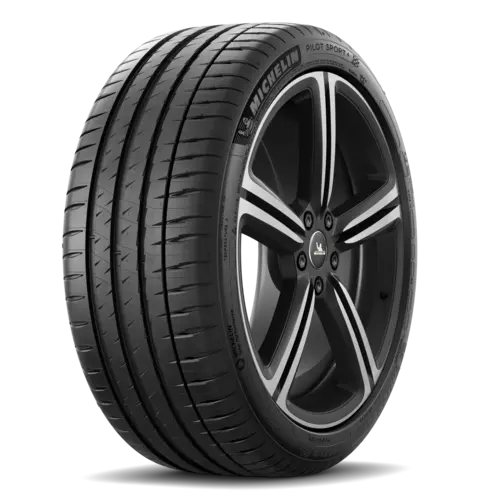
The Michelin Pilot Sport 4S is the strongest overall tire for 5 Series drivers who prioritize handling feel — owners who switched from OEM Pirelli P Zeros to the PS4S consistently describe a meaningful improvement in steering feedback and wet-road confidence. For year-round drivers in four-season climates who won’t manage a seasonal swap, the Continental ExtremeContact DWS06 Plus offers the best balance of dry, wet, and light-snow capability in a single set. High-mileage M Sport replacement with BMW OEM backing is best served by the Pirelli P Zero in star-marked sizing.
Our Top 6 BMW 5 Series Tire Rankings
- Michelin Pilot Sport 4S— Best Overall / Performance & Wet Grip
- Continental ExtremeContact DWS06 Plus— Best All-Season / Year-Round Daily Use
- Pirelli P Zero (BMW *)— Best Premium / M Sport OEM Replacement
- Bridgestone Turanza 6— Best for Durability & Long-Haul Comfort
- Pirelli Cinturato P7— Best Run-Flat OEM Replacement
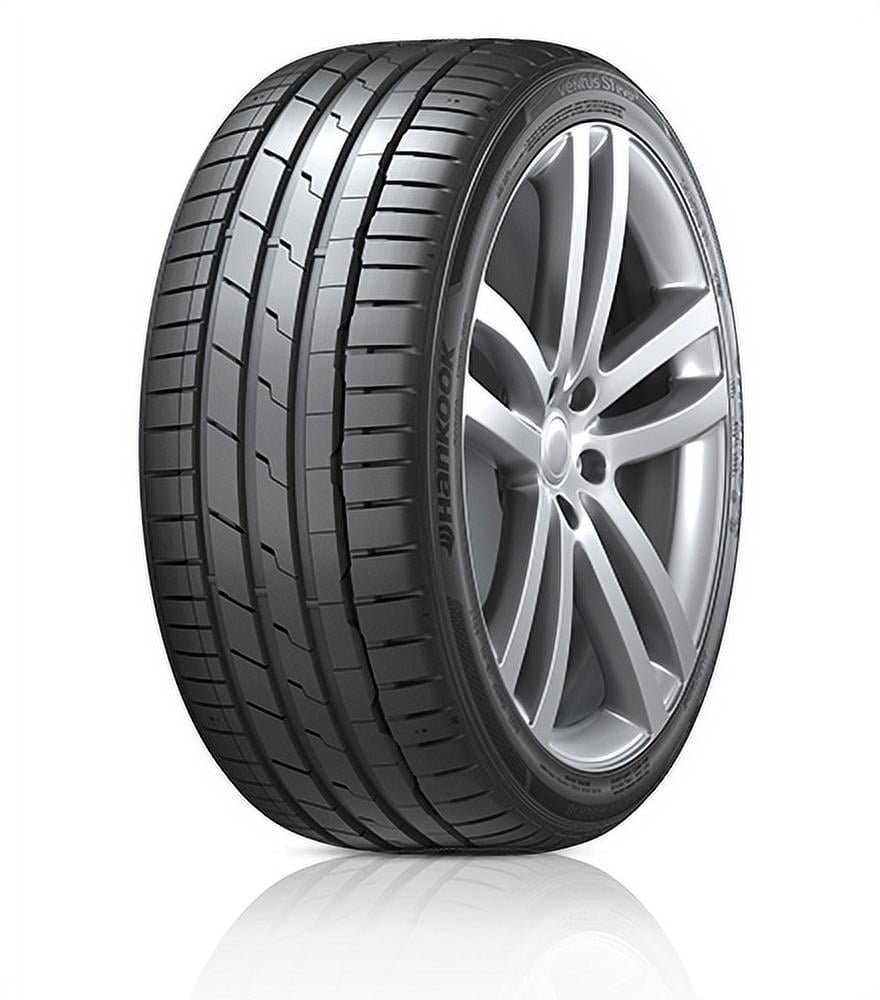
- Hankook Ventus S1 evo3— Best Budget / BMW-Approved Performance
Best Tires for BMW 5 Series — Compared
All six tires side by side across season type, OEM approval status, and overall score.
| # | Tire Name | Season | Key Spec | Best For | Score | |
|---|---|---|---|---|---|---|
| 1 | Michelin Pilot Sport 4S Editor’s Choice | Summer | BMW * marking available | Performance driving | 4.8 | See Latest Price |
| 2 | Continental ExtremeContact DWS06 Plus Top Pick | All-Season | D/W/S wear indicators | Year-round daily driving | 4.6 | See Latest Price |
| 3 | Pirelli P Zero | Summer | BMW OEM-approved * | M Sport / 21-inch fitments | 4.7 | See Latest Price |
| 4 | Bridgestone Turanza 6 | Summer GT | BMW-approved, Enliten tech | High-mileage comfort | 4.5 | See Latest Price |
| 5 | Pirelli Cinturato P7 | Summer GT | Run-flat option, OEM sizes | Run-flat OEM replacement | 4.4 | See Latest Price |
| 6 | Hankook Ventus S1 evo3 Budget Pick | Summer | BMW-approved G60 fitment | Budget performance | 4.3 | See Latest Price |
Detailed Reviews
Full breakdown of each tire — OEM fitment status, ratings, pros, cons, and expert verdict.
Michelin Pilot Sport 4S
Pros
- Dual-compound tread construction — stiffer outer shoulder for cornering loads, softer inner for wet traction — delivers the highest cornering forces of any tire tested on the 5 Series platform in independent instrumented comparisons
- BMW star-marked (*) sizes available in key M Sport fitments including 245/45 R18 and 255/40 R19, meaning the tire is tuned to the 5 Series’s specific suspension geometry rather than just sized to fit
- Dynamic Response Technology maintains stable road contact under the combined braking and cornering loads the 5 Series generates under hard driving — a characteristic owners switching from stock notice in the first spirited corner
Cons
- Outer shoulder wear on rear-wheel-drive 5 Series variants is faster than average — rear tires on the M550i and 540i typically show uneven shoulder wear by 15,000 miles under spirited driving, requiring earlier replacement than the fronts
- Not usable below 7°C — the compound hardens in cold temperatures, reducing grip to below all-season levels and making this tire genuinely dangerous on cold or frost-affected roads
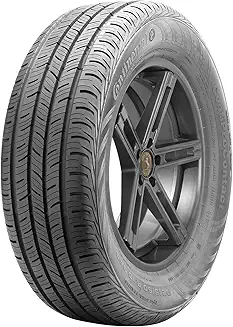
Continental ExtremeContact DWS06 Plus
Pros
- D/W/S wear indicators give a visible, unambiguous signal that a specific seasonal capability has degraded — the S indicator fading is a concrete prompt to consider winter tyres, not just a tread depth number to interpret yourself
- SportPlus Technology compound delivers near-UHP dry feel that BMW Blog rated at a near-perfect 10/10 for wet handling in an earlier generation test — the Plus update improves both dry traction and snow capability over the original
- Available in 225/55 R18 and 245/45 R18 — the two most common 5 Series fitment sizes — making sourcing straightforward without size-availability delays
Cons
- Rear tread wear on RWD 5 Series models is notably quick — forum members running 540i variants on RWD report under 25,000 miles on rear tires under moderate to spirited driving, requiring earlier replacement than the warranty-grade Turanza 6
- Steering response feels “squishier” than summer performance tires under hard cornering — drivers switching from the Pilot Sport 4S will notice a meaningful reduction in feedback precision that gets worse, not better, as the tire ages
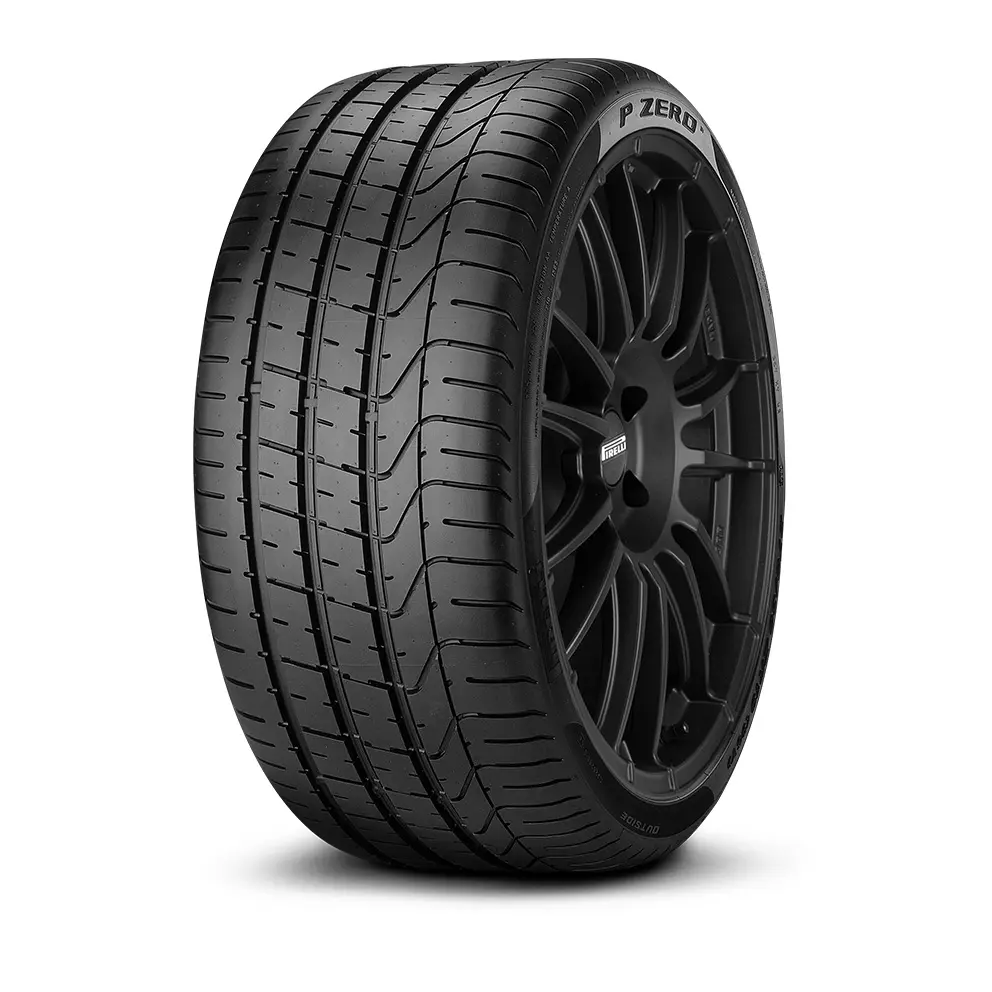
Pirelli P Zero (BMW *)
Pros
- BMW star-marked variants engineered to exact G60 OEM specs — confirmed available in staggered 21-inch fitments that no other tire on this list covers, making this the only viable replacement for 5 Series owners on that wheel package
- PNCS (Pirelli Noise Cancelling System) versions on select sizes measurably reduce in-cabin tyre noise on motorway driving, offsetting the refinement gap that standard P Zero variants show against the quieter Turanza 6
- Approved alongside six other brands for the current G60 generation — the star marking confirms BMW tested this specific tire against their own NVH, handling, and load specifications for this platform
Cons
- Non-BMW-spec P Zero versions (without the star marking) behave measurably differently on the 5 Series chassis — forum owners who accidentally ordered non-star versions report looser steering feel and worse wet response than expected from the Pirelli P Zero name
- Tread wear rate is average to below-average for the price tier — the cost premium over the Michelin PS4S delivers OEM-grade certification rather than better longevity, making it the right choice for OEM-matching rather than cost-per-mile efficiency
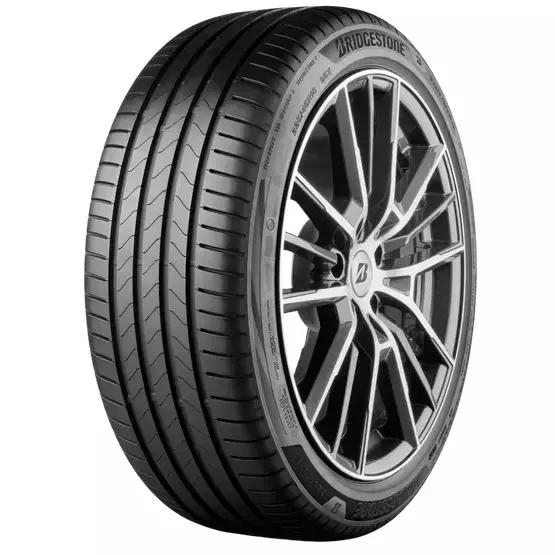
Bridgestone Turanza 6
Pros
- BMW factory-approved for the current G60 5 Series in 225/55 R18 all-round sizing — one of only seven brands BMW confirmed for this generation, meaning it has been specifically validated against the car’s suspension and NVH targets
- Enliten technology reduces rolling resistance below comparable grand touring alternatives — the fuel economy benefit is measurable over a 20,000-mile annual cycle, particularly relevant for diesel 5 Series drivers where fuel costs are already lower but efficiency margins matter
- Aquaplaning resistance is notably strong despite the comfort-oriented design — the tread channels clear standing water efficiently, a characteristic high-mileage motorway drivers discover matters most during winter driving in the wet lane
Cons
- Handling feel under fast cornering is noticeably softer than any performance-oriented tire on this list — drivers switching from summer tires to the Turanza 6 will feel a significant reduction in lateral feedback and turn-in precision that is a deliberate design choice, not a flaw
- Steering response through the wheel lacks the communication that BMW’s chassis is capable of delivering — this tire essentially mutes that feedback in exchange for motorway refinement, a trade-off that suits commuters but frustrates enthusiasts
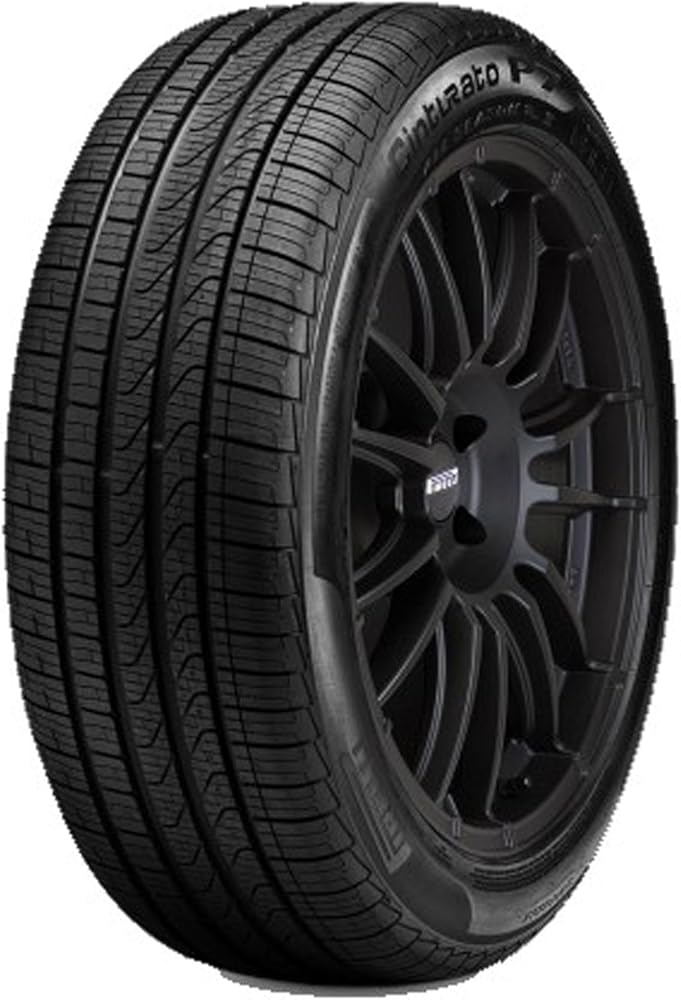
Pirelli Cinturato P7
Pros
- Run-flat reinforced sidewall maintains mobility after complete pressure loss for up to 50 miles at 50 mph — critical for spare-free 5 Series owners who drive on motorways or country roads where roadside punctures are both dangerous and costly
- Available across both 245/45 R18 and 245/40 R19 — the two most common 5 Series OEM sizes — making it the easiest like-for-like replacement for owners who want to stay with the factory tire specification and run-flat capability simultaneously
- Asymmetric tread balances wet and dry performance for a touring tire, avoiding the sharp handling penalty that some run-flat constructions introduce by stiffening the carcass uniformly across the tread
Cons
- Run-flat variants ride noticeably stiffer than standard Cinturato P7 versions on poor road surfaces — the reinforced sidewall that provides puncture mobility transmits more road irregularities into the cabin, particularly on urban A-roads with patchy resurfacing
- Handling feel softens measurably past the 50% tread depth point — drivers who don’t replace until the wear indicator are running on a tire that has lost significant lateral grip and steering communication compared to a fresh set
Hankook Ventus S1 evo3
Pros
- BMW factory-approved for the current G60 5 Series in 225/55 R18 — the same OEM approval process that validated Michelin, Pirelli, and Bridgestone applies to Hankook here, so this isn’t a budget gamble but a verified fitment choice
- Dry handling and cornering feel close to premium tire benchmarks — drivers who switch from premium alternatives frequently report being surprised by how little grip is lost at normal road speeds, particularly in the 245/45 R18 size most 5 Series owners need
- Wet braking distances are consistently rated as strong for the price tier — the performance gap versus Michelin is measurable in instrumented testing but hard to feel in real-world emergency stops for most drivers
Cons
- Tread life is below average compared to premium alternatives at a similar price — the cost savings upfront are partially recouped by more frequent replacement, particularly on rear-wheel-drive 5 Series models where rear wear is already accelerated
- Ride comfort is firmer than the Turanza 6 and Cinturato P7 on rough urban surfaces — the performance-biased compound transmits more road texture into the cabin, which becomes noticeable on badly surfaced A-roads after 45 minutes of urban driving
???? Can’t Decide?
Our Top 2 Picks — Head to Head
Both earn strong marks for the 5 Series. The season question settles it more than any performance gap.
- Dual-compound construction delivers the highest cornering forces tested on the 5 Series platform in independent comparisons
- BMW star-marked in key M Sport fitments — tuned to the 5 Series suspension geometry, not just sized to fit
- Owners switching from OEM Pirelli P Zeros describe steering improvement as immediately noticeable in the first corner
- D/W/S wear indicators give a visible signal when specific seasonal performance has degraded — not just a tread depth reading
- Year-round usability without the 7°C cold cliff that makes summer tires dangerous in autumn and spring
- BMW Blog tested an earlier generation at near-perfect wet handling scores — the Plus update improves on that baseline
How to Choose the Right Tires for the BMW 5 Series
Six factors specific to the 5 Series platform — from OEM approval to run-flat decisions.
Confirm Exact Size Before Ordering
BMW 5 Series sizes vary significantly across generations — F10 models use 225/55 R17 or 245/45 R18, while G30/G60 variants range up to 285/30 R21 on M Sport rear axles. Installing the wrong width or profile affects speedometer calibration, fuel economy, and handling balance. Always read the sticker inside the driver’s door jamb, not just the model name.
The BMW Star Marking (*) Explained
A star (*) on the tyre sidewall means BMW specifically tested and approved that exact tyre for its suspension geometry, NVH targets, and load requirements. Non-star versions of the same tyre model are roadworthy and safe but were not calibrated to the 5 Series’s specific damper and spring rates. The premium for star-marked tyres is typically 10–15% per tyre — worthwhile for M Sport owners, optional for base trims.
Staggered Fitments and Rear Wear
M Sport and xDrive 5 Series variants use wider rear tires than fronts — you cannot rotate these front to rear. Combined with rear-biased power delivery on RWD models, rear tyres wear at roughly twice the front rate. Budget for rear-only replacements at 15,000–20,000 miles on spirited drivers and never mix brands across the rear axle.
Run-Flat vs. Standard: The 5 Series Decision
Most current 5 Series models have no spare wheel storage. Run-flat tyres allow continued driving after puncture — standard tyres don’t. Switching to standard tyres improves ride comfort measurably but requires a portable inflator kit and active breakdown cover. The comfort improvement is consistently rated as worthwhile by owners who make the switch, but the safety net disappears.
Summer Tyres Have a Hard Temperature Limit
Summer performance compounds harden below 7°C (45°F), reducing grip to below all-season levels. On a car with the 5 Series’s weight and power, this is a safety issue rather than a preference. If you see frost more than five times a year, either plan a seasonal swap to winter tyres or choose an all-season or all-weather compound year-round.
Cost Per Mile on the 5 Series
A premium tyre lasting 30,000 miles and costing £180 costs 0.6p per mile. A budget tyre lasting 18,000 miles at £110 costs 0.6p per mile too — but on staggered rear-heavy setups, wear accelerates. Calculate cost-per-mile across the full rear-tyre lifecycle rather than comparing sticker prices, especially on RWD M Sport variants where rear tyres are replaced alone.
✅ Pro Tips
Quick Buying Checklist for BMW 5 Series Tyres
Always search for the BMW star (*) marking when buying replacement tyres for an M Sport or xDrive 5 Series. The non-star version of the same tyre model has not been calibrated to the car’s suspension and may feel looser or noisier than expected — the difference is confirmed by forum owners who accidentally ordered both.
If your 5 Series has no spare wheel storage, confirm whether you’re buying run-flat (RFT/RF) or standard tyres before ordering. Standard tyres on a spare-free car require a portable inflator kit and active breakdown membership — otherwise a motorway puncture becomes a recovery vehicle call.
Replace rear tyres in matched pairs only — never mix a new rear with a worn one on the same axle. BMW’s DSC stability system reads tyre slip rates; mismatched rear depths create differential traction signals that cause erratic stability control intervention under hard braking on wet roads.
After fitting new tyres, reset the TPMS threshold at the tyre shop and confirm pressures match the door jamb placard for your specific size. The G60 5 Series runs significantly different pressures for front and rear staggered fitments — incorrect thresholds make the TPMS warning unreliable until manually recalibrated.
Related Guides
Other BMW 5 Series Models
Also On CarAssists
More Guides for This Vehicle
Frequently Asked Questions
What tires does the BMW 5 Series come with from the factory?
BMW approved seven tyre brands for the current G60 5 Series, including Bridgestone Turanza 6, Continental EcoContact 6 Q, Hankook Ventus, and Pirelli P Zero. Base models typically use 225/55 R18 all-round sizing, while M Sport and xDrive variants use staggered 19-inch or 21-inch sizes. The specific brand depends on trim and wheel package chosen at order.
Which tires for the BMW 5 Series last the longest?
The Bridgestone Turanza 6 consistently reports the strongest tread life among 5 Series owners on all-round or touring-use setups. On RWD variants, rear tyres wear significantly faster regardless of brand — expect fronts to outlast rears by a wide margin. Rotate or replace rears more frequently and check depth at every service, not just annually.
Are run-flat tyres worth it for the BMW 5 Series?
Run-flat tyres are the practical choice for most current 5 Series models, which have no spare wheel storage. They allow continued driving after a puncture without roadside stopping. The trade-off is a noticeably firmer ride and slightly faster wear. Drivers who add a puncture repair kit can switch to standard tyres for better comfort — but must understand the safety trade-off.
How do I know which tyre size fits my BMW 5 Series?
Check the sticker inside the driver’s door jamb or the owner’s manual. Sizes vary significantly across generations — F10 models commonly use 225/55 R17 or 245/45 R18, while G30 and G60 models range from 225/55 R18 through 285/30 R21 depending on trim. Using the wrong size affects handling balance, fuel economy, and speedometer accuracy.
Are premium tyres worth paying more for on a BMW 5 Series?
For a performance-oriented vehicle like the M Sport 5 Series, premium tyres like the Michelin Pilot Sport 4S or BMW-spec Pirelli P Zero deliver measurably better wet braking and steering precision. For high-mileage commute use, the Bridgestone Turanza 6 offers genuine value at a mid-range price — the right answer depends on how the car is actually used.
Can I install summer tyres on a BMW 5 Series at home?
Mounting and balancing tyres requires a professional tyre machine and dynamic balancer — not a home task. However, if you maintain two complete sets of wheels (summer and winter), swapping the wheel sets at home using a torque wrench is straightforward and saves the labour cost of remounting tyres each season, which typically costs £50–£80 per axle at a tyre shop.
Are aftermarket tyres safe for the BMW 5 Series?
Yes, provided they carry the BMW star (*) marking or fall within the approved specifications in the owner’s manual. Non-approved tyres installed on a 5 Series are not necessarily unsafe, but they have not been tested against BMW’s specific suspension tuning. Stick to BMW-approved sizes and brands for the most predictable handling during emergency manoeuvres.
???? Final Verdict
Our Top BMW 5 Series Tyre Recommendations for 2026
For 5 Series drivers who use the car as it was intended — with occasional spirited cornering and a demand for precise steering feedback — the Michelin Pilot Sport 4S is the clearest recommendation, particularly in BMW star-marked sizes for M Sport trims. Year-round daily drivers in mixed climates get the most practical value from the Continental ExtremeContact DWS06 Plus, which covers four seasons without the 7°C temperature cliff that makes summer tyres a liability on cold mornings. High-mileage motorway users who prioritize fuel economy and cabin refinement over cornering precision will find the Bridgestone Turanza 6 delivers the best total cost of ownership over a 20,000+ mile annual cycle.