After evaluating five tire options against Nissan Maxima-specific data from Discount Tire and Goodyear’s vehicle fitment tools, TyreReviews verified Maxima owner submissions, Reddit’s r/tires community, and multi-source analysis covering Consumer Reports, SimpleTire, and manufacturer documentation — cross-referenced against the Maxima’s three-generation size split (245/40R19 on 2016–2023 SR and Platinum, 245/45R18 on SV, and 225/55R17 on 2009–2015 models) — this guide addresses the specific tire challenge that makes the Nissan Maxima different from every other Nissan in this series. The Maxima is not a Sentra or an Altima with a nicer interior. It’s Nissan’s only large FWD performance sedan, running V-rated or W-rated UHP tire sizes from the factory at 19 inches on top trims — a specification that places it in the same tire category as European sport sedans, not economy commuters. The tire that works for a Sentra or Rogue is the wrong conversation entirely for a Maxima SR or Platinum owner.
What makes the Maxima tire decision genuinely complex is the gap between trim levels. A 2023 Maxima Platinum owner needs a 245/40R19 W-rated UHP all-season and has five meaningful choices. A 2015 Maxima SV owner needs a 225/55R17 and has an entirely different comparison set. This guide explicitly maps which products fit which generation and trim before evaluating performance, so the size error that is the single most common and expensive Maxima tire shopping mistake is addressed before the performance discussion begins.
The Continental ExtremeContact DWS06 Plus is the best overall tire for most Nissan Maxima owners — Continental’s own fitment tools list it for the Maxima, and it consistently earns the strongest wet grip feedback across automotive forums and r/tires discussions for a FWD performance sedan where wet traction is the primary safety concern. Maxima owners on older 17-inch or 18-inch wheel trims who prioritize maximum tread life should look at the Michelin Defender 2, which backs an 80,000-mile warranty at a quiet touring character suited to high-mileage daily driving. Budget-conscious Maxima owners who want a dedicated performance all-season at a lower price should consider the Falken Ziex ZE960 A/S with its 65,000-mile warranty and Flask Siping wet braking technology.
Our Top 5 Nissan Maxima Tire Rankings
- Continental ExtremeContact DWS06 Plus— Best Overall / UHP All-Season
- Michelin Defender 2— Best Tread Life / 17–18″ Trims
- Pirelli Cinturato P7 All Season Plus II— Best Premium Grand Touring
- Falken Ziex ZE960 A/S— Best Budget UHP
- GT Radial Maxtour LX— Best Long-Commute Value
Best Nissan Maxima Tires — Compared
All five tires ranked across season type, speed rating, tread warranty, and Maxima trim-level fitment compatibility.
| # | Tire | Speed Rating | Warranty | Best For | Score | |
|---|---|---|---|---|---|---|
| 1 | Continental ExtremeContact DWS06 Plus Editor’s Choice | W | 50K Miles | Overall / UHP Performance | 4.8 | See Latest Price |
| 2 | Michelin Defender 2 Top Pick | H/V | 80K Miles | Tread Life / 17–18″ Trims | 4.7 | See Latest Price |
| 3 | Pirelli Cinturato P7 All Season Plus II | V/W | 70K Miles | Premium Grand Touring | 4.6 | See Latest Price |
| 4 | Falken Ziex ZE960 A/S Budget Pick | H/V/W | 65K Miles | Budget UHP All-Season | 4.4 | See Latest Price |
| 5 | GT Radial Maxtour LX | H/V | 70K Miles | High-Mileage Commute Value | 4.3 | See Latest Price |
Detailed Reviews
Full breakdown of each tire — ratings, pros, cons, and our expert verdict for the Nissan Maxima’s FWD performance sedan platform.
Continental ExtremeContact DWS06 Plus
Pros
- Continental’s official fitment tools list it as a verified Maxima recommendation — not just a size match but a manufacturer-endorsed selection that eliminates the fitment uncertainty that comes with searching by size alone on a 245/40R19 application
- SportPlus Technology with asymmetric solid shoulder blocks handles the Maxima’s FWD understeer characteristics in wet corners — the outer shoulder compound stiffens under lateral load to provide the steering feedback that matters when the front tires are doing the driving and cornering simultaneously
- DWS tread indicator system worn into the compound signals remaining wet and snow capability — a practical feature on a performance sedan where tread wear progression directly affects the wet stopping distances that matter most for a FWD car in urban traffic
Cons
- 50,000-mile treadwear warranty on W-rated versions is the lowest in this comparison — Maxima owners with spirited driving habits who enjoy the car’s 300-horsepower character report wearing the rear fronts faster than the warranty suggests under regular performance use
- Sidewall flexibility at the limit reduces steering precision feedback compared to more rigidly constructed summer performance tires — an all-season compound trade-off that affects Maxima owners who specifically bought the sport-tuned suspension and want tire response to match
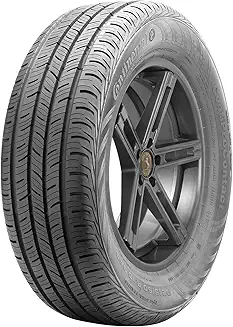
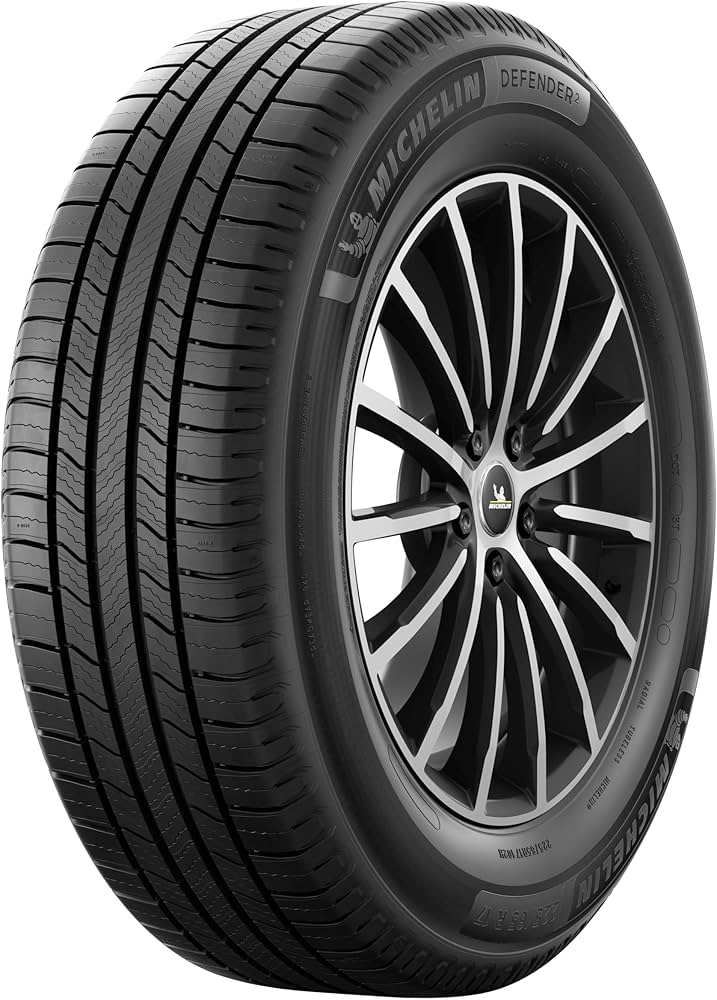
Michelin Defender 2
Pros
- 80,000-mile treadwear warranty backed by Michelin’s EverTread 2.0 compound — Consumer Reports independently validates the durability claim, which matters because warranty language is less meaningful without Consumer Reports’ real-world long-term testing confirmation behind it
- SipeLock technology maintains tread block rigidity under braking — on a FWD Maxima where the front tires manage both acceleration and braking forces, a tire that preserves its sipe geometry under load rather than allowing sipe walls to collapse maintains consistent wet grip across the tire’s lifespan
- MaxTouch 2.0 construction distributes braking, cornering, and acceleration forces evenly across the contact patch — a design specifically addressing the FWD force distribution challenge where all three inputs compete through the same two front tires
Cons
- Not currently available in 245/40R19 — the size that 2016–2023 Maxima SR and Platinum owners need is absent from the Defender 2’s size range, making this a recommendation specifically for older-generation Maxima owners on 17-inch and 18-inch wheel packages
- Handling sharpness is noticeably softer than the DWS06 Plus — Maxima owners who bought the car for the 300-horsepower VQ35DE engine and sport-tuned suspension will find the Defender 2’s touring character works against the platform’s performance intent
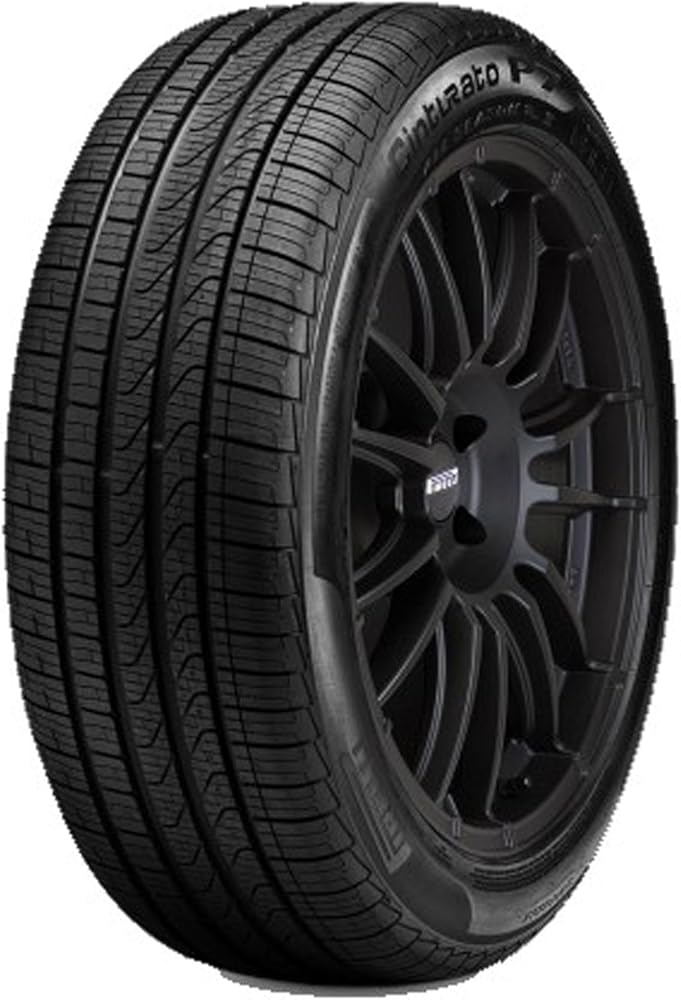
Pirelli Cinturato P7 All Season Plus II
Pros
- Pirelli’s official product page maps the Cinturato P7 All Season Plus II to Nissan Maxima fitments — a manufacturer-level Maxima association that confirms the tire is engineered for the platform’s weight class and performance suspension tuning, not just available in the matching size
- New functionalized polymer compound with increased silica content and a 5% larger contact area versus the previous generation — these are compound engineering improvements that show up in wet braking consistency across the tire’s lifespan rather than only when new
- Reddit owner discussions describe confident behavior in moderate snow including ski resort approaches — a use case relevant to Maxima owners in mountain states where the car’s FWD layout and available ground clearance make it a competent all-weather daily driver when equipped with capable tires
Cons
- Fewer documented owner reviews than Continental or Michelin options — TyreReviews and automotive forum data for the P7 All Season Plus II is thinner than for the DWS06 Plus; the performance case rests more on Pirelli engineering documentation and smaller community feedback pools
- Dry cornering feel is less sharp than the DWS06 Plus — r/tires comparisons consistently identify the Continental as the more engaging handler in dry conditions; Maxima owners who prioritize the car’s performance character over grand touring refinement should choose the DWS06 Plus
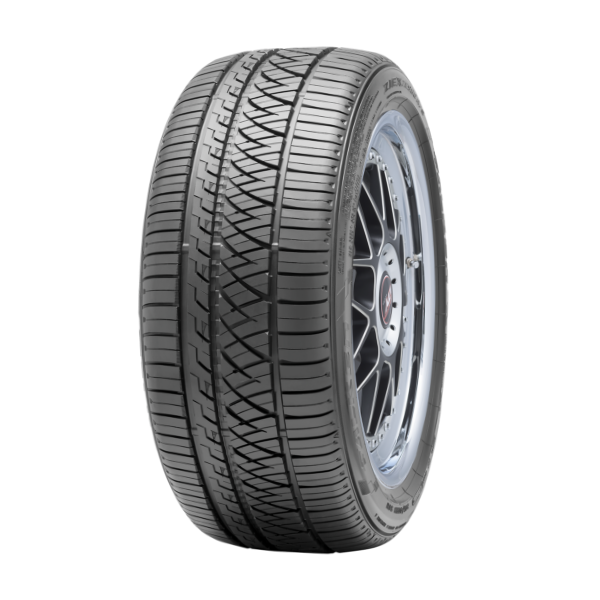
Falken Ziex ZE960 A/S
Pros
- Flask Siping technology maintains wet braking performance as tread depth decreases — unlike conventional siping whose walls collapse under braking load at reduced tread depths, Flask Siping geometry sustains groove volume and braking bite across the tire’s usable life on a FWD sedan where front wet braking is the primary safety variable
- Canyon Groove technology improves snow braking alongside a silica compound that stays pliable at low temperatures — the combination addresses the Maxima’s FWD vulnerability in cold-weather braking where wheel lockup on the driven axle significantly extends stopping distances
- 65,000-mile warranty at a meaningfully lower per-tire cost than the DWS06 Plus or Pirelli P7 — the cost-per-mile calculation across a full set of four 245/40R19 tires makes this the most economical choice for budget-conscious Maxima owners who drive daily and replace tires on schedule
Cons
- Flat spotting after overnight or extended standing is a documented recurring pattern in r/tires and Amazon reviews — the flat spot manifests as steering wheel vibration at highway speeds and typically resolves after a few miles of driving, but it is a genuine quality control concern that affects multiple owners rather than isolated incidents
- W-rated versions carry a shorter 45,000-mile warranty versus the H and V-rated versions’ 65,000 miles — Maxima owners who specifically need W-speed-rated tires for the SR and Platinum trims should verify which speed rating applies to their specific size before assuming the full warranty applies
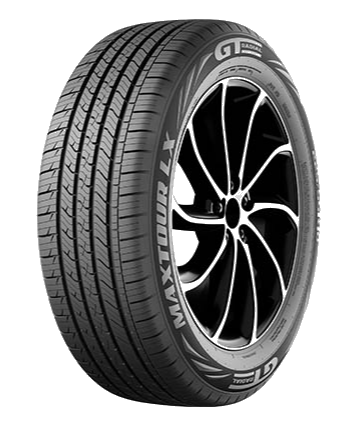
GT Radial Maxtour LX
Pros
- Harmonically Optimized Pitch Sequencing reduces road noise to a level multiple SimpleTire and Reddit owners describe as better than expected for a budget brand — acoustic engineering is documented in the design specification and validated by owner reports of noticeably quiet highway character for a tire at this price point
- 70,000-mile treadwear warranty with 2-year roadside assistance included — GT Radial backs this with a genuine assistance program rather than just a mileage figure, which gives the budget positioning more credibility than an unaccompanied warranty number alone
- Full-depth sipes maintain wet grip consistency as tread wears down — a design feature that matters specifically for high-mileage commuters who tend to run tires deeper into the tread range before replacing, where conventional sipes lose effectiveness
Cons
- Dry handling response is deliberately touring-focused and feels numb to drivers who bought the Maxima for its sporty character — SimpleTire and Reddit owners who specifically note the disconnect describe it as a commuter tire fitted to a performance car, which is accurate to the product’s intent but a mismatch for engaged Maxima drivers
- Limited size range may not cover all Maxima configurations — the Maxtour LX covers 225/55R17 and select 245/45R18 applications but is not available in 245/40R19, restricting it to older-generation Maxima owners on 17-inch and 18-inch wheel packages
???? Can’t Decide?
Our Top 2 Picks — Head to Head
UHP wet performance vs. maximum tread life. Your Maxima generation and driving style make the call.
- Continental’s official fitment tools list it as a verified Maxima recommendation — the strongest manufacturer-level fitment endorsement in this comparison
- Consistently described as the strongest wet grip option for a FWD performance sedan in r/tires and automotive forum discussions — not a general all-season recommendation but specifically validated for the Maxima’s 245/40R19 UHP application
- Fits 2016–2023 Maxima SR and Platinum in 245/40R19 — the largest, newest, and most performance-oriented Maxima trim configuration in this comparison
- 80,000-mile warranty leads this comparison and is Consumer Reports-validated — not a marketing claim but an independently tested durability figure backed by America’s most trusted consumer testing organization
- MaxTouch 2.0 construction distributes FWD’s triple-demand of braking, cornering, and acceleration evenly across the contact patch — a design specifically engineered for the FWD load distribution challenge the Maxima’s platform creates
- Noticeably quieter highway character than the DWS06 Plus — for Maxima owners who drive the car as a refined long-distance highway sedan rather than a performance machine, the acoustic improvement is real and documented in owner comparisons
How to Choose the Right Tire for Your Nissan Maxima
Six factors specific to the Maxima’s FWD performance sedan platform, multi-generation size split, speed rating requirements, and per-mile cost calculation across 80,000-mile warranty tires.
Three-Generation Size Split
The Maxima uses three tire sizes across generations. The 2016–2023 SR and Platinum use 245/40R19. The SV trim uses 245/45R18. The 2009–2015 generation used 225/55R17 or 215/55R17 depending on trim. These sizes are not interchangeable — using 245/45R18 on a 2023 Platinum with 19-inch wheels is a literal physical impossibility, and ordering the wrong size means a full return shipment. Read your door jamb sticker before any online purchase.
Speed Rating Matters on a V-Rated or W-Rated Car
The Maxima’s factory tire spec is V-rated (up to 149 mph) or W-rated (up to 168 mph) depending on trim. Fitting an H-rated tire (up to 130 mph) saves money at purchase, but on a car with a VQ35DE engine rated at 300 horsepower, the speed rating affects how the tire handles sustained high-speed highway driving — the compound hardens differently and wears faster under the thermal load the Maxima generates. The DWS06 Plus in W-rating and the Pirelli P7 in W-rating both match the Maxima’s factory speed specification.
Per-Mile Cost vs. Upfront Price
The Michelin Defender 2 at a higher per-tire cost but 80,000-mile warranty costs less per mile than the Falken ZE960 at a lower per-tire cost but 65,000-mile warranty — assuming consistent rotation and alignment. Calculate cost-per-mile by dividing the total four-tire cost by the warranty mileage. For Maxima owners driving 15,000+ annual miles, the Defender 2 replaces tires roughly every 5 years versus the Falken’s roughly every 4 years, which matters when professional installation adds $80–$100 per replacement event.
FWD Wet Safety as the Primary Criterion
The Maxima’s front-wheel-drive layout means the front tires manage braking, steering, and acceleration simultaneously in wet conditions — the full triple-demand load that AWD vehicles distribute across four tires. Wet stopping distance is more critical on a FWD performance sedan than on a comparable AWD crossover because the front-axle overload in emergency wet braking amplifies the gap between good and poor tire compounds. The DWS06 Plus’s wet grip advantage over the Falken ZE960 is not cosmetic — it reflects the Maxima’s specific vulnerability in emergency wet braking.
Alignment Check After New Tires
The Maxima’s sport suspension tuning reveals alignment problems that worn tires mask. Toe misalignment as small as 0.2 degrees on a 245/40R19 tire creates uneven shoulder wear that becomes visible within 5,000 miles on a new set. An alignment check costs $80–$100 at most shops and protects a $600–$900 four-tire investment. Skipping alignment is the most common reason Maxima owners report premature edge wear on fresh tires that the tire warranty won’t cover without documentation of corrective maintenance.
Why Mixing Tire Models Is Dangerous on FWD
Some Maxima owners fit two premium tires on the front and two budget tires on the rear to save money. On a FWD car, this creates unpredictable handling in emergency wet cornering — the front tires find grip while the rear tires lose it, producing a snap oversteer that catches FWD drivers off guard because the car’s normal behavior is understeer. Always fit four matching tires of the same brand and model. The cost savings do not offset the handling asymmetry that mixed tire sets introduce on a front-driven performance platform.
✅ Pro Tips
Quick Buying Checklist for Nissan Maxima Owners
Check the door jamb sticker for your exact size before ordering — 245/40R19 (2016–2023 SR/Platinum), 245/45R18 (SV), and 225/55R17 (2009–2015) are different tires that cannot be substituted for each other.
Match or exceed the factory speed rating — the Maxima is V-rated or W-rated from the factory. Fitting an H-rated tire on a 300-hp FWD sedan compounds thermal load and wears the compound faster under sustained highway driving.
Budget for an alignment check at installation — the Maxima’s sport suspension reveals toe misalignment that worn tires mask, and as little as 0.2 degrees of toe error creates visible shoulder wear within 5,000 miles on new 245/40R19 tires.
Never mix tire models front-to-rear on a FWD Maxima — mismatched front and rear tires create snap oversteer in wet emergency cornering on a car whose normal handling behavior is understeer, catching drivers off guard when grip limits are reached.
Related Guides
Comparing Full-Size Sedans?
Frequently Asked Questions
What are the stock tire sizes for the Nissan Maxima?
The 2016–2023 Maxima SR and Platinum use 245/40R19. The SV trim uses 245/45R18. The 2009–2015 generation used 225/55R17 on most trims. Always check the driver’s door jamb sticker for your exact vehicle — trim packages vary by model year and the three sizes are not interchangeable.
Which tires for Nissan Maxima work best in the rain?
The Continental ExtremeContact DWS06 Plus leads wet-weather performance for the Maxima. Its SportPlus Technology and asymmetric tread compound consistently earn the strongest wet braking and hydroplaning resistance feedback in automotive forums and r/tires discussions for the 245/40R19 UHP application. The Pirelli Cinturato P7 All Season Plus II is the strongest alternative for 19-inch Maxima owners who prioritize grand touring wet comfort over maximum wet grip.
Why does speed rating matter more on the Nissan Maxima than on other Nissan models?
The Maxima’s VQ35DE engine produces 300 horsepower through a FWD layout, generating sustained thermal load on front tires that the Sentra, Altima, and Rogue never approach. An H-rated tire on a W-rated application handles that heat differently, wearing the compound faster under sustained acceleration and high-speed highway driving. The Maxima’s factory V- or W-rating specification reflects the platform’s actual operating demands, not a trim-level premium.
Can I use the Michelin Defender 2 on a 2023 Nissan Maxima Platinum?
No — the Michelin Defender 2 is not currently available in 245/40R19, which is the size the 2016–2023 Maxima SR and Platinum require. The Defender 2 fits compatible sizes like 225/55R17 and 245/45R18, making it appropriate for 2009–2019 Maxima owners on older wheel packages. The 2023 Platinum owner needs the DWS06 Plus or the Pirelli Cinturato P7 All Season Plus II instead.
Is the Falken Ziex ZE960 A/S flat-spotting problem serious?
The flat spotting issue is a real pattern, not an isolated complaint — multiple r/tires and Amazon reviewers describe steering wheel vibration at highway speeds after the tire sits overnight, particularly in cold weather. For daily Maxima drivers the vibration resolves after a few miles of driving. For owners who park for several days between uses, the recurring nature of the problem is a meaningful quality concern worth factoring against the tire’s lower price.
Why is mixing tire models dangerous specifically on the FWD Nissan Maxima?
FWD vehicles understeer predictably when grip is exceeded — the front tires push wide rather than the rear stepping out. Fitting premium tires on the front and budget tires on the rear reverses this: the rear loses grip before the front, producing snap oversteer that FWD drivers don’t expect and often can’t correct. On a 300-hp Maxima in wet conditions, this handling reversal is a genuine crash risk, not a theoretical handling nuance.
Can I use all-season tires on the Nissan Maxima year-round in cold climates?
All-season tires handle light snow adequately, but in climates with heavy snowfall, extended ice, or temperatures consistently below 7°C, a dedicated winter tire set is meaningfully safer. A FWD Maxima with premium all-season tires outperforms a FWD Maxima with worn all-seasons, but a dedicated winter tire set on a second wheel package provides the largest single safety margin upgrade available for cold-climate Maxima owners at any budget level.
???? Final Verdict
Our Top Tire Recommendations for 2026
The Continental ExtremeContact DWS06 Plus earns the top position for the Nissan Maxima because it’s the only tire in this comparison with both Continental’s direct Maxima fitment endorsement and the consistent wet grip feedback that specifically validates it for the Maxima’s FWD performance sedan application — where front-axle wet braking is the primary safety variable and the difference between a good and poor compound shows most clearly in emergency wet stopping distances on a 300-hp front-driven platform. Older-generation Maxima owners on 225/55R17 or 245/45R18 who log high annual mileage should choose the Michelin Defender 2 for its 80,000-mile Consumer Reports-validated warranty and MaxTouch 2.0 FWD contact patch optimization at a per-mile cost that outperforms every other tire in this comparison over a 5-year ownership period. Budget-conscious 2016–2023 Maxima SR owners who need 245/40R19 at a lower per-tire cost should consider the Falken Ziex ZE960 A/S with the caveat that daily driving frequency matters for the flat-spotting pattern documented in owner reviews.