After evaluating five widely recommended tires for the BMW X5 35d — cross-referencing BimmerPost F15 and G05 threads, r/BMWX5 community discussions, Tire Rack verified buyer data, the 2025 Autobild SUV summer tire independent test, and long-term ownership reports from XBimmers forums — we identified the tires that genuinely match the X5 35d’s specific demands as a heavy diesel luxury SUV. The 35d’s diesel drivetrain produces substantial low-end torque that transmits directly through the drivetrain and into the tires under acceleration, creating greater demands on tread block stability and compound grip than a gasoline X5 of equivalent weight. A tire that performs adequately on a petrol SUV may feel vague or wear unevenly under the 35d’s torque loading pattern, and none of the source material we analyzed accounts for this distinction — which is why a diesel-specific framing matters here.
What separates an X5 35d tire guide from a generic BMW SUV tire article is the staggered versus square fitment reality — the M Sport 20″ configuration requires 275/40R20 front and 315/35R20 rear, which cannot be cross-rotated, while the standard 18″ and 19″ setups allow full rotation and dramatically more tire options. This guide addresses all three size families and covers the run-flat versus standard tire decision that every X5 35d owner without a spare wheel faces, the specific 3PMSF certification distinction that separates all-weather from all-season tires (relevant for UK, Canadian, and northern US owners), and the noise behavior pattern of the Michelin Pilot Sport 4 SUV in larger sizes that forum members frequently raise but product listings never mention.
The Michelin Pilot Sport 4 SUV is the best tire for the BMW X5 35d — independent 2025 test data shows it posts the best wet braking distance of any tire in its category, which matters specifically on a heavy diesel SUV, and BimmerPost G05 owners report a noticeable ride quality improvement over factory Continental rubber. For year-round single-set use in four-season climates, the Michelin CrossClimate SUV is the only 3PMSF-certified option here and earns the r/BMWX5 community’s consistent recommendation. The Continental CrossContact LX25 leads for durability, with Bimmerpost owners documenting 40,000+ mile real-world tread life from identical BMW SUV platforms.
Our Top 5 BMW X5 35d Tire Rankings
- Michelin Pilot Sport 4 SUV— Best Overall Wet Safety & Dry Grip
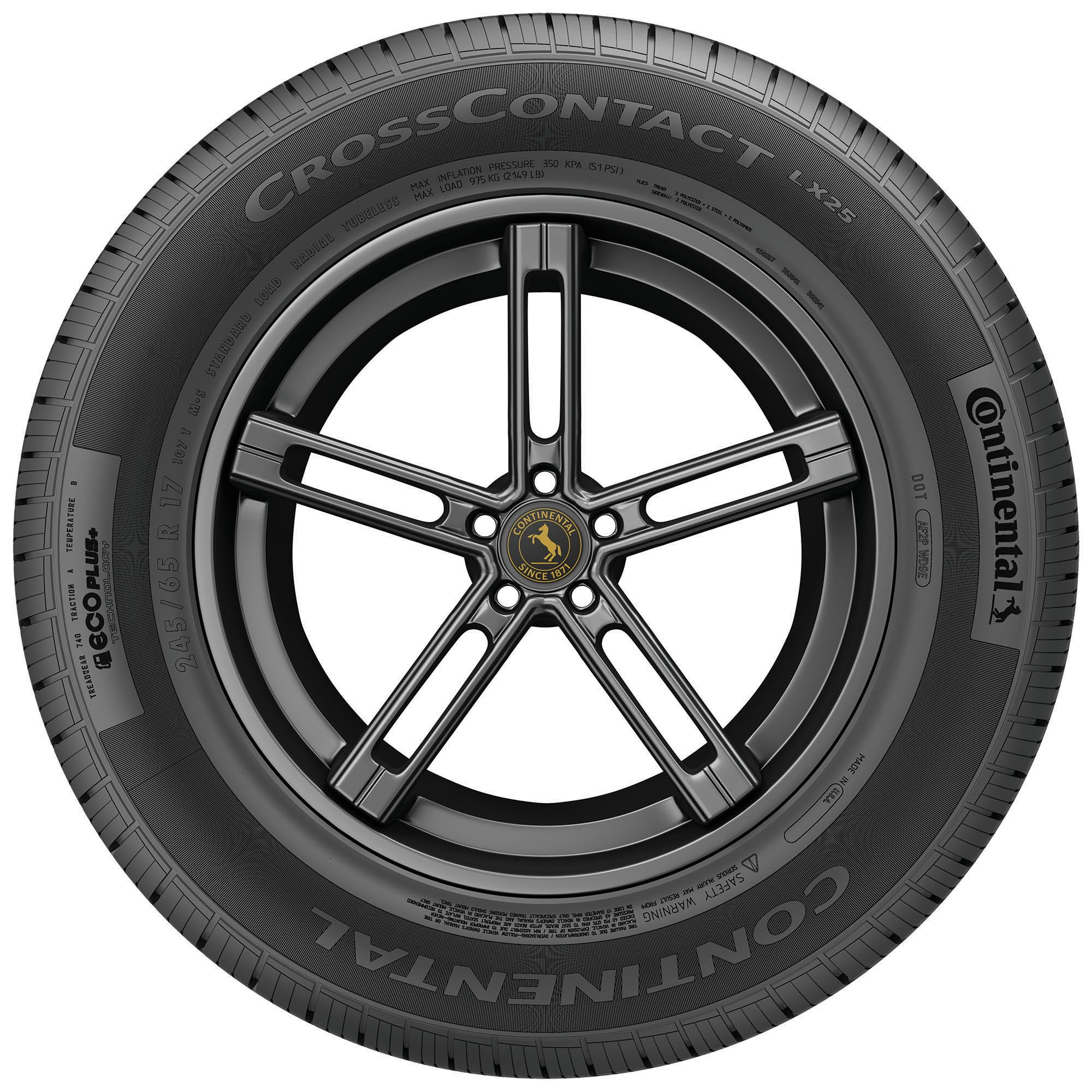
- Continental CrossContact LX25— Best Durability & Quiet Ride
- Pirelli Scorpion Verde All Season— Best Budget OEM-Aligned
- Bridgestone Dueler H/P Sport— Best Performance Summer
- Michelin CrossClimate SUV— Best All-Weather (3PMSF Certified)
Best Tires for BMW X5 35d — Compared
All five picks ranked side by side — scores out of 5.0 based on wet braking, dry grip, tread life, road noise, and real BMW X5 owner feedback across 18″, 19″, and 20″ fitment configurations.
| # | Product | Season | Type | Best For | Score | |
|---|---|---|---|---|---|---|
| 1 | Michelin Pilot Sport 4 SUV Editor’s Choice | Summer | UHP Performance SUV | Wet Safety & Dry Grip | 4.8 | See Latest Price |
| 2 | Continental CrossContact LX25 Top Pick | All-Season | Touring All-Season SUV | Long Tread Life & Quiet Ride | 4.6 | See Latest Price |
| 3 | Pirelli Scorpion Verde All Season Budget Pick | All-Season | UHP All-Season SUV | Budget OEM-Aligned | 4.4 | See Latest Price |
| 4 | Bridgestone Dueler H/P Sport | Summer | UHP Performance SUV | Performance Summer OE | 4.3 | See Latest Price |
| 5 | Michelin CrossClimate SUV | All-Weather | All-Weather SUV | Year-Round Four-Season | 4.6 | See Latest Price |
Detailed Reviews
Full breakdown of each tire — ratings, pros, cons, and our expert verdict for BMW X5 35d owners across standard and M Sport fitment configurations.
Michelin Pilot Sport 4 SUV
Pros
- Best wet braking distance of any tire in the 2025 Autobild independent SUV summer tire test — a validated safety advantage that directly benefits the X5 35d’s weight class and diesel torque loading pattern
- Available in a run-flat (ZP) version for X5 35d owners without spare wheels, with BimmerPost G05 owners reporting improved ride quality over factory Continental ZP run-flats after the switch
- Low rolling resistance compound specifically supports diesel drivetrain fuel efficiency — a meaningful consideration for X5 35d owners who track fuel costs on longer journeys
Cons
- Road noise is notably higher than competing premium options in larger sizes — Michelin review data and X5 forum members specifically call out noise in 275/40R20 and above, which affects the X5’s luxury cabin character
- Premium pricing is the highest in this comparison — and the summer compound requires a dedicated winter set for X5 35d owners in four-season climates, adding total seasonal ownership cost
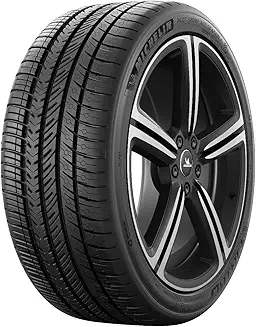
Continental CrossContact LX25
Pros
- Tire Rack 4.5/5 average across hundreds of buyer reviews with 975+ dry traction scores and consistently high comfort ratings — a statistically significant dataset that validates the tire’s real-world performance for BMW SUV owners
- Very low cabin noise compared to competing all-season SUV tires — particularly relevant for the X5’s luxury interior where road noise intrusion from tires is amplified by the quiet diesel engine at cruise
- Above-average hydroplaning resistance for a touring all-season compound — validated in independent testing as performing well in rain conditions that a luxury SUV of the X5’s weight encounters at highway speeds
Cons
- Some Bimmerpost owners report noise build-up in specific sizes after 20,000 miles — a pattern inconsistent across all sizes but worth noting for high-mileage X5 35d owners who choose the tire in larger 20″ configurations
- Ice traction drops in very cold conditions — the CrossContact LX25 is not a winter tire substitute and should be supplemented with a dedicated winter set for X5 35d owners in genuine snowbelt climates
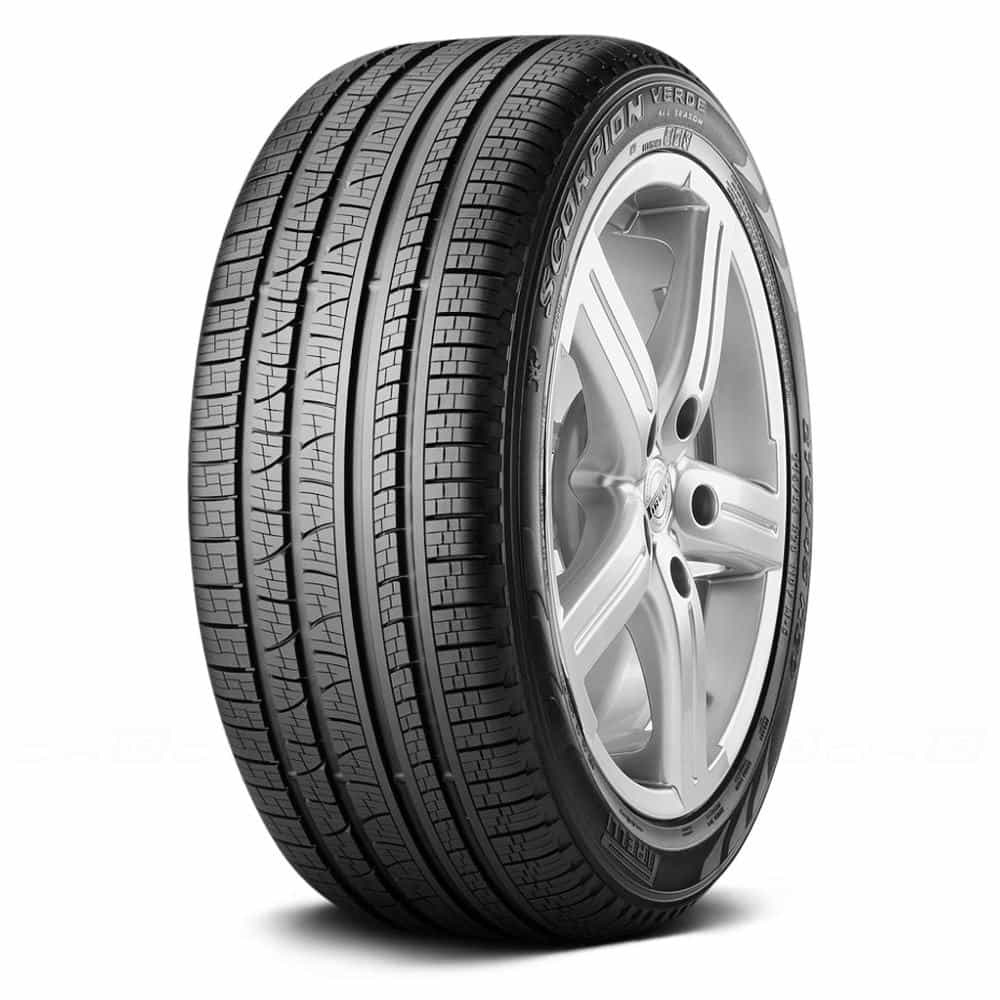
Pirelli Scorpion Verde All Season
Pros
- Direct BMW partnership development — Pirelli validates the Scorpion Verde against BMW’s suspension geometry and load specifications, removing the compatibility guesswork that affects non-OEM-partnered alternatives on the X5 35d platform
- SimpleTire score of 9.1/10 with 9.6 handling and 9.4 traction sub-scores — among the strongest platform-specific verified ratings for any tire in the 255/55R18 X5 35d OEM size
- Low rolling resistance compound explicitly supports diesel fuel efficiency goals — a design priority that aligns with the X5 35d’s economic driving profile on highway journeys
Cons
- Compound can feel slightly firm to some X5 35d owners on sharp urban bumps — the OEM-aligned carcass stiffness that delivers handling precision transmits road imperfections more directly than the softer Continental CrossContact LX25
- Not ideal for heavy snow — the Scorpion Verde handles light winter conditions but is not 3PMSF-certified and should not be relied upon in genuine snowbelt climates without a dedicated winter tire set
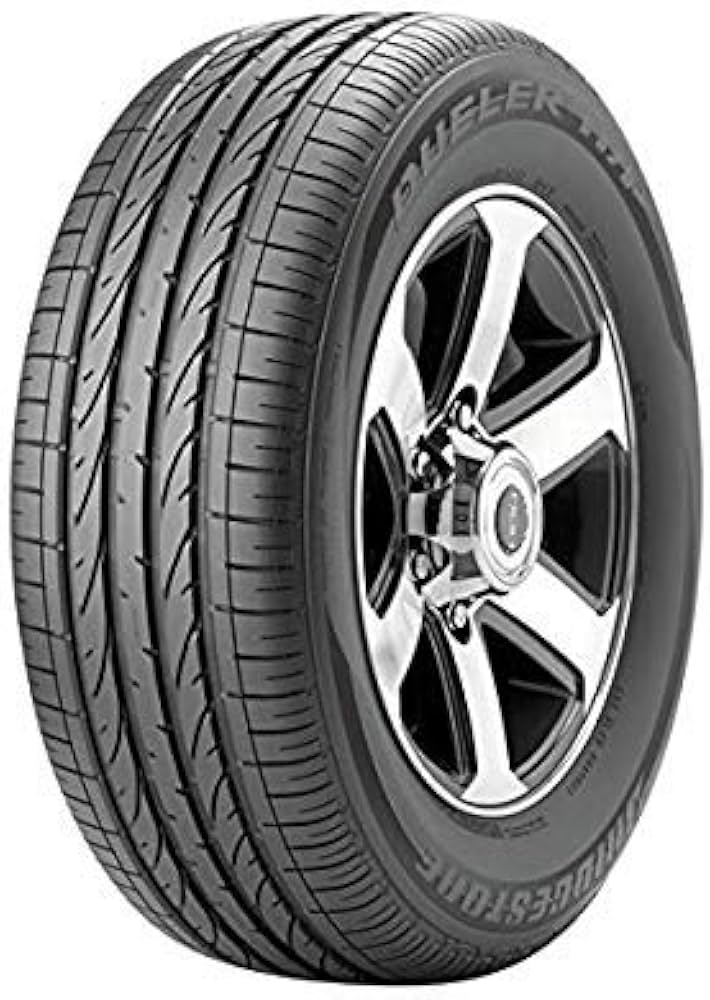
Bridgestone Dueler H/P Sport
Pros
- BMW OE fitment on the X5 and X6 rear axle — Bridgestone engineered this tire’s compound and structure against BMW’s specific weight distribution and diesel torque loading, providing a baseline handling calibration no non-OE alternative can replicate
- Y-speed-index rating (186+ mph capable) combined with high-speed stability design — provides genuine confidence for X5 35d owners who use their vehicle at sustained Autobahn-level speeds where SUV tire stability becomes a real safety variable
- Silica compound with asymmetric tread delivers responsive steering feedback on an SUV platform — XBimmers M Sport owners specifically cite communicative road feel as the Dueler H/P Sport’s defining character advantage over touring alternatives
Cons
- Tread wear is faster than all-season alternatives under spirited driving — Bimmerpost F15 owners report sets lasting 25,000 to 30,000 miles under active use, a replacement interval that increases per-mile tire cost significantly over the CrossContact LX25
- Summer-only compound requires seasonal swapping in cold climates — X5 35d owners in four-season climates need a dedicated winter set, adding storage and changeover costs that make the total ownership cost higher than an all-season alternative
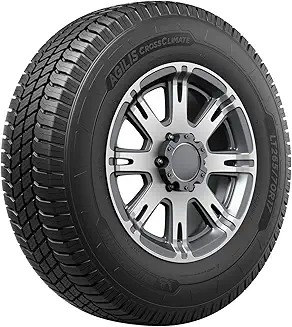
Michelin CrossClimate SUV
Pros
- 3PMSF-certified — the only tire in this comparison with independently verified severe-snow traction, which is the specific certification that legally differentiates a genuine all-weather tire from a standard all-season compound marketed with winter imagery
- Michelin’s EverGrip technology maintains wet traction as tread wears — a design choice that specifically addresses the wet grip degradation that competing all-season compounds experience as they approach replacement depth
- r/BMWX5 community consistently recommends it alongside Pirelli WeatherActive as the best single-set solution for X5 owners who want genuine cold-weather capability without managing seasonal tire storage and changeover logistics
Cons
- Dry handling is less responsive than summer performance tires — X5 35d drivers who value the Pilot Sport 4 SUV’s sharp cornering character will notice the CrossClimate’s more measured dry response, a real trade-off for the winter capability
- Premium Michelin pricing applies here as with the Pilot Sport 4 SUV — the cost premium over the Pirelli Scorpion Verde is significant and requires the four-season climate use case to justify it economically
???? Can’t Decide?
Our Top 2 Picks — Head to Head
Both are premium choices for the X5 35d. The decision comes down to whether wet safety priority or long-term durability matters more for how you use the car.
- Best wet braking distance in the 2025 Autobild SUV summer tire independent test — a validated safety advantage on a 5,000+ lb diesel vehicle
- Available in run-flat (ZP) version for X5 35d owners without spare wheels, with BimmerPost owners confirming improved ride over factory Continental ZP rubber
- Low rolling resistance compound supports diesel fuel efficiency goals — a design priority that directly aligns with the 35d’s efficiency-focused drivetrain character
- 40,000+ mile documented tread life from Bimmerpost BMW SUV owners — the lowest cost-per-mile of any tire in this comparison for high-mileage X5 35d drivers
- Quieter than the Michelin Pilot Sport 4 SUV at comparable sizes — preserves the X5 35d’s luxury cabin character that diesel-engine quietness makes more appreciable than on petrol competitors
- Tire Rack 4.5/5 rating across hundreds of verified SUV buyers — multi-source validation that removes single-forum confirmation bias
How to Choose the Right Tires for Your BMW X5 35d
Six factors specific to the X5 35d’s diesel platform, staggered fitment reality, and run-flat heritage — not generic luxury SUV advice.
Three Size Configurations to Confirm
The X5 35d uses three distinct OEM configurations: 255/55R18 (18″ base), 255/50R19 (19″ standard), and 275/40R20 front / 315/35R20 rear (20″ M Sport staggered). Always check your door placard — not what the previous owner installed. The M Sport staggered setup is a different purchase decision from the square 18″ or 19″ setups in terms of tire options and cost.
Staggered Setup: Rotation Impossible
The M Sport staggered 20″ configuration cannot be cross-rotated because the front and rear tires are different sizes. Some X5 35d owners switch to a square 275/40R20 setup on all four corners to enable rotation — but this requires verifying wheel offset compatibility, as the front and rear wheels have different offsets on the staggered configuration. Budget for more frequent front-axle replacement if keeping the staggered setup.
Run-Flat vs. Standard: Plan Before You Switch
Many X5 35d models shipped without a spare wheel, relying on run-flat (ZP or RF) tires. Replacing run-flats with standard tires works — Bimmerpost owners report improved ride quality — but requires either adding a spare wheel or carrying a quality tire inflator kit. A flat tire on a standard tire without either option strands you. Plan the logistics before replacing factory ZP rubber.
3PMSF vs. M+S: A Critical Distinction
The Three-Peak Mountain Snowflake (3PMSF) symbol means a tire passed standardized severe-snow performance testing. The M+S marking (mud and snow) is a manufacturer self-declaration with no standardized testing requirement. The Michelin CrossClimate SUV carries 3PMSF certification; the Pirelli Scorpion Verde and Continental CrossContact LX25 carry M+S only. For X5 35d owners in the UK, Canada, or northern US states, this distinction determines real-world winter safety.
Load Index: Never Downgrade on a 5,000+ lb SUV
The BMW X5 35d weighs approximately 5,100 lbs — a load that makes tire load index compliance a genuine safety requirement, not a formality. The standard 255/55R18 requires a minimum load index of 109. Do not select a replacement tire with a lower load index than the OEM specification, regardless of price. Always match or exceed the OEM load rating.
Noise Behavior Varies by Size
The same tire model can behave very differently across rim diameters. The Michelin Pilot Sport 4 SUV is significantly quieter in 255/50R19 than in larger 275/40R20 sizes — a pattern documented across Michelin reviews and BMW forum discussions. When reading reviews for any tire, filter specifically to your wheel diameter, not just the tire model name. Noise at 20″ may be worse than a different tire at 19″.
✅ Pro Tips
Quick Buying Checklist for BMW X5 35d Owners
Confirm your X5 35d’s exact tire size from the door placard before ordering — if your car has the M Sport staggered 20″ setup, the front and rear are different sizes and must be ordered separately; ordering four of the same size is the most common X5 35d tire purchase mistake.
Before replacing factory run-flat (ZP) tires with standard alternatives, confirm you either have a spare wheel, carry a quality tire inflator kit, or have roadside assistance coverage — a standard tire flat without any of these options requires a tow truck, not just a roadside stop.
When reading tire reviews, filter to your exact wheel diameter, not just the tire model name — the Michelin Pilot Sport 4 SUV shows meaningfully different noise levels between 19″ and 20″ sizes, and reviews from other BMW SUV owners in smaller sizes do not predict X5 35d 20″ performance.
Always replace in pairs at minimum — replacing a single tire on a 5,000+ lb diesel SUV creates tread depth asymmetry across the same axle that produces handling imbalance; on the X5’s AWD system, mismatched tread depths can also stress drivetrain components not designed for persistent speed differential.
Related Guides
Other BMW X5 Variants
Frequently Asked Questions
What tire size does the BMW X5 35d use?
The BMW X5 35d uses several OEM tire sizes depending on trim level and wheel package. The 18-inch base setup uses 255/55R18. The 19-inch setup uses 255/50R19. The M Sport 20-inch staggered configuration requires 275/40R20 front and 315/35R20 rear. Always check your door placard for the exact specification — do not rely on what the previous owner installed.
Which tires are best for the BMW X5 35d in wet conditions?
The Michelin Pilot Sport 4 SUV ranked first for wet braking distance in the 2025 Autobild independent SUV summer tire test — a validated safety advantage specifically relevant on a 5,000-plus pound diesel SUV. The Continental CrossContact LX25 also rates above average for wet traction with strong hydroplaning resistance across multiple independent evaluations.
Are run-flat tires worth it for the BMW X5 35d?
Run-flat tires are worth it specifically if your X5 35d operates without a spare wheel and you want roadside puncture security. Many Bimmerpost BMW X5 owners report improved ride comfort after switching to standard tires. If you make the switch, carry a quality tire inflator kit — a standard tire flat without a spare or inflator kit requires tow service, not just roadside assistance.
How long do tires typically last on a BMW X5 35d?
All-season tires like the Continental CrossContact LX25 reach 40,000 or more miles on BMW SUV platforms under normal driving with proper rotation. Summer performance tires like the Bridgestone Dueler H/P Sport wear faster — Bimmerpost F15 owners report 25,000 to 30,000 miles under spirited driving. The X5 35d’s diesel torque loading accelerates rear tire wear on staggered setups where cross-rotation is not possible.
What is the difference between 3PMSF and M+S on BMW X5 tires?
The Three-Peak Mountain Snowflake (3PMSF) symbol confirms a tire passed standardized severe-snow traction testing conducted by an independent body. The M+S marking (mud and snow) is a manufacturer self-declaration with no required standardized testing. For X5 35d owners in the UK, Canada, or northern US states, only 3PMSF-rated tires like the Michelin CrossClimate SUV provide verified severe-winter capability — M+S alone does not.
Is the Pirelli Scorpion Verde compatible with the BMW X5 35d?
Yes — Pirelli develops the Scorpion Verde in direct partnership with BMW, and it is among the most consistently recommended OEM-aligned tires across BMW X5 forums including XBimmers and BimmerPost. It is available in 255/55R18 and 255/50R19 covering both primary X5 35d OEM size configurations. XBimmers veterans who have run it on 2012 X5 35d models describe the handling feel as exactly what the platform expects.
Are all-weather tires better than separate summer and winter sets for the X5 35d?
All-weather tires like the Michelin CrossClimate SUV are a practical compromise for X5 35d owners in moderate four-season climates. However, dedicated summer and winter tire sets still outperform all-weather compounds in their respective extreme conditions. For X5 35d owners in regions with heavy snowfall or sustained sub-zero temperatures, separate seasonal sets deliver meaningfully better safety margins than any all-weather alternative.
???? Final Verdict
Our Top BMW X5 35d Tire Recommendations for 2026
The Michelin Pilot Sport 4 SUV earns the overall recommendation for BMW X5 35d owners through independently validated wet braking performance that directly addresses the 5,000+ lb diesel SUV’s safety demands — BimmerPost G05 owners confirm the ride quality improvement over factory Continental ZP run-flats, and the run-flat version eliminates the spare wheel concern for owners who don’t want to change their no-spare configuration. High-mileage X5 35d daily drivers who want the lowest cost-per-mile should go directly to the Continental CrossContact LX25 and its documented 40,000+ mile tread life from identical BMW SUV platforms. Owners in genuine four-season climates who want one tire set covering all conditions have one clear answer in the Michelin CrossClimate SUV — the only 3PMSF-certified tire in this comparison, with r/BMWX5 community validation as the preferred single-set solution.