After evaluating six tires across G05 Bimmerpost forum threads, Tire Rack survey data for the X5 M50i specifically, TyreReviews aggregated SUV performance scores, Reddit r/BMWX5 owner discussions, and real-world durability reports from owners running the M50i’s 4.4L twin-turbo V8 through its standard staggered 275/40R21 front and 315/35R21 rear fitment, the performance gaps between tire categories are more pronounced on this platform than any other BMW in this series. The M50i produces 523 hp and weighs approximately 5,200 lbs — a combination that accelerates rear tread wear, generates more heat through summer compounds during spirited driving, and demands a load index that eliminates entry-level performance options from the usable range entirely. Where the M2 or 535i articles addressed performance-first buyers managing track use, the X5 M50i serves a more varied ownership profile: some owners push it hard on mountain roads, many others treat it as a premium family hauler, and nearly all of them are replacing OEM Pirelli P Zero PZ4 or Continental PremiumContact 6 tires that neither brand offers in a genuine all-season formulation.
What makes this article different from generic X5 tire guides is the six-product range that spans summer UHP, all-season, run-flat-capable, and budget-performance tiers — all confirmed in the M50i’s specific staggered sizing. The buyer’s guide specifically addresses the 5,200-lb load index calculation, the 523-hp rear torque wear consequence on a staggered no-rotation setup, and the summer tire cold-weather risk that is meaningfully different on a vehicle this heavy versus a lighter sport sedan where the driver has more time to manage a rear-end traction event.
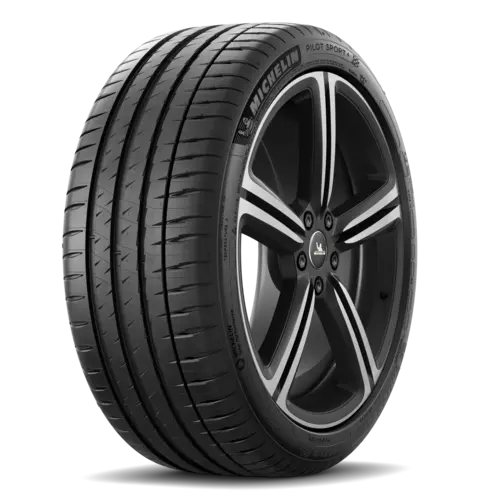
The Michelin Pilot Sport 4S is the strongest overall recommendation for X5 M50i owners who drive the car with intent in warm or mild climates — G05 Bimmerpost owners consistently rate it as the best available replacement for OEM summer rubber, and the BMW OE-spec variant’s compound calibration matches the M50i’s active suspension inputs directly. Drivers who need year-round single-set capability at a lower price should look at the Continental ExtremeContact DWS06 Plus‘s UTQG 560 treadwear advantage. For documented wet-weather performance validated in independent testing, the Goodyear Eagle F1 Asymmetric 6‘s 99.6% wet cornering score in Auto Express testing is the most specific safety credential in this comparison.
Our Top 6 BMW X5 M50i Tire Rankings
- Michelin Pilot Sport 4S— Best Overall / Dry & Wet Performance
- Continental ExtremeContact DWS06 Plus— Best All-Season / UTQG 560 Durability
- Pirelli P Zero PZ4— Best OEM Replacement / Run-Flat Option
- Goodyear Eagle F1 Asymmetric 6— Best Wet Performance / Independent Test Leader
- Bridgestone Alenza Sport A/S— Best Durability / All-Season Run-Flat
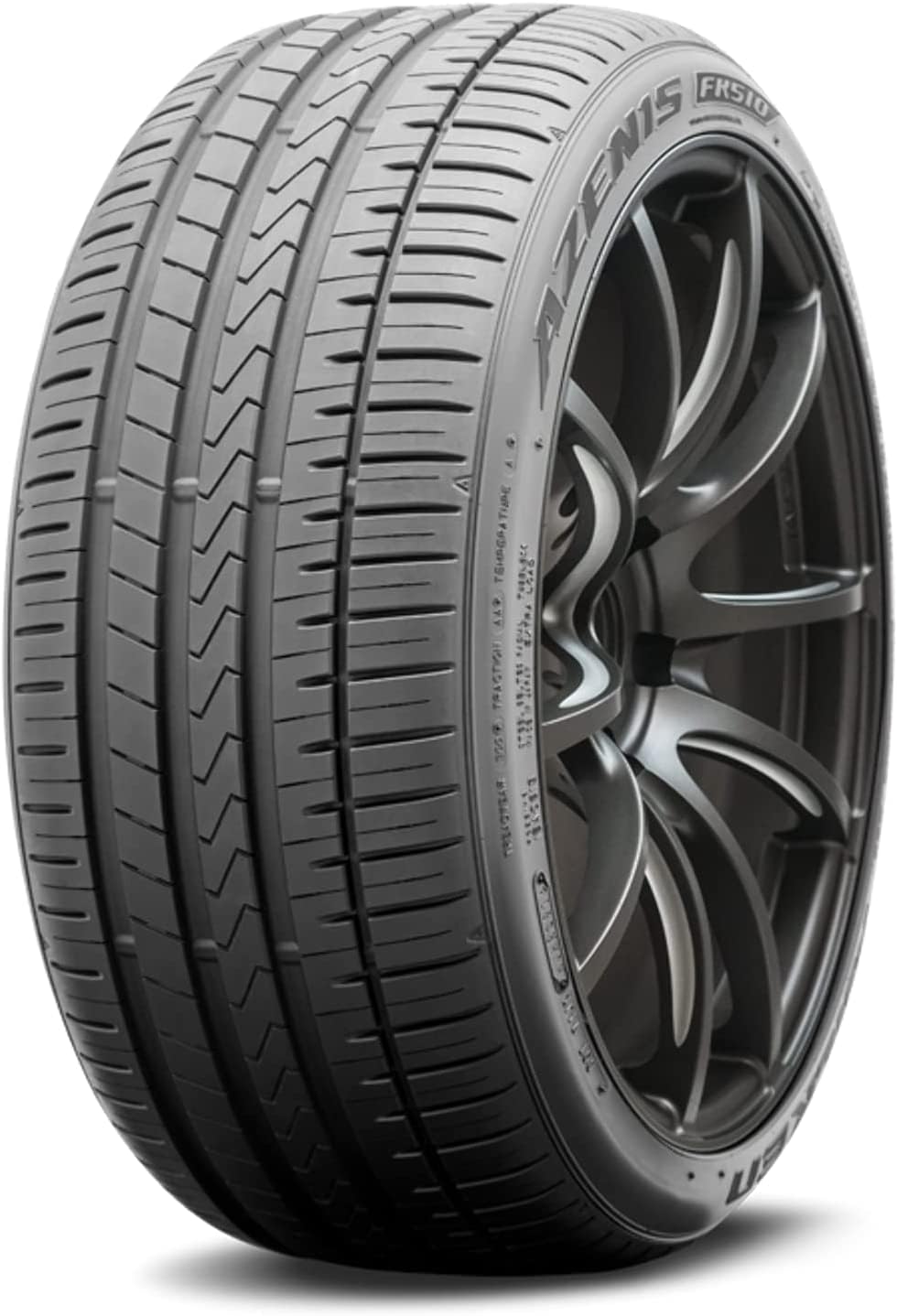
- Falken Azenis FK510 SUV— Best Budget / UHP at Lower Cost
Best Tires for BMW X5 M50i — Compared
All six tires ranked across season type, run-flat availability, and overall score for the staggered 275/40R21 & 315/35R21 fitment.
| # | Tire Name | Season | UTQG / Notes | Best For | Score | |
|---|---|---|---|---|---|---|
| 1 | Michelin Pilot Sport 4S Editor’s Choice | Summer | BMW OE variant | Performance & dry grip | 4.8 | See Latest Price |
| 2 | Continental ExtremeContact DWS06 Plus Budget Pick | All-Season | UTQG 560 | Year-round durability | 4.7 | See Latest Price |
| 3 | Pirelli P Zero PZ4 Top Pick | Summer | BMW homologated, RFT option | OEM spec & run-flat | 4.5 | See Latest Price |
| 4 | Goodyear Eagle F1 Asymmetric 6 | Summer | 99.6% wet cornering (AE) | Wet performance | 4.7 | See Latest Price |
| 5 | Bridgestone Alenza Sport A/S | All-Season | M+S, RFT option | High-mileage run-flat | 4.6 | See Latest Price |
| 6 | Falken Azenis FK510 SUV | Summer | 4D Nano Design | Budget UHP performance | 4.4 | See Latest Price |
Detailed Reviews
Full breakdown of each tire — M50i fitment notes, ratings, pros, cons, and expert verdict.
Michelin Pilot Sport 4S
Pros
- Asymmetric dual-compound tread places a stickier outer shoulder compound specifically at the contact point where the 5,200-lb X5 M50i generates maximum lateral load under cornering — the inner compound handles wet braking separately rather than compromising both functions through a single formulation, which is the key reason G05 Bimmerpost owners rate the PS4S as transformative versus OEM alternatives on this platform
- BMW OE-spec variant is available with compound and acoustic tuning validated specifically against the M50i’s adaptive suspension calibration and active air suspension inputs — the OE variant’s specific compound hardness was chosen to interact correctly with the xDrive system’s torque vectoring behavior in a way that non-OE tires in the same size don’t formally address
- Dynamic Response Technology belt reinforcement maintains high-speed stability above 130 mph where the M50i’s electronically limited top speed operates — on a vehicle this heavy and powerful, tire structural integrity under sustained high-speed cornering loads is a safety specification that the PS4S’s belt architecture was specifically designed to meet
Cons
- Tread wear rate accelerates with the M50i’s mass — the 5,200-lb curb weight multiplies the heat generation and lateral scrub that wears the outer shoulder compound faster than the same tire experiences on a 3,500-lb sports car, and the staggered setup’s no-rotation constraint means rear 315/35R21 tires accumulate wear independently without front-tire rotation relief
- Summer-only compound loses grip and structural compliance below 45°F — on a 5,200-lb SUV where cold-compound rear traction loss under the M50i’s 523-hp torque output creates a more difficult to manage situation than on a lighter car, running summer tires into cold weather on this specific platform carries disproportionately higher consequences than the 7°C threshold implies
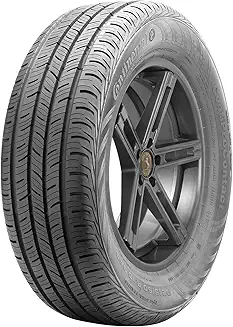
Continental ExtremeContact DWS06 Plus
Pros
- UTQG 560 treadwear rating is the highest in this comparison by a significant margin — specifically relevant to the X5 M50i’s staggered rear-only wear pattern where 315/35R21 rear tires accumulate heat and wear from a 5,200-lb vehicle’s cornering forces without rotation relief, making the longevity advantage translate directly to fewer replacement intervals and lower per-mile costs on a heavy platform
- DWS tread indicators provide the X5 M50i owner a visual, unambiguous signal when snow (S), wet (W), or dry (D) performance has degraded below the tire’s certified level — more actionable than measuring tread depth and inferring which performance category is affected, particularly on a vehicle this powerful where discovering degraded wet grip during an emergency braking event has severe consequences
- Ride comfort improvement over OEM Pirelli or Dunlop run-flats is documented by Bimmerpost F15 owners with specific mileage comparisons — the standard carcass construction removes the run-flat’s sidewall stiffness from the M50i’s adaptive suspension inputs, resulting in a highway ride that owners describe as genuinely transformative on motorways with longitudinal grooves or surface joints
Cons
- Peak dry-grip performance is measurably below the Michelin PS4S and Goodyear Eagle F1 Asymmetric 6 under the cornering loads the M50i generates — the harder compound that delivers the UTQG 560 longevity creates earlier understeer onset when the X5 M50i approaches its handling limit in warm dry conditions, which owners who use Sport+ mode regularly will notice as a reduction in the car’s dynamic character
- No run-flat option exists — X5 M50i owners who need post-puncture mobility for extended motorway routes without reliable roadside coverage cannot use the DWS06 Plus without accepting the loss of that capability, making the Bridgestone Alenza or Pirelli P Zero RFT the only alternatives if run-flat retention is a non-negotiable requirement
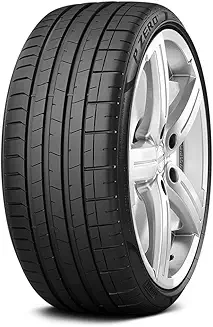
Pirelli P Zero PZ4
Pros
- BMW homologation stamp for the G05 X5 M50i confirms compound calibration, contact patch geometry, and acoustic foam liner specification were developed directly with BMW’s chassis engineering team for this platform — the most formally validated platform compatibility in this comparison, reducing the risk that the tire’s handling characteristics conflict with the M50i’s xDrive torque vectoring or adaptive damper inputs in ways an aftermarket tire in the same size doesn’t formally address
- Run-flat configuration is available in both 21-inch and 22-inch staggered sizes for the M50i — making the PZ4 the only summer tire in this comparison that allows an X5 M50i owner to maintain post-puncture drive capability after replacing OEM tires, which matters specifically for owners who regularly travel routes where a 5,200-lb SUV on a flat tyre would create a safety or access problem
- Optimised contact patch for high-speed stability above 130 mph provides the structural confidence that the M50i’s V-speed-rated performance envelope demands — on a vehicle producing 523 hp, a tire that loses progressive handling at sustained high-speed cornering loads creates a situation where the car’s capability exceeds the tire’s structural limits before the driver recognizes the threshold is approaching
Cons
- TyreReviews aggregated data from 77 reviews shows only 57% treadwear satisfaction — the lowest wear score in this comparison, and specifically problematic on a 5,200-lb M50i where the rear staggered tires cannot rotate and accumulate wear from the vehicle’s mass on every cornering exit, creating shorter rear replacement intervals than the OEM-tier pricing suggests is reasonable for this cost per tire
- Wet grip performance lags behind both the Michelin PS4S and Goodyear Eagle F1 Asymmetric 6 in independent testing — a gap that is specifically consequential on a 5,200-lb vehicle where wet stopping distances scale with mass, meaning the same wet grip deficit that might add 2–3 metres to a lighter car’s stopping distance adds 5–7 metres on the M50i
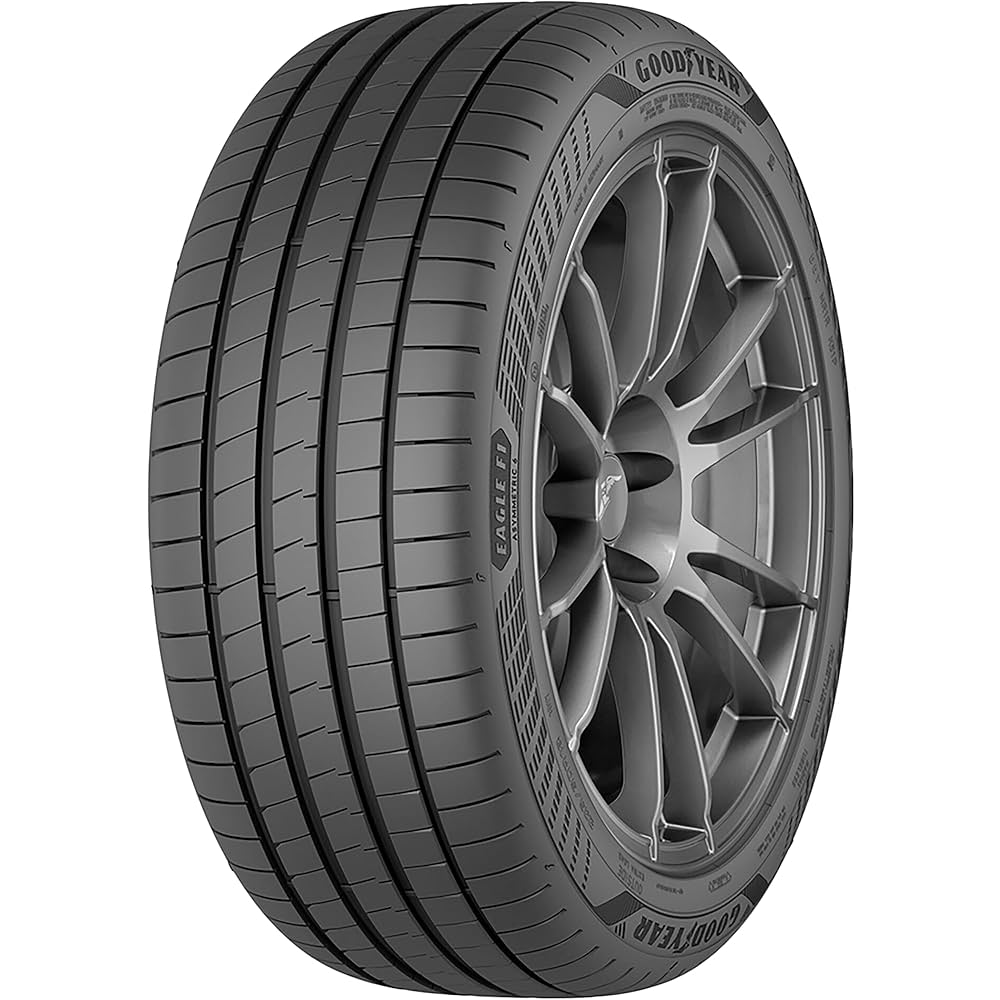
Goodyear Eagle F1 Asymmetric 6
Pros
- Auto Express independent test score of 99.6% wet cornering and 98.8% overall is the most specific, externally validated wet-performance credential in this comparison — the testing was conducted on actual wet surfaces at an independent facility rather than derived from manufacturer data, providing X5 M50i owners buying in a wet climate with documented evidence rather than implied capability claims
- More comfort-oriented than the previous Eagle F1 Asymmetric 5 generation — TyreReviews owner data shows improved ride refinement without the dry-grip regression that comfort improvements typically require, making the Asymmetric 6 more appropriate than its predecessor for a premium luxury-performance SUV where both dynamic capability and ride quality are ownership requirements rather than trade-offs
- Competitive pricing versus the Michelin Pilot Sport 4S at a slightly lower per-tire cost while delivering equivalent or superior wet braking performance — for wet-climate X5 M50i owners who have evaluated both tires, the cost difference over a full staggered set replacement cycle can approach £100–£200 without a commensurate performance disadvantage in the conditions they encounter most frequently
Cons
- Tread wear rate on heavier SUVs is a recurring complaint from TyreReviews owners — the UTQG 280 compound that delivers the wet-performance advantage wears faster per mile on a 5,200-lb X5 than on lighter performance cars, and the staggered rear’s no-rotation constraint accelerates this pattern, making the Goodyear’s cost-per-mile less favorable than its per-tire price suggests compared to the Continental DWS06 Plus
- Road noise on textured or broken asphalt surfaces is higher than the Michelin PS4S in back-to-back owner comparisons — on a premium SUV where cabin refinement is a core ownership expectation, the Eagle F1 Asymmetric 6’s noise characteristic on imperfect surfaces conflicts with the M50i’s luxury positioning in a way that extended motorway commutes make progressively more noticeable
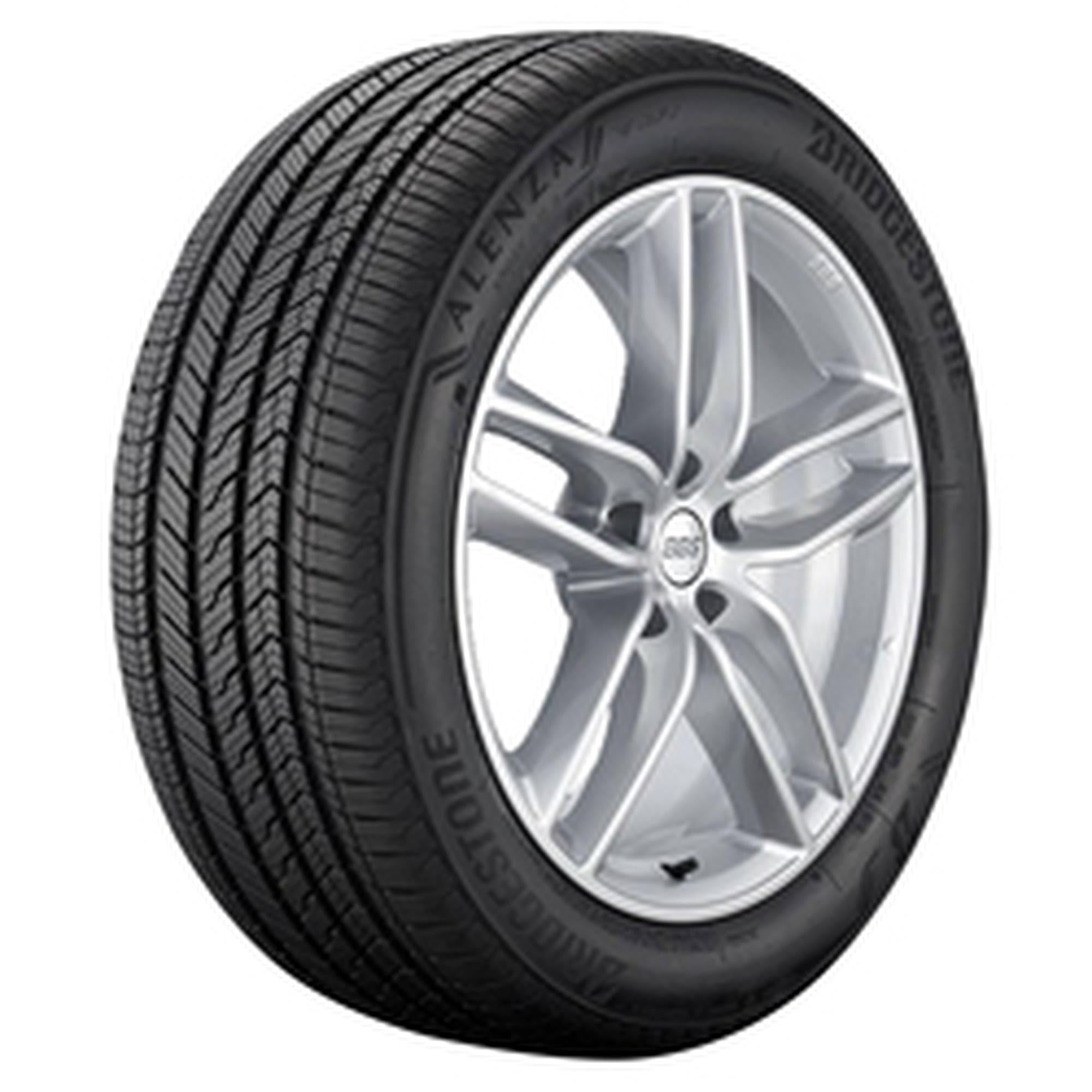
Bridgestone Alenza Sport A/S
Pros
- Run-flat all-season configuration is a specific combination that no other tire in this comparison offers — the Pirelli P Zero PZ4 is run-flat summer-only, the Continental DWS06 Plus is non-run-flat all-season, making the Alenza Sport A/S uniquely positioned for owners who need year-round weather coverage combined with post-puncture mobility on a vehicle with no spare wheel
- G05 Bimmerpost owner feedback documents very quiet highway performance for a run-flat tire — specifically noteworthy because run-flat carcass stiffness typically increases road resonance transmission at the frequencies the M50i’s large cabin amplifies, and the Alenza Sport’s quiet performance makes it one of the few run-flat options that approaches standard-construction refinement levels on extended motorway drives
- OEM fitment history on multiple BMW X5 variants confirms suspension geometry compatibility and load specification alignment with the platform — reducing the uncertainty about how the M50i’s active air suspension and dynamic stability control systems will interact with the Alenza Sport’s carcass stiffness under combined load and lateral traction demands
Cons
- Moderate snowfall performance falls below owner expectations — Reddit r/BMWX5 owners who used the Alenza Sport in northern US climates with regular winter snowfall specifically report switching to dedicated winter tires after one season, noting that the all-season M+S certification does not adequately represent the tire’s capability in conditions beyond light snow on the M50i’s heavy rear-wheel-drive platform
- Dry handling dynamics are noticeably below the summer performance alternatives — owners who use the M50i’s Sport+ mode for spirited driving will find the Alenza Sport’s all-season compound introduces understeer and reduced steering communication at the handling limit in a way that is inconsistent with a 523-hp performance SUV’s intended character, limiting the tire’s appeal to drivers who use the M50i primarily as a luxury transport vehicle
Falken Azenis FK510 SUV
Pros
- 4D Nano Design compound technology uses nano-sized silica distribution within the rubber matrix to improve wet grip at a lower compound cost than premium alternatives — on the X5 M50i where tire wet braking performance directly scales with vehicle mass, the FK510’s above-average wet grip for a budget tire provides a meaningful safety improvement over true entry-level alternatives that lack this compound technology
- Speed rating confirmation for high-output V8 turbocharged SUVs means the FK510 meets the X5 M50i’s structural requirements for sustained performance — unlike some budget tires where the correct size exists in an insufficient speed rating, the FK510 SUV variant is available with speed ratings appropriate for the M50i’s performance envelope, eliminating the most common safety concern with budget tire selection on performance platforms
- Per-set cost advantage of 40–50% versus Michelin Pilot Sport 4S makes seasonal tire changes more financially accessible — for M50i owners in four-season climates who want a dedicated summer set but found premium summer prices prohibitive, the FK510 SUV makes the two-set approach realistic without requiring budget tires on the primary set
Cons
- Tread life falls short of premium alternatives at equivalent mileage — the softer compound base that delivers the FK510’s respectable wet grip wears faster under the 5,200-lb X5 M50i’s loading, and without the premium compound engineering that extends tread life in competing tires, the per-mile cost advantage narrows meaningfully over the full tire life compared to what the per-tire sticker price suggests
- Ride refinement and steering precision are below the Michelin PS4S and Goodyear Eagle F1 Asymmetric 6 at the handling limit — for the X5 M50i’s 523-hp performance intent, the FK510’s feedback reduction at the threshold creates a disconnect between the vehicle’s chassis capability and what the driver can sense through the steering and seat, limiting the driver’s ability to use the car’s full performance potential safely
???? Can’t Decide?
Our Top 2 Picks — Head to Head
Climate and use profile separate these cleanly — both score at the top of this comparison.
- Dual-compound tread manages the M50i’s 5,200-lb lateral loads and 523-hp rear torque delivery better than any single-compound competitor in this comparison
- BMW OE-spec variant is compound and acoustic-tuned specifically for the G05 X5 M50i’s active suspension calibration
- G05 Bimmerpost owners consistently rate it as the most complete transformation available from OEM summer tires on this platform
- UTQG 560 treadwear rating delivers the lowest cost-per-mile in this comparison on a staggered no-rotation platform where rear tires bear full heavy-SUV loads
- DWS wear indicators provide visible degradation signals for snow, wet, and dry performance — the most actionable safety monitoring in this comparison
- Ride comfort improvement over OEM run-flats is documented by BimmerPost owners with specific mileage comparisons across multiple X5 generations
How to Choose the Right Tires for the BMW X5 M50i
Six factors specific to the M50i’s 5,200-lb weight, 523-hp V8, staggered fitment, and run-flat legacy.
Confirm Both Staggered Sizes First
The X5 M50i uses 275/40R21 front and 315/35R21 rear on standard 21-inch wheels, and 275/35R22 front and 315/30R22 rear on the optional 22-inch wheels. Ordering based on model year alone may return the base X5’s non-staggered size. Read both tire sidewalls or confirm on the door jamb sticker — the 315mm rear is a large, expensive, and non-returnable item if ordered incorrectly.
5,200 lbs Demands a Specific Load Index
The X5 M50i’s 5,200-lb kerb weight requires a tire load index that many entry-level performance options in the correct size don’t carry. Never fit a tire below the OEM load index on this platform — a structurally underloaded rear tire on a 523-hp SUV creates carcass flex under acceleration and cornering loads that manifests as unpredictable handling before visible tire failure occurs.
Staggered Rears Cannot Rotate — Plan Accordingly
The 315mm rear tire cannot move to the front axle. Combined with the M50i’s V8 torque delivery, this means rear tires wear faster than fronts with no relief possible. Monitor rear tread depth every 5,000 miles separately from fronts, and budget for rear-only replacement as a regular expense rather than a full-set rotation event that never occurs on staggered setups.
523 hp + Cold Compound = Amplified Risk
Summer tires harden below 45°F on all cars. On a 5,200-lb SUV with 523 hp at the rear wheels, cold-compound rear traction loss under throttle is more severe and less manageable than on a lighter or AWD platform. The BMW M50i’s xDrive AWD system helps but cannot compensate for a compound that has lost its designed operating characteristics. Plan seasonal swaps around temperature, not calendar month.
Run-Flat Decision Has No Middle Ground
The M50i has no spare wheel. Choosing non-run-flat tires requires a tire inflation kit in the vehicle and ideally a roadside assistance membership. The Pirelli P Zero PZ4 and Bridgestone Alenza Sport A/S are the only run-flat options in this comparison. Every other tire requires accepting the inability to drive on a flat — a real consideration for owners who regularly travel remote routes.
Cost Per Mile on a Heavy Staggered Platform
A UTQG 300 summer tire at $280/tire that lasts 22,000 miles costs $0.013/mile. The Continental DWS06 Plus at UTQG 560 and $180/tire lasting 45,000 miles costs $0.004/mile. On a 5,200-lb staggered rear-heavy vehicle where rear tires need replacing more frequently, this cost-per-mile calculation is more consequential than on lighter cars — worth running the numbers before defaulting to the highest-performance option.
✅ Pro Tips
Quick Buying Checklist for BMW X5 M50i Tire Replacement
Read both the front and rear tire sidewalls before ordering a staggered set. Confirming the 315/35R21 rear specifically prevents the most expensive ordering mistake — four of the front size returns on heavy oversized items are costly and time-consuming.
Decide on run-flat vs. standard before searching. The Pirelli P Zero PZ4 and Bridgestone Alenza are the only run-flat options here. Every other tire requires a tire inflation kit in the boot — confirm it’s there before your first drive, especially on the X5 M50i’s typical range of remote motorway routes.
If fitting summer tires, monitor the 10-day forecast in early October rather than waiting for a calendar date to arrange your swap. On a 5,200-lb V8 SUV, cold-compound rear grip loss under throttle is more sudden and less manageable than on lighter cars — early awareness prevents the late-season emergency swap appointment.
Calculate cost per mile across one full rear replacement cycle before comparing sticker prices. The Continental DWS06 Plus’s UTQG 560 frequently delivers the lowest total cost on a staggered heavy-SUV platform despite appearing mid-range by per-tire price — the math changes significantly when rear-only replacement frequency is factored in.
Related Guides
Other BMW X5 Variants
Frequently Asked Questions
What tires does the BMW X5 M50i come with from the factory?
BMW fits the X5 M50i with Pirelli P Zero PZ4 or Continental PremiumContact 6 as standard OEM tires, depending on model year and wheel configuration. Neither is available from BMW in an all-season formulation. If you need year-round weather capability including light snow, you must source aftermarket all-season tires that meet the M50i’s load and speed specifications.
Which tire size fits the BMW X5 M50i?
The standard staggered setup uses 275/40R21 front and 315/35R21 rear on 21-inch wheels. Owners with the optional 22-inch wheel package use 275/35R22 front and 315/30R22 rear. Always verify both sizes from your door jamb sticker before ordering — a year-and-model search frequently returns the base X5 non-staggered fitment regardless of your trim level.
How long do tires typically last on a BMW X5 M50i?
Summer performance tires like the Michelin Pilot Sport 4S typically last 20,000 to 30,000 miles on the M50i’s 5,200-lb platform. All-season options like the Continental DWS06 Plus with UTQG 560 can last significantly longer. Rear staggered tires wear faster than fronts without rotation — check rear tread depth every 5,000 miles on spirited drivers to avoid approaching minimum depth unnoticed.
Are all-season tires safe on the BMW X5 M50i?
Yes, for year-round use in mild-to-moderate climates. All-season tires like the Continental DWS06 Plus and Bridgestone Alenza Sport A/S handle dry roads, rain, and light snow competently. In regions with heavy snowfall or sustained freezing temperatures, a dedicated winter tire set is the appropriate choice for an SUV with the M50i’s rear-wheel-dominant power delivery.
Is it worth paying more for Michelin over budget alternatives on the M50i?
On a 523-hp 5,200-lb performance SUV, premium tires deliver measurably better wet braking and handling precision than budget alternatives in emergency situations. Budget tires like the Falken FK510 SUV are adequate for gentle driving but underperform at the handling limit and in wet emergency braking scenarios where the vehicle’s mass amplifies every traction shortfall into longer stopping distances.
Can staggered X5 M50i tires be rotated front to rear?
No. The 315mm rear tire cannot physically fit the front axle. This means rear tires accumulate wear from the M50i’s V8 torque delivery without rotation relief. Budget for rear-only replacement as an expected, regular maintenance expense — typically occurring before front tires reach minimum tread depth on owners who use the Sport+ mode or drive the M50i dynamically.
Do aftermarket tires void the BMW X5 M50i warranty?
No, fitting aftermarket tires does not void the BMW vehicle warranty in most markets. BMW must prove a specific tire caused the claimed component failure to deny a warranty claim. Using the BMW OE-spec variants of Michelin or Pirelli tires keeps you aligned with BMW’s engineering specification and removes any ambiguity if a suspension or drivetrain issue arises during the warranty period.
???? Final Verdict
Our Top BMW X5 M50i Tire Recommendations for 2026
For X5 M50i owners who use the 523-hp V8 as it was built to be used — spirited driving in warm or mild climates with the full support of the M Sport chassis — the Michelin Pilot Sport 4S is the clearest recommendation, with G05 Bimmerpost forum consensus and BMW OE-spec validation providing the most credible performance evidence available for this platform. Owners who prioritize total cost-of-ownership on a high-mileage daily driver should run the per-mile calculation for the Continental ExtremeContact DWS06 Plus before defaulting to premium summer alternatives — on a staggered 5,200-lb platform where rears wear without rotation, the UTQG 560 longevity advantage is the most financially relevant tire specification after safety performance. Wet-climate M50i owners who drive regularly in rain and want the most specifically validated wet-braking credential should evaluate the Goodyear Eagle F1 Asymmetric 6’s independently tested 99.6% wet cornering score against the Michelin PS4S before committing to either.