After evaluating five of the most widely tested adventure tire options for the F800GS against documented mileage data, multi-surface ride reviews, and real-world feedback from BMW MOA forums and ADV communities, a clear ranking emerged — one that doesn’t match the generic “just buy Anakee 3” advice you’ll find on most roundup sites. The right tire for your F800GS depends heavily on how you actually ride it: the split between tarmac and trail, your touring mileage expectations, and whether you prioritize low cost-per-mile or maximum off-road confidence.
The F800GS runs a 90/90-21 front and 150/70-17 rear — a specific sizing that not every adventure tire covers, which immediately trims the field. We cross-referenced manufacturer specs against community sizing charts, verified real-world tread life figures from BMW GS owner groups, and weighted off-road capability claims against actual trail performance reported by riders — not marketing copy. What follows is a ranking built for the bike you own, not a generic ADV tire list with an F800GS label pasted on top.
The Michelin Anakee Wild earns the top spot as the strongest genuine 50/50 tire for the F800GS, with predictable behavior on both tarmac and trail confirmed by real owners. The Continental Trail Attack 3 is the best choice for road-focused riders who want premium wet-weather grip and a 3-year warranty. On a budget, the Heidenau K60 Scout delivers long tread life and M+S-rated all-season performance at a price point the others can’t match.
Best BMW F800GS Tires — Compared
All five tires ranked by overall score, with key specs and best-use case at a glance.
| # | Tire | Road Split | Type | Best For | Score | |
|---|---|---|---|---|---|---|
| 1 | Michelin Anakee Wild Editor’s Choice | 50/50 | Dual Sport | Best Overall | 4.8 | See Latest Price |
| 2 | Continental Trail Attack 3 Top Pick | 90/10 | Road ADV | Best Premium | 4.7 | See Latest Price |
| 3 | Dunlop Trailmax Mission | 70/30 | Touring ADV | Best Durability | 4.6 | See Latest Price |
| 4 | Heidenau K60 Scout Budget Pick | 60/40 | Mixed Use | Best Value | 4.3 | See Latest Price |
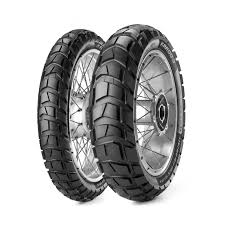
| 5 | Metzeler Karoo 3 | 50/50 | Enduro ADV | Best Off-Road | 4.2 | See Latest Price |
Detailed Reviews
Full breakdown of each tire — ratings, pros, cons, and our expert verdict.
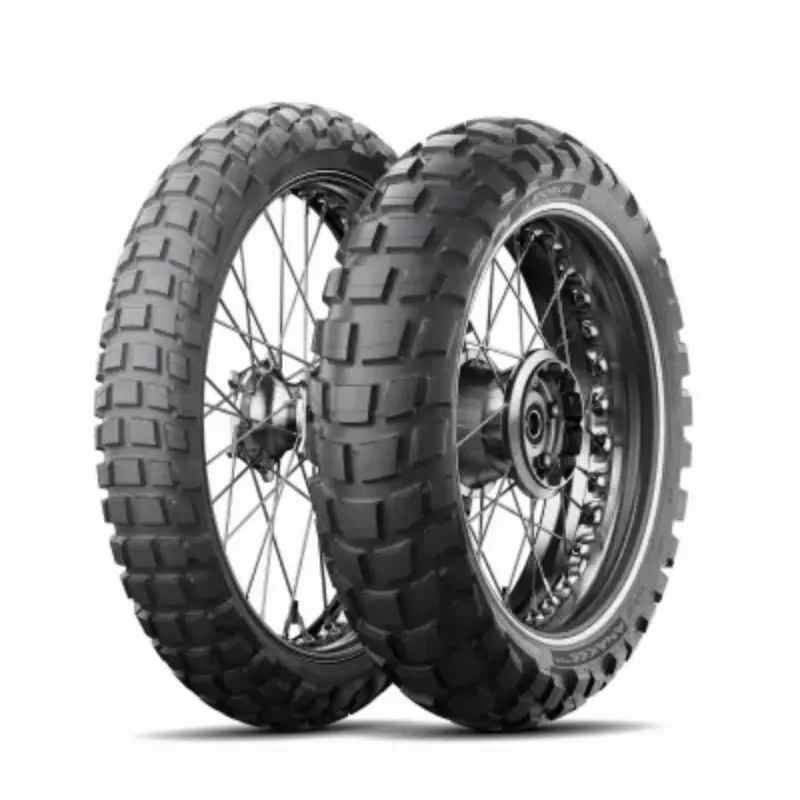
Michelin Anakee Wild
Pros
- Genuine 50/50 compound tolerates safe pressure drops to 1.6 bar off-road without sidewall damage
- Available in the exact 90/90-21 front and 150/70-17 rear sizing required by the F800GS
- Settles immediately from new — no extended break-in mileage required before full grip is available
Cons
- Tread noise above 90 km/h is noticeable without ear protection on extended motorway runs
- Shorter lifespan than road-biased alternatives — touring riders burning primarily highway miles will see faster wear
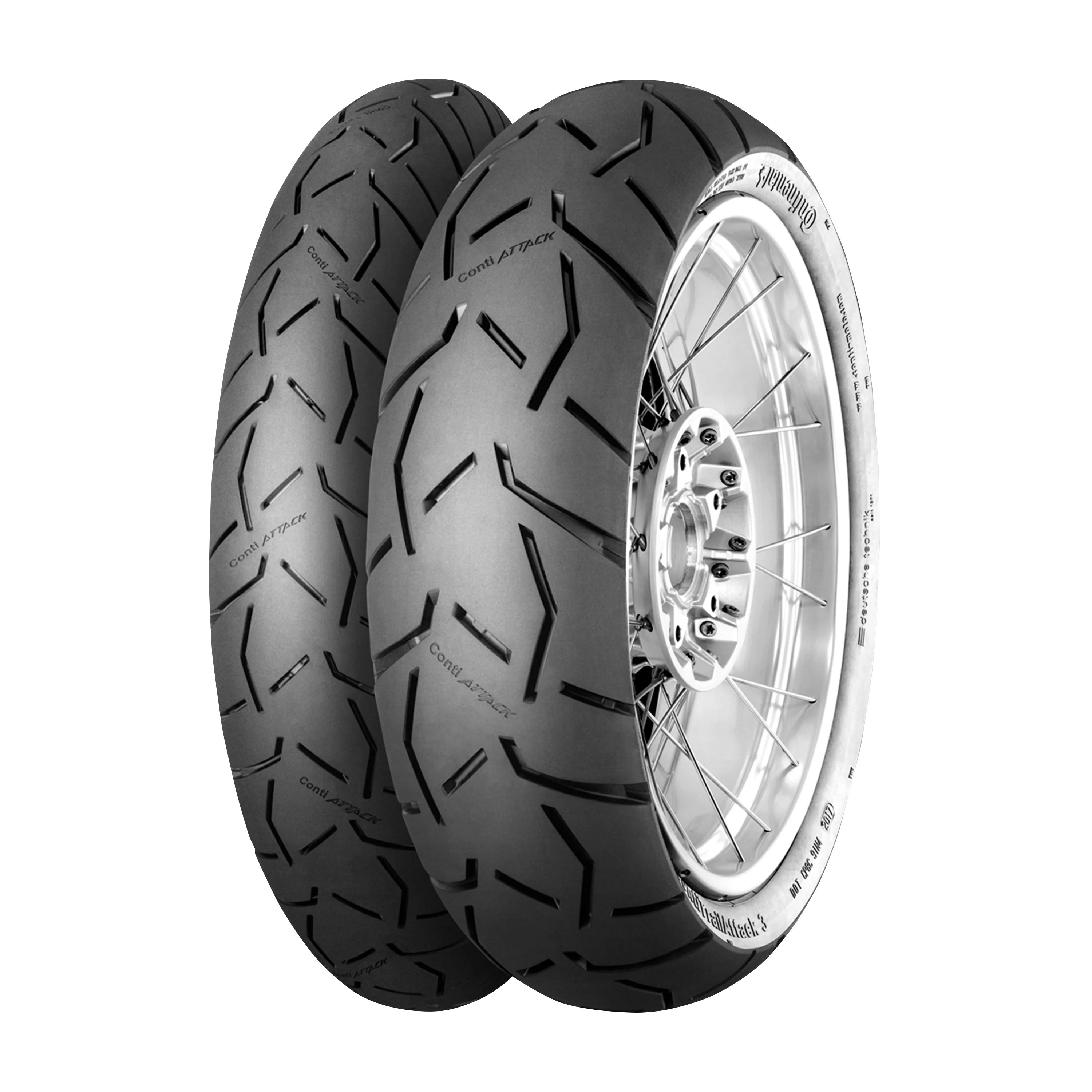
Continental Trail Attack 3
Pros
- TractionSkin micro-rough surface technology delivers full grip within 1,500 meters from new — critical in cold and wet climates
- Zero-degree steel belt prevents tire growth under hard braking at motorway speed, maintaining steering precision
- Backed by a 3-year Continental roadside warranty — the only tire in this category offering that coverage
Cons
- Rated 90/10 road-to-trail — performance drops sharply the moment terrain turns to soft soil, sand, or deep gravel
- Commands a higher price than every other tire in this comparison, with no budget-friendly sizing options
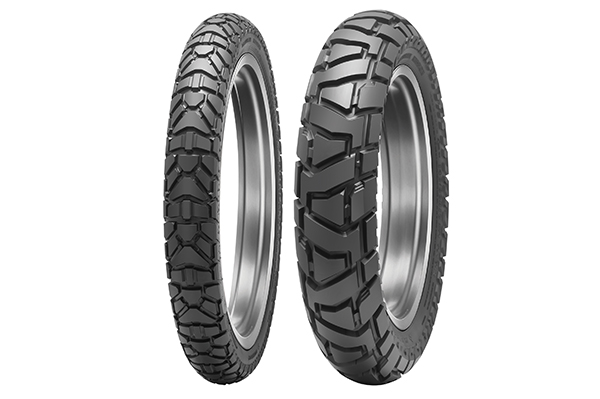
Dunlop Trailmax Mission
Pros
- Documents 20,000+ miles of real-world tread life from BMW GS community riders — a figure essentially unmatched in this category
- ATV-derived sidewall lugs add puncture resistance and directional stability on hardpack trails
- Quiet highway manners with minimal vibration through the handlebar on long tarmac stages
Cons
- Performs closer to a 70/30 road-biased tire in practice despite 60/40 labeling — loose sand and deep mud expose its limits quickly
- The hard compound that delivers its exceptional mileage also slightly reduces cold-weather grip in sub-5°C conditions
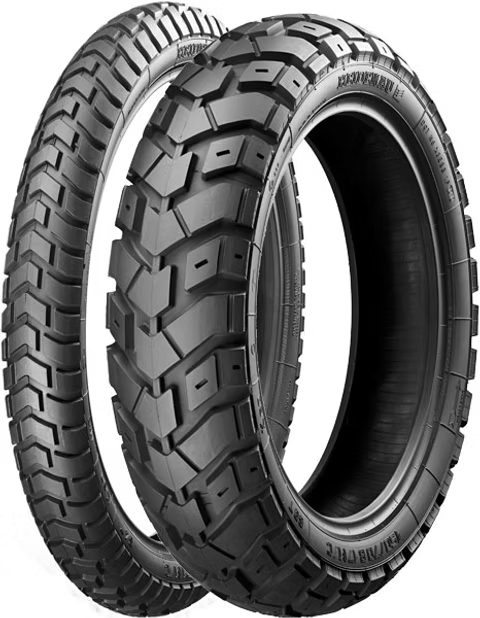
Heidenau K60 Scout
Pros
- M+S certified compound extends usable riding into autumn and early spring without switching to seasonal rubber
- Above-average tread life for a 60/40 tire — the German compound resists wear without sacrificing predictable traction
- Consistent tracking on wet asphalt and loose gravel without sudden grip transitions between surfaces
Cons
- New tires require 100–200 km of bedding in before full lateral stability — handling can feel slightly vague from the showroom
- Traction degrades sharply in deep mud or loose sand; not suited to F800GS riders who regularly tackle trail sections
Metzeler Karoo 3
Pros
- Factory-fitted on select F800GS variants from BMW — confirmed size and clearance compatibility with no guesswork
- Sand-paddle-style block scoops self-clean debris and maintain traction on loose surfaces where typical knobbies pack up
- Hard-packed gravel and rocky trail performance is genuinely competitive with the Continental TKC80 benchmark
Cons
- The rear tire’s central rain groove disappears around 3,000 km, significantly reducing wet-road grip before the tread looks worn
- Produces noticeable whine above 100 km/h — riders doing sustained motorway mileage will find this fatiguing without ear protection
???? Can’t Decide?
Our Top 2 Picks — Head to Head
Both are strong choices for the F800GS. Here’s how to pick the right one for your riding style.
- Genuine 50/50 capability confirmed by real F800GS owners on gravel and tarmac
- Pressure-tolerant design handles safe drops to 1.6 bar off-road without rim damage
- Direct sizing fit in 90/90-21 front and 150/70-17 rear — no adapters or compromises
- TractionSkin technology delivers full grip in under 1,500 meters — ideal for cold-start riders in wet climates
- MultiGrip compound provides sport-touring-level wet and dry road confidence
- Backed by a 3-year Continental roadside warranty — unique in this category
How to Choose the Right Tire for Your F800GS
Six factors that matter before you buy — explained for the F800GS specifically.
Confirm F800GS Sizing First
The BMW F800GS requires a 90/90-21 front and 150/70-17 rear. Not every adventure tire is available in these exact dimensions — several popular options are only produced in larger ADV sizing. Verify the fitment chart for both axles before ordering to avoid a return.
Match the Tire to Your Actual Riding Mix
Be honest about your real road-to-trail ratio. Riders who spend 80%+ on tarmac are better served by the Continental Trail Attack 3 or Dunlop Trailmax Mission. Genuine 50/50 riders need the Michelin Anakee Wild or Metzeler Karoo 3. There is no tire that excels equally at both extremes.
Understand Compound and Wear Trade-Offs
Softer compounds grip better and warm up faster in cold weather but wear significantly sooner. The Continental Trail Attack 3 uses a MultiGrip compound that balances both. The Dunlop Trailmax Mission uses a harder compound that prioritizes longevity over cold-temperature sensitivity.
DIY vs. Professional Mounting
The F800GS runs tubeless tires on both axles. Mounting tubeless motorcycle tires at home requires tire irons, a mounting stand, and a high-volume compressor capable of fast bead seating. Without the right equipment, a missed bead seat can cause a blowout. A moto shop typically charges $30–60 per tire.
Check Warranty Coverage
The Continental Trail Attack 3 is the only tire in this comparison that includes a 3-year roadside warranty. Most other dual sport tires cover manufacturing defects only. For long-distance touring riders who cover 15,000+ miles per year, that coverage has real practical value on remote routes.
Evaluate Rear Wear Rate Separately
The rear tire on the F800GS wears 30–40% faster than the front due to drive load. Aggressive knobbies like the Metzeler Karoo 3 show early rain groove wear around 3,000 km on the rear while still appearing usable. Track front and rear mileage independently and budget for staggered replacement.
✅ Pro Tips
Quick F800GS Tire Buying Checklist
Always verify 90/90-21 front and 150/70-17 rear availability in the specific tire model before ordering — not all adventure tires are produced in F800GS sizing.
Drop tire pressure to 1.6–2.0 bar on gravel and restore road pressure before returning to tarmac — running knobbies at road pressure off-road shrinks the contact patch and kills traction.
Track front and rear mileage separately — the rear wears 30–40% faster on the F800GS, so plan to replace it once before the front needs changing.
Carry a tubeless tire plug kit and CO₂ inflators in your luggage — they handle roadside punctures in under 10 minutes and weigh less than a phone charger.
Related Guides
Other BMW Adventure Bikes
Frequently Asked Questions
What are the stock tires on the BMW F800GS?
The F800GS shipped with either the Metzeler Tourance or the Michelin Anakee 2 depending on model year, with later variants using the Michelin Anakee 3 as OEM fitment. All three are road-biased dual sport tires, meaning most aftermarket choices will noticeably improve either off-road traction or tread life compared to stock.
Which tire is best for the BMW F800GS on mixed roads?
The Michelin Anakee Wild is the most consistently recommended choice for genuine 50/50 use on the F800GS. It handles tarmac without the squirm of pure knobbies and performs confidently on gravel and hard-packed dirt. Riders who want more road mileage with lighter trail use should consider the Dunlop Trailmax Mission instead.
How long do BMW F800GS tires typically last?
Tread life varies widely by tire type and riding style. Road-biased tires like the Dunlop Trailmax Mission can last 20,000+ miles on a GS-class bike, while aggressive 50/50 options like the Metzeler Karoo 3 may show reduced wet grip on the rear by 3,000 km despite appearing visually unworn.
Is the Continental Trail Attack 3 suitable for off-road riding on the F800GS?
The Trail Attack 3 handles hard-packed gravel and stony forest tracks competently, but it is fundamentally a road tire rated 90/10. Riders who stick to paved roads with occasional gravel detours will find it excellent. For genuine off-road sections — loose dirt, sand, or deep gravel — the Anakee Wild or Karoo 3 is a better fit.
Are premium tires worth the extra cost on the BMW F800GS?
For regular highway and touring use, yes — options like the Continental Trail Attack 3 offer measurably better wet grip, faster warmup, and manufacturer warranty coverage. Budget-conscious riders on mixed terrain will get strong performance from the Heidenau K60 Scout at a lower cost per mile, making the gap in value entirely rider-dependent.
Can I install BMW F800GS tires myself at home?
Tubeless mounting without proper equipment risks incomplete bead seating, which can cause a blowout at speed. Riders without a dedicated tire changing stand and high-volume compressor should use a motorcycle shop for mounting. A basic tire plug kit is worth carrying in your saddlebags for roadside puncture emergencies on the trail.
What tire pressure should I run on the BMW F800GS off-road?
Most F800GS riders drop pressure to 1.6–2.0 bar for gravel and trail use, then restore road pressure (2.2–2.5 bar front, 2.5–2.8 bar rear) before returning to tarmac. Exact settings depend on rider weight, luggage load, and tire brand — always check the manufacturer’s recommendation and adjust from there.
???? Final Verdict
Our Top F800GS Tire Recommendations for 2026
The Michelin Anakee Wild remains the top pick for F800GS riders who need a single tire that genuinely handles both tarmac and trail — confirmed by documented owner feedback, not marketing claims. For road-focused riders willing to pay for premium wet-weather safety and warranty coverage, the Continental Trail Attack 3 is in a class of its own. Commuters and high-mileage tourers who want to minimize cost-per-mile should look first at the Dunlop Trailmax Mission, whose documented 20,000+ mile lifespan from BMW GS owners makes it the most economical long-run choice.