After evaluating owner feedback across WranglerTJForum, JK-Forum, JLWranglerForums, and Reddit’s r/Jeep and r/Wrangler, we cross-referenced five coolant options against the specific demands of Jeep Wrangler engines. The difference between a correctly matched coolant and the wrong one can mean the difference between a clogged heater core and a cool-running engine on the trail.
The Wrangler platform splits neatly at the 2013 model year — OAT for newer engines, HOAT for older ones. Choose wrong, and the two chemistries react to form a gel that blocks coolant passages. Based on long-term owner reports and chemical compatibility data, here’s what protects your Jeep best for 2026.
The best coolant for Jeep Wrangler depends on your model year. For 2013 and newer Wranglers, Mopar 10 Year/150,000 Mile OAT Coolant 50/50 Premixed is the factory-spec choice that guarantees compatibility. For 2012 and older Wranglers, Zerex G05 HOAT coolant matches Chrysler’s original specification at roughly half the dealer price.
Our Top 5 Coolant Rankings
- Mopar 10Yr/150K 50/50 Premixed— Best Overall, Factory OAT Spec
- Zerex G05 50/50 Premixed— Best Budget, Proven HOAT Formula
- Mopar 10Yr/150K Concentrate— Best Value Long-Term
- Peak OET Extended Life Gold— Best Premium HOAT
- Valvoline MaxLife Universal— Best Universal, Multi-Vehicle
Best Jeep Wrangler Coolant — Compared
Side-by-side comparison of coolant type, specification, and our scores for each pick.
| # | Product | Spec | Coolant Type | Best For | Score | |
|---|---|---|---|---|---|---|
| 1 | Mopar 10Yr/150K 50/50 Premixed Editor’s Choice | MS.90032 | OAT 50/50 | 2013+ Wranglers | 4.6 | See Latest Price |
| 2 | Zerex G05 50/50 Premixed Budget Pick | HOAT | HOAT 50/50 | 2012 & Older Jeeps | 4.8 | See Latest Price |
| 3 | Mopar 10Yr/150K Concentrate Best Value | MS.90032 | OAT Concentrate | DIY Long-Term Value | 4.7 | See Latest Price |
| 4 | Peak OET Extended Life Gold | HOAT | HOAT Concentrate | Premium Protection | 4.5 | See Latest Price |
| 5 | Valvoline MaxLife Universal | Si-OAT | Universal Premix | Mixed Fleets | 4.5 | See Latest Price |
Detailed Reviews
Full breakdown of each coolant — ratings, pros, cons, and our expert verdict based on owner feedback and chemical compatibility data.
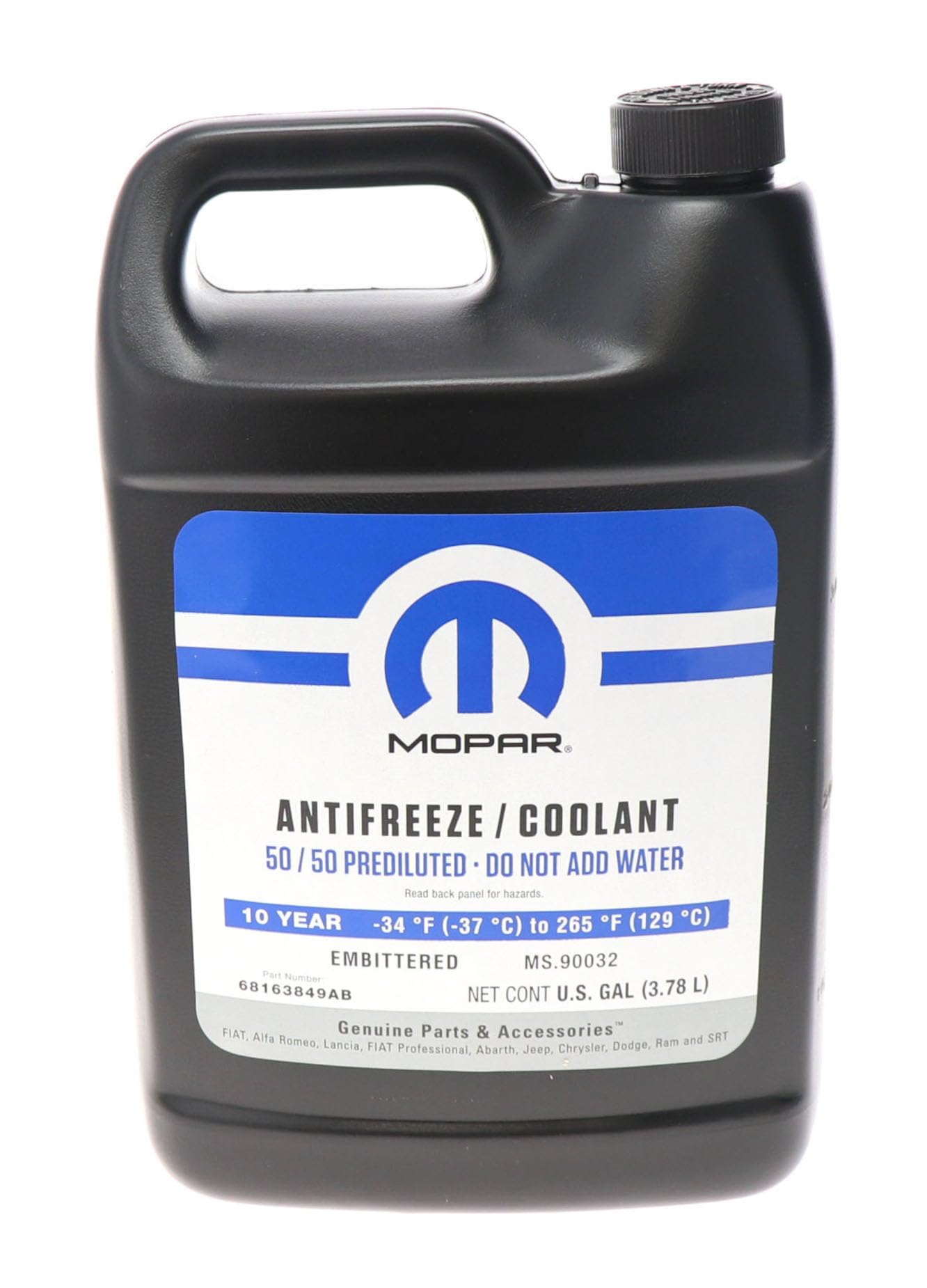
Mopar 10 Year/150,000 Mile Coolant 50/50 Premixed
- Meets exact Chrysler MS.90032 factory specification
- 50/50 prediluted with bittering agent for safety
- Amazon pricing often beats local dealerships by $5-$8 per gallon
- Not compatible with 2012 and older HOAT-requiring Jeeps
- Purple color can mask early contamination signs in the reservoir
- More expensive per ounce of actual coolant than concentrate
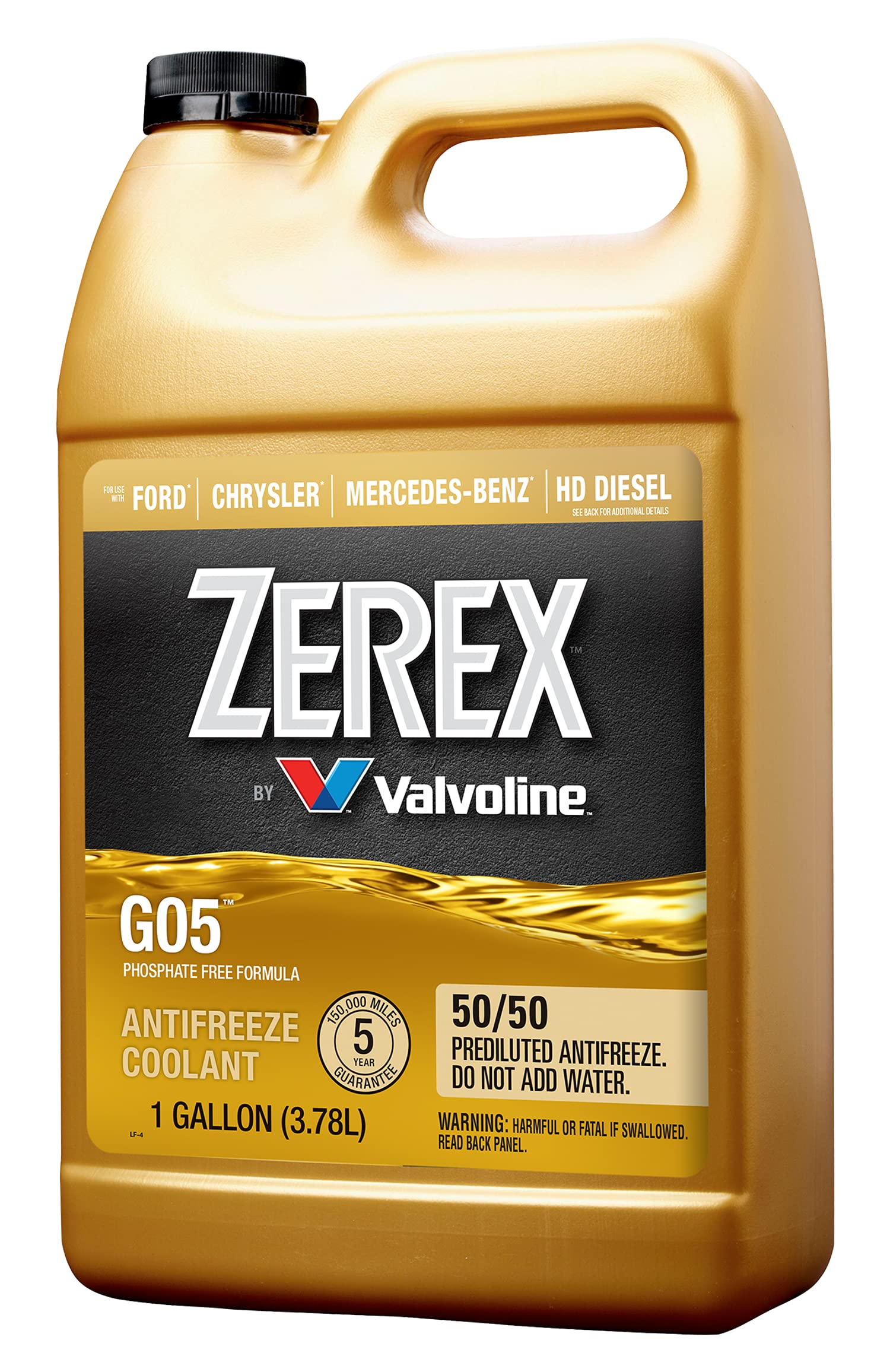
Zerex G05 Phosphate Free 50/50 Ready-to-Use Antifreeze/Coolant
- Matches Chrysler’s original HOAT specification for older Wranglers
- Phosphate-free formulation prevents scale buildup in hard-water conditions
- Costs significantly less than Mopar-branded HOAT from dealer parts counters
- Faint yellow dye makes it difficult to distinguish from clean motor oil
- Not compatible with 2013+ Wranglers that require OAT coolant
- 5-year service life is shorter than modern OAT formulations
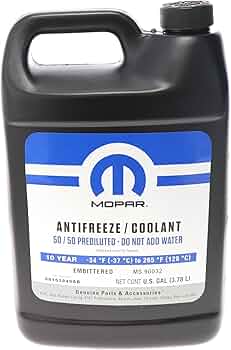
Mopar 10 Year/150,000 Mile Antifreeze-Coolant Concentrate
- One gallon of concentrate makes two gallons of ready-to-use coolant
- Flexible mix ratios for extreme temperature conditions up to 70/30
- Compact storage for trail spares and overlanding gear
- Requires careful measuring and distilled water — not grab-and-pour
- Not as convenient for roadside top-offs
- Bottle looks nearly identical to the premix version; easy to order the wrong one
Peak OET Extended Life Gold Concentrate
- Targeted HOAT formula for North American vehicles including Jeep
- Gold dye is easier to read on dipsticks and reservoir markings than Zerex yellow
- Meets Chrysler and Ford HOAT specifications
- Requires mixing with distilled water — not a premixed formula
- Less widely reviewed than Zerex G05 across Wrangler forums
- Slightly more expensive than Zerex G05 for the same HOAT chemistry
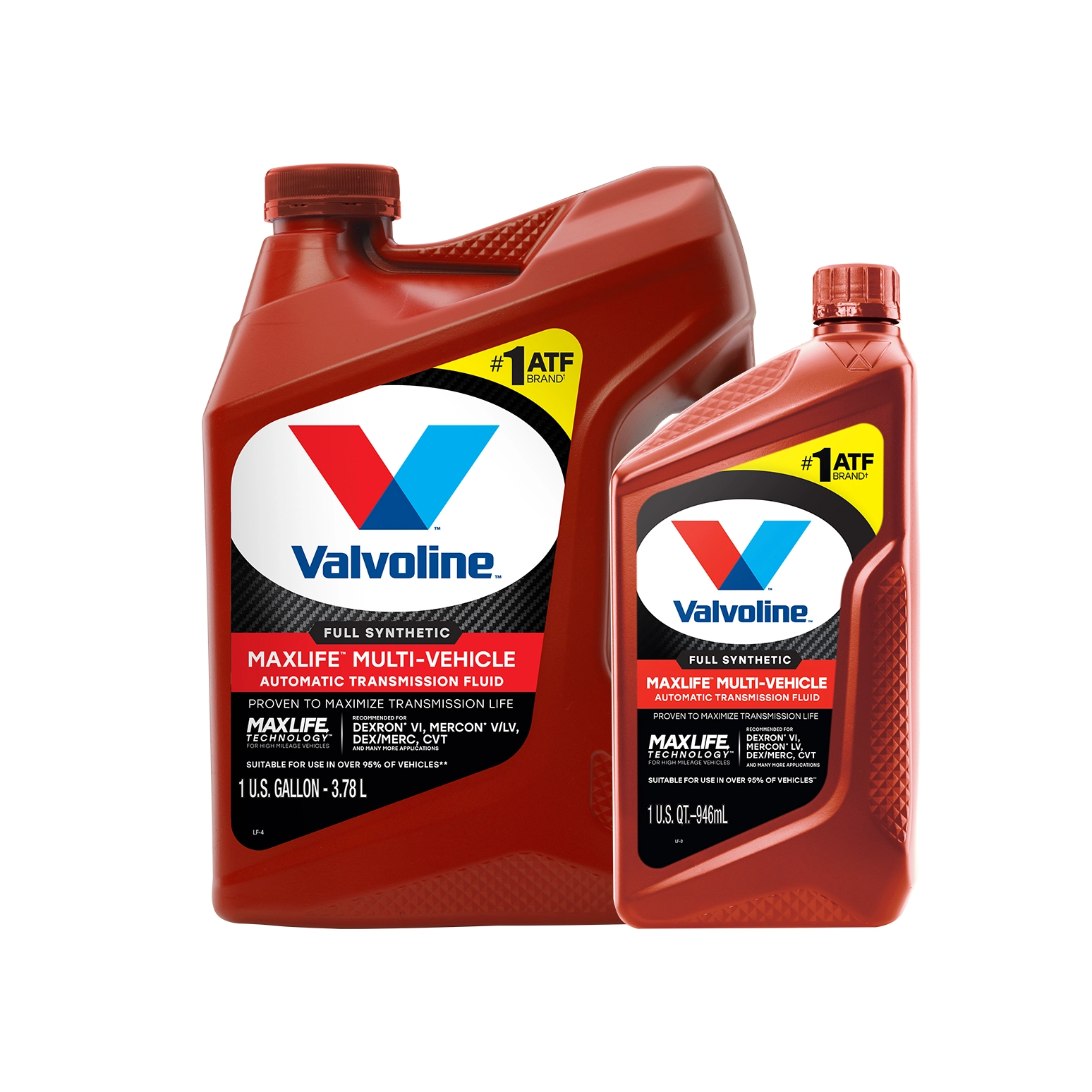
Valvoline MaxLife Universal Antifreeze/Coolant
- Truly universal — one coolant for an entire vehicle fleet
- Alugard Plus additive prevents gelling when mixed with residual coolant
- Strong anti-corrosion package for high-mileage engines
- Full system flush required before initial use — not a simple top-off
- 5-year life is half that of Mopar OAT
- Universal approach is debated among Jeep purists
Can’t Decide?
Our Top 2 Picks — Head to Head
Both are excellent. Here’s how to choose between them based on your Wrangler’s model year.
- Factory OAT chemistry meeting MS.90032 spec
- Zero compatibility risk for 2013+ Wranglers
- 10-year or 150,000-mile service life
- Proven HOAT formula matching Chrysler’s original spec
- Thousands of positive Wrangler TJ/JK owner reviews
- Costs significantly less than Mopar-branded HOAT
How to Choose the Right Coolant for Your Wrangler
Five factors specific to Jeep Wrangler cooling systems — explained by someone who has researched what actually causes failures.
Know Your Model Year First
Jeep changed coolant chemistry at the 2013 model year. Every Wrangler from 2013 forward uses OAT coolant conforming to MS.90032. Every Wrangler from 2012 and earlier uses HOAT coolant. These two chemistries cannot be mixed — doing so triggers a chemical reaction that turns coolant into gel, clogging radiator passages and heater cores.
Premixed vs. Concentrate
Premixed 50/50 coolant pours straight from the bottle with no measuring required. Concentrate costs less per ounce of actual coolant, but you must mix it yourself with distilled water — never tap water. Tap water introduces minerals that form scale inside your engine. If you keep distilled water on hand, concentrate saves money.
HOAT vs. OAT Chemistry
OAT coolant uses organic acid corrosion inhibitors and lasts up to 10 years or 150,000 miles. HOAT coolant combines organic and inorganic inhibitors for faster-acting protection and lasts about 5 years. Your Wrangler was engineered for one or the other. Using the wrong type accelerates corrosion instead of preventing it.
Aftermarket Radiator Needs
Many Wrangler owners upgrade to all-aluminum radiators from brands like Griffin or Mishimoto. Aluminum radiators are more sensitive to coolant chemistry than factory plastic-and-aluminum units. HOAT coolants like Zerex G05 are widely recommended for aluminum radiators because their inhibitor package protects aluminum without silicate drop-out problems.
Flush Before Switching Types
If you are switching from one coolant chemistry to another, you must flush the entire system thoroughly. A simple radiator drain leaves roughly half the old coolant in the engine block. Forum consensus recommends three to four drain-and-fill cycles with distilled water until the drained water runs clear. Only then should you add the new coolant.
Pro Tips
Quick Buying Checklist for Wrangler Coolant
Never mix OAT and HOAT coolant — the chemical reaction forms gel that blocks passages and destroys cooling systems.
Use distilled water only — tap water minerals form engine scale. Distilled water costs about a dollar per gallon.
Check the under-hood sticker — your Wrangler’s required coolant spec is printed right there. No guessing required.
Flush before switching brands — residual old coolant reacts with new chemistry. Three distilled-water cycles clears it safely.
Monitor JL reservoir bottles closely — the 2018+ generation has known elbow fitting cracks that cause slow coolant loss.
Related Guides
Other Jeep Coolant Guides
Jeep HOAT coolant is orange — do not mix with green or pink OAT.
Also On CarAssists
More Guides for This Vehicle
- → Jeep Wrangler
- → Jeep Wrangler
- → Jeep Wrangler
- → Jeep Wrangler— 3.6L Pentastar top picks
- → Jeep Wrangler
Frequently Asked Questions
What coolant does a Jeep Wrangler use?
Jeep Wranglers from 2013 and newer use OAT coolant meeting Chrysler MS.90032 specification — typically purple in color. Wranglers from 2012 and older use HOAT coolant — typically orange, pink, or yellow. Always check your owner’s manual for the exact specification for your specific model year before purchasing.
Can I mix different coolant colors in my Jeep Wrangler?
No. Coolant color is not just dye — it indicates different chemical formulations. Mixing OAT and HOAT coolants can cause a chemical reaction that turns the coolant into gel, blocking radiator passages and heater cores. If you accidentally mix types, have the system flushed and refilled with the correct coolant immediately.
How often should I change the coolant in my Jeep Wrangler?
OAT coolant in 2013+ Wranglers lasts up to 10 years or 150,000 miles. HOAT coolant in older Wranglers should be changed every 5 years or 100,000–150,000 miles. However, coolant degrades faster under the extreme heat cycles common in off-road driving. Many experienced Wrangler owners change coolant at half the rated interval as cheap insurance.
Is Mopar coolant worth the extra cost?
For 2013 and newer Wranglers, Mopar OAT coolant is the factory specification — it guarantees compatibility and eliminates the risk of chemical reactions with residual factory fill. The price difference on Amazon is often only $3–$5 per gallon compared to aftermarket alternatives. For that small premium, the certainty is worth it for most owners.
Will using the wrong coolant void my Jeep warranty?
Using coolant that does not meet Chrysler MS.90032 in a 2013+ Wrangler can contribute to cooling system failures that may not be covered under warranty. Jeep’s owner’s manual explicitly states that coolant must conform to MS.90032. If a dealership determines that incorrect coolant caused a failure, the repair cost falls on you.
Can I use universal coolant in my Jeep Wrangler?
Universal coolants like Valvoline MaxLife can work in Wranglers, but only after a complete system flush that removes all traces of the previous coolant. Universal does not mean “mixable with anything in any situation.” It means the formula is designed to be compatible across vehicle types when used as a complete fill. Skipping the flush invites gelling and corrosion.
How do I know if my Wrangler has the wrong coolant?
Warning signs include fluctuating temperature readings, a sweet coolant smell inside the cabin, sludge or gel visible in the radiator neck or reservoir, disappearing coolant with no external leaks, and a check engine light for cooling system performance. If you recently topped off with a different coolant type and notice any of these symptoms, have the system flushed and refilled immediately.
Final Verdict
Our Top Recommendations for 2026
After evaluating owner feedback, forum discussions, and chemical compatibility data specific to the Jeep Wrangler platform, the Mopar 10 Year/150,000 Mile 50/50 Premixed stands out as the best overall choice for 2013+ Wrangler owners — it guarantees factory-spec compatibility with zero mixing hassle. For older Wrangler owners, the Zerex G05 50/50 Premixed delivers proven HOAT chemistry at a significantly lower price than dealer coolant. Whichever you choose, matching the coolant type to your specific model year is the single most important decision you will make for your Jeep’s cooling system.