After evaluating six leading synthetic oils against Toyota’s strict 0W-20 requirements, we cross-referenced Amazon reviews, oil analysis reports, and forum feedback from ToyotaNation and BobIsTheOilGuy. The oil you pour into the crankcase every 5,000 to 10,000 miles determines whether that engine stays clean and quiet or develops the piston slap and oil consumption that plague neglected examples.
Toyota builds engines that regularly surpass 200,000 miles. Modern Toyota engines share a common requirement: full synthetic 0W-20 motor oil meeting API SP and ILSAC GF-6A specifications. Toyota’s official recommendation is clear: “Genuine Toyota motor oil 0W-20 utilizes a Toyota-specific additive package, but other 0W-20 synthetic oils can be used as long as they are ILSAC certified.”
Mobil 1 Advanced Full Synthetic 0W-20 is the most widely endorsed choice across Toyota forums, Amazon reviews, and independent lab testing. It is manufactured by ExxonMobil, the same company that blends Toyota Genuine Motor Oil, and offers consistent performance at a competitive price. For owners seeking maximum wear protection, independent testing shows Pennzoil Ultra Platinum 0W-20 and Quaker State Ultimate Durability 0W-20 deliver exceptional film strength.
Our Top 6 Oil Rankings for Toyota
- Mobil 1 Advanced Full Synthetic 0W-20— Best Overall
- Toyota Genuine Motor Oil 0W-20— Best OEM Match
- Pennzoil Ultra Platinum 0W-20— Best Premium
- Castrol GTX Full Synthetic 0W-20— Best Budget
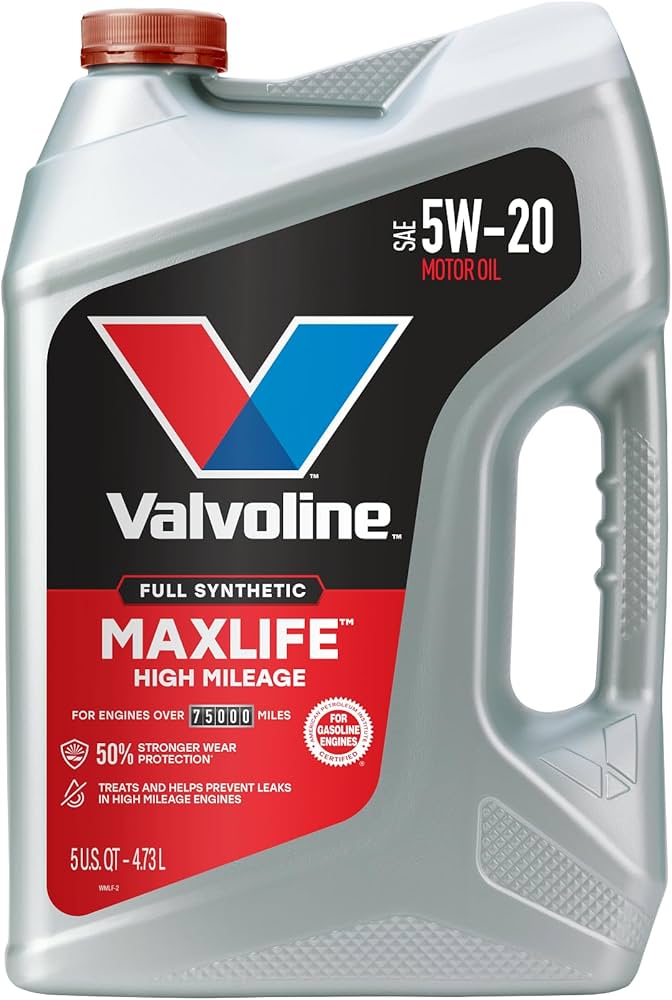
- Valvoline High Mileage MaxLife 5W-20— Best High Mileage
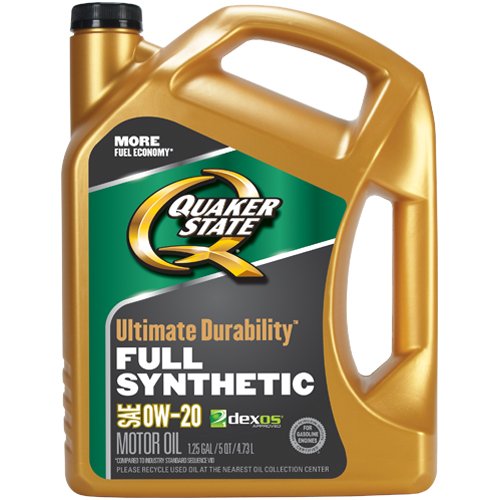
- Quaker State Ultimate Durability 0W-20— Best Wear Protection
Best Oil for Toyota — Compared
Six full synthetic oils ranked by additive quality, independent wear test results, and real-world durability in modern Toyota engines.
| # | Product | Viscosity | Key Feature | Best For | Score | |
|---|---|---|---|---|---|---|
| 1 | Mobil 1 Advanced Full Synthetic Editor’s Choice | 0W-20 | Same manufacturer as TGMO | Best Overall | 4.8 | See Latest Price |
| 2 | Toyota Genuine Motor Oil 0W-20 Top Pick | 0W-20 | High moly (755+ ppm) | Best OEM Match | 4.7 | See Latest Price |
| 3 | Pennzoil Ultra Platinum 0W-20 | 0W-20 | GTL base oil, natural gas-derived | Best Premium | 4.8 | See Latest Price |
| 4 | Castrol GTX Full Synthetic 0W-20 Budget Pick | 0W-20 | 6X better wear protection vs. standard | Best Budget | 4.6 | See Latest Price |
| 5 | Valvoline High Mileage MaxLife 5W-20 | 5W-20 | Seal conditioners, reduced oil burn | Best High Mileage | 4.7 | See Latest Price |
| 6 | Quaker State Ultimate Durability 0W-20 | 0W-20 | Highest film strength in testing | Best Wear Protection | 4.6 | See Latest Price |
Detailed Reviews
Full breakdown of each product — ratings, pros, cons, and our expert verdict based on independent testing and owner feedback.
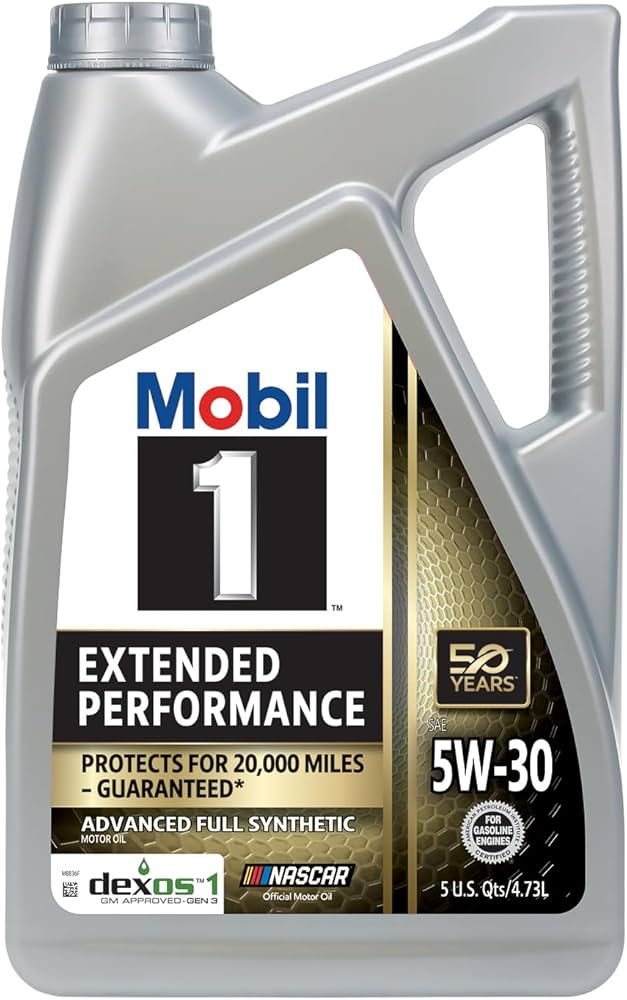
Mobil 1 Advanced Full Synthetic 0W-20
- Same manufacturer as Toyota Genuine oil ensures compatibility
- Massive user base with consistent UOA results across 10K+ intervals
- 5‑quart jug perfectly matches most Toyota sump capacities
- Frequent sales bring price well below dealer oil changes
- Lower molybdenum content than Toyota Genuine oil
- Price varies significantly between retailers
- Some forum members prefer shorter 5,000‑mile intervals
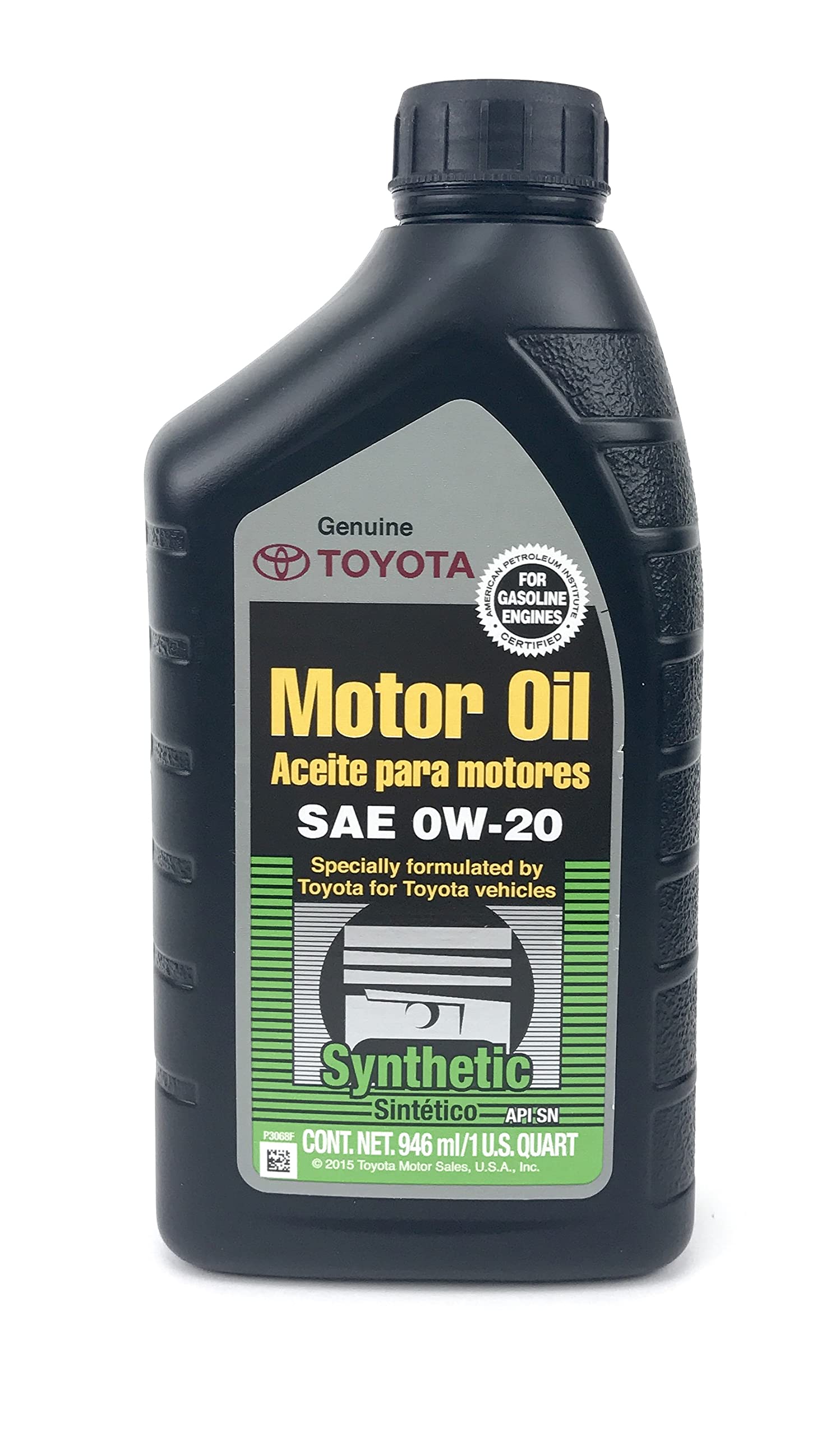
Toyota Genuine Motor Oil 0W-20
- Guaranteed factory chemical match for every Toyota engine
- Highest molybdenum content among mainstream 0W‑20 oils
- Documented spotless engine internals after 100K+ miles
- Can be surprisingly cheap at dealership parts counters
- Dealer pricing is highly variable — some charge $9/qt
- Not always sold in convenient 5‑quart jugs on Amazon
- Some independent tests rank other oils higher in wear
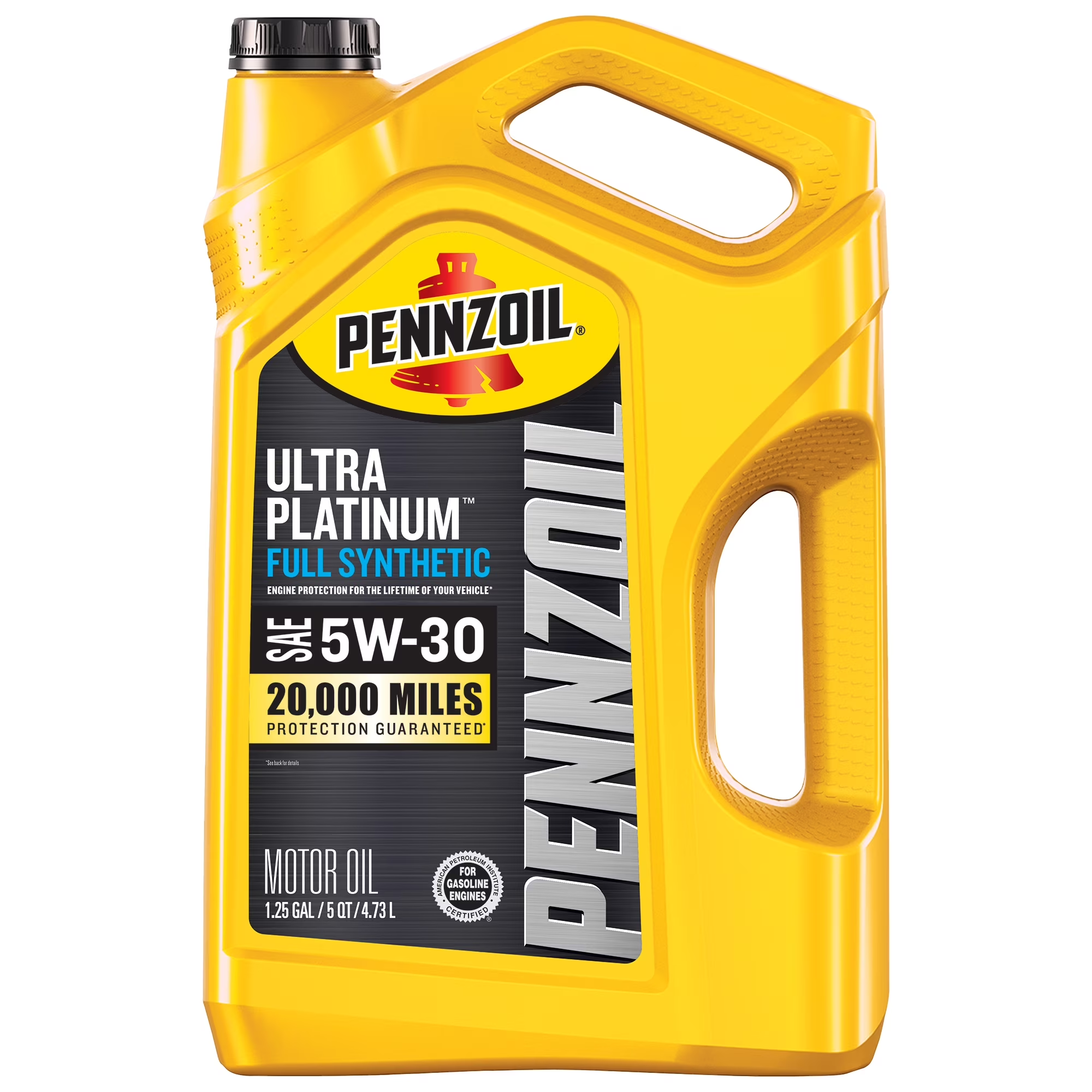
Pennzoil Ultra Platinum 0W-20
- GTL base oil derived from natural gas — fewer impurities
- 275°F thermal breakdown point among the highest tested
- Available in bulk 3‑packs at significant savings with rebates
- Consistently rated above standard Pennzoil Platinum on forums
- Higher regular price — rebates are almost essential
- 0W‑20 formulation lacks boron unlike 5W‑30 version
- Amazon availability can be inconsistent
Castrol GTX Full Synthetic 0W-20
- Full synthetic protection at a value price
- Strong sludge‑fighting detergent package
- Widely available at major retailers
- Meets API SP and ILSAC GF‑6A
- Fewer Toyota‑specific UOA reports than Mobil 1
- Positioned below Castrol EDGE in the product hierarchy
- Not the best choice for turbocharged engines

Valvoline High Mileage with MaxLife Technology 5W-20
- Seal conditioners actively reduce oil leaks in aging engines
- Quiets noisy valve trains in higher‑mileage Toyotas
- Reduces oil consumption compared to 0W‑20 in worn engines
- Affordable and widely available
- Heavier viscosity slightly reduces fuel economy
- Not recommended for engines under 75K miles or under warranty
- Effects take multiple oil changes to become apparent
Quaker State Ultimate Durability 0W-20
- Highest film strength among tested 0W‑20 oils (124,393 psi)
- Exceptional wear protection at a competitive price
- Shell manufacturing quality and research backing
- Meets API SP and ILSAC GF‑6A
- Less brand recognition than Mobil 1 or Pennzoil in Toyota circles
- Fewer Toyota‑specific UOA reports than category leaders
- Amazon availability can be inconsistent
Can’t Decide?
Our Top 2 Picks — Head to Head
Both are excellent. Here’s how to choose between them.
- Made by ExxonMobil, same as Toyota Genuine oil
- 4.8‑star Amazon average across thousands of reviews
- 5‑quart jug perfectly matches most Toyota sump capacities
- Highest molybdenum content (755+ ppm) for friction reduction
- Factory‑spec additive package with documented clean‑engine results
- No questions about compatibility during warranty period
How to Choose the Best Oil for Your Toyota
Six factors that matter before you buy — explained simply.
Match the Viscosity to Your Engine
Most Toyotas from 2010 onward require 0W‑20. Newer hybrids and some 2019+ gas engines use 0W‑16. Older V6 and V8 models often specify 5W‑30. Always check your oil fill cap and owner’s manual first. Using the wrong viscosity can affect VVT‑i operation and fuel economy.
Look for API SP and ILSAC GF‑6A
These certifications guarantee protection against low‑speed pre‑ignition (LSPI) in turbocharged and direct‑injection engines, plus proper timing chain wear protection. Oils meeting the newer SP/GF‑6A standards are backward compatible with older Toyota requirements.
5,000 or 10,000 Miles? The Interval Debate
Toyota officially allows 10,000‑mile intervals under normal conditions. Many experienced mechanics recommend 5,000 miles for severe service — short trips, cold weather, towing, or dusty roads. More frequent changes are cheap insurance for long‑term engine health.
Don’t Forget the Oil Filter
Toyota’s OEM Denso‑made filters (90915‑YZZF1) are excellent. Aftermarket options from Mobil 1, Purolator, K&N, and Wix also perform well. Change the filter with every oil change — a premium oil is wasted if the filter bypasses dirty oil.
Conventional vs. Synthetic: No Contest
Modern Toyota engines with tight bearing clearances and VVT‑i systems require the flow characteristics of full synthetic oil. Conventional oil flows too slowly at startup and breaks down faster. The small price difference between conventional and synthetic is far less than an engine rebuild.
Watch Oil Consumption Between Changes
Toyota considers up to 1 quart per 1,200 miles acceptable. Check your oil level monthly. Running low on oil will destroy a Toyota engine long before it reaches its potential lifespan. If consumption increases, consider a high‑mileage formulation.
Pro Tips
Quick Buying Checklist — Avoid These Common Mistakes
Don’t use conventional oil in a synthetic‑designed engine. Modern Toyota VVT‑i systems need the flow of full synthetic. Conventional oil can’t match the cold‑start protection.
Don’t switch viscosity just because it’s on sale. A bargain 5W‑30 may cause VVT‑i issues if your engine calls for 0W‑20. Stick to the oil fill cap specification.
Use API/ILSAC certified oils during warranty. Some boutique oils lack these certifications. A denied warranty claim over oil can cost thousands.
Match drain intervals to your driving. 10K miles works for highway commuters. For short trips, cold weather, or towing, change at 5K miles.
Check your oil level monthly. Toyota allows up to 1 quart per 1,200 miles. Running low on oil will destroy your engine quickly.
Related Guides
Popular Toyota Oil Guides
Toyota recommends 0W-20 for most modern models — check your cap.
Also On CarAssists
More Guides for This Vehicle
Frequently Asked Questions
What is the best oil for Toyota vehicles?
The best oil for Toyota depends on your engine and model year. For most modern Toyotas (2010+), Mobil 1 Advanced Full Synthetic 0W‑20 is the most widely endorsed choice. It is manufactured by ExxonMobil — the same company that makes Toyota Genuine Motor Oil — and meets all required API SP and ILSAC GF‑6A specifications.
Can I use 5W-30 instead of 0W-20 in my Toyota?
Toyota owner’s manuals state that 5W‑30 may be used temporarily if 0W‑20 is unavailable, but the system should be returned to 0W‑20 at the next oil change. Using 5W‑30 long‑term may reduce fuel economy and cause minor changes in variable valve timing behavior.
How often should I change the oil in my Toyota?
Toyota officially recommends 10,000 miles or 12 months for vehicles using full synthetic 0W‑20 under normal driving conditions. For severe service — short trips, cold weather, dust, towing — many experienced Toyota technicians recommend 5,000‑mile intervals.
Is Toyota Genuine Motor Oil worth the extra cost?
Toyota Genuine Motor Oil 0W‑20 contains significantly more molybdenum (755+ ppm) than standard Mobil 1, providing superior friction reduction for VVT‑i systems. At dealership pricing of $3–$4 per quart, it’s an excellent value. At $8–$9 per quart, Mobil 1 offers comparable protection for less.
Can I use AmazonBasics or SuperTech synthetic oil in my Toyota?
AmazonBasics and SuperTech full synthetic oils that carry API SP and ILSAC GF‑6A certification meet Toyota’s minimum requirements. A BobIsTheOilGuy member tested SuperTech 0W‑20 in a Toyota Tundra with satisfactory results. These budget oils are acceptable with conservative drain intervals.
What happens if I use conventional oil in a Toyota that requires synthetic?
Conventional oil flows more slowly at low temperatures, increasing cold‑start wear. It breaks down faster at operating temperature, leaving sludge and varnish deposits. Toyota engines designed for 0W‑20 synthetic have tight bearing clearances that depend on the oil’s flow characteristics.
Does the brand of oil filter matter for my Toyota?
Yes. The Toyota OEM filter (90915‑YZZF1) is an excellent choice manufactured by Denso. Aftermarket filters from Mobil 1, Purolator, K&N, and Wix also perform well. Avoid the cheapest economy filters, which may use inferior filter media and bypass valves.
Final Verdict
Our Top Recommendations for 2026
A Toyota engine that receives full synthetic oil changes at reasonable intervals will run for 200,000 miles or more with remarkable consistency. A thirty‑dollar 5‑quart jug of the right oil is the cheapest insurance you will ever buy for your vehicle. After evaluating six leading oils against Toyota’s 0W‑20 specifications, here are our definitive picks.