After cross-referencing five BMW Longlife-04 certified synthetics against diesel owner reports from Bimmerpost forums, BMW UK owner groups, and used-oil analysis databases, we identified the oils that genuinely protect M57, N57, and B57 engines — without clogging the diesel particulate filter.
BMW’s turbo diesels sit in a unique position: they need a low-SAPS formula to preserve DPF health, yet they also run hotter and carry more soot than petrols. The wrong oil accelerates regeneration failures and starves the variable-vane turbo. Every pick below carries the formal BMW Longlife-04 approval — not just a marketing claim.
A fully synthetic low-SAPS 5W-30 with BMW Longlife-04 approval is the only safe choice for any modern BMW diesel fitted with a DPF. Castrol Edge 5W-30 LL matches the factory-fill specification for most M57 and N57 engines and delivers reliable DPF-safe protection across the full drain interval. For drivers who tow regularly or cover sustained high-speed mileage, Mobil 1 ESP 5W-30 adds exceptional thermal stability where engine temperatures peak.
Our Top 5 BMW Diesel Oil Rankings
-
Castrol Edge 5W-30 LL — Best Overall
-
Pennzoil Platinum Euro L 5W-30 — Best Budget
-
Motul 8100 X-clean+ 5W-30 — Best Premium / Hard-Working Turbo Diesels
-
Mobil 1 ESP 5W-30 — Most Durable / Extended Drain Intervals
-
Liqui Moly Top Tec 4200 5W-30 — Easiest DIY Oil Change
Best BMW Diesel Oils — Compared
Every pick holds BMW Longlife-04 approval and a low-SAPS formulation safe for DPF-equipped engines.
| # | Product | Viscosity | Base Stock | Best For | Score | |
|---|---|---|---|---|---|---|
| 1 | Castrol Edge 5W-30 LL Editor’s Choice | 5W-30 | Full Synthetic | Daily driving | 4.8 | See Latest Price |
| 2 | Pennzoil Platinum Euro L 5W-30 Top Pick | 5W-30 | Natural Gas Synthetic | Budget-conscious owners | 4.7 | See Latest Price |
| 3 | Motul 8100 X-clean+ 5W-30 | 5W-30 | Ester Synthetic | Hard-working turbo diesels | 4.8 | See Latest Price |
| 4 | Mobil 1 ESP 5W-30 Budget Pick | 5W-30 | Full Synthetic | Extended drain intervals | 4.7 | See Latest Price |
| 5 | Liqui Moly Top Tec 4200 5W-30 | 5W-30 | Full Synthetic + Moly | DIY changes, high-mileage diesels | 4.8 | See Latest Price |
Detailed Reviews
Full breakdown of each oil — ratings, pros, cons, and our expert verdict for BMW diesel engines.
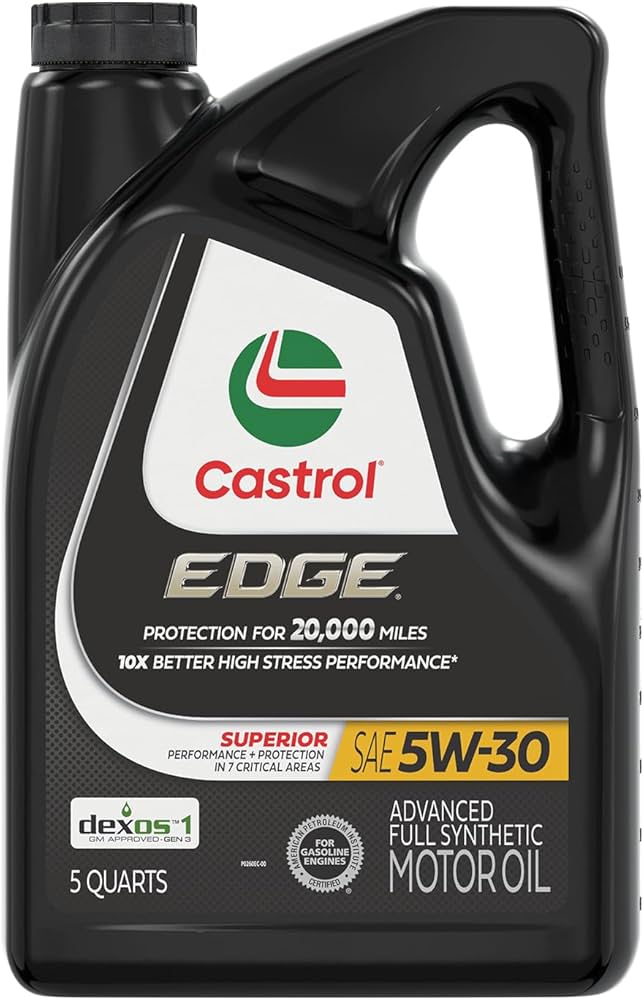
Castrol Edge 5W-30 LL
Pros
- Factory-fill spec for M57 and N57 engines; LL-04 printed clearly on the bottle
- Fluid Titanium Technology reduces metal-on-metal contact under sustained turbo boost
- DPF regeneration intervals stay consistent; no premature clogging reported
- Oil level holds steady across 8,000-mile drain intervals in owner reports
Cons
- No integrated pour spout — a funnel is required for a clean top-up
- Retail auto parts pricing runs $4–6 higher per jug than Amazon’s consistent pricing
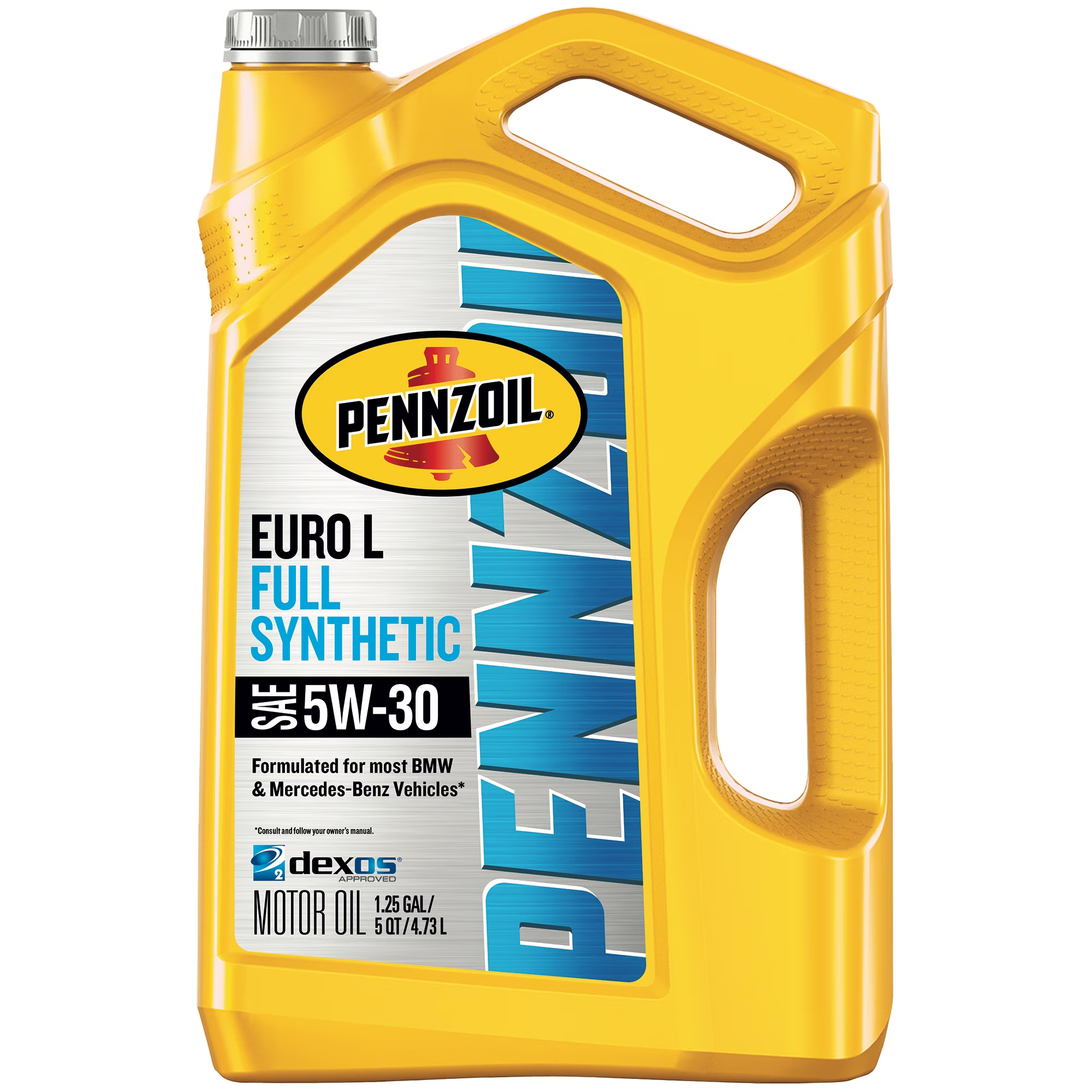
Pennzoil Platinum Euro L 5W-30
Pros
- BMW LL-04 approval confirmed on the rear label; not just a marketing claim
- Natural gas base oil resists thermal breakdown and keeps piston crowns cleaner
- Roughly $5–6 per quart — undercuts most European-branded LL-04 alternatives
- DPF regeneration frequency stays at factory levels in owner reports
Cons
- Some high-mileage N57 engines with worn seals show slightly higher consumption compared to Castrol
- Foil inner cap seal can be stubborn to remove without tearing
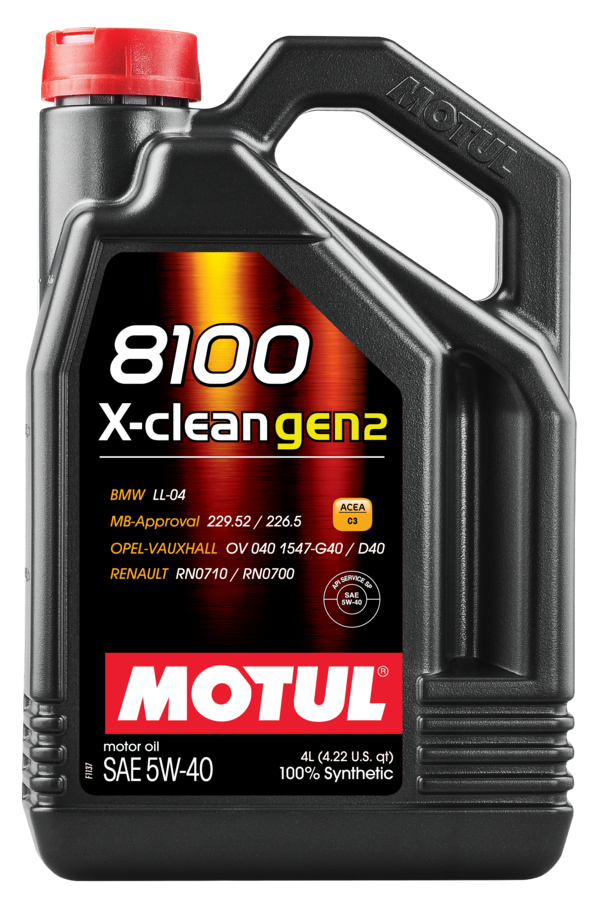
Motul 8100 X-clean+ 5W-30
Pros
- Ester base stock provides natural metal adhesion after a hot shutdown
- Used-oil analysis at 8,000 miles confirms low soot loading and minimal wear metals
- Holds grade under sustained towing heat — oil does not thin out prematurely
- Formal BMW LL-04 and ACEA C3 certifications; no ambiguity on the label
Cons
- A single oil change exceeds $55 in materials — the premium is real and consistent
- 5-liter container leaves most 3.0-litre sump capacities short; a top-up bottle is needed
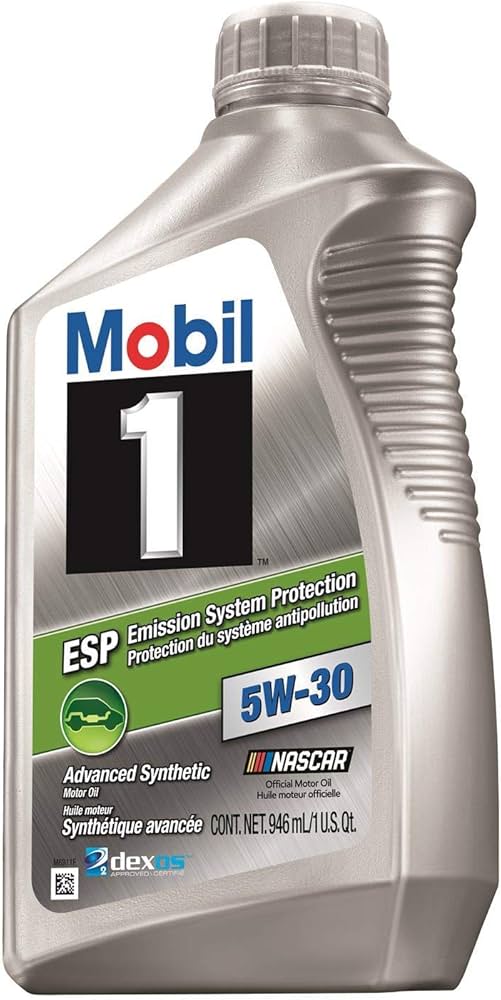
Mobil 1 ESP 5W-30
Pros
- BMW LL-04 plus Mercedes-Benz 229.51 and VW 504 00/507 00 approvals
- UOA results confirm soot handling and TBN retention strong at 8,000-mile intervals
- Maintains stable oil pressure during heavy summer towing in real owner reports
- Available in multi-pack formats that reduce cost-per-quart at longer intervals
Cons
- Costs more per change than Castrol or Pennzoil LL-04 alternatives
- Some N57 engines with worn valve stem seals may see increased consumption versus a 5W-40
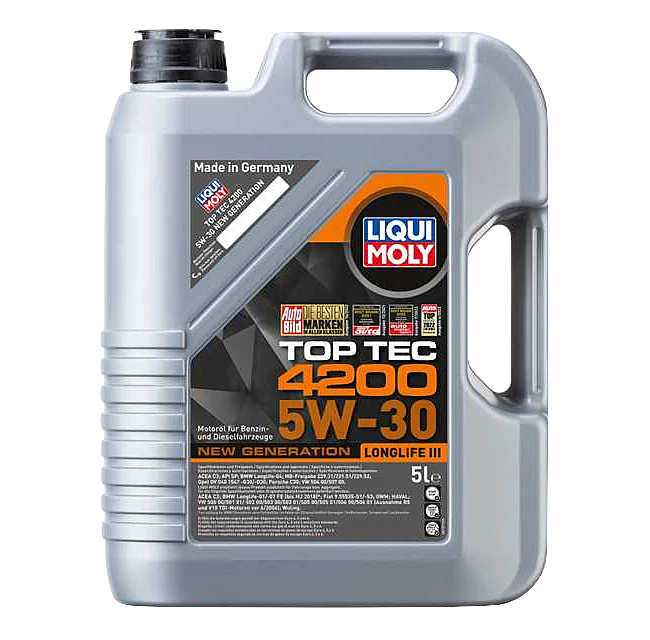
Liqui Moly Top Tec 4200 5W-30
Pros
- Extendable integrated spout reaches the filler neck cleanly — no funnel, no spills on the plastic cover
- High molybdenum content fills surface irregularities on worn camshaft lobes
- Full BMW LL-04 and ACEA C3 certification; low-SAPS formula confirmed on the label
- Engineered to German Autobahn sustained-speed standards — holds grade under load
Cons
- Costs $8–9 per liter — noticeably more expensive than Castrol or Pennzoil alternatives
- Bottle cap cracks if overtightened after the pour spout is retracted
Can’t Decide?
Our Top 2 Picks — Head to Head
Both carry BMW Longlife-04 approval and a genuine low-SAPS formula. Here’s how to choose.
- BMW factory-fill specification for M57 and N57 engines
- Fluid Titanium Technology strengthens film under sustained turbo boost
- Widest availability — Amazon, main dealers, and national auto parts chains
- Strongest value — genuine LL-04 at $5–6 per quart
- Natural gas base oil keeps piston crowns cleaner under diesel combustion
- Encourages more frequent changes — better for high-soot short-trip duty cycles
How to Choose the Right Oil for Your BMW Diesel
Six DPF-specific factors that matter before you buy — not generic consumer advice.
BMW Longlife-04 Certification
Look for the exact text “BMW Longlife-04” on the rear label — not “for diesels with DPF” or “ACEA C3 compatible.” LL-04 requires a low-SAPS (sulfated ash, phosphorus, sulfur) formula that passes BMW’s own DPF loading and catalyst durability tests. Oils that meet ACEA C3 without the LL-04 stamp may still carry ash levels that shorten filter life.
Low-SAPS vs. Standard Diesel Oil
Unlike heavy-duty truck oils — such as Shell Rotella or Delvac — which run high ash content for flat-tappet cam protection, BMW passenger car diesels require a low-SAPS formula. High ash accumulates in the DPF as metallic residue that can never be burned off during regeneration. Even one oil change with a non-LL-04 diesel oil accelerates ash loading measurably.
Viscosity vs. Engine Generation
BMW specifies 5W-30 for the vast majority of M57, N47, N57, and B47/B57 engines. A handful of older M57 applications tolerate 5W-40 with LL-04. In climates where morning temperatures regularly drop below -15°C, a 0W-30 LL-04 oil reaches the N57’s variable-vane turbo bearing faster than a 5W grade. Always verify against your owner’s manual before buying.
Drain Interval Strategy for Turbo Diesels
BMW’s Condition Based Service can push diesel oil changes beyond 18,000 miles. However, N57 and B57 engines running frequent short trips accumulate soot at a rate that can double viscosity well before the service indicator fires. Most experienced BMW diesel owners target 6,000–8,000-mile intervals, using used-oil analysis at least once to verify that soot and TBN levels support their chosen interval.
DPF Topping-Up Protocol
Running low between scheduled changes is common on diesel engines that consume small amounts. Topping up with any non-LL-04 oil — even a quality ACEA C3 product without the BMW stamp — introduces elevated ash into the DPF. Carry a spare litre of the same LL-04 oil you run in the sump; the cost of a litre is negligible compared to a forced DPF replacement.
Filter and Drain Plug Hardware
Use a MANN or Mahle filter — the original equipment manufacturers for BMW diesel filtration. Their bypass valve rating matches the cold-oil pressure spikes BMW’s variable-vane turbo produces during a cold winter start. Replace the aluminium crush washer on the drain plug at every change; a reused washer is the most common cause of post-service oil seeps that get misdiagnosed as rear main seal failure.
Pro Tips
Quick Buying Checklist for BMW Diesel Oil
Verify LL-04 on the rear label — “low SAPS” on the front is not a substitute for the formal BMW Longlife-04 certification stamp on the back.
Never use LL-01 or generic ACEA C3 diesel oil in a DPF-equipped BMW — high-ash formulas cannot be burned off during regeneration and permanently clog the filter.
Pair every change with a MANN or Mahle filter — OEM-specification bypass valves designed for BMW diesel cold-start pressure spikes.
Keep a spare litre of the same LL-04 oil in the boot — diesel engines that run short trips top up faster, and using any non-LL-04 oil adds DPF ash immediately.
Target 6,000–8,000-mile intervals for short-trip duty cycles — CBS intervals can reach 18,000 miles but soot accumulation in direct-injection diesels is faster than the sensor detects.
Replace the aluminium crush washer every change — a reused washer produces a slow seep at the drain plug that is frequently misdiagnosed as a rear main seal leak.
Frequently Asked Questions
What oil does BMW specify for diesel engines with a DPF?
BMW requires a fully synthetic low-SAPS oil carrying the formal BMW Longlife-04 approval for all modern diesel engines fitted with a diesel particulate filter. The standard recommended viscosity is 5W-30. A handful of newer B47 and B57 applications specify the updated LL-12 FE standard instead — always verify against your owner’s manual or service booklet.
Can I use BMW LL-01 oil in my diesel 3 Series?
No. BMW Longlife-01 is formulated for petrol engines and carries a high sulfated ash content. Using it in a diesel with a DPF deposits metallic ash that cannot be burned off during regeneration. Over time this blocks the filter entirely, triggering a warning light and eventually requiring a costly DPF replacement — always use LL-04 or the newer LL-12 FE where specified.
Is 5W-40 safe for my BMW diesel?
In some older M57 engines without a DPF, a 5W-40 carrying ACEA C3 or LL-04 approval is acceptable. For any DPF-equipped diesel, the owner’s manual almost always specifies 5W-30. Using a heavier viscosity than specified does not improve protection and may slow cold-start oil flow to the variable-vane turbo actuator on a cold morning.
How often should I change oil in my BMW diesel?
BMW’s Condition Based Service can extend intervals to 18,000 miles, but most diesel owners with DPF-equipped engines change every 6,000–8,000 miles. Frequent short trips cause soot to accumulate faster than the CBS sensor detects, thickening the oil. A single used-oil analysis run halfway through your chosen interval will confirm whether the oil is genuinely holding up or thinning with soot.
What happens if I top up my diesel BMW with non-LL-04 oil?
Even one quart of high-ash oil adds metallic residue to the DPF that a regeneration cycle cannot remove. Repeated top-ups with non-LL-04 products accelerate DPF ash loading cumulatively. The practical consequence is shortened DPF service life, more frequent forced regenerations, and eventually a blocked filter that triggers limp-mode and requires replacement costing £1,000–£2,500 at a main dealer.
Can I use Shell Rotella T6 or a heavy-duty diesel oil in my BMW diesel?
Shell Rotella T6 and similar HD diesel oils are designed for large diesel engines without DPFs and do not carry BMW Longlife-04 approval. Their elevated ash levels protect flat-tappet camshafts in trucks but will clog a BMW passenger car DPF rapidly. Use only an LL-04 certified oil such as Mobil 1 ESP, Castrol Edge LL, or Motul 8100 X-clean+.
Is Liqui Moly Top Tec 4200 good for BMW diesel engines?
Yes. Liqui Moly Top Tec 4200 5W-30 carries full BMW Longlife-04 approval and a confirmed low-SAPS formula. Its high molybdenum content reduces cold-start valvetrain clatter in higher-mileage N57 engines. Owners consistently praise the integrated pour spout for making driveway oil changes cleaner and faster than any competing 5-litre bottle on the market.
Final Verdict
Our Top BMW Diesel Oil Recommendations for 2026
Every oil here earns its place through formal BMW Longlife-04 certification, real-world owner data, and diesel-specific soot-handling performance. Start with the LL-04 stamp on the rear label, match the viscosity to your engine generation and climate, pair it with a MANN or Mahle filter, replace the crush washer, and carry a spare litre of the same oil for top-ups. Those five steps protect the DPF, turbocharger, and timing chain better than any single product choice alone.