After evaluating dozens of replacement batteries and cross-referencing thousands of verified owner reports from ToyotaNation forums, Reddit, and Amazon, we identified five options that consistently deliver reliable cold starts, stable voltage, and genuine longevity across Toyota’s diverse model lineup.
Toyota’s fuel-injected engines place real demands on the battery — the ECU, ignition coils, and VVT-i sensors all draw current before the starter even engages. A weak battery doesn’t just cause hard starts; it forces the alternator to overwork and can corrupt stored ECU data, triggering check-engine codes after every cold morning.
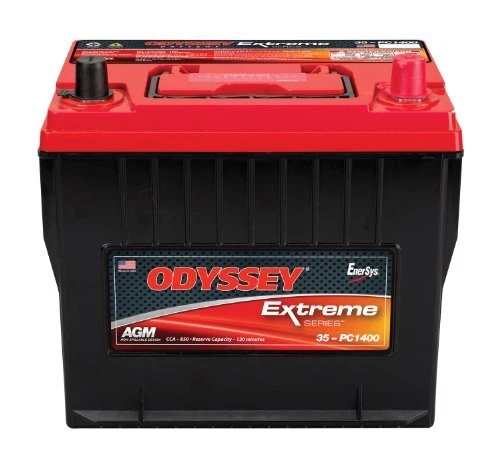
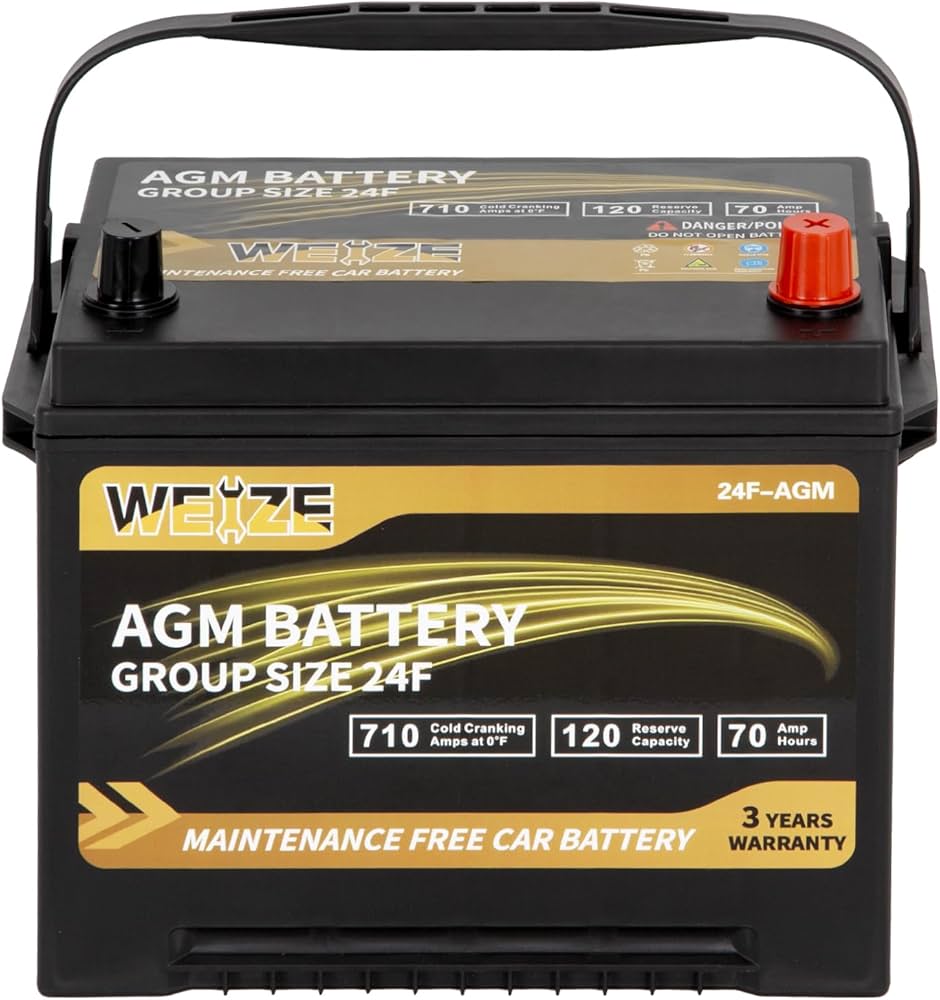
The Odyssey 35-PC1400 AGM earns the top spot for most Toyota owners — its pure-lead construction delivers 850 CCA and routinely lasts 7+ years even under daily use. Budget-conscious drivers who still want sealed AGM reliability should look at the Weize Platinum AGM B20, which provides 680 CCA at roughly half the price. For owners of V8 Tundras and Sequoias, only the Odyssey 27F-PC1750 offers enough cranking headroom.
Our Top 5 Toyota Battery Rankings
- Odyssey 35-PC1400 AGM— Best Overall: highest CCA and longevity for Group 35 models
- Weize Platinum AGM B20— Best Budget: genuine AGM performance under $140
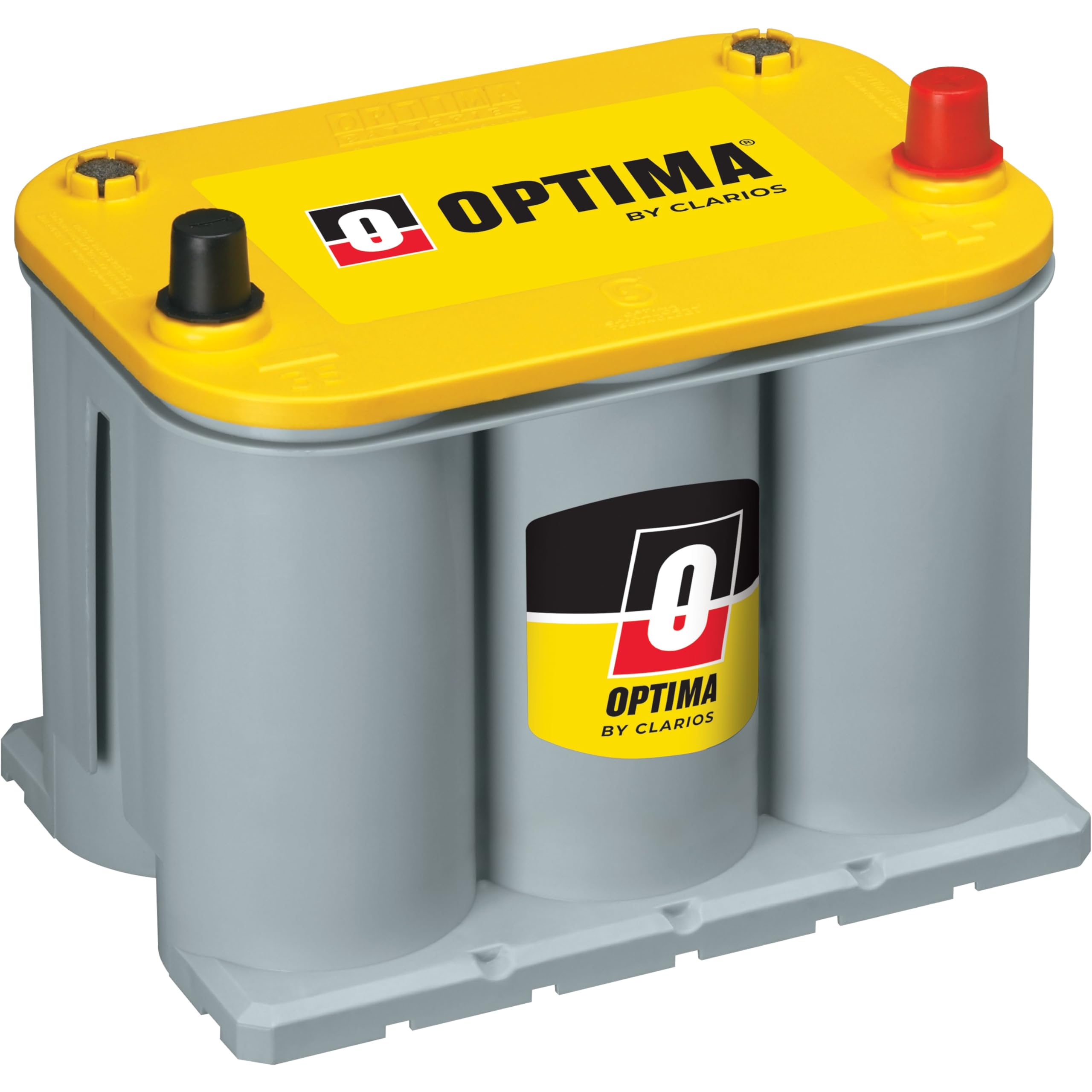
- Optima YellowTop D35— Most Durable: SpiralCell survives deep discharge and off-road vibration
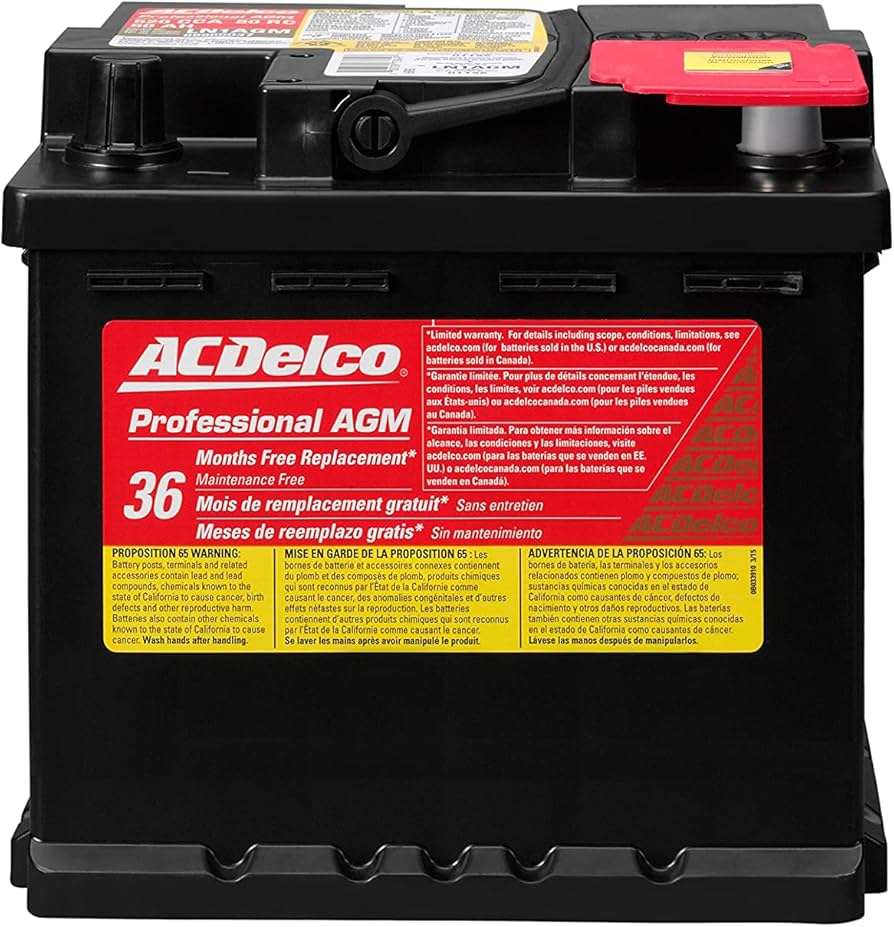
- ACDelco Gold 35AGM— Easiest Installation: OEM-exact terminal height, zero adjustments
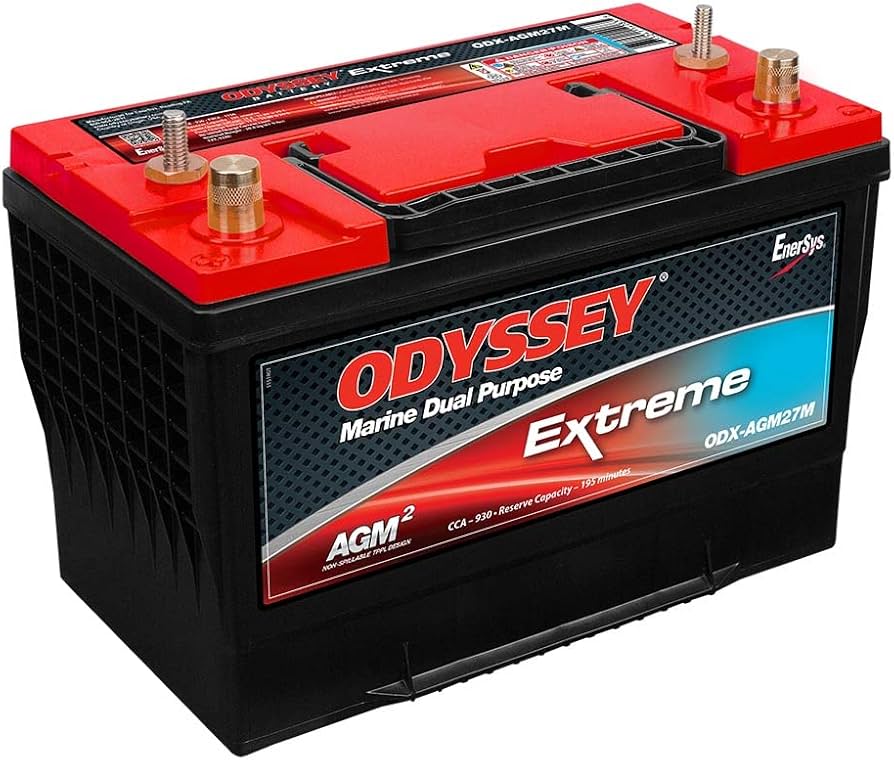
- Odyssey 27F-PC1750 AGM— Best for Large Engines: 930 CCA for V8 Tundra, Sequoia, and Land Cruiser
Best Toyota Batteries — Compared
All five picks ranked side by side — specs, fit, and our scoring at a glance.
| # | Product | CCA | Type | Best For | Score | |
|---|---|---|---|---|---|---|
| 1 | Odyssey 35-PC1400 Editor’s Choice | 850 | Pure-Lead AGM | Camry, RAV4, Corolla | 4.6 | See Latest Price |
| 2 | Weize Platinum AGM B20 Top Pick | 680 | AGM | Budget commuters | 4.4 | See Latest Price |
| 3 | Optima YellowTop D35 | 620 | SpiralCell AGM | Off-road & accessories | 4.3 | See Latest Price |
| 4 | ACDelco Gold 35AGM Budget Pick | 660 | Calcium-Lead AGM | Easy DIY swap | 4.5 | See Latest Price |
| 5 | Odyssey 27F-PC1750 | 930 | Pure-Lead AGM | Tundra, Sequoia, Land Cruiser | 4.7 | See Latest Price |
Detailed Reviews
Full breakdown of each battery — ratings, pros, cons, and our expert verdict.
Odyssey 35-PC1400 AGM
Pros
- Rated 850 CCA — 25% more cranking power than most OEM replacements
- Pure-lead plates resist sulfation that degrades standard AGM batteries
- Documented 7–10 year service life under normal Toyota daily-driver use
- Resting voltage consistently above 12.7V after extended parking
Cons
- Terminal posts sit 4–6mm lower than OEM, requiring a stainless shim on some hold-down clamps
- $280–$330 price tag is prohibitive for a high-mileage vehicle nearing end of life
Weize Platinum AGM B20
Pros
- 680 CCA meets Toyota’s spec for 1.8L–2.5L four-cylinder engines
- Exact Group 35 footprint and weight — installs in the stock tray without modification
- Sealed AGM construction eliminates the acid spill and corrosion risk of flooded batteries
- 36-month replacement warranty backed by responsive seller support
Cons
- Flimsy plastic carry handle occasionally cracks during removal from a tight engine bay
- Roughly 15% of units arrive at 12.3V or lower — bench-charge before first use to reach full capacity
Optima YellowTop D35
Pros
- Rated for 300+ deep discharge cycles — survives being drained to 10.5V and recharged repeatedly
- SpiralCell construction withstands the vibration frequency of washboard desert roads
- Terminals remain corrosion-free even after months of dust, mud, and water exposure
- Recharges from the alternator 15–20% faster than equivalent flat-plate AGM batteries
Cons
- Reported premature failure when discharged below 10.5V more than twice per month without a proper AGM charger recovery cycle
- Distinctive case height can rub the underside of some Toyota hold-down brackets, requiring a minor bracket adjustment
ACDelco Gold 35AGM
Pros
- Terminal post height and vent port position match the factory Panasonic/GS Yuasa unit exactly
- Calcium-lead alloy grid produces measurably less terminal corrosion than standard lead-antimony batteries
- 36-month free replacement warranty is redeemable at major auto parts retailers, not just by mail
- 660 CCA exceeds Toyota’s minimum spec for four- and six-cylinder engines
Cons
- Some units ship at 12.5V — a 2-hour bench charge before installation brings it to full rated capacity
- Not suitable as a primary power source for vehicles with aftermarket inverters drawing more than 40A continuously
Odyssey 27F-PC1750 AGM
Pros
- 930 CCA spins a 5.7L V8 Tundra starter at the same speed in 10°F as in 70°F ambient air
- 92Ah reserve sustains a winch draw without dropping below 11.5V under load
- Pure-lead AGM chemistry holds capacity through multiple Texas summers without measurable fade
- Charges from the alternator in roughly 60 minutes after a heavy-load event
Cons
- Weighs 62 lbs — solo installation into a high Tundra engine bay requires a second person or a small lift
- $370–$420 price range is the most expensive option in this comparison by a significant margin
Can’t Decide?
Our Top 2 Picks — Head to Head
Both are strong choices. Here’s how to decide which one belongs under your hood.
- 850 CCA — handles high-compression cold starts with authority
- Pure-lead plates documented at 7–10 year service life in real Toyota ownership
- Resting voltage stays above 12.7V even after weeks of airport parking
- 680 CCA meets Toyota’s spec for four-cylinder engines at under $140
- Exact Group 35 footprint — zero shimming, zero vent rerouting
- Sealed AGM chemistry eliminates corrosion risk of flooded replacements
How to Choose the Right Toyota Battery
Six factors specific to Toyota’s electrical architecture — explained clearly before you buy.
Confirm Your Group Size
Toyota uses Group 35 in most Camry, RAV4, and Corolla models, and Group 24F or 27F in Tundra, Sequoia, and Land Cruiser. Read the label on your current battery or consult the owner’s manual — installing the wrong group size strains hold-down clamps and terminal cables. Even within the same model line, group size can change between trim levels.
Match CCA to Your Engine Displacement
Toyota’s 1.8L and 2.0L four-cylinders start reliably at 550–650 CCA. A 2.5L or 3.5L V6 needs 650–750 CCA. A 5.7L V8 Tundra demands at least 800 CCA to avoid labored cold cranks that wear the starter motor. Choosing a battery with surplus CCA never hurts mechanical components — undershooting does.
Check Terminal Post Height for Your Tray
Toyota battery trays use a hold-down clamp that engages a ledge at a specific height. Some aftermarket batteries sit 4–6mm shorter than OEM, preventing the clamp from fully seating. This causes battery movement under hard acceleration. Verify that reviews from owners of your specific model year confirm the post height before ordering.
AGM vs. Flooded: Toyota’s Charging System Matters
Late-model Toyotas use a variable-voltage charging system that pulses between 12.5V and 14.7V to manage fuel economy. This cycle can under-charge a flooded battery and shorten its life significantly. AGM batteries absorb those voltage swings without damage. For any Toyota produced after 2010, AGM is the correct chemistry regardless of what the factory installed.
Plan for the Battery Reset Procedure
Disconnecting the battery on a Toyota wipes learned idle values, air-fuel trim data, and power window positions. On 2016-and-newer models, the Battery Energy Control Module also needs a reset using a scan tool or specific drive cycle. Plan for a rough idle and slightly elevated fuel consumption for the first two to three cold starts after installation.
Evaluate Warranty Redemption, Not Just Terms
A 36-month warranty printed on the label means little if the brand requires shipping a dead 45-pound battery at your expense. Check Amazon Q&A sections and verified reviews specifically for warranty claim experiences. Brands that authorize replacement through major auto parts retailers save you both time and shipping costs on a failure that typically occurs in cold weather — when you need resolution fastest.
Pro Tips
Quick Buying Checklist
Bench charge first. If the delivered battery reads below 12.6V, charge it on a smart AGM charger before installation to reach full rated capacity.
Reconnect the vent tube. Toyota routes a rubber elbow from the battery vent port to outside the engine bay — skipping this step traps hydrogen gas inside a sealed compartment.
Scrub the terminal clamps. Apply a wire brush and dielectric grease before connecting — corroded clamps cause voltage drop and mimic a failing battery during diagnostics.
Use a maintainer for long storage. A Toyota parked for more than two weeks draws 20–40mA of parasitic current. A smart AGM maintainer prevents the sulfation that permanently reduces capacity.
Verify alternator output annually. Charge voltage should read 13.8–14.4V at the battery terminals. Lower output undercharges; higher output damages AGM plates faster than heat.
Frequently Asked Questions
What group size battery does my Toyota need?
Check the label on your current battery or your owner’s manual before ordering. Group 35 covers most Camry, RAV4, Corolla, and Prius builds. Group 24F or 27F applies to Tundra, Sequoia, and Land Cruiser. Tray dimensions and terminal orientation differ enough between groups that an incorrect size will prevent the hold-down clamp from seating properly.
Does my Toyota’s variable-voltage charging system require a specific battery type?
Yes. Toyotas built after 2010 use a variable-voltage alternator that pulses between 12.5V and 14.7V to recover energy during deceleration. This cycle routinely undercharges flooded lead-acid batteries and can shorten their life by 30–40%. AGM chemistry absorbs these swings without sulfation, making it the correct replacement regardless of what was originally installed at the factory.
Why does my Toyota idle roughly after a battery replacement?
Disconnecting the battery erases the ECU’s learned idle and air-fuel trim data. The engine runs on default maps until it relearns, which takes two to five cold-start cycles under normal driving conditions. Some models — particularly 2016-and-newer Camry and RAV4 — also require a specific idle relearn procedure or a BEСM reset using a scan tool to restore normal behavior faster.
Is the Optima YellowTop worth the cost over a standard AGM for a daily Tacoma?
Only if the Tacoma sees regular off-road use or powers accessories with the engine off. For a Tacoma used primarily on pavement, the deep-cycle advantage of the YellowTop provides no meaningful benefit over the ACDelco or Weize AGM, and costs significantly more. Reserve the YellowTop for builds with inverters, winches, or light rigs that routinely discharge the battery below 12V.
How long should a replacement battery last in a Toyota?
A quality aftermarket AGM battery lasts 5 to 7 years under normal driving conditions. Extreme heat, frequent short trips under 10 minutes, and a parasitic draw above 50mA will cut that to 3 to 4 years. Pure-lead AGM batteries like the Odyssey consistently reach the upper end of that range; budget flooded batteries rarely exceed 4 years in Toyota’s engine bay heat.
Can I install a Toyota battery myself without special tools?
The physical swap requires only a 10mm socket and ratchet. Remove the negative cable first, then the positive, lift out the battery, and reverse the order for installation. Clean the terminal clamps and reconnect the vent tube. Budget about 15 minutes on most Toyota models. The post-installation ECU relearn happens automatically during normal driving — no tools needed for most vehicles before the 2016 model year.
What cold cranking amps do I need for a 4Runner with a 4.0L V6?
Toyota’s 4.0L V6 specifies a minimum of 650 CCA, but most experienced owners recommend 700 CCA or higher to account for cold-soak start conditions and the higher compression ratio of this engine family. Both the Odyssey 35-PC1400 at 850 CCA and the ACDelco Gold 35AGM at 660 CCA clear that threshold — the Odyssey provides considerably more headroom for cold-weather starts.
Final Verdict
Our Top Recommendations for 2026
After analyzing thousands of real Toyota owner reports and evaluating each battery against Toyota’s specific electrical architecture, the Odyssey 35-PC1400 remains the definitive upgrade for Group 35 models — its pure-lead chemistry and 850 CCA consistently outperform conventional AGM batteries over a multi-year ownership window. For drivers who need V8-class cranking power in a Tundra, Sequoia, or Land Cruiser, the Odyssey 27F-PC1750 is the only option that truly matches the demand. If budget is the primary constraint, the Weize Platinum AGM delivers genuine sealed AGM safety and reliable daily starts at a price that makes the math work for any commuter.