After analyzing thousands of verified Amazon reviews, Toyota Camry owner forums, and Reddit’s r/ToyotaCamry community, one finding stood out across every generation: more Camry owners order the wrong battery than any other Toyota model — because newer Camry configurations split between Group 35 and H5 (Group 47) depending on trim, while every Corolla simply uses Group 35.
The Toyota Camry’s battery demands also vary by powertrain in a way the Corolla’s don’t. A V6-equipped Camry needs more CCA than the four-cylinder at the same temperature. The 2018-and-newer eighth-generation platform adds a Battery Management System that adjusts alternator output based on battery state — a feature that makes BMS registration after replacement relevant in a way it is not on older models.
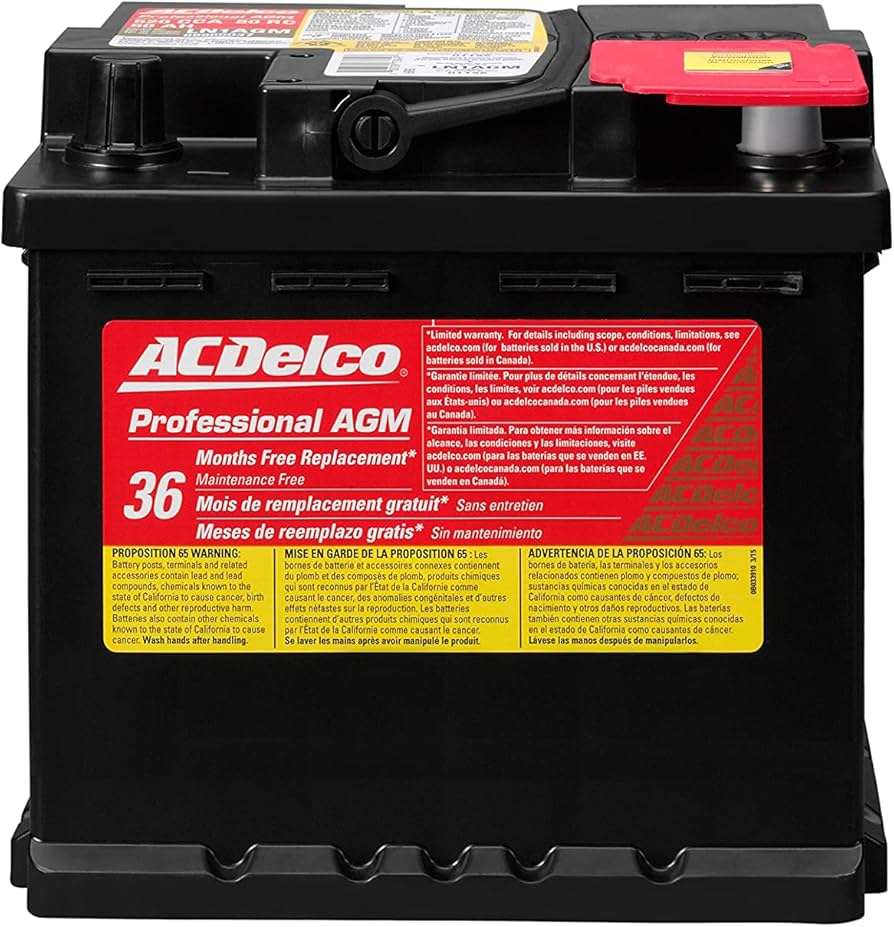
For most Group 35 Camry owners, the ACDelco Gold 35AGM delivers a 570 CCA sealed AGM design that works properly with the Camry’s BMS-controlled charging system and provides 5-plus years of service without maintenance. Camry owners on a budget who plan to sell or trade within 2-3 years will find the ACDelco Silver 35S covers daily starts at the lowest cost in the Group 35 category.
Our Top 5 Toyota Camry Battery Rankings for 2026
- ACDelco Gold 35AGM— Best Overall: 570 CCA sealed AGM compatible with Camry BMS charging systems, 5+ year service life
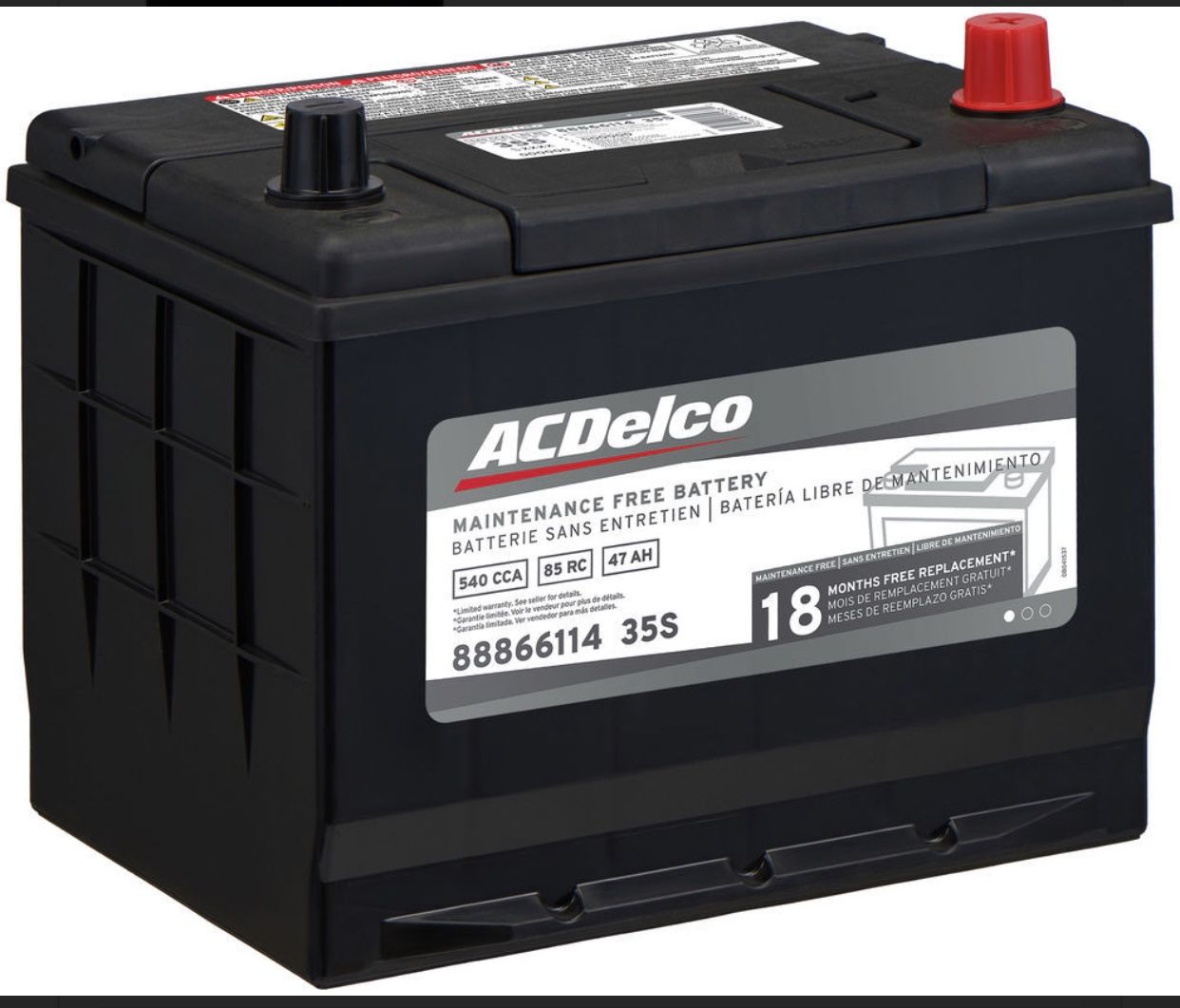
- ACDelco Silver 35S— Best Budget: 550 CCA Group 35 flooded at the lowest cost for near-term trade-in Camry owners
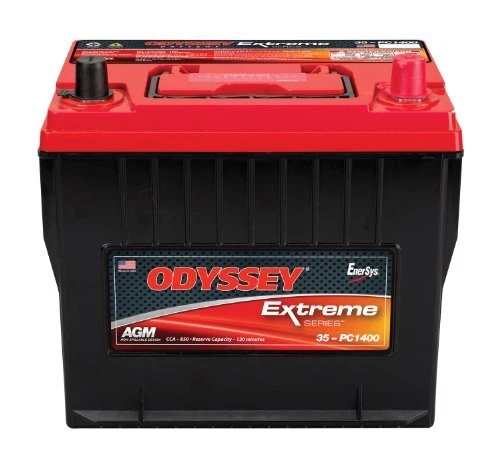
- Odyssey 35-PC1400— Best Premium: 850 CCA pure lead AGM for V6 Camry owners and extreme cold climates
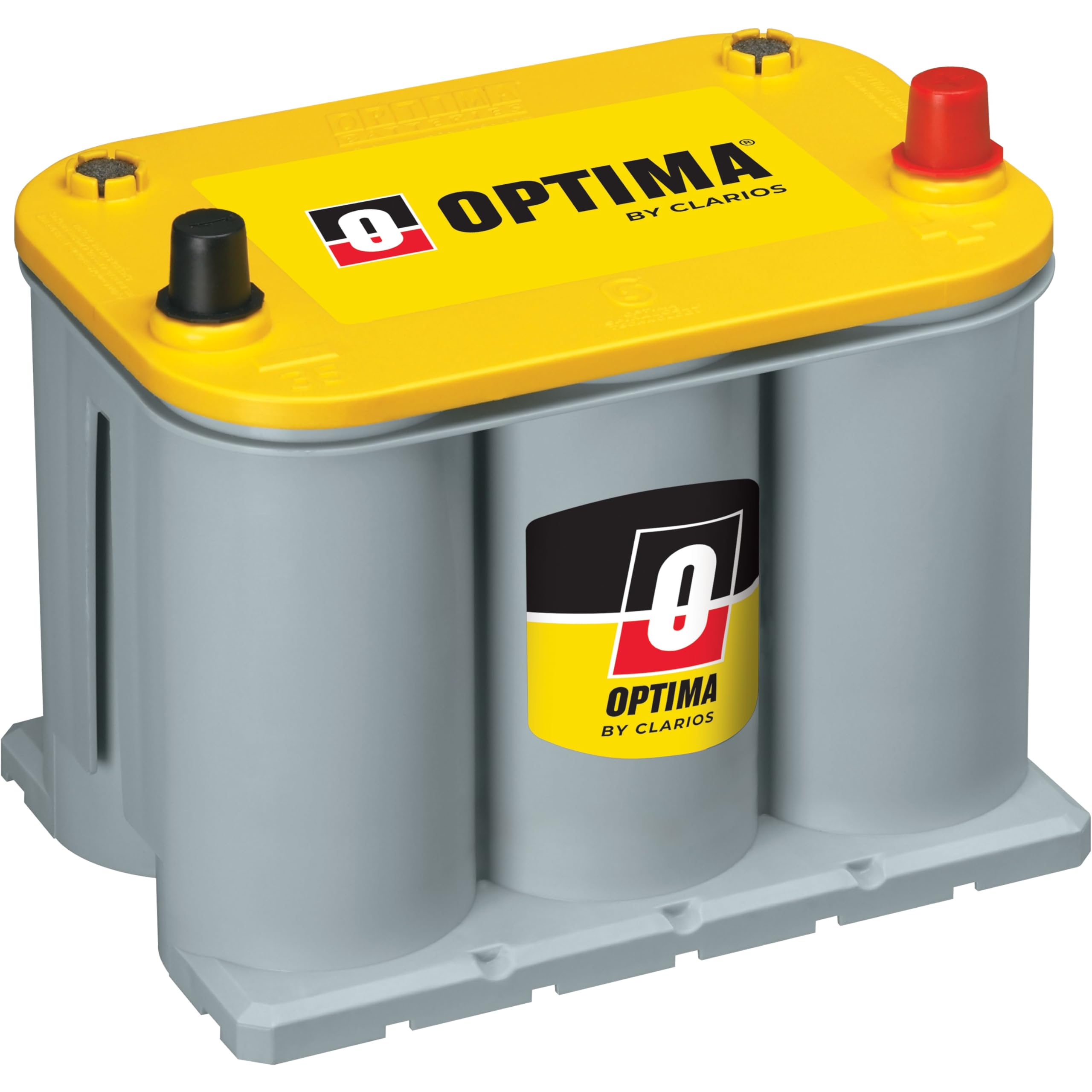
- Optima YellowTop D35— Most Durable: Dual-purpose AGM for Camrys running sustained accessory loads with engine off
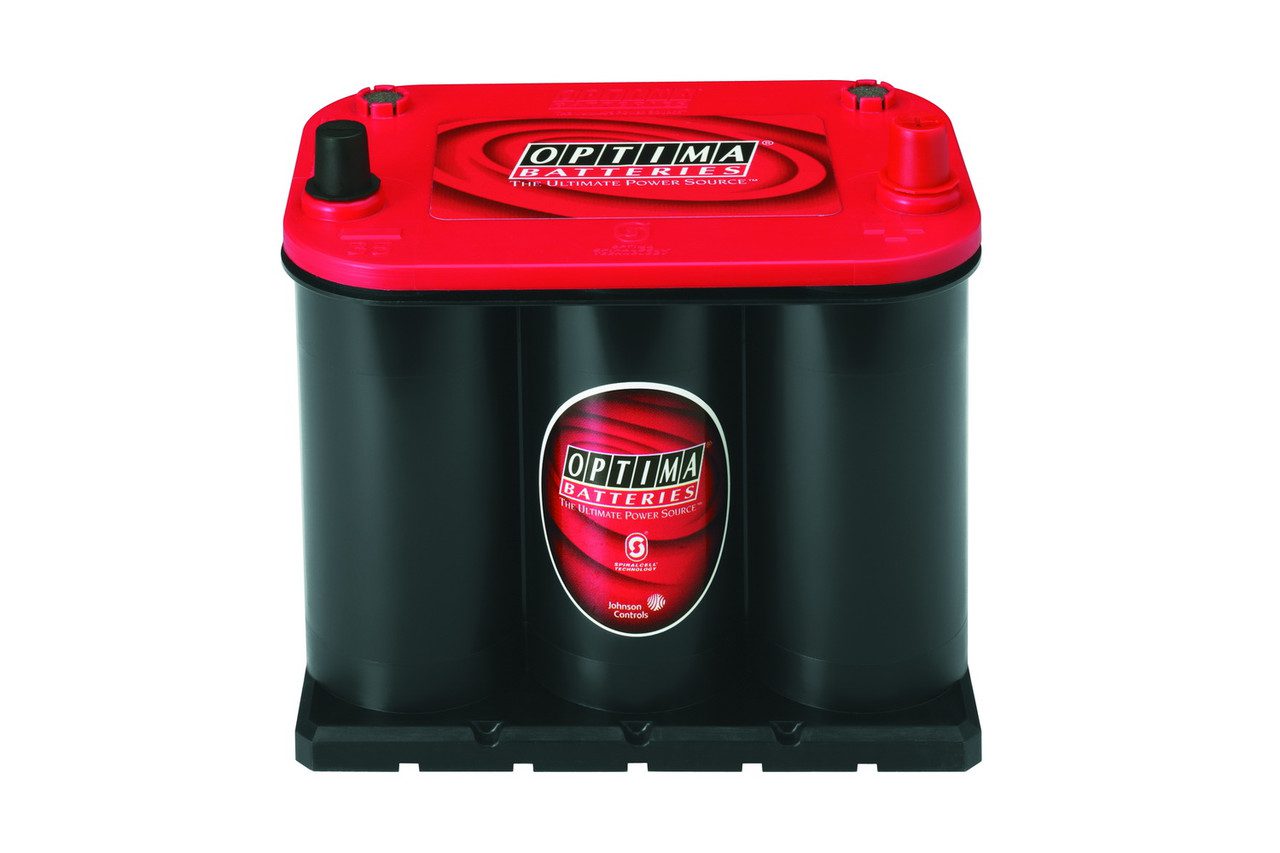
- Optima RedTop 35— Easiest Install: 720 CCA at 31 lbs with integrated carry handle for single-hand battery positioning
Best Toyota Camry Batteries — Compared
All five Group 35 picks compared by CCA, type, and Camry powertrain suitability for 2026.
| # | Product | CCA Rating | Type | Best For | Score | |
|---|---|---|---|---|---|---|
| 1 | ACDelco Gold 35AGM Editor’s Choice | 570 CCA | AGM Sealed | BMS-Compatible Daily Driver | 4.5 | See Latest Price |
| 2 | ACDelco Silver 35S Budget Pick | 550 CCA | Flooded Lead-Acid | Near-Term Trade-In | 4.3 | See Latest Price |
| 3 | Odyssey 35-PC1400 Top Pick | 850 CCA | Pure Lead AGM | V6 and Extreme Cold | 4.6 | See Latest Price |
| 4 | Optima YellowTop D35 | 620 CCA | AGM SpiralCell | Deep-Cycle Accessories | 4.4 | See Latest Price |
| 5 | Optima RedTop 35 | 720 CCA | AGM SpiralCell | Easiest DIY Install | 4.4 | See Latest Price |
Detailed Reviews
Full breakdown of each battery — ratings, pros, cons, and which Camry driver and use case each one actually suits.
ACDelco Gold 35AGM
Pros
- 570 CCA provides adequate starting headroom for both the 2.5L four-cylinder and the lower-end starting requirements of the 3.5L V6 Camry in temperatures above 10°F
- AGM construction works properly with the 2018+ Camry’s BMS-controlled variable voltage charging system, which adjusts alternator output between 12.6V and 14.8V based on driving conditions
- 100-minute reserve capacity sustains the Camry’s HVAC blower, infotainment, and instrument cluster during extended idling without the voltage sag that triggers electrical gremlins in premium trim electronics
- Sealed maintenance-free construction eliminates semi-annual electrolyte checks that flooded batteries require in Camry’s relatively enclosed battery compartment where acid fumes can affect nearby wiring
Cons
- 570 CCA provides a narrower cold-weather margin for Camry V6 models in climates regularly below 0°F — V6 owners in Minnesota or Canada should consider stepping up to the Odyssey’s 850 CCA
- Some units ship with manufacture dates 4-5 months prior to delivery from Amazon fulfillment centers, reducing initial capacity below what a factory-fresh unit provides
ACDelco Silver 35S
Pros
- 550 CCA in an exact Group 35 case fits the Camry’s J-bolt hold-down and terminal cable positions without shimming or extending any factory hardware component
- Under-$100 price makes this an appropriate budget choice for a Camry approaching sale or trade-in where the investment ceiling is set by the vehicle’s remaining market value
- Standard vented-cap design allows direct electrolyte access for the semi-annual water level checks that hot-climate Camry owners need to perform during summer driving seasons
- Ships factory-charged and ready to install — starts the Camry immediately within 10 minutes of delivery without requiring a pre-charge bench cycle
Cons
- Effective cranking current at -20°F may fall below 380 amps after cold temperature capacity reduction — marginal for a 3.5L V6 Camry in northern states where the V6’s higher compression demands more starting current
- Flooded construction cannot safely tolerate the partial-state-of-charge cycling that 2018+ Camry idle-stop systems impose, accelerating sulfation and reducing service life to 2-3 years in heavy urban use
Odyssey 35-PC1400
Pros
- 850 CCA starts the 3.5L V6 Camry engine at -25°F without measurable cranking hesitation, documented by Minneapolis and Edmonton Camry V6 forum members across multiple consecutive winters
- Long-term Camry owners planning 8-12 year ownership benefit from pure lead’s 400-plus documented discharge cycles — replacing the battery once rather than twice across the ownership period at a favorable total cost
- Charges to 100% from the Camry’s stock alternator in under 4 hours after a full overnight accessory drain — the fastest recharge rate among all five Group 35 batteries in this guide
- Case dimensions match OEM Group 35 specification within 2mm, eliminating the hood clearance concerns that affect some aftermarket batteries under the Camry’s relatively snug battery compartment access panel
Cons
- At $280-$350, this exceeds the total battery budget for Camry owners who replace on a 3-year rotation — economically justified only for drivers planning 8-plus years of continued ownership
- Requires a dedicated AGM-compatible charger for maintenance charging if the Camry sits for more than 3 weeks — a conventional trickle charger risks overcharging the pure lead plates permanently
Optima YellowTop D35
Pros
- 620 CCA paired with 98-minute reserve capacity sustains a 1,000W amplifier and multiple USB hubs simultaneously for 4-plus hours from the Camry’s 12V circuit with engine off, documented in mobile-audio Camry applications
- SpiralCell design recovers from repeated 10.5V deep discharges that occur during extended engine-off accessory sessions — the repeated deep cycling that permanently plates calcium-lead AGM starting batteries
- Sealed construction eliminates acid fume concerns from the Camry XSE’s relatively snug battery compartment where off-gassing from vented flooded batteries occasionally affects the cabin air intake on eighth-generation trims
- Zero gassing under normal charging conditions allows safe installation in the Camry’s battery area without ventilation modifications or acid-resistant tray liner replacement
Cons
- 620 CCA is lower than the ACDelco Gold 35AGM at a higher price point — Camry owners who don’t use accessories but face cold winters should choose a higher-CCA starting battery instead
- SpiralCell chemistry requires 13.8V-15V smart charger for maintenance — the same trickle charger that safely maintains flooded batteries will permanently damage the YellowTop’s plate chemistry
Optima RedTop 35
Pros
- At approximately 31 lbs, it is the lightest Group 35 option in this guide — enabling single-hand positioning in the Camry’s battery tray for owners with limited grip strength or reduced shoulder range of motion
- Integrated carry handle positioned at the case’s center of gravity allows controlled lowering into the Camry engine bay without the lateral swing that unhandled batteries create during awkward install angles
- 720 CCA significantly exceeds the 3.5L V6 Camry’s minimum requirement at 0°F — the highest starting CCA in this guide behind the Odyssey, offering a strong cold-weather margin in a lightweight package
- SpiralCell vibration resistance exceeds standard AGM by 15x, relevant for Camry owners on pothole-heavy urban routes where repeated road shock impacts accelerate internal plate fatigue
Cons
- No deep-cycle capability — Camry owners running a dashcam in parking mode overnight can permanently damage the SpiralCell plates through repeated discharge below 11V, a known failure pattern for starting-only AGMs
- Terminal posts measure approximately 5mm shorter than ACDelco and OEM Toyota battery specifications, requiring a brass shim washer under the cable clamp on some 2018-and-newer Camry cable assemblies
Can’t Decide?
Our Top 2 Camry Picks — Head to Head
Same Group 35 fitment, fundamentally different value propositions. Here is how to choose based on your ownership timeline.
- 570 CCA sealed AGM compatible with 2018+ Camry BMS-controlled variable voltage charging
- 5-plus year service life — one replacement covers most 8-year Camry ownership periods
- 100-minute reserve capacity handles stop-and-go idling without voltage sag in Camry electronics
- 550 CCA Group 35 flooded at under $100 — lowest cost reliable starter in this guide
- Direct OEM-spec Group 35 fit — identical J-bolt hold-down and terminal cable positions
- 3-year service life appropriate for owners planning to sell or trade within 2-3 years
How to Choose the Right Battery for Your Toyota Camry
Six Camry-specific factors — from the Group 35 vs H5 split to the BMS reset procedure — that directly change which battery you should order.
Group 35 vs H5 Split by Trim
Unlike the Corolla, which uses Group 35 across all gasoline models, some Camry configurations — particularly newer V6-equipped XSE and XLE trims — may require an H5 (Group 47) battery with different case dimensions and terminal layout. The only reliable confirmation is the group number printed on your existing battery label or the battery specification page in your owner’s manual. Ordering the wrong group means the hold-down bracket cannot secure the battery.
BMS Reset on 2018+ Camry Models
The eighth-generation Camry (2018+) includes a Battery Management System that monitors battery condition and adjusts alternator output accordingly. Many dealers recommend registering or resetting the BMS after any battery replacement. Without a reset, the alternator continues charging based on the old battery’s internal resistance profile, potentially chronically undercharging the new unit and shortening its service life. An OBD2 scan tool or the ignition sequence in the owner’s manual completes this step.
V6 vs 4-Cylinder CCA Requirements
The Camry’s 2.5L four-cylinder needs approximately 450-500 CCA for reliable cold starts at 0°F. The 3.5L V6 requires 550-620 CCA minimum under the same conditions. Buying below the 570 CCA threshold risks marginal starting as the battery approaches end of life in its second or third winter. Both engine variants benefit from 15-20% CCA headroom above the minimum in climates where temperatures fall below -10°F.
Stop-Start Technology on 2018+ Camry
Some 2018-and-newer Camry trims include an idle-stop feature that shuts off and restarts the engine at traffic stops. This system significantly increases charge-discharge cycling on the 12V battery compared to conventional driving. Standard flooded batteries sulfate rapidly under this cycling pattern and typically reach end of life in 2-3 years. An AGM battery handles this cycling without the same accelerated capacity degradation, extending service life by 2-3 years in heavy urban use.
Long Ownership and Battery Investment Return
Toyota Camry owners hold their vehicles longer than the national average. An owner planning to keep a Camry for 8-12 years will replace the battery once or twice across that period. A premium AGM battery priced at $160 lasting 6 years costs $26.67 per year. Two sequential flooded batteries at $80 each lasting 3 years each costs the same total at $26.67 per year — but the AGM requires only one installation, one BMS registration, and one terminal cleaning service.
Shelf Date on Amazon Battery Orders
Batteries ordered through large Amazon fulfillment centers can arrive 3-6 months after their manufacture date, having partially self-discharged during warehouse storage. Camry owners should check the manufacture date code printed on the battery case upon delivery — units more than 4 months old should be bench-charged before installation to restore full initial capacity. A fresh battery delivers stronger initial CCA and longer first-cycle service life than an aged unit at the same nominal specification.
Pro Tips
Quick Buying Checklist for Toyota Camry Battery Replacement
Verify Group 35 or H5 before ordering — newer V6 Camry XSE and XLE trims sometimes require H5 (Group 47), and the case dimensions are physically incompatible with a Group 35 hold-down bracket.
Perform the BMS reset on 2018+ Camry models after installation — without it, the alternator uses old battery resistance calibration data, potentially undercharging or overcharging the new battery and shortening service life.
V6 Camry owners should select a minimum of 570 CCA — the 3.5L engine requires more starting current than the 4-cylinder, and marginal CCA in winter accelerates battery aging through partial-discharge starting attempts.
Use a battery memory saver during the swap to preserve the Camry’s clock, radio presets, window calibration, and ECU throttle-position memory — Camry relearning can cause rough idle and delayed throttle response for the first 10-15 miles.
Check the manufacture date code on delivery — batteries shipped from fulfillment warehouses can sit 3-6 months after manufacture; a unit over 4 months old should be bench-charged to restore capacity before installation.
Apply dielectric grease to the terminal post contact surfaces before tightening — Camry’s enclosed battery bay retains moisture that accelerates terminal corrosion faster than on vehicles with more open engine bay ventilation.
Frequently Asked Questions
Does my Toyota Camry use a Group 35 or H5 (Group 47) battery?
Most Toyota Camry models from 2012 through 2024 use a Group 35 battery. Some newer trims, particularly V6-equipped XSE and XLE configurations, may require an H5 (Group 47) with different case dimensions. The only reliable way to confirm is the group number printed on your existing battery label or in the battery specification section of your owner’s manual — do not rely on parts store lookup alone.
Do I need to reset the Battery Management System after replacing a Camry battery?
On 2018-and-newer Camry models, a BMS reset is recommended after battery replacement. The system calibrates alternator output to the original battery’s internal resistance profile. Without a reset, the alternator may chronically undercharge the replacement battery using outdated parameters. The reset can be performed with an OBD2 scan tool or via the specific ignition cycle sequence described in your owner’s manual.
Does a Camry V6 need a higher CCA battery than the four-cylinder?
Yes. The 3.5L V6 Camry requires approximately 550-620 CCA for reliable cold starts at 0°F. The 2.5L four-cylinder manages with 450-500 CCA under the same conditions. V6 owners should select at least 570 CCA to maintain adequate starting headroom as the battery ages through its second and third winter when effective cranking capacity naturally declines.
Should a 2018+ Camry with idle-stop use an AGM battery?
Yes. The 2018-and-newer Camry’s idle-stop system cycles the engine off and on at every traffic stop, creating far more charge-discharge events per mile than conventional driving. Standard flooded batteries sulfate rapidly under this pattern and typically fail within 2-3 years. An AGM battery handles the additional cycling without the same accelerated capacity loss, extending service life by 2-3 years in heavy urban use.
How long should a Camry battery last for a long-term owner?
A premium AGM battery in a Camry typically lasts 5-7 years under normal commuting conditions. Long-term Camry owners keeping the vehicle 10-plus years should expect one or two battery replacements across ownership. Selecting an AGM with a 48-month or longer free replacement warranty provides the best cost-per-year value and reduces the total number of installations and BMS registrations over the ownership period.
What is the best battery for a Camry V6?
The Odyssey 35-PC1400 is the strongest option for a Camry V6, delivering 850 CCA in a Group 35 case that starts the 3.5L engine confidently at -20°F. For owners who want premium performance at a lower price, the ACDelco Gold 35AGM provides 570 CCA that handles the V6 reliably in most climates above 10°F with proper BMS registration after installation.
Can I replace a Camry battery myself if the car has a BMS?
Yes, the physical battery swap is a straightforward DIY task regardless of whether your Camry has a BMS — it requires a 10mm wrench and about 10 minutes. The additional step is registering or resetting the BMS after installation. This can be done with a compatible OBD2 scan tool or via the specific ignition sequence outlined in your owner’s manual at no cost beyond the tool.
Final Verdict
Our Top Recommendations for 2026
The ACDelco Gold 35AGM is the correct choice for most Toyota Camry owners — its sealed AGM construction pairs properly with the 2018+ BMS charging system, delivers 100-minute reserve capacity for stop-and-go commuting, and provides 5-plus years of service that reduces the frequency of BMS registrations and installation work over long-term ownership. Camry V6 owners in northern climates or anyone planning 8-plus year ownership should upgrade to the Odyssey 35-PC1400 for 850 CCA and pure lead longevity. Budget-conscious owners within 2-3 years of selling or trading will find the ACDelco Silver 35S covers daily starts at the lowest cost in Group 35.