After cross-referencing owner feedback on Acurazine, r/Acura, and thousands of verified Amazon reviews, the Acura TL’s battery purchase has a trap that catches more buyers than almost any other Honda-platform vehicle: the Group 24F designation requires the positive terminal to sit on the left side when facing the battery, and a standard Group 24 (positive on the right) reverses the polarity — a mismatch that strains the positive cable against the engine bay firewall and eventually fatigues the connector in ways that appear months later as an intermittent no-start.
Unlike the Renegade’s ESS cycling challenge or the Cherokee’s two-generation group size split, the TL’s defining battery concern is the hot engine bay it shares with the J35 V6 — sustained underhood heat above 160°F accelerates plate corrosion in flooded batteries and compresses the average service life from five years to three. AGM chemistry tolerates this environment measurably better, making it the practical baseline for anyone keeping their TL past 100,000 miles.
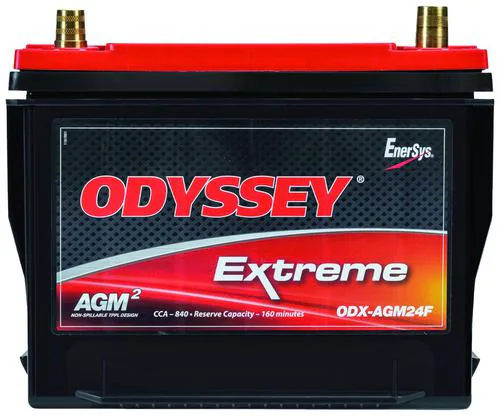
The Odyssey Performance AGM24F is the best battery for most Acura TL owners — its 850 CCA pure-lead construction starts the J35 V6 confidently in cold weather and tolerates the TL’s warm engine bay longer than conventional AGM alternatives. Budget-focused owners get solid Group 24F AGM performance from the Weize Platinum AGM 24F at roughly half the price, while TLs with high-wattage audio systems should invest in the XS Power D2400‘s 3,000 max-amp deep-cycle output despite requiring a minor hold-down adaptation.
Our Top 5 Acura TL Battery Rankings
- Odyssey Performance AGM24F— Best Overall: 850 CCA pure-lead AGM, 5–7 year service life, hot-bay tolerant
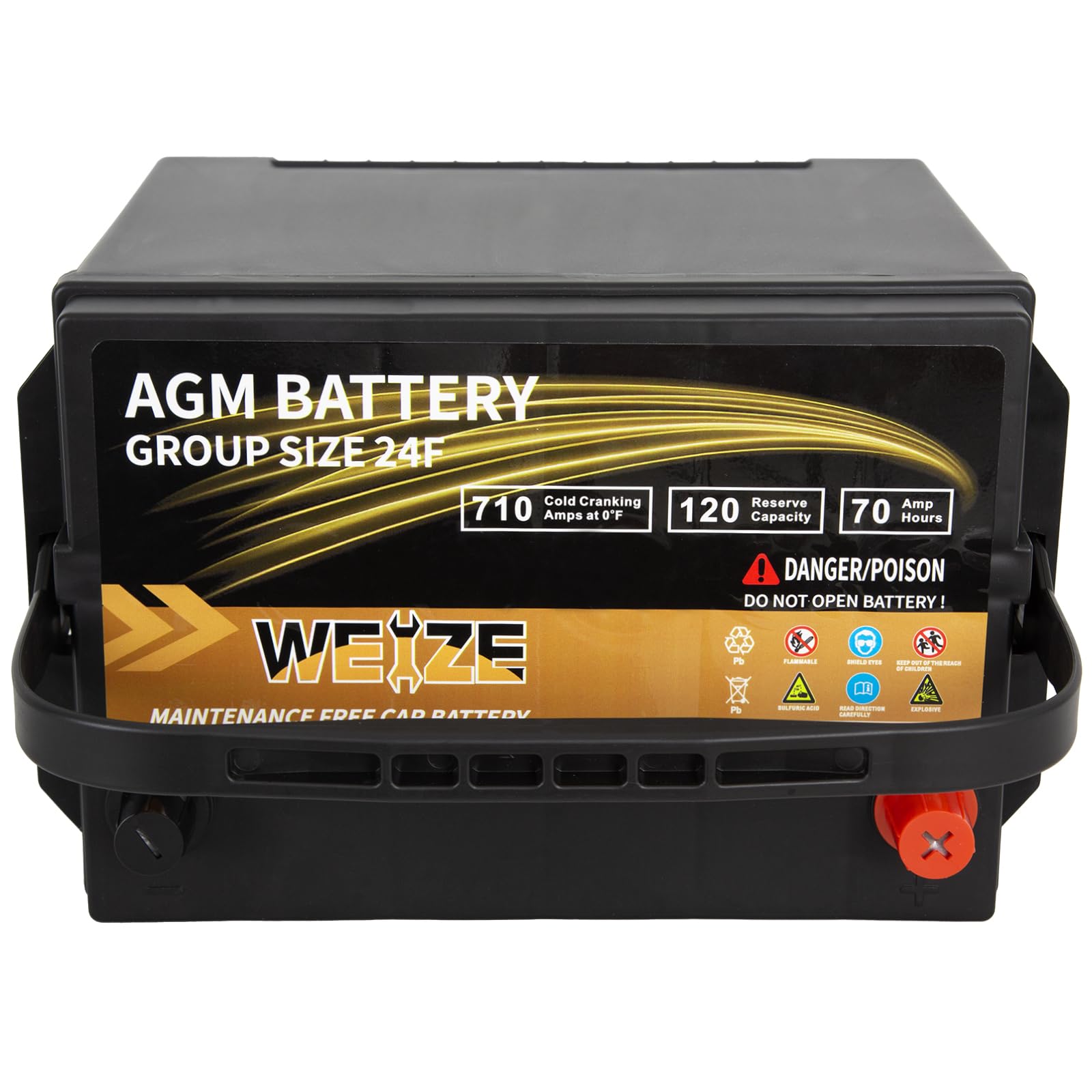
- Weize Platinum AGM 24F— Best Budget: 710 CCA AGM with 36-month warranty at half the Odyssey’s price
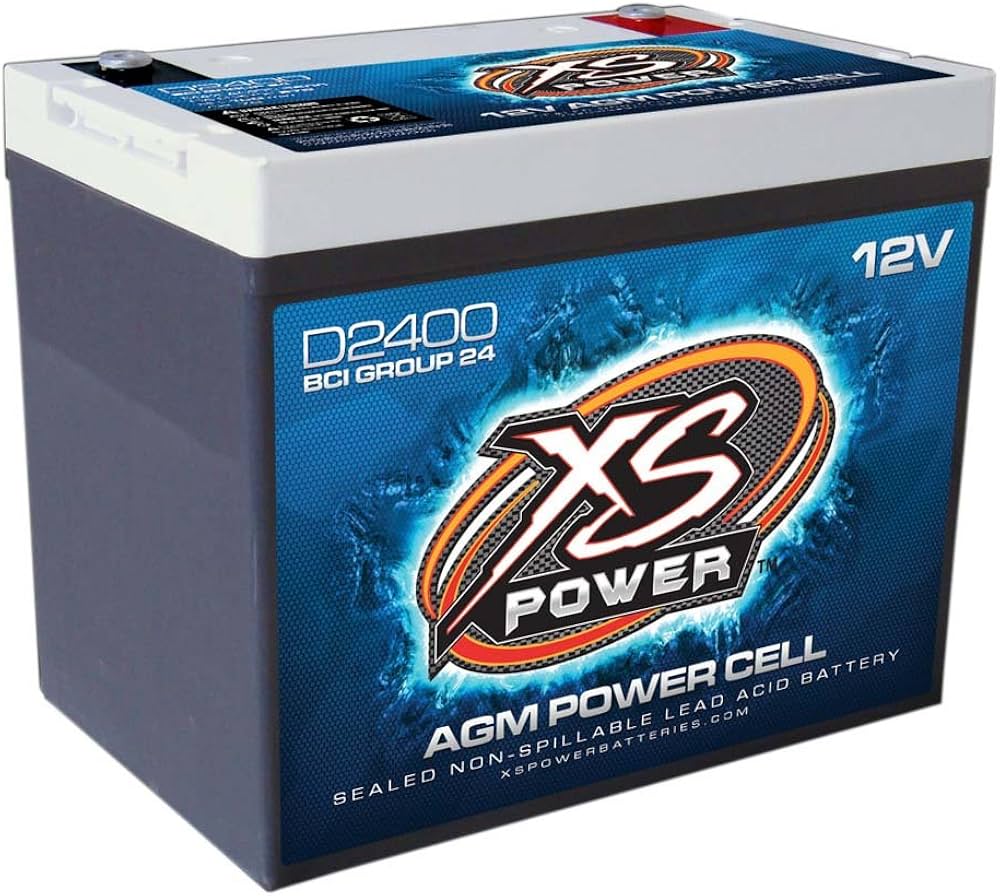
- XS Power D2400— Best Premium: 3,000 max amps, 80 Ah deep-cycle for audio and accessory builds
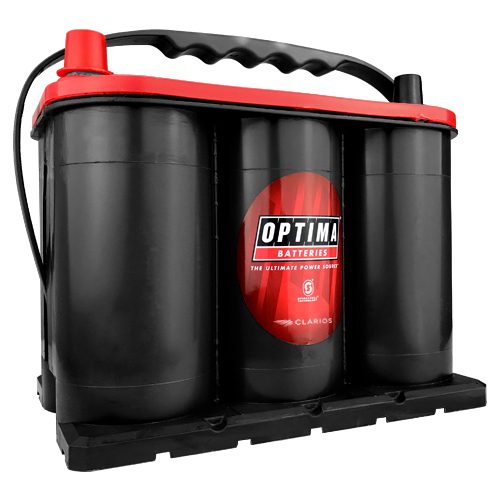
- Optima RedTop 8025-160 24F— Most Durable: SpiralCell AGM vibration resistance, leak-proof for performance driving
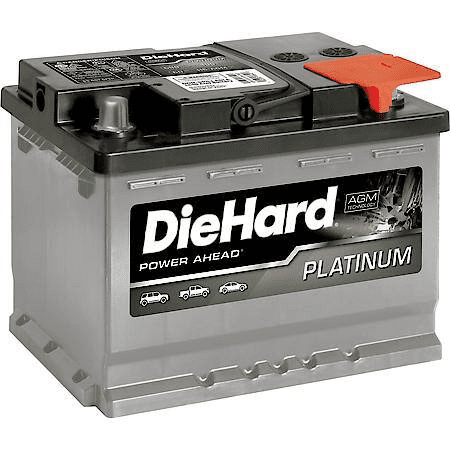
- DieHard Platinum AGM 24F— Easiest Install: OEM-exact terminal orientation, zero-modification drop-in
Best Acura TL Batteries — Compared
All five Group 24F picks for the J-series V6 — CCA, chemistry, reserve capacity, and overall score.
| # | Product | CCA | Type | Best For | Score | |
|---|---|---|---|---|---|---|
| 1 | Odyssey Performance AGM24F Editor’s Choice | 850 | Pure Lead AGM | Daily driving all TL years | 4.7 | See Latest Price |
| 2 | Weize Platinum AGM 24F Budget Pick | 710 | AGM | Budget daily commuter | 4.5 | See Latest Price |
| 3 | XS Power D2400 Top Pick | 950+ | AGM Deep-Cycle | Audio & accessory builds | 4.6 | See Latest Price |
| 4 | Optima RedTop 8025-160 24F | 720 | AGM SpiralCell | Vibration resistance | 4.4 | See Latest Price |
| 5 | DieHard Platinum AGM 24F | 710 | AGM Stamped Grid | Easiest DIY installation | 4.5 | See Latest Price |
Detailed Reviews
Full breakdown of each battery — ratings, pros, cons, and our expert verdict.
Odyssey Performance AGM24F
Pros
- 850 CCA starts the 3.2L and 3.5L J-series engines reliably at -20°F per Acurazine forum reports
- Pure-lead TPPL AGM tolerates the TL’s sustained underhood heat better than standard lead-calcium AGM plates
- 68 Ah reserve capacity holds voltage stable under simultaneous defroster, heated seats, and audio load
- 5–7 year real-world service life documented consistently across Acura owner forums
Cons
- Sits slightly taller than the factory battery — the hold-down bolt feels tight on some TL model years but still secures correctly
- Highest price on this list — the premium over the Weize is difficult to justify for a mild-climate daily commuter TL
- Requires an AGM-compatible smart charger during long storage — a standard trickle charger degrades it over winter
Weize Platinum AGM 24F
Pros
- Lowest price for a Group 24F AGM battery with correct left-side positive terminal orientation
- 120-minute reserve capacity — above average for this price tier, handles TL accessory loads well
- Drops into the TL tray with terminal positions matching the factory cable layout without stretching
- 36-month warranty with U.S.-based customer service — claims don’t route through a third-party seller
Cons
- CCA drops measurably faster in year three compared to the Odyssey’s pure-lead construction — relevant for northern TL owners
- Small percentage of units fail within 18–24 months — the warranty resolves this but the inconvenience is real
- Long-term cycle life data past four years is still accumulating — the 7-year ownership horizon is unproven at this price
XS Power D2400
Pros
- 3,000 max amps eliminates headlight dimming and voltage sag during simultaneous high-draw audio bursts
- 80 Ah capacity — functions as both a primary battery and a supplemental audio bank without a separate aux setup
- Sealed AGM mountable in multiple orientations — useful for relocated battery builds in the TL’s trunk
- Holds charge for weeks between audio demo sessions — low self-discharge unlike flooded alternatives
Cons
- Group 24 dimensions differ slightly from 24F — a tray adapter or longer J-bolt hooks are needed in the stock TL tray
- Weighs over 57 lbs — solo installation at awkward engine bay angles is genuinely difficult
- Overkill and expensive for a stock TL with no high-draw accessories — the Odyssey handles standard electrical loads better per dollar
Optima RedTop 8025-160 24F
Pros
- SpiralCell construction withstands track-day cornering and rough road vibration that fractures flat-plate AGM grids
- Sealed case eliminates acid spray risk during hard cornering — important for engine bay components near the battery
- 4–6 year service life in owner reports on stock TLs with normal daily driving patterns
- Lightweight for an AGM at this CCA rating — the engine bay swap is manageable solo
Cons
- 90-minute reserve capacity trails the Weize and Odyssey — not ideal for TLs that regularly run parked electronics
- Community has noted inconsistent quality across production batches — check recent review dates before ordering
- Premium price for the CCA output compared to the Odyssey, which delivers 130 more CCA at a similar price point
DieHard Platinum AGM 24F
Pros
- OEM-exact positive terminal on the left — the factory TL cable end connects directly without bending or stretching
- Stamped-grid AGM construction handles the TL’s underhood heat without the early plate degradation flooded batteries show
- 3-year free replacement redeemable at Advance Auto Parts nationwide — no return shipping required
- Consistent 20-minute installation reports across all TL model years — no hold-down modifications
Cons
- Self-discharge rate measurably higher than the Odyssey during multi-week storage — plan for a smart charger if the TL sits seasonally
- Some units shipped with a manufacture date older than five months — verify the date code sticker on arrival
- Reserve capacity trails the Weize’s 120 minutes — not ideal for TL owners who frequently run accessories parked
Can’t Decide?
Our Top 2 Picks — Head to Head
Both fit the Group 24F tray in every Acura TL. Here’s when each one makes sense.
- 850 CCA — 140 amps more than the Weize or DieHard
- Pure-lead TPPL: outlasts standard AGM in hot engine bays
- 5–7 year real-world service life in Acura forum reports
- Handles combined cold-start and accessory load without voltage sag
- 710 CCA handles the J-series V6 in moderate climates
- 120-minute reserve capacity — above average at this price
- Roughly half the Odyssey’s price with 36-month warranty
- Direct Group 24F drop-in with correct terminal orientation
How to Choose the Right Battery for Your Acura TL
Six factors specific to the TL’s J-series V6 platform and engine bay environment.
The 24F “F” Suffix — The Most Costly Mistake
The Group 24F and standard Group 24 batteries look nearly identical and occupy similar tray footprints, but their positive and negative posts are reversed. In a Group 24F (which every Acura TL uses), the positive terminal sits on the left side when facing the battery. Installing a standard Group 24 reverses the polarity — straining the positive cable against the firewall and creating a tension-fatigue failure mode that appears months after installation as an intermittent no-start. The “F” suffix on the label is the only reliable way to confirm the correct orientation.
J-Series Engine Bay Heat and AGM Chemistry
The J35A7 and J35Z2 engines in the TL generate sustained underhood temperatures that regularly exceed 160°F in traffic. At this temperature, a conventional flooded lead-acid battery loses electrolyte through evaporation at roughly twice the normal rate — effectively compressing the service life from five years to three. AGM batteries use an absorbed glass mat that retains electrolyte at high temperatures without evaporation. All five batteries on this list are AGM for exactly this reason; a flooded replacement in a TL engine bay is a deliberate trade-off of two years of service life.
CCA Requirements for the 3.2L and 3.5L J-Series
Honda specifies a minimum of 550 CCA for the J-series V6 across TL model years. In practice, targeting 700+ CCA provides the buffer needed when the battery enters its third or fourth year with some capacity loss from heat cycling. The TL Type-S with its higher compression ratio draws slightly more current per start cycle than the base model. Owners in climates that regularly drop below 0°F should prioritize 800+ CCA to ensure the battery still starts the engine reliably in its final service year.
Aftermarket Audio Load and Deep-Cycle Requirements
The TL-S was a frequent platform for high-wattage audio builds, and even the base TL supports substantial aftermarket upgrades. A starting-only AGM battery — regardless of brand — begins to degrade when repeatedly discharged below 50% state of charge by amplifier loads with the engine off. The XS Power D2400 is the only battery on this list specifically engineered for deep-cycle duty, and it is the only appropriate choice for TLs running more than 1,000 watts of aftermarket audio. For everything below that threshold, any AGM on this list handles the load.
Hold-Down Clamp Compatibility Across TL Generations
The first-generation TL (2004–2008) and second-generation (2009–2014) share the Group 24F tray but use slightly different hold-down bracket designs. The Odyssey Performance AGM24F sits 5–8mm taller than the OEM battery in some TL model years — the hold-down bolt reaches but feels tight. The DieHard and Weize match factory height exactly. Neither requires modification, but knowing which battery is taller prevents the surprise of reaching for a wrench at the auto parts store after a failed initial installation attempt.
Warranty Access When Your TL Is Your Only Vehicle
For a daily-driven TL, a battery warranty that requires mailing the unit back for replacement is impractical. The DieHard’s 3-year free replacement is redeemable at Advance Auto Parts stores nationwide — you exchange the battery in person without shipping. The Weize’s 36-month warranty routes through U.S.-based customer service rather than a third-party Amazon seller. The Odyssey’s warranty requires purchasing from an authorized distributor. Confirming which warranty network is accessible before buying prevents the frustration of discovering the coverage channel when the battery actually fails.
Pro Tips
Quick Buying Checklist
Only buy Group 24F — never Group 24. The terminal positions are reversed between the two. Installing a standard Group 24 in the TL strains the positive cable against the firewall and creates a delayed no-start failure months later.
Always replace with AGM in the TL engine bay. The J-series V6 runs hot enough that flooded batteries lose electrolyte at an accelerated rate — AGM chemistry is the baseline for reliable service past 100,000 miles.
Target 700+ CCA for cold-climate TLs. The factory minimum of 550 CCA leaves almost no margin in the battery’s third or fourth winter when capacity has declined from heat cycling. Buy the headroom now.
If your TL runs 1,000+ watts of audio, the XS Power D2400 is the only correct choice. No standard starting AGM on this list is designed for repeated deep discharges from amplifier loads — only a purpose-built deep-cycle unit handles that without premature failure.
Clean the terminal cable ends before installing the new battery. Corrosion on cable ends adds resistance that makes even a fresh 850 CCA battery appear weak — a wire brush and dielectric grease take three minutes and extend the new battery’s effective service life.
Check the manufacture date sticker before accepting the shipment. All AGM batteries degrade from their first day of manufacture — a unit sitting in an Amazon warehouse for nine months delivers measurably less than rated capacity on install day.
Frequently Asked Questions
What is the correct battery group size for an Acura TL?
All 2004–2014 Acura TL models require a Group 24F battery. The “F” suffix is critical — it indicates the positive terminal is on the left side when facing the battery. A standard Group 24 battery has the terminals reversed and will strain the TL’s positive cable against the firewall, creating a tension-fatigue failure mode that causes intermittent no-starts months after installation.
Why does the Acura TL specifically need an AGM battery instead of a standard flooded battery?
The J-series V6 engine bay generates sustained temperatures that exceed 160°F in stop-and-go traffic. At that temperature, a conventional flooded battery evaporates electrolyte at roughly twice the normal rate, compressing its service life from five years to three. AGM construction retains electrolyte regardless of temperature — all five batteries on this list are AGM specifically because of this thermal environment, not as a premium upsell.
What CCA rating does the Acura TL’s J-series V6 need?
Honda specifies a minimum of 550 CCA for the J-series V6. In practice, targeting 700 CCA or more provides the buffer needed as the battery ages — after three or four years of heat cycling, a battery retains roughly 80% of its original capacity, and a unit that started at 550 CCA now delivers only 440. Northern climate owners should prioritize 800+ CCA from the start.
Does the Acura TL need battery registration after a swap — like BMW or Mercedes?
No. Unlike BMW or Mercedes vehicles with IBS (Intelligent Battery Sensor) systems that require coding after replacement, the Acura TL uses a conventional charging system that does not need registration. The PCM relearns idle and fuel trims automatically over a few drive cycles after the swap. Radio presets and the clock will need manual resetting — no OBD-II scan tool or dealer visit is required.
Can a standard Group 24 battery be adapted to fit the Acura TL’s Group 24F tray?
Physically, yes — the case dimensions are similar enough to sit in the tray. But the reversed terminal positions mean the positive cable cannot reach the positive post without crossing over the battery or reversing polarity. There is no adapter that safely corrects this. The only correct solution is to purchase a Group 24F battery with the positive terminal on the left as specified.
Is the XS Power D2400 a good upgrade for a stock Acura TL without audio modifications?
No — the XS Power D2400 is engineered for deep-cycle duty under repeated high-draw discharge from amplifiers and accessories. A stock TL doesn’t need its 80 Ah capacity or 3,000 max-amp burst rating, and the installation requires a tray adapter since its Group 24 dimensions differ from the TL’s Group 24F tray. The Odyssey Performance AGM24F delivers better cold-start performance for a stock TL at comparable cost without the fitment complications.
What is the difference between the Optima RedTop and YellowTop for an Acura TL?
The RedTop 24F is a pure starting battery — optimized for rapid, high-current cranking with 90 minutes of reserve capacity. The YellowTop is a dual-purpose battery with deeper reserve capacity and deep-cycle tolerance for engine-off accessory use. For a stock daily-driven TL, the RedTop’s starting focus is sufficient. For a TL that regularly runs electronics parked — dashcam, audio, or camping accessories — the YellowTop’s deeper reserve capacity is the more appropriate choice.
Final Verdict
Our Top Recommendations for 2026
The Acura TL’s battery purchase has two concerns that separate it from most other vehicles in this series: the Group 24F terminal orientation trap that destroys positive cables when the wrong group size is installed, and the J-series engine bay’s sustained heat that makes AGM chemistry a functional baseline rather than a premium upgrade. The Odyssey Performance AGM24F earns the top position for its 850 CCA pure-lead construction that handles both concerns — outlasting standard AGM alternatives in the TL’s thermal environment and providing the cold-start headroom that matters in its third and fourth winters of service. Budget-focused owners get correct AGM chemistry and a 36-month warranty from the Weize Platinum AGM 24F. TL-S owners running aftermarket audio will find the only battery genuinely designed for their use case in the XS Power D2400, despite the minor tray adaptation it requires.