A radar detector only helps if it warns you before an officer already has your speed locked in, and cheap units full of false alerts get muted and ignored within a week of ownership. After evaluating five of the most-reviewed radar detectors against thousands of verified owner reports, five stood out clearly for detection range and false-alert filtering quality.
Antenna design, GPS lockout type, and whether you need stealth against detector-detectors all shape the right pick. The best radar detector matches your daily commute, your typical road-trip range, and your personal tolerance for manual setup and fiddling.
The Uniden R7 offers the best balance of detection range, arrows, and automatic GPS lockouts for most drivers on the road today. Budget-focused buyers get proven long-range performance in the Uniden R3, while the Escort Redline 360c leads on full stealth for drivers who cross into detector-restricted states. Anyone who wants a rugged, metal-built unit should look closely at the Radenso DS1 instead.
Best Radar Detectors — Compared
Five top-reviewed radar detectors ranked by detection range, false-alert filtering, and real owner feedback gathered across highway and city driving over multiple years. Scroll right on mobile to see GPS lockout type and pricing.
| # | Product | Antenna Type | GPS Lockouts | Best For | Score | |
|---|---|---|---|---|---|---|
| 1 | Uniden R7 Editor’s Choice | Dual Antenna + Arrows | Auto | Overall | 4.5 | See Latest Price |
| 2 | Escort Redline 360c Top Pick | Dual Antenna, Stealth | Auto | Premium | 4.2 | See Latest Price |
| 3 | Uniden R3 Budget Pick | Single Antenna | Manual | Budget | 4.5 | See Latest Price |
| 4 | Radenso DS1 | Single Antenna, Magnetic Mount | Auto (App) | Durability | 4.4 | See Latest Price |
| 5 | Cobra RAD 480i | Front/Rear, Bluetooth | Community App | Easiest Install | 4.2 | See Latest Price |
Detailed Reviews
Full breakdown of each detector — ratings, pros, cons, and our mounting and setup notes drawn from hands-on comparisons and verified owner feedback across highway, city, and rural driving conditions nationwide.
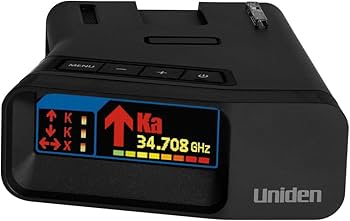
Uniden R7
- Dual LNA antennas provide both maximum range and directional arrows showing where the threat sits
- GPS auto-lockout remembers false alert locations after three passes and stops bothering you about them
- Large multicolor OLED display shows band, frequency, and signal strength at a glance
- K and Ka filter cuts down false alerts from modern blind-spot monitor systems
- Voice alerts announce the radar band and signal strength without you glancing at the screen
- 180-day firmware update policy keeps false-alert filtering current as new threats emerge
- Extreme long-range Ka-band performance puts it near the top of independent range tests
- Auto and manual muting options let experienced users fine-tune sensitivity beyond the factory defaults
- Large casing reflects in the windshield on sunny days, which some drivers find distracting
- K-band false alerts from certain Honda and Acura blind-spot systems persist despite filtering
- Bulkier mounting footprint than most single-antenna detectors in this comparison
- Price sits well above budget models despite lacking full 360-degree rear detection
- Voice alert volume can be hard to hear over loud highway wind noise with windows cracked
Escort Redline 360c
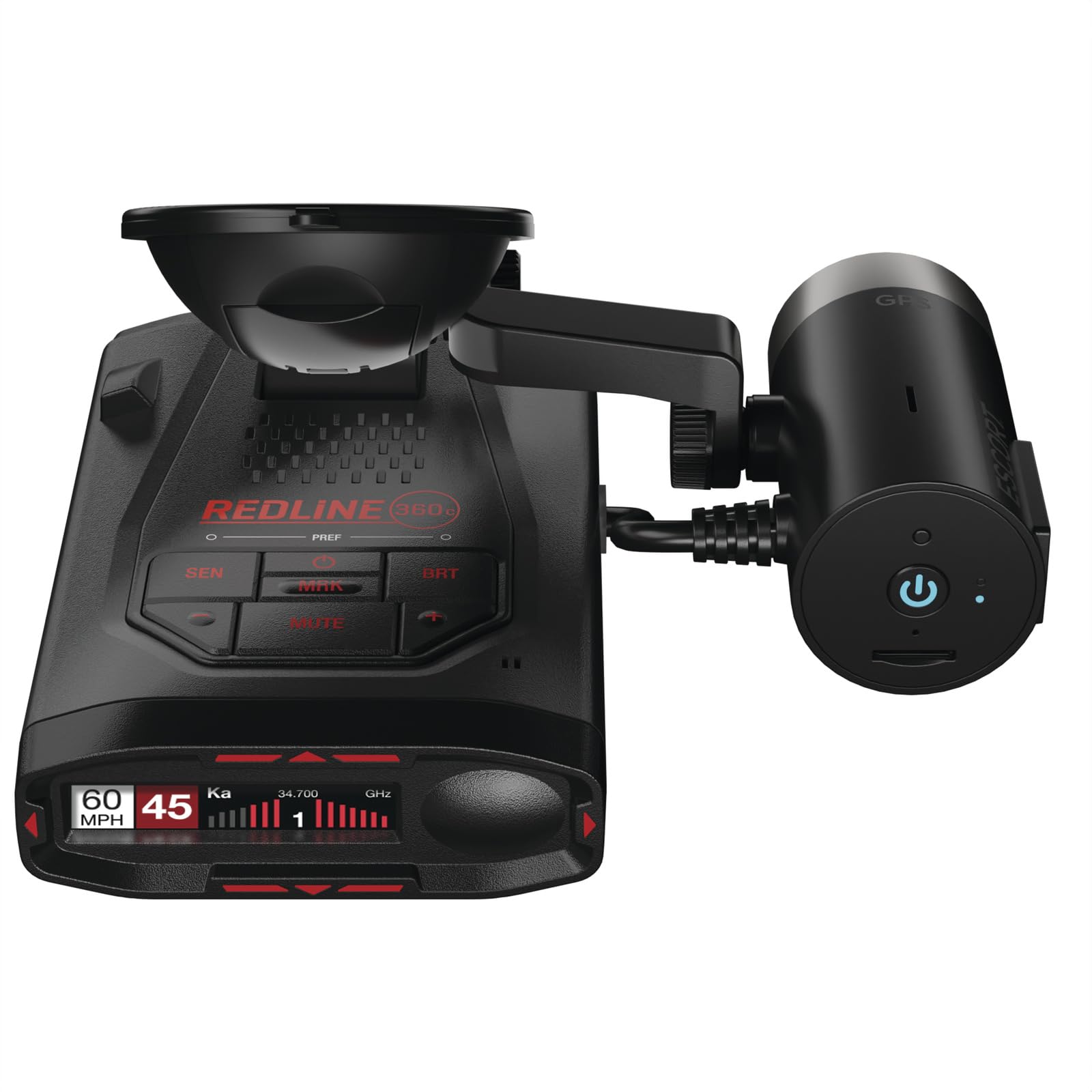
- Dual antennas deliver full 360-degree threat direction with arrows front and rear
- 100% stealth defeats radar detector detectors, including the Spectre Elite used by law enforcement
- AutoGPS learning silences false alert locations automatically without any driver input
- WiFi and Bluetooth connectivity downloads firmware and camera database updates wirelessly
- Low-noise amplifier design delivers excellent Ka-band range alongside the stealth capability
- Multi-color OLED display adjusts brightness automatically for day and night driving
- Escort Live app crowdsources real-time alerts from other users driving the exact same road
- Auto-dimming display and voice confirmation reduce distraction on night highway drives
- Premium price puts it out of reach for casual or budget-focused buyers
- Escort Live app connectivity can be unreliable on some Android phones
- Occasional Bluetooth dropout requires re-pairing mid-drive, interrupting the auto-learning feature
- Lowest value-for-money score in this roundup given the price relative to Uniden’s range
- Setup takes noticeably longer than plug-and-play detectors while the GPS database initializes
Uniden R3
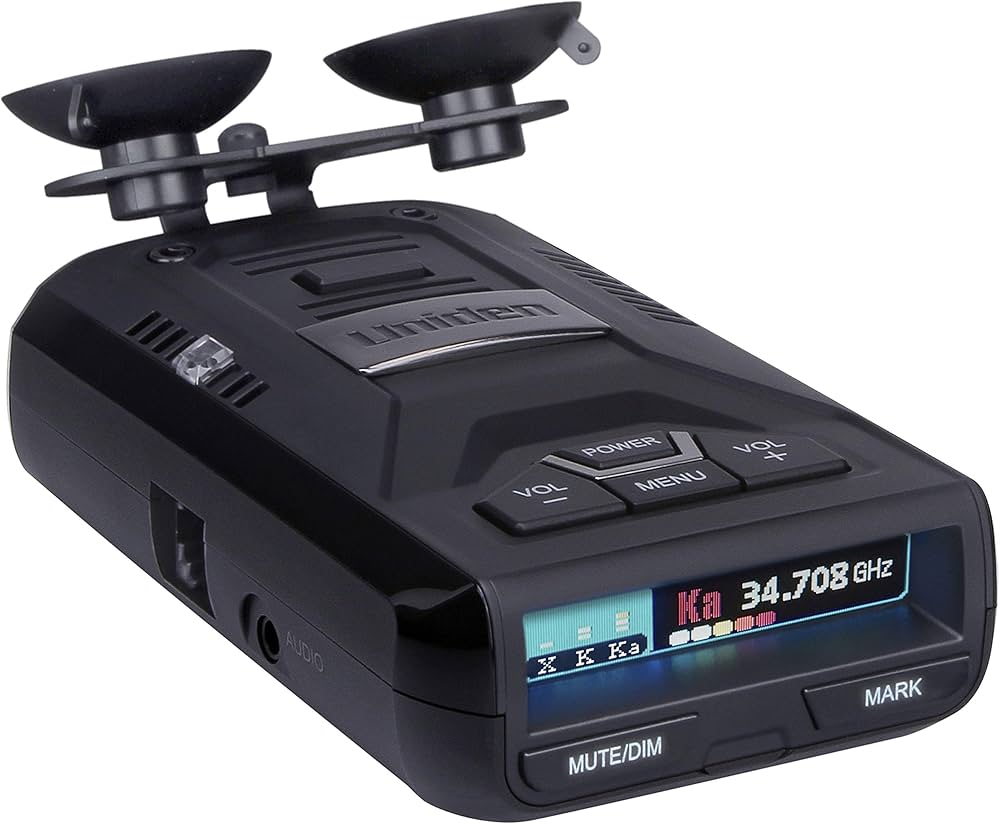
- Ka-band sensitivity rivals detectors costing significantly more, per independent range comparisons
- GPS with manual lockout lets you mark known false sources at your own pace
- Compact OLED display tucks neatly behind the rearview mirror without blocking the view
- Red light and speed camera database comes preloaded at no extra subscription cost
- Voice alerts keep your eyes on the road instead of glued to the display
- Firmware updates via USB keep the detector current for years after purchase
- Half the price of flagship models without a meaningful drop in core detection range
- Compact overall size mounts discreetly without drawing extra attention from passengers or passersby
- No directional arrows, so locating the threat source takes longer than on dual-antenna models
- Manual lockouts require more driver interaction than the auto-learning GPS on pricier units
- Speaker volume could be louder for convertibles or loud trucks with wind noise
- K-band filtering, while good, isn’t as refined as the newer firmware running on the R7
- No stealth capability, so it isn’t a legal option for driving through Virginia or D.C.
Radenso DS1
- USB-C power and data connection is a rare, welcome upgrade over older barrel-plug designs
- Magnetic windshield mount holds firmly and lets you remove the unit in seconds
- All-metal housing feels noticeably more solid than the plastic shells on competing detectors
- Extreme Ka-band sensitivity matches or beats detectors costing hundreds of dollars more
- Quiet ride feature mutes alerts automatically below a driver-set speed threshold
- Companion app adds GPS auto-lockouts on top of the detector’s raw sensitivity
- Custom low-noise amplifier design keeps range strong even in marginal signal conditions
- Regular firmware updates from Radenso keep pace with newer false-alert sources over time
- Auto-lockouts require the smartphone app running in the background at all times
- No directional arrows despite the detector’s otherwise high level of sensitivity
- Setup and app pairing takes longer than plug-and-play detectors in this comparison
- Metal housing adds weight that some suction mounts struggle to hold securely long-term
- Smaller brand means fewer third-party accessories compared to Uniden or Escort
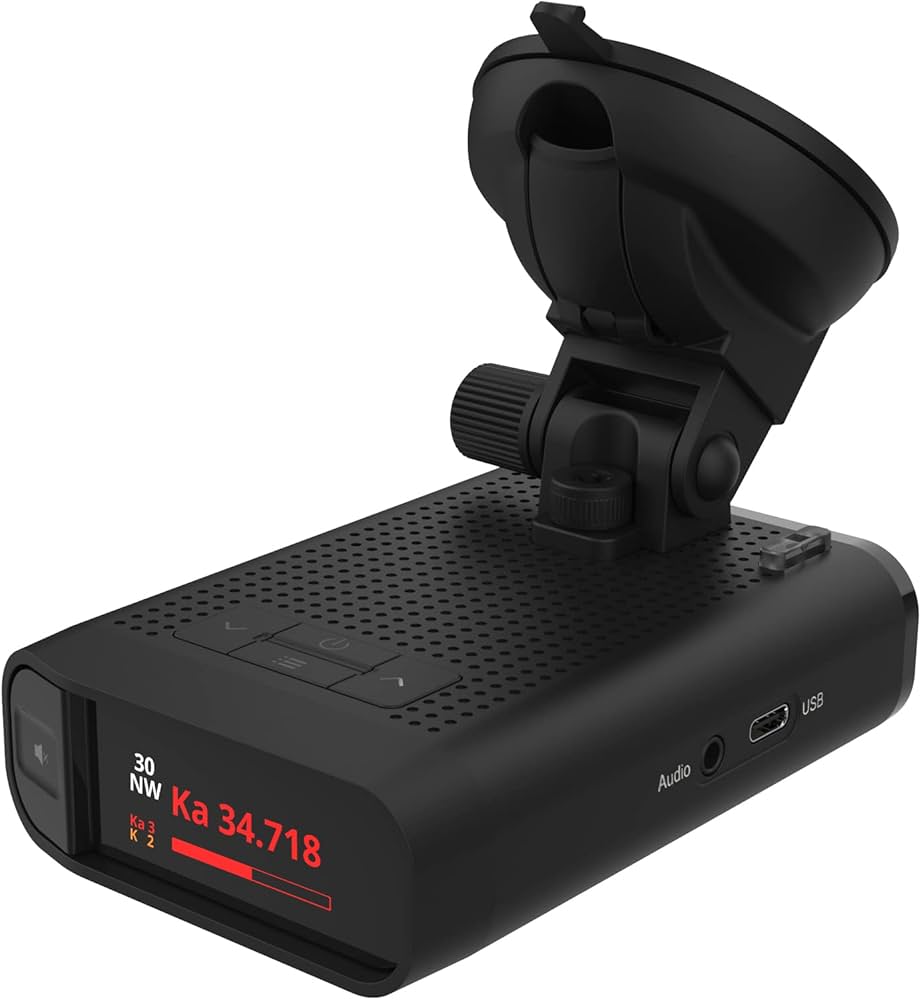
Cobra RAD 480i
- Simple suction cup mount with a quick-release tab attaches in seconds without tools
- Front and rear detection gives early warning from both directions on the highway
- Bluetooth connects to the Cobra iRadar app for community-shared alerts and camera warnings
- Menu navigation requires only a few button presses, ideal for first-time users
- IVT filter reduces false alerts from blind-spot monitors on many common vehicles
- Laser eye detection covers both front and rear approaches, not just radar bands
- Lowest price point in this comparison makes it an easy first detector to try
- Compact form factor doesn’t dominate the windshield the way larger flagship units do
- Ka-band range falls short of mid-tier detectors, especially in rolling hill terrain
- IVT filter isn’t as effective as Uniden or Escort’s filtering on newer vehicles
- Lacks GPS auto-lockouts entirely, relying on the app’s community database instead
- Build feels noticeably more plastic than the metal-housed Radenso DS1 in daily handling
- Community alert database depends on other nearby app users to stay useful in real time
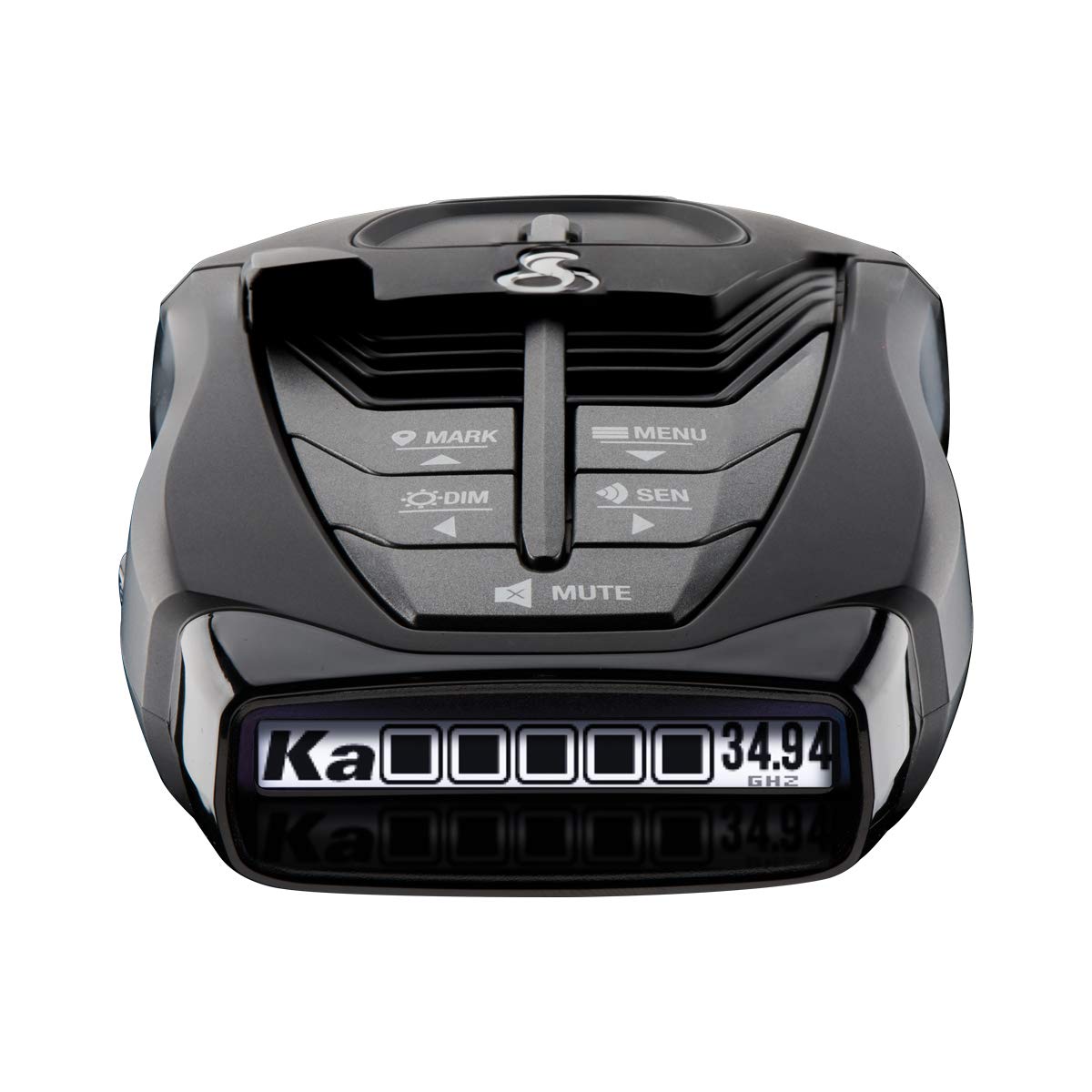
Can’t Decide?
Our Top 2 Picks — Head to Head
Both are top-rated. Here’s how to choose between them.
- Dual antennas with arrows show threat direction on both city streets and open highway driving
- GPS auto-lockout learns false alert locations after three passes, no manual marking needed at all
- Costs only a fraction of the Redline 360c while still covering nearly the same detection range
- 100% stealth defeats every radar detector detector, including units used in Virginia and Washington D.C.
- 360-degree dual antennas cover threats approaching from the front and rear simultaneously
- AutoGPS learning silences false sources completely hands-off, with no app babysitting ever required from you
How to Choose the Right Radar Detector
Six factors that matter before you buy — explained simply, without the jargon printed on the box or the sales pitch at the electronics counter.
Detection Range and Antenna Circuit Sensitivity
Long-range detection genuinely gives you more time to slow down before an officer clocks your speed with a handheld or dash-mounted gun on a busy road. Look for detectors with low-noise amplifiers in the antenna circuit, like the Uniden R7 and Radenso DS1. Ka-band is the most common police radar frequency in the US, so prioritize strong Ka sensitivity above all else when comparing spec sheets. K-band still appears in some rural areas, so a genuinely good K filter matters for quieter highway rides overall.
False Alert Filtering
Modern cars emit radar signals from blind-spot monitors and adaptive cruise control systems, which can trigger constant, exhausting false alerts on any daily commute. A detector with poor K-band filtering becomes a noisemaker you’ll eventually learn to ignore, defeating its entire purpose behind the wheel. The Uniden R7 and Escort Redline 360c both handle this automatically through GPS lockouts, while the Uniden R3 requires you to mark false sources yourself the first time.
GPS Features and Lockout Type
GPS enables automatic or manual lockouts of fixed false alert sources, plus red-light and speed camera database warnings that update as you drive across different counties. Some detectors use GPS to mute all alerts below a set speed threshold, which is handy in parking lots and school zones where alerts would otherwise be constant. The Radenso DS1 needs a connected phone app running in the background for its auto-lockout feature to work correctly. Decide how much manual interaction you’re willing to tolerate before choosing between auto and manual systems.
Arrows and Directional Awareness
Arrows show whether a radar threat is ahead, behind, or to the side, which highway drivers often find critical for making quick lane decisions in fast-moving traffic. The Uniden R7 and Escort Redline 360c both include dual antennas with directional arrows built into the display. The Uniden R3, Radenso DS1, and Cobra RAD 480i skip arrows entirely to keep costs or complexity down for everyday buyers. You still get an alert without them, but locating the exact source takes noticeably longer.
Mounting Style and Installation
Most detectors use a suction cup windshield mount that works fine for daily driving and holds securely through normal road vibration on most surfaces. The Radenso DS1 adds a magnetic mount instead, which makes daily removal faster and reduces wear on the glass over time. Hardwire kits tuck the power cord away for a cleaner look but add real installation time and complexity most casual buyers skip. Simple mount designs like the Cobra RAD 480i attach in seconds with no tools required at all.
Stealth and RDD Immunity
Virginia and Washington D.C. prohibit radar detector use entirely, and standard detectors leak a signal that radar detector detectors, or RDDs, can pick up from a passing patrol car within a few hundred feet. Drivers who regularly pass through those areas need a fully stealth unit like the Escort Redline 360c to avoid fines and confiscation of the device itself. If your routes never cross into a banned state, stealth capability isn’t worth the added cost over a standard detector.
Pro Tips
Quick Buying Checklist
Mount the detector high on the windshield near the rearview mirror for the clearest, most unobstructed detection angle.
Keep the unit level and centered rather than angled toward the sky, which cuts sensitivity dramatically on approach.
Run firmware updates regularly — old firmware performs noticeably worse against new false-alert sources on the road.
Don’t disable K-band entirely based on a forum post; some rural counties and highways still use it.
Check your state’s radar detector laws before crossing into Virginia, Washington D.C., or any military installation.
Remove the detector from the windshield when parked in direct sunlight to protect its internal electronic components.
Frequently Asked Questions
Are radar detectors legal to use?
Radar detectors are currently legal in every US state except Virginia and Washington D.C., and they’re also prohibited on military bases and in commercial vehicles over 10,000 pounds gross weight. Always check local laws before crossing state lines, especially if your route regularly passes through the Mid-Atlantic region on business or personal trips.
Do radar detectors work against laser guns?
Most detectors include a laser sensor, but it typically alerts you only after an officer has already clocked your speed with the laser gun aimed at your vehicle. That reaction window is much shorter than with radar. Dedicated laser jammers offer real defense, but they’re illegal in many states, so check local law before installing one.
What’s the real difference between GPS auto-lockouts and manual lockouts?
GPS auto-lockouts, like those on the Uniden R7 and Escort Redline 360c, learn false alert locations after a few passes and silence them automatically going forward. Manual lockouts, like on the Uniden R3, require you to mark each false source yourself the first time you pass it. Auto-lockouts cost more but save real driving-time hassle.
How long does a radar detector typically last?
A quality radar detector typically lasts four to six years with proper care and regular firmware updates from the manufacturer. Heat and direct sun exposure degrade internal components faster than normal use, so remove the unit from the windshield when parked outside for long periods. Regular firmware updates can meaningfully extend useful life well beyond that typical window.
Does mounting a radar detector damage my windshield or void my warranty?
No, suction cup and magnetic mounts don’t damage windshield glass or affect your vehicle’s warranty in any way whatsoever, regardless of make or model. That said, check your state’s laws about windshield obstructions, since some states restrict exactly where you can mount any device, including radar detectors, dash cams, and phone holders near the driver’s line of sight.
Do I really need directional arrows on a radar detector?
Arrows help you identify whether a radar threat is ahead, behind, or beside you, which highway drivers tend to find genuinely useful for making quick lane decisions. City drivers who mainly need a simple alert may not miss them much day to day. Detectors without arrows still provide the same underlying warning, just without the added direction.
Can a radar detector guarantee I’ll never get a speeding ticket?
No, a radar detector reduces your risk of a ticket but doesn’t eliminate that risk entirely, no matter how good the unit is. Instant-on radar and laser guns can catch you with essentially no warning time at all. Alert driving habits and situational awareness on the road remain your best overall defense.
What makes a detector “stealth” against RDDs?
A stealth detector, like the Escort Redline 360c, emits no detectable signal of its own, which keeps it invisible to radar detector detectors, or RDDs, that law enforcement uses in states where detectors are banned. Standard detectors leak a small signal that RDD units can pick up from a passing patrol car within a few hundred feet.
Final Verdict
Our Top Recommendations for 2026
Uniden R7 clearly remains the smartest all-around pick for drivers who want arrows and automatic false-alert learning without paying premium stealth pricing for features they may never use. Budget-focused drivers get proven long-range detection in the Uniden R3, while the Escort Redline 360c and Radenso DS1 reward buyers willing to pay more for full stealth or a rugged metal build that survives daily handling and repeated mounting. Whichever detector you choose, correct mounting height and regular firmware updates matter as much as the hardware itself.