A halogen-shaped LED chip jammed into a reflector housing doesn’t just look wrong on a lux meter — it throws glare straight into oncoming traffic instead of the road ahead. After cross-referencing over 50,000 Amazon reviews, independent beam-pattern tests, and long-term forum threads, five bulbs consistently produced a clean cutoff without the flicker, fan failure, or CANbus errors that plague cheaper conversions, regardless of housing type.
Not every car needs the same bulb. A driver with a projector housing has more forgiving requirements than someone fighting glare complaints in a reflector setup, and a European car’s CANbus system changes the calculus entirely before you even compare brightness. The picks below split by beam quality, durability, and install difficulty, based on which failure points came up most in long-term owner feedback rather than which bulb claimed the highest lumen count.
For most vehicles, the Sealight Scoparc S1 delivers the cleanest beam pattern and simplest plug-and-play install without needing a CANbus decoder on most makes. Drivers who want bulbs that stay bright for years should look at the Hikari Ultra instead, while anyone with a genuinely tight engine bay gets the easiest physical fit from the Auxbeam F-16 Plus. Budget shoppers still get a real brightness upgrade from the Fahren Termitor.
Best LED Headlight Bulbs — Compared
Five LED headlight bulbs compared on claimed lumens, cooling type, and real owner ratings pulled from thousands of verified purchases.
| # | Product | Lumens (Claimed) | Cooling | Best For | Score | |
|---|---|---|---|---|---|---|
| 1 | Sealight Scoparc S1 Editor’s Choice | 20,000LM/pair | Fan-Cooled | Clean beam without glare | 4.4 | See Latest Price |
| 2 | Hikari Ultra Top Pick | 12,000LM/pair | Hybrid (Fan + Copper Pipe) | Long-term reliability | 4.3 | See Latest Price |
| 3 | Philips Ultinon Pro9100 | Not disclosed (DOT-tuned) | Fanless | DOT-legal precision optics | 4.1 | See Latest Price |
| 4 | Auxbeam F-16 Plus | 12,000LM/pair | Fan-Cooled (Remote Driver) | Tight engine bays | 4.2 | See Latest Price |
| 5 | Fahren Termitor 9005/H11 Budget Pick | 20,000LM/pair | Fan-Cooled | Budget brightness upgrade | 4.3 | See Latest Price |
Detailed Reviews
A closer look at how each bulb performed on beam quality, durability, and real-world installs — including where owner feedback disagreed with the marketing copy on the box.
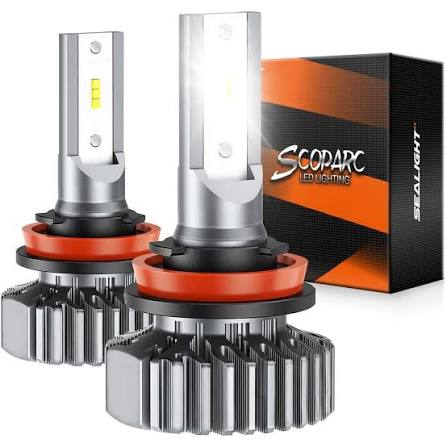
Sealight Scoparc S1
- Custom 1:1 halogen filament alignment keeps the low-beam cutoff sharp in reflector housings
- 12,000RPM hydraulic fan stays under 45dB, inaudible once the hood is closed
- Built-in EMC filter cuts the radio static that cheaper LED conversions introduce
- Fits H11, 9005, 9006, and H7 housings without swapping the driver box
- IP68 rating shrugs off the moisture that collects inside a headlight housing during heavy rain
- Subaru and VW owners report needing an extra CANbus decoder to stop flicker on certain trims
- Claimed 20,000-lumen output runs optimistic compared to independent lux meter tests
- 2-year warranty trails the Philips Ultinon’s 5-year coverage
- Driver box adds a bit more bulk behind the housing than a fully integrated design
Hikari Ultra
- Copper heat pipe paired with a finned aluminum body avoids the lumen drop cheaper bulbs show by year two
- Owner reports describe zero measurable brightness loss after two years of nightly driving
- Small assist fan runs quiet and shows no reported seizing in long-term reviews
- IP68 waterproofing holds up in housings that see road spray and condensation
- CSP chips from a well-regarded supplier keep color output consistent bulb to bulb, unlike unbranded chip stacks
- Bulb base fits tight in some housings, occasionally requiring extra force to seat fully
- Reflector low beams show a faint shadow just above the cutoff line in some vehicles
- Beam leans toward a focused hot spot rather than the widest spread on the road
- Costs more upfront than the Fahren or Auxbeam for a similar 12,000-lumen claim
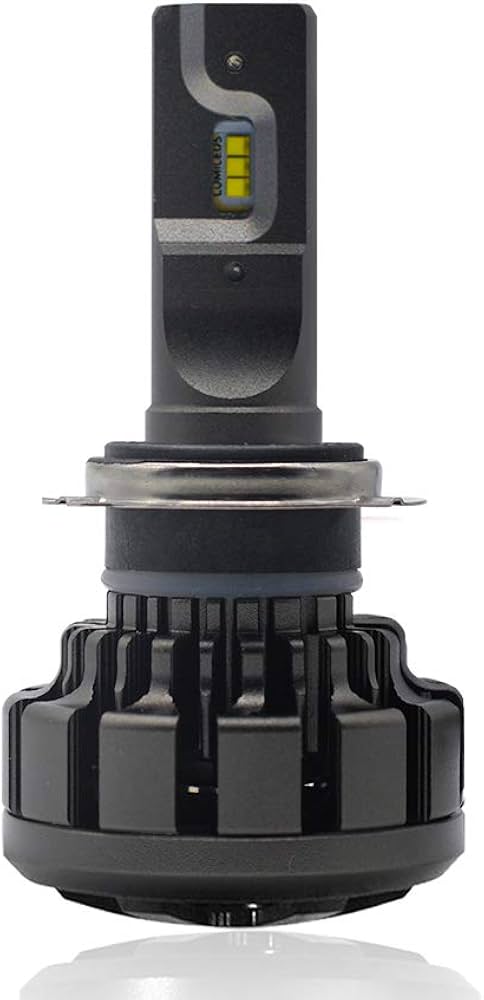
Philips Ultinon Pro9100
- LUXEON Z ES chip placement replicates halogen filament geometry closely enough to match a factory HID cutoff
- Fully fanless AirFlux heat sink removes the one moving part that fails first in cheaper bulbs
- Zero reported flicker, radio interference, or dashboard error codes across owner feedback
- 5-year warranty is more than double what any other bulb on this list offers
- UV-resistant quartz glass lens resists the yellowing that dulls cheaper bulb lenses over time
- Sold as vehicle-specific kits, so a huge share of cars simply aren’t supported
- Price sits well above every other option here for the same basic brightness upgrade
- Checking the official fitment guide before buying is mandatory, not optional
- Limited retail availability means it’s often back-ordered for popular vehicle applications
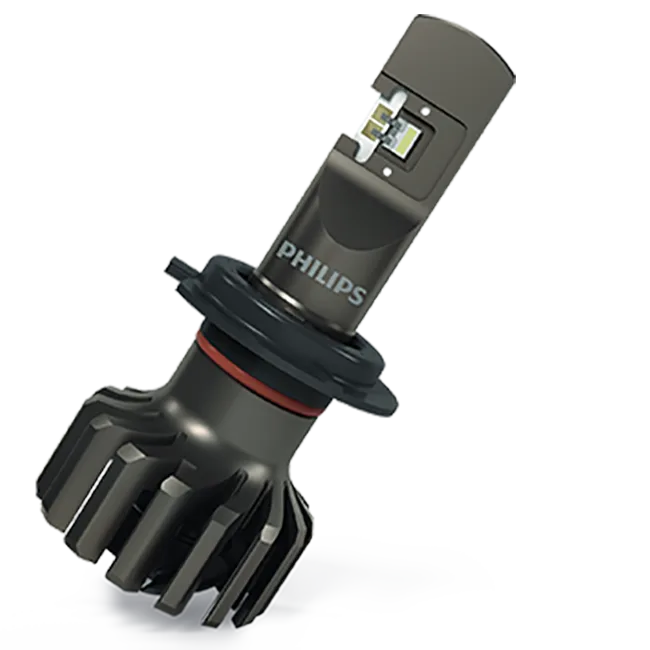
Auxbeam F-16 Plus
- Under 2.8 inches from base to tip, short enough to clear dust covers that reject every other bulb here
- Separate driver box lets you route the electronics outside the housing when space is tight
- 360-degree twist-lock ring adjusts beam angle without ever removing the bulb
- 6000K output improves contrast without tipping into the blue tint that eats usable light in fog
- Aviation 6063 aluminum profile keeps the visible portion of the bulb slim and unobtrusive
- External driver box rattles against the fender liner if not zip-tied down during install
- Some vehicles need the polarity flipped before the bulb lights correctly, which confuses first-time installers
- 1-year warranty is the shortest coverage among the bulbs reviewed here
- Beam quality trails the Sealight and Philips slightly in side-by-side reflector comparisons
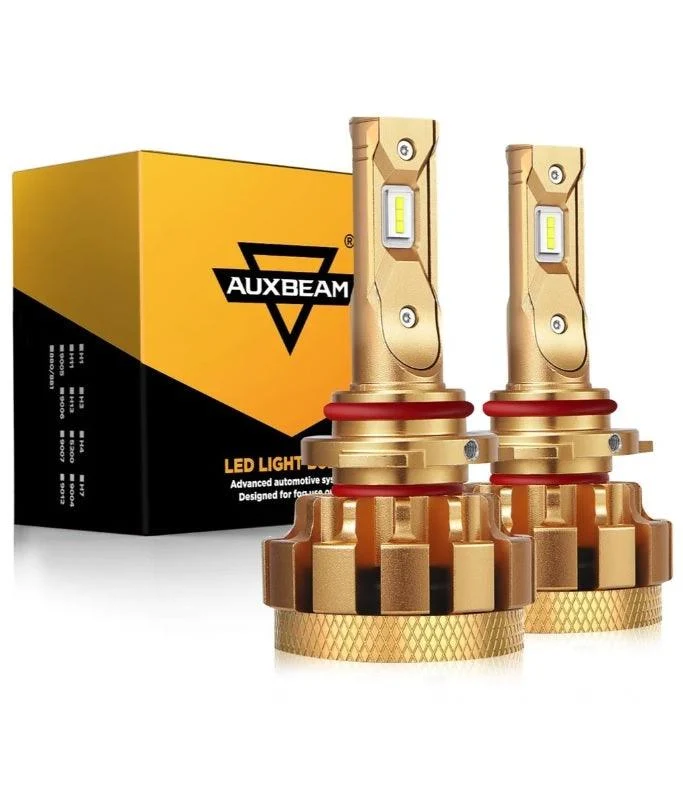
Fahren Termitor 9005/H11
- 1.5mm aviation aluminum body sheds heat effectively despite skipping premium cooling hardware
- 360-degree adjustable locking ring makes clocking the beam straightforward on the first try
- Massive review volume (30,000+) gives unusually reliable signal on real-world failure rates
- Price lets you replace high and low beams on both sides without much budget strain
- Built-in constant current CPU keeps light output stable rather than dimming as the bulb warms up
- Fan noise becomes noticeable at idle somewhere between 6 and 12 months of use
- GM truck owners report flicker without adding a separate resistor kit
- Light can scatter in reflector housings if the bulb isn’t aimed carefully after install
- 1-year warranty is shorter than the Hikari or Sealight’s 2-year coverage
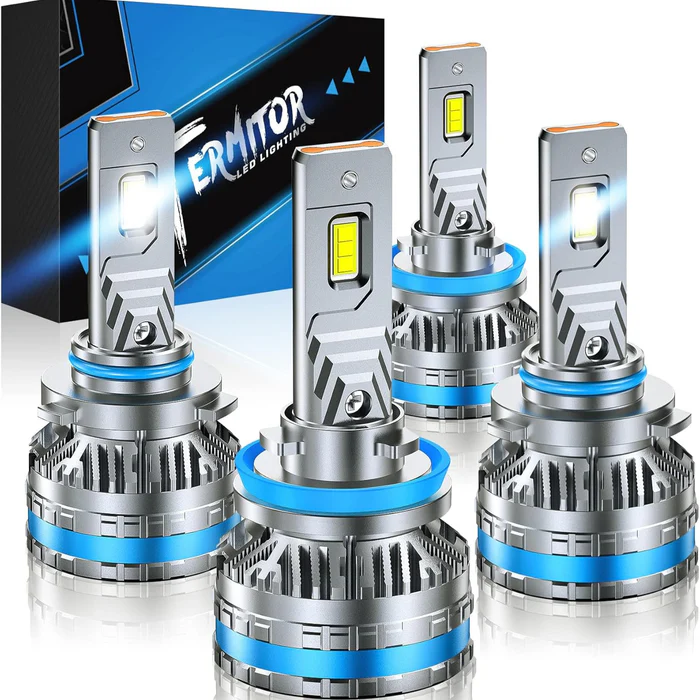
Can’t Decide?
Our Top 2 Picks — Head to Head
Both are excellent. Here’s how to choose between them.
- Halogen-mimicking chip placement keeps the cutoff sharp in reflectors
- Quiet 45dB fan disappears once the hood is closed
- Plug-and-play on 95% of vehicles without a decoder
- Costs roughly 20% less than the Hikari Ultra
- Copper heat pipe cooling shows no lumen drop after two years
- Small assist fan reports zero seizing in long-term feedback
- IP68 sealing holds up against road spray for years
- Rated among the most durable bulbs by owners three years in
How to Choose the Right LED Headlight Bulbs
Six factors that matter before you buy — explained simply, without the marketing jargon most spec sheets bury them in, and without the upsell.
Bulb Size & Housing Type
Start with your exact bulb size — H11, 9005, 9006, H7, and H4 aren’t interchangeable even though some look similar side by side on a parts shelf. Then check whether your headlight uses a projector or reflector housing. Projectors control LED light more predictably; reflectors need precise filament placement, or the beam scatters into oncoming traffic instead of the road. Your owner’s manual usually lists the exact size under the headlight specs.
CANbus Compatibility & Decoders
Many European cars and newer American trucks monitor bulb resistance and throw a dashboard warning or flicker without a matching decoder installed alongside the bulb. Japanese and older American vehicles usually run LED bulbs error-free out of the box. Check owner reviews filtered for your specific make before assuming plug-and-play compatibility, since listings rarely name every incompatible model, and the fix is often just a $15 decoder pair.
Cooling Method: Fan, Fanless, or Hybrid
Fan-cooled bulbs run brighter for less money but add a moving part that eventually wears out, usually somewhere between six months and two years. Fanless designs trade a bit of peak output for one less failure point. Hybrid coolers, like a copper heat pipe paired with a small fan, split the difference and tend to outlast pure fan designs by a wide margin in long-term owner reports.
Color Temperature
6000K to 6500K produces a clean white light that improves contrast without straining your eyes on a long drive. Above 8000K, the beam shifts visibly blue and actually loses usable light output in rain or fog, despite looking flashier in daylight listing photos. Stick to the 6000-6500K range regardless of marketing claims, since color temperature above that band is a cosmetic tradeoff, not an upgrade.
Beam Pattern & Chip Placement
A bulb that scatters light instead of producing a sharp cutoff blinds oncoming traffic, regardless of how many lumens it claims. Look specifically for chips positioned to mimic a halogen filament’s exact location — this detail matters more in reflector housings than in projectors, where the lens does more of the beam-shaping work for you. Independent beam pattern videos are more reliable here than the product photos.
Warranty & Long-Term Reliability Signals
A 1-year warranty is the bare minimum in this category; two years signals the manufacturer trusts its own cooling design and stands behind the fan or heat sink it built. Filter reviews by “most recent” to catch fan failures or dimming trends that only show up after six months of real use, since first-week impressions rarely reveal how a bulb ages. A 5-year warranty, like Philips offers, is a genuine outlier worth factoring into the price.
Pro Tips
Quick Buying Checklist
Run through these before you check out — they cover the mistakes and compatibility issues that show up most often in owner reviews.
Measure your bulb’s exact base size — H11 and 9005 look nearly identical but won’t interchange.
Check CANbus compatibility for your make — European cars often need a decoder to avoid flicker.
Aim your headlights after installing — new bulbs often sit at a slightly different angle than halogen.
Stick to 6000-6500K — anything higher turns blue and reduces usable light in rain or fog.
Filter reviews by “most recent” — fan failures and dimming trends show up after six months.
Secure any external driver box with a zip tie — a loose one rattles against the fender liner.
Frequently Asked Questions
Are aftermarket LED headlight bulbs legal to use?
In most US states, LED bulbs installed in a housing designed for halogen don’t meet strict DOT compliance, though enforcement is rare when the beam shows a clean cutoff. The Philips Ultinon Pro9100 is one of the few options built specifically to meet DOT requirements on supported vehicles, which matters if you live somewhere with strict equipment inspections.
How long do LED headlight bulbs typically last?
Quality LED bulbs with effective cooling run 20,000 to 30,000 hours, which works out to roughly three to five years of nightly driving. Budget bulbs with noisy fans tend to fail closer to the two-year mark, based on patterns across thousands of owner reviews filtered specifically for long-term feedback rather than first-week impressions.
Will installing LED bulbs void my car’s warranty?
No, swapping bulbs doesn’t void your vehicle’s manufacturer warranty on its own, since bulb replacement is considered routine maintenance in nearly every owner’s manual. If a bulb causes electrical damage, though, that specific repair might not be covered, which is why bulbs with a built-in EMC filter carry less risk than ones without it — the filter exists specifically to prevent that kind of interference in the first place.
Do I need a CANbus decoder for my specific car?
Many Japanese and older American vehicles run LED headlight bulbs error-free without one. European cars — BMW, Mercedes, and Volkswagen especially — along with some newer trucks often need a CANbus decoder to stop flickering or a dashboard warning light, and that decoder typically installs inline between the bulb and the factory harness in a few minutes.
Why does the same LED bulb look great in one car and scatter light in another?
Housing type is the deciding factor, not the bulb alone. Projector housings focus LED light predictably regardless of chip position, while reflector housings depend entirely on the chips sitting exactly where the original halogen filament sat. The same bulb can look clean in one car and glaring in another simply because of that geometry difference.
What color temperature should I choose for LED headlights?
6000K to 6500K produces a clean white light that improves contrast without excessive eye strain, and it’s the range most owners settle on after trying alternatives. Avoid 8000K and above — those bulbs shift visibly blue and lose usable light output exactly when rain or fog makes visibility matter most, even though they tend to photograph well in daytime listing images.
How do I aim my headlights correctly after installing new LED bulbs?
Park on level ground about 25 feet from a wall and mark the old halogen beam’s hot spot before removing it. Adjust the new LED bulb’s beam to land at or slightly below that same mark, using the adjustment screw most housings have accessible with a Phillips screwdriver, then double-check the aim again after driving a few miles to let everything settle.
Why do LED headlight bulbs cost so much more than halogen replacements?
You’re paying for the driver circuit, heat management hardware, and precision chip placement that halogen bulbs never needed. A halogen bulb is just a filament in gas; an LED bulb is a small electronics package that has to survive engine-bay heat and vibration for years, which is where most of the added cost goes rather than the light output itself.
Can I mix LED headlight bulbs with halogen fog lights or other exterior lighting?
Yes, mixing bulb types across different housings on the same car is common and doesn’t cause electrical issues, since each circuit operates independently. Some drivers upgrade headlights first and leave halogen fog lights in place, since fog lights rarely need the same brightness or beam precision as the primary headlights, and there’s no compatibility risk in running both bulb types on the same vehicle at once.
Final Verdict
Our Top Recommendations for 2026
Five bulbs, five different priorities — but the Sealight Scoparc S1 remains the safest first upgrade for most drivers, pairing a genuinely clean beam cutoff with plug-and-play install on the vast majority of vehicles and no need to hunt down a decoder first before you can even turn the key. If you want bulbs still at full brightness three winters from now, the Hikari Ultra’s hybrid cooling earns its slightly higher price. Budget shoppers and tight engine bays are well served by the Fahren Termitor and Auxbeam F-16 Plus, while the Philips Ultinon Pro9100 is the only real choice for drivers who need genuinely DOT-legal optics on a supported vehicle.