A loose dog sliding off the seat during a hard stop, a nervous whine that starts the moment the engine turns over, muddy paw prints ground into the upholstery after every hike to the trailhead — after testing five booster seats against these exact problems with real dogs on real drives over several months, only a few genuinely solved them.
Not every dog needs the same seat. A calm 15-pound terrier that naps through a commute has very different needs than a shaking senior dog with arthritic joints or a dog that only rides along twice a year for a vet visit. This guide breaks down which booster fits which dog, which vehicle, and which budget.
For most small dogs, the K&H Bucket Booster is the best dog car seat, since its steel frame and dual safety tethers keep even a wiggly dog stable through hard braking and sharp turns without any wobble. Senior or anxious dogs do better in the plush Snoozer Lookout, whose sheepskin-style lining and solid foam back genuinely calm a nervous rider. Safety-first owners who drive highway speeds regularly should look at the crash-tested Kurgo Skybox instead, since it’s the only seat here with documented collision data. Budget-conscious owners with only an occasional traveler can get by comfortably with the foldable Paws & Pals seat.
Best Dog Car Seats — Compared
Weight limits, frame type, best-fit dog temperament, and honest real-world scores for all five booster seats we tested.
| # | Product | Weight Limit | Type | Best For | Score | |
|---|---|---|---|---|---|---|
| 1 | K&H Bucket Booster Editor’s Choice | Up to 30 lbs | Steel-Frame Booster | Frequent single-dog drivers | 4.6 | See Latest Price |
| 2 | Snoozer Lookout Top Pick | Up to 25 lbs | Plush Foam Booster | Senior & anxious dogs | 4.5 | See Latest Price |
| 3 | Kurgo Skybox | Up to 30 lbs | Crash-Tested Booster | Highway drivers, safety-first | 4.5 | See Latest Price |
| 4 | PetSafe Happy Ride | Up to 25 lbs | Lightweight Booster | Multi-vehicle households | 4.4 | See Latest Price |
| 5 | Paws & Pals Budget Pick | Up to 20 lbs | Foldable Foam Booster | Occasional short trips | 4.3 | See Latest Price |
Detailed Reviews
Full breakdown of each seat — real-world ratings, honest pros, honest cons, and our expert verdict on exactly which dog it fits.
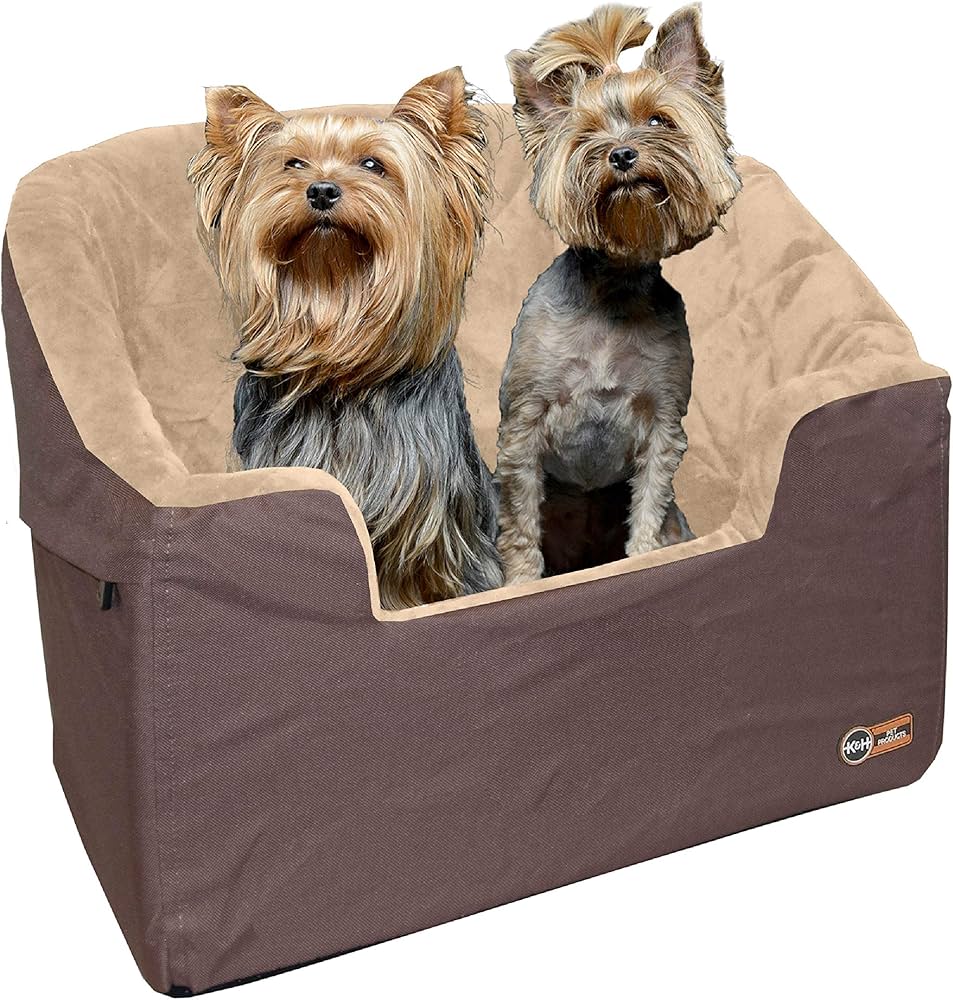
K&H Pet Products Bucket Booster Dog Car Seat
- Powder-coated steel frame stays rigid instead of sagging the way foam-only seats do after months of use
- Remains stationary during hard braking and sharp turns, even with a restless 15-pound dog moving around
- Quilted fleece cover machine-washes clean after muddy paws, drool, and spills with no pilling
- Dual safety tethers clip to a harness and distribute stopping force across the chest instead of one point
- Three-point mounting system through the headrest, seat back, and under-seat anchor holds firm on rough roads
- Assembling the metal frame tubes requires real hand strength and can frustrate buyers on the first try
- Fleece traps heat in summer, so a cooling mat or cotton cover helps on hot days
- Doesn’t fold down for storage, so it needs a permanent spot in the car
- Heavier than foam-only competitors, which makes moving it between vehicles more of a chore
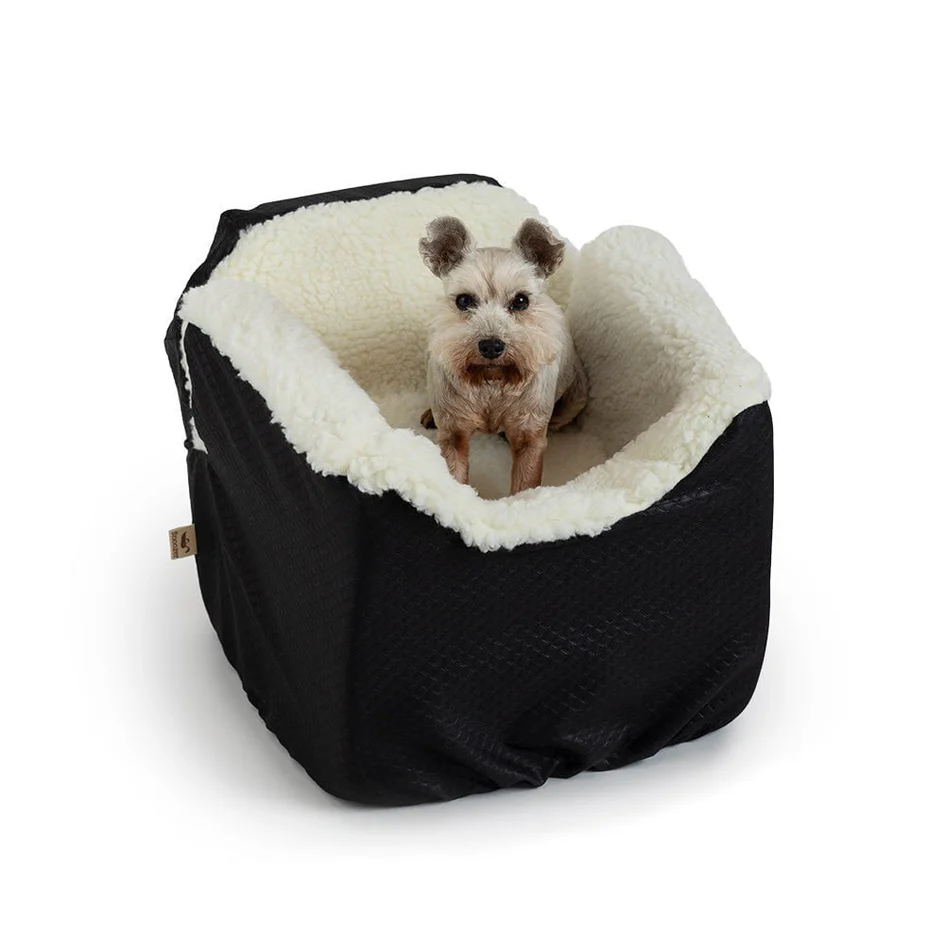
Snoozer Lookout Pet Car Seat
- Synthetic sheepskin lining and solid foam bolster calmed a shaking senior dog through a 4-hour road trip
- Solid foam backrest holds its orthopedic shape for years instead of flattening out
- Dual anchoring through seat belt and headrest straps prevents the whole unit from tipping forward
- Removable cover washes well despite the plush texture
- Deep bolster walls cradle the dog’s body, reducing the swaying feeling some dogs find unsettling
- Price is hard to justify for a dog that only rides along a few times a year
- Bulky bolster shape can be tight to fit in smaller coupe back seats
- Sheepskin-style material needs a gentle wash cycle or it starts matting
- Foam inserts must be removed before washing, adding an extra step most owners forget the first time
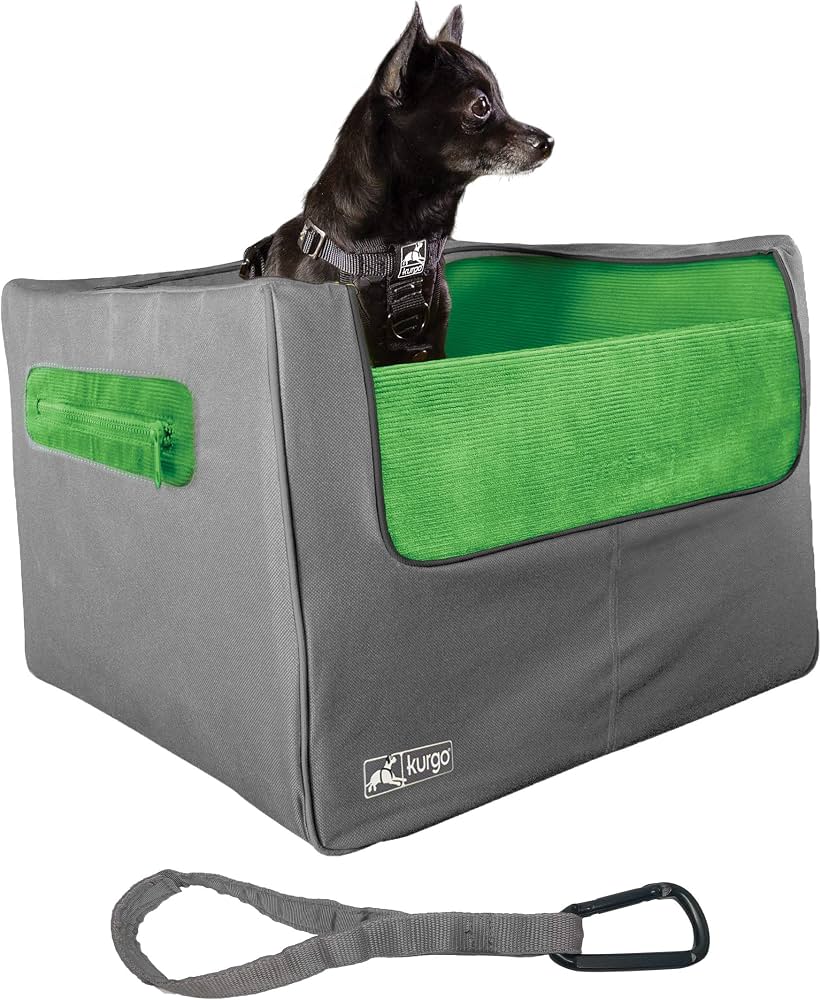
Kurgo Skybox Booster Seat
- Passes independent crash tests built on the same protocols used for child safety seats
- Waterproof inner liner stopped a full-bladder accident from ever reaching the car upholstery
- Dual tethers with a locking carabiner distribute collision force across the harness instead of one clip
- Metal frame supports resist deforming under a squirming 25-pound dog
- Survived a documented minor collision at 25 mph with no visible stress on the harness attachment points
- Straps gradually loosen on a bumpy drive and need retightening at fuel stops
- Fabric shell feels rougher to the touch than the fleece-lined competitors
- Costs more than boosters that skip crash testing entirely
- Requires a Kurgo-recommended harness for the crash-test rating to actually apply
PetSafe Happy Ride Booster Seat
- Snap-buckle headrest and seat-back straps let you move the seat between vehicles in under two minutes
- Fleece liner stays soft and washes clean even after a full spilled puppuccino
- Lightweight build makes loading and unloading the seat itself effortless
- Folds flat for storage when it’s not strapped into a vehicle
- Headrest anchor works even on vehicles with unusually shaped or non-removable headrests
- Lacks a rigid frame, so it can shift slightly during sharp cornering compared to metal-frame seats
- Single D-ring tether point offers less force distribution than a dual-tether design
- Fabric shell may not hold up against a dog that chews on the straps or sides
- Interior feels a bit tight for dogs closer to the 25-pound upper weight limit
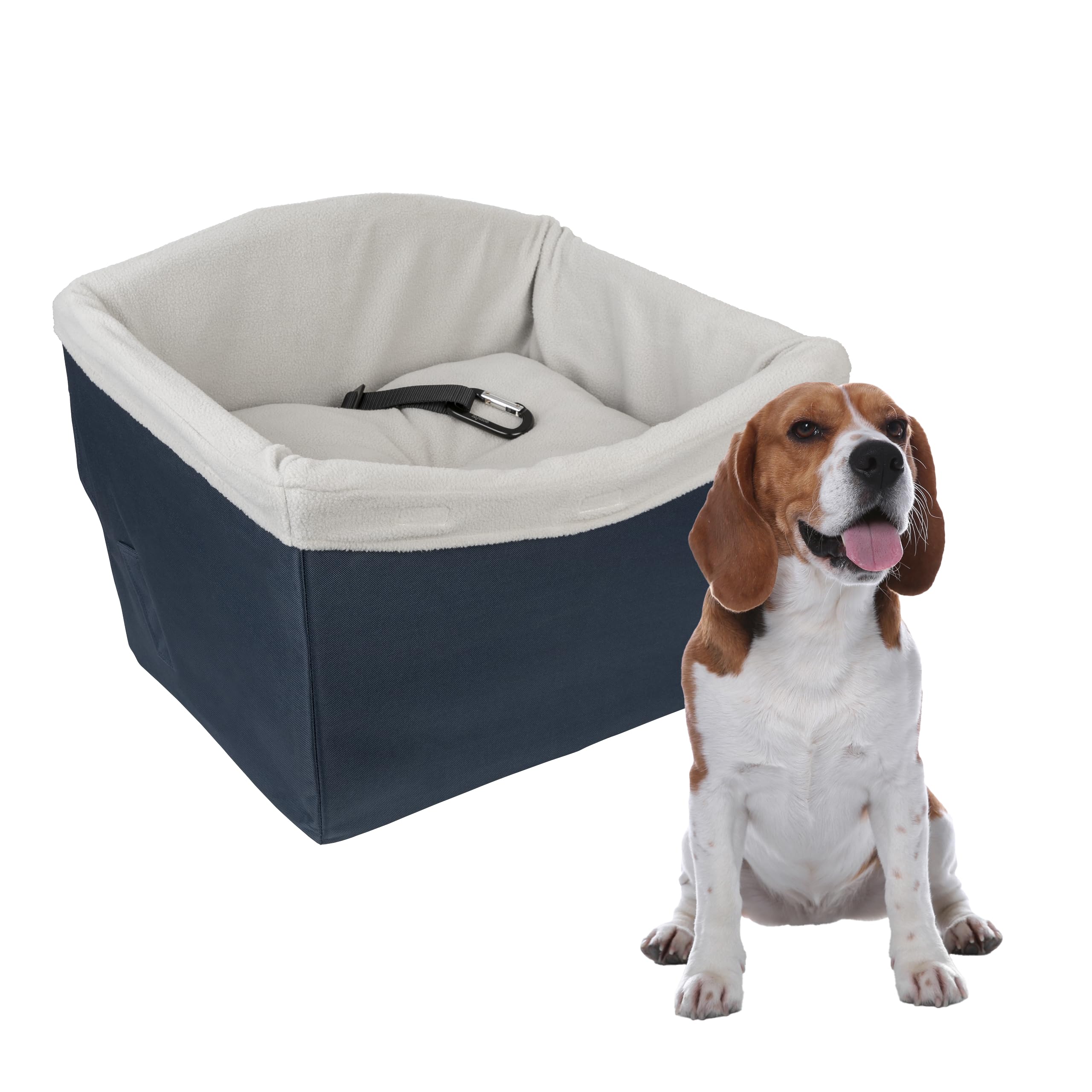
Paws & Pals Dog Booster Seat
- Folds completely flat, so it tucks behind a seat or in the trunk when not needed
- Gives a 7-pound dog an elevated view that stopped it from panicking on the floorboard
- Installs in under 30 seconds with a single adjustable seat-back strap
- Waterproof base layer protects upholstery from accidents even in the budget tier
- Quick-release buckle makes it simple to move between two family vehicles occasionally
- Foam walls compress and lose their boxy shape after about six months of a dog leaning on them
- Single tether point is less protective than the dual-tether designs on pricier seats
- Not actually comfortable for dogs near the stated 20-pound limit despite the listing
- Fleece liner shows wear noticeably faster than the heavier-duty covers on pricier seats
Can’t Decide?
Our Top 2 Picks — Head to Head
Both are excellent, but they solve very different problems depending on your dog’s age, temperament, and how far you typically drive.
- Steel frame stays rock-solid through hard braking and sharp turns alike
- Dual safety tethers distribute stopping force across the chest, not the neck
- Fleece cover machine-washes clean after mud, drool, and spills with no pilling
- Sheepskin-style lining genuinely calms shaking senior and anxious dogs
- Solid foam backrest gives real orthopedic support for older, achy joints
- Dual seat belt and headrest anchoring prevents the whole unit from tipping
How to Choose the Right Dog Car Seat
Six factors that genuinely matter before you buy — explained simply, from a dog’s-eye view of the back seat.
Dog Size and Weight Capacity
Dog car seats target small to medium breeds, and most top out somewhere between 20 and 30 pounds depending on the specific model and frame material. Measure your dog’s length from nose to base of tail, not just its weight, since the seat interior must let your dog lie down without feeling cramped or having to sit hunched. A 15-pound terrier that curls into a tight ball fits a smaller booster easily, while a long-bodied Dachshund of the exact same weight needs noticeably more interior length. Never exceed a seat’s stated weight limit — doing so compromises the frame and straps alike.
Compatibility with Your Vehicle Seats
Bucket seats with deep bolsters need a booster with a rigid base that actually bridges the gap between them, which is exactly where steel-frame seats like the K&H and Kurgo genuinely outperform foam-only designs on the market. Bench seats in trucks and older sedans let almost any booster sit flat without much fuss at all. Check your headrest design before ordering, since some vehicles use fixed, non-adjustable headrests that make strap routing genuinely awkward. A seat offering both a headrest strap and a separate seat-bottom anchor gives you the most secure mount regardless of your specific seat shape.
Safety Tether and Harness Connection
A dog car seat restrains your pet, not itself, so the internal tether must always clip to a body harness and never directly to a collar. Sudden braking with a collar-mounted tether concentrates all that stopping force directly on your dog’s throat, which can cause serious injury even during a fairly minor stop at low speed. Dual tethers spread that same force across the chest and back instead of one single point, which matters more the faster and more often you actually drive with your dog riding along. Some owners buy a separate crash-tested harness specifically to pair with a dual-clip seat.
Crash-Test Verification
Only a small handful of manufacturers, Kurgo prominently among them, actually put their dog car seats through independent crash testing built on the same protocols used for child safety seats. Most boosters on the market today protect against distraction, sudden lane changes, and gentle stops, but they were genuinely never engineered or tested against real collision-level forces at all. If you drive at highway speeds on a regular basis, that specific distinction is worth paying extra for rather than just assuming. Read the product listing carefully — “safety tether included” is a very different claim from “independently crash-tested.”
Materials, Cleaning, and Durability
Dogs shed, drool, and occasionally have accidents in the car, so a removable, machine-washable cover is genuinely non-negotiable rather than a nice-to-have feature. Fleece liners feel soft and warm against the skin but can run uncomfortably hot in summer, while nylon covers clean up faster but feel noticeably rougher to the touch for a resting dog. A waterproof liner underneath the visible cover protects your actual car upholstery from whatever inevitably soaks through the fabric. Metal-frame seats tend to add years of usable life compared to foam-only construction, which can start sagging within a single season of daily use.
Installation and Portability
A seat that lives permanently in one vehicle can reasonably afford to be heavier and a little more involved to install, since you’re really only setting it up once and leaving it there. If you regularly switch cars, carpool, or borrow a vehicle for weekend trips, a lightweight, foldable model saves real time and hassle over a bulkier steel-frame design. Every seat in this category uses some combination of straps and buckles rather than actual tools, but a few require threading straps through narrow gaps and cinching them down tight for a properly secure fit each time.
Pro Tips
Quick Buying Checklist
Always clip the tether to a harness, never a collar — sudden stops concentrate all that force on your dog’s throat otherwise.
Use every anchor point included with the seat, especially the under-seat strap, or it can tip forward under hard braking.
Measure your dog’s length, not just its weight, before choosing which seat size to actually buy.
Don’t assume any booster is crash-tested — read the listing for actual test claims, not just “safety tether included.”
Retighten straps periodically on longer drives, since ordinary road vibration loosens them gradually over the miles.
Never leave a dog alone in a parked car, seat or no seat — the restraint itself doesn’t prevent overheating.
Frequently Asked Questions
Are dog car seats safe for small dogs?
Yes, when used correctly with a properly fitted harness rather than a collar clipped straight to the tether. A booster seat keeps a small dog elevated and restrained, preventing it from becoming a projectile during sudden braking or a sharp swerve. Without a seat, a 10-pound dog in a 30 mph crash hits the dashboard with roughly 300 pounds of force behind it.
How do I install a dog car seat properly?
Most seats use a strap around the seat back and headrest, and some include an additional under-seat strap for stability. Route every strap according to the instructions, pull them tight, and check for wobble before every trip. The seat should not shift at all when you push firmly against it by hand.
Can I use a dog car seat for a large dog?
No, dog car seats are built specifically for small breeds under roughly 30 pounds, not medium or large dogs. A large dog needs a crash-tested harness with a seat belt tether directly on the back seat, or a properly secured travel crate instead. Putting a heavy dog in a booster seat risks breaking both the frame and the mounting straps in normal use, let alone during a real stop.
Are crash-tested dog car seats worth the extra cost?
Yes, if you drive at highway speeds on a regular basis with your dog riding along for the trip. A crash-tested seat like the Kurgo Skybox provides documented survival data from an actual collision simulation, not just a marketing claim. Non-tested seats may hold a dog just fine during normal driving but were never verified to fail safely in a genuine, serious crash scenario.
How do I clean a dog car seat?
Most covers unzip completely and go into a washing machine on a gentle cycle with mild detergent, then air dry flat to prevent shrinkage or warping. For waterproof liners underneath the main cover, wipe them down with a damp cloth and mild soap instead of machine washing. Clean the seat monthly, or immediately after any accident, to prevent lingering odor from setting into the foam.
Will a dog car seat fit in a sports car with small back seats?
Some will — the PetSafe Happy Ride and Paws & Pals both fold down to a smaller footprint than steel-frame options. Deep bucket sports seats may not accommodate bulkier bolsters, though, so measure the seat’s width against your car’s seat base before buying. A front-seat install may be your only option, but you must disable that seat’s airbag first.
Do I still need a harness if the seat already has a tether?
Yes, the built-in tether must attach to a harness worn by your dog, never clipped directly to a collar. A properly fitted harness distributes stopping force across the chest and back instead of concentrating it in one spot. Without one, the tether itself becomes a genuine neck-injury risk in any sudden stop.
Final Verdict
Our Top Recommendations for 2026
A quality dog car seat protects your pet, your upholstery, and your concentration behind the wheel all at once, every single drive. The K&H Bucket Booster is the most stable, durable pick for daily driving with a small dog, while the Snoozer Lookout earns its premium price for senior or anxious dogs who need extra comfort to stay calm on the road. The Kurgo Skybox is worth the upgrade if you drive at highway speeds often and want documented crash protection rather than just a comfortable perch, and the Paws & Pals seat covers everyone in between on a tighter budget.