Squeaky ball joints, a driveshaft U-joint clicking on every turn, a tie rod end that groans in cold weather — after testing five grease guns against these exact warning signs on real vehicles and real farm equipment over several months, only a couple genuinely cleared stubborn, neglected fittings without a fight.
Not every shop needs the same gun. A home mechanic greasing one truck twice a year has very different needs than a fleet manager pumping grease into dozens of fittings every single day. This guide breaks down pressure output, coupler design, and build quality so you buy the gun that actually matches your workload.
For most home mechanics, the Lincoln 1134 is the best grease gun, since its cast-iron head and bleeder valve deliver 7,500 PSI without the air-lock frustration that plagues cheaper guns on the market. Anyone greasing multiple machines daily should look at the Milwaukee M18 cordless gun instead, which trades pumping effort entirely for 10,000 PSI at the pull of a trigger. Farmers and heavy-equipment operators who need something indestructible outdoors should consider the all-metal Alemite 500-E, and budget-conscious owners can get by fine with the complete Lumax kit for occasional seasonal use.
Best Grease Guns — Compared
Pressure output, power type, best-fit job, and honest real-world scores for all five grease guns we tested side by side.
| # | Product | Pressure Output | Type | Best For | Score | |
|---|---|---|---|---|---|---|
| 1 | Lincoln 1134 Editor’s Choice | 7,500 PSI | Pistol-Grip Manual | Home mechanics, daily auto use | 4.6 | See Latest Price |
| 2 | Milwaukee M18 Top Pick | 10,000 PSI | Cordless | Pros greasing fleets & equipment | 4.8 | See Latest Price |
| 3 | Alemite 500-E | 10,000 PSI | Lever-Action Manual | Farm & heavy-equipment abuse | 4.5 | See Latest Price |
| 4 | LockNLube | 7,500 PSI | Pistol-Grip Manual | Fighting slipping couplers & air locks | 4.7 | See Latest Price |
| 5 | Lumax LX-1152 Budget Pick | 6,000 PSI | Pistol-Grip Manual | Seasonal light-duty lubrication | 4.4 | See Latest Price |
Detailed Reviews
Full breakdown of each grease gun — real-world ratings, honest pros, honest cons, and our expert verdict on exactly who it fits.
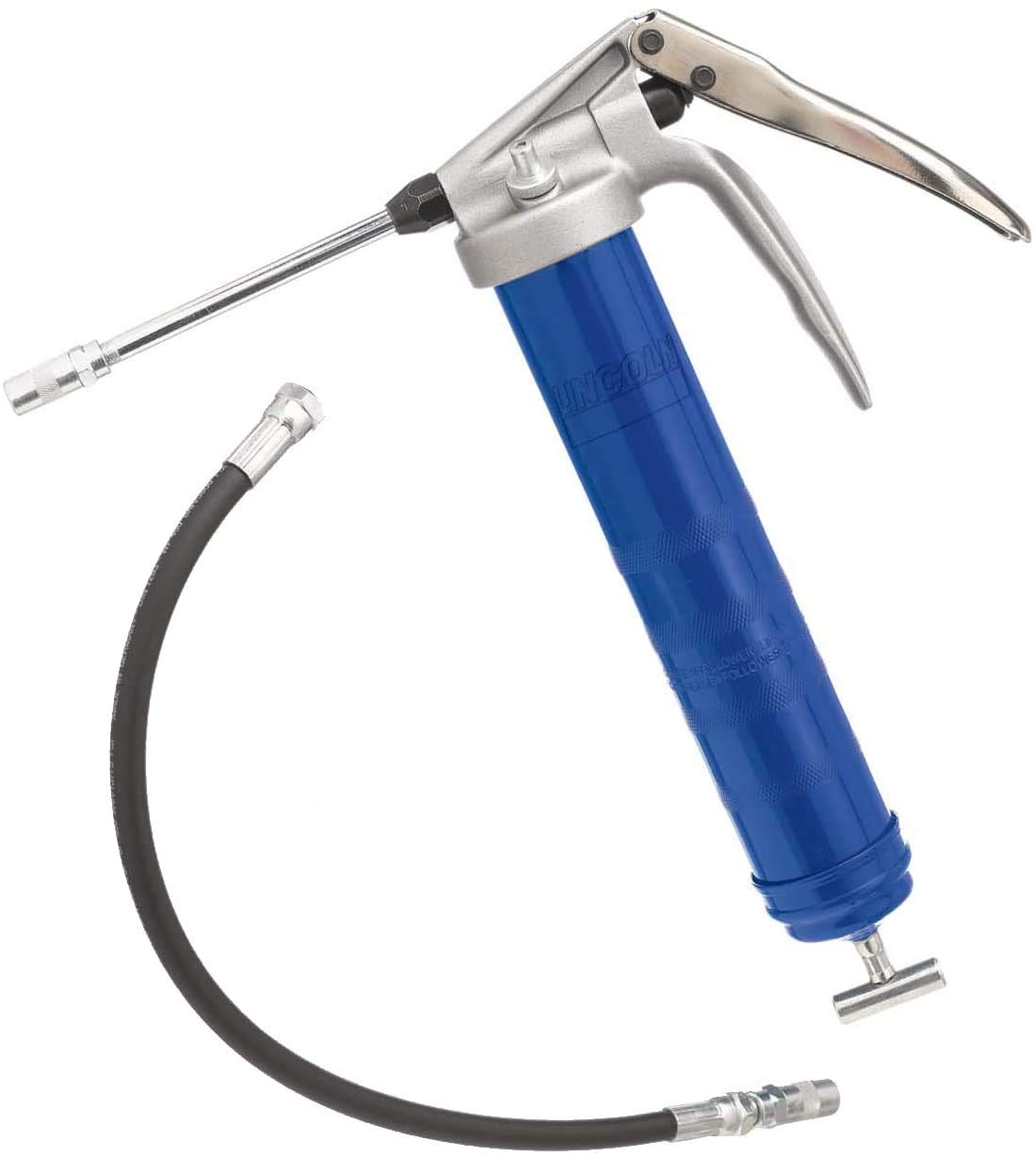
Lincoln Industrial 1134 Pistol Grip Grease Gun
- Cast-iron head resists cracking and holds seal integrity even after years of shop use
- Bleeder valve dramatically cuts down the air-lock frustration that plagues cheaper manual guns
- Variable stroke lets you use short pumps in tight spaces or long pumps for volume
- Pistol grip allows genuine one-handed operation in cramped engine bays
- Accepts both standard 14-ounce cartridges and bulk suction fill for flexibility on the job
- Included coupler is a basic spring-jaw type, so many owners upgrade to a locking coupler separately
- Slightly heavier in the hand than budget pistol-grip competitors
- A small number of units leak from the plunger seal if the barrel gets overfilled
- Costs noticeably more than entry-level manual guns with similar-looking specs on paper
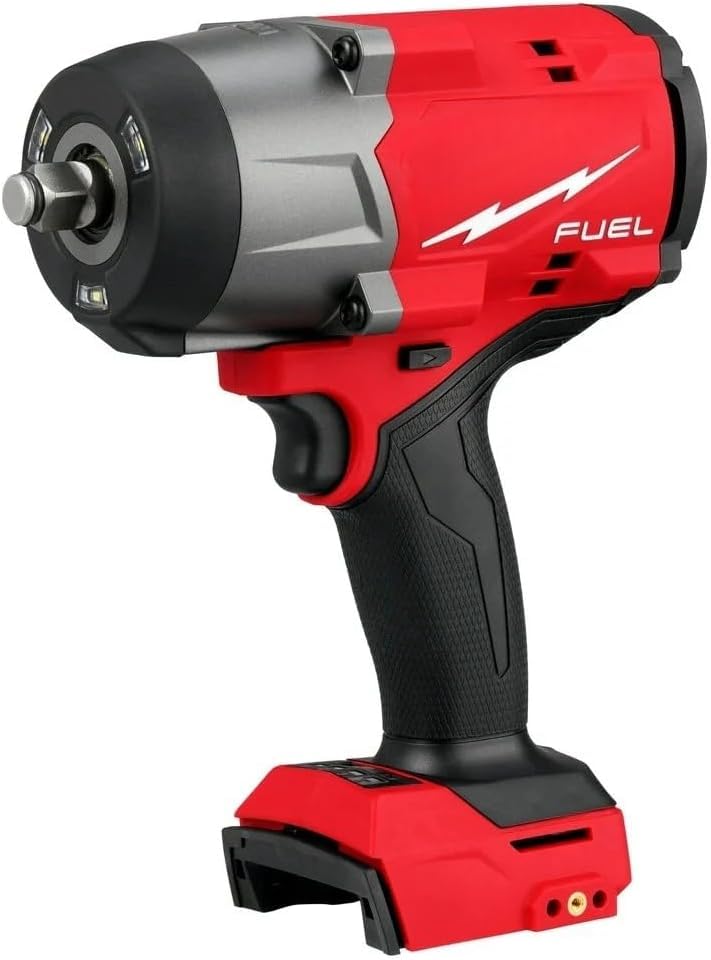
Milwaukee M18 2646-20 Cordless Grease Gun
- 10,000 PSI at the pull of a trigger clears fittings a manual gun simply can’t budge
- Brushless motor with a variable speed trigger gives real control instead of an all-or-nothing blast
- Air-bleed valve and plunger-rod lock clear a jam with the push of a button
- Integrated LED light aims directly at the coupler, useful under a tractor deck or truck frame
- A single 5.0Ah battery pack routinely lubricates an entire piece of heavy equipment with charge left over
- Bare-tool price stings hard if you don’t already own M18 batteries and a charger
- Noticeably heavy with a large battery attached during extended overhead greasing
- High output pressure can blow out small rubber boots if you hold the trigger too long
- Overkill for someone who only greases a personal vehicle a couple times a year
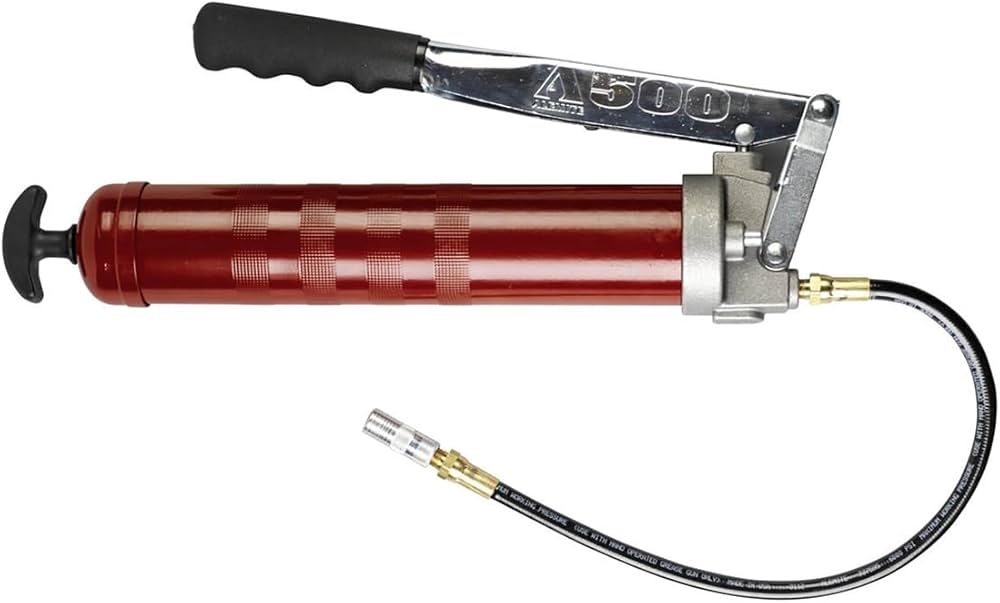
Alemite 500-E Lever Grease Gun
- All-metal steel barrel, cast-iron head, and steel lever survive being run over by a tractor
- Leather plunger seal is fully serviceable and replaces in minutes when it eventually wears
- Lever action delivers the highest grease volume per stroke of any manual design here
- Accepts bulk grease loading in addition to standard cartridges, cutting cost per ounce
- Rebuild kits and replacement seals remain widely available decades after the original purchase
- Two-handed lever operation needs open space, which rules out tight engine bay work
- Noticeably heavier than any pistol-grip gun in this lineup
- Initial priming and bleeding takes more patience than the modern bleeder-valve designs
- Rigid pipe version on some models makes reaching certain zerks more awkward than a flexible hose
LockNLube Heavy-Duty Grease Gun
- Locking coupler with four hardened jaws clamps onto a zerk and simply will not slip off
- Bleeder valve purges trapped air in seconds with a single push, restoring pressure fast
- 7,500 PSI handles automotive and light equipment fittings without hesitation
- Hose and coupler are individually rebuildable instead of becoming disposable once worn
- Frees up both hands for pumping instead of holding the coupler steady against a fitting
- Premium price is mostly paying for the coupler technology, not the gun body itself
- Bulky coupler shape struggles to reach deeply recessed zerks on some vehicles
- Gun body build quality is solid but doesn’t quite match Lincoln or Alemite
- Replacing the locking coupler alone costs more than an entire budget grease gun
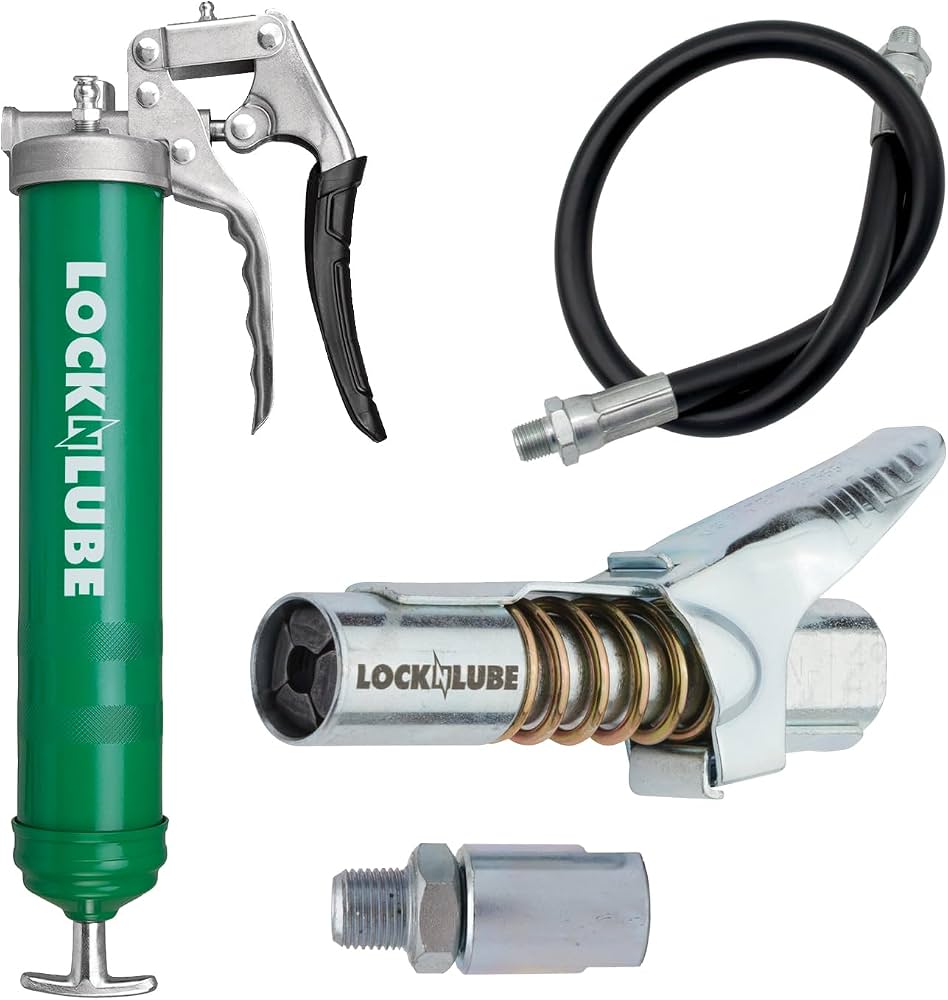
Lumax LX-1152 Pistol Grip Grease Gun
- Complete kit arrives with a hose, coupler, and a starter tube of grease in one box
- 18-inch flexible hose reaches recessed zerks on drive shafts without straining to angle the gun
- Lightweight body stays comfortable through an entire round of seasonal chassis lubrication
- Zinc-plated head resists rust noticeably better than a bare steel equivalent in damp garages
- Follower rod locks in place quickly, making cartridge changes faster than fumbling with a loose rod
- 6,000 PSI ceiling struggles to clear severely hardened, long-neglected zerk fittings
- Follower rod seal can leak a light oil film if stored in a hot garage
- Basic coupler may slip on a worn or damaged fitting under real pressure
- Zinc head, while rust-resistant, won’t survive drops onto concrete as well as cast iron
Can’t Decide?
Our Top 2 Picks — Head to Head
Both are excellent, but they solve very different problems depending on how often you actually grease equipment and how much your time is worth.
- Cast-iron head resists cracking and holds seal integrity for years of use
- Bleeder valve removes the air-lock frustration that plagues cheaper guns
- Pistol grip fits into tight engine bays with genuine one-handed control
- 10,000 PSI at the trigger clears fittings a manual gun simply can’t budge
- Brushless motor and variable trigger give real, controllable pressure output
- LED light and jam-clearing lock speed up every single greasing pass of the day
How to Choose the Right Grease Gun
Six factors that genuinely matter before you buy — explained simply, from decades of real shop-floor complaints.
Manual vs. Cordless vs. Pneumatic Power
Three power types dominate the grease gun market, and each fits a different shop. Manual guns operate entirely by hand — pistol-grip models work one-handed, while lever guns pump faster per stroke but need two hands and open space to swing. They cost less and never run out of charge mid-job. Cordless guns use a rechargeable battery to drive a motorized pump, delivering high pressure with zero physical effort at the cost of weight and price. Pneumatic guns connect to a shop air compressor and suit a fixed bay with existing air lines, but rarely make sense in a home garage.
Pressure and Flow Rate Requirements
Chassis grease for automotive ball joints and tie rod ends rarely demands more than 5,000 PSI, and a quality manual gun handles that range without any real strain. Heavy equipment with large pins, or fittings clogged with years of hardened old grease, can demand 8,000 to 10,000 PSI to break free at all. Cordless and lever-action guns reach those higher numbers reliably, but that same higher pressure risks blowing out seals on smaller automotive joints if you’re careless with the trigger. Match the gun’s ceiling to your actual equipment instead of chasing the highest PSI number available.
Coupler Style and Hose Length
The coupler is what actually attaches the gun to the zerk fitting, and it matters more than most buyers expect going in. Standard spring-jaw couplers slide on and off quickly but can slip loose mid-pump, wasting both grease and your patience. Locking couplers clamp on mechanically instead and stay attached under real pressure, freeing up both hands for pumping without babysitting the connection. For hose length, an 18-inch flexible hose reaches most fittings tucked behind steering knuckles and driveshaft U-joints without forcing you to contort the whole tool.
Cartridge Loading vs. Bulk Fill
Most modern grease guns load standard 14-ounce cartridges — remove the barrel cap, insert the cartridge, peel back the seal, and reassemble in under a minute with clean hands. Bulk fill instead loads loose grease from a larger pail using a suction method built into the barrel, messier to set up but noticeably cheaper per ounce for anyone running through real volume. The Alemite 500-E handles both loading styles on the same gun, which is unusual. For occasional home use, cartridges remain the far easier choice by a wide margin.
Grease Type and Compatibility
Not all grease works in every fitting, and mixing the wrong type causes real problems down the line for the joint and the seal alike. Most chassis parts call for an NLGI #2 lithium complex grease, the general-purpose standard sold in nearly every auto parts store across the country. Wheel bearings and certain heavy-equipment pins often specify a different thickener entirely, and mixing incompatible thickener types can actually break down the grease’s structure and turn it watery under heat. Check your vehicle or equipment’s service manual before loading a cartridge, since the gun’s pressure rating means nothing if you’re pushing the wrong grease into the joint in the first place.
Build Quality and Serviceability
A cast-iron head lasts dramatically longer under pressure than a zinc-plated or plastic equivalent, and metal barrels resist the dents that eventually crack cheaper housings. Bleeder valves save real time over guns that require loosening the whole head just to purge air. Look specifically for a gun with seal kits sold separately — leather plunger seals in guns like the Alemite last decades and swap in minutes when they finally wear out. A gun with no available rebuild parts becomes landfill the moment a two-dollar seal fails, no matter how well it worked on day one.
Pro Tips
Quick Buying Checklist
Always bleed the air out after loading a new cartridge, or you’ll pump air instead of grease for several minutes straight.
Match pressure to the actual job — 10,000 PSI on a small ball joint boot risks blowing the seal entirely.
Upgrade to a locking coupler if yours is the basic spring-jaw type that keeps slipping off mid-pump.
Check your service manual before loading — not every fitting wants the same NLGI grease thickener.
Stop pumping the moment clean grease appears at the boot seal — over-greasing ruptures it and lets dirt in.
Store the gun with the follower rod pushed in and locked to keep steady pressure off the internal seals.
Frequently Asked Questions
What type of grease does a grease gun use?
Most automotive and equipment grease guns use NLGI #2 lithium complex grease, the general-purpose chassis grease that works reliably for ball joints, tie rod ends, and U-joints across most vehicles. Some wheel bearings and certain heavy-equipment pins require a different thickener entirely, and mixing the wrong type can cause problems. Always check your owner’s manual for the exact grease specification before loading a fresh cartridge.
How do you prime a grease gun after loading a new cartridge?
Insert the fresh cartridge, screw the head back on securely, then unscrew the bleeder valve a turn or two before you start pumping the handle. Work the handle slowly and steadily until grease, not air, comes out of the bleed port, then close the valve fully. If your gun lacks a bleeder valve entirely, unscrew the head slightly until trapped air escapes, then retighten it completely before continuing.
Is a cordless grease gun worth the extra cost?
Yes, if you grease more than a dozen fittings on any kind of regular basis throughout the week. A cordless gun like the Milwaukee M18 eliminates hand fatigue almost entirely and speeds up fleet maintenance dramatically over the course of a full shift. For a home mechanic lubing a personal car just twice a year, though, a manual gun remains perfectly sufficient and considerably more affordable overall.
How many pumps of grease should go into a ball joint?
Pump until you see clean, fresh grease purging from the boot seal, which usually takes 2 to 4 pumps on a typical passenger-car ball joint. Stop the moment fresh grease appears rather than continuing out of habit. Over-greasing can rupture the rubber boot, letting dirt in and grease out over time.
Can a grease gun damage a zerk fitting?
Yes — a locking coupler forced onto a damaged or oversized zerk can snap the fitting clean off, and an extremely high-pressure cordless gun can blow out a bearing seal if held too long. Use steady, controlled pressure at all times. If grease doesn’t flow after several pumps, stop and investigate rather than forcing it.
What is the difference between a pistol-grip and lever-action grease gun?
A pistol-grip gun operates with one hand in a simple squeeze motion, which lets it fit into engine bays and other genuinely tight spots without much fuss at all. A lever-action gun instead uses a long handle pulled with two hands, delivering considerably more grease volume per stroke and higher peak pressure, but it requires open space to swing the full arc. Pistol grips suit passenger cars best; levers excel on tractors and earthmoving equipment.
How often should I grease my vehicle’s chassis fittings?
Most passenger vehicles need chassis lubrication at every scheduled oil change, which typically falls somewhere between every 5,000 and 7,500 miles under normal driving conditions. Heavy-duty trucks, off-road equipment, and farm machinery often require greasing every 8 to 10 operating hours instead of a mileage-based schedule. Wet, muddy, or dusty conditions demand noticeably more frequent greasing than what the standard maintenance schedule suggests.
Final Verdict
Our Top Recommendations for 2026
A grease gun is cheap insurance against a part failure that costs hundreds more to fix down the road, every single time you skip a scheduled lube job. The Lincoln 1134 remains the benchmark manual gun for home mechanics who service their own vehicles, while the Milwaukee M18 earns its premium price for anyone greasing machines daily on the job site. The Alemite 500-E outlasts every plastic component on the market if you need something that survives real outdoor abuse for decades, and the Lumax kit covers occasional light-duty use without the bigger investment upfront.