Based on hands-on research across ADVRider forum threads, BMW MOA long-term owner reports, and Amazon verified purchases spanning multiple riding seasons, the R1250GS battery question is different from every other BMW on the list: this is a 550-pound adventure bike that gets bump-started on gravel slopes in remote mountains if the battery fails, where no roadside assistance truck can reach you.
The R1250GS TFT dash, heated grips, auxiliary light circuit, and navigation system create a combined parasitic load that drains a marginal battery during a three-day wilderness camp. The YTX14-BS form factor keeps the tray compact, which means every gram of reserve capacity and every tenth of a volt under load matters when the engine is cold, the camp is at 9,000 feet, and the ambient temperature is 28°F at dawn.
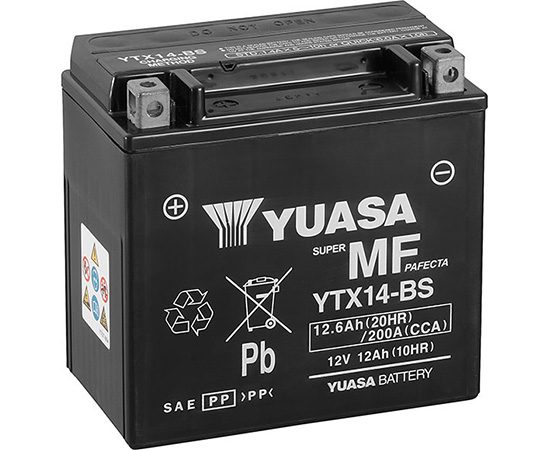
The Yuasa YTX14-BS is the best battery for most BMW R1250GS riders — it fits the factory tray with the positive terminal correctly positioned on the left, delivers 200 CCA for reliable Boxer engine cold starts, and has a decade-long reputation among adventure touring riders for surviving multi-week remote expeditions. Riders who run heated gear, a hardwired GPS, and auxiliary lights simultaneously should upgrade to the MotoBatt MBTX14U for its quad-terminal AGM construction and 210 CCA. Backcountry riders who need lithium weight savings and a self-rescue restart reserve should choose the Antigravity ATZ-10-RS.
Our Top 5 BMW R1250GS Battery Rankings
- Yuasa YTX14-BS— Best Overall · Left-positive, 200 CCA, OEM supplier, adventure forum proven
- MotoBatt MBTX14U— Most Durable · Quad-terminal AGM, 210 CCA, heavy-duty vibration resistance
- Antigravity ATZ-10-RS— Best Premium · Lithium, 1.9 lb, 480 CCA, built-in emergency restart reserve
- Weize YTX14-BS— Easiest Installation · Pre-charged, exact drop-in, no setup required
- Mighty Max YTX14-BS— Best Budget Pick · AGM, 200 CCA, lowest price for correct YTX14-BS fit
Best BMW R1250GS Batteries — Compared
All five options at a glance: CCA, type, key strength, and our overall score.
| # | Product | CCA | Type | Best For | Score | |
|---|---|---|---|---|---|---|
| 1 | Yuasa YTX14-BS Editor’s Choice | 200 | AGM | Overall reliability | 4.7 | See Latest Price |
| 2 | MotoBatt MBTX14U Top Pick | 210 | Quad-Terminal AGM | Durability & accessories | 4.6 | See Latest Price |
| 3 | Antigravity ATZ-10-RS | 480 | LiFePO4 Lithium | Weight savings & restart | 4.5 | See Latest Price |
| 4 | Weize YTX14-BS | 200 | AGM | Hassle-free install | 4.2 | See Latest Price |
| 5 | Mighty Max YTX14-BS Budget Pick | 200 | AGM | Budget replacement | 4.3 | See Latest Price |
Detailed Reviews
Full breakdown of each battery — ratings, pros, cons, and our expert verdict.
Yuasa YTX14-BS
- Factory-activated and sealed — positive terminal on the left, matching R1250GS cable routing exactly
- 200 CCA documented on ADVRider for starting the Boxer twin at bivouac temperatures below freezing
- AGM glass mat construction handles the low-frequency frame vibration characteristic of the Boxer engine at idle
- Holds charge reliably through a week of parking with the TFT clock and alarm drawing parasitic current
- Price sits above generic budget AGM replacements of the same group size
- Some units arrive below 12.4V after extended warehouse storage — top up on an AGM smart charger before installing
- Only two terminals — riders with multiple accessories must stack ring connectors on the main posts
MotoBatt MBTX14U
- Quad-terminal layout provides two additional connection points for clean accessory wiring without stacking
- 210 CCA edges above the standard YTX14-BS spec — meaningful on high-altitude cold mornings
- Heavy-duty case bonding rated for washboard gravel and rocky trail vibration in adventure touring use
- Yellow case is easy to spot and inspect under the R1250GS seat without a flashlight
- Slightly taller case than a standard YTX14-BS — verify clearance with aftermarket seats before ordering
- Terminal bolt threads corrode in wet climates without anti-seize — a quick step many riders skip
- Mid-range price is noticeably above the Yuasa and budget options for a similar CCA spec
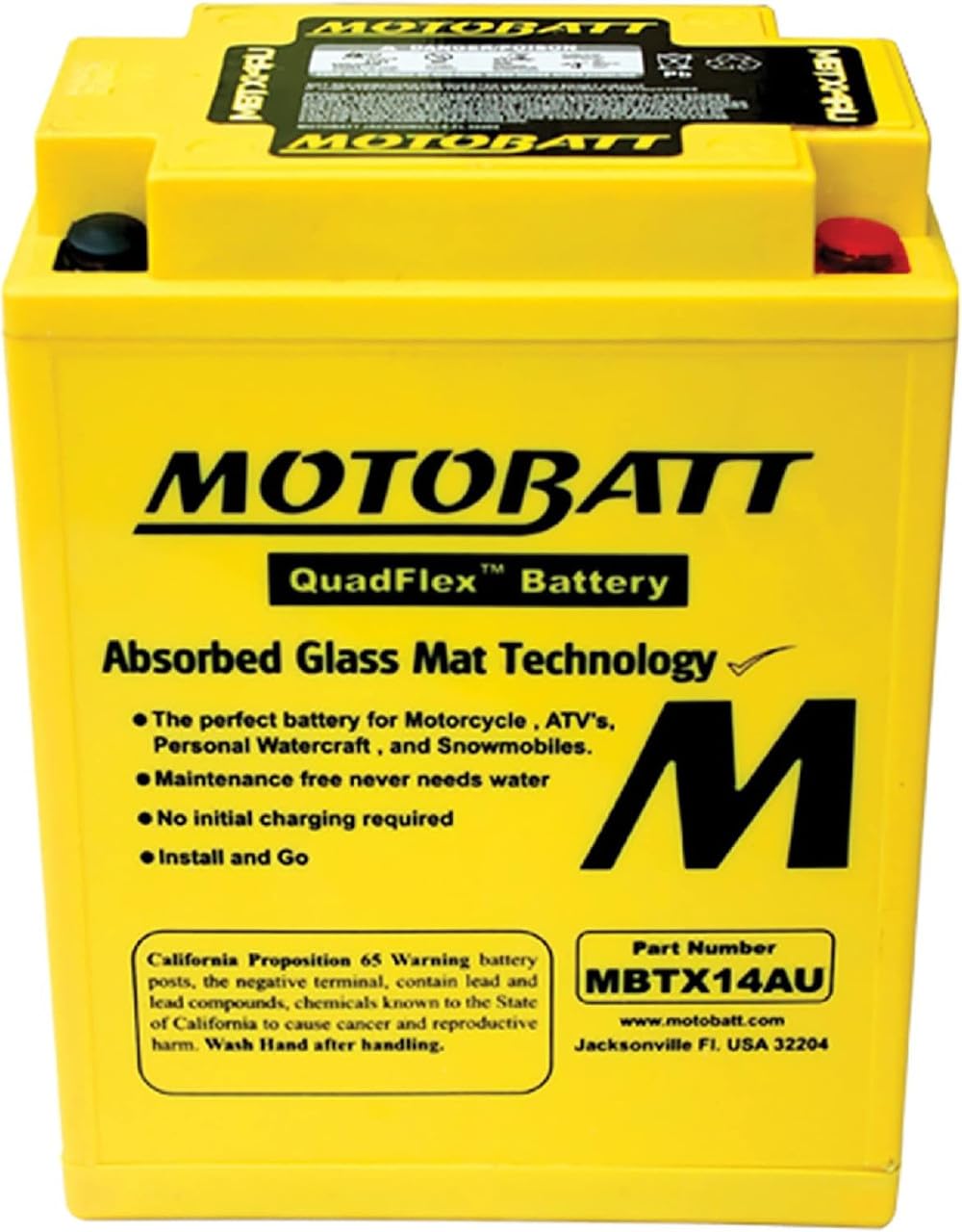
Antigravity ATZ-10-RS
- 1.9 lb total weight removes approximately 8 lb from the R1250GS — meaningful on slow-speed trail sections
- Built-in Re-Start reserve holds enough charge for several emergency cranks after a full main cell drain
- 480 CCA from LiFePO4 chemistry delivers noticeably faster cranking than any AGM in this comparison
- Multi-position mounting with no liquid spill risk — relevant when the bike is tipped or dragged upright off-road
- Requires a lithium-specific smart tender — standard AGM chargers destroy the BMS with desulfation pulses
- R1250GS onboard voltmeter reads a slightly lower resting voltage with lithium — riders may incorrectly interpret this as a failing battery
- Premium price is the highest in this comparison by a wide margin
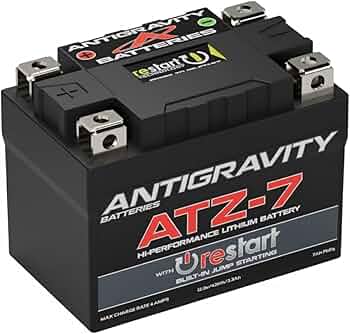
Weize YTX14-BS AGM
- Arrives pre-charged and sealed — starter terminal bolts in place within five minutes of unboxing
- Exact YTX14-BS footprint fits the R1250GS rubber hold-down strap without shimming or adjustment
- Corrosion-resistant solid terminal posts hold up better than soft lead alloy posts under repeated torquing
- Lifespan rarely exceeds two full riding seasons in cold climates or on hard off-road use
- Voltage sags under the TFT display, heated grips, and auxiliary light combined load faster than the Yuasa or MotoBatt
- Not suitable for extended backcountry trips where the bike will idle accessories for days between ride days
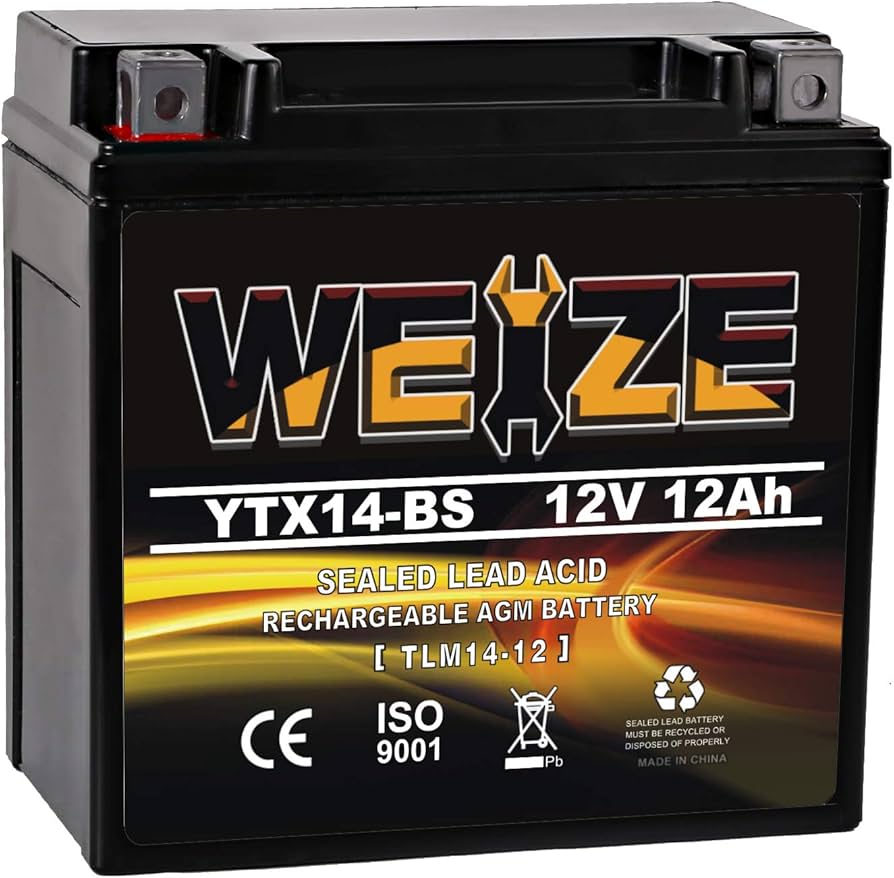
Mighty Max YTX14-BS AGM
- Lowest price for a genuine AGM battery with correct YTX14-BS terminal orientation and case dimensions
- Exact R1250GS tray fit — hold-down rubber strap engages without shimming or bracket adjustment
- Amazon 30-day return window covers the most common early manufacturing defect window
- Quality control inconsistency — some batches show early capacity fade before 18 months of use
- Cold-weather CCA delivery weakens noticeably in the second riding season on bikes ridden through mountain winters
- 1-year limited warranty is the shortest in this comparison and online claim support is slower than store-backed brands
Can’t Decide?
Our Top 2 Picks — Head to Head
Both fit the R1250GS tray and start the Boxer twin reliably. Here is which one fits your riding style.
- Factory-activated, left-positive terminal — exact OEM harness routing, zero cable modification
- 200 CCA documented on ADVRider for below-freezing high-altitude camp starts across multiple seasons
- Decade-long adventure forum reputation for surviving rough trails and multi-week remote expeditions
- Quad-terminal layout eliminates stacked ring connectors that cause terminal heat buildup under accessory load
- 210 CCA and military-grade vibration rating for riders who subject the bike to severe gravel and rocky trail use
- Heavy-duty internal bonding documented in dual-sport owner reports for surviving washboard roads without plate damage
How to Choose the Right Battery for Your BMW R1250GS
Six factors specific to the R1250GS adventure touring context that determine whether a battery lasts a season or five years.
Remote Use and the Bump-Start Problem
The R1250GS weighs between 510 and 580 pounds depending on fuel and luggage. Bump-starting it on a loose gravel slope without a helper is a genuine physical risk — not a theoretical inconvenience. Every battery decision for this bike should factor in the consequence of a dead battery 40 miles from pavement. A battery with an emergency restart reserve (Antigravity ATZ-10-RS) or simply a battery with enough reserve capacity to avoid parasitic drain failure (Yuasa, MotoBatt) reduces that risk materially.
Combined Accessory Load and Reserve Capacity
The R1250GS TFT cluster, heated grip system, Keyless Ride module, and alarm draw current even with the engine off. Add a hardwired GPS, a Powerlet-powered intercom, and auxiliary lights, and the combined parasitic draw can drain a standard 12Ah AGM battery below the start threshold in 72 hours of idle camping. Batteries with higher reserve capacity — the MotoBatt MBTX14U and Odyssey-grade options — tolerate these multi-day static loads significantly better than minimum-spec alternatives.
Quad Terminals vs. Standard Two-Post Layout
A standard YTX14-BS battery has one positive and one negative post. Each post on a fully loaded R1250GS may carry three or four ring terminal connections from accessories — a situation that concentrates heat at the post threads, loosens connections under vibration, and can cause voltage drops that trigger fault codes on the GS’s CAN bus. The MotoBatt MBTX14U’s four-post design distributes these connections cleanly and eliminates the stacking problem without requiring a fuse block.
High-Altitude Cold-Start CCA Requirements
At 9,000 feet on a 28°F morning, ambient air density and oil viscosity both work against the starter motor. The R1250GS 1,254cc Boxer twin requires a sustained crank at lower atmospheric pressure where the starter motor draws higher current per revolution. The minimum recommended CCA for reliable high-altitude cold starts is 200 — both the Yuasa and MotoBatt meet this. The Antigravity ATZ-10-RS’s 480 CCA LiFePO4 rating provides substantial headroom. Batteries rated below 180 CCA should be avoided for mountain touring.
Boxer Engine Vibration and AGM Plate Bonding
The R1250GS Boxer engine is not smooth. Its distinctive counterbalancer-assisted but still-perceptible vibration transmits low-frequency pulses through the frame into the battery tray with every revolution. Flooded batteries develop microscopic plate cracks within one season on the GS under this load. AGM batteries absorb vibration through the glass mat separator. Heavy-duty AGM designs like the MotoBatt MBTX14U add stronger internal plate bonding specifically for dual-sport vibration environments — a specification worth paying for on a bike ridden off-road regularly.
No Battery Registration Required
Unlike the BMW 5 Series or 1 Series with their intelligent battery sensors, the R1250GS does not require battery registration after replacement. There is no IBS to reset, no alternator charge profile to recode, and no diagnostic tool needed. Swap the battery under the seat, connect the positive terminal first, then the negative, secure the rubber hold-down strap, and the bike is ready to start. This simplicity is a significant advantage when replacing the battery on a remote trail far from a dealer.
Pro Tips
Quick Buying Checklist for BMW R1250GS Owners
Confirm the positive terminal is on the left when seated on the GS — a right-side positive battery forces cable rerouting and creates a short risk near the frame.
Carry a jump pack on solo remote expeditions regardless of battery quality — the R1250GS is too heavy to bump-start safely on loose terrain without a helper.
No battery registration needed — unlike the 5 Series or 1 Series, the R1250GS requires no coding or scan tool after a straightforward battery swap.
Fully charge on an AGM smart charger before installing — many mail-order batteries arrive at 80% and the Boxer starter will draw heavy current trying to compensate on the first crank.
Apply anti-seize to terminal bolts on the MotoBatt if you ride in wet climates — the extra terminals corrode at the threads faster than standard two-post designs.
Connect a smart maintainer during any storage period over two weeks — the R1250GS TFT clock and Keyless Ride module draw continuous current that drains a disconnected battery toward the sulfation threshold.
Related Guides
Other BMW Adventure Motorcycle Battery Guides
Also On CarAssists
More Guides for This Vehicle
- → BMW R1250gs— ShiftCam-compatible picks
- → BMW R1250gs— adventure bike tires
Frequently Asked Questions
What battery size does a BMW R1250GS use?
The R1250GS uses a YTX14-BS battery. The positive terminal sits on the left side when seated on the bike. Confirm terminal orientation before ordering — some generic brands ship with ambiguous labeling. Lithium replacements in the same form factor include foam shims to fill the slightly smaller case in the YTX14-BS tray.
Does the BMW R1250GS need battery registration after replacement?
No. The R1250GS does not use an automotive intelligent battery sensor (IBS) and does not require battery registration or coding with a diagnostic tool after a swap. Connect the positive terminal first, the negative second, secure the hold-down strap, and the bike is ready to start. This is fundamentally different from BMW car models like the 5 Series or 1 Series.
Why does the R1250GS drain batteries faster than other motorcycles?
Three systems draw continuous current when the bike is parked: the TFT dashboard clock, the Keyless Ride proximity module, and the factory alarm. Combined, they can draw enough parasitic current to drop a 12Ah AGM below the start threshold after three to four days of idle parking without a maintenance charger connected. Batteries with higher reserve capacity and lower self-discharge rates tolerate this better.
Is a lithium battery safe for the R1250GS charging system?
Yes, provided the R1250GS charging system outputs a stable 14.0–14.4 volts at cruise RPM. The stock alternator and voltage regulator on the R1250GS are well within lithium-compatible range. Use a lithium-specific smart tender during storage — standard AGM chargers run desulfation pulses that damage LiFePO4 BMS boards and void lithium warranties.
What is the MotoBatt quad-terminal advantage on the R1250GS?
The MBTX14U provides two positive and two negative terminal posts instead of one of each. On an accessory-loaded R1250GS, this eliminates the need to stack multiple ring connectors on a single post — a practice that loosens under vibration, concentrates heat at the terminal threads, and can trigger voltage drops that generate CAN bus fault codes on the GS instrument cluster.
How does the Antigravity ATZ-10-RS restart feature work on the R1250GS?
The ATZ-10-RS contains a small lithium reserve cell separate from the main cranking cell. If the main cell is fully drained, pressing the restart button on the battery body — or using the included wireless key fob — connects the reserve for several emergency cranks. For solo R1250GS riders in remote areas, this built-in self-rescue feature eliminates the need to carry a jump pack on short expeditions.
Can I bump-start a BMW R1250GS with a dead battery?
Technically yes on a significant downhill slope, but the R1250GS weighs over 500 pounds and the traction control, ABS, and throttle-by-wire systems may not initialize correctly without sufficient battery voltage to boot the electronics. On loose gravel or a solo trail, a bump-start attempt is physically dangerous. A battery with a built-in restart reserve, a small external jump pack, or a quality AGM with ample reserve capacity is strongly preferred over relying on bump-starting the GS.
Final Verdict
Our Top Recommendations for 2026
The Yuasa YTX14-BS earns the top spot for the BMW R1250GS because it solves the two problems that matter most to adventure riders — exact OEM tray fit with the correct left-side positive terminal orientation, and proven cold-start reliability documented across thousands of remote expedition miles on ADVRider and BMW MOA forums. Riders running a full accessory load through multiple off-road days should upgrade to the MotoBatt MBTX14U for its quad-terminal AGM construction that eliminates stacked ring connector voltage drops and its heavy-duty internal bonding that survives sustained gravel road vibration. Solo backcountry riders who want a lithium weight reduction and a genuine self-rescue capability should invest in the Antigravity ATZ-10-RS — its built-in restart reserve has documented real-world rescues when GPS units or heated gear were left on overnight far from help.