We cross-referenced six batteries against NissanArmada.net forum reports, ClubArmada owner threads, and verified Amazon reviews — and the Armada’s 5.6-liter V8 reveals a performance gap that matters: the body-on-frame chassis transmits more road shock into the battery tray than any unibody SUV in its class, which is why flat-plate flooded batteries fail earlier here than their rated lifespans suggest.
The Armada also spans two distinct battery generations — the 2004–2015 models use Group 24F, while the redesigned 2017–2025 trucks require the longer Group 27F tray. Ordering the wrong group size means the hold-down won’t engage and cable clamps either can’t reach or get forced at unnatural angles. That single mistake causes more Armada battery failures than any product quality issue.
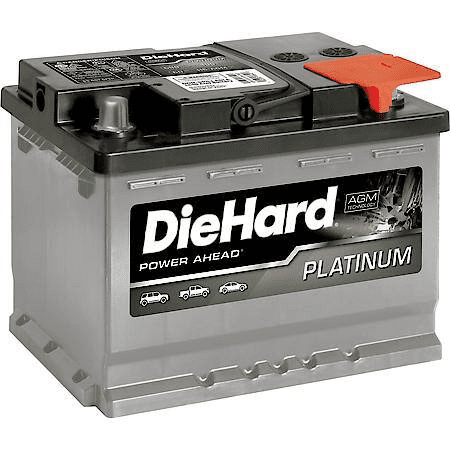
The DieHard Platinum AGM 27F is the best battery for most 2017–2025 Nissan Armadas — its stamped-grid AGM construction handles the V8’s compression, the SUV’s heavy accessory load, and body-on-frame vibration without the early plate damage that kills flooded batteries. For the 2004–2015 generation, the ACDelco Gold 24F AGM delivers an OE-exact fit with no guesswork. Owners demanding maximum cranking headroom for cold climates or towing should step up to the Odyssey 27F-750 and its 750 CCA pure-lead output.
Our Top 6 Nissan Armada Battery Rankings
- DieHard Platinum AGM 27F— Best Overall: 710 CCA AGM, exact 2017+ tray fit, stamped-grid durability
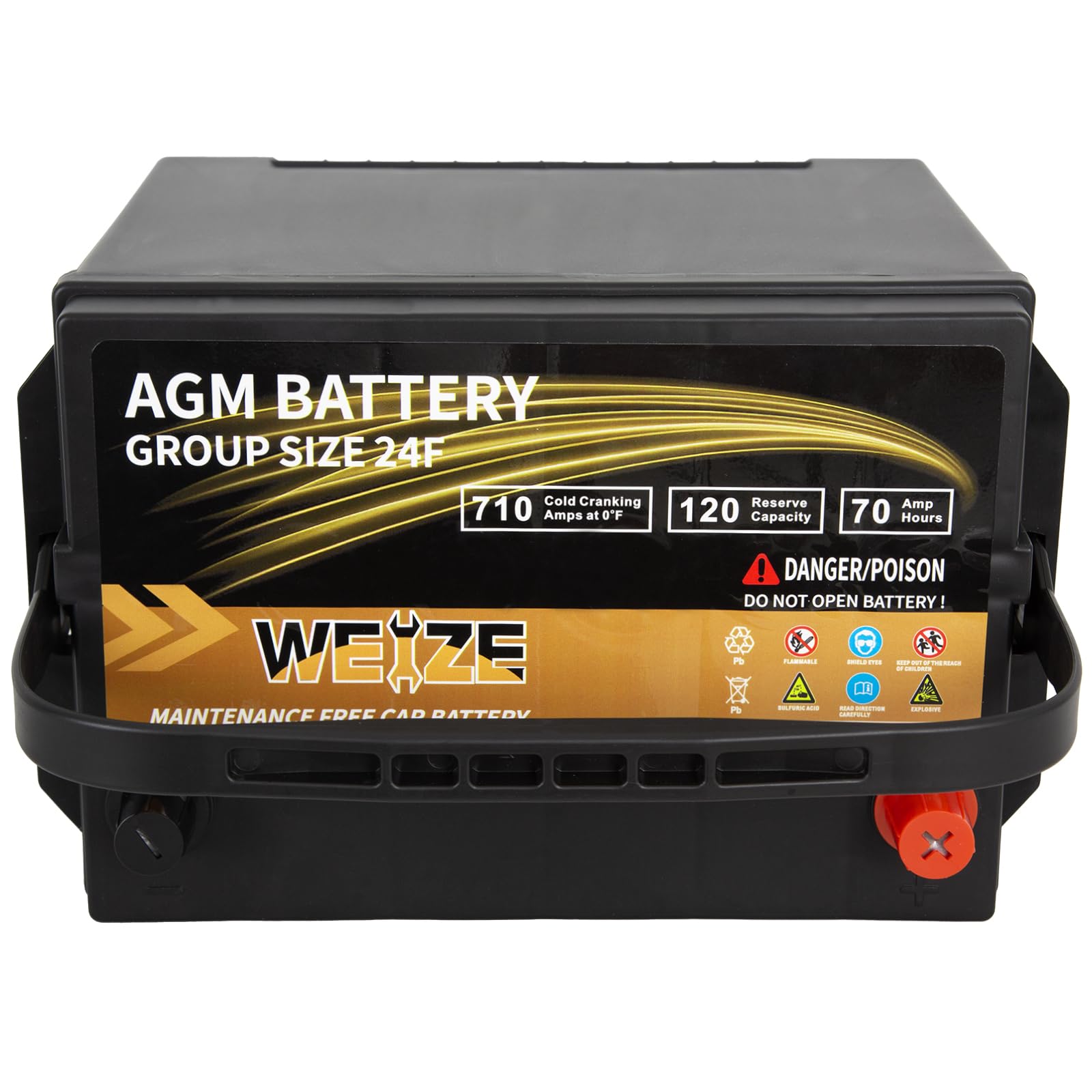
- Weize Platinum AGM 27F— Best Budget: 710 CCA AGM at the lowest price on this list
- Odyssey 27F-750— Best Premium: 750 CCA pure-lead AGM, fastest recharge, longest service life
- Optima YellowTop D27F— Most Durable: dual-purpose SpiralCell AGM for off-road and deep-discharge use
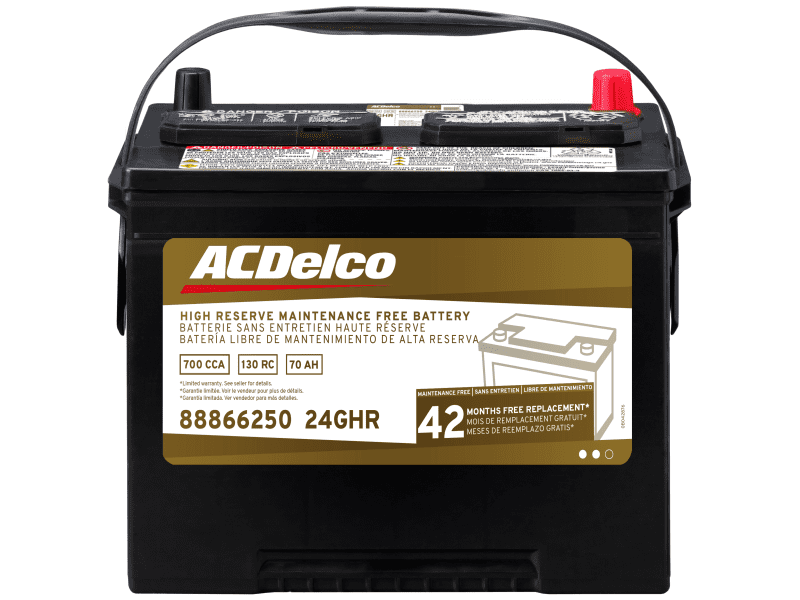
- ACDelco Gold 24F AGM— Easiest Install: OE-exact fit for 2004–2015 Armadas, zero cable adjustments
- ACDelco Professional 24F Flooded— Budget Flooded: 600 CCA for mild-climate 2004–2015 daily drivers
Best Nissan Armada Batteries — Compared
All six picks across both generations — CCA, chemistry, group size, and overall score.
| # | Product | CCA | Type | Best For | Score | |
|---|---|---|---|---|---|---|
| 1 | DieHard Platinum AGM 27F Editor’s Choice | 710 | AGM Stamped Grid | 2017+ daily driving | 4.6 | See Latest Price |
| 2 | Weize Platinum AGM 27F Budget Pick | 710 | AGM Pure Lead | Budget AGM 2017+ | 4.5 | See Latest Price |
| 3 | Odyssey 27F-750 Top Pick | 750 | Pure Lead AGM | Cold climate & towing | 4.7 | See Latest Price |
| 4 | Optima YellowTop D27F | 710 | AGM SpiralCell | Off-road & deep cycling | 4.5 | See Latest Price |
| 5 | ACDelco Gold 24F AGM | 710 | AGM | 2004–2015 exact fit | 4.6 | See Latest Price |
| 6 | ACDelco Professional 24F Flooded | 600 | Flooded | 2004–2015 budget | 4.5 | See Latest Price |
Detailed Reviews
Full breakdown of each battery — ratings, pros, cons, and our expert verdict.
DieHard Platinum AGM 27F
Pros
- 710 CCA starts the 5.6L V8 instantly even at -10°F per forum owner reports
- Stamped grid AGM resists the vibration that fractures flat-plate flooded batteries in the Armada’s tray
- Integrated carry handle — managing a Group 27F’s weight in a deep engine bay requires it
- 100-minute reserve capacity sustains combined electronics load during tailgating or parking stops
Cons
- Some Amazon units ship with manufacture dates older than six months — request the freshest available
- Warranty claims route through Advance Auto Parts, not a direct manufacturer line
- Peak-season Amazon stock runs out in November–December when Armada owners scramble before winter
Weize Platinum AGM 27F
Pros
- Delivers claimed 710 CCA in load tests — not a spec-sheet exaggeration
- Ships fully charged with a recent manufacturing date in most buyer reports
- Supports auto start-stop systems on Armada trims that have the feature
- Lowest price for a Group 27F AGM battery that meets the Armada’s minimum CCA requirement
Cons
- Plastic case construction feels noticeably thinner than DieHard or Odyssey in hand
- Long-term reliability data is still building — the 5-year ownership horizon is unproven
- Warranty claims go through the seller’s support system rather than a national retail network
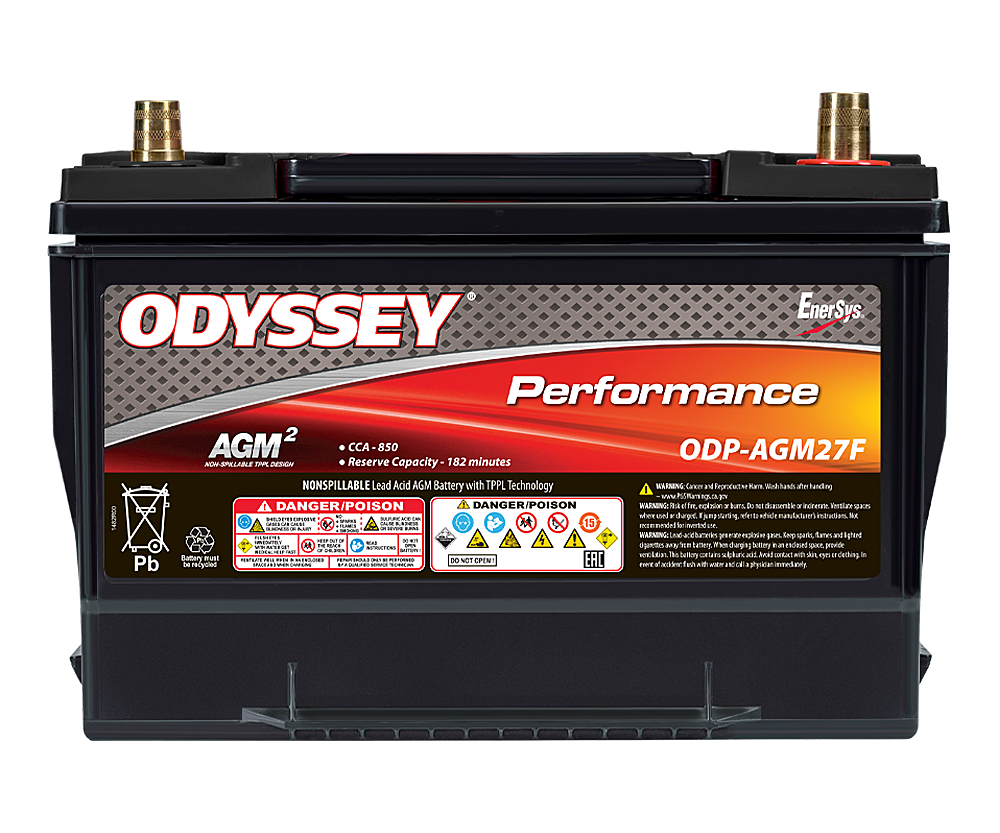
Odyssey 27F-750
Pros
- 750 CCA — 40 amps more than any other Group 27F on this list, meaningful in sustained cold
- TPPL pure-lead AGM recovers from deep discharges faster than standard AGM — important for tow rigs
- 3-to-10-year expected service life with proper charging discipline
- Holds charge reliably during multi-week airport parking or hunting camp storage
Cons
- Terminal posts sit ~5mm shorter than standard SAE — some Armada cable clamps need post shims
- Requires an AGM-compatible smart charger — standard trickle chargers undersell it during maintenance
- Highest price on this list by a significant margin — overkill for a mild-climate SUV with no towing
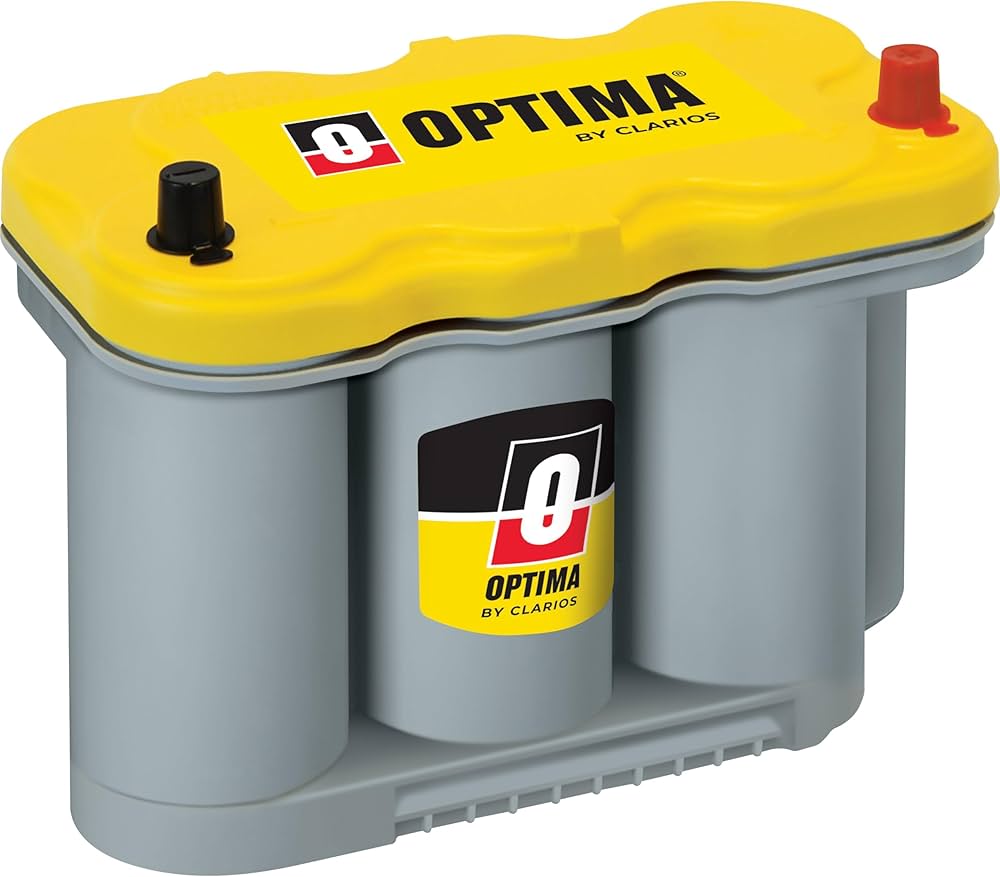
Optima YellowTop D27F (8014-045)
Pros
- SpiralCell construction is 15× more vibration-resistant than flat-plate AGM — built for washboard roads
- 100-minute reserve capacity with true deep-cycle recovery after drain below 50%
- Sealed case mountable in any orientation — relevant for lifted Armadas with relocated battery trays
- Powers a 12V winch pull followed immediately by engine start without voltage collapse
Cons
- 710 CCA trails the Odyssey by 40 amps — the gap matters on the coldest mornings in northern climates
- Chronic undercharging on short daily trips accelerates capacity degradation faster than any other use pattern
- Price premium over the DieHard is hard to justify for an Armada that never leaves pavement
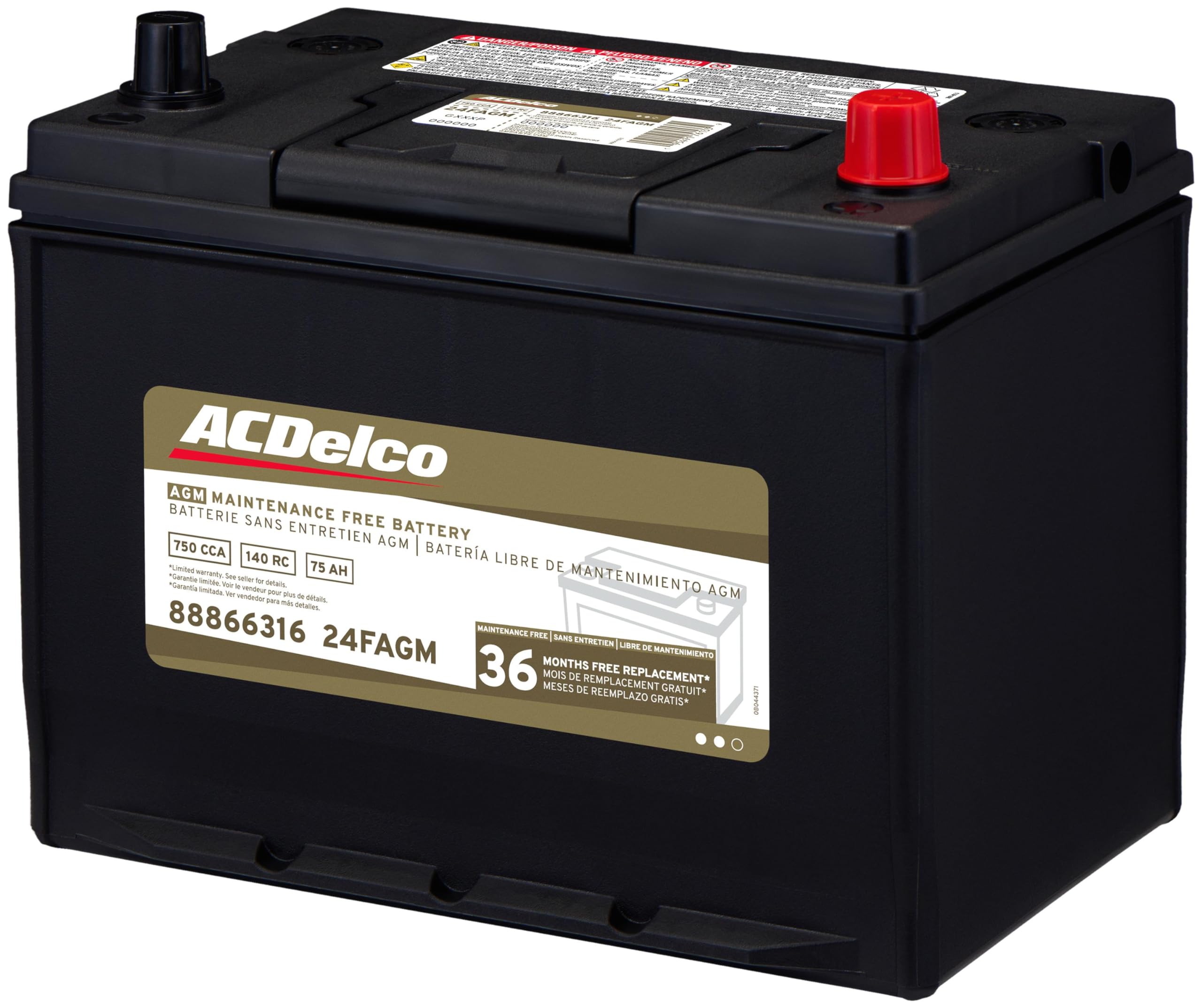
ACDelco Gold 24F AGM (24FAGM)
Pros
- OE-exact terminal layout — positive post lands where the factory cable end reaches without stretching
- High-density AGM separator construction extends cycle life in hot-climate Armadas
- Strong ACDelco retailer warranty network for claims without shipping the battery back
- Integrated carrying strap handles the 60+ lb weight for single-person installation
Cons
- Plastic carrying strap feels undersized relative to the battery’s weight — use caution over tile or concrete
- Price varies significantly across Amazon sellers — check multiple listings before buying
- Some units shipped without anti-corrosion terminal washers — apply dielectric grease regardless
ACDelco Professional 24F Flooded
Pros
- Lowest price by a wide margin — replacement every 3–4 years remains cost-effective vs. premium AGM
- Calcium-lead alloy grid reduces internal gassing and extends shelf life between charges
- Direct Group 24F drop-in fit — correct terminal orientation for 2004–2015 factory cables
Cons
- 600 CCA struggles noticeably below 15°F on the 5.6L V8 — not for climates with real winters
- Flooded plates fracture under sustained Armada chassis vibration faster than any AGM alternative
- Terminal corrosion requires cleaning every six months in humid or coastal environments
Can’t Decide?
Our Top 2 Picks — Head to Head
Both are strong Group 27F choices for the 2017+ Armada. Here’s when to choose each one.
- 710 CCA handles the V8 in cold weather with proven reliability
- Stamped-grid AGM absorbs body-on-frame chassis vibration
- Integrated carry handle for solo installation in the Armada bay
- Strong price-to-performance ratio vs. premium alternatives
- 750 CCA — highest cold-start power in Group 27F by a meaningful margin
- TPPL pure-lead AGM recharges faster after a deep towing drain
- Holds charge during extended parking — airport, hunting camp, seasonal storage
- 3–10 year service life with proper AGM smart-charger maintenance
How to Choose the Right Battery for Your Nissan Armada
Six factors specific to the Armada platform — including the generation split that catches most buyers off guard.
The Two-Generation Group Size Split
This is the most critical purchase decision for Armada owners. The 2004–2015 first and second generation uses a Group 24F battery measuring roughly 10.25 × 6.8 × 8.9 inches. The completely redesigned 2017–2025 third generation uses the longer Group 27F at approximately 12 × 6.8 × 8.9 inches. Installing a 24F in a 27F tray leaves the hold-down clamp dangling; installing a 27F in a 24F tray means it simply won’t fit. There is no workaround — always read the label on the battery you’re removing before ordering.
CCA Requirements for the 5.6L Endurance V8
Nissan’s 5.6L Endurance V8 requires at least 600 CCA at moderate temperatures. In climates that regularly drop below 20°F, 700 CCA is the realistic minimum to avoid slow cranks. The battery capacity loss per 10°F below freezing means a 600 CCA battery operating at -10°F delivers only about 400–440 effective amps — well below what the V8’s compression demands on a cold soak. Buying at 710 CCA gives you a two-season buffer before capacity aging brings you back to the edge.
Why Body-on-Frame Construction Kills Flooded Batteries Early
The Armada shares its ladder-frame platform with the Titan pickup — which means road shock transmits differently than in a unibody crossover. Flooded lead-acid batteries rely on liquid electrolyte in contact with flat lead plates. Under repeated chassis vibration, that electrolyte sloshes against the plate grid and gradually fractures it, creating dead cells long before the battery’s rated life. AGM batteries immobilize the electrolyte in a glass mat separator, eliminating that failure mode. Armada owners consistently report flooded batteries failing 18–24 months earlier than the same battery in a unibody vehicle.
Reserve Capacity Under Combined Luxury Load
A fully loaded Armada Platinum runs rear-seat entertainment screens, dual-zone climate control, a 13-speaker Bose system, and navigation simultaneously. At highway speeds, that combined draw is absorbed by the alternator. At idle or with the engine off — at a campsite, sports field pickup, or airport lot — it draws entirely from the battery. A 100-minute reserve capacity rating assumes a 25-amp draw. Modern luxury SUV combined loads often exceed 40–50 amps when climate control and entertainment run together, compressing that effective reserve window significantly.
Warranty Terms for a High-MSRP SUV
A full-size luxury SUV commands a strong warranty expectation. The 36-month free replacement period offered by the DieHard and ACDelco options reflects a realistic 4–5 year service life under normal Armada use. The Odyssey’s 3-to-4-year full replacement with an extended pro-rated period signals confidence in a 7-to-10-year horizon. If you plan to keep your Armada past 150,000 miles, the longer warranty terms signal meaningful differences in build quality that compound over time.
Window Auto-Up Relearn After Battery Disconnect
The Armada’s power windows use a pinch protection system that stores calibration data. Disconnecting the battery erases that calibration, and the windows will stop moving partway up until you run the relearn sequence: roll each window fully down, hold the close button for two seconds past the fully-closed position, and release. Repeat on all four windows. This takes about three minutes and does not require a scan tool — but skipping it leaves windows that appear to stop randomly, which owners frequently misdiagnose as a new electrical fault rather than a normal post-swap procedure.
Pro Tips
Quick Buying Checklist
Read the label on your current battery before ordering. The 2004–2015 Armada uses Group 24F; the 2017+ uses Group 27F. Ordering the wrong size means the hold-down clamp won’t secure the battery safely.
Target 710+ CCA if you park outside below 20°F. The 5.6L V8’s compression requires strong cranking amps — 600 CCA at that temperature may only deliver 400 effective amps after capacity loss.
Run the window relearn sequence after installation. All four power windows need a calibration reset after battery disconnect — a 3-minute procedure that prevents false “electrical fault” diagnoses.
Fully charge any AGM before first installation using a smart charger with an AGM mode. Most batteries ship at 70–80% — dropping a partial charge into the Armada forces the alternator to bulk-charge at maximum output for 45+ minutes.
Load-test the alternator before buying a new battery if the old one failed suddenly. A healthy alternator reads 13.8–14.4V at idle. Anything lower means a weak voltage regulator will drain your new battery within weeks.
Apply dielectric grease to both terminal posts after connecting. The Armada’s engine bay heat accelerates terminal oxidation — unprotected posts on even a premium AGM will show corrosion within one summer season.
Related Guides
Other Nissan SUV Battery Guides
Armada often requires a larger group size battery than the Pathfinder.
Frequently Asked Questions
What size battery does a Nissan Armada take?
The 2004–2015 Armada uses a Group 24F battery. The 2017–2025 Armada uses the longer Group 27F. Some 2016 transition-year models may vary, so always read the label on your existing battery before ordering. The two groups are different physical lengths and will not share hold-down hardware — installing the wrong size leaves a loose, unsecured battery.
Why do flooded batteries fail earlier in the Armada than expected?
The Armada’s body-on-frame ladder chassis transmits road vibration into the battery tray more aggressively than a unibody SUV. Flooded batteries rely on liquid electrolyte in contact with flat lead plates — sustained vibration gradually fractures those plates, creating dead cells 18 to 24 months earlier than the same battery survives in a unibody crossover. AGM batteries immobilize the electrolyte and eliminate this failure mode entirely.
Do I need to run the window relearn procedure after an Armada battery swap?
Yes. The Armada’s power windows use a pinch-protection system that loses its calibration when power is disconnected. After installation, roll each window fully down, then hold the close button for two seconds past the fully-closed position before releasing. Repeat on all four windows. The entire procedure takes about three minutes and requires no scan tool — but skipping it causes windows to stop mid-travel, which owners often mistake for an electrical fault.
What CCA rating does the Armada’s 5.6L V8 need?
The minimum is 600 CCA for moderate climates above 20°F. In northern states where temperatures drop below 0°F, target 700–710 CCA to maintain reliable starts as the battery ages. Battery capacity drops roughly 5–10% per 10°F below freezing, so a 600 CCA battery at -10°F may only deliver 400–440 effective amps — insufficient for the V8’s compression requirements after a cold soak.
Can a Group 24F battery work in a 2017+ Armada in a pinch?
No. The Group 24F is roughly 1.75 inches shorter than the Group 27F. In the 2017+ Armada tray, the hold-down clamp cannot engage on the shorter battery case, leaving it free to shift under braking and hard acceleration. A loose battery can arc against the hold-down bracket or fracture internally on rough roads. There is no safe workaround — only the correct Group 27F fits securely.
Does replacing the Armada battery require a scan tool or dealer visit?
No. The Armada does not use a Battery Energy Control Module (BECM) or IBS-style registration system the way some European vehicles do. A basic swap — disconnect negative, disconnect positive, swap battery, reconnect positive first, negative last — is all that is required. The ECU relearns fuel trims and idle calibration automatically within a few drive cycles without any dealer involvement.
Is the Odyssey 27F-750 worth the premium for a standard family Armada?
For a stock family SUV in a moderate climate without towing, no — the DieHard Platinum AGM 27F delivers equal daily reliability at a significantly lower price. The Odyssey earns its premium specifically for Armadas in sub-zero climates, those that tow heavy trailers regularly, or owners who park for extended periods where a fast-recovering, deep-cycle-tolerant battery makes a tangible difference on the first start back.
Final Verdict
Our Top Recommendations for 2026
The Nissan Armada’s two-generation group size split and body-on-frame chassis vibration make it one of the more specific battery purchases in the full-size SUV segment — and getting the group size wrong is a more costly mistake than choosing the wrong chemistry. For the 2017–2025 third generation, the DieHard Platinum AGM 27F delivers the best balance of cold cranking power, vibration resistance, and accessory stability for a daily family hauler. Northern climate owners and towers should step up to the Odyssey 27F-750 for its 750 CCA and pure-lead durability. First- and second-generation owners get the cleanest installation from the ACDelco Gold 24F AGM, while budget-focused 24F owners in mild climates can rely on the ACDelco Professional 24F Flooded without overspending.