Factory door speakers turn to mush the moment you push past half volume — vocals blur, cymbals hiss, and bass collapses into a papery rattle. After cross-referencing owner threads on r/CarAV, hundreds of Amazon Verified Purchase reviews, and mounting-depth notes across six 6.5″ drivers, a clear pattern emerged in which models actually held up over years of daily use rather than just the first few weeks after installation.
Not every driver needs the same fix. A commuter chasing cleaner vocals on a stock head unit has different priorities than a Jeep owner replacing speakers every couple of years to rain damage. The picks below split by budget, durability, and amplified setups, based on which weaknesses came up most often in long-term owner feedback rather than which spec sheet looked best on paper.
For most drivers, the JBL GTO629 delivers the clearest jump in sound quality without needing an amplifier or a complicated install. Truck and Jeep owners exposed to rain and dust should look at the marine-rated Polk Audio DB652 instead, while anyone running an aftermarket amp gets the most detail from the JL Audio C2-650X or the Alpine R-S65C.2 component set. Buyers on a strict budget still see a real upgrade from the Pioneer TS-G1620F.
Best Car Speakers — Compared
Six 6.5″ speakers compared on power handling, mounting depth, and real owner ratings pulled from verified purchases.
| # | Product | Power Handling | Type | Best For | Score | |
|---|---|---|---|---|---|---|
| 1 | JBL GTO629 Editor’s Choice | 60W RMS / 180W peak | Coaxial | Best overall upgrade | 4.5 | See Latest Price |
| 2 | JL Audio C2-650X Top Pick | 50W RMS / 150W peak | Coaxial | Premium detail | 4.6 | See Latest Price |
| 3 | Alpine R-S65C.2 | 100W RMS / 300W peak | Component | Amplified systems | 4.5 | See Latest Price |
| 4 | Polk Audio DB652 | 50W RMS / 150W peak | Coaxial (marine) | Wet & off-road use | 4.5 | See Latest Price |
| 5 | Pioneer TS-G1620F Budget Pick | 30W RMS / 250W peak | Coaxial | Budget commuters | 4.4 | See Latest Price |
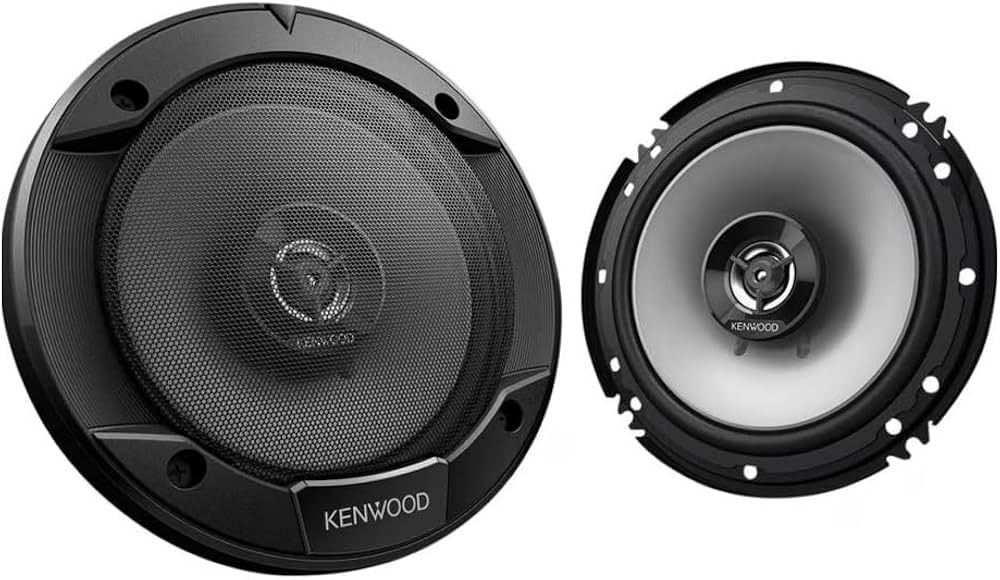
| 6 | Kenwood KFC-1666S | 22W RMS / 300W peak | Coaxial | Shallow-depth doors | 4.3 | See Latest Price |
Detailed Reviews
A closer look at how each speaker performed on sound, durability, and real-world installs — including where owner feedback disagreed with the marketing copy.
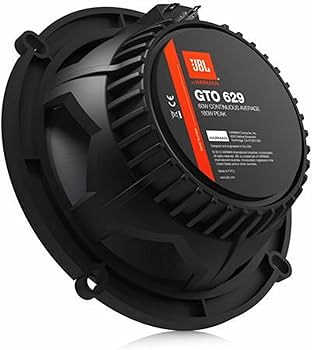
JBL GTO629
- Plus One+ carbon-injected cone moves more air than a standard 6.5″ driver, adding midbass without a subwoofer
- 3-ohm low-impedance design pulls extra power from stock head units, so no amp is required
- UniPivot angled tweeter aims highs at the listener even mounted low in the door
- Rubber surround shows no cracking in owner reports past the three-year mark
- Drops straight into Honda, Toyota, Ford, and GM door openings without a spacer ring
- Tweeter reads bright out of the box; most owners knock treble down 2-3dB on the factory EQ
- Not rated for marine or open-top exposure, a poor fit for Jeeps or convertibles
- Deep bass fans will still want a dedicated subwoofer for anything below 60Hz
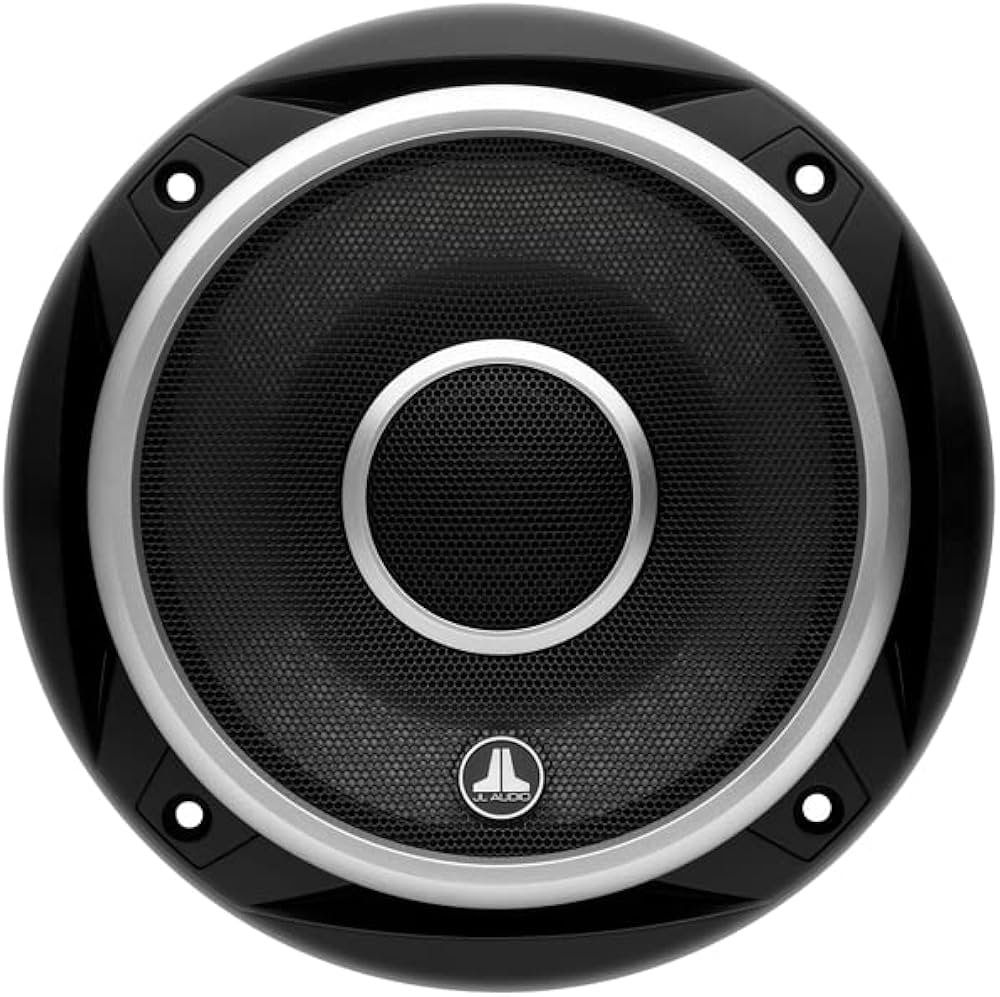
JL Audio C2-650X
- Mineral-filled polypropylene cone stays acoustically dead, producing a natural rather than boosted tone
- Ferrofluid-cooled silk dome tweeter extends highs without the harshness common in budget coaxials
- Polymer basket resists the ringing and resonance that stamped-steel frames introduce at higher volumes
- Butyl rubber surround holds up to years of temperature swings without hardening or splitting
- Street price runs roughly double the JBL GTO629 for a similar coaxial format
- Deeper mounting depth than average; some factory tweeter grilles press against the dome and need trimming
- 50W RMS rating trails the Alpine component set if you’re already running a strong amp
Alpine R-S65C.2
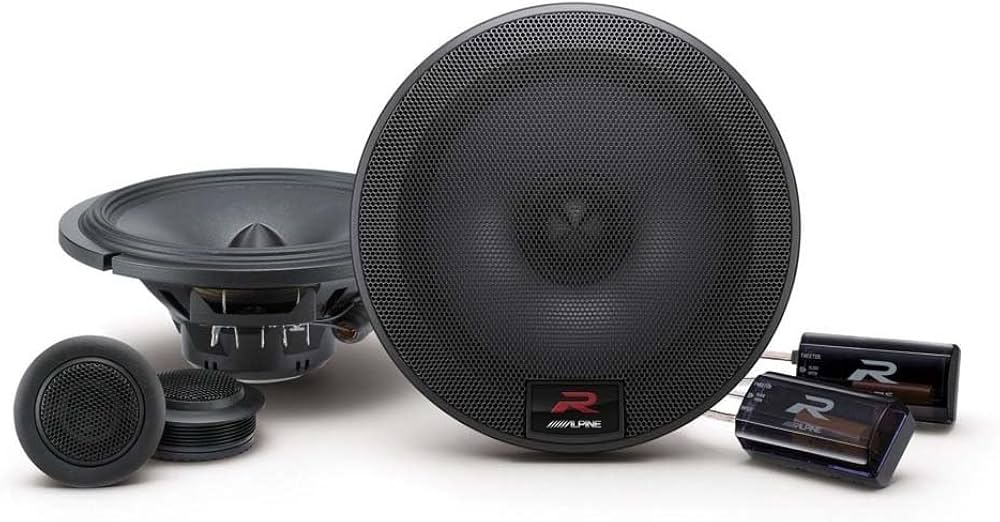
- Ring-dome tweeter reproduces detail — string plucks, breath, room reverb — coaxials compress or lose
- Carbon-fiber reinforced cone handles 100W RMS without bottoming out under a real amplifier
- External crossover network gives precise control over where tweeter and woofer split frequencies
- Multi-fit tweeter mounts (flush or surface) work in more dash and pillar locations than fixed pods
- Running separate crossovers and tweeter pods adds real install time versus a drop-in coaxial
- Aimed incorrectly, the tweeter turns harsh; angling matters more here than on any coaxial in this list
- Priced closer to a budget amplifier than a speaker upgrade, which makes sense only if you own one
Polk Audio DB652
- IP56 marine certification means rain, dust, and direct sun won’t degrade the cone or surround
- Stainless steel mounting hardware ships in the box, so nothing rusts shut a year later
- Klippel-optimized motor structure keeps distortion low even when driven hard on the highway
- Owner reports from boat and Jeep installs still show a clean cone and surround after several seasons outdoors
- Bass output stays noticeably restrained next to non-marine coaxials in this price range
- Tweeter can turn sibilant at the top of its volume range on sharp recordings
- Grille design leans utilitarian, a tradeoff some buyers notice next to sleeker coaxials
Pioneer TS-G1620F
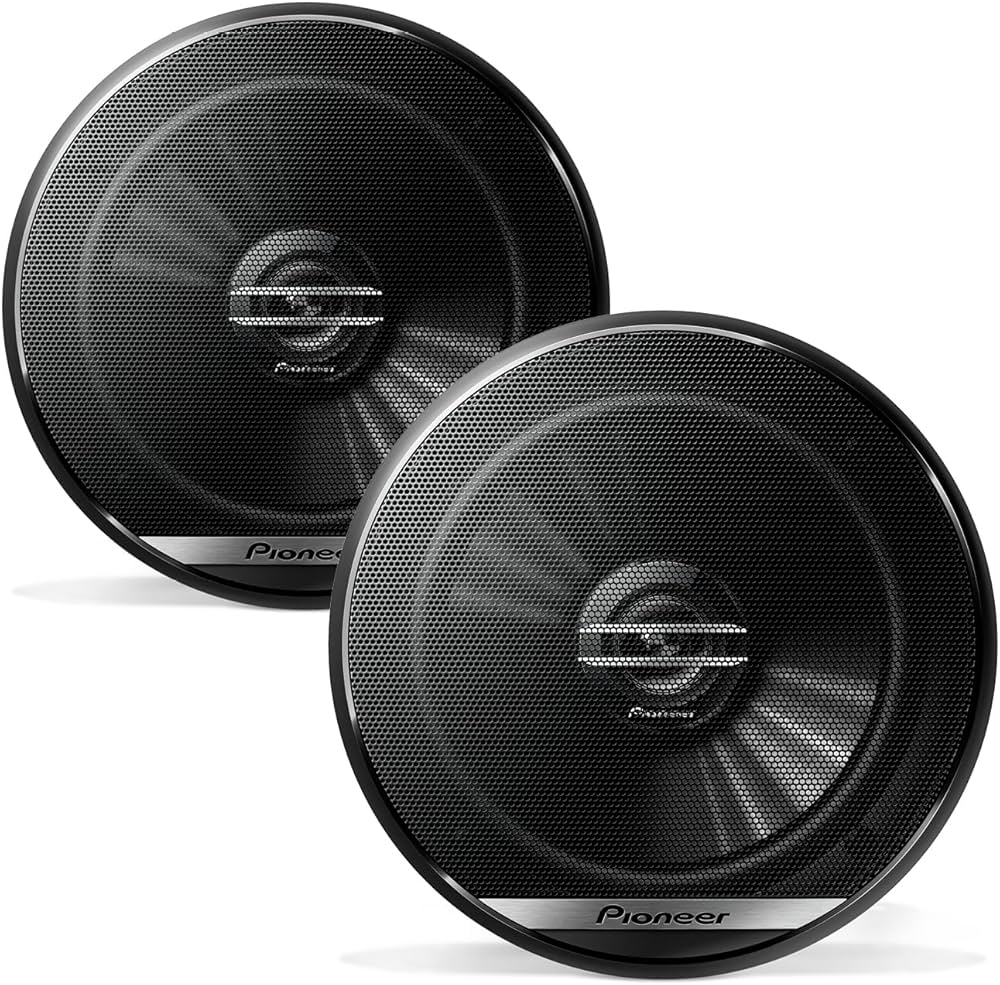
- Mica-reinforced IMPP cone keeps its shape under power despite a rock-bottom price
- Shallow basket depth slides into tight factory cavities in older Toyota and Nissan doors
- 4-ohm impedance works with every factory radio, no wiring changes needed
- Low enough cost per pair that swapping all four doors barely dents a weekend project budget
- Real-world RMS output tops out around 30W, so the printed 250W peak figure overstates usable power
- Bass rolls off noticeably below 80Hz; pair with a subwoofer if low end matters to you
- Basket plastic feels thin next to mid-tier competitors, though reported failures stay rare
Kenwood KFC-1666S
- 1-3/16″ mounting depth clears window tracks and regulators that stop deeper speakers cold
- Multi-fit brackets and harness adapters in the box mean fewer trips back to the parts store
- Treated paper cone produces a warm tone that suits talk radio and older recordings
- Acoustic sound harmonizer dome pole piece smooths out harsh high-frequency dispersion in tight door locations
- 22W RMS power handling distorts quickly if paired with an aftermarket amp pushed hard
- Paper cone holds up worse than poly or mica composites in consistently humid climates
- Modest bass output is the tradeoff for a driver this shallow — expect midrange focus, not slam
Can’t Decide?
Our Top 2 Picks — Head to Head
Both are excellent. Here’s how to choose between them.
- Clear, punchy sound without needing an amp
- Low-impedance design drives well off stock radios
- Under $80 per pair
- Confirmed fitment across most Honda, Toyota, Ford, and GM door openings
- Smoother, more detailed treble than any coaxial here
- Stronger midbass punch without a subwoofer
- Resonance-resistant polymer basket
- Ferrofluid-cooled tweeter stays smooth at volumes where budget domes turn harsh
How to Choose the Right Car Speakers
Six factors that matter before you buy — explained simply, without the marketing jargon most spec sheets bury them in.
Speaker Size & Mounting Depth
Most cars use a 6.5″ or 6.75″ opening, but the depth behind the factory grille varies by several tenths of an inch between models. A speaker that’s too deep can strike a window regulator or door glass. Pull the factory speaker and measure the cavity before ordering a replacement — a $5 tape measure saves a returned box. Shallow-mount options like the Kenwood KFC-1666S exist specifically for cars where nothing deeper will clear the glass.
Impedance Matching
Factory radios are tuned for 4-ohm speakers, and most aftermarket coaxials match that load. A handful of designs, like JBL’s GTO series, run lower impedance to pull extra volume from weak factory amps — check your radio’s manual before installing anything below 4 ohms, since sustained low-impedance loads can overheat an underpowered amp section. Speaker packaging usually lists impedance on the box or spec sheet, so it takes seconds to confirm before checkout.
Coaxial vs. Component Layout
Coaxial speakers combine woofer and tweeter in one basket and bolt straight into the factory location. Component systems separate the two, adding a dedicated crossover and a tweeter pod you mount elsewhere. Components image better and let you aim the tweeter independently, but they take longer to install and usually need an amplifier to sound their best. Start with coaxials if this is your first speaker swap; move to components once you’ve added an amp.
Power Handling: RMS vs. Peak
Peak wattage is a marketing number — a spec sheet listing 300W peak might handle only 50W continuously. RMS predicts real loudness and survivability under sustained use. Match RMS rating to your radio or amp’s actual output rather than shopping by the bigger, more impressive peak figure printed on the box. A speaker with a modest but honest RMS rating usually outlasts one with inflated peak numbers and a weak continuous spec.
Cone & Surround Materials
Foam surrounds soften and crack within a few years, especially in hot climates — avoid them for a long-term install. Rubber and butyl surrounds last far longer under the same conditions. For the cone, polypropylene and mica composites resist moisture better than paper, though treated paper sounds warmer at moderate volumes. Steel baskets can ring under heavy bass; polymer or cast-alloy frames stay quieter at the same power level.
Amplifier Requirements
High-sensitivity coaxials rated in the 80-90dB range play loud enough on factory radio power alone. Component systems and anything above 50W RMS start sounding compressed and flat without a dedicated amplifier. If you’re not adding one anytime soon, prioritize sensitivity over raw power handling when comparing spec sheets. A sensitivity figure above 90dB is a reasonable target for anyone sticking with factory power.
Pro Tips
Quick Buying Checklist
Measure mounting depth before you buy — a speaker that’s too deep can hit window tracks or door mechanisms.
Match impedance to your radio — most factory head units expect 4-ohm speakers.
Choose rubber over foam surrounds — foam breaks down within a few years, rubber lasts far longer.
Ignore peak watts — RMS power handling is the number that actually predicts loudness and durability.
Budget extra time for component systems — crossover and tweeter mounting take longer than coaxials.
Add basic door deadening — under $30 per door, and it noticeably tightens midbass.
Keep the factory speakers in a labeled box in case you ever need to revert for warranty work.
Angle component tweeters toward the listener’s ears rather than flat against the dash for a wider soundstage.
Frequently Asked Questions
Should I get 2-way coaxial speakers or a 3-way design?
Two-way coaxials pair a woofer with a single tweeter and work well for most daily listening. Adding a third driver in the same basket rarely improves detail in a 6.5″ format since the drivers sit too close together. A true component system with a separate tweeter pod, like the Alpine R-S65C.2, delivers a bigger jump in imaging than any 3-way coaxial squeezed into one basket.
Will low-impedance speakers damage my factory radio?
Most factory radios expect 4-ohm speakers, and running 2-ohm or 3-ohm models can pull more current than the amp section handles long-term. Speakers built for low impedance, like the JBL GTO629, are engineered with this in mind. Check your radio’s spec sheet before buying anything below 4 ohms.
How long should new car speakers last?
Speakers with rubber surrounds and polypropylene or mica cones typically run 5 to 10 years without issue. Foam surrounds degrade much faster, especially in hot or humid climates. Feeding speakers a clean, unclipped signal rather than overdriving a weak factory amp extends that lifespan further, and it’s usually the amplifier — not the speaker — that fails first when a system is pushed too hard for years.
Does swapping speakers void my car’s warranty?
No. The Magnuson-Moss Warranty Act protects your right to install aftermarket parts without automatically losing factory coverage. A dealer would need to prove the speaker swap directly caused a specific failure to deny a claim. Keeping the factory speakers in a labeled box covers you if you ever need to revert for a warranty visit or a future trade-in.
Do component speakers need an amplifier to sound right?
Not strictly, but they’re built for it. External crossovers and separate tweeters draw more current than a basic coaxial, and factory radios often can’t drive them to their full potential. Pair a component set like the Alpine R-S65C.2 with even a modest 4-channel amp for the detail and imaging it’s actually designed to deliver — running it straight off a factory deck leaves real performance on the table.
What’s the biggest installation mistake with speaker swaps?
Skipping the mounting-depth check. A speaker that’s a half-inch too deep can hit window regulators or door glass, and you won’t know until reassembly. Measure the cavity behind your factory grille before ordering, and confirm the figure against the new speaker’s spec sheet, not just its advertised 6.5″ or 6.75″ size, since two speakers with identical diameters can differ by half an inch in depth.
Are marine-rated speakers worth it if I don’t own a boat?
Yes, for the right vehicle. IP-rated speakers like the Polk Audio DB652 resist rain, dust, and UV degradation, which matters just as much in a Jeep with the doors off or a truck bed camper as it does on a boat. Non-marine speakers exposed to that kind of weather often show surround rot or a rattling cone within a couple of seasons, well before a normal daily driver would need a replacement.
Why do some coaxial speakers sound bassier than others at the same size?
Cone area, magnet strength, and basket venting all affect bass output more than the 6.5″ label suggests. JBL’s Plus One+ design increases usable cone surface within the same frame, which is why it outperforms standard coaxials of the same nominal size. Door panel sealing and added deadening also change perceived bass more than most buyers expect, which is why the same speaker can sound noticeably different from one car to the next.
Final Verdict
Our Top Recommendations for 2026
Six speakers, six different priorities — but the JBL GTO629 remains the safest first upgrade for nearly any vehicle, matching or beating pricier coaxials on clarity without demanding an amplifier. If moisture or budget change the calculus, the Polk Audio DB652 and Pioneer TS-G1620F cover those cases without asking you to compromise heavily on sound. For listeners already running an amp, the JL Audio C2-650X and Alpine R-S65C.2 justify their higher price with a genuinely different level of detail and imaging.