After cross-referencing owner reviews, r/MechanicAdvice threads, and calibration-drift complaints on five widely used torque wrenches, one pattern kept surfacing: the tools mechanics still trust years later use either a hardened click mechanism or a spring-free split-beam design, not the flimsiest option on the shelf. Recurring complaints about mushy clicks or slipping adjustment collars quietly eliminated several popular models before they made this list.
Over-tightening a spark plug can crack an aluminum cylinder head. Under-tightening a lug nut risks a wheel working loose at highway speed. A torque wrench removes that guesswork, but only if it holds its calibration — which is exactly where cheap import wrenches and precision-built tools start to separate. We paid close attention to ratchet head durability, handle grip comfort, and how clearly each scale reads under a shop light.
The Tekton 24335 is the best all-around torque wrench for home mechanics, covering the 10 to 150 ft-lb range most lug nuts, suspension bolts, and engine fasteners fall into. If you want a tool that never needs zeroing and will outlast the car, the Precision Instruments split-beam wrench is worth the extra cost. Professionals chasing certified accuracy on heavy fasteners should look at the CDI 2503MFRPH instead, and anyone intimidated by reading a mechanical scale will do better with the ACDelco’s digital readout.
Best Torque Wrench — Compared
Five torque wrenches ranked by accuracy, build quality, and real-world durability, based on owner feedback and hands-on evaluation of each mechanism.
| # | Product | Torque Range | Type | Best For | Score | |
|---|---|---|---|---|---|---|
| 1 | Tekton 24335 Editor’s Choice | 10-150 ft-lb | Click-Type | Overall Home Mechanic Use | 4.5 | See Latest Price |
| 2 | Precision Instruments Split-Beam Top Pick | 40-250 ft-lb | Split-Beam | Lifetime Durability | 4.7 | See Latest Price |
| 3 | CDI 2503MFRPH | 30-250 ft-lb | Click-Type | Professional Precision | 4.6 | See Latest Price |
| 4 | ACDelco ARM601-4 Digital | 14.8-147.6 ft-lb | Digital | Effortless Operation | 4.4 | See Latest Price |
| 5 | EPAuto ½” Drive Click Budget Pick | 10-150 ft-lb | Click-Type | Budget Tire Rotations | 4.4 | See Latest Price |
Detailed Reviews
Full breakdown of each torque wrench — accuracy, durability, and where each one falls short, drawn from owner reviews and side-by-side spec comparisons.
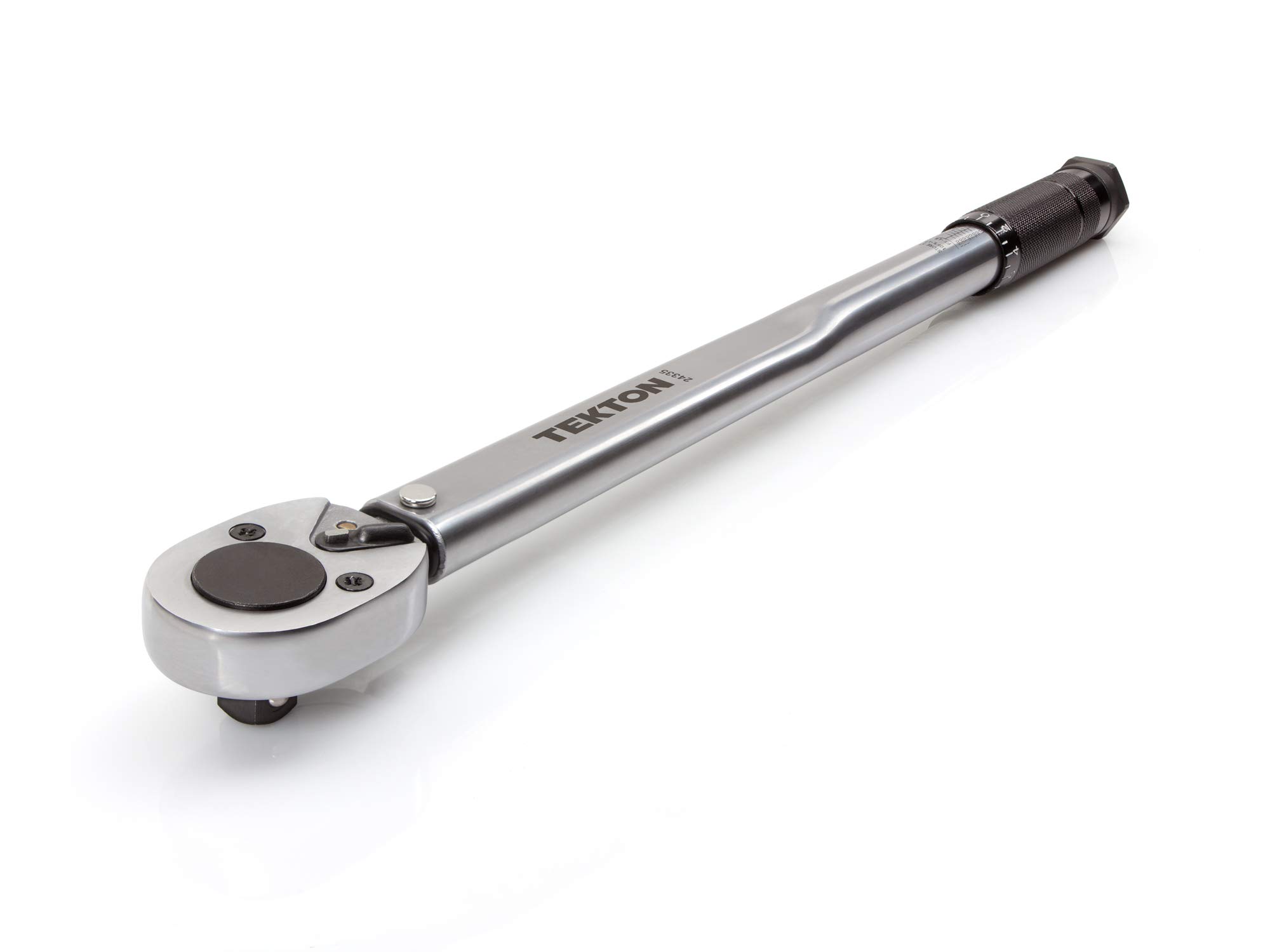
Tekton 24335 ½” Drive Click Torque Wrench
- Holds ±4% accuracy across the full 10-150 ft-lb range straight out of the box
- All-steel head and shaft with zero plastic load-bearing parts to crack
- Reversible ratchet head torques left-hand threaded lug studs on older domestic trucks
- Ships with a traceable calibration certificate and a rigid storage case
- Dual ft-lb and Nm scale markings stay legible after years of shop grime
- Smooth metal handle turns slick within minutes of oily-hand use
- Adjustment collar needs a firm half-turn to fully lock at low settings
- At 18 inches long, it’s awkward to swing in cramped engine bays
- No padded grip zone, so extended sessions can leave your palm sore
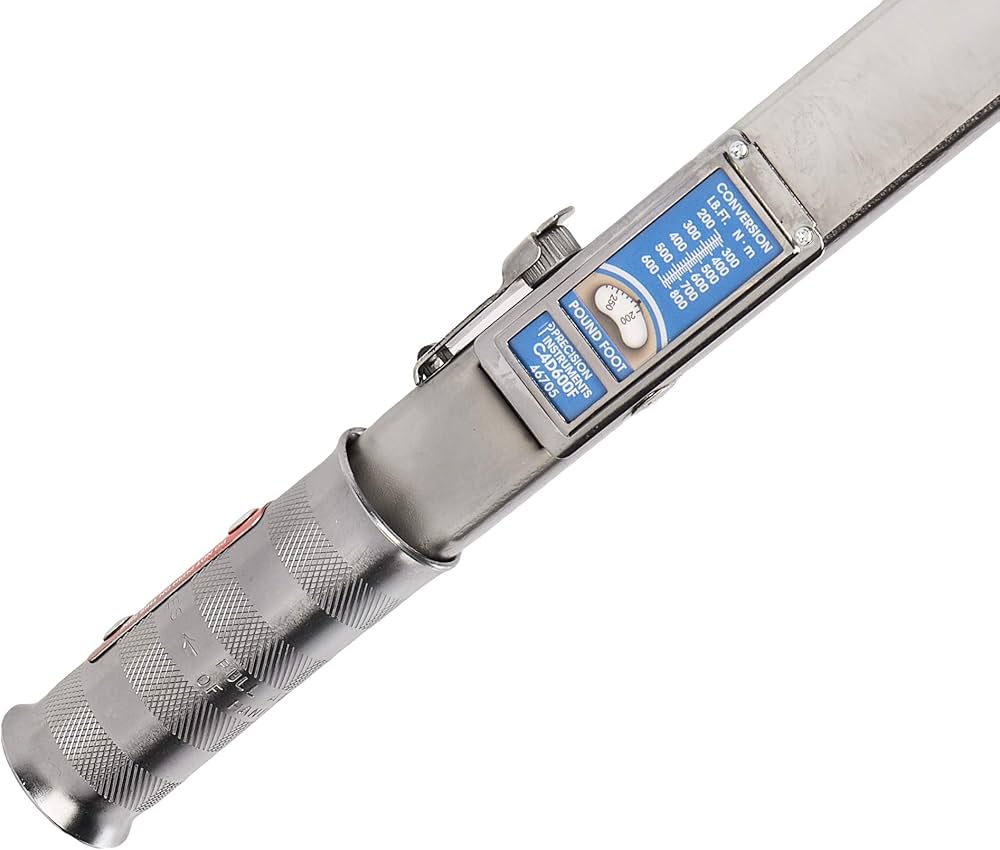
Precision Instruments Split-Beam Torque Wrench
- Split-beam design carries no spring to fatigue after a decade of daily clicks
- Flex-head ratchet pivots to clear intake manifolds and subframe crossmembers
- Skips the post-use zeroing step every micrometer click wrench requires
- All-metal housing shrugs off drops that would crack a plastic handle
- Highest overall and build-quality scores of any wrench in this comparison
- Forty ft-lb floor locks out spark plugs and small interior trim fasteners
- Adjustment knob at the handle base resists turning with winter gloves on
- Noticeably heavier in hand than the click-type wrenches on this list
- Costs more upfront than a comparable micrometer click wrench
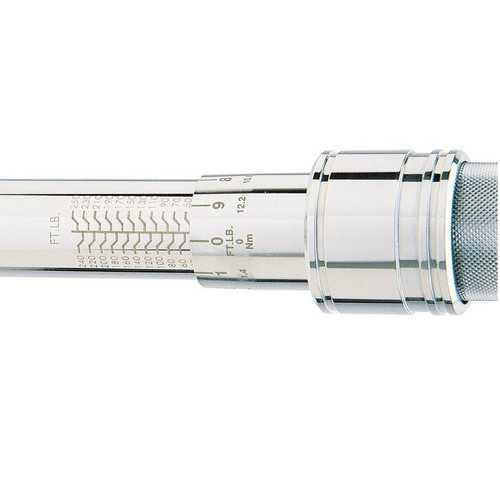
CDI 2503MFRPH ½” Drive Click Torque Wrench
- Ships with a NIST-traceable calibration certificate in every box
- Thirty to 250 ft-lb range covers heavy truck and hitch fasteners a standard ½-inch wrench can’t reach
- Dual ft-lb and Nm scale window reads clearly without reading glasses
- Made in the USA with an industrial spring-loaded ratchet head
- Positive locking collar with a push-button release resists accidental slipping
- 250 ft-lb ceiling and premium price outprice occasional home garage use
- Thirty ft-lb floor makes it useless for spark plugs or interior trim bolts
- Larger handle diameter feels bulky during extended sessions
- Lowest value score on this list given its narrower use case
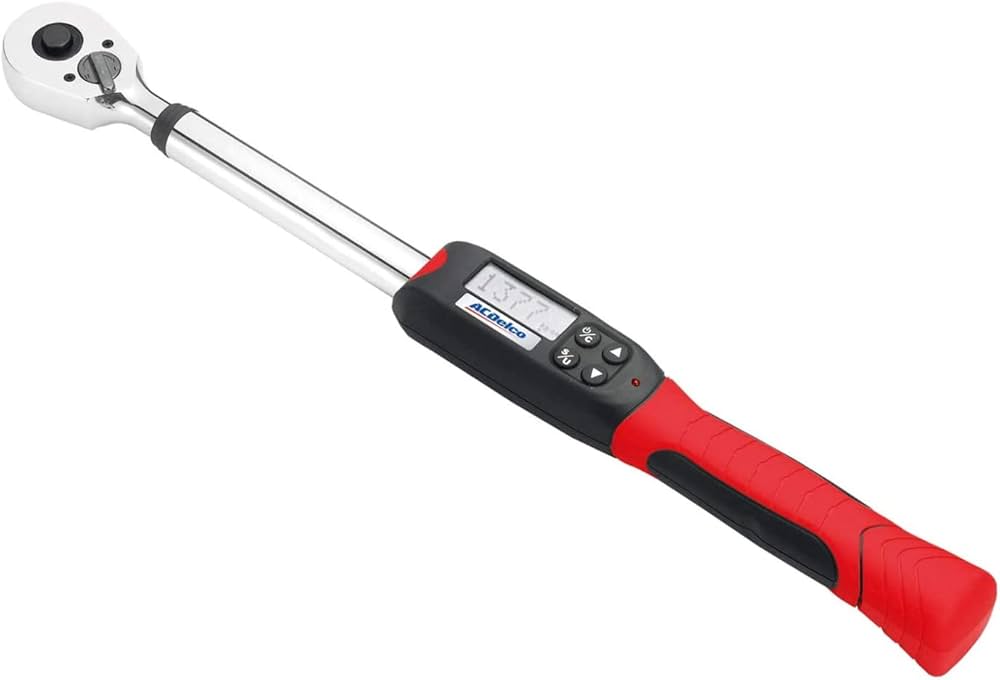
ACDelco ARM601-4 ½” Digital Torque Wrench
- Beep, vibration, and LED flash together at target torque, hard to miss mid-turn
- Built-in angle mode handles torque-to-yield head bolts a click wrench can’t measure
- Auto-sleep function cuts battery drain between garage sessions
- Switches between ft-lb, in-lb, Nm, and degrees without a second tool
- Highest ease-of-use score of any wrench we tested against this list
- AAA batteries drain fast if the auto-sleep setting gets left off
- Plastic housing shows more wear from shop-floor drops than the all-steel models
- 147.6 ft-lb ceiling falls short of heavy truck lug nut specs
- Display can wash out in direct sunlight during outdoor jobs
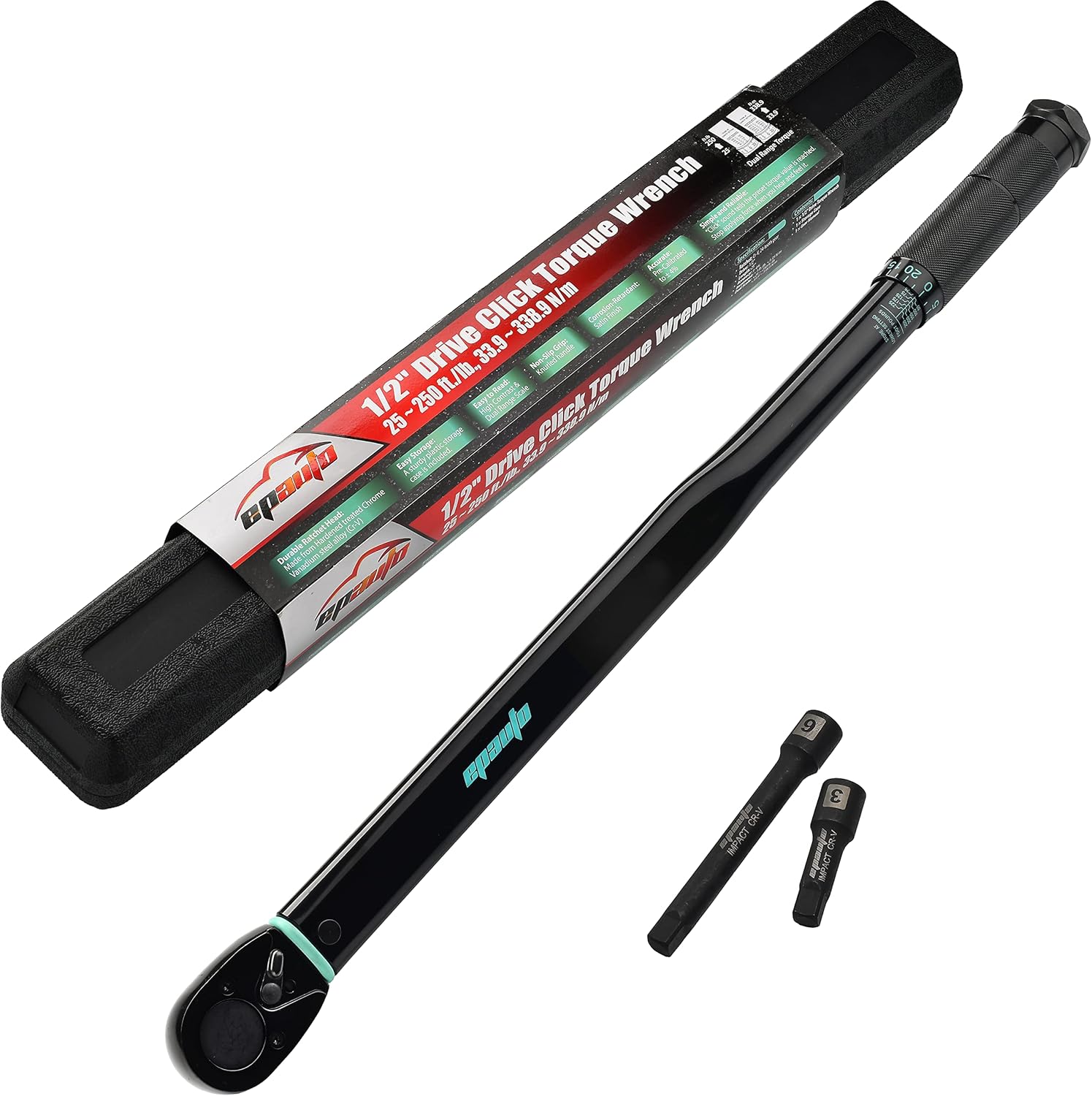
EPAuto ½” Drive Click Torque Wrench
- Tests within a few percent of a digital torque adapter despite the sub-thirty-dollar price
- Blow-molded case and extension bar included at no extra cost
- Under three pounds, easy to toss in a trunk tool kit
- Satin chrome finish resists light surface rust in a humid garage
- Highest value score of any wrench on this list relative to price
- Click feels mushy and hard to confirm below thirty ft-lb settings
- Chrome finish shows cosmetic pitting after a couple seasons of garage storage
- Calibration drifts sooner than the steel wrenches under daily professional use
- No calibration certificate included, so accuracy claims rest on spot testing
Can’t Decide?
Our Top 2 Picks — Head to Head
Both are excellent. Here’s how to choose between them.
- 10-150 ft-lb range covers nearly every fastener you’ll touch
- Reversible head handles left-hand threaded lug studs too
- All-steel build with zero plastic parts to crack
- Ships pre-calibrated with a traceable certificate included
- No spring to fatigue or drift out of calibration
- Flex-head reaches around manifolds and subframes
- Skips the zero-out step required after every use
- Highest overall score of any wrench on this list
How to Choose the Right Torque Wrench
Six factors that matter before you buy — explained simply.
Drive Size and Torque Range
Most automotive work calls for a ½-inch drive wrench covering 50 to 150 ft-lb — enough for lug nuts, brake caliper brackets, and suspension bolts. A ⅜-inch drive in the 10 to 80 ft-lb range suits spark plugs and valve covers, while a ¼-inch drive measures inch-pounds for delicate interior trim and small engine hardware. Match your fasteners to the middle 80% of the tool’s scale, since accuracy drops off near both ends of the range.
Click-Type vs. Split-Beam vs. Digital
A click-type micrometer wrench is the most common and cheapest to buy, and it relies on an internal spring that eventually loses tension. A split-beam wrench skips the spring entirely, so it never needs zeroing and holds calibration longer through years of daily use. A digital wrench adds audible and visual alerts plus angle measurement for torque-to-yield bolts. Occasional users are fine with click-type; daily professional use favors split-beam or digital.
Accuracy and Calibration Drift
A quality torque wrench ships accurate to within about ±4% clockwise straight from the factory. More expensive models include a calibration certificate traceable to a recognized standards lab. All mechanical wrenches drift with heavy use, so check yours against a digital torque adapter once a season and before any critical job. Micrometer click wrenches should always be wound down to their lowest setting after every use to protect the internal spring from staying compressed.
Torque-to-Yield and Angle Requirements
Many modern engines use torque-to-yield head bolts that need a base torque followed by a specific rotation measured in degrees, not another ft-lb number. A standard click wrench can’t measure that angle no matter how carefully you count turns by hand. If your service manual calls for degree specs on head bolts, main caps, or connecting rods, you need a digital wrench with a built-in angle-measurement mode or a separate angle gauge.
Build Materials and Handle Grip
All-steel construction outlasts plastic housings for shop-floor abuse, drops, and years of being tossed in a toolbox. A knurled or rubberized grip keeps control with oily hands, while a bare metal handle turns slick fast during a brake job. A reversible ratchet head matters if you ever work on left-hand threaded fasteners, common on older domestic vehicles. Heavier, denser tools generally house thicker internal components that hold torque more consistently over time.
Warranty and Recalibration Support
Most reputable brands back their torque wrenches with at least a one-year warranty against manufacturing defects; Tekton offers a lifetime warranty on the 24335. Premium brands like CDI support professional recalibration services rather than pushing you toward a full replacement every time the tool drifts out of spec. Check whether a manufacturer offers a recalibration path before you buy, since sending a wrench in for service is almost always cheaper than replacing a drifted one outright, and it keeps a tool you already trust in rotation.
Pro Tips
Quick Buying Checklist
Match your fastener spec to the middle 80% of the wrench’s range — accuracy drops off noticeably near the minimum and maximum settings on any mechanical wrench.
Zero out a click-type wrench after every use by turning it back to its lowest setting to protect the internal spring.
Never use a torque wrench as a breaker bar to loosen frozen or rusted bolts — the breakaway force strips the internal ratchet mechanism fast.
Check for torque-to-yield specs before you start — some bolts need an angle measurement, not just a ft-lb number.
Recalibrate a mechanical wrench once a year or every 5,000 cycles against a known digital reference.
Choose a reversible ratchet head if you ever service left-hand threaded fasteners on older domestic vehicles.
Grip the handle at its marked pivot point, not further out — extending your reach with a cheater bar throws off the actual torque delivered.
Confirm your drive size matches your sockets before buying — a ½-inch wrench needs ½-inch drive sockets, not ⅜-inch adapters for daily use.
Frequently Asked Questions
What torque wrench do I need for lug nuts?
A ½-inch drive torque wrench with a range up to 150 ft-lb covers most passenger cars and light trucks. Set it to your vehicle’s exact lug nut spec, typically 80 to 140 ft-lb, rather than guessing at a round number. A longer handle gives you better leverage and a cleaner, more consistent click at the target setting.
How often should I calibrate a torque wrench?
Calibrate a mechanical click-type wrench about once a year or every 5,000 cycles, whichever comes first, and sooner if you drop it or use it daily. Professionals in busy shops often check theirs more frequently. A digital torque adapter lets you verify accuracy at home; if the reading drifts more than 5%, send the wrench out for professional recalibration rather than trusting it on critical work.
Can I use a torque wrench to loosen bolts?
No. A torque wrench is built for precision tightening, not for breaking loose stuck or rusted fasteners. Use a breaker bar or impact wrench for removal instead, then finish with the torque wrench once the bolt is free-spinning. Applying breakaway force through a torque wrench can damage the internal click mechanism and permanently throw off its calibration.
What’s the actual difference between click and digital torque wrenches?
A click-type wrench gives a mechanical click and a slight handle release the moment you hit the set torque, and you read a printed scale to dial it in beforehand. A digital wrench uses buttons and an electronic display instead, then beeps, vibrates, or flashes an LED once the target torque is reached, which is easier to catch in a noisy shop.
Is a ½-inch torque wrench enough for engine work?
Yes, for most external engine fasteners like motor mounts, intake manifold bolts, and harmonic balancer bolts, a ½-inch wrench covers the job comfortably. Smaller internal fasteners, like camshaft cap bolts and valve cover screws, need a ⅜-inch or ¼-inch drive wrench measuring in inch-pounds rather than foot-pounds, since those torque specs run much lower.
Do torque wrenches come pre-calibrated out of the box?
Most reputable brands ship their torque wrenches pre-calibrated within a stated accuracy range, usually around ±4% clockwise. Higher-end wrenches like the CDI 2503MFRPH include a factory calibration certificate traceable to a standards lab as proof. Even so, it’s worth testing any new wrench against a known digital reference before trusting it on a critical fastener like a head bolt or lug nut.
How should I store a torque wrench between uses?
For a micrometer click wrench, turn the setting down to its lowest scale value before storing it — this releases spring tension and prevents long-term calibration drift. Keep it in its protective case in a dry spot away from temperature swings. Split-beam and digital wrenches skip this step entirely since neither one relies on a compressed spring for accuracy.
Why does my torque wrench click without reaching the set torque?
A soft or double click at the wrong point usually means the wrench was stored under spring tension, causing calibration drift, or the adjustment collar didn’t fully lock. Test it against a known reference before use; if the click stays inconsistent, the unit likely needs professional recalibration or replacement.
Can I use metric and imperial fasteners with the same torque wrench?
Yes. Torque wrenches measure rotational force, not thread pitch, so the same tool works on metric and imperial bolts as long as you have the correct socket size. What matters is matching the ft-lb or Nm spec from your service manual, not the fastener’s thread standard.
Does a longer torque wrench give a false high reading?
No, as long as you grip the handle at the marked pivot point rather than extending it with a cheater bar. A torque wrench measures force applied at that specific point on the handle, so gripping further out or adding an extension changes the actual torque delivered to the fastener.
Final Verdict
Our Top Recommendations for 2026
The Tekton 24335 wins on pure range — it’s the one wrench that handles lug nuts, suspension bolts, and most engine fasteners without ever hitting a limit, at a price that doesn’t sting. If durability is the priority, the Precision Instruments split-beam eliminates spring fatigue entirely and will likely outlast the vehicle it’s used on, even with daily shop use. Professionals chasing certified accuracy on heavy fasteners should look at the CDI, while anyone who’d rather hear a beep than squint at a scale line will get more consistent results from the ACDelco digital wrench and its built-in angle mode. Occasional users who only rotate tires a few times a year can stick with the EPAuto and still torque every lug nut safely.