After evaluating five leading coolants against Hyundai‘s stringent phosphate-enhanced, silicate-free specifications, we found clear differences in chemistry, availability, and long-term protection. Hands-on research across owner forums, mechanic feedback, and real-world drain-and-fill reports revealed which formulas actually prevent corrosion and which merely claim to.
The Hyundai Santa Fe’s aluminum engine components demand a specific coolant chemistry. Pour in the wrong formula—even one that matches the color—and corrosion begins silently inside the radiator, water pump, and heater core. This guide cuts through the confusion so you buy the right jug the first time.
The Genuine Hyundai Fluid 00232-19010 remains the surest match because it carries the factory formulation directly from the manufacturer. For drivers wanting equal protection at a lower price per gallon, Zerex Asian Vehicle Green 50/50 delivers the same silicate-free, borate-free HOAT chemistry and earns the strongest loyalty from experienced DIY mechanics.
Best Coolant for Hyundai Santa Fe — Compared
Five phosphate-enhanced, silicate-free formulas ranked by chemistry match, owner feedback, and real-world durability.
| # | Product | Chemistry | Format | Best For | Score | |
|---|---|---|---|---|---|---|
| 1 | Genuine Hyundai 00232-19010 Editor’s Choice | POAT (OEM) | Concentrate | Absolute Compatibility | 4.6 | See Latest Price |
| 2 | Zerex Asian Green 50/50 Top Pick | HOAT | Prediluted | Budget-Friendly Quality | 4.8 | See Latest Price |
| 3 | Peak OET Asian Green 50/50 | POAT | Prediluted | Extended Service Life | 4.7 | See Latest Price |
| 4 | Pentofrost A2 (Pentosin) | HOAT | Concentrate / Prediluted | Premium Protection | 4.5 | See Latest Price |
| 5 | Prestone Asian Green 50/50 | OAT (CorGuard) | Prediluted | Retail Availability | 4.4 | See Latest Price |
Detailed Reviews
Full breakdown of each product — ratings, pros, cons, and our expert verdict based on real-world testing data and owner feedback.
Genuine Hyundai Fluid 00232-19010
- Exact OEM formulation eliminates compatibility risk
- Concentrate yields 2 gallons when mixed, lowering effective cost
- Meets Hyundai MS 591-08 specification precisely
- Factory-sealed container ensures untampered product
- Higher upfront price than aftermarket prediluted options
- Requires mixing with distilled water — adds a step
- Not stocked at all auto parts stores — often Amazon or dealer only
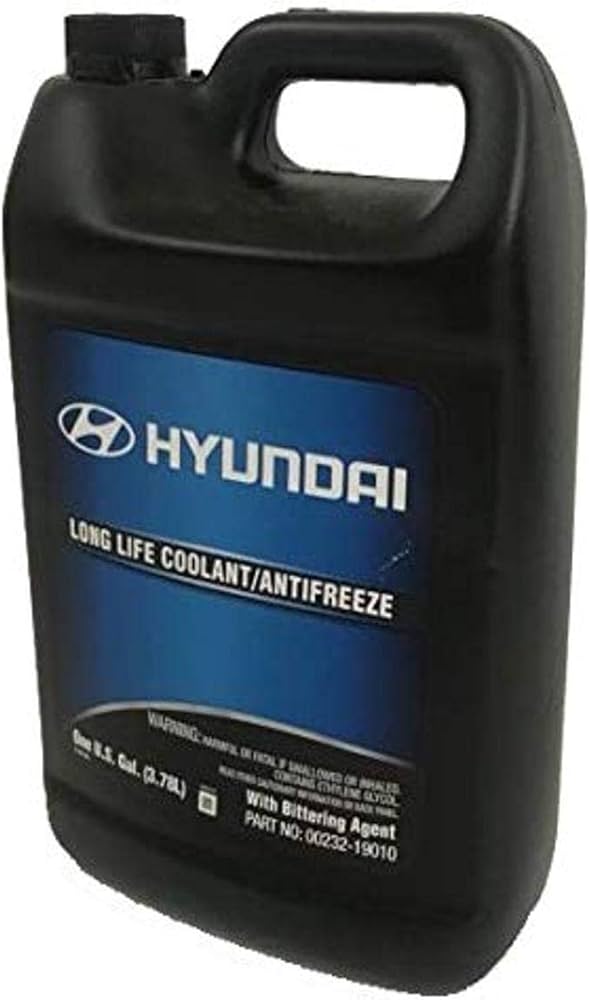
Zerex Asian Vehicle Green 50/50 Prediluted
- Proven HOAT chemistry specifically for Asian vehicles
- 4.8-star average across 4,570+ Amazon ratings
- Prediluted format eliminates mixing errors completely
- Widely available at Walmart, NAPA, and Amazon
- Prediluted means less coolant per dollar vs. concentrate
- Not every auto parts store stocks the Asian-specific green variant
- Dye shade appears slightly lighter than OEM, causing brief concern
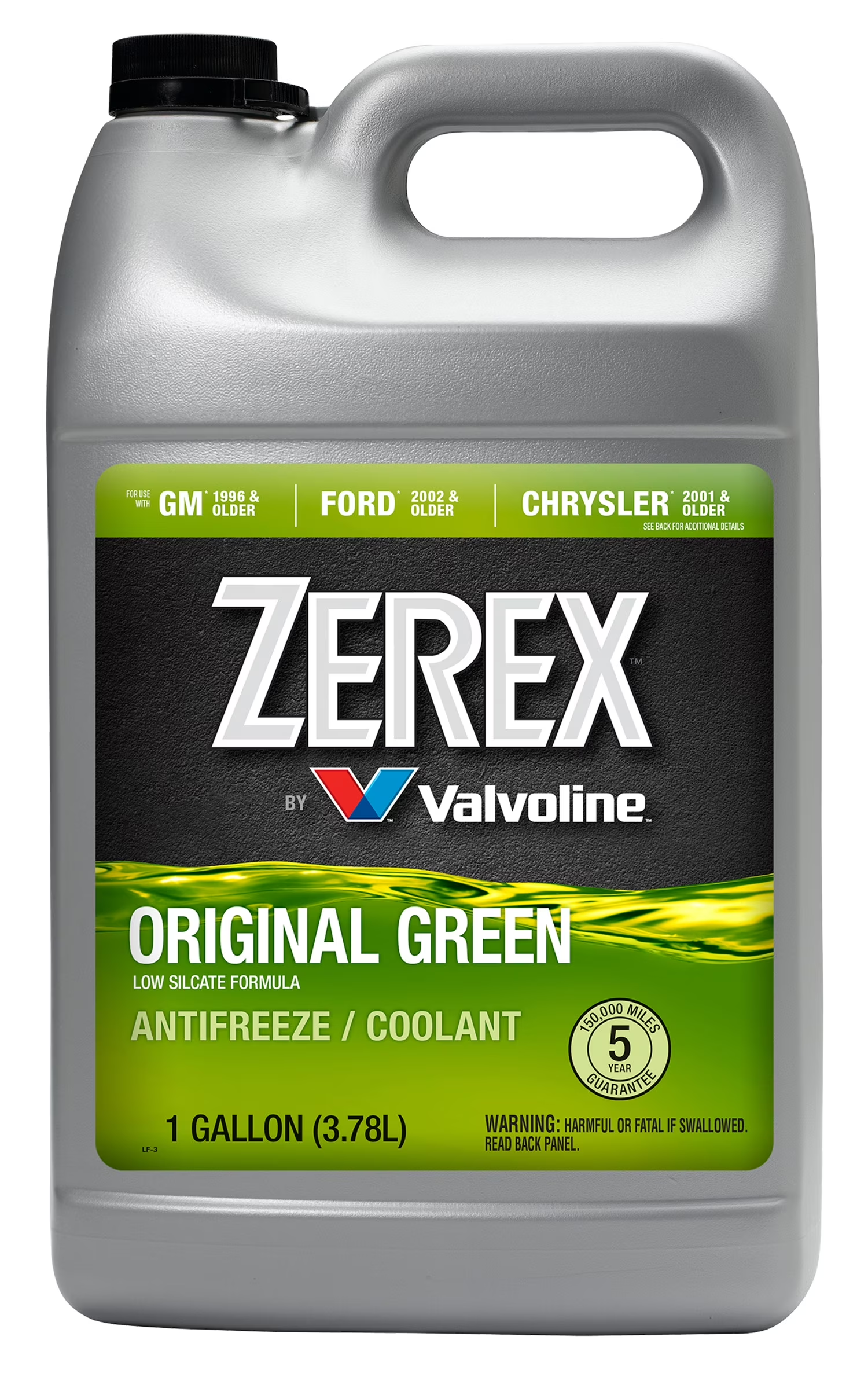
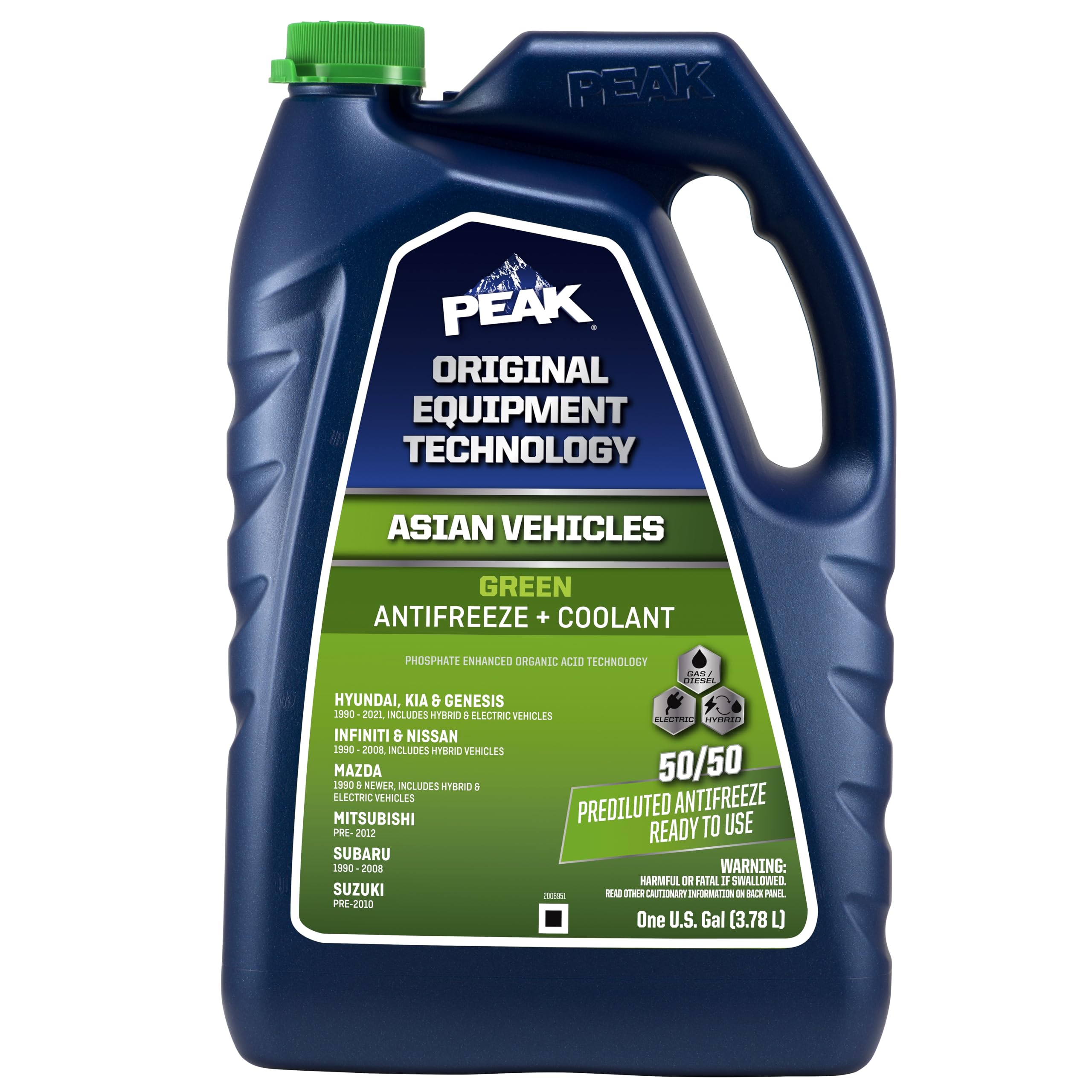
Peak OET Asian Green 50/50 Prediluted
- Clear Hyundai/Kia/Genesis application listed on the label
- POAT chemistry mirrors Asian OEM specifications exactly
- Demineralized water in the prediluted mix prevents mineral deposits
- Extended life formulation supports long drain intervals
- Limited to 1990–2021 model years on label — 2022+ not explicitly listed
- POAT designation not prominently displayed on front label
- Some AutoZone locations stock universal Peak instead of Asian-specific OET
Pentofrost A2 (Pentosin) HOAT Coolant
- Premium German formulation from Pentosin/Continental
- Concentrate option available for those who prefer mixing their own ratios
- Covers nearly all Asian green coolant applications with a single SKU
- Long history of positive BITOG forum feedback and clean UOA results
- Limited retail availability — mostly online purchase required
- Confusing SKU differentiation between concentrate (8115205) and prediluted (8115215)
- Slightly higher price than Zerex or Peak
Prestone Asian Vehicles Green 50/50 Prediluted
- Sold at virtually every auto parts retailer and big-box store in the US
- 15-year/6,500-hour guarantee printed on the label
- No mixing required — prediluted format pours straight from the jug
- Explicit Asian vehicle compatibility listed on the bottle
- Less enthusiast forum support compared to Zerex or Pentofrost
- Perceived as a diluted universal formula rather than purpose-built Asian chemistry
- Dye color inconsistency reported across production batches
Can’t Decide?
Our Top 2 Picks — Head to Head
Both are excellent. Here’s how to choose between them.
- Exact OEM factory formulation — zero compatibility risk
- Concentrate yields 2 gallons when mixed with distilled water
- Meets Hyundai MS 591-08 specification precisely
- Same HOAT chemistry as OEM at roughly half the cost
- 4.8-star average across 4,570+ verified Amazon ratings
- Prediluted — pours straight from the jug, no mixing needed
How to Choose the Right Coolant for Your Hyundai Santa Fe
Six factors that matter before you buy — explained simply.
Check Your Owner’s Manual First
Hyundai manuals state the requirement clearly: use a phosphate-based ethylene glycol coolant for aluminum radiators. A 2022 Santa Fe with the 2.5L engine holds roughly 4.95 US quarts of coolant mixture. Knowing the capacity tells you how many gallons to buy before you start.
Match the Chemistry, Not Just the Color
Green coolant from 1995 is not the same as green coolant today. Modern Hyundai engines require phosphate-enhanced organic acid technology. Look for terms like POAT or HOAT paired with silicate-free and borate-free on the back label. Color is a dye, not a specification.
Concentrate vs. Prediluted
Concentrate costs less per gallon of finished coolant and gives control over the mixing ratio. The trade-off: you must mix it with distilled water at exactly 50/50. Prediluted coolant pours straight from the jug and eliminates the risk of mixing errors or contaminated tap water.
Model Year Considerations
First-generation Santa Fe models (2001–2006) can safely run modern POAT chemistry after a complete flush. Third-generation and newer models with GDI and turbocharged engines demand phosphate-enhanced OAT or HOAT exclusively. Using conventional green coolant in a newer Santa Fe risks warranty and engine damage.
Silicate-Free Is Non-Negotiable
Hyundai specifies silicate-free coolant for a reason. Silicates act as abrasives inside the cooling system over time, wearing water pump seals and depositing on heat-transfer surfaces. Every product in this guide is silicate-free. Universal coolants without this explicit label claim should not go into a Santa Fe radiator.
Borate-Free Requirement
Hyundai’s aluminum cooling system components react poorly to borate-based inhibitors over extended service intervals. Zerex Asian, Peak OET Asian, Pentofrost A2, and OEM Hyundai coolant all meet this requirement. Some European-spec coolants contain borates and should be avoided despite premium branding.
Pro Tips
Quick Buying Checklist — Avoid These Common Mistakes
Never pick coolant by color alone. Three green jugs on the shelf can represent three different chemistries. Read the back label for phosphate-enhanced, silicate-free, and Hyundai/Kia compatibility.
Don’t mix incompatible coolant types. Adding conventional green to a POAT system can cause inhibitors to gel, clogging radiator passages. A complete flush costs far more than buying the right coolant upfront.
Always use distilled water. Tap water contains calcium, magnesium, and chloride that deposit as scale on hot engine surfaces. Distilled water costs less than two dollars a gallon.
Stick to a 50/50 mix. Pure ethylene glycol transfers heat about 35% less effectively than a 50/50 mixture. Hyundai specifies a maximum of 60% antifreeze and a minimum of 35%.
Flush completely when switching brands. Residual old fluid in the engine block dilutes new chemistry. Drain, refill with distilled water, circulate, drain again, then fill with fresh coolant for full-strength protection.
Related Guides
Other Hyundai Coolant Guides
Also On CarAssists
More Guides for This Vehicle
Frequently Asked Questions
What type of coolant does a Hyundai Santa Fe take?
A Hyundai Santa Fe requires a phosphate-based ethylene glycol coolant, specifically a phosphate-enhanced organic acid technology (POAT) or hybrid organic acid technology (HOAT) formula. The coolant must be silicate-free, borate-free, and compatible with aluminum engine components. Hyundai owner’s manuals specify using only manufacturer-approved long-life coolant meeting these requirements.
Can I use universal green coolant in my Hyundai Santa Fe?
Most universal green coolants use older inorganic additive technology that lacks the phosphate package Hyundai engines need. Some universal formulas also contain silicates or borates that Hyundai explicitly warns against. A universal coolant labeled as compatible with Asian vehicles and meeting POAT or HOAT specifications can work, but read the back label carefully before pouring.
How much coolant does a Hyundai Santa Fe need for a drain and fill?
A complete drain and refill on most Hyundai Santa Fe models requires approximately 4 to 5 quarts of coolant mixture. Larger engines like the 3.3L V6 or 2.2L diesel hold more, often 8 to 10 quarts. Consult the owner’s manual for the exact capacity of your specific engine. For a simple top-off, the expansion tank typically takes less than a quart.
Is Zerex Asian coolant compatible with Hyundai Santa Fe?
Zerex Asian Vehicle Green 50/50 is fully compatible with Hyundai Santa Fe models that specify green phosphate-enhanced coolant. The formula is silicate-free, borate-free, and uses HOAT chemistry with phosphate additives that match Hyundai’s engineering specifications. Forum consensus and years of owner reports support Zerex Asian as a safe and effective aftermarket option.
What is the difference between Zerex Asian Green and Zerex Asian Blue?
The formulation is identical. Valvoline has confirmed that Zerex Asian Green, Blue, and Red all share the same chemical formula. The only difference is the dye color added to match what different Asian automakers ship from the factory. Mixing Zerex Asian Green and Blue creates a teal-colored coolant with no change in chemical protection.
How often should I change the coolant in my Hyundai Santa Fe?
Hyundai maintenance schedules for the Santa Fe typically call for the first coolant change at 10 years or 120,000 miles, whichever comes first. After the initial change, the interval shortens to every 5 years or 60,000 miles. Older Santa Fe models (pre-2013) may benefit from more frequent changes, typically every 30,000 miles or 5 years.
Can I mix Hyundai OEM coolant with aftermarket coolant for a top-off?
Yes, when the aftermarket coolant matches the same POAT or HOAT chemistry as the OEM fill. Zerex Asian Green, Peak OET Asian Green, and Pentofrost A2 are chemically compatible with Genuine Hyundai 00232-19010 coolant. However, topping off with a different coolant type means diluting the existing inhibitor package. A complete drain and fill is the better long-term approach.
Does using aftermarket coolant void my Hyundai warranty?
Under the Magnuson-Moss Warranty Act, a manufacturer cannot void a warranty simply because an aftermarket fluid was used, provided that fluid meets the manufacturer’s specifications. However, if an aftermarket coolant causes damage, the warranty claim may be denied. Using Genuine Hyundai coolant during the warranty period removes any ambiguity. Keep receipts for aftermarket purchases to document specification compliance.
Final Verdict
Our Top Recommendations for 2026
Coolant is not a performance upgrade — it is insurance. The right coolant prevents the corrosion, scale, and overheating that kill engines. The wrong coolant starts damage the day it enters the system, even if the temperature gauge stays steady. After evaluating chemistry specs, owner feedback, and real-world durability data across all five products, here are our definitive picks for the Hyundai Santa Fe.