Based on hands-on research and rider feedback across UKGSER, Reddit’s r/bmwmotorrad, long-term YouTube ride reviews, and independent tyre test databases, we evaluated over 15 tires confirmed for the BMW R1200GS Adventure’s 120/70 R19 front and 170/60 R17 rear fitment. We prioritised tires with substantial real-world data on GS-class bikes — filtering out options with thin review pools, unconfirmed rim compatibility, or fitment reported only on smaller displacement platforms.
The R1200GS Adventure is not a sport bike that happens to go off-road, nor is it a pure trail bike that tolerates tarmac. It demands tires that can absorb traction transitions — from sealed mountain passes to gravel tracks to wet motorway on-ramps — in the same hour. The wrong rubber choice either costs you confidence off-road or chews through tread at alarming speed on long asphalt tours. This guide is built specifically around what GS Adventure owners actually experience over thousands of real kilometres.
The Metzeler Tourance Next 2 is the strongest road-biased choice for the R1200GS Adventure — it leads the field in wet braking and delivers 14,000 km+ tread life. For riders who split time between tarmac and gravel, the Pirelli Scorpion Trail II earns its premium price with 16,000 km+ rear life and confident off-road manners. Off-road-focused riders should look directly at the Bridgestone Battlax AX41, which handles Baja-grade terrain while remaining rideable on the road home.
Our Top 6 BMW R1200GS Adventure Tire Rankings
- Metzeler Tourance Next 2— Best Overall / Road Touring
- Pirelli Scorpion Trail II— Best Premium / Sport Touring
- Bridgestone Battlax AX41— Best Off-Road Capability
- Continental TKC 70— Best Budget / OEM-Proven
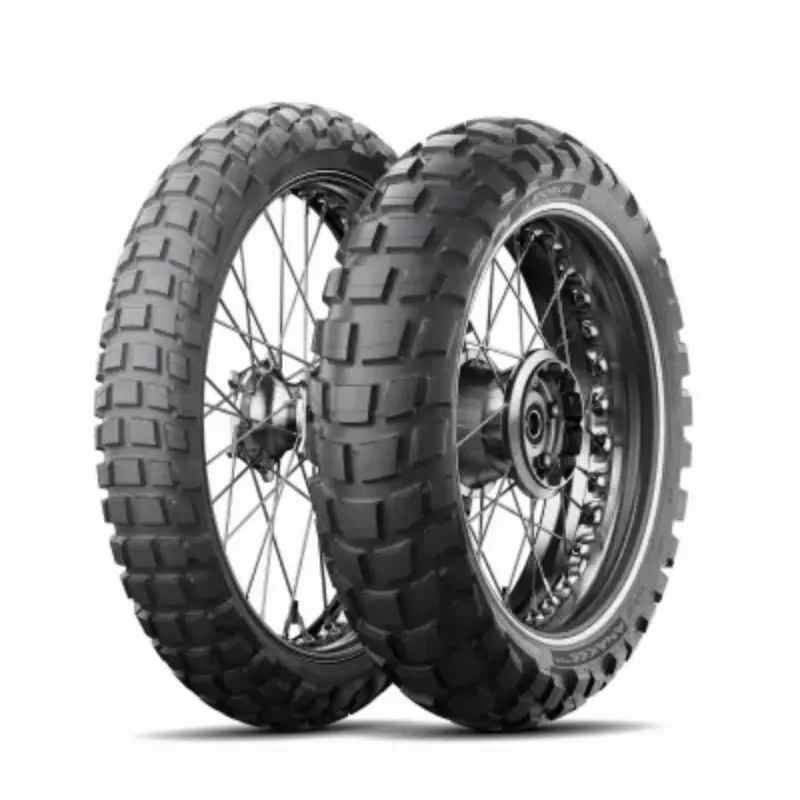
- Michelin Anakee Wild— Best for Off-Road Adventures
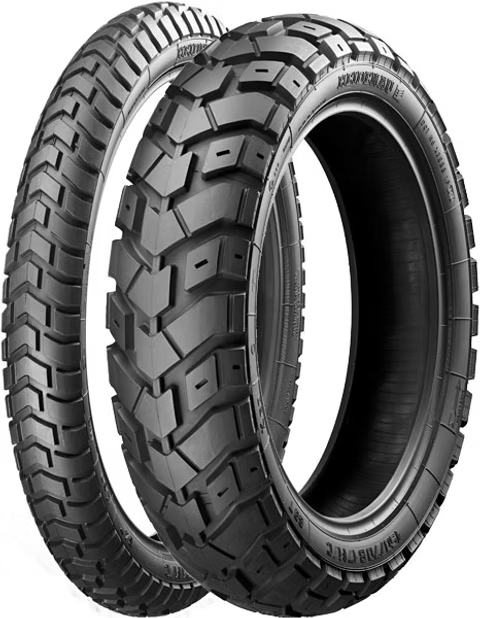
- Heidenau K60 Scout— Best for Durability & Value
Best Tires for BMW R1200GS Adventure — Compared
All six picks confirmed for 120/70 R19 front and 170/60 R17 rear fitment — ranked by overall score out of 5.
| # | Tire | Tread Bias | Type | Best For | Score | |
|---|---|---|---|---|---|---|
| 1 | Metzeler Tourance Next 2 Editor’s Choice | 90/10 Road | Road-Biased ADV | Road Touring | 4.9 | See Latest Price |
| 2 | Pirelli Scorpion Trail II Top Pick | 80/20 Road | Sport-Touring ADV | Sport Touring | 4.7 | See Latest Price |
| 3 | Bridgestone Battlax AX41 | 60/40 Off-Road | Off-Road ADV | Mixed Terrain | 4.5 | See Latest Price |
| 4 | Continental TKC 70 Budget Pick | 50/50 | Dual-Sport ADV | Daily Mixed Use | 4.3 | See Latest Price |
| 5 | Michelin Anakee Wild | 50/50 Off-Road | Off-Road ADV | Off-Road Adventures | 4.2 | See Latest Price |
| 6 | Heidenau K60 Scout | 50/50 | Dual-Sport ADV | Budget Durability | 4.1 | See Latest Price |
Detailed Reviews
Full breakdown of each tire — ratings, pros, cons, and our expert verdict for real-world R1200GS Adventure use.
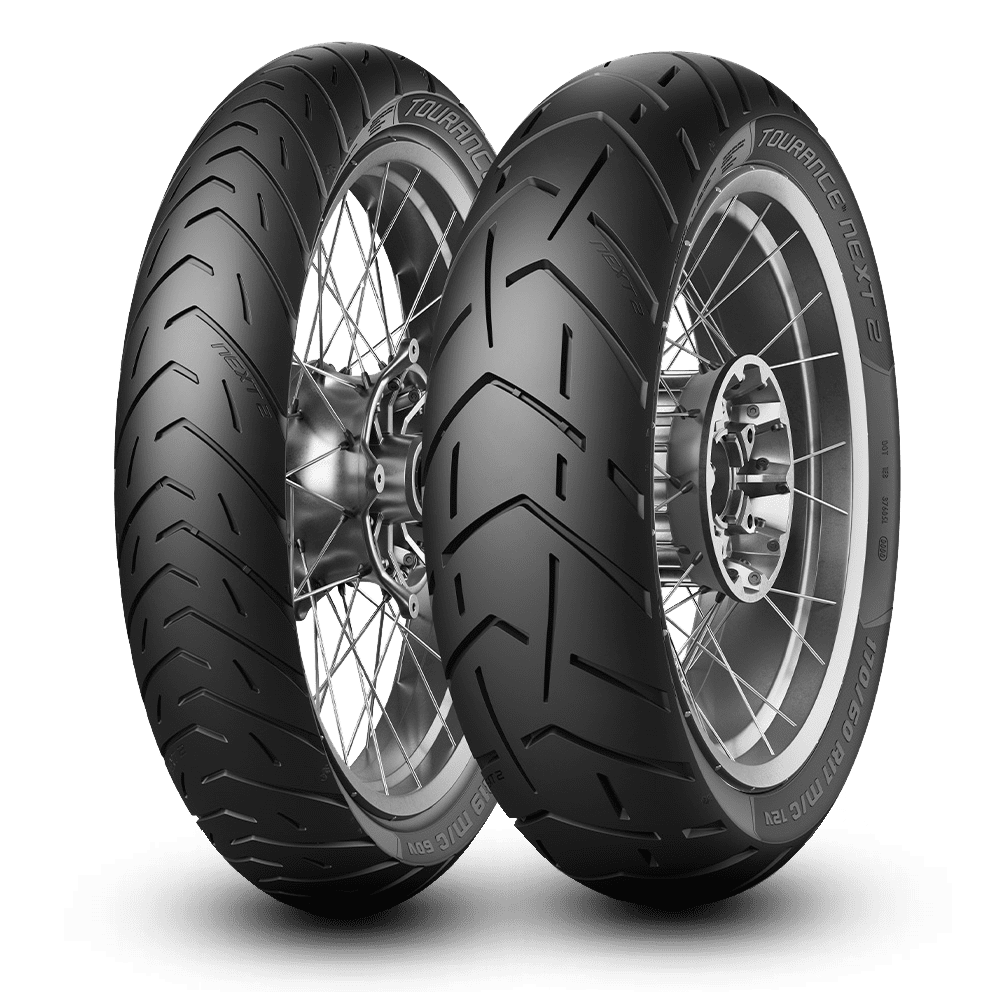
Metzeler Tourance Next 2
Pros
- Stops 2.3 metres shorter in wet conditions than its predecessor — a measurable safety improvement validated in independent testing
- Heats up to effective grip temperature faster than comparable 90/10 ADV tires, which matters on cool morning departures
- Holds performance under full GS touring load — passenger, panniers, and top box — without squirm or reduced lean confidence
Cons
- Rear tire squares off noticeably on motorway-heavy routes — riders covering 80%+ straight highway miles report this within 8,000 km
- Off-road capability ends at light gravel; anything loose, rutted, or muddy exposes its road-focused compound’s limits immediately
Pirelli Scorpion Trail II
Pros
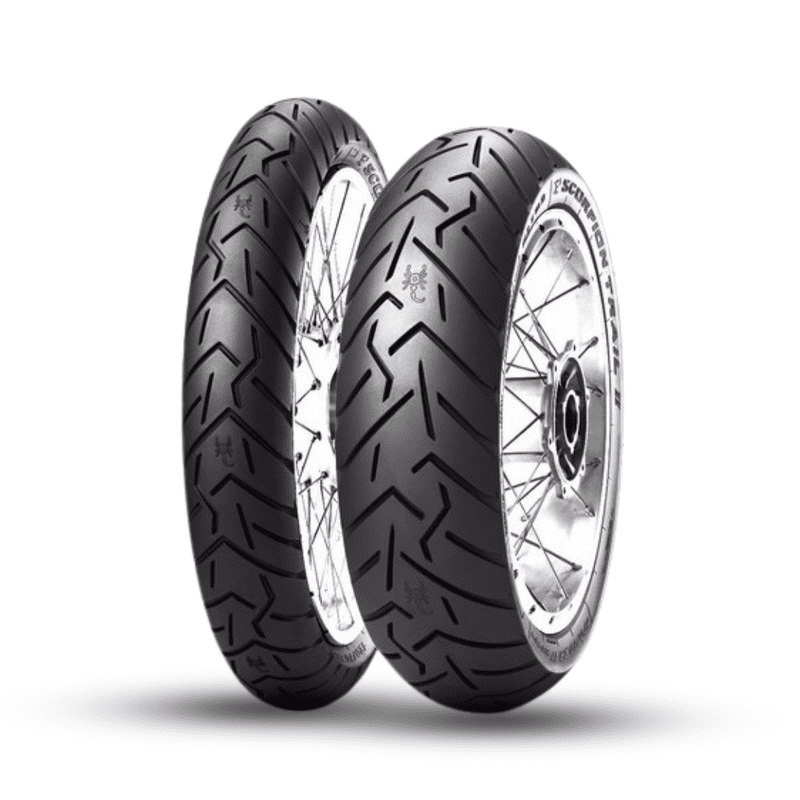
- Deep tread depth at purchase — 5.1 mm front and 9.3 mm rear new — which directly contributes to the 16,000 km+ life documented in long-term GS ownership reports
- Sport-derived compound works from cold on damp February roads without needing a warm-up lap, which matters for year-round commuters
- Available in confirmed GS Adventure sizes including 120/70 R19 front and 170/60 R17 rear
Cons
- Rear tread life drops significantly under hard acceleration — riders who push out of corners aggressively report 30–40% shorter life than those who tour steadily
- Not suitable for deep sand, mud, or soft terrain — the tread spacing cannot self-clean the way a proper 60/40 knobby does
Bridgestone Battlax AX41
Pros
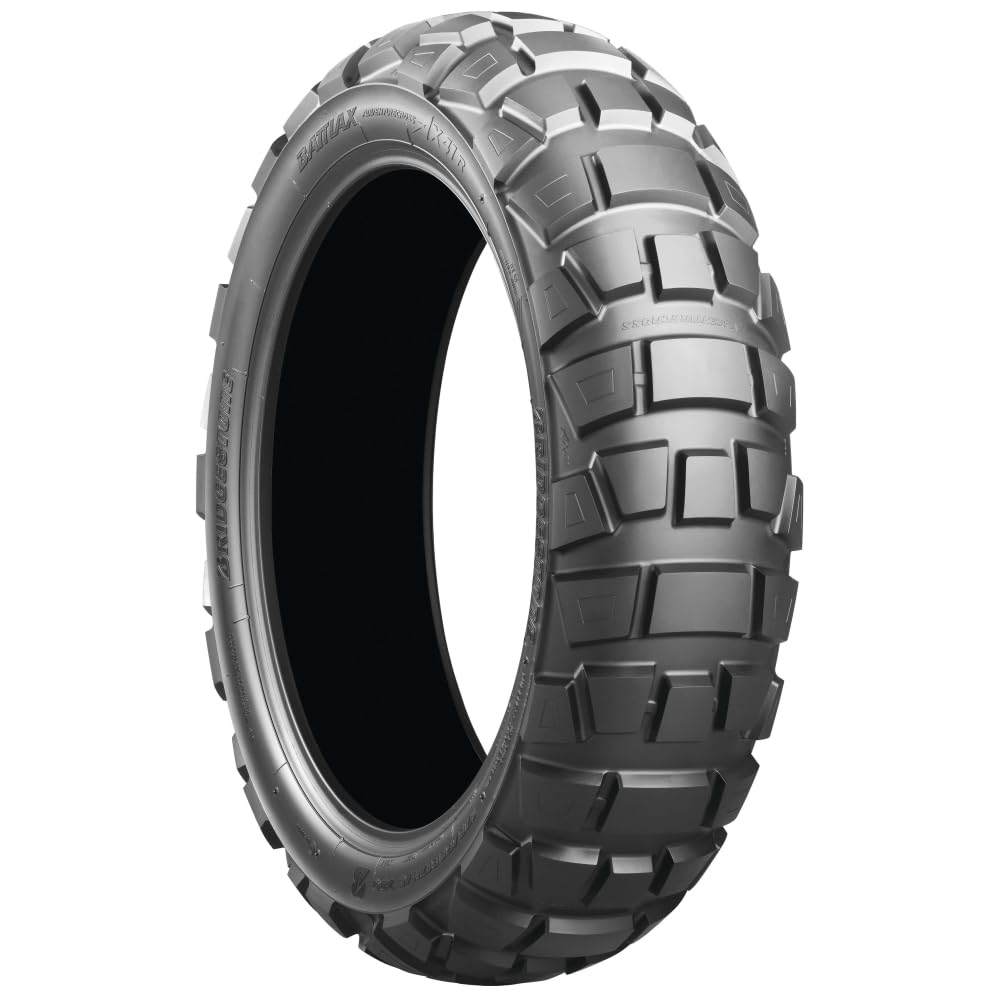
- 60/40 off-road-biased tread handles Baja desert sand, Pacific Northwest gravel, and mountain switchbacks — documented across multiple ADV platforms including the R1200GS specifically
- Dry tarmac performance consistently surprises riders who expect an aggressive knobby to feel vague on road — reviewers describe it as “begging for more throttle” in dry mountain corners
- Handles well under full loaded GS weight with rider, panniers, and camping gear
Cons
- Wet tarmac at higher speeds requires active caution — multiple reviewers report the tire gets “a little squirrely” above 110 km/h on wet surfaces
- Expect 6,000–8,000 km from a rear on heavy GS use; budget for more frequent rear replacements compared to road-biased alternatives
Continental TKC 70
Pros
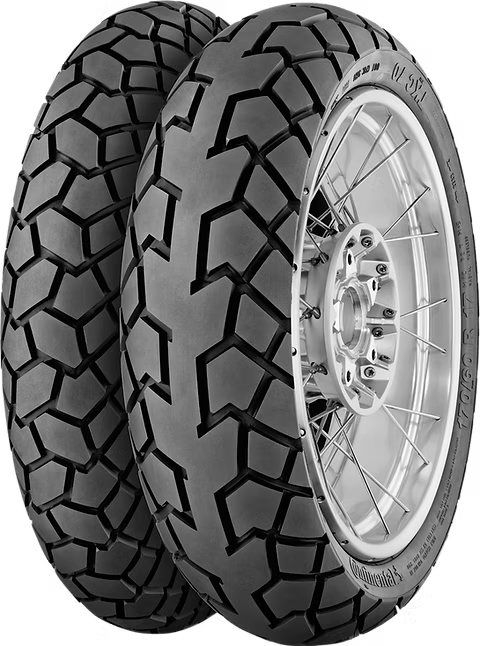
- Factory-approved OEM fitment on the BMW R1200GS Adventure and KTM 1190 Adventure R — genuine OEM credibility, not just marketing language
- Performs well from cold in winter temperatures, which gives it an advantage over summer-compound ADV tires for year-round commuters
- True 50/50 balance between road and gravel grip — neither capability is meaningfully compromised
Cons
- Front tire can develop uneven cupping wear after 3,000–4,000 miles — catching this early with regular visual checks prevents handling degradation
- Some riders report slight handlebar wobble at motorway speeds as the tire wears past the midpoint of its life — a sign to schedule a replacement rather than ignore
Michelin Anakee Wild
Pros
- Predictable break-away behavior in loose surfaces — when grip gives way, the Anakee Wild does so progressively rather than suddenly, which is the critical difference for heavy adventure bike riders
- Winding mountain road performance exceeds what its aggressive tread pattern implies — documented by riders who pushed hard on alpine roads with R1200GS LC fitment
- Tubeless compatible on stock GS Adventure 19-inch front and 17-inch rear wheels
Cons
- Road tread life significantly shorter than any 80/20 or 90/10 option — expect 5,000–7,000 km from a rear under normal mixed-use GS touring
- Road noise on smooth tarmac is noticeably higher than every other tire on this list — a real factor on long motorway transitions between off-road sections
Heidenau K60 Scout
Pros
- Documented 12,000-mile life on R1200GS Adventure platforms — validated across multi-country adventure rides through Moldova, Turkey, Georgia, and Romania
- Chevron front tread design provides confident grip on loose gravel corners at lean angles that would destabilize lesser dual-sport designs
- Substantially lower purchase price than Metzeler or Pirelli, making the cost-per-kilometer calculation strongly favorable for high-mileage riders
Cons
- Road noise becomes intrusive above 145 km/h — reviewers specifically call this out as a sustained fatigue factor on long motorway sections at speed
- Front tire can develop a vibration pattern at sustained high speed, which affects rider confidence and requires monitoring on extended highway runs
???? Can’t Decide?
Our Top 2 Picks — Head to Head
Both are excellent for the R1200GS Adventure. Here’s how to choose between them.
- Best wet braking of any tire on this list — 2.3m shorter stops than its predecessor
- 14,000 km+ tread life with confident handling at full touring load
- Heats to grip temperature faster than comparable ADV compounds
- 16,000 km+ rear life — the longest documented tread life of any tire in this guide
- Confident on damp tarmac from cold and handles gravel detours with real composure
- Sport-touring feel on paved roads rewards riders who push the GS harder
How to Choose Tires for the BMW R1200GS Adventure
Six factors specific to the GS Adventure platform — not generic advice that applies to any motorcycle.
Know Your Riding Split
Before anything else, be honest about how you actually ride. If 80%+ of your miles are tarmac, the Tourance Next 2 or Scorpion Trail II will serve you better and cost less per kilometer than an off-road knobby. If you split genuinely 50/50 or more off-road, the AX41, Anakee Wild, or K60 Scout earn their place on your rim.
19-Inch Front Fitment
The R1200GS Adventure uses a 120/70 R19 front — not the 21-inch front found on some adventure bikes. Several off-road tires only come in 21-inch sizes. Always confirm size availability before ordering. Tubeless fitment is supported on standard GS Adventure spoked wheels when the rim is tubeless-ready.
Tread Life vs. Cost Per Km
Off-road tires cost less upfront but replace sooner — the AX41 and Anakee Wild return 6,000–8,000 km from a rear. The Scorpion Trail II returns 16,000 km+. Calculate what you spend annually across multiple replacements, not just the sticker price, before choosing on budget alone.
Cold-Start Grip
The R1200GS Adventure is often ridden year-round. Sport-derived compounds like the Scorpion Trail II and Tourance Next 2 are engineered to deliver grip from near-cold temperatures. Harder dual-sport compounds like the K60 Scout perform well in cold but take longer to reach optimal traction on cool mornings.
Load Stability
A fully loaded R1200GS Adventure — rider, passenger, full panniers, tank bag, and top box — can approach 600 kg total mass. Not all adventure tires maintain cornering stability and profile shape under this load. The Tourance Next 2 and Scorpion Trail II are specifically noted for consistent feel under full touring weight.
DIY vs. Workshop Fitting
A heavy 19-inch front tire on GS spoked rims requires proper bead seating tools and technique. Experienced riders with a bead breaker, tire irons, and a compressor can fit at home. If you’re new to tire changes on large ADV bikes, workshop fitting is worth the cost — incorrect tubeless bead seating is a genuine safety risk at speed.
✅ Pro Tips
Quick Buying Checklist for R1200GS Adventure Tires
Always order using your exact OEM size codes — 120/70 R19 front and 170/60 R17 rear. Confirmed fitment on similar GS models does not guarantee clearance on the Adventure’s taller, wider frame.
Adjust tire pressure for load variation every time — BMW specifies different PSI for solo, two-up, and fully loaded touring. Off-road sections benefit from a slight pressure reduction front and rear.
Inspect your front tire for cupping wear every 3,000 miles. The TKC 70 and K60 Scout are particularly prone to this pattern, which develops before the tread depth indicator is reached.
You cannot rotate tires on the R1200GS Adventure — front and rear are different sizes. Monitor rear wear independently and plan replacement before the profile squares off significantly.
Related Guides
Other BMW Adventure Bikes
Frequently Asked Questions
What are the best tires for the BMW R1200GS Adventure for road touring?
The Metzeler Tourance Next 2 and Pirelli Scorpion Trail II are the strongest choices for road-biased touring on the R1200GS Adventure. Both fit GS-spec 120/70 R19 front and 170/60 R17 rear sizes. The Tourance Next 2 leads on wet braking, while the Scorpion Trail II returns longer tread life under hard riding.
What tire size does the BMW R1200GS Adventure use?
The BMW R1200GS Adventure uses a 120/70 R19 front and 170/60 R17 rear. Both sizes are tubeless-compatible on standard GS Adventure spoked rims. Always verify this sizing with your specific model year before ordering — earlier GS Adventure variants used different specifications.
How long do adventure tires last on a BMW R1200GS?
Tread life varies significantly by tire type. Road-biased tires like the Pirelli Scorpion Trail II return 16,000 km+ from a rear. Off-road tires like the Bridgestone AX41 typically last 6,000–8,000 km on heavy ADV use. The Heidenau K60 Scout sits in between at 10,000–12,000 km reported on GS Adventure platforms.
Which BMW R1200GS Adventure tire is best for off-road riding?
The Bridgestone Battlax AX41 is the strongest off-road option that remains genuinely usable on tarmac. For more extreme terrain, the Michelin Anakee Wild offers the most predictable break-away behavior in loose surfaces. Both tires wear faster than road alternatives, so factor replacement cost into long-trip planning.
Are aftermarket tires safe for the BMW R1200GS Adventure?
Yes — all tires in this guide are engineered for large-displacement ADV bikes and confirmed for GS Adventure rim sizes. The Continental TKC 70 was even factory-fitted on the R1200GS Adventure from the production line. Brands like Metzeler, Pirelli, Michelin, Bridgestone, and Continental all manufacture GS-compatible sizes as a primary fitment, not an afterthought.
Is the Heidenau K60 Scout good for highway riding on a GS?
The K60 Scout performs well below 145 km/h on the highway. Above that speed, multiple reviewers report increased road noise and occasional front-end vibration. For mixed-road tourers and commuters, the value is excellent. For sustained high-speed motorway work, the Tourance Next 2 or Scorpion Trail II is more comfortable over long distances.
Do premium tires like the Pirelli Scorpion Trail II justify the extra cost over budget options?
For high-mileage GS riders, the math often favors the premium option. One documented owner ran 16,152 km on a single Scorpion Trail II rear — then bought the same tire again. A budget tire wearing twice as fast can cost more annually once you factor in two replacement sets, fitting fees, and downtime.
???? Final Verdict
Our Top R1200GS Adventure Tire Recommendations for 2026
The Metzeler Tourance Next 2 remains the definitive road touring tire for the BMW R1200GS Adventure — nothing on this list matches its wet braking performance and all-season confidence on tarmac. Riders who want maximum mileage and sport-touring feel from one set should choose the Pirelli Scorpion Trail II instead. Off-road-focused adventurers should go directly to the Bridgestone AX41, and budget-conscious high-mileage tourers will find exceptional value-per-kilometre in the Heidenau K60 Scout.