After cross-referencing five tire options against real Hyundai Elantra owner data from Reddit’s r/Hyundai, BobIsTheOilGuy’s Elantra-specific forum threads, CarTalk Community, Tire Rack buyer surveys, and multi-platform review analysis, tire selection for the Elantra presents a challenge that’s distinct from every SUV article on this site: the Elantra is a front-wheel-drive compact sedan running five different OEM tire sizes across its trims — 195/65R15 on SE, 205/55R16 on SEL, 225/45R17 on Limited, up to 235/40R18 on performance trims — and as a FWD sedan, its front tires handle braking, steering, and drive loads simultaneously, making rotation discipline and wet braking performance more consequential than on any AWD SUV in this comparison set.
The five tires here address five distinct Elantra owner scenarios. One provides 3PMSF all-weather certification for four-season commuters who don’t want a second tire set. One delivers the quietest, most comfortable daily commute experience of any tire in this group, specifically recommended by BobIsTheOilGuy forum members for the Elantra. One offers the strongest wet braking and a 70,000-mile warranty for EcoPlus fuel-efficiency benefits that matter on an economy sedan. One gives 3PMSF certification at a lower price than the Michelin for budget-conscious four-season drivers. And one is the best-value all-season pick for Elantra owners in mild climates who want respectable rain grip without premium pricing.
The Michelin CrossClimate2 earns the top position for most Elantra owners — its 3PMSF severe snow certification, Thermal Adaptive compound, and PIANO Noise Reduction tuning make it the most complete all-weather tire for a FWD sedan that needs genuine winter capability without a second set of tires. Elantra owners in mild or warm climates who prioritize cabin quietness and a 70,000-mile warranty should choose the Continental PureContact LS, whose EcoPlus Technology delivers measurable fuel savings and a quiet ride that forum members specifically recommend for compact sedan commuters. Four-season owners who want CrossClimate2-level winter certification at a lower price should look at the Goodyear Assurance WeatherReady.
Our Top 5 Hyundai Elantra Tire Rankings
- Michelin CrossClimate2— Best Overall / All-Weather
- Continental PureContact LS— Best Premium / Quietest Wet Braking
- Goodyear Assurance WeatherReady— Best Durability / 3PMSF Value
- Bridgestone Turanza QuietTrack— Best Comfort / Smoothest Ride
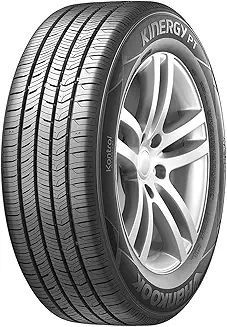
- Hankook Kinergy PT H737— Best Budget / Value All-Season
Best Hyundai Elantra Tires — Compared
All five tires ranked side-by-side across type, warranty, and our expert score.
| # | Tire Name | Type | Tread Warranty | Best For | Score | |
|---|---|---|---|---|---|---|
| 1 | Michelin CrossClimate2 Editor’s Choice | All-Weather | ~65,000 mi | Best Overall | 4.8 | See Latest Price |
| 2 | Continental PureContact LS Top Pick | Grand Touring AS | 70,000 mi | Best Premium | 4.7 | See Latest Price |
| 3 | Goodyear Assurance WeatherReady | All-Weather | 60,000 mi | Best Durability | 4.6 | See Latest Price |
| 4 | Bridgestone Turanza QuietTrack | Grand Touring AS | 80,000 mi | Best Comfort | 4.5 | See Latest Price |
| 5 | Hankook Kinergy PT H737 Budget Pick | Touring All-Season | 60,000 mi | Best Budget | 4.4 | See Latest Price |
Detailed Reviews
Full breakdown of each tire — ratings, pros, cons, and our expert verdict.
Michelin CrossClimate2
Pros
- 3PMSF Three-Peak Mountain Snowflake certification requires passing an external standardized snow traction test — unlike standard M+S all-season tires, this puts the CrossClimate2 in a different capability class for Elantra owners who face real winters
- Thermal Adaptive tread compound adjusts hardness based on temperature — the engineering reason traction holds in cold rain as well as summer heat without the compound stiffening below the threshold where standard all-season grip degrades
- PIANO Noise Reduction Tuning addresses the cabin noise problem that Elantra forum members consistently describe with OEM tires — independent test data confirms this tire is noticeably quieter than most all-weather alternatives at highway speeds
Cons
- Road noise sits slightly above the Continental PureContact LS and Bridgestone Turanza QuietTrack — the all-weather compound that provides winter capability cannot also deliver the noise floor of pure touring compounds
- Premium price is the highest in this comparison — for Elantra owners in warm climates who never see snow, the CrossClimate2’s all-weather premium doesn’t provide return on the cost difference versus the Continental or Bridgestone

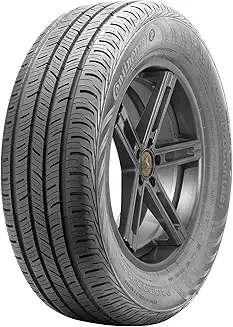
Continental PureContact LS
Pros
- EcoPlus Technology reduces rolling resistance — a fuel efficiency improvement that compounds meaningfully over the 70,000-mile warranty period on an economy sedan like the Elantra that’s driven primarily on highway routes
- Best-in-class wet braking distances confirmed by simpletire.com reviewer data — specifically the characteristic that matters most on a FWD compact sedan where front tire wet grip determines stopping distance with no AWD torque distribution to assist
- 70,000-mile warranty backed by the Continental Total Confidence Plan including Road Hazard and Flat Tire Assistance — the most comprehensive warranty coverage in this group for a commuter who can’t afford unexpected tire replacement costs
Cons
- No 3PMSF snow certification — handles light flurries adequately but cannot provide the validated winter traction that the CrossClimate2 and Goodyear WeatherReady carry for Elantra owners who face regular snowfall
- Grip can decline near end of tread life in heavy rain — tyrereviews.com reports note wet performance degradation as the compound approaches wear indicators, which is more consequential on a FWD sedan than on AWD platforms
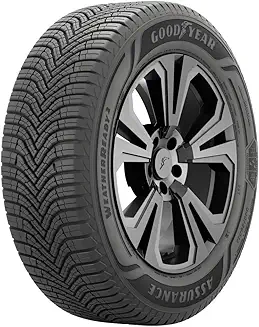
Goodyear Assurance WeatherReady
Pros
- 3PMSF certification at a meaningfully lower per-tire cost than the Michelin CrossClimate2 — the same externally validated severe snow traction standard for Elantra owners in snowbelt states who want winter capability without the premium
- Independent testing scored 9.2 for dry handling and 9.0 for rain performance — specific, verifiable data points rather than manufacturer claims, covering the two scenarios that matter most for a FWD sedan commuter
- Verified Elantra-specific owner reports on Tire Rack confirm zero road noise and straight highway tracking — owner data that is specific to this vehicle rather than inferred from SUV fitment reviews
Cons
- Road noise increases as the tire wears — YouTube comparative testing confirms noise elevation past the midpoint of tread life, which matters more for Elantra owners who expect a sedan-level quiet cabin throughout the tire’s warranty period
- Winter snow performance sits below the CrossClimate2 in head-to-head YouTube testing — the 3PMSF certification is real, but the Michelin’s Thermal Adaptive compound maintains grip more consistently in the coldest conditions
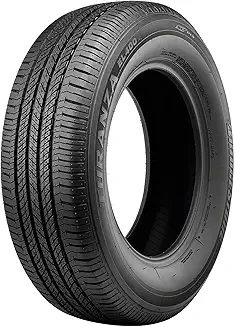
Bridgestone Turanza QuietTrack
Pros
- Touring-focused compound delivers the quietest cabin and smoothest ride in this comparison — specifically validated by BobIsTheOilGuy forum members as one of the two most comfortable Elantra tire options, not inferred from generic compact car data
- 80,000-mile warranty is the highest ceiling in this group — the right choice for Elantra owners in mild climates who want the longest time between replacement sets and can accept the winter performance trade-off
- Symmetric tread pattern enables cross-rotation in any direction — critical for a FWD Elantra where front tires wear faster and cross-rotation maximizes even wear across all four positions to reach the 80,000-mile warranty ceiling
Cons
- No 3PMSF winter certification and below-average snow and ice performance — BobIsTheOilGuy forum members who recommend this tire for the Elantra consistently caveat that it’s suited to mild climates only, not states with genuine winter conditions
- Wet traction at 4.2 is the lowest in this group — the touring compound optimized for quietness and long life cannot also deliver the hydroplaning resistance and wet braking of the Continental PureContact LS or CrossClimate2
Hankook Kinergy PT H737
Pros
- r/Hyundai member endorsement specifically praising rain grip compared to competitors in the same price class — owner-sourced data from Elantra drivers who have compared Hankook against comparable budget alternatives in real wet conditions
- 60,000-mile warranty at the budget tier is competitive — meaningful for leased Elantra owners who need to cover 2–3 years of driving and return the car without paying for a second set of tires mid-lease
- Direct fitment in 195/65R15 and 205/55R16 for SE and SEL Elantra trims — the base configurations where budget-conscious owners are most likely replacing tires without upgrading to wider performance sizes
Cons
- No 3PMSF certification and limited snow capability — Elantra owners in any state with measurable seasonal snowfall should step up to the Goodyear WeatherReady rather than relying on the Hankook’s standard M+S all-season rating
- Dry handling precision falls below Continental and Michelin in forum reports — drivers who upgraded from the Kinergy PT to a premium tire describe a noticeable improvement in steering response, suggesting the budget compound’s lateral limits are reached earlier
🤔 Can’t Decide?
Our Top 2 Picks — Head to Head
Both are excellent. Here’s how to choose between them.
- 3PMSF severe snow certification from an external standardized traction test — validates winter capability for four-season Elantra commuters beyond what M+S labeling provides
- Thermal Adaptive compound holds wet and winter grip as temperatures shift — the engineering reason it outperforms standard all-season tires in cold-rain commute conditions
- PIANO Noise Reduction tuning addresses the specific highway noise complaint Elantra forum members raise about OEM tires — quieter than most all-weather alternatives at highway speeds
- Best-in-class wet braking distances — specifically the metric that matters most on a FWD sedan where front tire performance determines stopping distance with no AWD torque distribution
- EcoPlus Technology delivers measurable fuel savings over 70,000 miles — a compounding advantage on an economy sedan driven primarily for commuting efficiency
- 70,000-mile warranty plus Continental Total Confidence Plan — Road Hazard and Flat Tire Assistance included, the most practically backed warranty coverage in this group
How to Choose the Right Tires for Your Hyundai Elantra
Six factors specific to the Elantra’s FWD sedan platform before you order.
Five Distinct Sizes by Trim Level
The Elantra SE uses 195/65R15. The SEL runs 205/55R16. The Limited uses 225/45R17. Performance trims step up to 235/40R18. These are not interchangeable — a 215/45R17 and a 225/45R17 are different tires with different load ratings and sidewall profiles. Always read your door jamb sticker before ordering, as year-and-model searches can return multiple valid sizes.
FWD Front Tire Wear Acceleration
The Elantra’s front-wheel-drive layout loads the front tires with braking, steering, and drive forces simultaneously. This accelerates front tread wear significantly faster than rear tires — FWD Elantra owners who skip rotation intervals report exhausting front tires at 25,000–30,000 miles on 60,000-mile warranty tires. Rotate every 5,000–7,500 miles without exception and choose a symmetric tread for cross-rotation capability.
Rolling Resistance on an Economy Sedan
The Elantra is purchased primarily as a fuel-efficient commuter. Rolling resistance affects real-world fuel economy more than on heavier SUVs because the Elantra’s lighter weight makes the tire’s contribution a larger percentage of total drive resistance. The Continental PureContact LS’s EcoPlus Technology delivers a measurable mpg improvement per Michelin’s own comparative data — worth calculating over 70,000 miles of commuting.
3PMSF vs. M+S for Sedan Winter Safety
The M+S marking is self-certified — no external snow traction test required. The 3PMSF Three-Peak Mountain Snowflake requires passing a standardized test. For Elantra drivers in Ohio, Michigan, Pennsylvania, or New England, only 3PMSF tires provide validated winter confidence. The CrossClimate2 and Goodyear WeatherReady both carry this certification; the Continental PureContact LS, Turanza QuietTrack, and Hankook Kinergy do not.
Lease vs. Long-Term Ownership Math
Leased Elantra drivers returning the car in 24–36 months need only enough tread depth to pass inspection — the Hankook Kinergy PT H737 at budget pricing covers this scenario without overpaying for a 70,000-mile warranty that won’t be fully used. Long-term Elantra owners covering 15,000+ miles annually should prioritize the Continental’s 70,000-mile warranty or Bridgestone’s 80,000-mile ceiling to reduce total lifetime tire cost.
Total Cost Per Mile Including Warranty
A tire at $120/unit with a 60,000-mile warranty costs $0.002 per mile. A tire at $165/unit with a 70,000-mile warranty costs $0.00236 per mile. On a per-tire-per-mile basis, the Continental PureContact LS often costs less than mid-tier alternatives despite a higher sticker price. Calculate four tires over the warranty period rather than comparing unit prices — the math changes the ranking for high-mileage Elantra commuters significantly.
✅ Pro Tips
Quick Buying Checklist Before You Order
Check your door jamb sticker for the exact size before ordering — the Elantra runs five different OEM sizes across trims, and year-model searches return multiple valid fitments. A close-but-wrong size affects speedometer accuracy and load rating.
Rotate every 5,000–7,500 miles on your FWD Elantra — the front tires handle braking, steering, and drive loads simultaneously and wear significantly faster than rears. Skipping rotation on a FWD sedan is the most common cause of premature warranty failure.
If you live above the 40th parallel, confirm your tire carries the 3PMSF snowflake symbol, not just M+S marking — only the CrossClimate2 and Goodyear WeatherReady in this group pass the external snow traction test for validated winter driving.
Calculate cost per mile across the warranty period before comparing sticker prices — a higher-priced tire with a 70,000-mile warranty often costs less per mile than a cheaper tire with a 50,000-mile warranty on a high-mileage Elantra commuter.
Frequently Asked Questions
What tire size does a Hyundai Elantra use?
Elantra tire sizes depend on trim level. SE models use 195/65R15. SEL uses 205/55R16. Limited trims use 225/45R17. Some performance and N-Line trims use 235/40R18. Always check your driver-side door jamb sticker to confirm the exact size before purchasing — year-model searches return multiple valid fitments, and the wrong size affects speedometer accuracy and load rating.
Are all-season tires good enough for a Hyundai Elantra in snow?
Standard M+S all-season tires handle light snow adequately but are not tested for heavy winter conditions. If you drive your Elantra through regular snowfall, choose a tire with the 3PMSF Three-Peak Mountain Snowflake certification — the Michelin CrossClimate2 and Goodyear Assurance WeatherReady both carry this rating. For occasional light flurries, standard all-season tires are sufficient.
How long do tires last on a Hyundai Elantra?
Most quality tires last 50,000–80,000 miles on an Elantra with rotation every 5,000–7,500 miles. The Bridgestone Turanza QuietTrack carries an 80,000-mile warranty and the Continental PureContact LS covers 70,000 miles. FWD Elantra owners who skip rotation intervals report front tires wearing out at 25,000–30,000 miles on tires with much longer warranties — rotation is the most impactful maintenance factor.
Is the Michelin CrossClimate2 worth the extra cost for an Elantra?
Yes, for Elantra owners in four-season climates. The CrossClimate2 eliminates the need for a separate winter tire set, and when you factor in mounting, storage, and the cost of a second set of wheels, the premium pays for itself. In mild climates without snow, the Continental PureContact LS provides better fuel efficiency and equivalent all-season performance at a lower price.
Which tire is best for a Hyundai Elantra on a budget?
The Hankook Kinergy PT H737 earns consistent praise from r/Hyundai members for rain grip competitive with alternatives at the same price point, and its 60,000-mile warranty is strong for the budget tier. For slightly more, the Goodyear Assurance WeatherReady adds 3PMSF winter certification — the better investment for Elantra owners in states with regular seasonal snowfall.
Does the FWD Elantra need any special tire considerations versus an AWD SUV?
Yes. On a FWD Elantra, the front tires handle braking, steering, and drive power simultaneously — there is no AWD system distributing load across all four wheels. This makes front tire wet grip and rotation discipline more consequential than on AWD platforms. FWD Elantra owners should prioritize wet braking ratings and rotate every 5,000–7,500 miles to prevent accelerated front wear.
Will installing aftermarket tires affect my Hyundai Elantra warranty?
Replacing OEM tires with aftermarket options does not void your Hyundai powertrain or bumper-to-bumper warranty under the Magnuson-Moss Warranty Act. However, using the wrong tire size or load rating can affect specific suspension and safety system coverage if damage is directly linked to the incorrect fitment. Always match or exceed the OEM size and load index from your door jamb sticker.
🏆 Final Verdict
Our Top Hyundai Elantra Tire Recommendations for 2026
The Michelin CrossClimate2 earns the top position for the broadest range of Elantra owners — its 3PMSF certification, Thermal Adaptive compound, and PIANO Noise Reduction tuning make it the most complete all-weather tire for a FWD sedan that faces real winters. Elantra commuters in mild or rainy climates who prioritize the quietest cabin, strongest wet braking, and the best total cost-per-mile should choose the Continental PureContact LS and its 70,000-mile EcoPlus warranty. Owners who want 3PMSF winter capability at a lower price than Michelin should choose the Goodyear Assurance WeatherReady, while warm-climate drivers who spend primarily on highway commutes and want the smoothest possible ride should consider the Bridgestone Turanza QuietTrack and its 80,000-mile warranty ceiling.