After cross-referencing five tire options against real Jeep Wrangler Rubicon owner data from r/Wrangler, r/Offroad, JLWranglerForums long-term review threads, Expedition Portal field tests, DrivingLine’s Rubicon Trail documentation, and GearJunkie’s independent evaluations — the Rubicon’s tire selection challenge is fundamentally different from every other Jeep in this series because the Rubicon is the only trim in this comparison that arrives from the factory with a tire already validated for its specific off-road purpose: Jeep installs the BFGoodrich All-Terrain T/A KO2 as OEM equipment specifically because the Rubicon’s Dana 44 axles, lockers, and rock rails create a vehicle that will actually use the tire’s 3-ply CoreGard sidewall on technical terrain rather than treating off-road capability as a marketing accessory. The tire choices for a Rubicon are consequently more consequential than for a Sahara — running a C-load (6-ply) tire on a vehicle that genuinely crawls boulders creates a sidewall puncture risk that E-load (10-ply) construction eliminates, and the five-tire rotation that a Rubicon’s full-size matching spare enables produces dramatically different long-term wear patterns than four-tire rotation on vehicles without a matching spare.
The five tires here map to five distinct Rubicon owner profiles across real documented use cases. One earns the top position as the factory choice with 50,000 miles of warranty, 15/32″ tread depth, and 3-ply sidewall toughness documented across JLWranglerForums reviews that specifically called out zero flats on sharp desert rock. One is trail-proven on the actual Rubicon Trail — not test-track marketing, but a documented round-trip from Colorado to Northern California with five days of actual trail running documented by DrivingLine. One delivers the most verified highway quiet per decibel measurement (65 dB on a lifted Wrangler with soft top) for Rubicon owners who cover high annual mileage. One provides superior wet and snow performance versus the KO2 at a lower cost. And one supplies the 65,000-mile warranty for Rubicon owners whose primary use is daily commuting with light trail occasional use.
The BFGoodrich All-Terrain T/A KO2 earns the top position for most Rubicon owners — it is the factory OEM choice on this trim for a reason, and its 3-ply CoreGard sidewall, 15/32″ tread depth, and 3PMSF winter certification make it the most proven tire for a vehicle designed to actually run technical off-road terrain. Rubicon owners who prioritize mud-terrain aggression with daily-driver noise manners should choose the Nitto Ridge Grappler — verified on the actual Rubicon Trail by DrivingLine with zero performance issues. Budget-focused Rubicon owners in wet or snowy climates should evaluate the Falken Wildpeak AT3W, which outperforms the KO2 in wet conditions at a meaningfully lower per-tire cost.
Our Top 5 Jeep Wrangler Rubicon Tire Rankings
- BFGoodrich All-Terrain T/A KO2— Best Overall / Factory OEM
- Falken Wildpeak AT3W— Best Budget / Wet and Snow
- Nitto Ridge Grappler— Best Premium / Trail Performance
- Mickey Thompson Baja Boss A/T— Best Durability / Quietest Hybrid
- Toyo Open Country A/T III— Best Daily Driver / 65K Warranty
Best Jeep Wrangler Rubicon Tires — Compared
All five tires ranked across type, warranty, and our expert score.
| # | Tire Name | Type | Warranty | Best For | Score | |
|---|---|---|---|---|---|---|
| 1 | BFGoodrich All-Terrain T/A KO2 Editor’s Choice | All-Terrain E-load | 50,000 mi | Best Overall | 4.7 | See Latest Price |
| 2 | Falken Wildpeak AT3W Budget Pick | All-Terrain | 55,000 mi | Best Budget / Wet | 4.6 | See Latest Price |
| 3 | Nitto Ridge Grappler Top Pick | Hybrid AT/MT | — | Best Premium / Trail | 4.8 | See Latest Price |
| 4 | Mickey Thompson Baja Boss A/T | Hybrid AT/MT | — | Best Durability | 4.7 | See Latest Price |
| 5 | Toyo Open Country A/T III | All-Terrain | 65,000 mi | Best Daily Driver | 4.6 | See Latest Price |
Detailed Reviews
Full breakdown of each tire — ratings, pros, cons, and our expert verdict.
BFGoodrich All-Terrain T/A KO2
Pros
- 3-ply CoreGard sidewall construction — the specific structural feature that makes this the factory OEM choice on the Rubicon trim and that r/Wrangler members document as preventing the trail-edge sidewall cuts that C-load (6-ply) all-terrain alternatives sustain on the sharp rock edges the Rubicon’s lockers and approach angles allow it to contact
- 15/32″ tread depth at new in E-load variant alongside 3PMSF severe snow certification — the dual capability that covers the Rubicon’s use cases from technical rock crawling through packed snow access roads without requiring a seasonal swap or separate dedicated winter tire set
- Available in LT285/70R17 for standard Rubicon and LT315/70R17 for Rubicon X Xtreme Recon Package — the Jeep-confirmed sizing that fits both Rubicon configurations without lift modifications and that Tires-Easy confirms as the most widely available Rubicon fitment across the national dealer network
Cons
- Wet-road traction trails the Falken Wildpeak AT3W in r/Offroad side-by-side comparison discussions — the specific wet performance gap that makes the KO2 the less appropriate choice for Rubicon owners in the Pacific Northwest, Appalachians, or northern states where rain-soaked highway driving is the daily baseline rather than the exception
- Heavier tire weight compared to the Toyo Open Country AT III produces a noticeable fuel economy reduction — multiple Rubicon owners document a measurable MPG drop after switching from highway tires to the KO2’s E-load construction, compounding over high annual mileage for owners who commute extensively between trail adventures
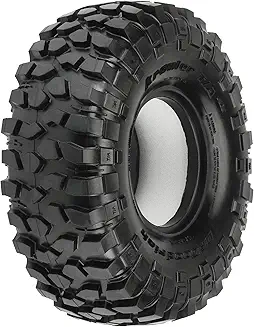
Falken Wildpeak AT3W
Pros
- Noticeably better grip on wet pavement versus the KO2 — the specific performance difference r/Offroad comparison threads document, produced by the Wildpeak AT3W’s 3D Canyon Sipes and silica tread compound that maintain wet traction margins that the KO2’s compound reaches its limits at on sustained wet highway driving
- 55,000-mile treadwear warranty at a per-tire cost $20–$50 below the KO2 — the budget advantage that becomes more significant when replacing all five tires on a Rubicon including the matching full-size spare, where the total set savings approach $100–$250 that can fund trail accessories
- 3PMSF severe winter certification alongside upper sidewall tread extending off-road grip — the dual-season capability that Rubicon owners in northern states document as producing deep snow performance that surprises drivers switching from KO2s, particularly in the early-season snow conditions that Pacific Northwest trail access roads encounter before snowpack fully develops
Cons
- Slightly less aggressive sidewall lug design than the KO2 for technical rock crawling — the specific sidewall traction difference that matters when the Rubicon’s lockers allow it to contact rock faces at angles where sidewall grip contributes to forward progress, making the Wildpeak the less appropriate choice for Rubicon owners who run technical rock gardens rather than maintained trail surfaces
- Not as widely available in 315/70R17 for Rubicon X Xtreme Recon owners — the sizing gap that forces Rubicon X owners to either confirm Wildpeak availability in their specific size before purchasing or accept sourcing from a limited retailer network compared to the KO2’s near-universal availability
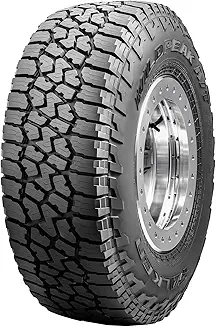
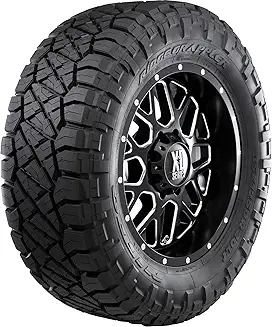
Nitto Ridge Grappler
Pros
- Verified on the actual Rubicon Trail — not manufacturer marketing, but DrivingLine’s documented test of a 2021 Rubicon 392 running 38-inch Ridge Grapplers through five days of technical boulder and creek crossing terrain without performance failures, which is the specific real-world validation no other tire in this comparison can claim with this level of documentation
- Available in 38×12.50R17 for Rubicons on stock 17-inch wheels — the extended sizing that allows Rubicon owners to run aggressive 38-inch tires without purchasing aftermarket wheels, making this the most practical path to larger rubber for owners who want maximum trail capability without the additional cost of a wheel upgrade
- Hybrid AT/MT alternating shoulder groove pattern for mud self-cleaning alongside lower road noise than dedicated mud-terrain alternatives — the specific noise-capability balance that Rubicon daily commuters who run serious technical trails describe as the reason they chose this tire over a mud-terrain that would make highway commuting uncomfortable five days per week
Cons
- Highest per-tire price in this comparison — the premium that DrivingLine’s trail validation and the hybrid tread engineering commands, which becomes most significant when purchasing all five tires for a Rubicon with matching full-size spare and makes the total set cost meaningfully higher than the KO2 or Wildpeak alternatives
- Not ideal if 90%+ of driving is highway — the aggressive void ratio that produces trail capability generates more highway noise than the Toyo Open Country AT III or even the KO2 on sustained motorway speeds, making this tire the wrong choice for Rubicon owners whose trail use is infrequent and daily commuting is the primary use case
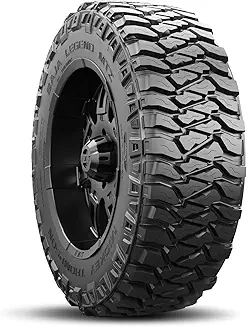
Mickey Thompson Baja Boss A/T
Pros
- JLWranglerForums’ 20,000-mile review measured 65 dB highway road noise on a lifted Wrangler with a soft top — the quietest hybrid aggressive tire in this comparison by a significant margin, and the specific acoustic measurement that makes this the correct tire for Rubicon owners who cover long highway distances between trail destinations and refuse to accept the cabin fatigue that louder alternatives generate
- Verified 40,000+ mile real-world tread life on a set of 35×12.50 Baja Boss ATs across sharp Arizona desert rock with zero flats — the specific long-term durability documentation that JLWranglerForums provides and that makes this the strongest total ownership cost argument for high-mileage Rubicon overlanders when calculated across the tire’s documented lifespan with consistent five-tire rotation
- 3PMSF severe winter rating alongside Mickey Thompson’s BAJA ATZP3 compound blended with Boss M/T construction — the premium hybrid engineering that GearJunkie’s review confirms produces excellent snow and ice traction alongside the off-road compound’s terrain grip, covering the Rubicon’s complete operating environment in a single tire set
Cons
- Tread life decreases significantly without consistent five-tire rotation at 5,000–6,000 miles — JLWranglerForums specifically flags this pattern, where the aggressive compound that produces the terrain grip advantage wears unevenly when rotation is delayed, making the 40,000-mile durability claim conditional on maintenance discipline that not all Rubicon owners maintain consistently
- Heavier compound than standard AT alternatives places more strain on wheel bearings over sustained high-mileage use — the long-term wear concern that Rubicon owners who cover 20,000+ annual miles should factor into total ownership cost calculations alongside the per-tire price premium
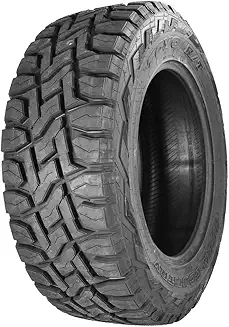
Toyo Open Country A/T III
Pros
- 65,000-mile treadwear warranty in P-metric sizing — the longest warranty in this comparison, backed by 4.6 stars across 370+ verified Walmart reviews in P285/70R17 (the standard Rubicon fitment) and Expedition Portal’s documented field test that produced zero road noise in the Rubicon’s highway sections between trail access roads
- Significant wet braking improvement over the previous Open Country AT/II generation confirmed by GearJunkie’s review — the redesigned compound and additional biting edges that make the AT/III’s wet safety margins meaningfully better than its predecessor, which matters for Rubicon commuters who use the vehicle in rain before and after weekend trail sessions
- Near-silent highway ride confirmed across multiple Jeep-specific long-term tests — the specific acoustic characteristic that Expedition Portal’s reviewer described as the Jeep’s body being louder than the tires on the highway, making this the correct recommendation for Rubicon owners whose primary ownership experience is daily commuting rather than rock crawling
Cons
- Not the right tire for serious rock crawling or deep mud — the softer sidewall construction and less aggressive void ratio that produce the quiet highway character and long tread life create real limitations on the Rubicon’s technical terrain capability that the KO2 and Ridge Grappler’s more aggressive designs address, making this tire incompatible with Rubicon owners who use the vehicle’s lockers on boulder fields regularly
- Softer sidewall construction makes it more vulnerable to puncture on sharp trail edges — the E-load vs. C-load sidewall difference that matters specifically when the Rubicon’s lockers allow it to contact trail obstacles at angles where the tire’s sidewall takes the load, a risk the KO2’s 3-ply CoreGard construction was specifically designed to absorb
🤔 Can’t Decide?
Our Top 2 Picks — Head to Head
Both are excellent. Here’s how to choose between them.
- 3-ply CoreGard sidewall is the factory OEM choice on the Rubicon — the most important single differentiator for trail use, documented by r/Wrangler members as preventing sidewall cuts on sharp rock edges that C-load alternatives sustain on the same terrain
- 15/32″ tread depth at new in E-load variant alongside 50,000-mile warranty and Made in USA — the combination of depth, durability, and national availability that makes this the most accessible and verifiable recommendation for Rubicon owners across all usage profiles
- LT285/70R17 and LT315/70R17 availability covers both standard Rubicon and Rubicon X Xtreme Recon Package — the full Rubicon lineup sizing that the Falken Wildpeak AT3W cannot guarantee in the 315/70R17 size for Rubicon X owners
- Outperforms the KO2 in wet-road traction according to r/Offroad comparative discussions — the specific safety advantage that matters daily for Rubicon owners in rainy climates who spend more time on wet pavement than dry rock
- $20–$50 lower per-tire cost with a 55,000-mile warranty — the total set savings that approach $100–$250 when replacing all five Rubicon tires including the matching spare, meaningful for owners who calculate total cost rather than sticker price
- 3PMSF severe winter certification with deep snow performance that surprises KO2 switchers — the specific winter advantage r/Wrangler members in northern states document after switching, particularly on wet-snow trail access roads where the Wildpeak’s compound maintains grip margins that the KO2 loses
How to Choose the Right Tires for Your Jeep Wrangler Rubicon
Six factors specific to the Rubicon’s purpose-built trail platform.
Know Your Exact Rubicon Size
The standard Rubicon and Unlimited Rubicon run LT285/70R17 (approximately 33 inches diameter). The Rubicon X with the Xtreme Recon Tire Package uses 315/70R17 (approximately 35 inches). Always confirm on your door jamb sticker before ordering — these sizes are not interchangeable, and the 315/70R17 is significantly less widely available than the 285/70R17, particularly for budget-tier options like the Falken Wildpeak AT3W.
E-Load (10-Ply) vs. C-Load (6-Ply) for Trail Use
The Rubicon’s Dana 44 axles, factory lockers, and approach angles allow the vehicle to contact rock faces and trail edges at angles where the tire’s sidewall takes direct load. An E-load (10-ply) construction like the KO2’s CoreGard technology resists the sidewall punctures that result from this contact. A C-load tire saves money upfront but creates a sidewall failure risk on the specific terrain the Rubicon is designed to access. Always run E-load on a Rubicon that actually goes off-road.
Plan for a Five-Tire Rotation
The Rubicon carries a full-size spare on a matching wheel. A five-tire rotation schedule extends tread life significantly — multiple JLWranglerForums long-term owners document this specifically with the Baja Boss AT and KO2. Rotating at 5,000–6,000 miles across all five positions distributes wear evenly and makes the warranty mileage claims realistic rather than theoretical. Skip the spare in rotation and you lose roughly 20% of the potential tread life from your set.
Lift Requirements When Sizing Up
A 33-inch tire (285/70R17) fits a stock Rubicon without any lift modification. Moving to 35-inch tires typically requires a 2-inch leveling kit minimum to prevent rubbing at full steering lock. Running 37-inch or larger tires requires 2.5–3.5 inches of lift and may require fender trimming. The Ridge Grappler’s availability in 38×12.50R17 on stock 17-inch wheels is specifically notable — it offers one of the most aggressive tires available without requiring aftermarket wheels.
TPMS Recalibration When Sizing Up
Moving from stock 285/70R17 to 315/70R17 on a JL or JLU Rubicon triggers TPMS system conflicts that require dealer or specialist recalibration. A persistent TPMS warning after sizing up almost always indicates a calibration issue rather than a tire defect. Budget $50–$100 for recalibration at a qualified shop when stepping up to the Rubicon X’s 315/70R17 size from the standard 285/70R17 fitment.
3PMSF Rating for Rubicon Winter Access Roads
All five tires in this comparison carry the 3PMSF Three-Peak Mountain Snowflake certification, meaning each passed the ASTM F1805 external standardized snow traction test. This matters for Rubicon owners who use forest service and mountain access roads in winter conditions — the M+S designation on cheaper alternatives is self-certified with no external test requirement and does not guarantee the snow traction that the Rubicon’s technical terrain access routes require in cold months.
✅ Pro Tips
Quick Buying Checklist Before You Order
Always choose the E-load (10-ply) variant for trail use — the C-load version of any tire saves money but creates sidewall puncture risk on the sharp rock edges the Rubicon’s lockers allow it to contact. The price difference is $15–$25 per tire; the consequence of a sidewall failure on a trail is far more expensive.
Run a five-tire rotation including the matching full-size spare at every 5,000–6,000 miles. JLWranglerForums’ long-term Baja Boss AT review specifically credits this practice for reaching 40,000+ miles — skipping the spare rotation loses roughly 20% of total tread life from the set.
Measure your clearance before ordering tires larger than 285/70R17 — 35-inch tires require at minimum a 2-inch leveling kit to prevent rubbing at full steering lock. Ordering 315s without confirming clearance leads to fender contact and potential tire damage within the first day of driving.
Budget for TPMS recalibration at a qualified shop whenever you change tire size — moving from 285/70R17 to 315/70R17 on a JL or JLU triggers system conflicts. A persistent dashboard warning after a size change is almost always a calibration issue, not a defective tire.
Frequently Asked Questions
What size tires fit the Jeep Wrangler Rubicon stock?
The standard Rubicon and Unlimited Rubicon use LT285/70R17 tires on factory 17-inch wheels. The Rubicon X with the Xtreme Recon Tire Package uses 315/70R17. Both the four-cylinder and V6 Rubicon trims share the 285/70R17 sizing. Always verify your exact size on the door jamb sticker before purchasing — the 315/70R17 is significantly less available than the 285/70R17 across most tire brands in this comparison.
Are all-terrain tires good enough for the actual Rubicon Trail?
Yes — with the right tire. The BFGoodrich KO2 and Nitto Ridge Grappler have both been documented on the actual Rubicon Trail by verified sources. The critical requirement is an E-load (10-ply) sidewall to survive rocky technical terrain. A standard C-load all-terrain tire is a genuine sidewall puncture risk on sharp rock edges that the Rubicon’s approach angles allow it to contact directly.
How long do tires typically last on a Jeep Wrangler Rubicon?
Expect 40,000 to 65,000 miles depending on tire model, terrain use, and rotation discipline. The Toyo Open Country AT III is warranted to 65,000 miles. JLWranglerForums members document 40,000-plus miles on the Mickey Thompson Baja Boss AT and BFGoodrich KO2 with consistent five-tire rotation. Heavy technical off-road use reduces tread life significantly — trail sessions accelerate wear faster than highway miles.
Do larger tires affect the Rubicon’s fuel economy?
Yes. Heavier E-load tires reduce fuel economy measurably. The Toyo Open Country AT III showed approximately 1.5 MPG reduction in one long-term review. Heavier hybrid tires like the Ridge Grappler and Baja Boss AT can reduce highway efficiency by 2 to 3 MPG. This is a normal trade-off for the sidewall strength and terrain capability that Rubicon-specific trail use demands.
Is it worth upgrading from stock KO2s on a Rubicon?
If your Rubicon came with KO2s from the factory, they are already a strong foundation. Upgrading makes sense if you need better wet-weather performance (switch to Wildpeak AT3W), mud-terrain aggression with daily manners (switch to Ridge Grappler), or quieter highway commuting (switch to Toyo AT III). Replacing worn KO2s with new KO2s is always a safe and proven choice for trail-focused Rubicon owners.
Can I mix tire brands on a Jeep Rubicon?
Technically possible but not recommended. Mismatched tires affect handling balance, ABS calibration, and 4WD transfer case performance — Jeep’s full-time and part-time transfer case options are sensitive to tread depth differences across axles. Different tread depths trigger driveline binding in 4-high and 4-low. Always run four matching tires, five if you rotate the full-size spare, with identical tread depth across all positions.
Why does the Rubicon need E-load tires instead of C-load?
The Rubicon’s factory lockers, Dana 44 axles, and rock rails allow it to contact trail obstacles at angles where the tire’s sidewall takes direct load — a scenario that happens regularly on boulder fields and rock ledges. E-load (10-ply) construction resists sidewall punctures in these contacts. C-load (6-ply) tires are engineered for pavement loads, not the lateral sidewall compression that technical trail driving generates on a Rubicon.
🏆 Final Verdict
Our Top Jeep Wrangler Rubicon Tire Recommendations for 2026
The BFGoodrich All-Terrain T/A KO2 earns the top position for most Rubicon owners — its factory OEM status, 3-ply CoreGard sidewall, 15/32″ tread depth, and 3PMSF winter certification make it the most proven tire for a platform purpose-built for technical terrain that the Rubicon’s lockers and Dana 44 axles actually access. Rubicon owners who run serious technical trails multiple times per year and need mud-terrain aggression with daily-driver noise control should choose the Nitto Ridge Grappler — DrivingLine’s verified Rubicon Trail documentation makes it the only tire in this comparison with the specific trail validation that a serious Rubicon owner should weight. Budget-focused Rubicon owners in wet or snowy climates should evaluate the Falken Wildpeak AT3W, which outperforms the KO2 in wet conditions at a $20–$50 lower per-tire cost with a 55,000-mile warranty.