
After cross-referencing owner feedback from r/mercedes_benz, MBWorld.org forums, Amazon review patterns, Tire Rack ratings, and independent test results from Auto Express and Tyre Reviews — evaluated against six of the most commonly purchased tires in the C300’s primary sizes (225/40R18, 255/35R18, 225/45R18, and 225/40R19) — the clearest finding is this: most C300 owners replacing tires are not chasing performance, they’re escaping their OEM run-flats. The most common complaint across every forum is that factory run-flat tires sacrifice too much ride quality, and the moment owners switch to standard construction, the car transforms.
What separates this list from a generic luxury sedan tire roundup is the C300-specific context that most comparisons ignore. The C300’s low-profile tire sizes (35 and 40 series) accelerate wear on heavier variants. Staggered fitments on Sport trims mean front and rear tires cannot be rotated. And switching from run-flat to standard construction requires carrying an inflation kit — something most first-time C300 tire buyers don’t plan for until they’re already stranded. This comparison addresses all of those realities before recommending a single product.
The Michelin Pilot Sport 4S delivers the strongest overall driving experience for the C300 — Mercedes OEM homologation, exceptional dry and wet grip, and a steering feel that matches the car’s precision chassis tuning. For daily drivers in mixed weather who want one tire year-round without a performance compromise, the Continental ExtremeContact DWS06 Plus offers class-leading wet braking with a 50,000-mile warranty. C300 owners replacing Pirelli OEM tires who want zero fitment complexity should look at the Pirelli P Zero PZ4 Luxury with the optional PNCS noise-cancelling foam insert.
Our Top 6 Mercedes C300 Tire Rankings
- Michelin Pilot Sport 4S — Best Premium / Overall
- Continental ExtremeContact DWS06 Plus — Best All-Season Value
- Bridgestone Potenza Sport — Best Wet Performance
- Pirelli P Zero PZ4 Luxury — Best OEM Replacement
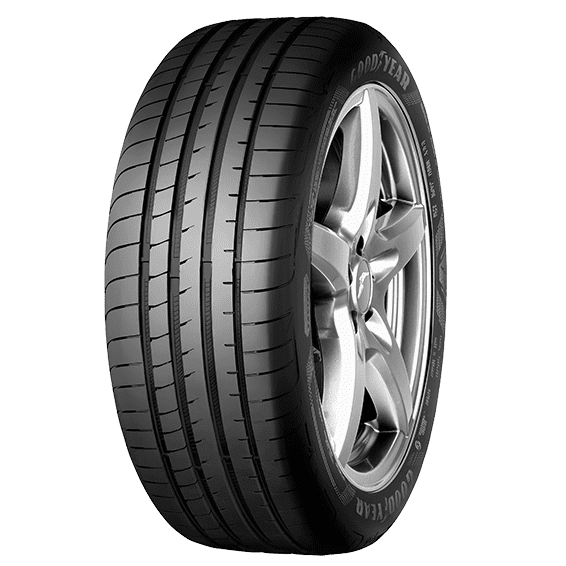
- Goodyear Eagle F1 Asymmetric 5 — Best Budget Performance
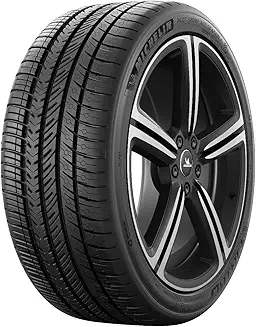
- Michelin Pilot Sport 4 A/S — Best All-Season Daily Driver
Best Mercedes C300 Tires — Compared
All six evaluated across type, UTQG treadwear rating, and overall score.
| # | Tire | Type | UTQG | Best For | Score | |
|---|---|---|---|---|---|---|
| 1 | Michelin Pilot Sport 4S Editor’s Choice | Summer UHP | 300AA | Premium / Performance | 4.8 | See Latest Price |
| 2 | Continental ExtremeContact DWS06 Plus Top Pick | UHP All-Season | 540AA | All-Season / Value | 4.7 | See Latest Price |
| 3 | Bridgestone Potenza Sport | Summer UHP | 280AA | Wet Performance | 4.7 | See Latest Price |
| 4 | Pirelli P Zero PZ4 Luxury | Summer UHP | 300AA | OEM Replacement | 4.6 | See Latest Price |
| 5 | Goodyear Eagle F1 Asymmetric 5 Budget Pick | Summer UHP | 340AA | Budget Performance | 4.6 | See Latest Price |
| 6 | Michelin Pilot Sport 4 A/S | UHP All-Season | 500AA | Year-Round Daily | 4.7 | See Latest Price |
Detailed Reviews
Full breakdown of each tire — ratings, pros, cons, and our expert verdict.
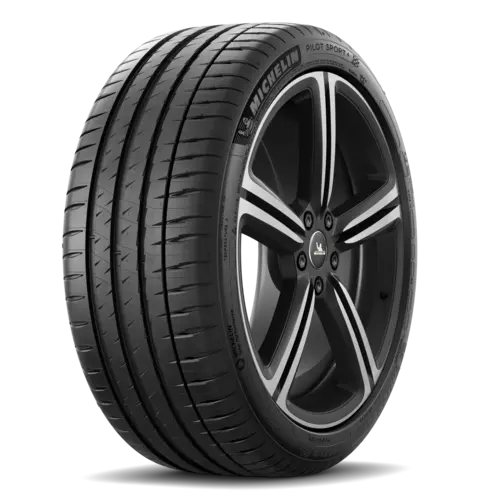
Michelin Pilot Sport 4S
Pros
- Mercedes-Benz MO homologation — this tire was engineered alongside C-Class models, not merely fitted after the fact, which means the compound hardness and sidewall stiffness match the C300’s suspension spring rates
- Dual-compound tread construction: stiffer outer shoulder for high-load cornering, softer inner for wet road grip — C300 owners switching from OEM Pirelli run-flats consistently describe an immediate and dramatic improvement in steering precision
- UTQG 300AA rating provides adequate tread life for a performance summer tire, with multiple owners reporting 25,000–35,000 miles on C300 models with regular front-to-rear rotation where size permits
Cons
- Tread wears faster on heavier C300 4MATIC variants than on rear-wheel-drive models — the added weight of the all-wheel-drive system accelerates shoulder wear on staggered fitments where rotation is impossible
- Four-tire pricing in 255/35R18 or 255/35R19 configurations regularly exceeds $1,200 — the highest cost-per-set of any tire in this comparison
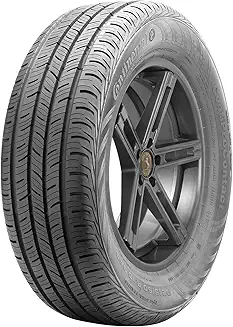
Continental ExtremeContact DWS06 Plus
Pros
- QuickView DWS wear indicators stamped on the tread surface show when wet (W) and snow (S) traction thresholds have been reached — the only tire in this C300 comparison that communicates remaining traction capability visibly without measuring depth
- Continental’s 2021 reformulation reduced wet braking distances by 9% over the original DWS06 — Tire Rack independent testing places it at or near the top of the UHP all-season category for stopping performance on rain-soaked pavement
- 50,000-mile treadwear warranty is the strongest coverage in this comparison, providing genuine cost-per-mile protection for high-mileage C300 commuters who would otherwise be replacing summer tires every 2–3 years
Cons
- Dry steering feedback is noticeably more neutral than the Michelin Pilot Sport 4S — C300 drivers who specifically miss the OEM run-flat’s taut, communicative feel will find the DWS06 Plus slightly muted through corners
- Standard construction with no run-flat variant — switching from OEM run-flats to the DWS06 Plus requires purchasing and carrying a tire inflation and repair kit, since the C300 has no spare tire well
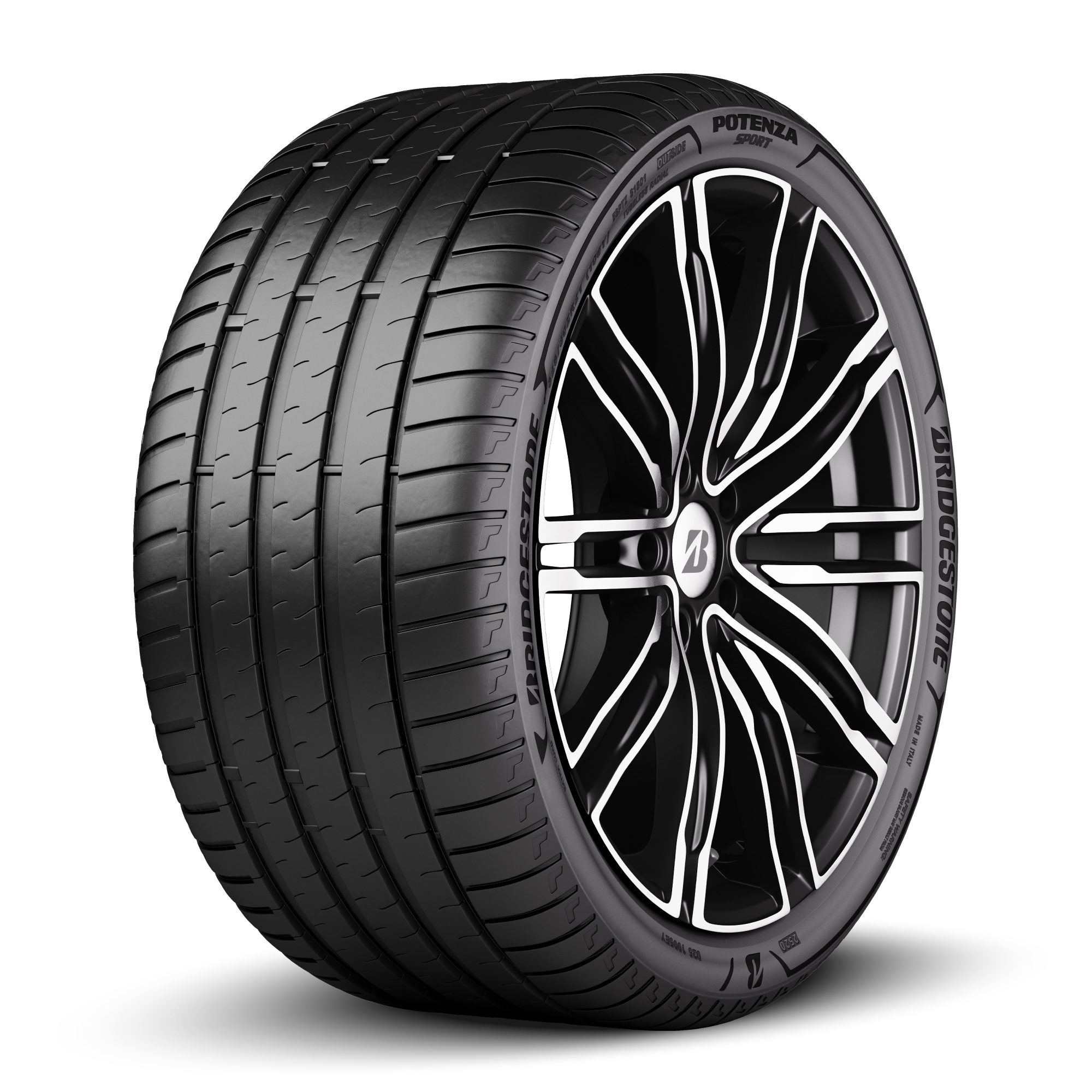
Bridgestone Potenza Sport
Pros
- Ranked first in wet braking in the 2024 Auto Express comparative test — a 100-point score that beat both the Michelin Pilot Sport 4S and Pirelli P Zero in the same test conditions, a non-obvious result given Bridgestone’s lower profile in the C300 community
- Asymmetric tread with solid center rib delivers noticeably sharper steering weight and precision than the Continental DWS06 Plus — C300 drivers on Reddit specifically describe it as the tire that “wakes up” the car’s chassis response
- Priced meaningfully below the Michelin Pilot Sport 4S in most C300-compatible sizes, making it a compelling wet-climate alternative for drivers who can’t justify the full PS4S premium
Cons
- Summer-only construction — compound hardens and loses grip at temperatures below 7°C (45°F), making this tire genuinely unsafe in cold climates and a liability on winter mountain passes regardless of how good it performs in rain
- UTQG 280 treadwear rating is the lowest in this comparison — C300 4MATIC owners report earlier-than-expected replacement timelines due to the combined effect of AWD weight and the tire’s soft compound
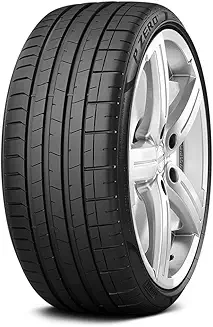
Pirelli P Zero PZ4 Luxury
Pros
- Mercedes-Benz MO/MO1 homologation ensures the compound stiffness, sidewall construction, and contact patch geometry were validated against C300 suspension tuning — there is no fitment uncertainty, no suspension recalibration, and no ABS system relearning period
- PNCS (Pirelli Noise Cancelling System) foam insert available in select sizes — MBWorld.org owners confirm the foam version delivers a measurably quieter cabin at motorway speeds compared to the standard version, a meaningful improvement for C300 owners who removed run-flats specifically to reduce noise
- Available as both standard and run-flat (RFT) variants, allowing C300 owners to stay on run-flat construction if they don’t want to carry an inflation kit or if the vehicle was specified without run-flat monitoring
Cons
- Standard (non-foam) version wet grip trails the Michelin Pilot Sport 4S and Continental DWS06 Plus at equivalent price points — paying OEM prices for below-OEM wet-weather performance is a real trade-off that forum owners frequently flag
- Niche sizes (especially 255/35R18 and 255/35R19) are intermittently out of stock at major retailers — C300 owners on staggered fitments sometimes wait weeks for rear-axle sizes, which delays replacements done in pairs
Goodyear Eagle F1 Asymmetric 5
Pros
- 93% dry grip score in independent testing — the highest dry grip rating among C300-compatible options in this comparison, which means the Asymmetric 5 delivers more lateral grip at the limit than either the Pirelli P Zero PZ4 or the Continental DWS06 Plus
- UTQG 340 treadwear rating provides better longevity than both the Potenza Sport (280) and the Pilot Sport 4S (300) — giving budget-focused C300 owners a meaningful per-mile cost advantage over competing summer tires
- ActiveBraking Technology — tread blocks lean forward under braking force to increase contact patch area — produces noticeably shorter dry stopping distances that Reddit users consistently describe as “confidence-inspiring” on the C300’s sport-tuned brakes
Cons
- Road noise increases noticeably as tread depth drops below 50% — C300 owners who kept OEM Pirelli run-flats specifically for cabin refinement will find the noise degradation over the tire’s lifespan counterproductive to that goal
- Wet braking, while above average, falls measurably short of the Michelin Pilot Sport 4S and Bridgestone Potenza Sport — drivers in wet climates who push the car hard in the rain will notice the gap in high-demand situations
Michelin Pilot Sport 4 A/S
Pros
- UTQG 500 treadwear rating is the highest in this entire comparison — C300 4MATIC owners specifically benefit, as the AWD system’s added weight accelerates wear on lower-rated tires, and the PS4 A/S’s harder compound resists that wear pattern significantly better than the summer alternatives
- Helio+ Technology maintains compound pliability below 45°F where summer tire compounds stiffen and lose grip — the critical difference between a tire that’s technically legal and one that’s actually safe in cold weather
- C300 owners who switched from OEM run-flats to the PS4 A/S consistently describe improved ride comfort and reduced cabin noise — a meaningful quality-of-life upgrade on a daily driver with a hard sport suspension tune
Cons
- Dry steering feedback is perceptibly softer than the Pilot Sport 4S — C300 drivers who specifically value the car’s chassis sharpness over comfort will notice the less communicative feel through tight corners and highway on-ramps
- Heavier sidewall construction than pure summer alternatives slightly increases unsprung mass, which is detectable in ride feel on the C300’s firm sport suspension — most owners accept the trade-off, but it exists
🤔 Can’t Decide?
Our Top 2 Picks — Head to Head
Both are excellent C300 tire choices. The decision comes down to your climate and priorities.
- Mercedes MO homologation — compound validated against C-Class suspension geometry at the factory
- Best steering feel and dry cornering confidence of any tire in this comparison
- Dual-compound tread balances summer grip and wet performance in a single construction
- 50,000-mile treadwear warranty — the strongest cost-per-mile protection in this comparison
- DWS wear indicators show remaining traction capability in wet and snow conditions visibly
- Handles four seasons confidently — wet highways, light snow, and dry summer roads without switching tires
How to Choose the Right Tire for Your Mercedes C300
Six factors specific to the C300’s platform, staggered fitment, and run-flat heritage.
Confirm Staggered Fitment
Many C300 Sport trims use different front and rear tire sizes — typically 225/40R18 front and 255/35R18 rear. Staggered fitments cannot be rotated between axles, which means the rear tires wear independently of the fronts. Always order in axle pairs rather than a full set of four identical tires, and confirm your specific trim’s front and rear sizes from the door jamb sticker before ordering.
Run-Flat vs. Standard
Factory C300 models use run-flat tires (RFT) that allow 50-mile driving after puncture. Switching to standard construction improves ride quality and reduces noise, but the C300 carries no spare tire. Any driver making this switch must purchase and carry a tire inflation and repair kit in the trunk — without one, a puncture on a standard tire leaves the car immobile.
Summer vs. All-Season for Your Climate
Summer tires like the Pilot Sport 4S and Potenza Sport lose grip below 7°C (45°F) as the compound stiffens. This is a genuine safety concern — not just a performance issue. Drivers in cold climates or anyone crossing mountain passes in shoulder seasons must choose an all-season or all-weather tire. The Continental DWS06 Plus and Michelin PS4 A/S are the correct choices for mixed-season use.
UTQG Treadwear on a Heavy Sedan
The C300 weighs approximately 3,600–3,900 lbs depending on variant — heavier than most equivalent sport sedans. This weight accelerates tire wear, particularly on low-profile 35 and 40 series sizes. Tires with UTQG ratings below 300 wear faster on this car than manufacturers’ advertised averages suggest. For C300 4MATIC owners, a minimum UTQG of 340 is advisable for reasonable cost-per-mile economics.
MO Homologation Explained
An “MO” or “MO1” marking on the tire sidewall indicates Mercedes-Benz OEM approval — the tire was tested against specific Mercedes suspension geometry, not just a general performance standard. Non-MO tires from Michelin, Continental, and Goodyear perform excellently in C300-compatible sizes, but MO variants carry the explicit validation of the engineers who designed the car’s handling behavior.
Wheel Alignment After Installation
The C300’s sport suspension is known to wear inside tire edges unevenly when alignment drifts from spec — a pattern that accelerates on low-profile tires. A four-wheel alignment check immediately after new tire installation is not optional on a C300 that has covered significant mileage. Skipping it on a car with even minor camber drift can destroy the inner shoulder of a new premium tire within 10,000 miles.
✅ Pro Tips
Quick Checklist Before You Order C300 Tires
Check your door jamb sticker for both front and rear sizes separately — many C300 Sport trims run a staggered fitment that cannot be rotated, and ordering four identical tires for a staggered car is a common and expensive mistake.
If switching from OEM run-flats to standard tires, purchase a tire inflation and repair kit before driving the car — the C300 has no spare tire well, and a standard tire puncture without a kit leaves you stranded regardless of roadside coverage.
Book a four-wheel alignment check at the same appointment as your tire installation — the C300’s suspension geometry wears inner tire edges aggressively when alignment drifts, and new premium tires reveal this problem within the first 10,000 miles.
If your C300 uses a square fitment (same size front and rear), set a 5,000-mile rotation schedule immediately — the front axle on a rear-wheel-drive C300 steers and brakes but doesn’t drive, creating different wear patterns that rotation balances out.
Frequently Asked Questions
What tire size does the Mercedes C300 use?
The C300 uses several sizes depending on year and trim. Common configurations include 225/45R17, 225/40R18 front with 255/35R18 rear (staggered), 225/45R18, and 225/40R19 front with 255/35R19 rear on newer Sport trims. Always verify both front and rear sizes from the door jamb sticker — many C300 Sport trims use staggered fitments that cannot be confirmed from online guides alone.
Can I replace run-flat tires on my Mercedes C300 with regular tires?
Yes — and most C300 owners who do this report significant improvements in ride comfort and noise reduction. However, the C300 has no spare tire well, so switching to standard construction requires carrying a tire inflation and repair kit in the trunk. Confirm your TPMS system accepts non-run-flat monitoring before making the change.
How long do tires typically last on a Mercedes C300?
Most performance summer tires last 25,000–40,000 miles on the C300 depending on the UTQG rating and variant weight. The 4MATIC AWD version is heavier and wears tires faster. All-season options like the Michelin Pilot Sport 4 A/S (UTQG 500) or Continental DWS06 Plus (UTQG 540) consistently outlast summer alternatives in real-world C300 owner reports.
Which tire performs best in wet conditions for the C300?
The Bridgestone Potenza Sport ranked first in wet braking in the 2024 Auto Express comparative test at 100 points. The Continental ExtremeContact DWS06 Plus also delivers class-leading wet performance with the added benefit of all-season capability, making it the stronger year-round choice for C300 drivers in rain-heavy climates who can’t use a summer-only tire safely.
Do new aftermarket tires affect my Mercedes C300 warranty?
Replacing OEM tires with aftermarket options does not void the C300 vehicle warranty under normal circumstances. Installing incorrect sizes or mismatched load ratings may affect warranty claims related to suspension or drivetrain components. Using OEM-specified sizes and at minimum the factory load and speed ratings keeps any potential warranty dispute off the table.
Is the Michelin Pilot Sport 4S worth the premium price for the C300?
For C300 drivers who prioritize the car’s steering feel and chassis precision, yes. The MO homologation and dual-compound tread deliver a driving experience that cheaper alternatives measurably don’t match. For daily commuters who rarely explore the car’s handling limits, the Continental DWS06 Plus or Goodyear Eagle F1 Asymmetric 5 close most of the performance gap at a significantly lower per-tire cost.
Can I rotate tires on a staggered fitment Mercedes C300?
No. Staggered fitments — where front and rear tires are different widths — cannot be rotated between axles. The rear tires will wear independently and typically need replacement before the fronts on rear-wheel-drive C300 variants, and before the rears on 4MATIC AWD variants. Always replace in axle pairs, and account for the asymmetric replacement schedule when budgeting for tire costs.
🏆 Final Verdict
Our Top Recommendations for 2026
The Michelin Pilot Sport 4S is the strongest overall tire for the C300 — Mercedes MO homologation, best-in-class steering precision, and genuine wet confidence make it the right call for performance-focused drivers in temperate climates. Daily commuters who cover four seasons and want one tire backed by a real mileage warranty should choose the Continental ExtremeContact DWS06 Plus, which combines class-leading wet braking with 50,000-mile coverage. C300 owners on a tighter budget who drive primarily in dry conditions will find the Goodyear Eagle F1 Asymmetric 5 delivers the highest dry grip score in this comparison at a meaningfully lower cost per tire.