After evaluating six leading tire models against real Mercedes E‑Class owner feedback and independent test data, one pattern emerged: the E‑Class punishes mediocre rubber in ways that show up in wet‑weather confidence and cabin refinement. This chassis was engineered around specific tire characteristics — get the wrong set and you sacrifice both ride quality and safety.
Most E‑Class drivers replace tires for one of three reasons: worn tread, declining wet grip, or a desire to improve road noise and comfort. The six tires below cover everything from AMG‑spec performance to high‑mileage touring, all validated against E‑Class fitment data and owner sentiment across forums and review platforms.
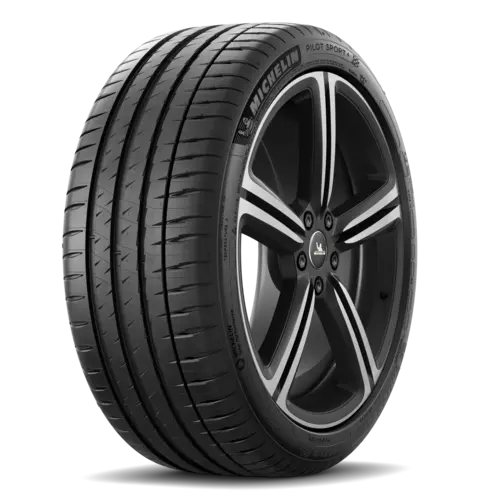
The Michelin Pilot Sport 4S is the best overall tire for the E‑Class in warm climates — co‑developed with Mercedes‑Benz engineers for precise handling and ride refinement. For year‑round driving with wet‑road safety, the Continental ExtremeContact DWS06 Plus leads the all‑season category with top‑rated wet braking and dependable light‑snow traction.
Our Top 6 Tire Rankings
- Michelin Pilot Sport 4S— Best Overall / Performance
- Continental ExtremeContact DWS06 Plus— Best All‑Season Safety
- Pirelli P Zero PZ4— Best Premium AMG Replacement
- Michelin Primacy Tour A/S— Best Comfort & Tread Life
- Bridgestone Potenza Sport— Best Wet‑Weather Performance
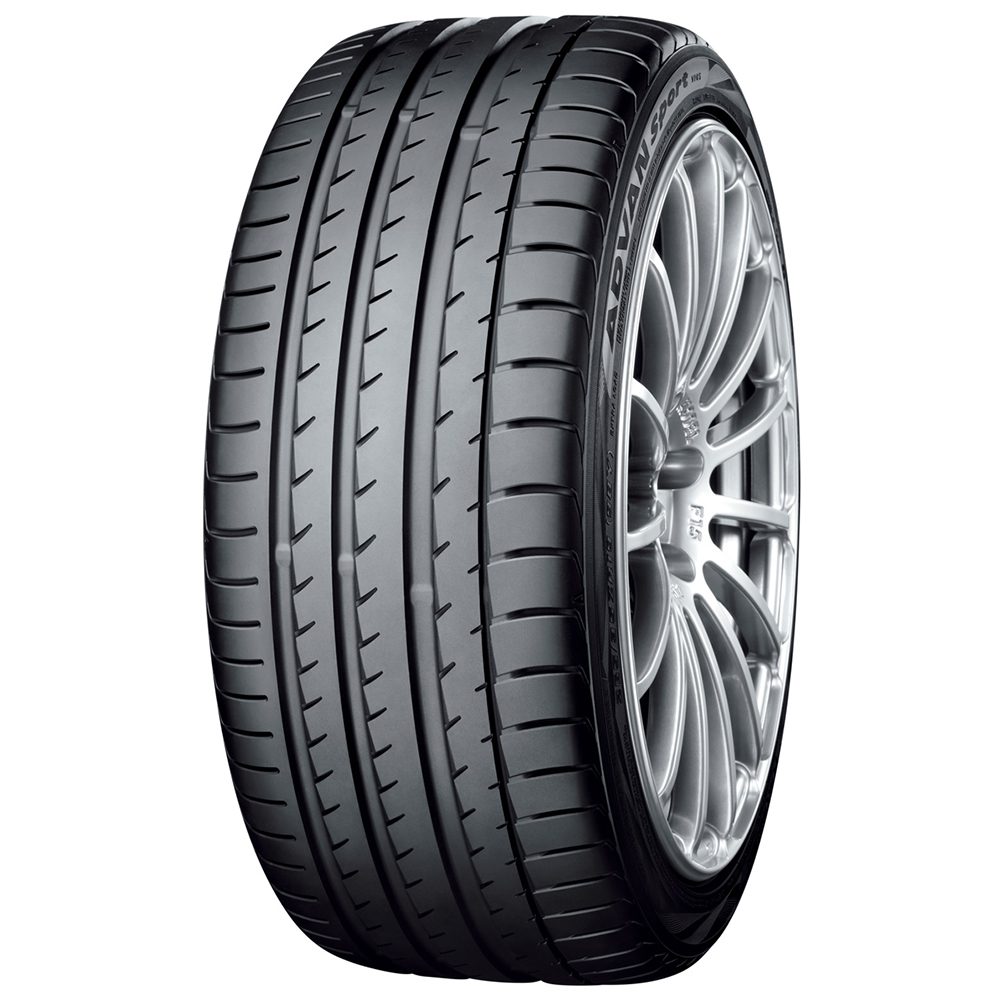
- Yokohama Advan Sport V105— Best Budget UHP
Best E‑Class Tires — Compared
All tires are available in common E‑Class sizes (245/40R18, 245/45R18, etc.) and verified for fitment.
| # | Product | Speed Rating | Type | Best For | Score | |
|---|---|---|---|---|---|---|
| 1 | Michelin Pilot Sport 4S Editor’s Choice | Y (186 mph) | Summer | Performance Handling | 4.9 | See Latest Price |
| 2 | Continental ExtremeContact DWS06 Plus Top Pick | W (168 mph) | All-Season | Year‑Round Wet Safety | 4.7 | See Latest Price |
| 3 | Pirelli P Zero PZ4 | Y (186 mph) | Summer | AMG OEM Fitment | 4.5 | See Latest Price |
| 4 | Michelin Primacy Tour A/S | H (130 mph) | All-Season Touring | Long Tread Life & Comfort | 4.6 | See Latest Price |
| 5 | Bridgestone Potenza Sport | Y (186 mph) | Summer | Wet‑Weather Braking | 4.7 | See Latest Price |
| 6 | Yokohama Advan Sport V105 Budget Pick | Y (186 mph) | Summer | Budget UHP | 4.4 | See Latest Price |
Detailed Reviews
Full breakdown of each tire — real‑world ratings, pros, cons, and who they’re truly for.
Michelin Pilot Sport 4S
- Co‑developed with Mercedes‑Benz engineers
- Exceptional dry grip and responsive steering
- Y‑rated for AMG E‑Class variants
- Summer‑only — dangerous below 7°C
- Tread life averages only 20‑30k miles
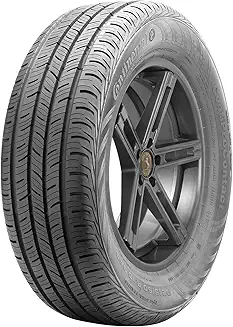
Continental ExtremeContact DWS06 Plus
- Best‑in‑class wet braking (Tire Rack verified)
- DWS wear indicators give visual safety warning
- Genuine all‑season capability with light snow traction
- Steering feedback softer than summer compounds
- Noise increases noticeably after 35k miles
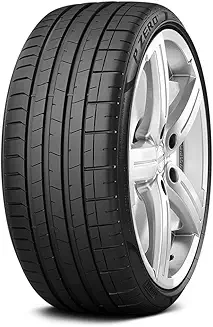
Pirelli P Zero PZ4
- OEM specification for AMG E‑Class models
- Class‑leading dry cornering scores
- Wide AMG‑specific staggered size availability
- Road noise above 60 mph is intrusive
- Tread life on AMG variants only 15‑25k miles
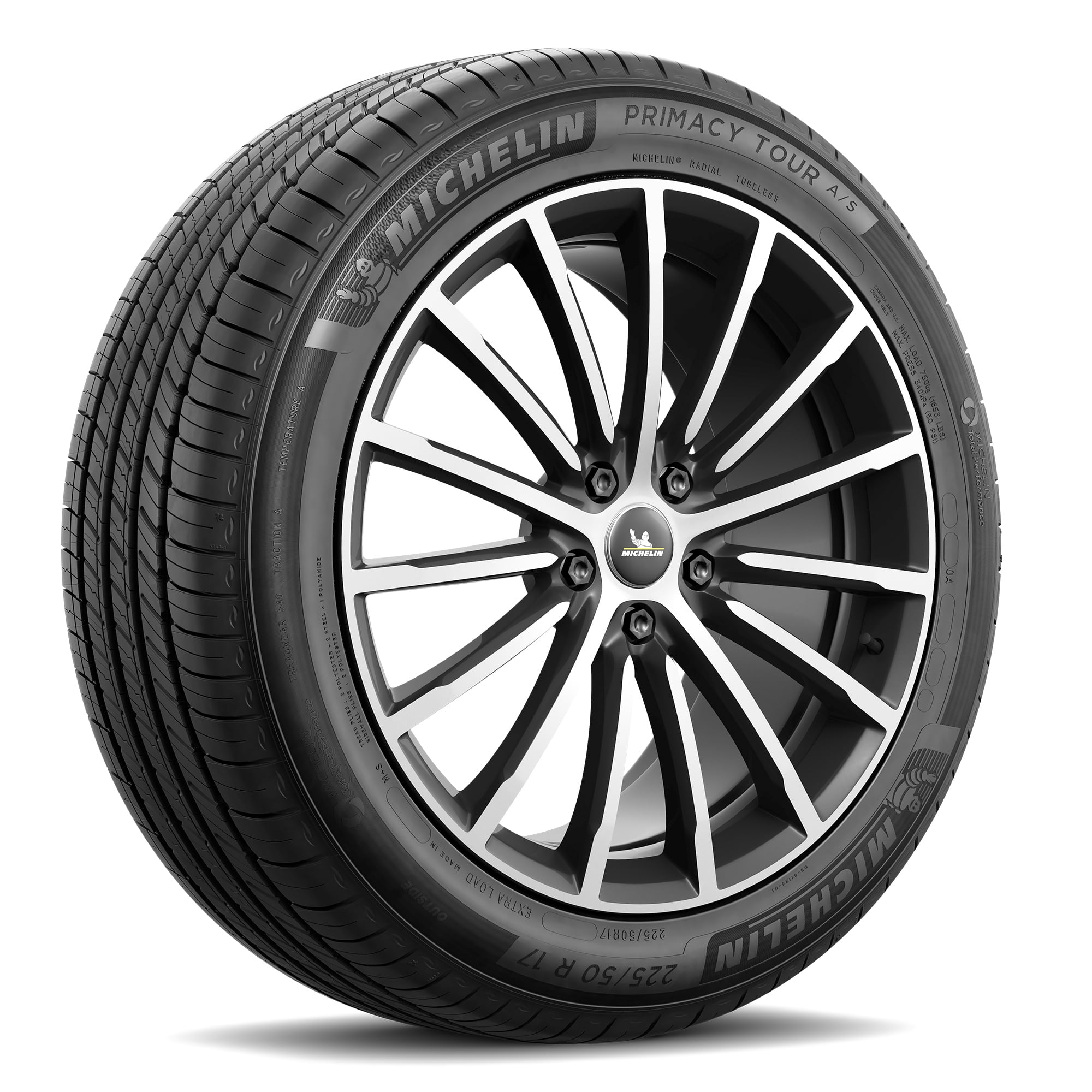
Michelin Primacy Tour A/S
- 55,000‑mile warranty with factory E‑Class validation
- Near‑silent highway ride praised across forums
- EverGrip compound maintains wet grip as tire wears
- Limit handling is relaxed — not for spirited driving
- AMG‑specific low‑profile sizes not fully covered
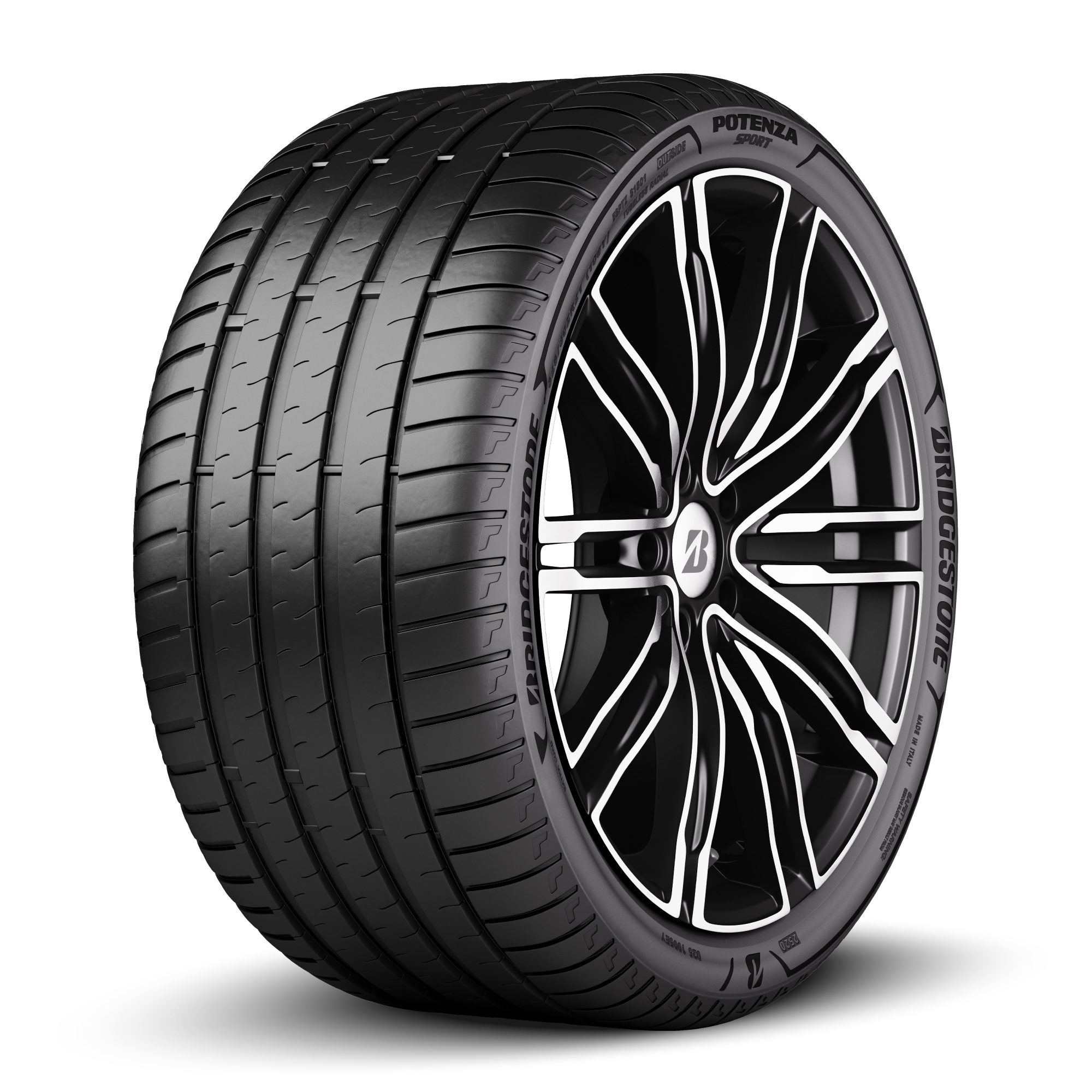
Bridgestone Potenza Sport
- No.1 in Auto Express wet braking test
- AMG‑homologated sizes available
- Strong dry lap performance alongside wet safety
- Above‑average road noise at highway speed
- Summer‑only compound — cold weather hazard
Yokohama Advan Sport V105
- Significantly cheaper than Michelin or Pirelli
- Quieter than most UHP competitors at speed
- Nürburgring‑developed tread architecture
- Wet braking is measurably longer than premium options
- AMG‑specific wide sizes not consistently available
Can’t Decide?
Our Top 2 Picks — Head to Head
Both are excellent. Here’s how to choose between them.
- Co‑developed with Mercedes‑Benz engineering
- Sharper steering feedback and dry cornering
- Y‑rated for AMG E‑Class variants
- Best‑in‑class wet braking all‑season
- DWS wear indicators for visual safety checks
- Genuine year‑round capability including light snow
How to Choose the Right E‑Class Tire
Six factors specific to the Mercedes E‑Class — not generic tire advice.
Read Your Door Jamb Sticker First
The E‑Class spans multiple generations with different sizes per trim. A 2016 E350 uses a different size than a 2023 E350. Never order by model name alone — the sticker shows exact size, load index, and minimum speed rating.
MOE Run‑Flat vs. Standard
Many E‑Class models came with MOE run‑flats. Switching to standard tires improves ride quality noticeably — but your car likely has no spare. Buy a portable inflator before you commit. This is a one‑time decision with real daily consequences.
AMG Speed Rating Is Mandatory
AMG E53 and E63 models frequently require Y‑rated tires (300 km/h). Most all‑season tires don’t carry Y ratings. Installing an H‑ or V‑rated tire on an AMG is a safety risk and may void chassis‑related warranty claims.
The 7°C Summer Compound Cutoff
Summer tires harden below 7°C, extending wet braking distances on a rear‑wheel‑drive E‑Class significantly. If you choose a summer tire, commit to swapping before temperatures drop — not after the first cold morning.
Check Wheel Alignment at Fitment
The E‑Class multi‑link suspension drifts out of alignment over time. New tires on a misaligned E‑Class show rapid inner‑edge wear — a known and avoidable problem. Request a four‑wheel alignment at installation; it costs less than one replacement tire.
Warranty Terms Vary Significantly
Touring tires like the Michelin Primacy Tour A/S carry 55,000‑mile warranties. Performance summer tires carry none. Calculate your cost‑per‑mile based on your annual mileage before defaulting to the most expensive compound.
Pro Tips
Quick Buying Checklist — Avoid These Mistakes
Never order by model name, only door jamb size. E‑Class tire sizes change across generations. Confirm exact specs before you click buy.
Don’t mix summer and all‑season tires on the same car. The E‑Class ESP system expects predictable grip from all four corners simultaneously.
Switching from run‑flats? Have a puncture plan first. Standard tires ride better, but the E‑Class often carries no spare. Buy a portable inflator at the same time.
Don’t fit a low speed‑rated tire on an AMG. A V‑rated all‑season on an AMG E63 is dangerous. Always match or exceed the OEM speed rating exactly.
Insist on a four‑wheel alignment at installation. The most common cause of rapid inner‑edge tire wear on E‑Class models is skipping this step.
Related Guides
Other Mercedes E-Class Models
Also On CarAssists
More Guides for This Vehicle
Frequently Asked Questions
What are the best tires for Mercedes E‑Class for daily driving?
For four‑season climates, the Continental ExtremeContact DWS06 Plus handles wet roads, light snow, and highway miles without compromise. In warm climates with dry winters, the Michelin Pilot Sport 4S delivers better performance with acceptable refinement for a luxury sedan.
Which tires do Mercedes E‑Class AMG models use from the factory?
Most AMG E‑Class variants ship factory‑fitted with Pirelli P Zero tires. Some model years also use Michelin Pilot Sport 4S depending on the market. Always check your door jamb sticker — AMG models often require Y‑rated tires that standard trims do not specify.
How long do performance tires last on a Mercedes E‑Class?
Summer performance tires like the Pirelli P Zero typically last 15,000–25,000 miles on heavier AMG variants. The Michelin Pilot Sport 4S averages 20,000–30,000 miles with moderate driving. Grand touring tires like the Michelin Primacy Tour A/S reach 45,000–55,000 miles.
Are run‑flat tires required on the Mercedes E‑Class?
No — MOE run‑flat tires are not required. Many E‑Class owners switch to standard tires for improved ride quality. The trade‑off is losing the 80 km emergency driving capability since most E‑Class models carry no spare tire. Buy a portable inflator before switching.
Is it safe to install aftermarket tires on a Mercedes E‑Class without voiding warranty?
Yes — fitting aftermarket tires in the correct OEM size, load index, and speed rating does not void your Mercedes‑Benz warranty in most markets. Dealers cannot deny claims solely for changing tire brands when all specifications match. A lower speed rating may compromise chassis‑related protection.
Are premium tires worth paying more for on a Mercedes E‑Class?
For most E‑Class owners, yes. The E‑Class suspension is tuned to specific tire stiffness and compound characteristics. Budget tires alter steering feel, braking distances, and stability in ways that affect both safety and driving enjoyment. The per‑mile cost gap is often smaller than buyers expect.
Do tires affect fuel economy on the Mercedes E‑Class?
Yes. Tires with lower rolling resistance — like the Michelin Primacy Tour A/S with EverGrip and EcoPlus Technology, or the Continental DWS06 Plus — measurably reduce fuel consumption on an E‑Class. Performance summer tires typically have higher rolling resistance, and the difference accumulates over 50,000 miles.
Final Verdict
Our Top Recommendations for 2026
After cross‑referencing owner reviews, independent test data, and E‑Class‑specific fitment requirements, the Michelin Pilot Sport 4S remains the best overall tire for warm‑climate drivers — it was literally co‑developed with Mercedes‑Benz and delivers the sharpest handling available. For year‑round safety including wet roads and light snow, the Continental ExtremeContact DWS06 Plus is the most practical choice, backed by class‑leading wet braking and DWS wear indicators that no other tire offers.