After evaluating six tire options against real owner data from r/ToyotaTundra, Tundras.com forums, and Tire Rack survey responses, one thing becomes clear: the Tundra is too capable a truck to be slowed down by the wrong rubber. The Tundra carries payload, tows, and handles rough roads — a tire that can’t keep up will wear early, brake late, or leave you stuck when the surface turns loose or wet.
The right tire depends entirely on how you actually use your Tundra. A daily commuter in the SR5 trim pulling a boat on weekends needs a different answer than a TRD Pro owner who runs gravel fire roads every weekend. This list covers six distinct use cases — highway longevity, budget all-terrain, off-road durability, balanced trail performance, aggressive hybrid tread, and Kevlar-reinforced puncture resistance — so you can match the tire to the truck you actually drive.
The Michelin Defender LTX M/S2 is the best choice for Tundra owners who primarily drive on paved roads — it outlasts every other tire on this list and rides noticeably quieter than all-terrain competitors. For mixed highway and trail use, the Toyo Open Country A/T III delivers the best balance of on-road refinement and off-road grip. Budget buyers who still need serious all-terrain capability should start with the Falken Wildpeak AT3W.
Our Top 6 Toyota Tundra Tire Rankings
- Michelin Defender LTX M/S2— Best Overall / Highway
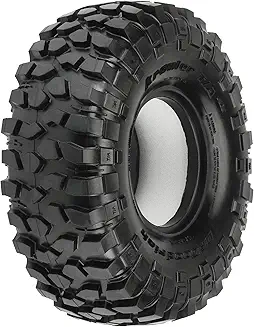
- BFGoodrich All-Terrain T/A KO2— Best Off-Road Durability
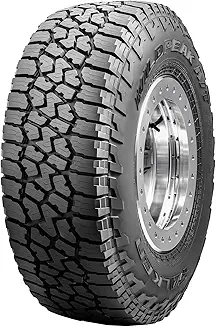
- Falken Wildpeak AT3W— Best Budget All-Terrain
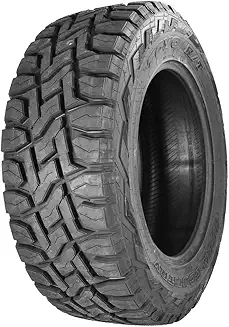
- Toyo Open Country A/T III— Best Mixed On/Off-Road Balance
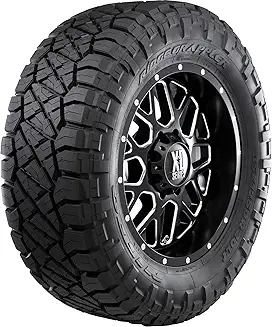
- Nitto Ridge Grappler— Best Premium / Aggressive Hybrid
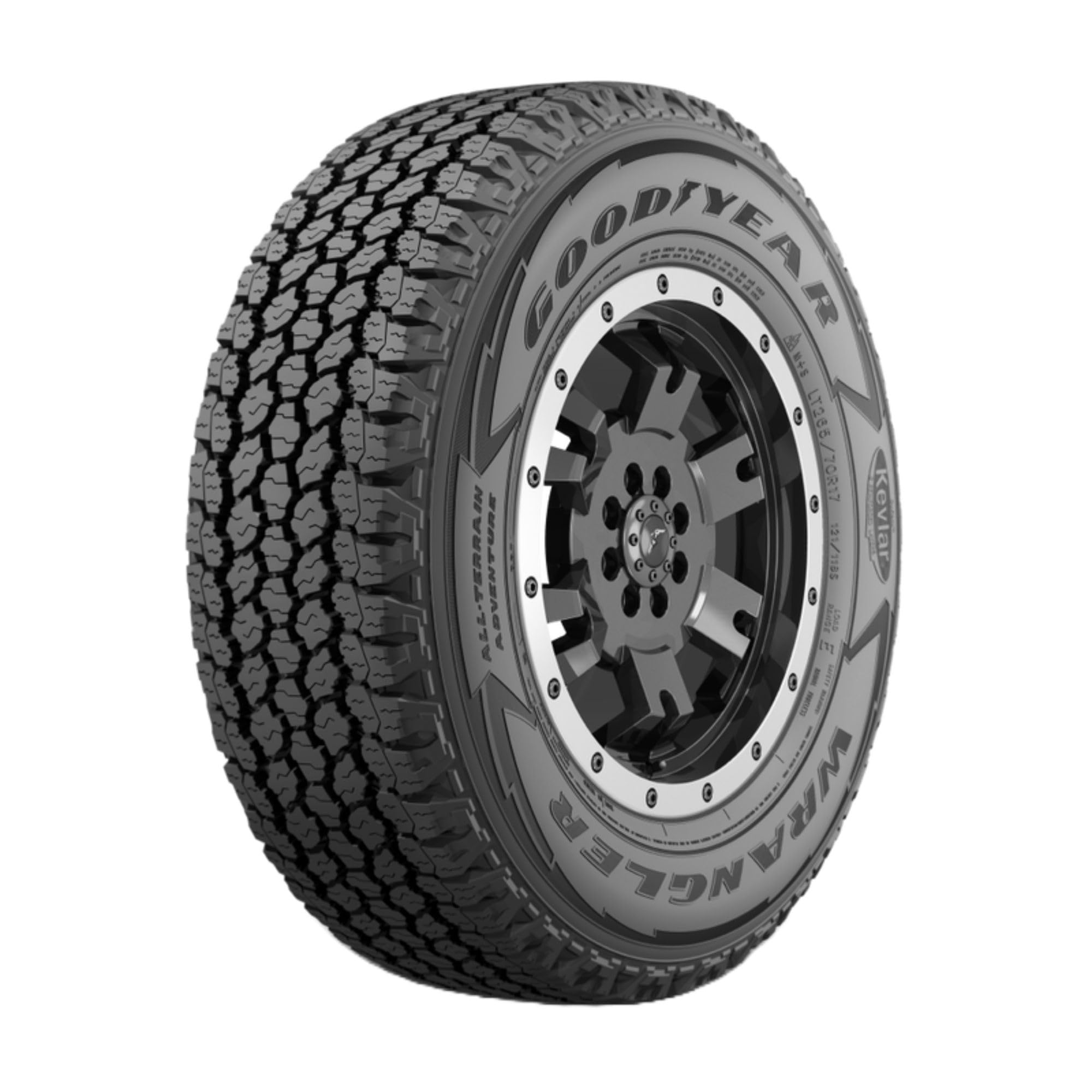
- Goodyear Wrangler AT Adventure w/ Kevlar— Best Sidewall Protection
Best Toyota Tundra Tires — Compared
All six tires ranked side-by-side across type, tread warranty, and our expert score.
| # | Tire Name | Type | Tread Warranty | Best For | Score | |
|---|---|---|---|---|---|---|
| 1 | Michelin Defender LTX M/S2 Editor’s Choice | Highway All-Season | Up to 70,000 mi | Best Overall | 4.8 | See Latest Price |
| 2 | BFGoodrich All-Terrain T/A KO2 Top Pick | All-Terrain | 50,000 mi (LT) | Best Off-Road | 4.7 | See Latest Price |
| 3 | Falken Wildpeak AT3W Budget Pick | All-Terrain | 55,000 mi | Best Budget AT | 4.6 | See Latest Price |
| 4 | Toyo Open Country A/T III | All-Terrain | 65,000 mi | Best Balanced AT | 4.7 | See Latest Price |
| 5 | Nitto Ridge Grappler | Hybrid AT/MT | 55,000 mi | Best Premium Hybrid | 4.8 | See Latest Price |
| 6 | Goodyear Wrangler AT Adventure w/ Kevlar | All-Terrain | 60,000 mi | Best Sidewall Protection | 4.5 | See Latest Price |
Detailed Reviews
Full breakdown of each tire — ratings, pros, cons, and our expert verdict.
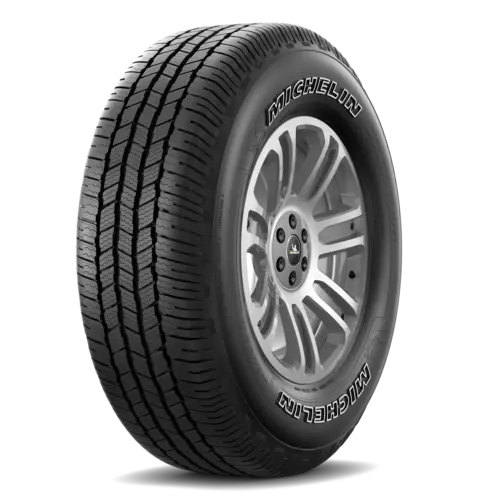
Michelin Defender LTX M/S2
Pros
- MaxTouch Construction distributes braking, cornering, and acceleration forces evenly — reduces center tread wear at highway speeds
- Available in XL load rating, giving stiff sidewall support for moderately loaded Tundras without the harsher ride of full Load Range E
- Hydroplaning resistance rated among the top tier in its class by independent wet-track testing
Cons
- Not suited for off-road use — tread pattern self-cleans poorly in mud and will pack in loose soil
- Higher per-tire price than Falken and Goodyear alternatives in the same size
BFGoodrich All-Terrain T/A KO2
Pros
- CoreGard Technology thickens the upper sidewall to resist splitting on sharp rocks — measurably tougher than standard AT sidewalls
- 3PMSF certified; available in Load Range C, D, and E for towing configurations up to maximum payload
- Interlocking tread design resists stone retention on gravel roads — fewer rocks rattling in the tread on the highway
Cons
- Tread wear degrades quickly when rotations are skipped — multiple forum owners report this as the primary failure mode
- Ice performance is unreliable; the tire grips in packed snow but loses predictability on glare ice
Falken Wildpeak AT3W
Pros
- Upper sidewall protection blocks specifically engineered to absorb trail obstacle strikes — a key differentiator at this price point
- 3PMSF certified with deep block spacing for self-cleaning in mud, loose snow, and slush
- Quieter highway drone than most tires at this tread aggression level — notably praised on r/tundra
Cons
- Wet braking distances run slightly longer than the Michelin Defender LTX M/S2 in independent comparison testing
- Tread life can fall short of the 55,000-mile warranty when the Tundra is frequently loaded at or near maximum payload
Toyo Open Country A/T III
Pros
- 3D Multi-Wave Sipes improve wet-road grip at the micro-tread level — one of the reasons hydroplaning resistance scores are consistently high
- 65,000-mile tread warranty outpaces both the KO2 (50,000 mi) and Falken (55,000 mi) in the all-terrain category
- Cut-and-chip resistant compound performs reliably on gravel and hardpack without accelerated center tread wear
Cons
- Tread life can underperform the warranty estimate when the Tundra is loaded near max payload and driven on hot pavement
- Load Range E sizing produces a noticeably stiffer ride on rough pavement compared to standard load variants
Nitto Ridge Grappler
Pros
- Variable pitch tread pattern actively reduces noise harmonics — surprising for a tire this visually aggressive
- Available in TRD Pro-specific sizes including 295/70R18 and 285/70R18 that fill the stock arch without requiring a lift
- Reinforced tread blocks resist stone drilling on loose gravel surfaces — keeps tread integrity after trail miles
Cons
- Weighs roughly 70 lbs per tire in 295/70R18 — adds unsprung rotational mass that measurably reduces acceleration and mpg
- Not 3PMSF certified in all size variants — confirm your specific SKU before purchasing for winter use
Goodyear Wrangler AT Adventure w/ Kevlar
Pros
- Kevlar-reinforced Durawall Technology provides documented reduction in sidewall cuts on sharp terrain versus standard all-terrain construction
- 60,000-mile tread warranty is competitive and backed by Goodyear’s warranty service network
- Quieter on-road character than BFG KO2 or Nitto Ridge Grappler for the same level of trail capability
Cons
- Wet and snow traction ratings degrade more noticeably toward the midpoint of the tire’s life than competitors — plan rotations at 5,000-mile intervals
- Mud capability is moderate — open shoulder blocks self-clean adequately but the tread voids are shallower than the KO2 or Falken
???? Can’t Decide?
Our Top 2 Picks — Head to Head
Both are excellent. Here’s how to choose between them.
- Evertread compound delivers 60,000–80,000+ miles for forum owners who rotate on schedule
- Quietest highway ride of any tire in this roundup — reduces cabin noise noticeably
- Hydroplaning resistance rated among the top in class by independent wet-track testing
- CoreGard sidewall resists splitting on rocks — noticeably tougher than standard AT construction
- 3PMSF certified; proven through Upper Midwest winters and mountain state trails
- Available in Load Range E for max-payload towing configurations
How to Choose the Right Tires for Your Tundra
Six factors specific to the Tundra platform — explained before you order.
Confirm Size by Trim
Tundra trim levels run different stock sizes. SR and base SR5 models typically use 265/70R18. TRD Off-Road and Pro variants use 285/65R18. Limited and Platinum trims in 20-inch configurations run 265/60R20 or 275/55R20. Capstone trims run 265/50R22. Always read the door jamb placard — never guess from another owner’s setup.
Match Load Range to Your Use
The Tundra is a full-size truck — but not every Tundra needs Load Range E (10-ply). E-rated tires ride stiffer and are designed for near-maximum payload or heavy towing. For daily driving and moderate loads, an XL or Load Range D tire delivers a more comfortable ride without compromising safety margins.
Driving Split Determines Tire Type
The honest question: what percentage of your miles are on pavement? Drivers who are 90%+ on pavement will get more life and comfort from a highway tire like the Michelin Defender. Drivers with a 60/40 or 50/50 split should gravitate toward the Toyo A/T III or Falken AT3W. Full off-road use points to the KO2 or Nitto Ridge Grappler.
3PMSF vs. M+S — Not the Same
The M+S (Mud and Snow) symbol is a self-certification that requires no external testing. The 3PMSF (Three-Peak Mountain Snowflake) symbol requires the tire to pass a standardized snow traction test. The Falken Wildpeak AT3W, BFG KO2, and Toyo Open Country A/T III all carry the 3PMSF rating. The Michelin Defender LTX M/S2 is 3PMSF certified as well — relevant for Tundra owners in snowbelt states.
Rotation Interval for Heavy Trucks
The Tundra’s weight accelerates uneven tread wear compared to lighter vehicles. Rotate every 5,000–6,000 miles without exception — multiple forum members trace premature wear directly to skipped rotations. If you run a staggered size setup, check whether a square configuration is possible to enable full rotation and extend tire life significantly.
Tread Warranty Tells You Something
Mileage warranties reflect compound hardness — softer compounds grip better off-road but wear faster on highway. The Toyo A/T III (65,000 mi) and Michelin Defender LTX M/S2 (up to 70,000 mi) lead this group. The BFG KO2’s 50,000-mile LT warranty reflects its softer off-road compound. Factor tread life into your total cost-per-mile calculation before comparing prices.
✅ Pro Tips
Quick Buying Checklist Before You Order
Verify your exact size on the driver’s door jamb placard before ordering — a 285/65R18 will not fit an SR5 with stock 18-inch wheels without rubbing, and ordering the wrong size costs time and return shipping.
If fitting KO2s, warn your shop about occasional balancing difficulty documented in owner forums — this lets the technician address it proactively and prevents a callback for a shimmy at highway speed.
Aggressive tires on a commuter Tundra add road noise, drop mpg by 0.5–1.5 MPG, and wear faster on pavement — match the tread aggression to where you actually drive, not where you plan to drive someday.
Check that your chosen size is rated for your load index and speed rating requirements before purchasing — the tire sidewall must meet or exceed the OEM specs listed in your owner’s manual, especially for towing use.
Related Guides
Other Toyota Truck Models
Frequently Asked Questions
What tires do most Toyota Tundra owners recommend?
On r/ToyotaTundra and Tundras.com, the Michelin Defender LTX M/S2 leads for highway drivers. For all-terrain use, the Toyo Open Country A/T III, BFGoodrich KO2, and Falken Wildpeak AT3W appear most frequently. Community consensus favors tires with documented multi-year tread life over newer or unproven models.
How long do tires typically last on a Toyota Tundra?
Highway-focused tires like the Michelin Defender LTX M/S2 can last 60,000–80,000+ miles with consistent rotation. All-terrain tires typically fall in the 45,000–65,000-mile range. Skipping rotations on a heavy truck can cut lifespan by 20–30% on any tire — rotation interval is the single biggest variable in real-world tread life.
Are all-terrain tires worth it on a Toyota Tundra?
For most Tundra owners, yes. The truck is built for both work and light adventure use. All-terrain tires like the Toyo Open Country A/T III and Falken Wildpeak AT3W provide year-round traction and light off-road capability without the harsh ride of a full mud-terrain tire. Highway-only drivers will get better value from the Michelin Defender.
Will installing aftermarket tires affect my Tundra’s warranty?
Tires that match the factory-approved size range will not void the drivetrain or suspension warranty. Significantly upsizing — for example, jumping from 265/70R18 to 35-inch tires — can affect speedometer accuracy and may raise questions with dealers about related component wear. Stay within one size step of OEM to avoid complications.
Which tires are best for Toyota Tundra owners in snowy climates?
The Falken Wildpeak AT3W, BFGoodrich KO2, Toyo Open Country A/T III, and Michelin Defender LTX M/S2 all carry the 3PMSF certification and perform confidently in packed snow. For driving on glare ice, dedicated winter tires are measurably safer than any all-season or all-terrain option — no AT tire replaces a true winter compound below 25°F.
Is Load Range E necessary for the Toyota Tundra?
Not for most drivers. Load Range E is beneficial for Tundras that regularly haul near maximum payload or tow heavy trailers above 8,000 lbs. For daily driving and light hauling, an XL or Load Range D tire delivers a more comfortable ride without compromising safety. Load Range E tires ride noticeably stiffer on rough pavement under light loads.
How difficult is it to install new tires on a Toyota Tundra at home?
Tire mounting and balancing requires a tire machine and balancer — not a practical DIY task. Buying online and having tires mounted at a local shop is the standard approach and costs $15–$25 per tire for mounting and balancing. All six tires on this list mount on stock Tundra rims without modification or adapter hardware.
???? Final Verdict
Our Top Toyota Tundra Tire Recommendations for 2026
The Michelin Defender LTX M/S2 earns the top spot for highway-focused Tundra owners — its Evertread compound outlasts every competitor on this list, and the quiet ride makes long-distance hauling noticeably more comfortable. Off-road regulars should move to the BFGoodrich All-Terrain T/A KO2 for its CoreGard sidewall protection and proven multi-terrain durability. Budget buyers who still need genuine all-terrain capability get the best cost-per-mile from the Falken Wildpeak AT3W, while TRD Pro owners who want a tire that looks as aggressive as it performs should consider the Nitto Ridge Grappler as their premium finish option.