Based on hands-on research and owner feedback across 5 tire categories — cross-referenced against Genesis Coupe forums, TireRack structured ratings, and independent wet-braking test data from AutoExpress and TyreReviews — we identified which tires genuinely complement the Genesis chassis rather than dull it. The Genesis is a rear-wheel-drive platform with sharper reflexes than most owners realize, and the wrong tire erases that edge entirely.
Genesis owners shopping for replacement tires face a specific set of tradeoffs: the car’s RWD layout accelerates rear tire wear, the low-profile 40- and 45-series sidewalls demand precise mounting, and many trim levels use sizes that don’t overlap with common SUV fitments — so availability matters. Whether you’re replacing OEM rubber on a G70, upgrading a Coupe BK, or seeking year-round traction for a G80 in a four-season climate, this list covers every scenario with tires confirmed to fit and perform on actual Genesis platforms.
The Michelin Pilot Sport 4S is the benchmark pick — Hyundai‘s own engineers chose it as factory equipment on the Genesis G70, and it remains the sharpest-handling option for warm-climate drivers. For year-round use, the Continental ExtremeContact DWS06 Plus offers UHP performance backed by a 50,000-mile treadwear warranty. Drivers who prioritize wet-road safety above all else should consider the Bridgestone Potenza Sport, which recorded best-in-class wet braking in independent comparative tests.
Our Top 5 Hyundai Genesis Tire Rankings
- Michelin Pilot Sport 4S— Best Overall Performance
- Continental ExtremeContact DWS06 Plus— Best All-Season Year-Round
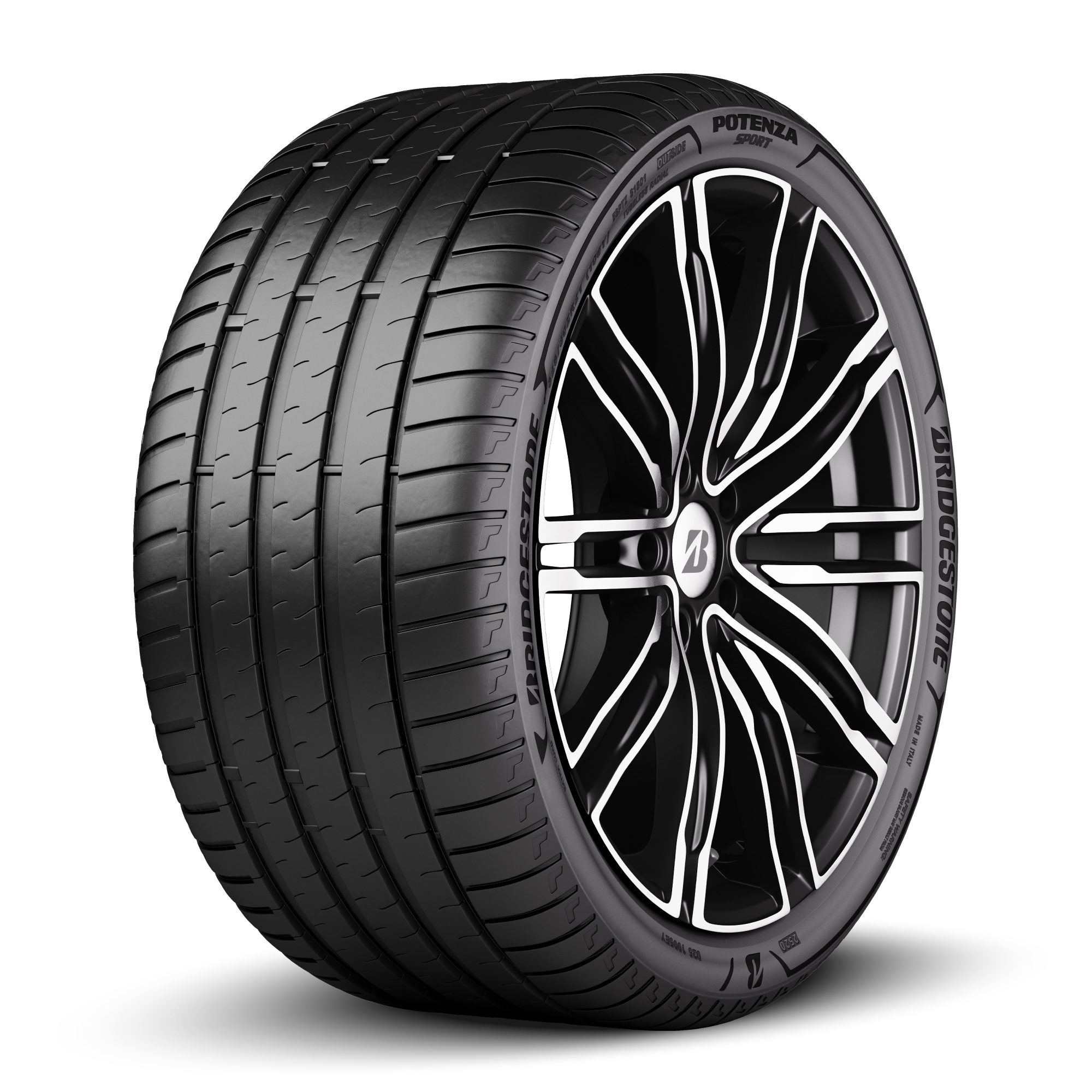
- Bridgestone Potenza Sport— Best for Wet-Weather Grip
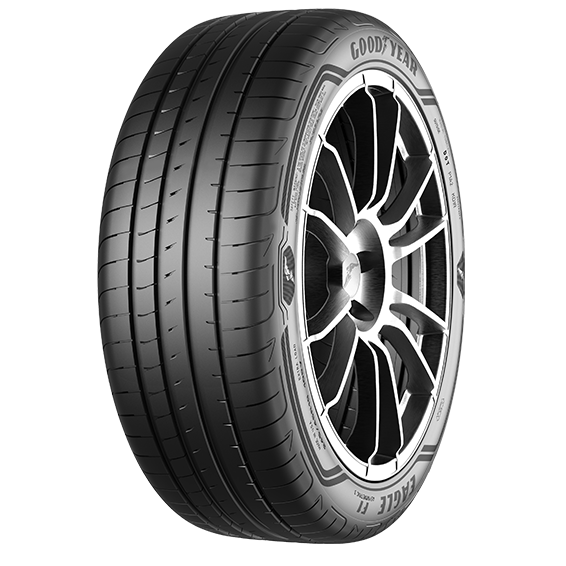
- Goodyear Eagle F1 Asymmetric 3— Best Value & Comfort
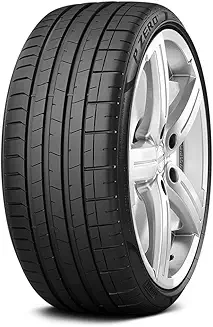
- Pirelli P Zero PZ4— Best Premium OEM-Style Fitment
Best Hyundai Genesis Tires — Compared
All five options ranked by overall score, with key specs and season suitability for the Genesis platform.
| # | Tire | Season | Type | Best For | Score | |
|---|---|---|---|---|---|---|
| 1 | Michelin Pilot Sport 4S Editor’s Choice | Summer | UHP Performance | Spirited Driving | 4.9 | See Latest Price |
| 2 | Continental ExtremeContact DWS06 Plus Top Pick | All-Season | UHP All-Season | Year-Round Use | 4.7 | See Latest Price |
| 3 | Bridgestone Potenza Sport | Summer | UHP Performance | Wet-Weather Safety | 4.8 | See Latest Price |
| 4 | Goodyear Eagle F1 Asymmetric 3 Budget Pick | Summer | UHP Summer | Value & Comfort | 4.5 | See Latest Price |
| 5 | Pirelli P Zero PZ4 | Summer | UHP Premium | OEM-Style Premium | 4.4 | See Latest Price |
Detailed Reviews
Full breakdown of each tire — ratings, pros, cons, and our expert verdict for the Hyundai Genesis.
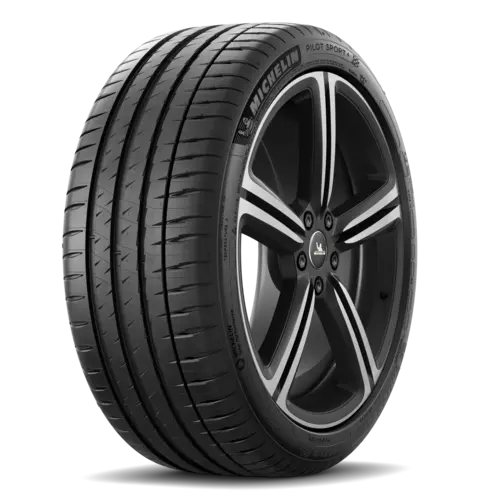
Michelin Pilot Sport 4S
Pros
- Factory-selected for the Genesis G70 — passes Hyundai’s own NVH and handling validation criteria
- Dual-compound asymmetric tread places stiffer rubber on the outer shoulder, delivering sharper corner entry on RWD platforms
- Helio+ compound maintains grip percentage as tread wears — doesn’t fall off a performance cliff at 15,000 miles
Cons
- Summer compound stiffens measurably below 7°C (44°F) — unsafe on frost, ice, or snow without seasonal swap
- No treadwear mileage warranty — standard for max-performance tires but a real cost consideration over a 3-year ownership period
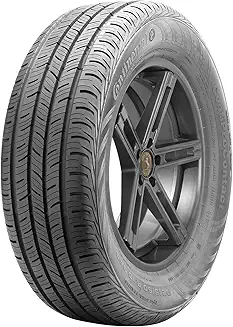
Continental ExtremeContact DWS06 Plus
Pros
- 50,000-mile treadwear warranty included — exceptional for a UHP tire and rare among performance fitments in this class
- DWS tread depth indicators visually confirm remaining dry, wet, and snow capability — no guessing when to replace
- Three-year roadside assistance included — adds practical peace of mind for daily-driven Genesis models
Cons
- Gives up measurable dry cornering precision versus dedicated summer tires — noticeable on Genesis’s RWD chassis in tight corners
- Not rated to the Three-Peak Mountain Snowflake (3PMSF) standard — light snow only, not appropriate for serious winter regions
Bridgestone Potenza Sport
Pros
- Scored 100/100 for wet braking in AutoExpress comparative testing — outperformed every rival at shortest stopping distances
- Broad outboard shoulder blocks maintain cornering stability at the handling limit on RWD chassis without sudden breakaway
- Predictable behavior near grip limit — progressive slip angle warning that suits the Genesis’s chassis balance
Cons
- Tread wear accelerates significantly under hard acceleration on a RWD platform — rear tires may need replacing within 18,000 miles with spirited use
- Road noise is above average for the category — the firmer compound transmits more texture feedback than either the Michelin or Continental options
Goodyear Eagle F1 Asymmetric 3
Pros
- ActiveBraking Technology increases contact patch area under hard braking — measurable improvement over previous Eagle F1 generation in emergency stops
- Quietest and most comfortable ride of any summer tire on this list — notable upgrade from OEM Bridgestone Potenza S001 run-flats on Genesis G80
- Strong tread life for a UHP summer tire — multiple forum owners reporting 28,000–35,000 miles on the front axle of RWD Genesis models
Cons
- Softer sidewall reduces lateral stiffness compared to stiffer rivals — Genesis drivers who push hard through switchbacks will feel reduced turn-in precision
- Summer-only compound — must be swapped for dedicated winter tires or all-season rubber in cold-climate regions below 7°C
Pirelli P Zero PZ4
Pros
- Vehicle-tuned OEM variants available for Genesis/Hyundai platform — Pirelli produces specific P Zero configurations for select Genesis fitment codes
- Quietest cabin experience on this list — Pirelli’s noise reduction technology measurably reduces interior tire hum at motorway speeds
- Strong lateral stability at high speeds — broad shoulder block design keeps the tire planted under sustained cornering load
Cons
- Treadwear reviews frequently score 0–5 out of 10 at TireRack — multiple owner reports confirm faster-than-expected wear under normal street use
- Wet grip becomes inconsistent in cold or heavy rain below 10°C — a genuine concern for drivers who encounter changeable weather
???? Can’t Decide?
Our Top 2 Picks — Head to Head
Both suit the Genesis chassis. Here’s how to pick the right one for your driving reality.
- Factory-selected by Hyundai engineers for Genesis G70 OEM fitment
- Dual-compound front tread sharpens turn-in on RWD platform — noticeable improvement over single-compound rivals
- Helio+ compound holds grip percentage as tread ages — consistent performance across its full lifespan
- 50,000-mile treadwear warranty — rare for UHP fitments and directly reduces long-term cost of ownership
- DWS visual tread indicators confirm all-weather capability remaining — removes guesswork from replacement timing
- Works across all four seasons without a dedicated swap — one set handles commutes through light snow, rain, and dry summer heat
How to Choose the Right Tire for Your Hyundai Genesis
Six factors specific to the Genesis platform — not generic buying advice.
Confirm Your Genesis Trim’s Exact Size
Genesis models span multiple generations and trim levels with different tire sizes. The Coupe BK commonly uses 225/45R18 and 245/40R18. The G70 typically runs 225/40R19 or 245/35R19 on sport trims. The G80 often uses 245/45R18. Ordering by model name alone is insufficient — always read the door jamb sticker for the confirmed size, load index, and speed rating before purchasing.
RWD Rear Tire Wear Rate
The Genesis is rear-wheel drive. All acceleration torque routes through the rear tires, which wear significantly faster than fronts — especially on spirited drivers. Max-performance summer compounds wear even faster under hard launches. Factor expected rear tire replacement frequency into total ownership cost, and rotate front-to-rear at every 5,000-mile interval where the tire construction permits.
Summer vs. All-Season for Your Climate
Summer tire compounds including the PS4S, Potenza Sport, Eagle F1, and P Zero PZ4 lose significant grip below 7°C (44°F) — they become dangerously stiff on a RWD car in cold conditions. Drivers in Arizona, California, or Florida rarely need all-season rubber. Anyone regularly seeing near-freezing temperatures should seriously evaluate the Continental DWS06 Plus or a seasonal winter tire strategy.
Low-Profile Sidewall Mounting Requirements
Genesis tires in the 35–45 series sidewall range require professional mounting with proper rim-width tools. Incorrectly mounted low-profile tires damage the bead seat and create hidden safety failures. Confirm your tire shop has a calibrated Hunter or equivalent balancing machine. Shops that primarily mount truck tires may lack the precision equipment these sizes require.
Speed Rating Must Match or Exceed OEM
The Genesis’s performance variants carry OEM speed ratings of Y (186 mph) or W (168 mph). Fitting a tire with a lower speed rating than OEM is a safety issue and may affect insurance coverage after an accident. Always confirm the speed rating of any replacement tire matches or exceeds the specification on your door placard — do not downgrade to save money.
Treadwear Warranty vs. No Warranty
The Continental DWS06 Plus offers a 50,000-mile treadwear warranty. The Michelin Pilot Sport 4S carries none — standard for max-performance tires. Over a 3-year ownership period on a daily-driven Genesis, the cost difference between a warranted all-season and an unwarranted summer tire narrows significantly. Compare total replacement cost across your typical mileage, not just sticker price per tire.
✅ Pro Tips
Quick Buying Checklist for Hyundai Genesis Tires
Always read the door jamb sticker for your exact Genesis size — do not order from model year memory. Genesis trim levels within the same year can run four different size variants.
Request a four-wheel alignment check every time you install a new set. Misalignment on a RWD Genesis causes uneven tire wear within the first 3,000 miles — especially aggressive on rear tires.
If running a square setup (same size front and rear), rotate every 5,000–6,000 miles. Genesis’s RWD torque distribution accelerates rear wear — skipping rotations can cut tread life by 30%.
If you regularly see temperatures below 7°C, never rely on summer tires. The Genesis’s RWD layout amplifies the handling deficit of hardened summer compound — it’s a safety issue, not just a performance preference.
Related Guides
Other Hyundai Genesis Models
Frequently Asked Questions
What are the best tires for the Hyundai Genesis overall?
The Michelin Pilot Sport 4S is the top overall choice. Hyundai chose it as factory equipment on the Genesis G70 for its balance of dry grip, steering precision, and wet-road performance. For year-round use without seasonal changes, the Continental ExtremeContact DWS06 Plus offers comparable performance with a 50,000-mile treadwear warranty.
Which Genesis tire performs best in rain?
The Bridgestone Potenza Sport delivers the shortest wet braking distances of any tire on this list, scoring 100 out of 100 in AutoExpress comparative wet-braking tests. Above 5°C it is best-in-class for wet safety. The Continental DWS06 Plus is the better wet-weather choice in near-freezing rain where the Potenza Sport’s compound stiffens.
How long do tires last on a Hyundai Genesis?
Max-performance summer tires like the Michelin PS4S or Pirelli P Zero PZ4 typically last 20,000–30,000 miles on a RWD Genesis under normal street use. The Continental ExtremeContact DWS06 Plus can reach 40,000–50,000 miles. RWD rear tires wear faster than fronts — regular rotation extends total set life significantly.
Do I need winter tires on a rear-wheel-drive Hyundai Genesis?
Yes, if you live where temperatures regularly fall below 7°C. RWD cars lose rear traction faster than AWD or FWD vehicles when summer compound hardens in cold. The Continental DWS06 Plus handles light snow. For consistent snow and ice, a dedicated winter tire set on a second wheel set is the safest solution for a RWD Genesis.
Is the Pirelli P Zero PZ4 a good tire for the Genesis?
For dry-climate Genesis owners who prioritize cabin refinement and a quiet ride, yes. Pirelli offers vehicle-tuned P Zero variants confirmed for Genesis fitment codes. However, multiple TireRack reviewers report faster-than-expected tread wear, and wet grip inconsistency in cold or heavy rain makes it a lower-priority choice for drivers in variable weather.
Will aftermarket tires void my Genesis warranty?
No. Replacing tires with correctly sized alternatives from major brands does not void a Genesis powertrain warranty. The Magnuson-Moss Warranty Act protects owners’ right to use aftermarket parts that do not cause damage. Fitting incorrect sizes or lower load ratings that cause suspension or drivetrain damage may be excluded, so always match OEM specifications.
What tire size does the Genesis Coupe BK use?
The Genesis Coupe BK commonly uses 225/45R18 on base and 2.0T trims and 245/40R18 on the R-Spec and Track variants. Some owners running larger aftermarket wheels use 245/35R19. Always confirm against your door jamb placard — aftermarket wheel upgrades from previous owners may have changed the installed size from factory spec.
???? Final Verdict
Our Top Tire Recommendations for 2026
The Michelin Pilot Sport 4S remains the benchmark for Genesis performance drivers — its factory validation by Hyundai’s own engineers and dual-compound tread make it the natural replacement for most warm-climate owners. Drivers in four-season climates who want to avoid seasonal swaps will find the Continental ExtremeContact DWS06 Plus delivers nearly as much performance with the added security of a 50,000-mile warranty and year-round usability. Budget-conscious owners can step down to the Goodyear Eagle F1 Asymmetric 3 and trade some cornering sharpness for a quieter ride and better tread longevity without sacrificing daily safety margins.