After analyzing thousands of Wrangler Forum threads, Amazon purchase reviews, and real-world wheeling reports from JKU owners running winches, compressors, and camp refrigerators, we identified five Group 34 batteries that hold up under the Pentastar’s demanding electrical load and the JKU’s brutal off-road environment.
The 3.6L Pentastar’s compact engine bay runs hot, and frame-twisting rock crawls create sustained vibration that destroys flooded batteries from the inside. A JKU battery needs to crank reliably after sitting overnight at elevation, recover from a single full winch pull without permanent capacity loss, and survive the corrugated desert roads that connect the trailhead to the campsite.
For most JKU owners running a winch and trail accessories, the Odyssey 34-PC1500T AGM delivers the most reliable combination of 850 CCA cranking power, 400-cycle deep-discharge tolerance, and an 8-year design life that outlasts the typical ownership cycle. Overlanders who want to shed 35+ pounds from the front axle and eliminate any risk of being stranded with a dead battery should consider the Antigravity ATX-30 Re-Start lithium instead. Either choice requires a healthy alternator — a regulator over 14.7V will destroy both an AGM and a lithium battery in weeks.
Our Top 5 Jeep JKU Battery Rankings
- Odyssey 34-PC1500T AGM— Best Overall: 850 CCA, pure lead plates, 4-year warranty, proven under demanding off-road use
- Mighty Max ML-34 AGM— Best Budget: sealed 740 CCA AGM at a fraction of the premium price
- Antigravity ATX-30 Re-Start— Best Premium: 1500 CA lithium, 11.5 lbs, built-in emergency restart reserve
- Optima YellowTop 9040-218— Most Durable: spiral-cell AGM, deep-cycle tolerant, dual top and side terminals
- Weize 34 AGM— Easiest Install: fully pre-charged, complete hardware kit, direct-fit Group 34
Best Jeep JKU Batteries — Compared
Five Group 34 batteries benchmarked against the 3.6L Pentastar’s cranking demands, winching loads, and off-road vibration exposure.
| # | Product | CCA | Type | Best For | Score | |
|---|---|---|---|---|---|---|
| 1 | Odyssey 34-PC1500T AGM Editor’s Choice | 850 CCA | Pure Lead AGM | Maximum trail performance | 4.6 | See Latest Price |
| 2 | Mighty Max ML-34 AGM Budget Pick | 740 CCA | Sealed AGM | Budget upgrade from flooded | 4.4 | See Latest Price |
| 3 | Antigravity ATX-30 Re-Start Top Pick | 1500 CA | Lithium LiFePO4 | Weight savings & max power | 4.6 | See Latest Price |
| 4 | Optima YellowTop 9040-218 | 620 CCA | Spiral-Cell AGM | Vibration & deep-cycle tolerance | 4.5 | See Latest Price |
| 5 | Weize 34 AGM | 740 CCA | Sealed AGM | Turnkey DIY installation | 4.4 | See Latest Price |
Detailed Reviews
Full breakdown of each battery — ratings, pros, cons, and our expert verdict for the Jeep JKU’s demanding electrical requirements.
Odyssey 34-PC1500T AGM Battery
Pros
- Pure lead thin-plate AGM delivers 850 CCA — verified to cold-crank the 3.6L Pentastar at -40°F in Odyssey’s published cold-start test data
- 135-minute reserve capacity powers LED lighting, an ARB compressor, and a 12V refrigerator simultaneously for over 2 hours engine-off
- Rated for 400 discharge cycles to 80% depth — recovers from repeated winch pulls without the permanent plate loss that kills flooded batteries
- 4-year full replacement warranty — the longest in this comparison and backed by Odyssey’s domestic service network
Cons
- Listed at $300–$350 depending on retailer — the highest upfront cost of the five batteries in this comparison
- Weighs approximately 49 lbs; the density that gives it durability makes the engine-bay lift uncomfortable without a helper or a battery-lifting strap
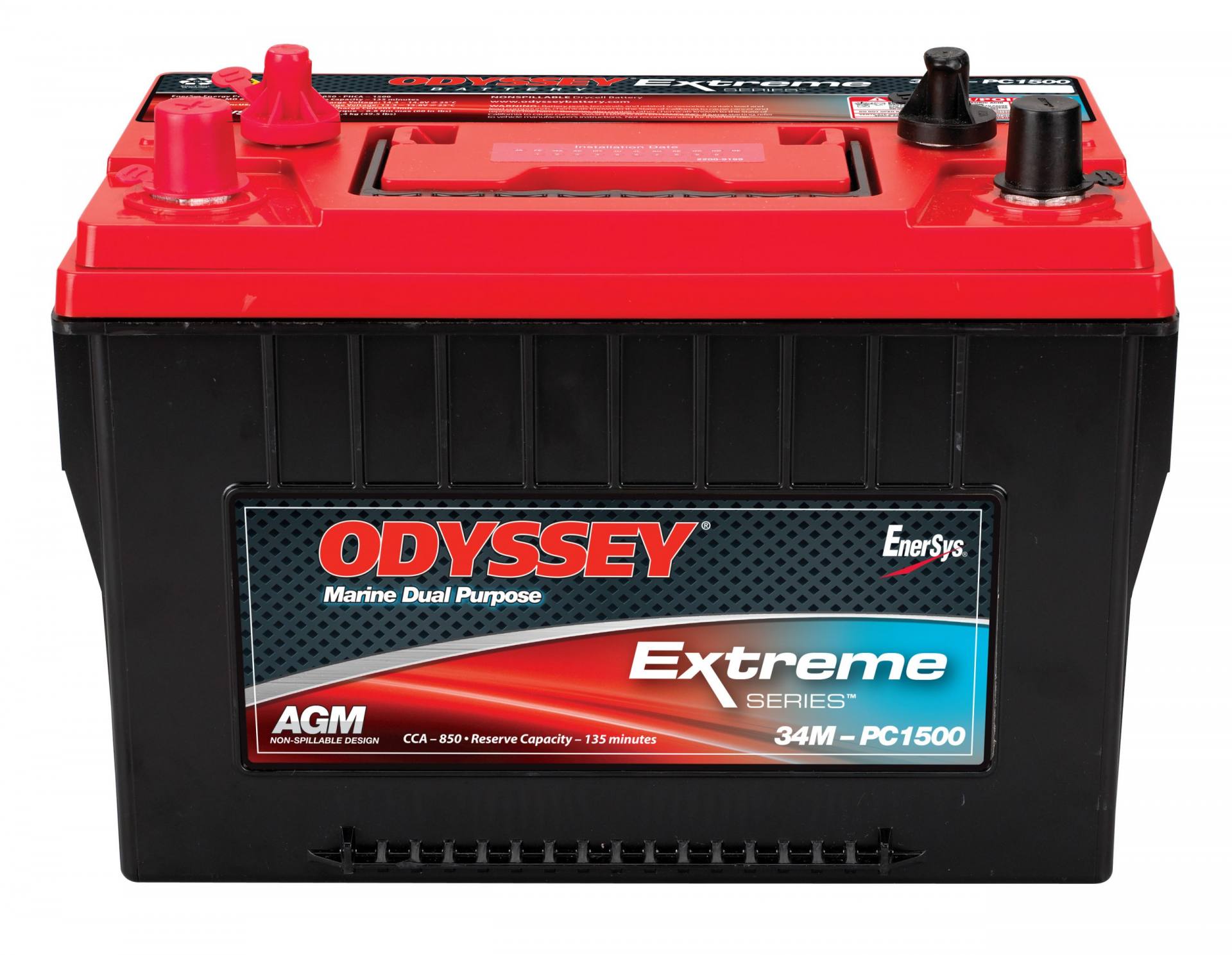
Mighty Max ML-34 AGM Battery
Pros
- Available for $80–$110 — approximately 65% below the Odyssey for the same Group 34 case and comparable sealed AGM chemistry
- Sealed, maintenance-free AGM construction prevents acid spill at extreme trail angles common in rock-crawling and steep descents
- Direct-fit Group 34 dimensions with positive terminal on driver’s side — no cable modification or stretching required for the JKU tray
Cons
- 1-year warranty expires just as the battery enters the period where heat-related production inconsistencies tend to surface — typically around 18 months in desert climates
- Rated for significantly fewer deep-discharge cycles than the Odyssey; repeated full winch pulls without recharging will accelerate plate degradation
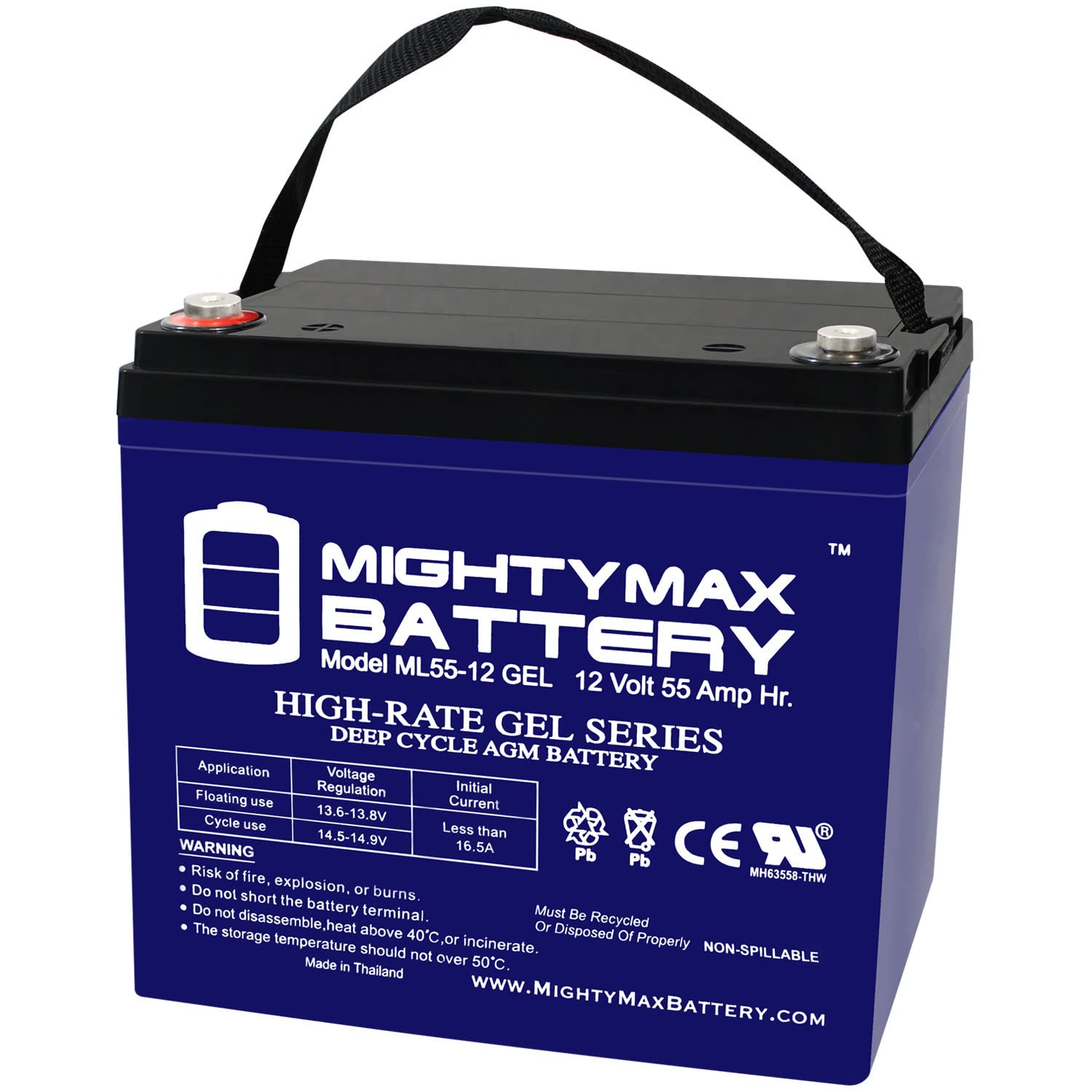
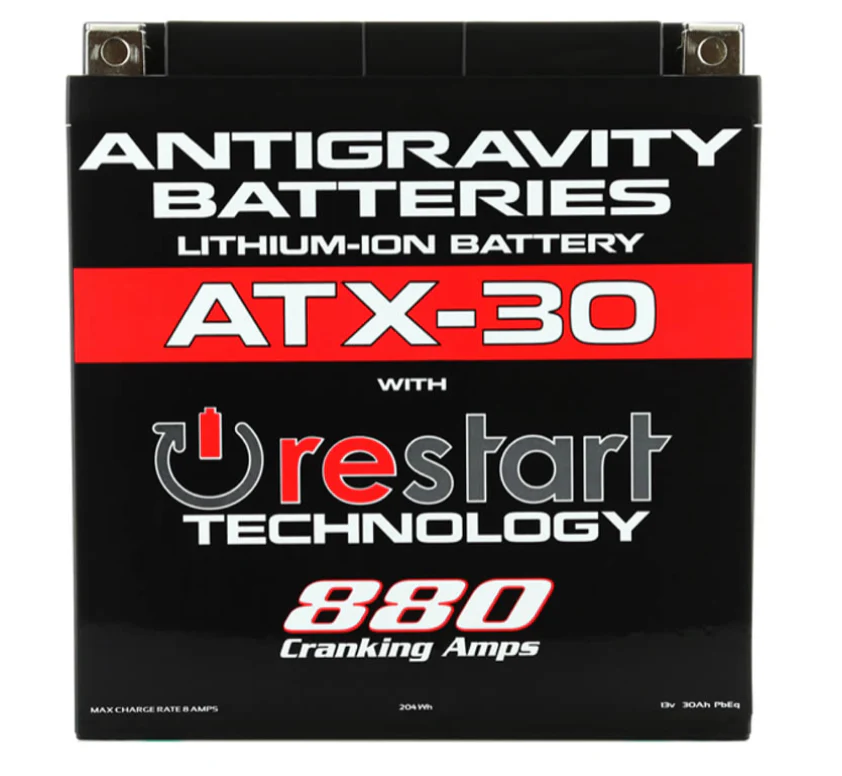
Antigravity ATX-30 Re-Start Lithium
Pros
- Delivers 1500 cranking amps from an 11.5-lb package — saving 35 to 40 lbs over standard Group 34 AGM directly over the front axle
- Re-Start button triggers a reserve cell cluster after a complete drain, providing one emergency crank to drive off the trail and reach safety
- LiFePO4 provides over 5,000 charge-discharge cycles at 80% depth versus the ~400 cycles of conventional AGM in the same Group 34 case
- Self-discharge rate of approximately 1% per month — the battery can sit in a stored JKU for 3 to 4 months without dropping below safe cranking voltage
Cons
- Priced at $700–$800 — approximately six times the cost of a quality AGM, requiring 5 to 7 years of ownership to recover through reduced front-axle wear
- The JKU charging system must stay below 14.6V; an alternator or regulator producing over 15V will damage the BMS and void the warranty
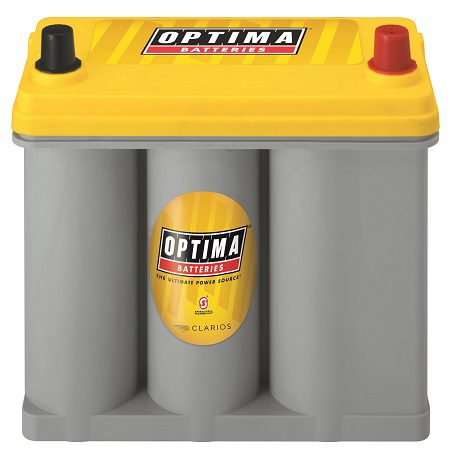
Optima YellowTop 9040-218
Pros
- Six pure lead spiral cells provide 15× the vibration resistance of flooded batteries per Optima’s published SAEJ537 test data — directly relevant for frame-twisting rock crawls
- 120-minute reserve capacity sustains lights, a heated blanket, and a tire inflator without risking a full engine-off discharge at camp
- Dual top SAE and side terminal configuration allows accessory wiring to tap side terminals, keeping main top cable runs clean and mechanically protected
Cons
- 620 CCA is the lowest cranking rating on this list — a meaningful gap at temperatures below -15°C where the Pentastar starter demands maximum current to fire
- Current retail price positions it close to the Odyssey’s base price, but without comparable CCA output or warranty depth for the investment
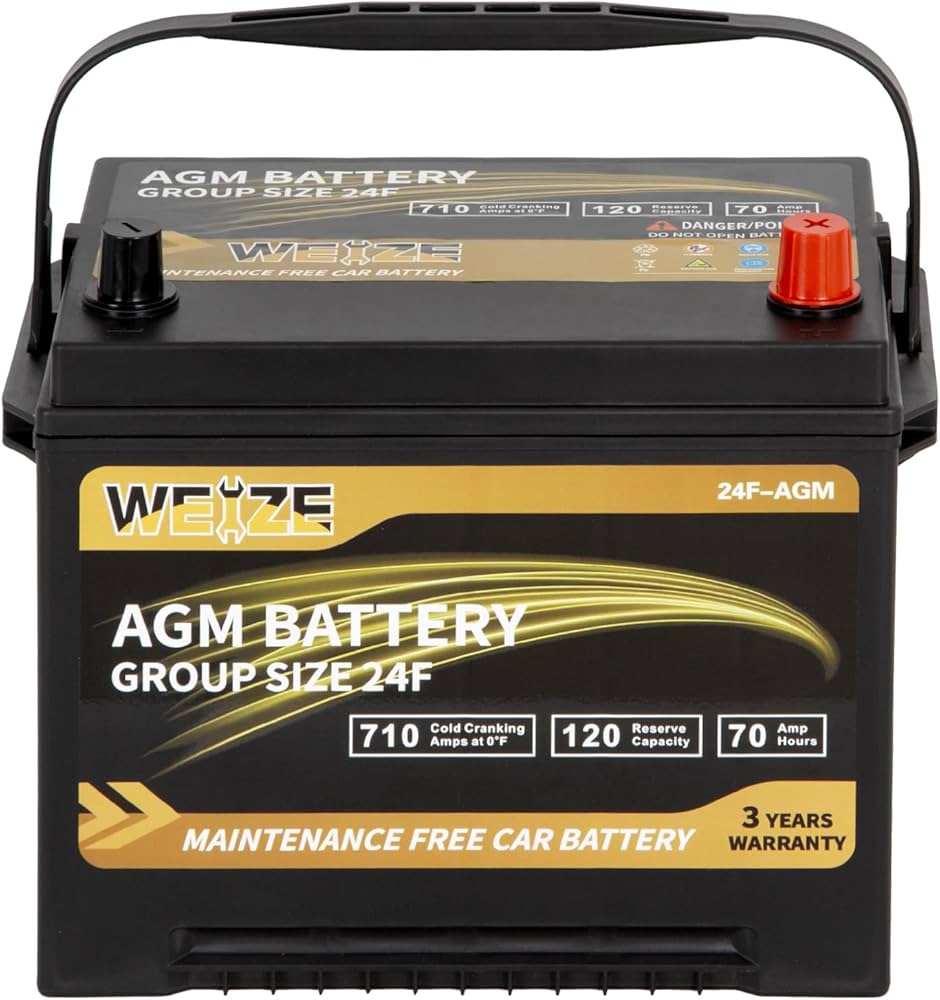
Weize 34 AGM Battery
Pros
- Ships at a measured 12.8V or higher — connects to the JKU’s terminals and cranks the Pentastar without a pre-charge step or voltmeter verification
- Complete kit includes terminal protectors, anti-corrosion washers, and mounting hardware — the only product here where the box contains everything needed for a full installation
- 100-minute reserve capacity provides adequate buffer for running camp lights and USB charging through the JKU’s 12V outlets engine-off at a trailhead
Cons
- 1-year warranty and limited multi-year forum data make long-term reliability difficult to verify beyond the 3-year mark from real JKU owner reports
- Not rated for repeated winch-depth discharge cycles; JKU owners running a heavy winch frequently should budget for a 3-year replacement cycle with this unit
Can’t Decide?
Our Top 2 Picks — Head to Head
Maximum AGM endurance vs. lithium performance and weight savings: here is the real decision for serious JKU owners.
- 850 CCA and 135-minute reserve — runs winch, compressor, and lights simultaneously
- 400 deep-discharge cycles — survives multiple full winch pulls per trip without degrading
- 4-year full replacement warranty — the strongest coverage on this list
- 1500 CA in 11.5 lbs — removes 35–40 lbs from over the front axle instantly
- Re-Start button triggers an emergency crank after a complete drain at camp
- 5,000+ cycle life — outlasts any AGM alternative by a factor of 12
Pro Tips
Quick Buying Checklist for Jeep JKU Battery Replacement
Confirm Group 34, not Group 34R — the terminal polarity reversal means cables that either reach correctly or cannot connect to the JKU’s factory positive and ground positions.
Test alternator output before buying — a voltage regulator over 14.7V will destroy an expensive AGM or lithium battery within months of installation.
Loosen the hold-down clamp bolt before attempting battery removal — it corrodes to the bracket in the JKU’s engine bay and strips easily if forced without penetrating oil.
Connect a memory keeper to the OBD-II port before disconnecting to preserve ECU adaptive memory, radio presets, and power window pinch protection settings.
Apply anti-corrosion terminal spray after connecting the new battery — the JKU engine bay traps heat and humidity that corrodes exposed lead terminals faster than most vehicles.
Run a battery tender during storage periods exceeding 2 weeks — the JKU’s electrical system draws a parasitic current that depletes even a full AGM in 4 to 6 weeks of inactivity.
Frequently Asked Questions
What group size battery fits a Jeep JKU?
The Jeep Wrangler JKU uses a BCI Group 34 battery, with the positive terminal on the driver’s side when standing in front of the grille. A Group 34R battery reverses the positive terminal to the passenger side and cannot be used without dangerous cable modification. Always confirm the “34” designation — not “34R” — even on listings that claim Jeep Wrangler compatibility.
How many cold cranking amps does a 3.6L Pentastar JKU need?
A minimum of 600 CCA starts the 3.6L Pentastar reliably in most U.S. climates. Batteries with 700 to 850 CCA provide a meaningful safety margin for cold-weather starts and for the brief voltage sag that occurs when cranking a heat-soaked engine after a long trail run. Owners in northern climates or high-altitude desert regions should target 800 CCA or higher.
Are AGM batteries better than flooded batteries for off-road JKU use?
Yes — AGM batteries are sealed, spill-proof, and handle the vibration and tilt angles of off-road driving far better than flooded batteries. More critically, they recover from deep discharges caused by winching or running accessories with the engine off. A single long winch pull can permanently reduce a flooded battery’s capacity; an AGM battery recovers fully from the same event.
Can I use a lithium battery in a Jeep JKU?
Yes — lithium iron phosphate batteries like the Antigravity ATX-30 fit the Group 34 tray and save 35 to 40 lbs over the front axle. The JKU charging system must stay below 14.6V; verify alternator output before purchasing. Many JKU owners run lithium batteries without problems, but a failing voltage regulator producing over 15V will damage the battery management system and void the warranty.
How long does an AGM battery last in a Jeep Wrangler?
A quality AGM battery in a JKU lasts 5 to 8 years with proper maintenance. Extreme trail vibration, repeated winching without full recharging, and chronic heat soak from the Pentastar engine can shorten that to 3 to 4 years. Using a smart AGM-mode battery maintainer during any storage period longer than 2 weeks is the single most effective way to extend service life.
Will a dual battery system help my main battery last longer?
Yes — a dual battery system with a battery isolator separates starting power from accessory loads. The main battery never drops below its starting reserve because all winching and camping loads draw from a dedicated deep-cycle auxiliary battery. This extends main battery life significantly, particularly for overlanders who run refrigerators and lighting for multiple days between alternator recharging sessions.
How do I maintain a JKU battery that sits for weeks between trips?
Connect a smart battery maintainer that supports AGM mode — it holds the battery at the correct 13.6V float voltage without overcharging. The JKU’s electrical system draws a small parasitic current from the alarm, clock, and ECU that depletes an unattended AGM in 4 to 6 weeks. For lithium batteries, use a lithium-specific tender, as the float voltage differs from AGM and matters over extended storage periods.
Final Verdict
Our Top Recommendations for 2026
The Odyssey 34-PC1500T earns the top position because it combines the highest sustained cranking reserve, the deepest cycle tolerance, and the longest warranty in the Group 34 AGM category — all without requiring any charging system verification or special maintenance procedures. Overlanders and competition rock crawlers who can verify their charging system stays below 14.6V should strongly consider the Antigravity ATX-30 Re-Start, which not only triples cranking output but includes a built-in emergency restart reserve that eliminates the risk of a trail-ending dead battery. The Mighty Max ML-34 AGM closes the field for daily-driver JKU owners who want sealed AGM chemistry at an entry-level price.