BMW puts run-flat tires on nearly every 3 Series, 5 Series, and X3 from the factory, which means there’s no spare tire in the trunk if you ignore the original spec when it’s time to replace them. After evaluating five run-flat options against owner feedback from BMW forums and verified Amazon buyers, the ride-quality gap between models was bigger than expected.
Run-flat tires let you drive up to 50 miles at 50 mph after a puncture, but that safety margin comes from a stiffer sidewall that can make a poorly chosen tire feel harsh over every pothole. The five tires below cover every BMW driving style, from a daily 330i commute to weekend M340i track days.
For most BMW drivers, the Michelin Pilot Sport All Season 4 ZP delivers the strongest balance of grip, comfort, and tread life without giving up the 50-mile run-flat safety margin. Budget-focused commuters get nearly the same comfort for less with the Bridgestone DriveGuard, while track-day drivers should look at the Pilot Sport 4S ZP instead.
Our Top 5 Run-Flat Tire Rankings
- Michelin Pilot Sport All Season 4 ZP— Best Overall
- Michelin Pilot Sport 4S ZP— Best Performance
- Goodyear Eagle F1 Asymmetric All-Season RunOnFlat— Best Durability
- Bridgestone DriveGuard— Best Budget
- Pirelli Cinturato P7 All Season Run Flat— Easiest Installation
Best Run-Flat Tires for BMW — Compared
Five options ranked by grip, comfort, durability, and value for BMW staggered fitments.
| # | Product | Speed Rating | Type | Best For | Score | |
|---|---|---|---|---|---|---|
| 1 | Michelin Pilot Sport All Season 4 ZP Editor’s Choice | W (168 mph) | All-Season UHP | Overall Balance | 4.6 | See Latest Price |
| 2 | Michelin Pilot Sport 4S ZP Top Pick | Y (186 mph) | Summer UHP | Track-Day Grip | 4.7 | See Latest Price |
| 3 | Goodyear Eagle F1 Asymmetric All-Season RunOnFlat | V (149 mph) | All-Season Performance | High-Mileage Durability | 4.5 | See Latest Price |
| 4 | Bridgestone DriveGuard Budget Pick | H (130 mph) | Touring All-Season | Budget Comfort | 4.4 | See Latest Price |
| 5 | Pirelli Cinturato P7 All Season Run Flat | H (130 mph) | Touring All-Season | Easy Install & Quiet Ride | 4.3 | See Latest Price |
Detailed Reviews
Full breakdown of each tire — ratings, pros, cons, and our expert verdict.
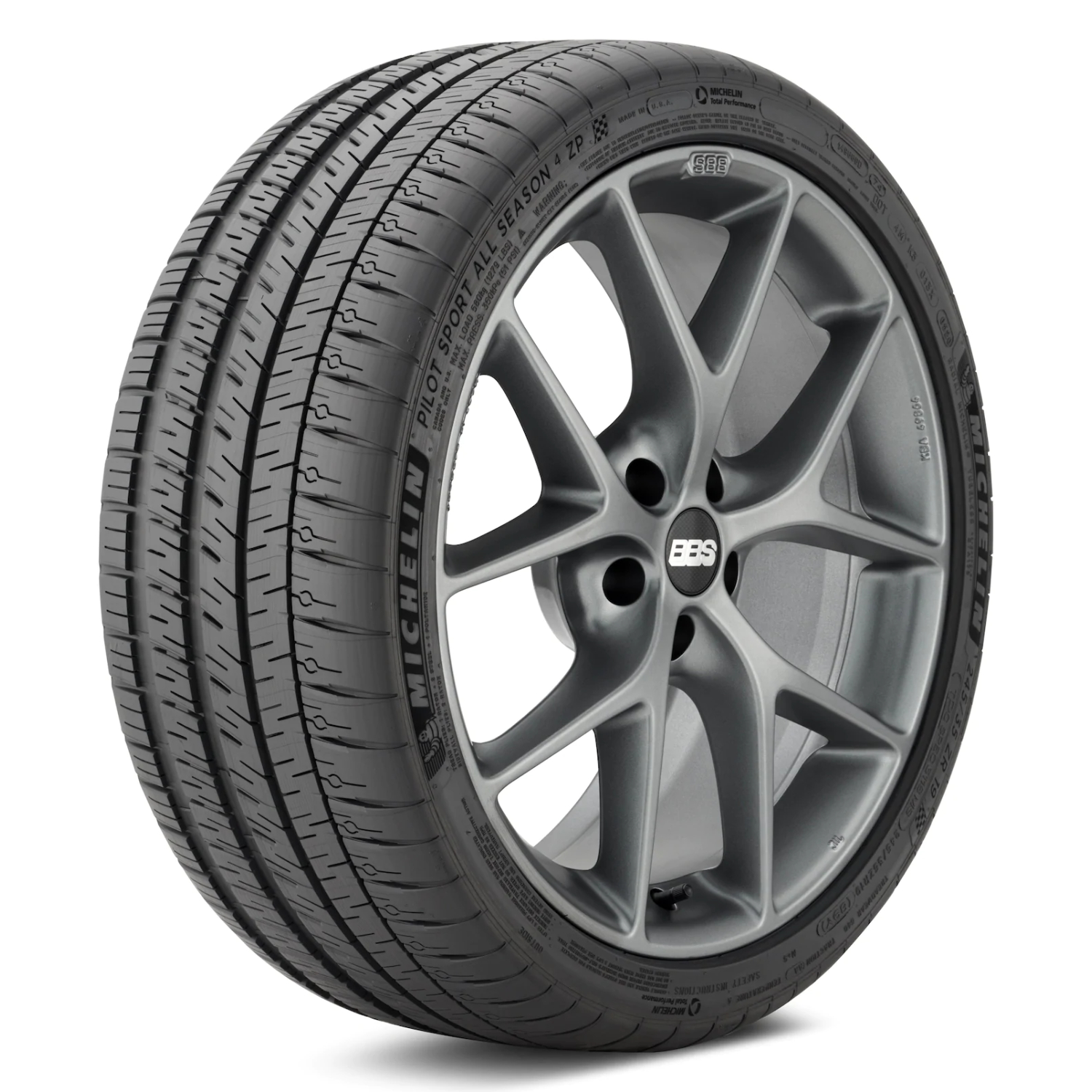
Michelin Pilot Sport All Season 4 ZP
- Wet braking distances measurably shorter than the outgoing Pilot Sport AS3+ ZP, per Michelin’s own test data
- 45,000-mile limited treadwear warranty, though staggered BMW fitments cut that to 22,500 miles
- Helio+ compound stays pliable below 45°F, so a surprise cold snap won’t make it go hard
- Stocked in 20+ BMW-specific staggered sizes, from 225/45R18 up to 255/35R20
- Runs $40–$70 more per tire than the Goodyear Eagle F1 in matching sizes
- Tread hum picks up noticeably on coarse asphalt past 20,000 miles
- Staggered setups can’t be rotated, so rear tires on RWD 3 Series wear faster than the fronts
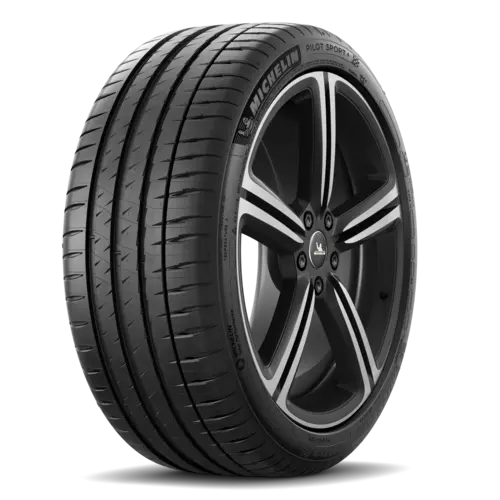
Michelin Pilot Sport 4S ZP
- Bi-compound tread holds lateral grip through sustained track corners without the squirm typical of touring run-flats
- Comes as factory OE rubber on several M Performance trims, so fitment data is well documented
- Wet braking stays composed enough for summer thunderstorm commutes, not just dry track days
- Dynamic Response Technology noticeably sharpens turn-in versus the previous Pilot Super Sport ZP
- Tread life averages 20,000–25,000 miles on driven rear axles, roughly half an all-season run-flat
- Grip drops off sharply below 40°F, unusable as a year-round tire in colder climates
- Wider rear sizes like 275/30R20 push the per-tire price past $400
Goodyear Eagle F1 Asymmetric All-Season RunOnFlat
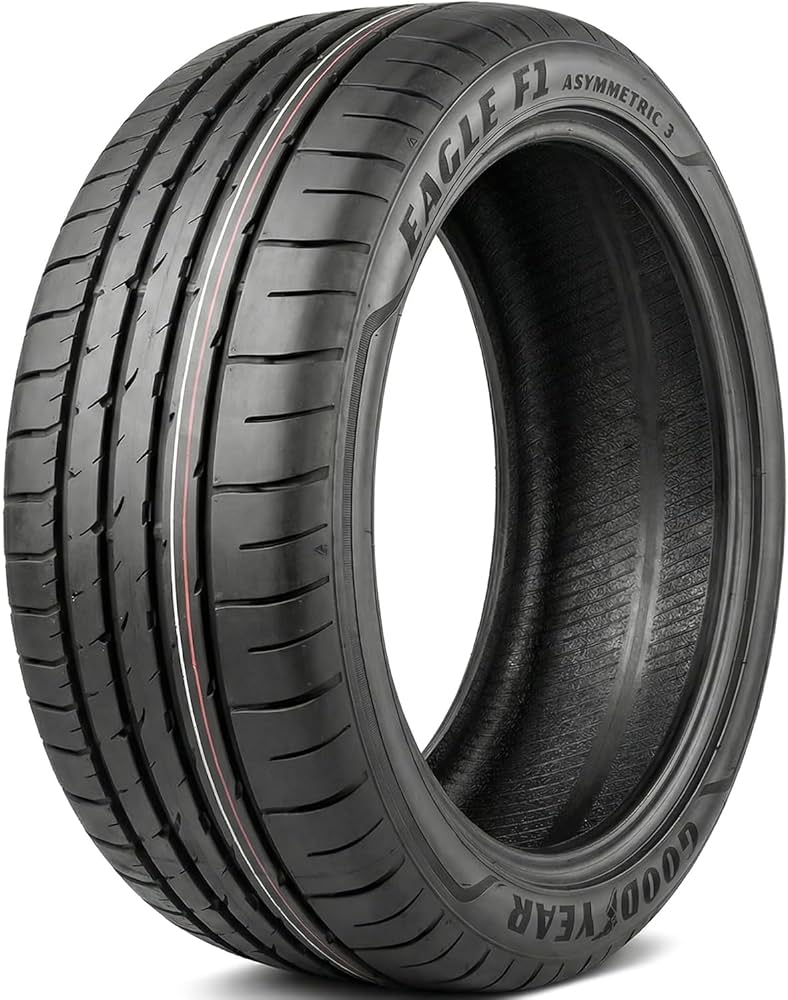
- Wear-resistant compound regularly clears 40,000 miles on well-aligned BMW sedans, per long-term owner reports
- Rim protector ridge guards alloy wheels against curb scuffs during tight parallel parking
- TredLock micro-grooves give usable light-snow bite without needing a dedicated winter set
- SoundComfort foam (select sizes) measurably cuts cabin drone on coarse highway pavement
- Steering feel is noticeably heavier on-center than the Michelin options in this lineup
- Ride stays firm over expansion joints and broken pavement
- Some sizes develop a high-frequency hum starting around 15,000 miles
Bridgestone DriveGuard
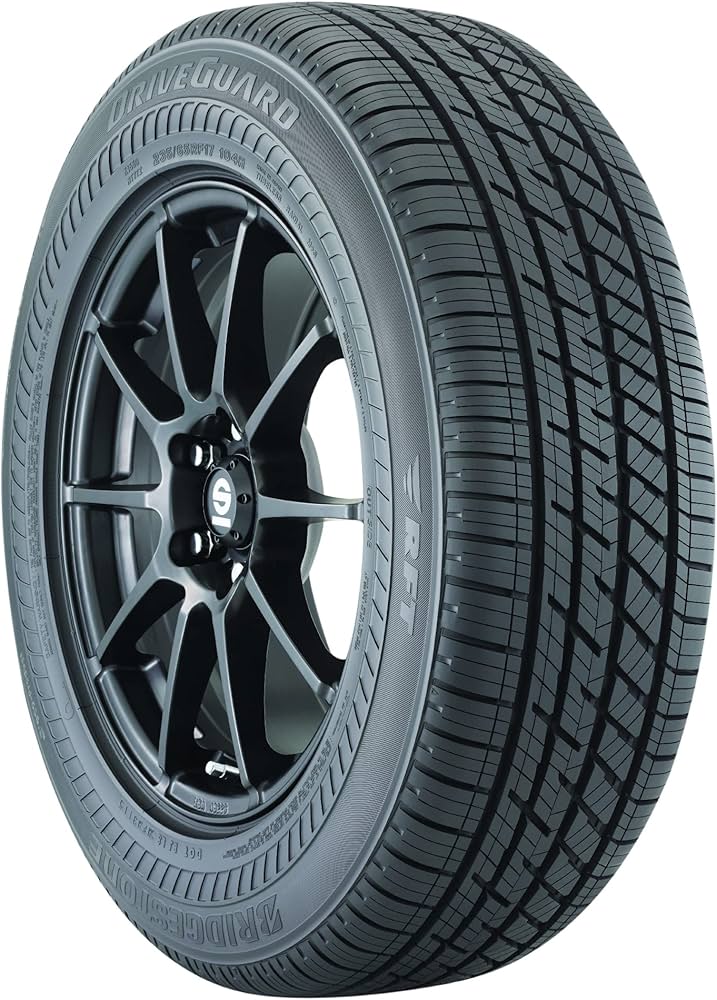
- Cooling fin sidewall design keeps the tire flexible, the main reason it rides softer than stiffer OE run-flats
- Mounts and balances at independent shops without the fight stiffer performance run-flats cause
- Priced $60–$100 below the Michelin and Goodyear options in equivalent BMW sizes
- NanoPro-Tech compound holds respectable wet braking despite the softer, comfort-tuned sidewall
- Steering response feels noticeably lazier than the Michelin or Pirelli alternatives in this lineup
- Tread life averages around 30,000 miles on rear-wheel-drive BMWs, decent but not class-leading
- A faint hum shows up at 45–55 mph on some size and vehicle combinations
Pirelli Cinturato P7 All Season Run Flat
- Optimized sidewall stiffness means it mounts and balances with fewer weights than stiffer performance run-flats
- Five-rib tread pattern keeps cabin noise close to luxury-sedan levels on smooth asphalt
- Silica-enhanced compound delivers reliable wet braking without sacrificing fuel efficiency
- Competitively priced against the DriveGuard while offering a more refined highway ride
- On-center steering feels vague compared to a true performance tire
- Treadwear reports are inconsistent — some owners see 30,000 miles, others barely reach 22,000
- Deep snow traction is limited, even though it’s rated as an all-season tire
Can’t Decide?
Our Top 2 Picks — Head to Head
Both are excellent. Here’s how to choose between them.
- Comfortable enough for daily commuting in any season
- 45,000-mile warranty more than double the 4S ZP’s tread life
- Confident grip down to freezing temperatures
- Elite dry and wet grip for spirited canyon driving
- OE-grade fitment data on M Performance trims
- Sharper turn-in than any other tire in this lineup
How to Choose the Right Run-Flat Tire for Your BMW
Six factors that matter before you buy — explained simply.
Match Your Exact OE Size and Load Index
Check the placard inside your driver’s door jamb before ordering anything. BMW staggered setups frequently pair a narrower front tire with a wider rear one, and run-flat tires must carry the correct XL (extra load) rating to support the vehicle’s weight after a puncture. Mixing in a non-XL tire can cause premature sidewall flex within a few thousand miles.
Understand the Sidewall Stiffness Tradeoff
Every run-flat tire reinforces its sidewall to support the car after a puncture, and that reinforcement is exactly what makes some models ride harsher than others. The Pilot Sport 4S ZP and Goodyear Eagle F1 favor a stiffer sidewall for cornering precision, while the DriveGuard and Cinturato P7 soften that structure for comfort.
Check the Real Staggered Treadwear Warranty
Most run-flat tires advertise a mileage warranty, but staggered BMW fitments can’t be rotated front-to-rear, which often cuts that coverage in half. A tire rated for 45,000 miles may only carry a 22,500-mile staggered warranty in the fine print. Read the actual warranty document, not just the headline number.
Confirm the Shop Has Run-Flat Mounting Equipment
Run-flat sidewalls resist a standard tire machine, and an inexperienced tech can damage a wheel or scratch a bead forcing one off. Stiffer performance run-flats like the Pilot Sport 4S ZP are hardest to mount; softer designs like the DriveGuard go on with far less drama. Call ahead and ask specifically.
Factor In TPMS Sensor Compatibility
BMW’s factory tire pressure monitoring system works with aftermarket run-flat tires without modification, but the sensors themselves age out over time. A failing TPMS sensor often gets mistakenly blamed on a brand-new tire. If your car is past 60,000 miles, budget for sensor battery replacement at the same visit.
Match the Tire to Your Actual Driving Style
A long highway commuter needs durability and low cabin noise, which points toward the Goodyear Eagle F1. A weekend track or canyon driver needs the Pilot Sport 4S ZP’s grip. A city driver who wants a quiet, easy-to-mount tire is better served by the DriveGuard or Cinturato P7.
Pro Tips
Quick Buying Checklist
Always check your driver’s door jamb placard for the exact OE size — BMW staggered setups mean front and rear sizes often differ.
Budget for a wheel alignment with every new set; off-spec toe wears stiff run-flat sidewalls unevenly fast.
Ask your shop if they run a dedicated run-flat tire machine before you book the appointment.
On xDrive models, replace all four tires together to protect the transfer case from tread-depth mismatch.
Past 60,000 miles, replace TPMS sensor batteries proactively so a dying sensor doesn’t get blamed on new tires.
Frequently Asked Questions
What is a run-flat tire and how does it work on a BMW?
A run-flat tire uses a reinforced sidewall that supports the car’s weight even after a complete loss of air pressure. It lets you drive up to 50 miles at a maximum of 50 mph to reach a shop or safe location. BMW builds most models around this technology instead of a spare tire.
Are aftermarket run-flat tires safe for my BMW, or do I need factory-only tires?
Aftermarket run-flat tires are safe as long as you match the correct size, load index, and speed rating from your door jamb placard. Major brands like Michelin, Bridgestone, Goodyear, and Pirelli build run-flat tires that meet the same safety standards as BMW’s original equipment.
How long do run-flat tires typically last on a BMW?
Tread life ranges from about 20,000 miles on ultra-high-performance summer run-flats to over 40,000 miles on durable all-season models. Alignment, tire pressure, and BMW’s naturally aggressive camber settings all affect how fast the tread wears down.
Will installing aftermarket run-flat tires affect my BMW’s factory warranty?
No. Installing a like-for-like replacement tire that matches your BMW’s specified size and load rating does not void the vehicle warranty. Keep your receipt and the tire’s spec sheet on hand in case a future suspension claim ever needs that documentation.
Can I mix run-flat and regular tires on a staggered BMW?
It’s not recommended. Mixing a run-flat and a standard tire creates uneven sidewall stiffness side to side, which can affect handling predictability in a skid. If you switch away from run-flats, replace all four tires and carry a spare or sealant kit instead.
Why do staggered BMW fitments cut the treadwear warranty in half?
Staggered setups use different front and rear tire sizes, so you can’t rotate them front-to-back like a non-staggered car. Manufacturers account for that uneven wear by halving the published mileage warranty, even though the tire itself is identical to the non-staggered version.
Is a performance run-flat worth the extra cost over a touring option on a 3 Series?
If you drive your BMW hard on back roads or track days, the extra grip and steering precision are worth the shorter tread life. If you mostly commute, a touring or all-season run-flat like the DriveGuard or Pilot Sport All Season 4 ZP saves money and lasts longer.
Final Verdict
Our Top Recommendations for 2026
After weighing real owner feedback against tread life, ride comfort, and mounting headaches, the Michelin Pilot Sport All Season 4 ZP earns our overall pick for most BMW drivers. If your BMW lives on a track more than a commute, the Pilot Sport 4S ZP rewards that focus, and budget-conscious commuters get the best return from the Bridgestone DriveGuard.