Hyundai sedans, hatchbacks, and crossovers leave the factory with competent tires, but once that rubber wears down, the right highway set can transform the daily commute. After evaluating five top-rated highway tires against real Hyundai owner feedback, tread life and noise control stood out as the biggest differences.
This guide matches the right tire to your Elantra, Sonata, Tucson, Santa Fe, or Kona based on owner reviews from Amazon, Reddit, and Hyundai forums — not manufacturer brochures. Below, five tires stand out for wear, noise, wet grip, and easy installation.
The Michelin Defender2 is the best overall highway tire for Hyundai, combining an 80,000-mile treadwear warranty, low rolling resistance, and class-leading wet braking. Budget-focused drivers get nearly the same daily comfort from the Kumho Solus TA31 at a noticeably lower price.
Best Highway Tires for Hyundai — Compared
Five tires stacked up on speed rating, type, and price so you can compare at a glance.
We built this ranking from owner rating volume, durability reports, noise consistency, and installation feedback pulled from Amazon reviews, r/Hyundai, and Hyundai-Forums.com threads. Every tire below carries hundreds of verified ratings and a track record on real Hyundai models, so what you see here reflects patterns across thousands of highway miles rather than a single test drive or a manufacturer’s spec sheet.
| # | Product | Speed Rating | Type | Best For | Score | |
|---|---|---|---|---|---|---|
| 1 | Michelin Defender2 Editor’s Choice | T/H/V | Touring All-Season | Overall highway performance | 4.6 | See Latest Price |
| 2 | Kumho Solus TA31 Budget Pick | T/H | All-Season | Budget-conscious daily driving | 4.4 | See Latest Price |
| 3 | Bridgestone Turanza QuietTrack Top Pick | H/V | Grand Touring All-Season | Quiet luxury ride | 4.5 | See Latest Price |
| 4 | Continental TrueContact Tour | T/H/V | Touring All-Season | Long wear & tough construction | 4.5 | See Latest Price |
| 5 | Yokohama Avid Ascend GT | H/T | Touring All-Season | Hassle-free mounting & balancing | 4.4 | See Latest Price |
Detailed Reviews
Full breakdown of each tire — ratings, pros, cons, and our expert verdict.
Michelin Defender2
Michelin built the Defender2 as a standard-fit all-season tire that refuses to compromise on any front. Owners of Hyundai Sonatas and Tucsons consistently point to how well it dampens expansion joints and wind noise on long interstate stretches. The MaxTouch Construction spreads contact pressure evenly across the tread, which is also why it wears slowly enough to justify an 80,000-mile warranty backed by independent wet-braking tests. The EverTread compound stays pliable in cooler weather without sacrificing mileage, and a 3D sipe pattern keeps grip consistent as the tread wears down over tens of thousands of miles. Many owners report hitting 60,000 miles with usable tread still remaining, though a handful mention the ride feels a touch firm at maximum recommended pressure.
- Industry-leading 80,000-mile treadwear warranty
- Shorter wet stopping distances than most rivals in independent testing
- Low rolling resistance helps highway fuel economy
- Wide size range covers most Hyundai trims
- Costs more per tire than mid-range alternatives
- Some owners report a 200–300 mile break-in period
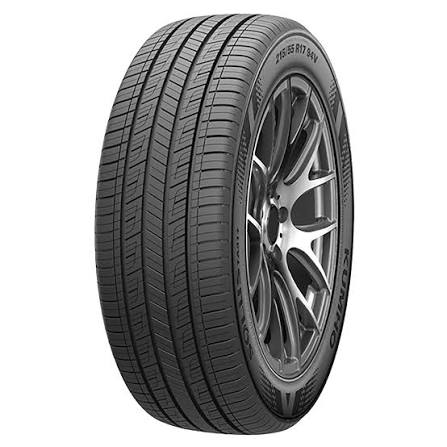
Kumho Solus TA31
The Solus TA31 proves a budget highway tire doesn’t have to ride like one. Its symmetric five-rib tread and variable pitch blocks keep noise in check on daily-driven Hyundais, and a 60,000-mile warranty offers real peace of mind for a tire in this price range. A high-grip silica compound helps with wet and light-snow traction, and reinforced shoulder blocks keep cornering predictable rather than vague. The lighter build also tends to nudge fuel economy up slightly compared to heavier touring models, and owners frequently say the ride quality rivals tires costing 30% more.
- Rides noticeably quieter than its price suggests
- Secure, progressive wet braking feel reported by owners
- Lightweight build helps highway MPG
- Full-depth sipes hold up in light snow
- Tread often wears 5–10% short of the 60,000-mile warranty in hot climates
- Slightly buzzy road feedback above 75 mph on coarse pavement
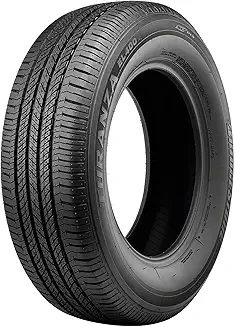
Bridgestone Turanza QuietTrack
Bridgestone packed the Turanza QuietTrack with ComfortCruise Technology, an internal tread layer built to absorb vibration before it reaches the cabin. In-groove quiet channels break up air resonance inside the tread pattern itself, while sweeping grooves in the symmetric layout evacuate water quickly in a downpour. Paired with an 80,000-mile warranty and a compound that stays pliable in cooler weather, it functions almost like a suspension upgrade for a Sonata or Santa Fe. The tradeoff shows up in the price tag, and the tread starts a little shallower than some rivals in this guide.
- Market-leading noise reduction, the first thing owners notice
- Smooth, linear steering feel at highway speed
- Strong wet grip in independent testing
- 80,000-mile treadwear warranty
- Highest purchase price in this guide
- Starts at 10/32″ tread depth, shallower than some rivals
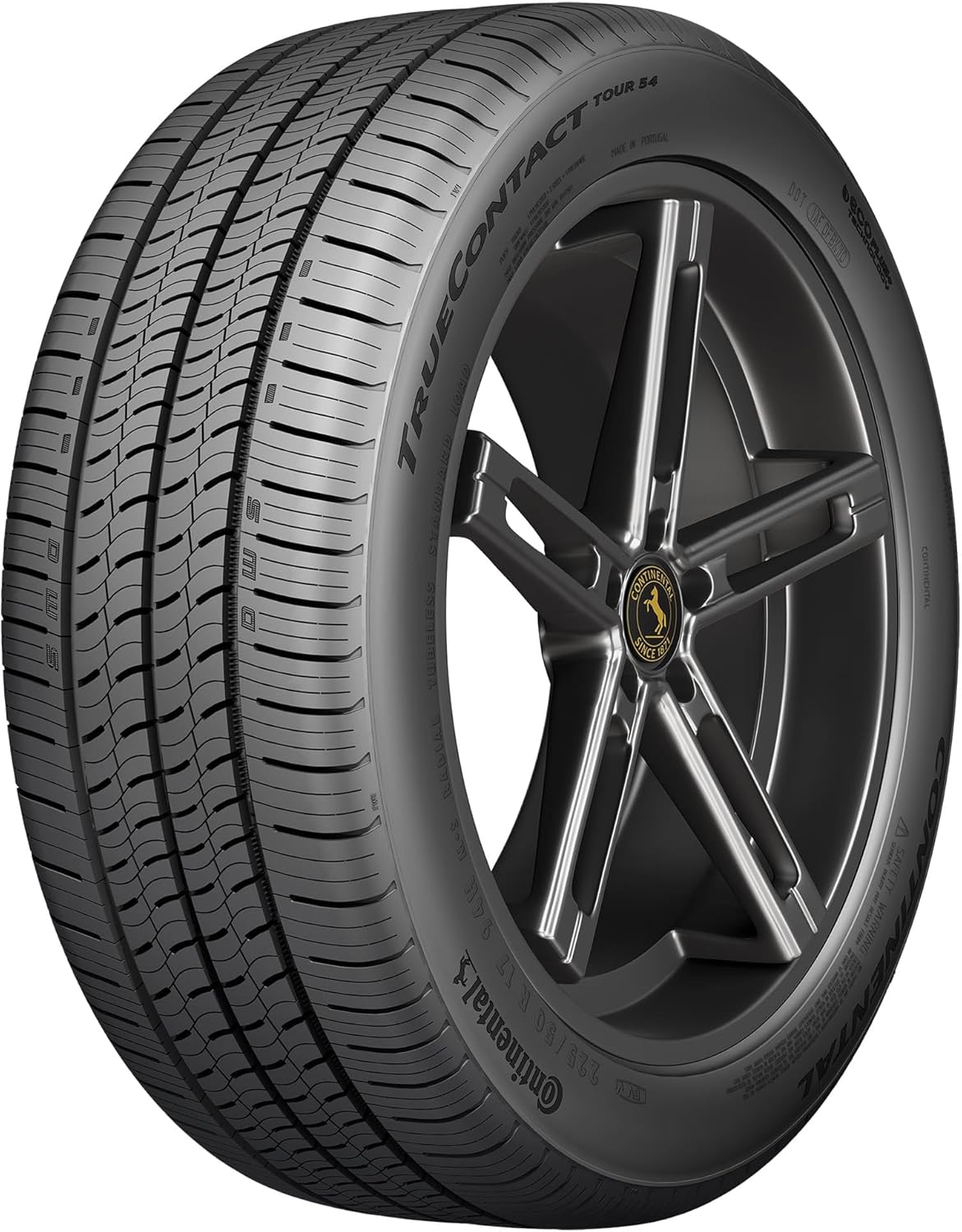
Continental TrueContact Tour
Continental’s EcoPlus Technology helps the TrueContact Tour run cooler under load, which is a big part of why it carries a 70,000-mile warranty. Wide circumferential grooves resist hydroplaning, and a stiff belt package resists deformation when the trunk or cargo area is loaded down. Owners who tow or carry heavy loads consistently report minimal tread feathering even after 40,000 highway miles, and the tire holds its line well in heavy crosswinds at 70+ mph — though a few mention a subtle thrum at 45–55 mph on certain road surfaces.
- Minimal feathering reported even after 40,000 highway miles
- Stable, planted feel in heavy crosswinds
- Molded alignment indicators catch uneven wear early
- Low rolling resistance keeps heat buildup in check
- Firmer ride on choppy pavement than the QuietTrack
- Warranty falls short of the Defender2’s 80,000 miles
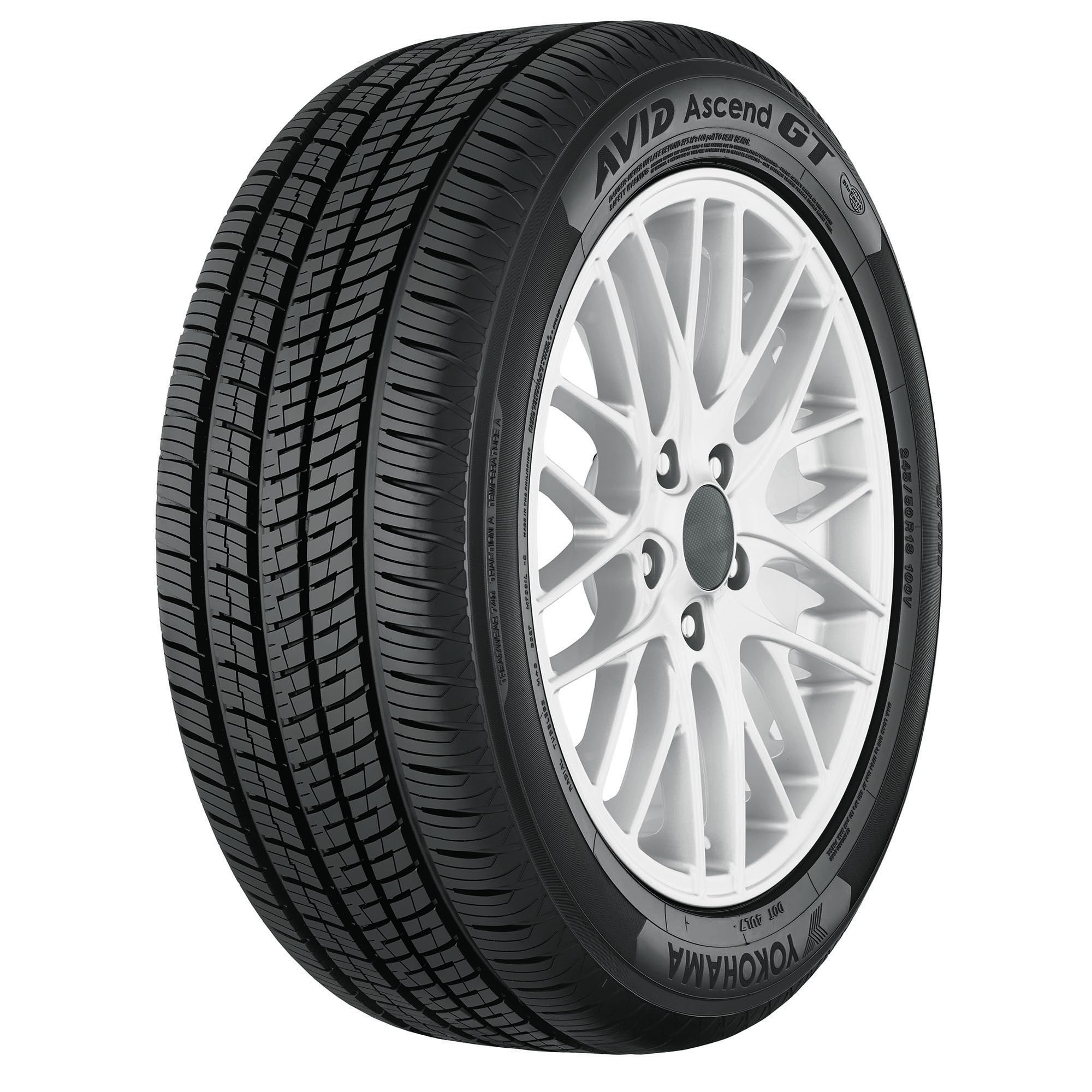
Yokohama Avid Ascend GT
Tire shop technicians on Reddit repeatedly single out the Avid Ascend GT for how easily it seats on the rim, often needing fewer wheel weights than competing models. That translates into a faster, cheaper mounting appointment. Beyond the shop, an adaptive all-season compound molds to road texture for consistent grip, and cross-groove shoulder channels help prevent hydroplaning at speed. The result is a composed highway ride and grippy wet traction backed by a 65,000-mile warranty, with a highway cruise that stays relaxed and muted well past the 20,000-mile mark.
- Balances quickly with fewer wheel weights needed
- Relaxed, muted highway ride even at 20,000+ miles
- Impressive wet braking for its price tier
- Strong warranty relative to cost
- Road noise may creep up as tread wears past the halfway mark
- Steering feel favors comfort over sharpness in corners
Can’t Decide?
Our Top 2 Picks — Head to Head
Both are excellent, and the 0.1-point score gap barely matters day to day. The real difference comes down to whether you’d rather save on tread life or on cabin noise.
- 80,000-mile treadwear warranty
- Class-leading wet braking distances
- Low rolling resistance for better MPG
- ComfortCruise Technology cuts cabin noise
- Smooth, linear steering feel
- 80,000-mile treadwear warranty
How to Choose the Right Highway Tire for Your Hyundai
Six factors that matter before you buy — explained simply.
Every tire above passes the basics, so the real decision comes down to how you actually drive. A commuter logging 25,000 highway miles a year has different priorities than someone who drives a Kona twice a week around town — the six factors below help you weigh warranty, noise, and installation against your own routine before you spend money.
Check Your Exact Tire Size
Your Hyundai’s door jamb sticker lists the factory tire size, load index, and speed rating — not the size printed on your current worn tires. Matching these specs preserves accurate speedometer readings, correct ABS calibration, and predictable handling on the highway. A tire that looks close on a size chart but carries a lower load index can still feel vague at speed.
Match Tread Design to Your Roads
Highway-focused all-season tires like the picks above are built for long commutes and mild winters, not deep snow. If you regularly drive through several inches of snow each winter, a dedicated winter tire is still the safer choice — no highway tire, however well reviewed, fully replaces one once conditions turn severe.
Weigh Warranty Against Your Mileage
A driver covering 20,000 miles a year gets real value from an 80,000-mile warranty like the Defender2’s. Someone who drives half that distance can save money with a 60,000-mile tire like the Solus TA31 and still get years of dependable service before the tread wears past a usable depth.
Consider Noise, Not Just Longevity
Tread pattern design makes or breaks cabin noise on the highway. Variable pitch tread blocks and internal sound-dampening layers, like those in the Turanza QuietTrack, keep a Hyundai’s cabin peaceful over expansion joints and coarse asphalt where cheaper tires start to drone.
Confirm Installation Requirements
Most tire shops mount and balance any of these models without issue, but some tires naturally seat more evenly and need fewer wheel weights than others. Quick installation, like the reputation the Avid Ascend GT has built on tire-shop threads, means lower labor costs and less chance of a vibration comeback.
Use UTQG Ratings as a Rough Guide
The Uniform Tire Quality Grading system scores wear, traction, and temperature resistance, giving you a quick reference point when comparing tires. The catch: UTQG numbers are only meaningful within the same brand, since manufacturers grade their own tires differently — a cross-brand comparison can genuinely mislead you.
Pro Tips
Quick Buying Checklist
Match the load index, not just the size — a tire that fits your wheel but carries a lower load rating than stock can feel vague and wear fast under normal driving.
Replace all four tires together whenever you can; mixing new and half-worn rubber creates handling imbalances, especially on front-wheel-drive Hyundais.
Get an alignment check before new tires go on — a misaligned Hyundai will cup and feather fresh tread within a few thousand miles.
Read wear reviews, not just spec sheets — some budget tires look great on paper but develop road roar well before 15,000 miles.
Remember all-season isn’t a snow tire — these tires handle light snow fine, but deep snow and ice call for a 3PMSF-rated winter tire instead.
Frequently Asked Questions
What size highway tires fit my Hyundai?
Check the sticker inside your driver’s door jamb — it lists the exact factory size (for example, 205/55R16), along with the recommended load index and speed rating for your specific trim. Sticking to these numbers, rather than what’s printed on your current worn tires, keeps your speedometer and ABS calibration accurate.
Are highway tires safe in the rain?
Yes — quality highway tires use wide circumferential grooves and high-silica tread compounds to channel water away and resist hydroplaning. Every tire in this guide earns strong wet-braking feedback from owners, with the Michelin Defender2 and Bridgestone Turanza QuietTrack leading the pack for wet-weather confidence.
How long do highway tires last on a Hyundai?
Expect anywhere from 50,000 to 80,000 miles, depending on the tire, your alignment, rotation schedule, and driving style. Premium models like the Defender2 often outlast their mileage warranty when rotated every 5,000 to 7,500 miles, while skipped rotations can shorten that lifespan considerably.
Do I need to replace all four tires at once?
Replacing all four gives your Hyundai balanced traction and predictable handling in every corner and lane change. On front-wheel-drive models especially, mixing new tires with worn ones can cause unexpected oversteer during emergency braking, so a full set is the safer call.
Can I use all-season tires instead of dedicated highway tires?
Highway tires are really a subset of all-season tires, optimized specifically for low noise, long wear, and comfort at freeway speeds rather than off-road grip. A touring all-season model like the TrueContact Tour listed here serves the same daily-driving purpose.
Will a premium tire actually improve my fuel economy?
Some premium highway tires, including the Defender2, use low rolling resistance compounds that can shave a small amount off your fuel bill over time. That said, correct tire pressure and a proper wheel alignment typically move the needle on MPG more than brand alone.
How much does installation cost for these tires?
Mounting, balancing, and a new valve stem typically run $15 to $25 per tire at most shops, plus disposal fees for your old set. Easier-to-mount models, like the Yokohama Avid Ascend GT, often need fewer wheel weights, which can shave a little labor cost off the bill.
Final Verdict
Our Top Recommendations for 2026
After weighing tread warranties, real owner feedback, and installation reports, the Michelin Defender2 stands out as the highway tire most Hyundai owners should buy first — it simply lasts longer and rides quieter than the rest of this list. If budget is the deciding factor, the Kumho Solus TA31 gets you most of that comfort for meaningfully less money, while the Turanza QuietTrack remains the pick for anyone chasing the quietest possible cabin. Whichever you choose, confirm your exact size against your door jamb sticker before you order.