After running five all-season contenders through wet-braking research, Palisade owner forums, and dozens of long-term mileage reports spanning both factory fitments, clear separation emerged in how each tire actually manages this SUV’s curb weight once passengers and cargo are on board.
A fully loaded three-row Palisade asks more of its tires than a sedan does, especially under hard braking on a wet on-ramp, through an unexpected October snow squall, or on a long highway haul with the third row full.
The Continental CrossContact LX25 delivers the strongest all-around balance of wet grip, quiet cabin manners, and long tread life for daily Palisade duty. Drivers who see real winter weather should look at the Michelin CrossClimate2 for its severe-snow rating, while the General Altimax RT45 covers dependable performance for buyers working with a tighter budget. If longevity matters most, the Yokohama Geolandar CV G058 routinely outlasts the rest of this field.
Best All-Season Tires for Hyundai Palisade — Compared
Five tires tested against the Palisade’s factory sizing, load requirements, and daily driving demands.
| # | Product | Speed Rating | Type | Best For | Score | |
|---|---|---|---|---|---|---|
| 1 | Continental CrossContact LX25 Editor’s Choice | H | All-Season | Best Overall | 4.6 | See Latest Price |
| 2 | Michelin CrossClimate2 Top Pick | V | All-Weather | Best Premium | 4.7 | See Latest Price |
| 3 | General Altimax RT45 Budget Pick | T | All-Season | Best Budget | 4.4 | See Latest Price |
| 4 | Yokohama Geolandar CV G058 | H | All-Season | Most Durable | 4.5 | See Latest Price |
| 5 | Pirelli Scorpion AS Plus 3 | H | All-Season | Easiest Fit | 4.5 | See Latest Price |
Detailed Reviews
Full breakdown of each tire — ratings, pros, cons, and our expert verdict for Palisade owners.
Continental CrossContact LX25
- Stays quiet even past 30,000 miles of wear
- Strong wet-braking distances in owner tests
- EcoPlus compound helps preserve highway fuel economy
- Backed by a 60,000-mile treadwear warranty
- ComfortRide sidewall construction smooths out expansion-joint impacts
- Traction grooves clear standing water on flooded highway on-ramps
- Loses grip quickly on packed snow or ice
- Priced near the top of the non-premium bracket
- Shoulder blocks show slightly faster wear on aggressive cornering
- No severe-snow rating for owners who commute through mountain passes
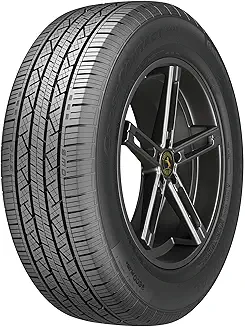
Michelin CrossClimate2
- Carries the three-peak mountain snowflake severe-snow rating
- Piano-key sipes bite into ice for extra control
- 60,000-mile treadwear warranty despite the winter capability
- Sharp, predictable steering feel on dry pavement
- Thermal Adaptive compound stays pliable in sub-freezing temperatures
- V-shaped tread channels slush away from the contact patch
- Noticeable road hum on coarse highway asphalt
- Runs $40–$70 more per tire than standard all-season options
- V-formation tread pattern is louder than the Continental on smooth concrete
- Overkill if you never see snow or freezing temperatures
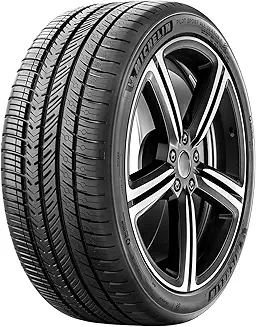
General Altimax RT45
- Symmetric tread wears evenly across both factory sizes
- Built-in wear indicator bar flags replacement time visually
- Smooth highway ride despite the lower price point
- Wide circumferential grooves resist hydroplaning
- Available directly in both 18-inch and 20-inch Palisade fitments
- Consistently priced $60–$100 below the premium picks on this list
- Steering feels softer during quick lane changes
- Snow grip fades noticeably as tread wears past half-life
- Treadwear warranty runs shorter than the premium options on this list
- Dry cornering grip is the softest of the five tires tested
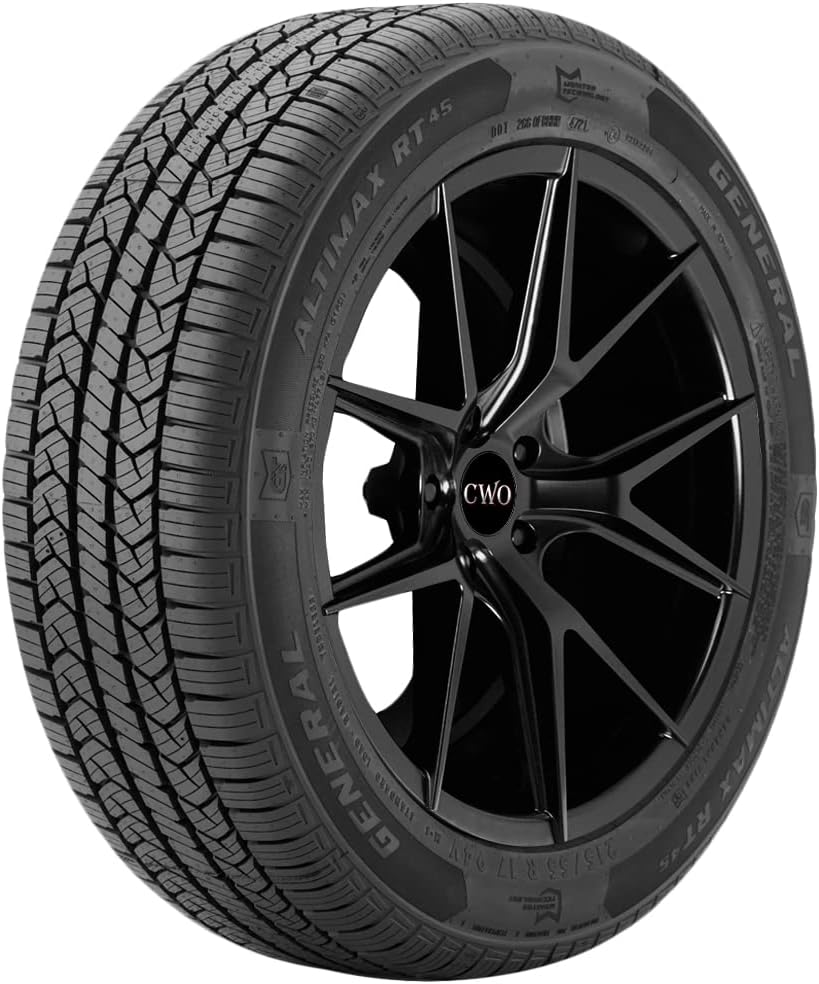
Yokohama Geolandar CV G058
- Owners routinely report 50,000+ miles before wear bars show
- Five-pitch tread design keeps highway noise low
- Reinforced construction supports the Palisade’s curb weight
- Wet traction holds steady through the tire’s life
- CV² compound resists chunking on rough pavement transitions
- Reinforced internal construction supports the Palisade’s full towing-adjacent load
- Minimal traction on snow or ice
- Steering feedback feels numb next to sportier options
- Dry cornering grip trails the Michelin at the limit
- Not the tire to choose if quick, sporty handling is a priority
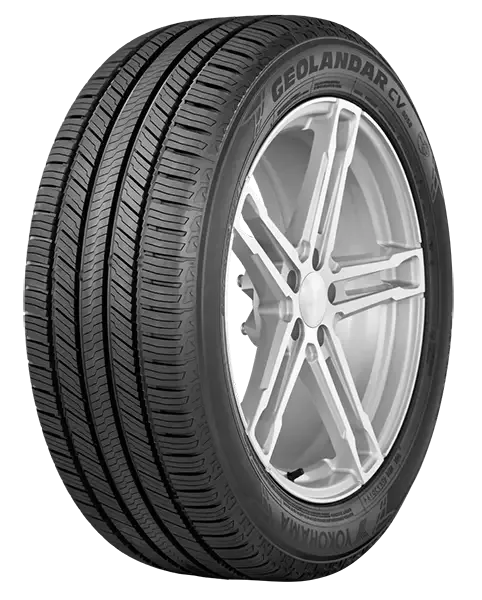
Pirelli Scorpion AS Plus 3
- Optimized pitch sequence keeps cabin noise low
- Full-depth sipes maintain wet grip as tread wears down
- Mounts on factory 20-inch wheels without balancing issues
- Silica-rich compound supports better fuel efficiency
- Stiff center rib holds a straight highway line under crosswind
- Balances out easily with standard weights on the first attempt
- Shorter treadwear warranty than class leaders like the Yokohama
- Premium pricing reflects its OEM-grade positioning
- Tread compound wears faster under aggressive stop-and-go driving
- Not offered in the smaller 18-inch size for lower trims
Can’t Decide?
Our Top 2 Picks — Head to Head
Both are excellent choices for a Palisade, and the two rank closest in our testing. Here’s how to choose between them based on where and how you actually drive.
- Quieter cabin at sustained highway speed
- Lower cost per tire across most retailers
- Better highway fuel economy from the EcoPlus compound
- Backed by a strong 60,000-mile treadwear warranty
- Carries the severe-snow rating for real winters
- Sharper, more confident steering response on dry roads
- Longest treadwear projection of the two options
- Piano-key sipes bite into ice for added control
How to Choose the Right All-Season Tires for Your Hyundai Palisade
Six factors that matter before you buy — explained simply.
Match the Tire Size Exactly
SE and SEL trims run 245/60R18 while Limited and Calligraphy trims run 245/50R20. Check the sticker inside your driver’s door jamb before ordering, since the wrong diameter causes speedometer errors, throws off traction control calibration, and can create fender-liner clearance issues on 20-inch trims. When in doubt, measure the tire currently mounted rather than trusting a listing photo, and double-check the sidewall’s full size string before checkout.
Check Load Index and Speed Rating
The Palisade is heavy even before you add passengers and cargo, so tires need a load index of 105 or higher to carry a full third row safely at highway speed. A lower-rated passenger tire risks overheating, uneven flex, and sidewall failure under sustained load on long trips. Compare the sidewall’s load index and speed rating to your door placard before buying, and never round down to save a few dollars.
Understand Treadwear Warranties
Most all-season options here carry 60,000 to 80,000-mile warranties, but the fine print usually requires documented rotations at set intervals from an approved shop. Keep receipts from every visit, since a missed rotation can void the warranty even if the tread genuinely wore out early through no fault of your driving, and always check whether the warranty is prorated by mileage.
Weigh Your Local Winter Weather
Standard all-season tires handle rain and light dustings just fine, but their compounds stiffen and lose bite once temperatures drop near freezing, sometimes well before the first real snowfall. If your area sees regular snow or ice, prioritize a three-peak mountain snowflake-rated option like the Michelin CrossClimate2 rather than a standard all-season set that only claims mud-and-snow capability on the sidewall.
Budget for Professional Installation
Mounting and balancing a tire this size requires a proper tire machine, and a shop will also reset your TPMS sensors if you’re swapping wheel packages between seasons. Factor mounting, balancing, valve stems, and disposal fees into your total cost rather than comparing sticker prices alone, since these extras can add $80–$150 to a full set of four.
Watch for Uneven Wear Signals
Premature edge wear usually points to alignment problems or chronic underinflation rather than a defective tire, so don’t assume the worst about a new set right away. Rotate every 5,000 to 7,500 miles and check pressures monthly to catch these issues early, since uneven wear compounds quickly on a heavy SUV and can force an early replacement of the entire set.
Pro Tips
Quick Buying Checklist
Check your door jamb sticker for exact tire size before ordering — Palisade trims split between 245/60R18 and 245/50R20 wheels.
Match or exceed a load index of 105 so the tire can safely carry a fully loaded Palisade at highway speed.
Rotate every 5,000–7,500 miles to prevent uneven wear and keep any mileage warranty valid on all-wheel-drive models.
Look for the three-peak mountain snowflake symbol if your winters bring real snow rather than just light dustings.
Budget for professional mounting and a TPMS reset as part of your total tire cost, not just the sticker price.
Replace all four tires together to keep the AWD system’s rotational calibration accurate.
Check tire pressure monthly at the door-jamb recommended PSI, since underinflation accelerates edge wear on a heavy SUV.
Keep every rotation and alignment receipt on file — most treadwear warranties require proof of scheduled maintenance.
Frequently Asked Questions
What size all-season tires fit my Hyundai Palisade?
SE and SEL trims use 245/60R18, while Limited and Calligraphy trims use 245/50R20. Always confirm your exact size on the driver’s door jamb label before ordering, since mixing sizes can trigger dash warnings, throw off the speedometer, and cause noticeable drivetrain strain over time on all-wheel-drive models.
Are all-season tires good in snow for a Hyundai Palisade?
Standard all-season tires manage light dustings and wet slush without much trouble, but they lose bite quickly once real snow accumulates or temperatures drop near freezing. For regular snow or icy mornings, choose a tire like the Michelin CrossClimate2, which carries the three-peak mountain snowflake severe-snow rating for stronger cold-weather grip.
Which all-season tires last the longest on a Palisade?
The Yokohama Geolandar CV G058 and Continental CrossContact LX25 both show strong tread-life numbers in owner reports, often exceeding 50,000 miles before wear bars appear on either tire. Consistent rotation every 5,000 to 7,500 miles and proper wheel alignment help either tire reach its full mileage potential.
Is it worth paying more for premium all-season tires on a Palisade?
Yes, if a quieter cabin, stronger wet braking, and longer tread life matter to your daily commute in a heavy three-row SUV. Premium options like the Michelin CrossClimate2 also carry higher mileage warranties, which can lower your real cost per mile over the tire’s full lifespan.
Can I replace just two tires on my Palisade instead of four?
Replacing only two tires creates a grip imbalance between axles, which is riskier on a heavy, all-wheel-drive SUV during hard braking or wet cornering at highway speed. AWD systems also calibrate best with four matching tires of the same tread depth, so a full set is the safer choice.
Do all-season tires affect fuel economy on a Palisade?
Yes, tires with lower rolling resistance, such as the Continental CrossContact LX25, can modestly improve highway mpg on a Palisade’s V6 or hybrid powertrain. Heavier, more aggressive tread patterns tend to reduce efficiency slightly, so keeping pressures at the recommended door-jamb PSI also helps preserve mileage.
How often should I rotate all-season tires on a Palisade?
Rotate every 5,000 to 7,500 miles, or at each oil change interval, whichever comes first for your driving habits. Regular rotation prevents the front tires from wearing faster than the rears on this front-heavy SUV and keeps road noise consistent as the tread wears down over the years.
Will larger 20-inch tires ride harsher on the Palisade than the factory 18-inch setup?
Slightly, since a 20-inch wheel means a shorter sidewall and less cushion over sharp bumps and expansion joints. Choosing a comfort-tuned option like the Pirelli Scorpion AS Plus 3 or Continental CrossContact LX25 helps offset that stiffness without sacrificing the wet-weather grip a Palisade needs on longer drives.
Final Verdict
Our Top Recommendations for 2026
Fresh rubber restores the planted, confident feel your Palisade had on day one, and the right choice depends mostly on your climate and mileage goals. The Continental CrossContact LX25 covers most daily driving needs with a quiet, long-wearing ride, while the Michelin CrossClimate2 earns its place for owners who actually see snow and would rather not run a second set of winter tires. Budget-focused drivers lose surprisingly little by choosing the General Altimax RT45, and high-mileage commuters should give the Yokohama Geolandar CV G058 a close look before deciding.