Winter turns an unheated garage into a workspace you avoid, and after cross-referencing hands-on owner data across five electric garage heaters, we found real differences in heat-up speed, safety, and installation hassle for mechanics and woodworkers alike.
Running costs, breaker requirements, and how evenly heat spreads across a two-car bay separate the best models from disappointing ones. We compared plug-in portables against hardwired ceiling units, weighing wattage per square foot against real owner complaints about noise, thermostat accuracy, and long-term reliability before ranking these five picks.
The Dr. Infrared DR-988 earns our top spot for most home workshops, combining strong forced-air heat with safe, portable operation. Buyers wanting a permanent solution should consider the Fahrenheat FUH54, while the Comfort Zone CZ220 offers hardwired heat at the lowest cost. Anyone in a small shed or single-car bay is better served by the plug-in Heat Storm than by any of the 240V options.
Our Top 5 Garage Heater Rankings
- Dr. Infrared DR-988— Best Overall for most two-car home workshops
- Comfort Zone CZ220— Best Budget for large garages on a tight budget
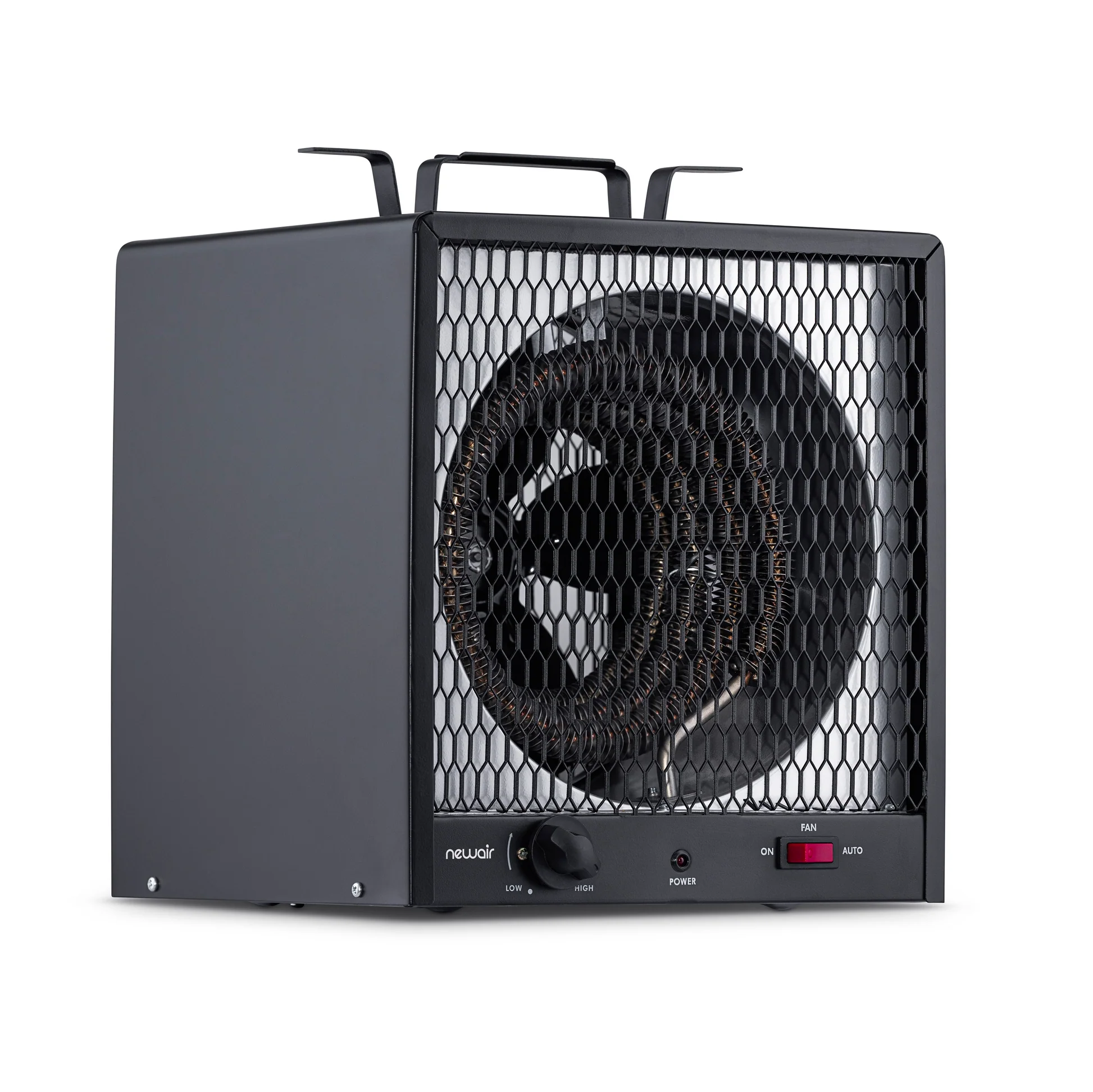
- NewAir G56— Best Premium build for heavy daily use
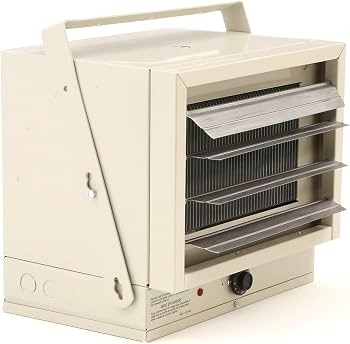
- Fahrenheat FUH54— Most Durable for decades of hands-off reliability
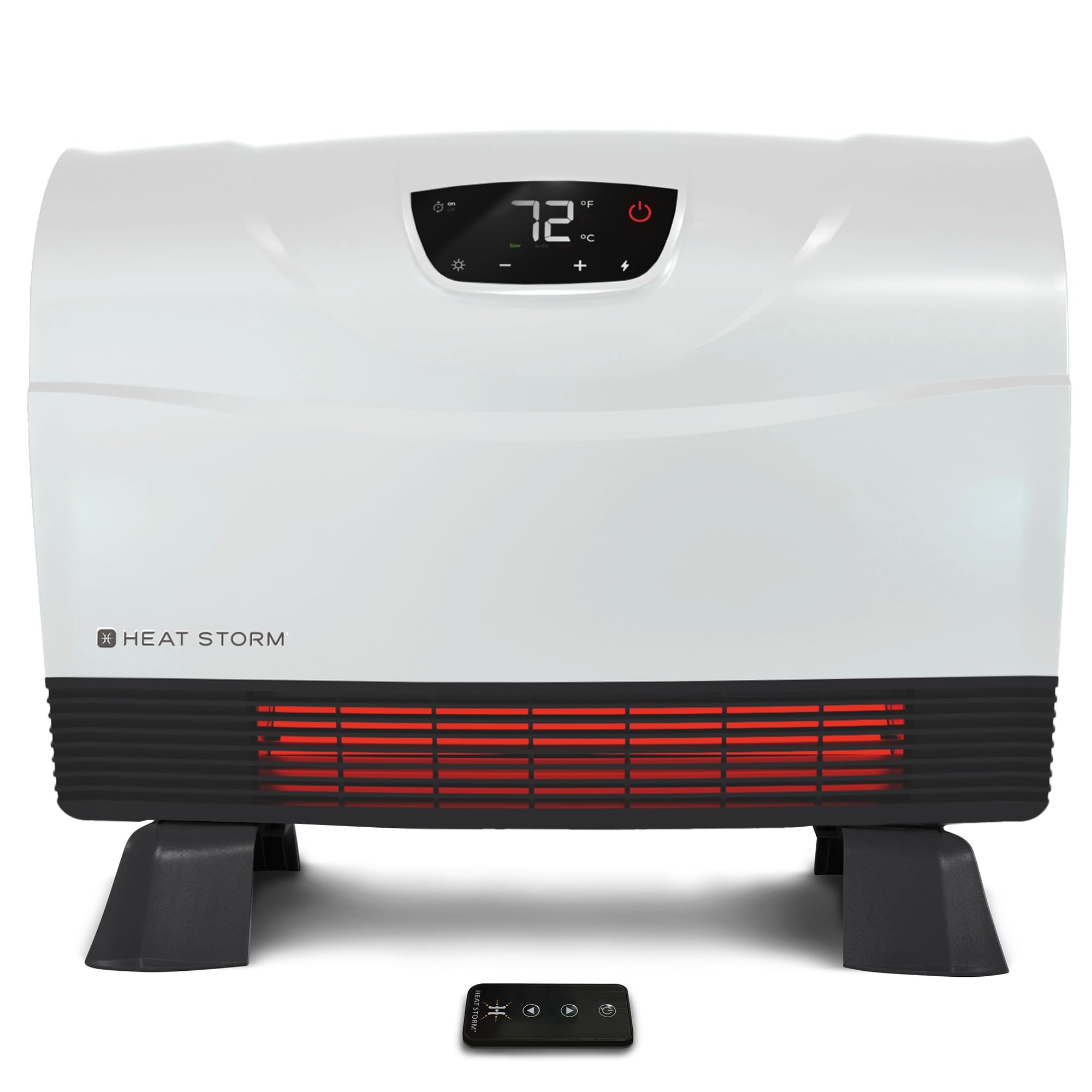
- Heat Storm HS-1500-PHX— Easiest Install for small garages and sheds
Best Garage Heaters — Compared
Five electric heaters compared on output, power type, and where each one fits — scan this table first, then jump to the detailed review for whichever model best matches your garage.
| # | Product | Heat Output | Power Type | Best For | Score | |
|---|---|---|---|---|---|---|
| 1 | Dr. Infrared DR-988 Editor’s Choice | 5600W | 240V Electric | Two-car workshops | 4.4 | See Latest Price |
| 2 | Comfort Zone CZ220 Budget Pick | 7500W | 240V Hardwired | Large garages on a budget | 4.2 | See Latest Price |
| 3 | NewAir G56 | 5600W | 240V Electric | Heavy daily use | 4.3 | See Latest Price |
| 4 | Fahrenheat FUH54 Top Pick | 5000W | 240V Hardwired | Decades of reliable heat | 4.5 | See Latest Price |
| 5 | Heat Storm HS-1500-PHX | 1500W | 120V Plug-in | Small garages & sheds | 4.3 | See Latest Price |
Detailed Reviews
Full breakdown of each heater — ratings, pros, cons, and who each model actually fits, based on patterns across owner feedback rather than spec sheets alone.
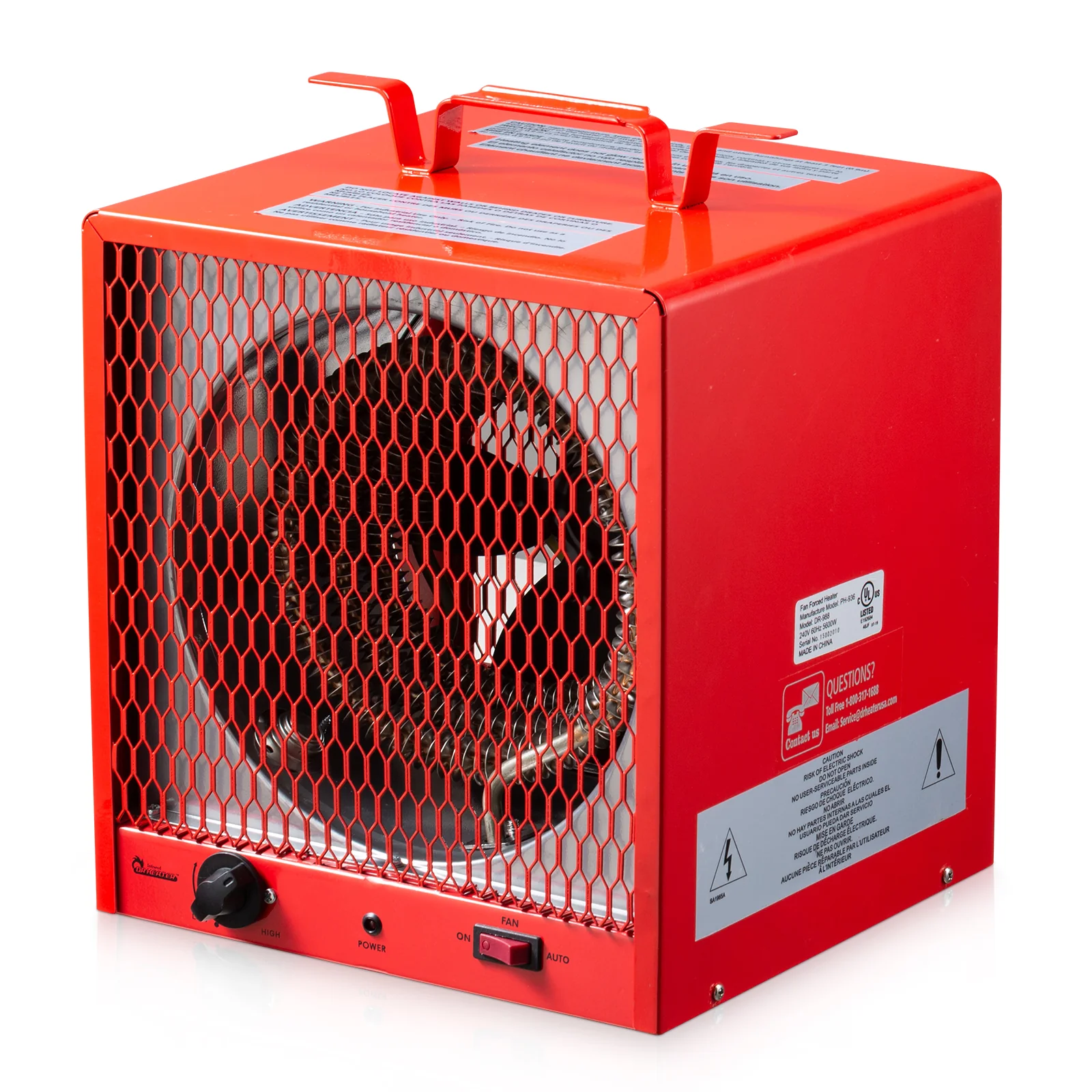
Dr. Infrared DR-988
- Reaches comfortable temperature in a two-car bay in under 30 minutes on the 5600W setting
- Built-in thermostat cycles automatically instead of running continuously once the space is warm
- Zero-emission electric operation is safe to run near sawdust and gasoline vapors
- Large rear wheels and a top handle make it easy to roll between the garage and a detached workshop
- Overheat protection cuts power automatically if a drop cloth or dust buildup restricts airflow around the unit
- Requires a dedicated 240V outlet, often meaning an electrician if one isn’t already installed
- Included power cord is short and needs a properly rated 240V extension for larger garages
- Running the 5600W high setting costs noticeably more per hour than the smaller 1500W infrared option
- At full output the blower is audible enough to require raising your voice nearby
Comfort Zone CZ220
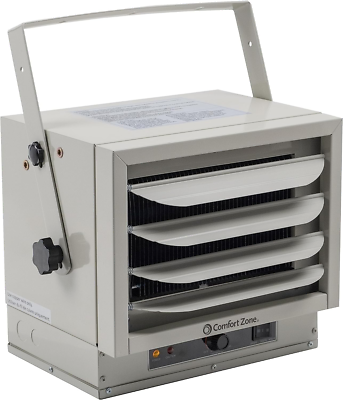
- 7500W output heats spaces up to 750 square feet, more capacity than similarly priced units
- Ceiling mount keeps the unit out of the way in a cluttered workshop with limited wall space
- Adjustable louvers direct airflow toward the workbench instead of heating the whole ceiling
- Fan-forced airflow reaches corners a single wall-mounted unit would leave cold in a three-car bay
- Cost per watt undercuts every other model on this list, even after adding a separate thermostat
- Ships without a thermostat, so cycling requires a separate line-voltage thermostat purchase
- Fan noise on high is noticeably louder than the Dr. Infrared or NewAir units
- Hardwiring into a ceiling junction box typically adds an extra hour of electrician labor versus a plug-in unit
- Ceiling mounting means airflow direction is fixed once installed, unlike a repositionable portable unit
NewAir G56
- All-steel housing shrugs off drops and daily workshop abuse better than plastic-paneled competitors
- Tip-over shutoff cuts power automatically if the unit is knocked onto its side
- Dual 5600W/4800W settings let you dial back output on milder days to save power
- Hardwire bypass option lets you convert it to a permanent fixture later if you change your mind
- Even heat distribution across a standard two-car bay with no noticeable cold spots near the corners
- Costs more than the Dr. Infrared for the same 5600W output
- Thermostat dial markings run a few degrees off, so a separate room thermometer helps
- The steel exterior gets noticeably hot to the touch during extended runs, so it needs clearance from painted walls
- Heavier than comparable portable units, making it less convenient to move solo up stairs or ramps
Fahrenheat FUH54
- Steel-sheathed heating element resists burnout even after 15+ years of continuous winter use
- Heavy-gauge steel cabinet and powder coat finish hold up in unheated, humid outbuildings
- Manual reset high-limit switch adds a mechanical safety backup beyond the standard thermal cutout
- Adjustable louvers let you angle airflow directly at a workbench instead of heating the whole ceiling void
- Owners report units still running after 15 years in unheated barns with only the thermostat ever replaced
- No thermostat included, adding roughly $30 to $50 to the total installed cost
- Mounting bracket alignment is awkward for one person working alone
- Fan noise is louder at startup than at steady-state operation, which some owners notice in a quiet shop
- No portability at all — this is a permanent, hardwired fixture once installed
Heat Storm HS-1500-PHX
- Plugs into any standard 120V outlet, so setup takes under five minutes from box to running
- Infrared quartz elements warm your body immediately instead of waiting for surrounding air to heat
- Cool-touch exterior stays safe to bump against, unlike exposed metal coil heaters
- Included remote control lets you adjust the auto-shutoff timer without walking over to the unit
- No permit, breaker upgrade, or electrician visit needed at any point in the setup process
- Effective heating range tops out around 150 square feet, too small for a two-car bay
- Digital thermostat reads a few degrees off actual room temperature per owner reports
- Owners in larger detached garages report needing two units to feel a real difference in ambient temperature
- Infrared warmth fades quickly once you step outside the direct line of the heating panel
Can’t Decide?
Our Top 2 Picks — Head to Head
Both are excellent, but they solve different problems — one prioritizes speed and portability, the other prioritizes decades of maintenance-free heat. Here’s how to choose between them.
- Ready to use in under 30 minutes with no hardwiring or electrician visit required
- Thermostat included out of the box, so there’s no extra part to buy or install
- Fully portable — roll it to a different bay or take it with you if you move
- Steel-sheathed element rated for decades of continuous use with minimal maintenance
- Heavy-gauge steel cabinet built specifically for unheated barns and outbuildings
- Manual reset high-limit switch backs up the standard automatic thermal cutout
How to Choose the Right Garage Heater
Six factors that matter before you buy — explained simply, without the marketing spec-sheet language most retailers rely on.
Power Source & Garage Size
Electric heaters need access to either a 120V household outlet or a 240V circuit like the ones used for welders and dryers. A 1500W plug-in unit comfortably heats around 150 square feet, while a 5600W model covers a typical two-car bay. Garages over 750 square feet usually need a 7500W or larger hardwired unit to keep up. Measure the actual ceiling height too, since a garage with a 12-foot peak needs more output than the same footprint with an 8-foot ceiling. When in doubt, size up rather than down — an oversized heater simply cycles off sooner, while an undersized one runs constantly and never quite catches up.
Installation Complexity
Plug-in heaters connect in seconds, but hardwired ceiling and wall units need a licensed electrician unless you’re comfortable running a new circuit yourself. Budget $150 to $400 for professional installation depending on how far the unit sits from your electrical panel. Ceiling mounts also require solid structural attachment above the workspace. Check your local permit rules too, since some municipalities require an inspection after adding a new 240V circuit. Ask any electrician you hire for a written quote up front, since panel upgrades on top of the new circuit can push costs well past a basic estimate.
Forced Air vs. Infrared Heat
Forced-air heaters warm the surrounding air and circulate it with a fan, which evenly heats an enclosed garage but adds some noise. Infrared units warm objects and people directly, so they perform better in drafty spaces where air heat escapes quickly through gaps. Choose forced air for a sealed garage and infrared for one that gets opened often. Mechanics who step outside frequently tend to prefer infrared, since the warmth returns instantly instead of needing the air to reheat. Some owners run both types together — infrared near the workbench and forced air to keep the whole bay above freezing.
Thermostat & Temperature Control
A built-in thermostat cycles the heater on and off automatically, which saves electricity compared to running continuously. Several hardwired ceiling models, including budget units, ship without one, meaning you’ll need to add a separate line-voltage thermostat for roughly $30 to $50. Portable heaters more often include integrated controls out of the box. A remote-controlled thermostat is worth the small upcharge if the heater sits somewhere hard to reach, like a ceiling mount above a workbench. Look for a thermostat with a wide dial range, since a unit that only cycles between two fixed settings offers little real control.
Safety Features & Clearances
Overheat protection shuts the unit down automatically if airflow gets blocked by tools or clutter. Tip-over switches matter most for portable models moved around a busy shop floor. Keep flammable liquids, sawdust, and aerosol cans at least three feet from any heater regardless of its safety features. A manual reset high-limit switch, found on some hardwired units, adds a second layer of protection beyond the standard automatic cutout. Never leave a portable electric heater running unattended overnight, even one with every safety feature listed on the box.
Running Costs & Efficiency
Electric heat costs more per BTU than natural gas, but skips the venting and fuel storage that gas units require. Running a 5600W heater for eight hours costs roughly $6 to $8 at average electricity rates, so a working thermostat that limits runtime pays for itself within a single winter. Occasional weekend use in a well-insulated garage keeps electric heating costs modest even at higher wattages. Compare your local electricity rate against the heater’s listed amp draw before assuming any single model will be cheaper to run than another.
Pro Tips
Quick Buying Checklist
Size it right: use 10–15 watts per square foot as your starting point — cold climates and uninsulated garages need the higher end of that range, not the lower one.
Check your panel first: heaters over 4800W usually need a 240V, 30-amp double-pole breaker, so confirm you have an open slot before you buy anything.
Add a thermostat: units without one run continuously and waste power until you shut them off manually, which adds up fast over a whole winter.
Keep 3 feet of clearance: gasoline, paint thinner, and sawdust sit too close to heaters more often than you’d think, especially in a cluttered corner.
Never run unvented gas heaters indoors: pair any combustion heater with a working CO detector and a cracked window or door for fresh air.
Insulate before you heat: even the best heater struggles to keep an uninsulated garage warm through a real cold snap, no matter the wattage.
Frequently Asked Questions
What size garage heater do I actually need?
Multiply your garage’s square footage by 10 to 15 watts to estimate the output you need. A 500-square-foot garage in a mild climate needs roughly 5,000 watts, while cold climates and poor insulation push that number higher. Most two-car garages are comfortable with a 5,600W heater, and rounding up slightly beats coming up short on a bitter January morning.
Are electric garage heaters expensive to run?
Electric heat costs more per BTU than gas, but it skips installation and venting costs. Running a 5,600W heater for eight hours costs roughly $6 to $8 at average electricity rates. Adding a working thermostat cuts that runtime significantly and lowers your monthly bill.
Can I run a propane heater in a closed garage?
Only use a propane heater rated for indoor use, and even then crack a window or door for airflow. Combustion produces carbon monoxide and water vapor, so always run a CO detector and follow the manufacturer’s listed clearance distances around the unit. Electric models avoid this risk category entirely.
Do garage heaters dry out the air inside the workshop?
Forced-air electric heaters can lower humidity slightly as they circulate warm air. Infrared heaters don’t have this effect since they warm objects directly rather than the surrounding air. This matters more if you’re doing woodworking than if you’re just storing a vehicle, since dry air helps prevent glue joints and finishes from curing unevenly.
What does it take to install a 240-volt garage heater?
Portable 240V units plug into an outlet you likely already use for a welder or dryer. Permanent ceiling or wall heaters need hardwiring to a double-pole breaker, a job that typically calls for a licensed electrician and runs $150 to $400 depending on panel distance and local permit requirements.
Is it safe to run an infrared heater near stored gasoline cans?
Infrared heaters have no open flame and lower surface temperatures than forced-air coil elements, which makes them a safer option near flammables. Even so, keep gasoline, paint thinner, and other flammable liquids at least three feet away from any heater, infrared or not.
How long do garage heaters typically last?
A well-built hardwired unit like a steel-element heater can run 15 years or more with minimal maintenance. Portable electric heaters with fans tend to need motor or thermostat repairs sooner, often in the 7 to 10 year range depending on how often they’re moved and how dusty the environment is around the intake vents.
Can I mount a garage heater myself instead of hiring an electrician?
Mounting the physical bracket is a DIY-friendly task for most homeowners. Running a new 240V circuit to power it is not, and miswiring a double-pole breaker creates a real fire risk. Handle the mechanical mounting yourself if you’re comfortable, but leave the electrical connection to a licensed electrician for both safety and code compliance.
Final Verdict
Our Top Recommendations for 2026
After weighing heat output, safety, and real installation headaches, the Dr. Infrared DR-988 stands out as the best all-around garage heater for 2026. Buyers who want a heater installed once and forgotten should look at the Fahrenheat FUH54, while tight budgets are best served by the Comfort Zone CZ220. Whichever model you choose, pair it with a working thermostat and keep flammables well clear of the unit before your first cold-weather startup. None of these five heaters is a bad choice on its own — the right pick simply depends on your garage size, your wiring situation, and how often you’re actually out there working.