After cross-referencing thousands of summer parking reviews across five car sun shades, from rigid foam-core panels to suction-cup retractables, one thing stood out: the shades drivers still trust after three or four summers use a dense insulating core, not just a shiny reflective surface. Isolated five-star ratings without real review volume got discounted from this list, and recurring complaints about warped panels or failed suction cups quietly eliminated several popular models.
A dashboard left under direct sun for a single Arizona or Texas summer can crack and fade within a year, and interior temperatures inside a parked car can climb past 150°F in under an hour on a clear day. A sun shade cuts that heat gain dramatically, but only if it actually stays in place and seals the glass edge to edge instead of sagging into the seats by midday. We paid close attention to how each shade held up after weeks of daily folding, not just its performance out of the box on day one.
The Covercraft UVS100 is the best overall car sun shade, with a computer-cut custom fit and a foam core that blocks the most heat of anything on this list. If you leave a shade in the windshield every day through a brutal summer, the Intro-Tech Ultimate Sunshade resists creasing the longest. For a shade that costs less than dinner out, the EcoNour still delivers real heat reduction, and the Shade-It retractable is worth a look if folding anything by hand is simply a dealbreaker for you.
Best Car Sun Shade — Compared
Five sun shades ranked by fit accuracy, heat rejection, and how well they hold up after repeated daily folding through a full summer of outdoor parking.
| # | Product | Fit Type | Material | Best For | Score | |
|---|---|---|---|---|---|---|
| 1 | Covercraft UVS100 Editor’s Choice | Custom-Fit | Foam Core | Overall Heat Protection | 4.5 | See Latest Price |
| 2 | Intro-Tech Ultimate Sunshade Top Pick | Custom-Fit | Insulated Foam Core | Long-Term Durability | 4.5 | See Latest Price |
| 3 | WeatherTech TechShade | Custom-Fit (Laser-Measured) | Dense Foam Core | Premium Heat Rejection | 4.4 | See Latest Price |
| 4 | Shade-It Retractable | Universal | Reflective Polyester | Fastest Daily Use | 4.0 | See Latest Price |
| 5 | EcoNour Windshield Sun Shade Budget Pick | Universal (S–XL) | 240T Reflective Polyester | Budget Heat Reduction | 4.4 | See Latest Price |
Detailed Reviews
Full breakdown of each sun shade — fit, heat rejection, and where each one falls short after real-world summer use and repeated daily folding.
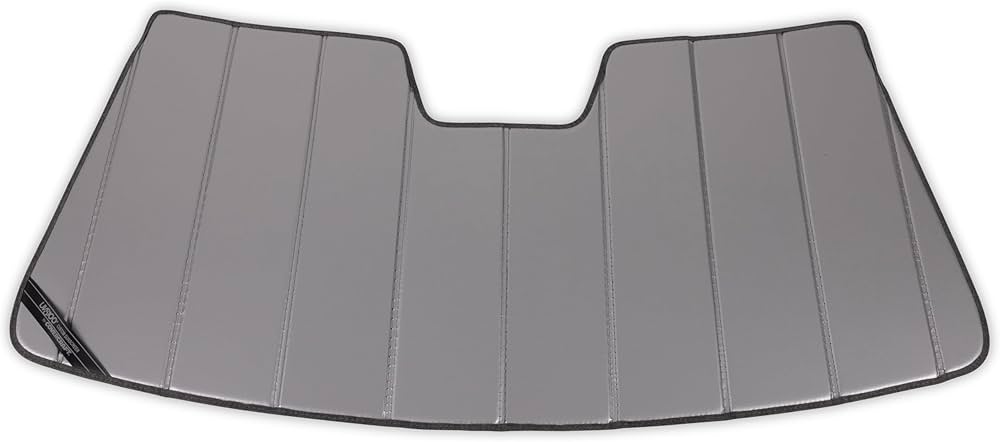
Covercraft UVS100 Custom Sunscreen
- Computer-cut panels match your exact windshield with zero light gaps
- Self-supporting foam core needs no suction cups or window clips
- Blocks over 99% of UV rays according to the manufacturer’s lab testing
- Backed by a limited lifetime warranty against material failure
- Available in silver or blue metallic exterior finishes
- Accordion fold takes several tries before it collapses cleanly
- Folded shade eats into front passenger footwell space
- Costs more than double a universal shade of similar size
- Vehicle-specific cut means it won’t transfer to your next car
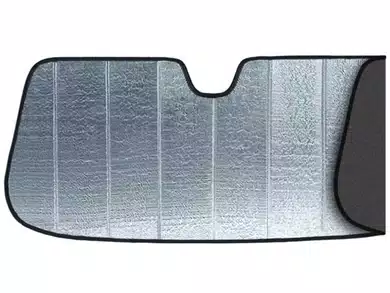
Intro-Tech Automotive Ultimate Sunshade
- Reinforced edge binding stops fraying after years of daily folding
- Thick insulated core resists creasing that ruins thinner shades within a season
- UV inhibitors in the outer layer prevent the color from fading
- Custom vehicle fit matches dash contours most universal shades miss
- Highest durability score of any shade in this comparison
- Stiffer panels require more hand strength to fold than thinner shades
- Custom-fit pricing runs higher than one-size-fits-all competitors
- Only a 1-year warranty despite the premium price tag
- A few owners report minor fit gaps on oddly shaped dash designs
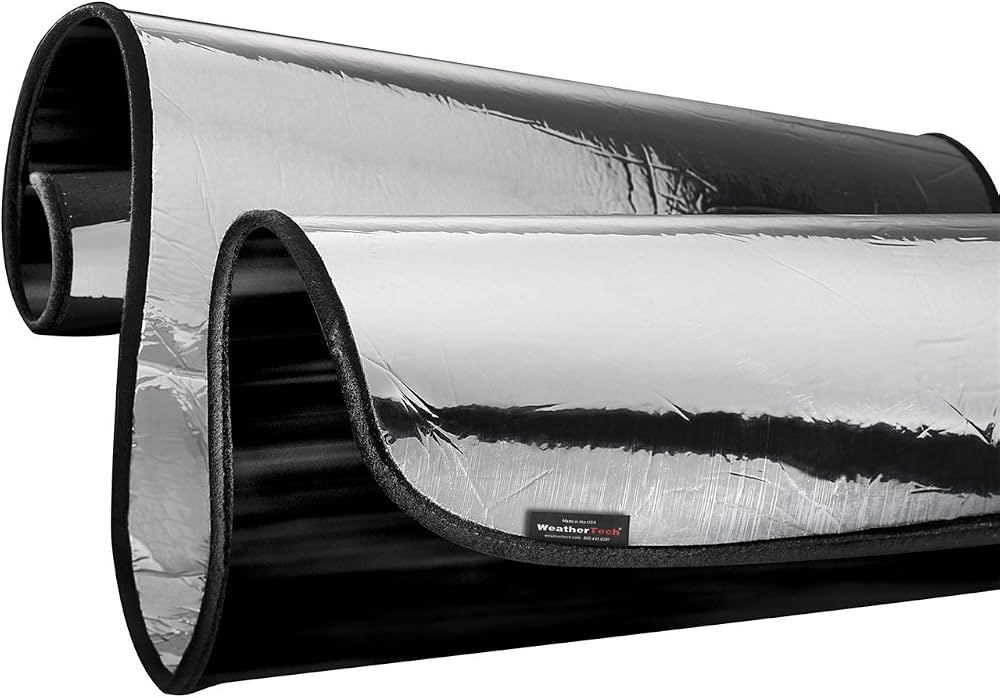
WeatherTech TechShade
- 3D laser scanning produces a fit tighter than most factory parts
- Dense closed-cell foam blocks noticeably more heat than thin fabric shades
- Self-supporting wedge design skips suction cups entirely
- Made in the USA with WeatherTech’s established quality control
- Highest fit-accuracy score of any shade we compared
- Among the priciest shades in this entire comparison
- Larger windshield sizes get heavy and awkward to fold solo
- A handful of owners report the outer layer peeling after repeated heat cycles
- Lead time can run longer since each unit is made to order
Shade-It Retractable Windshield Sun Shade
- Rolls out and retracts in about two seconds, no folding at all
- Suction cup mount installs once and stays put for daily use
- Trims to width, so one unit fits a range of windshields
- Compact cassette stores itself, no bag or door pocket needed
- Cheapest way to get a permanently mounted shade solution
- Suction cups can lose their grip in extreme summer heat
- Thin fabric transfers more heat than foam-core competitors
- Cassette housing can interfere with sun visor movement on some cars
- Lowest fit-accuracy and heat-rejection scores of any shade on this list
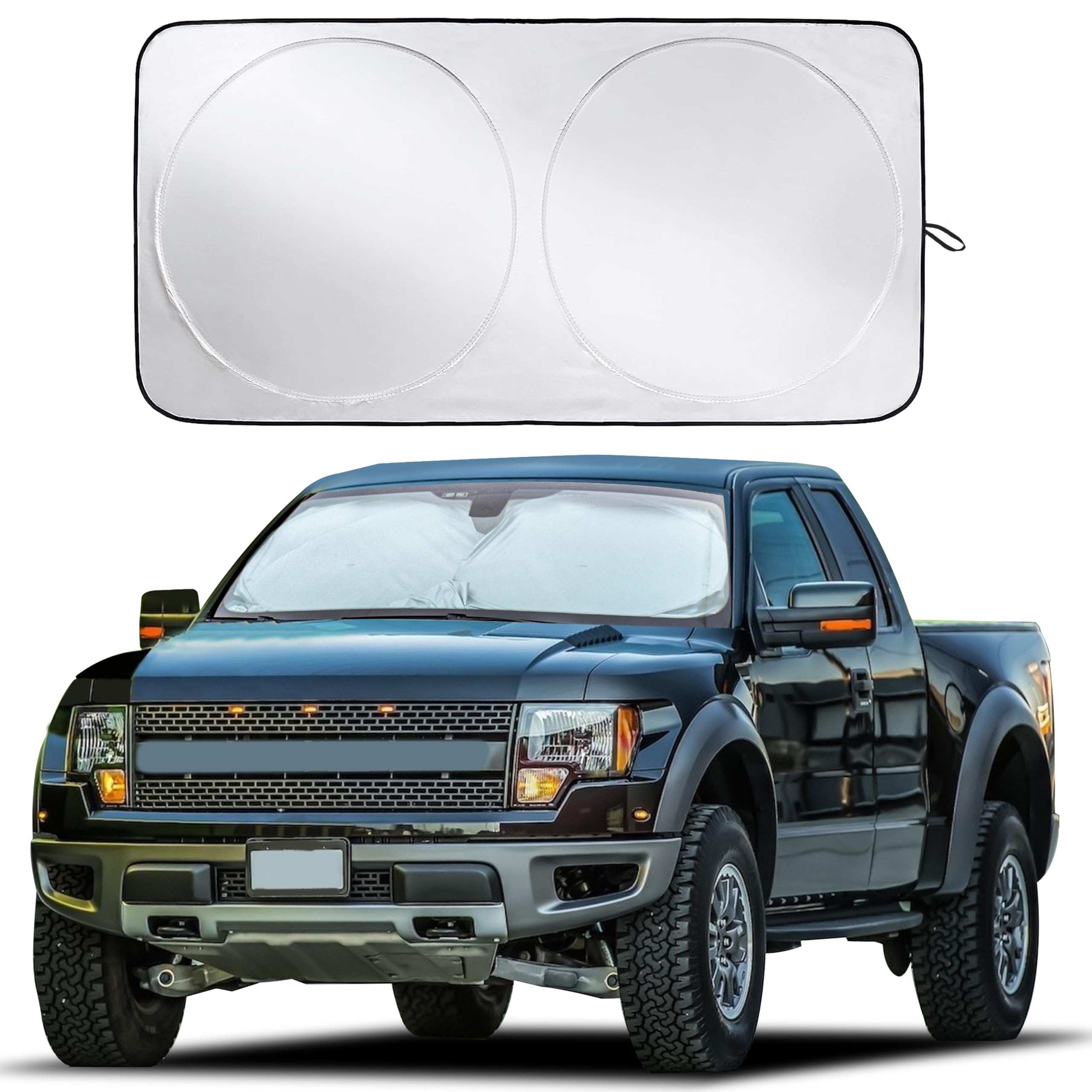
EcoNour Windshield Sun Shade
- Double-layer 240T polyester reflects sunlight at a fraction of custom-fit pricing
- Twist-fold collapses into a circle that fits in a door pocket
- Available in five sizes to match cars, SUVs, and trucks
- Tucks behind the sun visors without any extra hardware
- Highest ease-of-use-to-price ratio of any shade on this list
- Wrong size choice leaves noticeable gaps at the windshield edges
- Edges can delaminate after repeated exposure to direct summer sun
- Twist-fold mechanism warps if folded against its natural pattern
- Thinner core means less insulation than any foam-based shade here
Can’t Decide?
Our Top 2 Picks — Head to Head
Both are excellent and score within a tenth of a point of each other. Here’s how to choose between them based on what you actually need day to day.
- Computer-cut fit seals every edge of the glass
- Multi-layer foam blocks over 99% of UV rays
- Self-supporting design needs no suction cups
- Backed by a limited lifetime warranty
- Reinforced binding survives years of daily folding
- Thick core resists the creasing that shortens shade lifespan
- UV inhibitors keep the fabric from fading
- Highest durability score of any shade compared here
How to Choose the Right Car Sun Shade
Six factors that matter before you buy — explained simply.
Custom-Fit vs. Universal Sizing
Custom-fit shades match your exact windshield shape with computer-cut precision and leave no light gaps at the edges, since the manufacturer cuts each panel to your specific make, model, and sometimes trim level. Universal shades come in small through extra-large and cost far less, but only work well if you measure your windshield width and height accurately before ordering. A shade that’s too small exposes the edges to direct sun; one that’s too large bends or won’t seat properly against the glass.
Material and Insulation
Single-layer reflective fabric or thin Mylar reflects visible light but still lets infrared heat conduct through to the cabin, which is why the dashboard can stay bright yet still feel hot to the touch. Multi-layer shades with a foam core insulate against that heat transfer far more effectively, which is why foam-core shades consistently score higher on real-world temperature drop than fabric-only competitors in owner testing. Thicker cores generally mean a cooler dashboard on the hottest days of the year.
Folding Style and Ease of Use
Twist-fold shades collapse into a small circle almost instantly and are the easiest style to learn, which is why they’re the most common budget option. Rigid accordion-fold panels take practice but stand on their own without sagging once you get the pattern down. Retractable roller shades skip folding entirely by pulling across the glass like a blind, trading some insulation for pure speed. Pick the style you’ll actually use every single day when you’re rushed and the car is already hot, not just the one that sounds best on paper.
Storage Footprint
A sun shade that’s a hassle to stow ends up living on the passenger floor instead of getting used. Rigid shades bundle into a carrying bag and take up real footwell space. Twist-fold shades collapse small enough for a door pocket or glovebox. Retractable shades stay mounted to the windshield permanently, which eliminates the storage question altogether.
UV Protection and Fading Prevention
Look specifically for shades that list UV inhibitors in the outer layer, not just “reflective” fabric, since inhibitors slow down the material’s own breakdown from sun exposure in addition to protecting your dashboard from fading. A shade that fades, chalks, or stiffens within a season is also losing reflectivity as the coating degrades, which quietly reduces the heat protection it was bought for in the first place, often without the owner noticing until the next hot summer arrives.
Durability, Edge Binding, and Warranty
Edges finished with sewn binding hold up far longer than raw-cut fabric edges, which fray after repeated folding within a season or two of daily use. Foam-core shades can crease permanently if folded against their natural pattern, so it’s worth watching a fold video for your specific brand before your first use rather than guessing. Warranties on quality shades range from one year to a limited lifetime; brands like Covercraft and WeatherTech stand behind theirs accordingly, which says something about how long they expect the product to last.
Pro Tips
Quick Buying Checklist
Measure your windshield width and height at the widest points before ordering a universal-fit shade, not just a rough guess based on your car’s size class.
Choose a foam-core shade over single-layer Mylar if real dashboard temperature reduction matters more to you than upfront price.
Practice folding a rigid shade outside the car a few times before you’re rushing in a hot parking lot.
Dab suction cups with a little water to help a retractable shade hold its seal through summer heat.
Replace any shade with peeling or exposed foam — it stops insulating well and can start holding moisture.
Store shades away from wet floor mats in the trunk to prevent mold from developing on a foam core.
Check for UV inhibitor treatment in the outer layer, not just reflective coating, for longer-lasting protection.
Confirm a custom-fit shade lists your exact trim — windshield shape can vary between base and upgraded models.
Frequently Asked Questions
What size car sun shade do I need?
Measure your windshield from the driver’s side edge to the passenger’s side edge at its widest point, then measure from the dash up to the roof line. Compare those two numbers to the manufacturer’s size chart for a universal shade, or order a custom-fit shade listed for your exact vehicle and trim.
Are custom-fit sun shades worth the extra money?
Yes, for daily outdoor parking. Custom-fit shades provide edge-to-edge coverage with no light gaps, stay in place without sagging, and typically use thicker insulating materials than universal options built to fit a range of vehicles. The higher upfront cost pays off in daily ease of use and noticeably better heat rejection over a full summer of use.
How do I fold a rigid car sun shade without bending it?
Fold the outer panels toward the center first, then fold the center sections in alternating directions like an accordion rather than forcing a single crease. The exact pattern varies slightly by brand, but most rigid shades use a zig-zag fold. Practicing outside the car a few times builds the muscle memory fast.
Can a sun shade actually protect my dashboard from cracking?
Yes. A good sun shade blocks the UV rays that cause dashboard plastic and vinyl to fade, dry out, and eventually crack over repeated summers of sun exposure. It also lowers surface temperatures that accelerate that material breakdown in the first place. Combined with window tinting, a quality shade meaningfully extends the life of your interior trim.
Do windshield sun shades help in winter too?
A little — they block some solar heat gain on sunny winter days, but their bigger cold-weather benefit is keeping frost off the inside of the windshield entirely. By blocking the temperature swing overnight between the warm cabin and the cold glass, a shade reduces the interior condensation that freezes into a layer of frost by morning.
How should I clean a car sun shade?
Wipe the reflective side with a damp microfiber cloth and a mild soap, avoiding abrasive cleaners or brushes that scratch the reflective coating and reduce its effectiveness. Let it dry completely before folding or rolling it up, since trapped moisture against a foam core can lead to mold over time, especially in humid climates.
Are retractable sun shades as effective as rigid foam shades?
Not quite — retractable shades use thin fabric, so they insulate less than a dense foam core. What they trade in raw heat rejection, they make up for in convenience. A shade you’ll actually deploy every single day beats a better-rated one that stays folded in the trunk.
Why does my sun shade leave gaps around the windshield edges?
Gaps almost always trace back to sizing: a universal shade ordered too small for your windshield, or a custom-fit shade meant for a different trim level with a slightly different glass shape. Double-check your measurements or vehicle trim against the manufacturer’s chart before assuming the shade itself is defective.
Can I use a car sun shade with a dash cam or transponder mounted on the windshield?
Most rigid and universal shades tuck behind these accessories without issue since they sit against the glass below the mirror mount. Retractable shades can be trickier if the cassette housing sits near a transponder, so check the mounting location before buying if your windshield already has hardware installed.
How long should a good car sun shade actually last?
A quality foam-core shade with reinforced edges should hold up for three to five summers of daily outdoor parking before creasing or fading noticeably. Budget single-layer shades often show delamination or warping within one to two seasons. Storing the shade properly between uses is the biggest factor in how long it actually survives.
Final Verdict
Our Top Recommendations for 2026
The Covercraft UVS100 earns the overall pick for its computer-cut fit and the highest heat rejection of any shade here, at a price most daily drivers will accept for a lifetime-warrantied product they’ll use every single day. If your shade needs to survive a decade of daily desert-sun folding without cracking at the seams, the Intro-Tech Ultimate Sunshade resists creasing better than anything else on this list. Buyers who want laser-measured precision from a brand they already trust and don’t mind paying for it should look at the WeatherTech TechShade, while anyone who’d rather pull a shade across the glass than fold one by hand should grab the Shade-It retractable. If you’re still testing whether you’ll actually use a sun shade at all, the EcoNour delivers real protection without a big financial commitment either way.