A folded-down SUV cargo area sounds flat until you actually lie on it — wheel-well bumps, a ridge where the seats meet, and a hard metal floor showing through a thin sleeping bag. After cross-referencing over 9,000 Amazon reviews and car-camping threads on Reddit, five mattresses consistently solved that problem without a slow leak by 3am, regardless of what vehicle they ended up in.
Not every trip calls for the same setup. A weekend SUV camper has different needs than a solo sedan driver squeezing in a rest-stop nap. The picks below split by vehicle type, budget, and how often you actually camp, based on which failure points — leaks, pump reliability, poor fit — came up most often in long-term owner feedback rather than which spec sheet read best in the original listing photos.
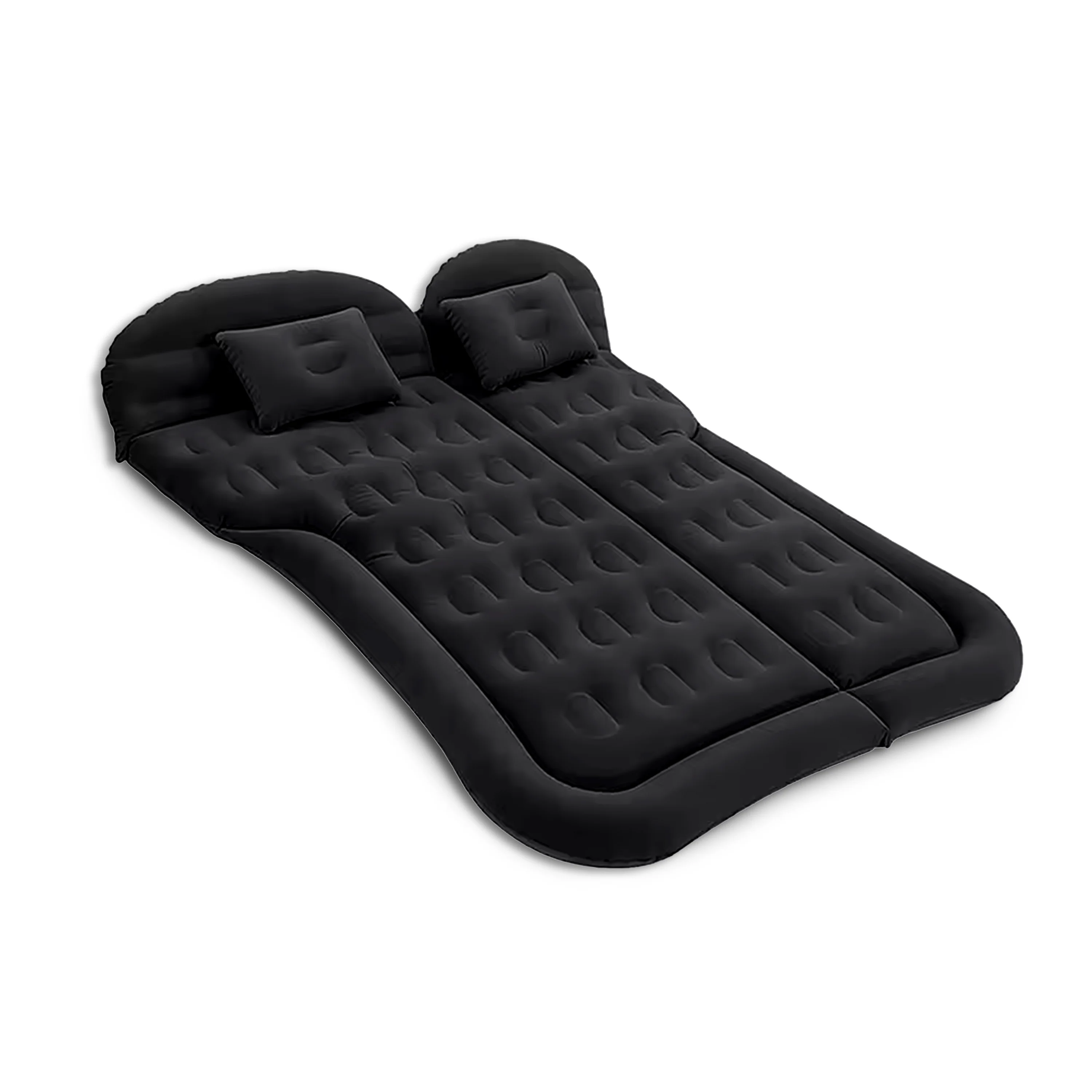
For most SUV and minivan owners, the Hikenture SUV Air Mattress delivers the best mix of comfort, fast setup, and wide vehicle fit for a broad range of vehicles. Frequent campers who’d rather never deal with a leak should look at the Zermätte Trifold Memory Foam Mattress instead, while solo travelers in sedans get the fastest setup from the Hikenture Back Seat Air Mattress. Truck bed owners who camp often will get more long-term value from the custom-contoured AirBedz Lite.
Best Car Mattresses — Compared
Five car mattresses compared on weight capacity, inflation method, and real owner ratings pulled from thousands of verified purchases.
| # | Product | Weight Capacity | Type | Best For | Score | |
|---|---|---|---|---|---|---|
| 1 | Hikenture SUV Air Mattress Editor’s Choice | 550 lbs | Air Mattress | Most SUV & minivan owners | 4.3 | See Latest Price |
| 2 | Zermätte Trifold Memory Foam Mattress Top Pick | No air limit (foam) | Memory Foam | Leak-free durability | 4.5 | See Latest Price |
| 3 | Pittman Outdoors AirBedz Lite | ~500 lbs | Air Mattress (Custom Fit) | Custom truck bed fit | 4.1 | See Latest Price |
| 4 | SAYGOGO SUV Air Mattress Budget Pick | 440 lbs | Air Mattress | Budget car campers | 4.2 | See Latest Price |
| 5 | Hikenture Back Seat Air Mattress | ~300 lbs (single rider) | Air Mattress (Back Seat) | Solo rest-stop naps | 4.0 | See Latest Price |
Detailed Reviews
A closer look at how each mattress performed on comfort, durability, and real-world installs — including where owner feedback disagreed with the marketing copy on the box.
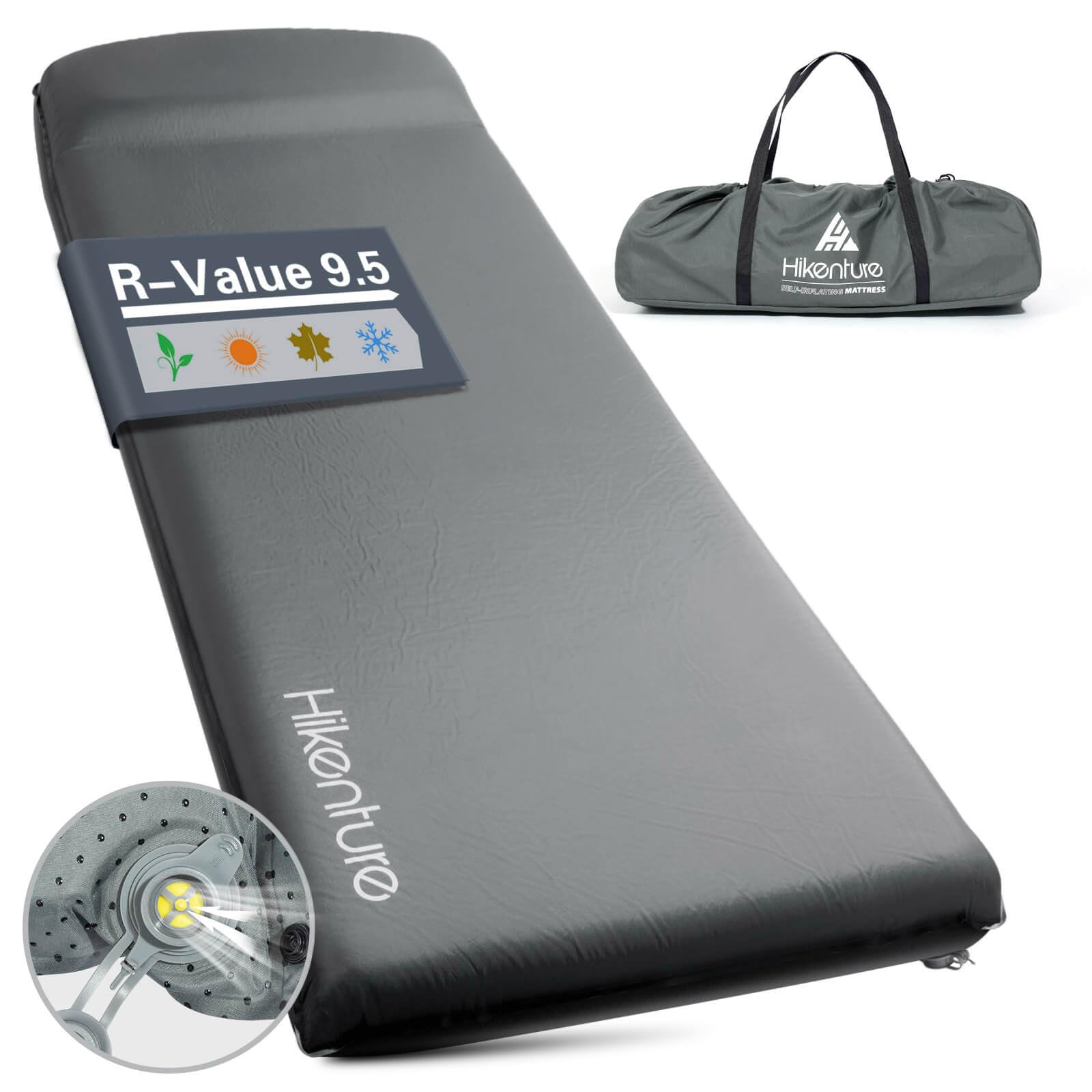
Hikenture SUV Air Mattress
- Double-layer flocked top holds sheets in place and doesn’t feel like sleeping on a pool float
- Reinforced seams and a two-layer valve keep it firm through an 8-hour night with minimal top-offs
- 12V pump inflates the full mattress in under two minutes, no separate air compressor needed
- Rated to 550 pounds, enough margin for two adults plus a dog without pushing the limit
- Fits folded cargo areas in a Honda CR-V, Toyota RAV4, and most minivans without trimming or spacers
- Stock 12V pump reportedly fails after 10-15 uses in owner reports; a spare pump is cheap insurance
- Side bolsters press against narrow cargo walls in compact crossovers, not just full-size SUVs
- Riders over 6’2″ report the 72-inch length runs short once the pad is angled around folded seats
- No built-in insulation layer, so a cold night still means packing an extra sleeping pad or blanket
Zermätte Trifold Memory Foam Mattress
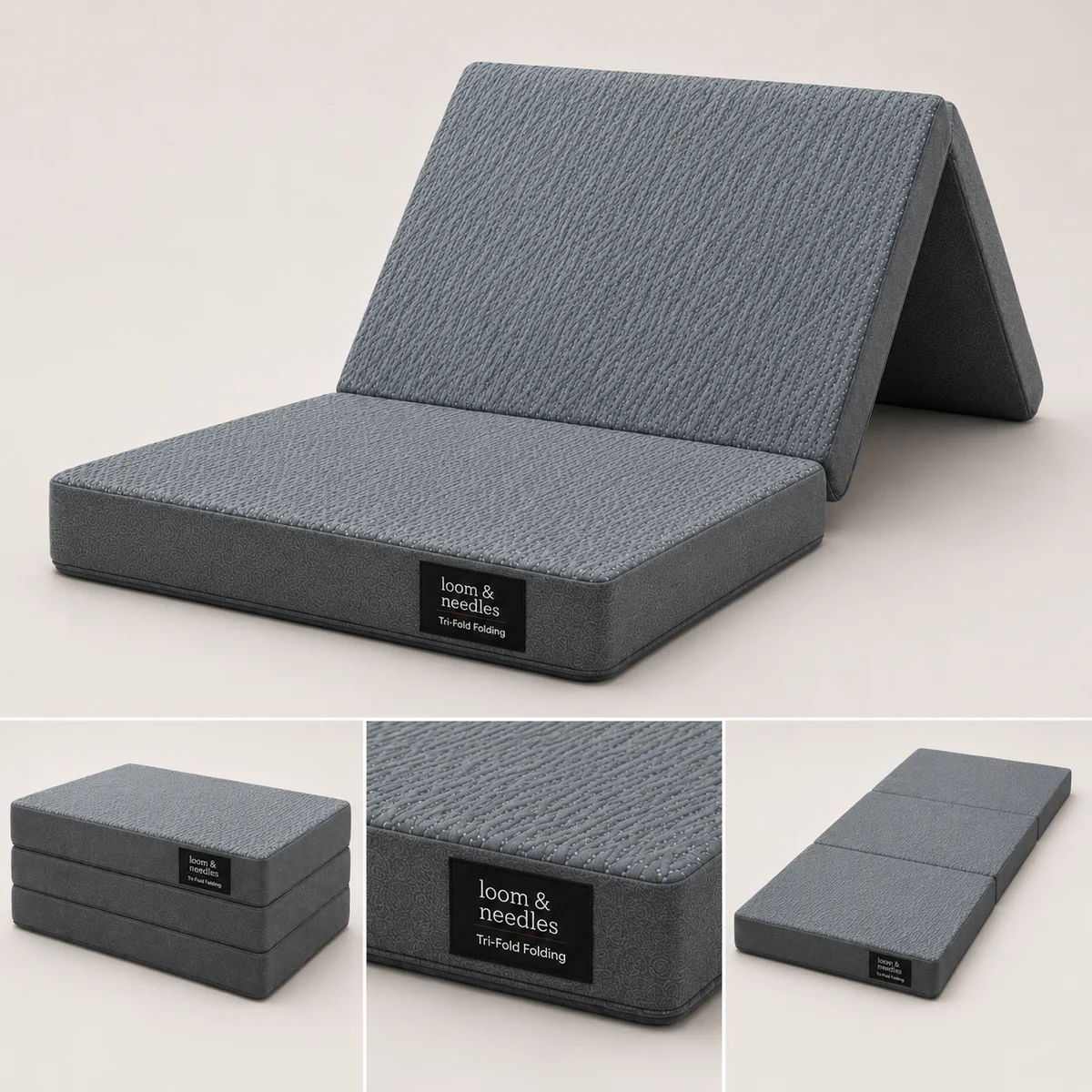
- 4 inches of high-density foam means there’s no valve or seam to fail overnight
- Removable bamboo cover machine-washes clean after muddy boots or a shedding dog
- Foam insulates against cold metal cargo floors better than any inflatable pad in this category
- No pump, no cord, no 12V outlet dependency — unfold it and it’s ready
- Trifold hinges resist cracking after repeated folding, unlike thinner camp mats that break down within a season
- Folded size still eats a meaningful chunk of cargo space on multi-day trips with other gear
- Firmness sits closer to a camping pad than a home mattress; side sleepers may want a topper
- Costs roughly three times what the Hikenture SUV air mattress runs
- Heavier than any inflatable here, which matters if you’re already carrying camp chairs and a cooler
Pittman Outdoors AirBedz Lite
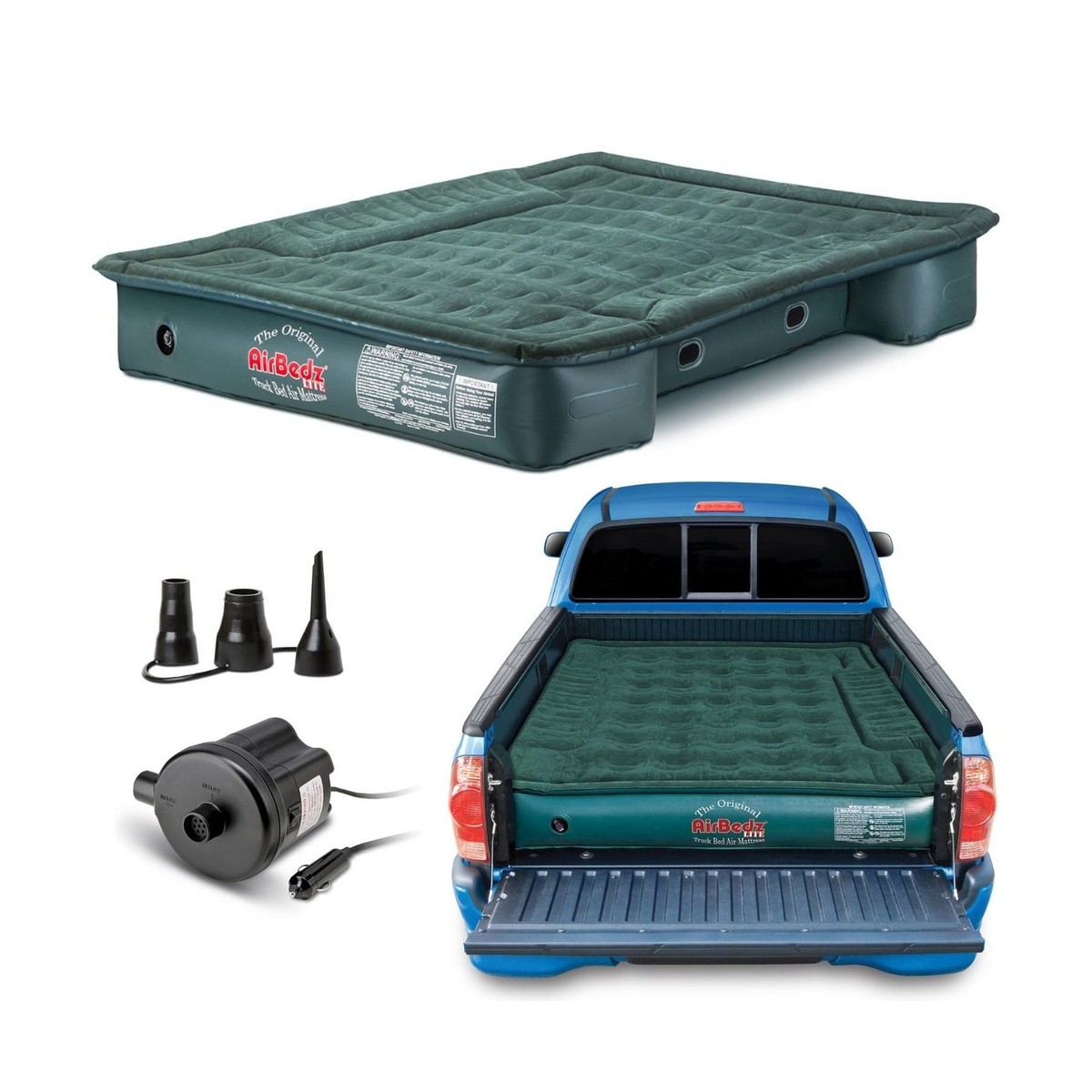
- Contoured wheel-well cutouts use cargo space that a rectangular pad simply wastes
- Built-in rechargeable pump means there’s no separate pump to lose or leave in the garage
- Heavy-gauge fabric shrugs off sharp gear edges better than standard PVC air mattresses
- Integrated pillow section saves packing a separate camp pillow
- Available in multiple size options so short-bed and long-bed trucks both get a proper fit
- Sizing is vehicle-specific, so ordering the wrong length wastes the custom-fit advantage entirely
- Built-in pump runs loud enough at close range to wake a sleeping partner during a midnight top-up
- Nearly $200 puts it out of reach for anyone who camps only once or twice a year
- Rechargeable pump adds one more battery to keep charged before a trip, unlike a plug-in-and-go 12V unit
SAYGOGO SUV Air Mattress
- Dual air chambers mean a slow leak on one side still leaves you off the hard cargo floor
- 0.6mm PVC construction feels noticeably thicker than most mattresses under $50
- Packs down small enough to stash in a door pocket or under a seat
- Included 12V pump handles both chambers without needing to switch nozzles
- Fits most crossover SUVs like the Nissan Rogue, Ford Escape, and Jeep Cherokee without modification
- Some units lose 2-3 PSI overnight, so a quick top-up before bed becomes part of the routine
- Fabric surface is smoother than the flocked Hikenture, so sheets tend to slide more
- Riders over 6 feet describe the length as barely adequate once the pad is positioned
- Valve seals show more variance between units than pricier competitors, based on the spread in owner reviews
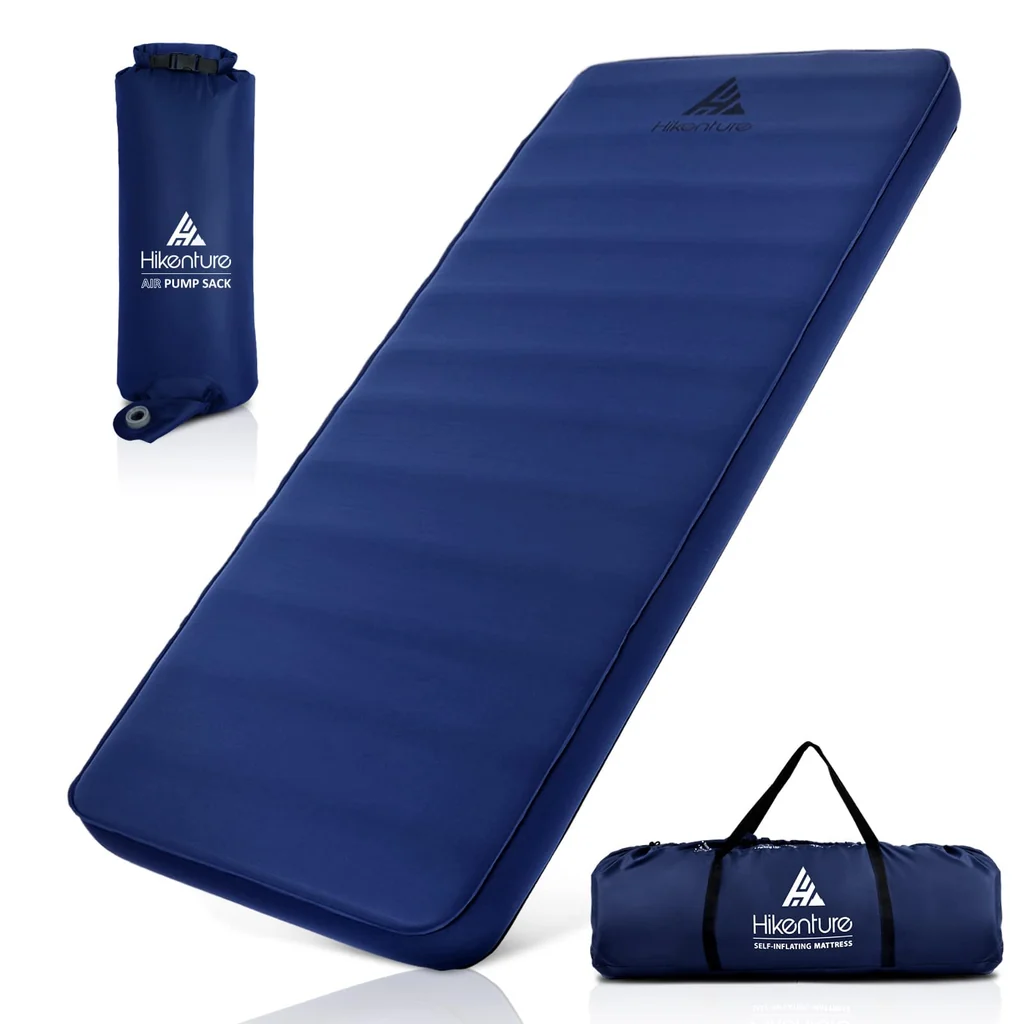
Hikenture Back Seat Air Mattress
- Inflates with a manual foot pump in under two minutes, no 12V outlet or electricity required
- Bridges the rear footwell gap that otherwise digs into your lower back on a bench-seat nap
- Under 5 pounds packed, easy to keep in a trunk permanently without noticing the weight
- Flocked top keeps a sleeping bag from sliding off during the night
- Works in sedans and hatchbacks that other car mattresses on this list don’t even attempt to fit
- Only comfortably fits one adult; a second person crowds the footprint fast
- Front seats need to be pushed fully forward to fill the footwell, which cuts front legroom
- Over-inflating creates a hard center ridge right where the footwell seam sits
- Not built for a full night’s sleep on a long trip — it’s a nap solution, not a camping mattress
Can’t Decide?
Our Top 2 Picks — Head to Head
Both are excellent. Here’s how to choose between them.
- Full night of comfort with almost no setup time
- Fits the widest range of SUVs and minivans out of the box
- Costs a third of the premium foam alternative
- 550-lb weight capacity covers two adults comfortably
- Nothing to inflate, so nothing to deflate at 3am
- Foam insulates against cold cargo floors an air mattress can’t match
- Washable cover handles dirt, mud, and pet hair without a second thought
- Ready in seconds — unfold and lie down, no pump required
How to Choose the Right Car Mattress
Six factors that matter before you buy — explained simply, without the marketing jargon most spec sheets bury them in, and without the upsell.
Vehicle Measurements & Wheel-Well Fit
Measure the cargo floor from the back of the front seats to the closed liftgate, then check the width between wheel wells. A 72-inch mattress won’t magically fit a compact crossover with only 65 inches of cargo length. Contoured pads like the AirBedz Lite solve wheel-well dead space; rectangular pads trade a custom fit for wider vehicle compatibility. Keep the tape measure in the glovebox if you plan to try more than one pad.
Inflation Method: Electric, Foot Pump, or None
Electric 12V pumps are fastest but depend on a working outlet and, per owner reports, are often the first part to fail. Foot-pump pads like the Hikenture Back Seat need no power at all. Memory foam skips inflation entirely — you trade setup speed for zero mechanical parts that can break. Whichever method you choose, test it once at home before you’re relying on it in the dark.
Air Mattress vs. Memory Foam
Air mattresses pack smaller and inflate to a specific firmness, but they can leak, especially at the valve after repeated use. Memory foam never deflates and insulates better against cold metal floors, at the cost of bulkier storage and a firmer, less adjustable feel. Frequent campers tend to land on foam; occasional trippers usually prefer air. There’s no universally correct answer — only the one that matches how often you actually camp.
Weight Capacity & Sleeper Count
A mattress rated for 440 pounds is fine for one adult but tight for two plus a dog. Check the stated capacity against your actual load before you buy, not after a 2am blowout. Back seat pads are built for one rider — treat a second sleeper as a hard no. Manufacturers rarely advertise what happens past the rated limit, and owner reviews are the best source for that answer.
Material & Valve Quality
PVC thickness and seam construction determine how well an air mattress survives sharp gear edges in transit. Look for a reinforced double-layer valve, which resists the slow overnight leaks that plague single-layer designs. Flocked surfaces reduce slipping and the plasticky noise that comes with plain PVC. A repair patch kit in the box is a small detail that saves a trip if a puncture does happen.
Storage Space When Packed Down
An inflatable pad rolls into a bag roughly the size of a sleeping bag; a 4-inch foam trifold stays bulky even when folded. If your cargo area doubles as gear storage on multi-day trips, that difference decides whether the mattress rides along or gets left at home. Weigh the packed size against how much other equipment you’re already hauling.
Pro Tips
Quick Buying Checklist
Run through these before you check out — they cover the mistakes that show up most often in owner reviews.
Measure your cargo floor first — wheel wells and seat folds eat more space than you’d guess.
Pack a spare pump — stock 12V pumps are the most common failure point in owner reviews.
Test inflation at home — a slow leak is easier to spot in your driveway than in the dark.
Match mattress type to trip frequency — air for occasional trips, foam for frequent leak-free camping.
Leave a weight margin — don’t load a 440-lb-rated pad to the edge with two adults and gear.
Use a protective layer underneath — a moving blanket stops sharp cargo edges from puncturing PVC.
Frequently Asked Questions
Are inflatable car mattresses safe to sleep on overnight?
Yes, as long as you park on level ground with the engine off and the vehicle in park. Never sleep with the engine running for climate control, since carbon monoxide can build up in an enclosed cabin faster than most people expect. Position the mattress so it doesn’t block seatbelt anchors or airbag zones, especially in vehicles where the pad extends toward the front seats.
How long does a car mattress typically last?
A well-maintained inflatable pad lasts two to four years with regular use, based on patterns in long-term owner reviews. Memory foam models like the Zermätte often last five years or more since there’s no valve or seam to fail. Proper storage and a protective layer underneath both extend lifespan.
Will a car mattress void my vehicle’s warranty?
No. Placing a mattress on folded seats or in the cargo area doesn’t modify the vehicle in any way a dealer could point to. It has no effect on drivetrain, electrical, or safety systems, so it carries zero risk to your manufacturer coverage, regardless of how many nights a year you use it.
Do I need a pump for every car mattress?
Most SUV air mattresses include a 12V electric pump; some back seat pads use a manual foot pump instead. Memory foam mattresses need no pump at all — you just unfold them. Always confirm the included pump’s plug matches your vehicle’s 12V outlet before you rely on it at a campsite.
Can I just use a regular household air mattress in my car?
Not well. A household bed leaves gaps around wheel wells and pushes against interior trim, since it isn’t shaped for a vehicle’s cargo contours. Car-specific mattresses like the Hikenture or AirBedz Lite are cut to maximize usable flat space and reduce stress on the pad’s edges.
What’s the difference between the SUV and back seat versions?
SUV air mattresses lay flat across a folded-down cargo area and comfortably fit one or two people. Back seat pads like the Hikenture Back Seat Air Mattress instead bridge the rear footwell, creating a flat surface for one person without folding any seats down — better suited to sedans and quick naps.
How do I know if a mattress will fit my specific vehicle?
Fold the rear seats flat and measure from the back of the front seats to the closed liftgate, then measure width between the wheel wells. Compare both numbers against the mattress’s listed dimensions before ordering, since a pad rated for “most SUVs” can still be a couple inches short in a compact crossover.
Why do some air mattresses need a top-up before bed even without a puncture?
PVC contracts slightly as the temperature drops overnight, which reads as a soft leak even on a healthy mattress. This is common enough that seasoned car campers just plan for a quick top-up before sleeping rather than assuming a slow drop in pressure means a bad valve or a real puncture.
Can two adults comfortably share a standard SUV air mattress?
Yes, on models built with dual chambers or a wide enough single chamber, like the Hikenture and SAYGOGO SUV mattresses. Check both the width and the weight rating together — a mattress can technically be wide enough for two people while still sitting close to its rated capacity once you add sleeping bags and gear.
Final Verdict
Our Top Recommendations for 2026
Five mattresses, five different travel styles — but the Hikenture SUV Air Mattress remains the safest first buy for most SUV and minivan owners, delivering real comfort without asking you to spend a truck payment or learn a new setup routine. If leak-free reliability matters more than upfront cost, the Zermätte trades some storage space for zero-maintenance peace of mind on every single trip. Budget campers and solo sedan travelers are well covered by the SAYGOGO and Hikenture Back Seat, while serious truck-bed campers get real, lasting value from the custom-contoured AirBedz Lite.