After cross-referencing feedback from IntegraForums, Team-Integra.net, r/Acura, and verified Amazon reviews, the Acura Integra is the only model in this series that requires two entirely different battery recommendations for two generations — and the distinction isn’t just size: the modern fifth-generation Integra’s 1.5L turbocharged engine with auto start-stop needs an H5 (Group 47) AGM and a BMS reset, while the classic fourth-generation DC2 Integra’s B-series engine uses a Group 51R battery and needs neither.
Buying a Group 47 for a DC2 won’t fit the factory tray; buying a Group 51R for a fifth-gen won’t come close to its start-stop cycling demands. This article covers both generations with distinct recommendations — making it the only Acura battery guide on this site that has to solve the problem of one nameplate requiring fundamentally different battery platforms across its production history.
For the 2023+ Integra, the Odyssey Performance AGM47 H5 L2 provides 780 CCA and TPPL pure-lead construction that handles the turbo engine’s start-stop cycling better than any other Group 47 battery. For the 1994–2001 DC2 Integra, the Optima YellowTop D51R delivers B-series vibration resistance and deep-cycle recovery in the correct Group 51R format. Budget-focused fifth-gen owners get solid BMS-compatible AGM performance from the ACDelco Gold 47AGM.
Our Top 6 Acura Integra Battery Rankings
- Odyssey Performance AGM47 H5 L2— Best Overall (2023+): 780 CCA pure-lead AGM, start-stop optimized, 5–7 year life
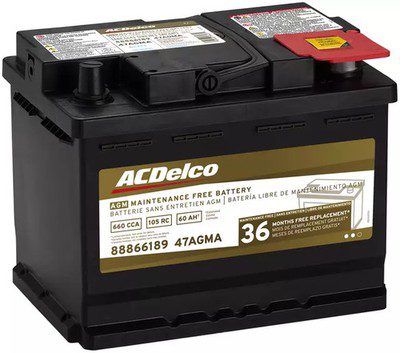
- ACDelco Gold 47AGM— Best Budget (2023+): 680 CCA, OEM H5 terminal fit, 36-month warranty
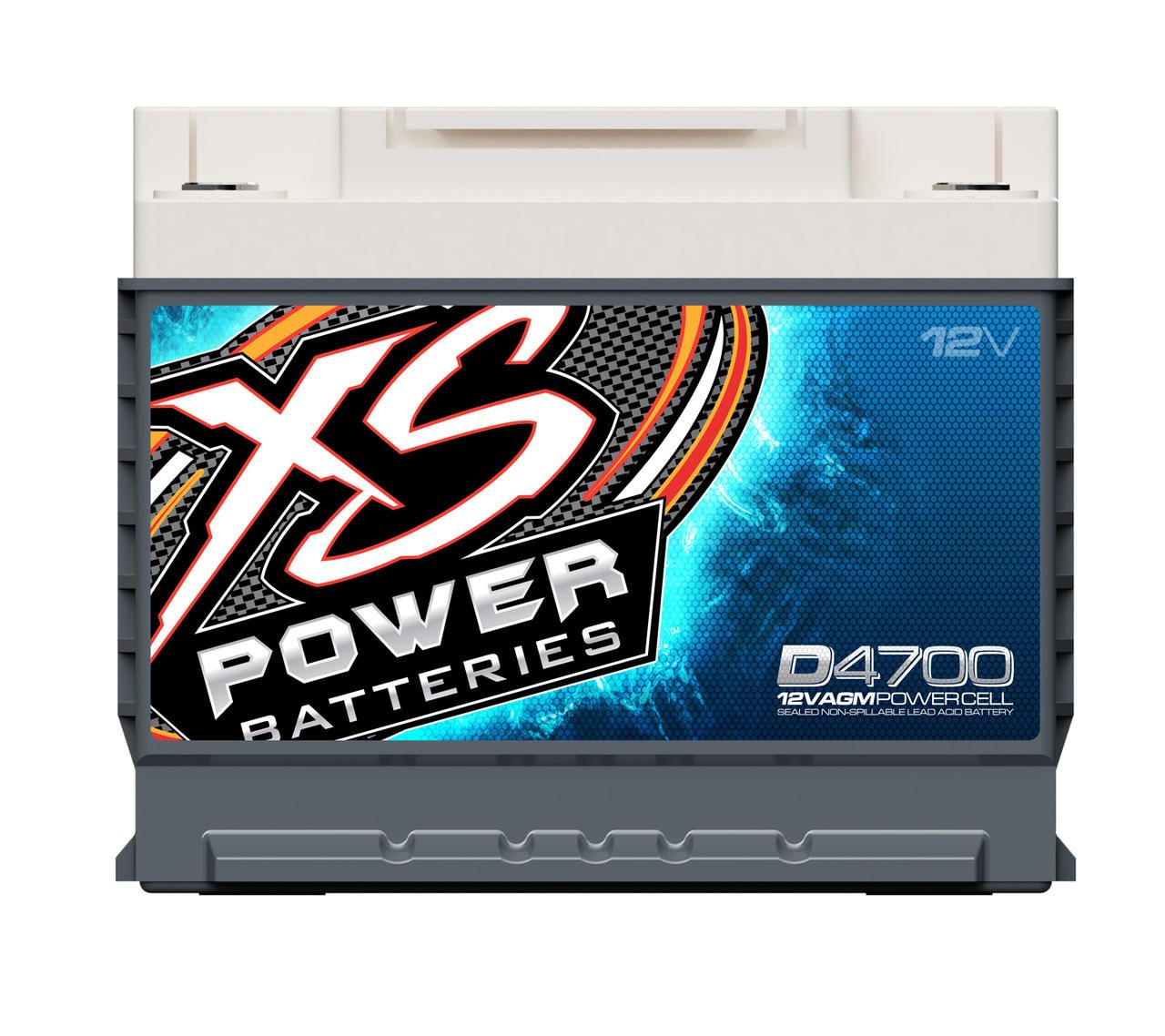
- XS Power D4700— Best Premium (2023+): 3,000 max amps, 60 Ah deep-cycle for audio builds
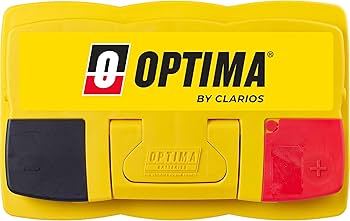
- Optima YellowTop DH5— Most Durable (2023+): 750 CCA SpiralCell AGM, deep-cycle for harsh conditions
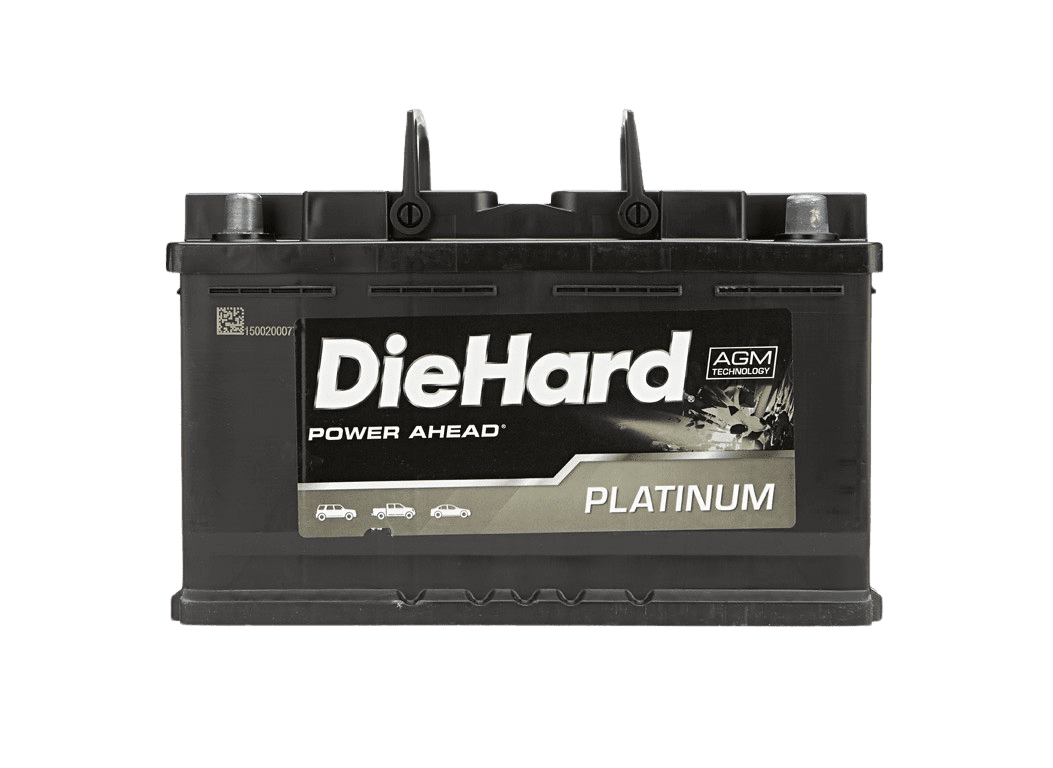
- DieHard Platinum AGM H5— Easiest Install (2023+): OEM-identical terminal and hold-down fit
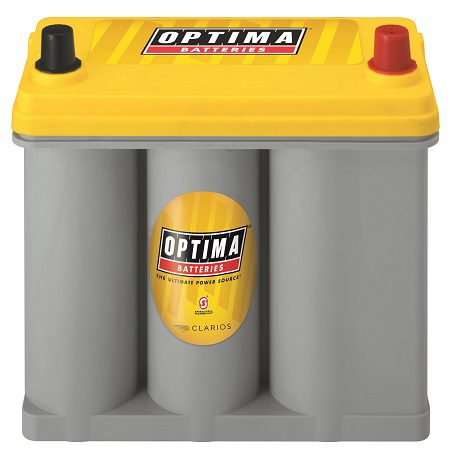
- Optima YellowTop D51R— Best Classic (DC2): Group 51R SpiralCell AGM for 1994–2001 B-series Integra
Best Acura Integra Batteries — Compared
All six picks across both generations — CCA, chemistry, group size, and overall score.
| # | Product | CCA | Type | Best For | Score | |
|---|---|---|---|---|---|---|
| 1 | Odyssey Performance AGM47 H5 L2 Editor’s Choice | 780 | Pure Lead AGM | 2023+ daily & cold climate | 4.7 | See Latest Price |
| 2 | ACDelco Gold 47AGM Budget Pick | 680 | AGM | 2023+ budget start-stop | 4.5 | See Latest Price |
| 3 | XS Power D4700 Top Pick | 1000+ | AGM Deep-Cycle | 2023+ audio & accessories | 4.6 | See Latest Price |
| 4 | Optima YellowTop DH5 | 750 | AGM SpiralCell | 2023+ rough roads & deep cycle | 4.4 | See Latest Price |
| 5 | DieHard Platinum AGM H5 | 680 | AGM | 2023+ easiest install | 4.5 | See Latest Price |
| 6 | Optima YellowTop D51R | 450 | AGM SpiralCell | DC2 (1994–2001) classic | 4.4 | See Latest Price |
Detailed Reviews
Full breakdown of each battery across both Integra generations — ratings, pros, cons, and our expert verdict.
Odyssey Performance AGM47 H5 L2
Pros
- 780 CCA starts the 1.5L turbo and 2.0L Type S in sub-zero conditions without hesitation
- TPPL pure-lead construction delivers 70% more start-stop cycle life than standard lead-calcium AGM
- 65 Ah reserve capacity maintains stable voltage under simultaneous climate control, heated seats, and audio
- 5–7 year real-world service life documented across Integra forum owner reports
Cons
- Slightly taller case — the hold-down bolt feels tight on some fifth-gen builds but secures safely without modification
- Highest price on this list — the premium over the ACDelco is only justified in cold climates or long-term ownership
- Requires AGM smart charger during long storage — a standard trickle charger degrades the pure-lead construction
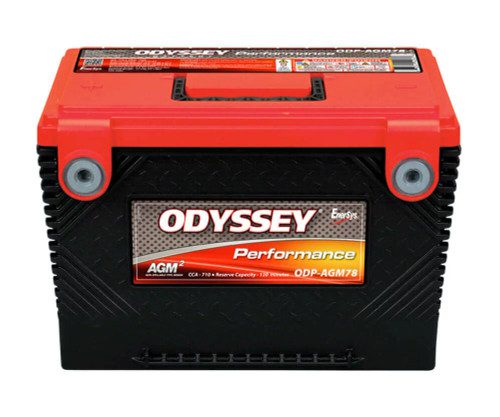
ACDelco Gold 47AGM
Pros
- OEM-exact H5 terminal orientation — the positive cable and BMS sensor connector seat without cable repositioning
- 36-month free replacement through ACDelco’s national retailer network — in-person exchange, no shipping required
- High-density negative paste improves charge acceptance from the alternator after start-stop restart cycles
- Built-in carry strap simplifies the installation in the Integra’s forward engine bay position
Cons
- CCA degrades faster in year three than the Odyssey’s pure-lead construction — relevant for owners planning to keep the Integra past 100,000 miles
- Small percentage of units fail within 18 months — the 36-month warranty resolves this but the inconvenience is real
- Not designed for deep-discharge recovery from sustained aftermarket audio draws above 600W
XS Power D4700
Pros
- 3,000 max amps eliminates headlight dimming during simultaneous start-stop restarts and high-draw audio bursts
- 60 Ah deep-cycle capacity handles engine-off audio demos without the permanent capacity loss starting AGMs suffer
- Sealed mountable in any orientation — supports relocated battery builds in the fifth-gen’s compact trunk area
- Holds charge between weekly track days or weekend audio events without measurable self-discharge
Cons
- May require a longer J-bolt hold-down or tray adapter depending on production tolerance variation in the H5 tray
- Heavier than any other H5 option — solo installation is genuinely awkward over the Integra’s intake manifold
- Unnecessary and expensive for a stock fifth-gen Integra — the Odyssey’s 780 CCA handles every factory electrical demand more cost-effectively
Optima YellowTop DH5
Pros
- SpiralCell construction resists the lateral vibration from rough mountain roads that fractures flat-plate AGM grids over time
- 98-minute reserve capacity handles extended engine-off tailgate and camping electronics use
- Holds charge reliably during two-week airport parking per multiple IntegraForums owner reports
- Sealed case eliminates acid spray risk from the Integra’s performance driving at track events
Cons
- 750 CCA trails the Odyssey by 30 amps — the difference matters when the battery ages into year four in sub-zero climates
- Forum reports of production batch inconsistency — verify recent review dates before purchasing
- Premium price for a CCA rating the Odyssey exceeds while also offering longer service life
DieHard Platinum AGM H5
Pros
- OEM-identical terminal position, hold-down lip, and vent connector orientation — confirmed across all fifth-gen Integra trims
- 3-year free replacement at Advance Auto Parts nationwide — in-person exchange after BMS reset verification
- Stamped-grid AGM handles the Integra’s start-stop cycling without the early sulfation that kills flooded replacements
- Factory case height matches the Integra’s hold-down clamp exactly — no J-bolt shimming or tray modification
Cons
- Self-discharge rate higher than the Odyssey during storage — plan for a smart charger if the Integra sits seasonally
- Some Amazon units ship with manufacture dates older than five months — verify date code sticker on arrival
- Stock can thin in November when fifth-gen Integra owners make pre-winter battery swaps simultaneously
Optima YellowTop D51R (Classic DC2)
Pros
- SpiralCell construction absorbs B-series solid mount vibration that fractures flat-plate AGM and flooded batteries within 24 months
- Recovers from 3-month winter storage without a trickle charger — documented in Team-Integra.net owner threads
- Sealed against acid leaks that corrode the DC2’s battery tray — a common rust source on high-mileage classic Integras
- Correct Group 51R positive-right orientation — fits the DC2 tray and factory hold-down without modification
Cons
- 450 CCA is the lowest of any battery in this article — not ideal for DC2 owners in climates below -15°F regularly
- Premium price for a compact battery in a vehicle where book value rarely justifies the Optima’s cost tier
- Production batch inconsistency noted by community — verify the manufacture date and recent review patterns before ordering
Can’t Decide?
Our Top 2 Modern Integra Picks — Head to Head
Both fit the Group 47 H5 tray in the 2023+ Integra. Here’s when each makes sense.
- 780 CCA — highest cold-start power in Group 47
- TPPL pure-lead: 70% more start-stop cycle life than standard AGM
- 5–7 year real-world service life in Integra owner reports
- BMS reset compatible — no charging system conflicts
- 680 CCA handles the 1.5T and 2.0T in moderate climates
- OEM H5 terminal fit — BMS sensor seats on first attempt
- 36-month free replacement through national retailers
- Roughly half the Odyssey’s price for comparable normal-use performance
How to Choose the Right Battery for Your Acura Integra
Six factors covering both the 2023+ fifth-gen and the 1994–2001 DC2 — the only article on this site that must solve for two incompatible battery platforms under one nameplate.
Two Generations, Two Completely Different Group Sizes
This is the defining challenge of the Integra battery search. The 2023+ fifth-generation Integra uses a Group 47 (H5) battery with a European-format positive-right terminal layout. The 1994–2001 DC2 fourth-generation Integra uses a Group 51R battery with a compact positive-right terminal. The two batteries are physically incompatible — a Group 47 will not fit the DC2 tray, and a Group 51R cannot be secured by the fifth-gen’s hold-down clamp. There is no overlap. Confirm your generation before every purchase decision on this list.
Fifth-Gen Start-Stop AGM Requirement
The 2023+ Integra’s automatic idle stop-start system creates 40–80 shallow discharge-recharge cycles per urban commute hour — similar to the Renegade’s ESS system but operating on the L15CA and K20C4 engines’ different restart engagement profiles. A standard flooded H5 battery is rated for approximately 200–300 such cycles before measurable capacity loss. Any H5 AGM on this list handles the same pattern for 400–600+ cycles. Flooded batteries in a fifth-gen Integra with stop-start typically fail within 18 months regardless of brand.
BMS Reset Required on the Fifth-Gen
Like the Acura TLX, the 2023+ Integra uses a Battery Management System that stores the installed battery’s state of health. After a replacement, the BMS must be reset to recalibrate the alternator’s charge profile to the new battery’s full capacity. Without the reset, the alternator applies the old battery’s degraded profile to the new one — overcharging it and shortening its service life by an estimated 18–24 months. The reset sequence involves specific ignition cycles and takes under five minutes per the owner’s manual.
DC2 B-Series Vibration vs Fifth-Gen 1.5T Turbo
The DC2’s B18C and B18B engines have a famously stiff mount character, and modified B-series cars with solid mounts transmit vibration continuously to the compact Group 51R battery tray — making SpiralCell construction the most relevant feature for classic Integra battery selection. The fifth-gen’s 1.5L turbo engine in a modern rubber-mount chassis transmits much lower vibration, making vibration resistance less critical and start-stop cycle life the more important purchasing criterion instead.
CCA Requirements Across Both Engines
The fifth-gen 1.5L turbocharged L15CA and 2.0L K20C4 Type S require approximately 600–640 CCA minimum at standard temperatures. Targeting 680–780 CCA provides the aging buffer needed through the BMS cycling years. The DC2’s B18B1 and B18C5 are naturally aspirated with lower compression ratios — the minimum is approximately 350 CCA, but 450 CCA provides necessary margin for cold winter starts and battery aging in a car that often sits for extended periods.
Warranty Network for an Enthusiast Vehicle
Classic DC2 Integras are frequently garage-kept, driven seasonally, and owned by enthusiasts who may live far from urban auto parts chains. Optima’s 36-month free replacement warranty requires purchasing from an authorized seller — buying from an unauthorized third-party Amazon listing voids the warranty even within the coverage period. The fifth-gen ACDelco and DieHard warranties redeem in-person at national chains, which is more accessible for daily-driver owners. The Odyssey’s warranty requires distributor verification — confirm authorized seller status before purchasing from any listing.
Pro Tips
Quick Buying Checklist
Confirm your generation before ordering. The 2023+ Integra needs Group 47 (H5); the 1994–2001 DC2 needs Group 51R. These are incompatible sizes — an H5 cannot fit the DC2 tray under any circumstances.
Only buy AGM for the 2023+ Integra with stop-start. A flooded H5 battery under repeated start-stop cycling fails within 18 months regardless of brand. Every battery for the fifth-gen on this list is AGM — that is a requirement, not an upsell.
Complete the BMS reset after installing in a 2023+ Integra. The five-minute reset sequence from the owner’s manual recalibrates the alternator to the new battery’s full capacity — skipping it shortens the service life by up to two years.
For a DC2 with solid engine mounts, buy SpiralCell AGM. The B-series vibration path directly to the battery tray fractures flat-plate AGM grids within 18–24 months on stiffened builds — SpiralCell construction absorbs that lateral vibration.
Verify authorized seller status for Optima purchases. The Optima YellowTop warranty is voided for batteries purchased from unauthorized Amazon third-party listings — check the seller’s Optima authorization before clicking “Buy.”
For cold-climate fifth-gen owners, target 780 CCA minimum. The difference between 680 CCA and 780 CCA is most noticeable when a three-year-old battery has lost 15–20% capacity and needs to start a turbocharged engine at -10°F.
Also On CarAssists
More Guides for This Vehicle
Frequently Asked Questions
What battery group size does an Acura Integra use?
The answer depends entirely on the generation. The 2023+ fifth-generation Integra uses Group 47 (H5). The 1994–2001 DC2 fourth-generation Integra uses Group 51R. These are completely different battery sizes that cannot be exchanged between generations — a Group 47 will not physically fit a DC2 tray, and a Group 51R cannot be secured by the fifth-gen’s hold-down clamp. Always confirm your model year before purchasing.
How does the 2023+ Integra’s stop-start system compare to the Renegade’s ESS in terms of battery wear?
Both systems create shallow discharge-recharge cycles at every traffic stop, but the Integra’s 1.5L turbo requires a slightly longer engine spool-up sequence than the Renegade’s larger-displacement engines — increasing per-cycle discharge depth marginally. In practice, both vehicles exhaust a standard flooded battery’s 200–300 cycle rating within 18 months of urban driving. Any AGM on this list for the fifth-gen handles both patterns for 400+ cycles without premature capacity loss.
Does the fifth-generation Integra require a BMS reset after battery replacement?
Yes. The 2023+ Integra uses a Battery Management System identical in function to the Acura TLX’s — it stores the installed battery’s capacity profile and adjusts alternator output accordingly. Without a reset after replacement, the alternator overcharges the new battery using the old unit’s degraded profile. The reset sequence is outlined in the owner’s manual and typically involves specific ignition cycles that take under five minutes to complete.
Can I use the same Optima YellowTop D51R in both the DC2 Integra and the Acura RSX?
Yes — both the 1994–2001 DC2 Integra and the 2002–2006 Acura RSX use a Group 51R battery with the positive terminal on the right, making the Optima YellowTop D51R a direct fit for both vehicles. The B18 and K20 engines have similar CCA requirements, and the SpiralCell construction addresses the vibration concerns that both platforms share from Honda’s characteristic stiff engine mount character.
Is the Acura Integra nameplate’s battery complexity unique in the Acura lineup?
Yes — the Integra is unique among the Acura models in this series in that its nameplate spans two production generations that require incompatible battery group sizes: Group 51R for the DC2 (1994–2001) and Group 47 for the fifth gen (2023+). The TL uses one group size across its entire run; the TLX uses one group size throughout its production; even the multi-engine RSX uses a single Group 51R. Only the Integra demands entirely different batteries for different generations of the same model.
What is the minimum CCA needed for the DC2 Integra’s B18 engine in winter?
The B18B1 in the base DC2 and the B18C5 in the Type R both have moderate compression ratios that start reliably at 350–380 CCA minimum in normal temperatures. For climates that regularly drop below 0°F, targeting 420–450 CCA provides the margin needed for confident cold starts as the battery ages into its third or fourth year. The Optima D51R’s 450 CCA sits at the upper end of the Group 51R format, which is the primary reason it consistently outperforms budget Group 51R flooded options in northern climates.
Do I need to reset anything after replacing the battery in a 1994–2001 DC2 Integra?
No — the DC2 Integra uses a conventional charging system with no BMS, IBS sensor, or intelligent battery registration requirement. After installation, you re-enter the radio security code, reset the clock, and drive. The ECU relearns idle fuel trim naturally within a few minutes of driving. This simplicity is shared with the Acura RSX and contrasts directly with the fifth-gen Integra, TLX, and BMW X5 articles in this series where post-installation reset procedures are mandatory.
Final Verdict
Our Top Recommendations for 2026
The Acura Integra is the only vehicle in this series where a single nameplate requires two completely incompatible battery platforms — Group 47 for the 2023+ fifth generation and Group 51R for the 1994–2001 DC2 — and the modern generation adds the BMS reset requirement that the classic generation doesn’t have. For the fifth-gen, the Odyssey Performance AGM47 H5 L2 earns top position by delivering TPPL pure-lead start-stop cycling endurance that outlasts standard AGM alternatives by an estimated two seasons under urban driving conditions. Budget fifth-gen owners who complete the BMS reset correctly will get three to four solid years from the ACDelco Gold 47AGM at half the Odyssey’s price. For the classic DC2, the Optima YellowTop D51R remains the definitive recommendation — its SpiralCell construction solves the B-series vibration problem that defeats every flat-plate alternative, and its deep-cycle recovery keeps the car alive through seasonal storage without a dedicated trickle charger.