We cross-referenced five H8 (Group 49) AGM batteries against Bimmerfest and Bimmerpost forum reports, verified Amazon reviews, and independent mechanic feedback — and what separates a successful BMW X5 battery swap from a frustrating one isn’t the battery brand: it’s whether the owner registered the new battery to the vehicle’s IBS sensor afterward.
Unlike the other vehicles in this series, installing the wrong chemistry or skipping the registration step in the X5 produces cascading electrical faults — iDrive glitches, false alternator warnings, start-stop failures — that make the new battery appear defective when the battery itself is perfectly fine. That diagnostic trap catches a significant number of DIYers who end up returning a working battery.
The ACDelco Gold 49AGM is the best battery for most BMW X5s — its 900 CCA AGM construction matches OEM specifications for all E70, F15, and G05 generations, and its terminal layout eliminates the cable strain that plagues generic H8 substitutes. Owners needing maximum starting headroom for cold climates or high-draw accessories should step up to the Odyssey AGM49 H8 and its 950 CCA pure-lead output. Budget-conscious owners who still need true AGM compliance get solid value from the Weize Platinum AGM H8.
Our Top 5 BMW X5 Battery Rankings
- ACDelco Gold 49AGM— Best Overall: 900 CCA, OE-exact terminal fit, broad E70/F15/G05 compatibility
- Weize Platinum AGM H8— Best Budget: 900 CCA AGM at the lowest price on this list
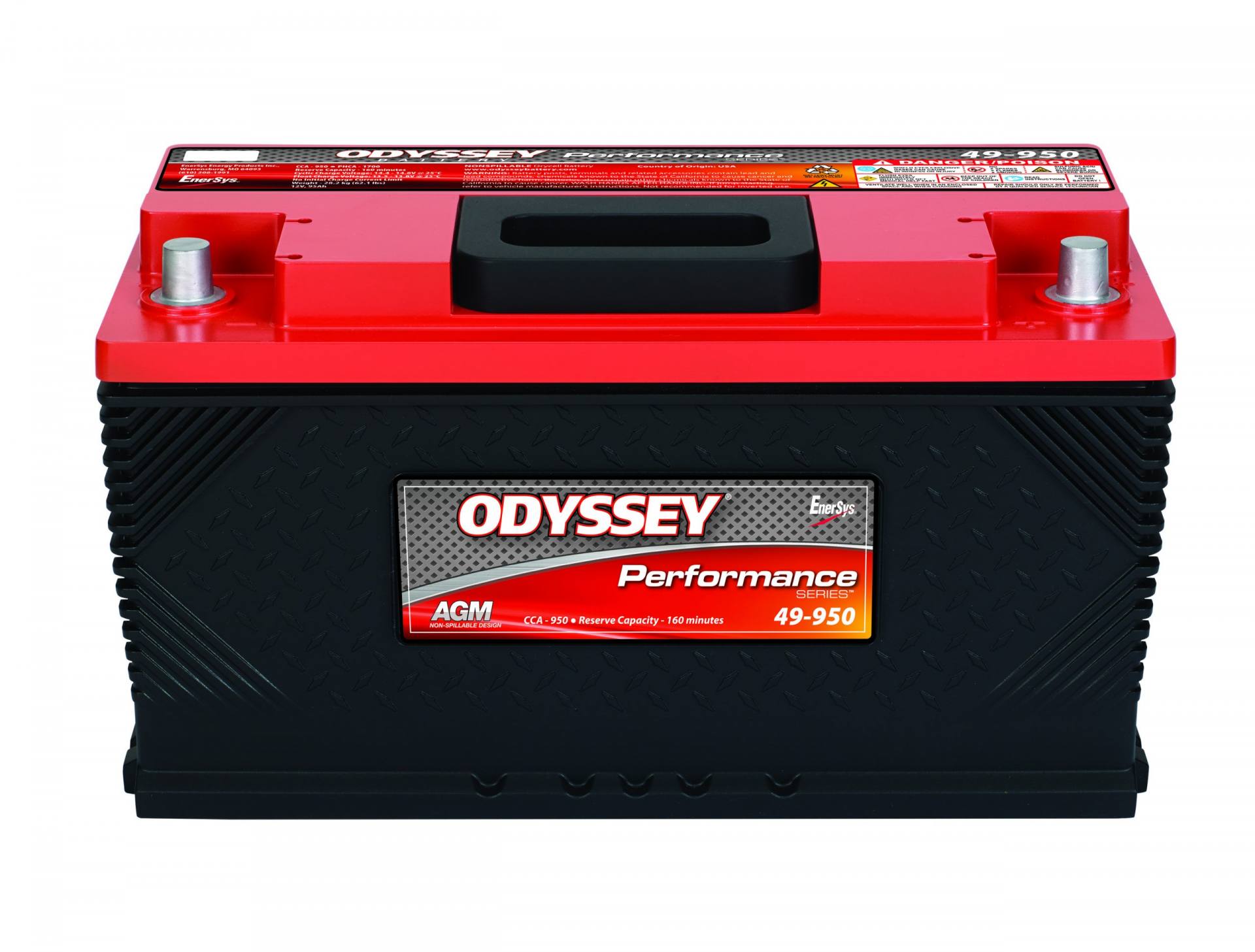
- Odyssey AGM49 H8 (49-950)— Best Premium: 950 CCA pure-lead TPPL AGM, fastest recharge, longest service life
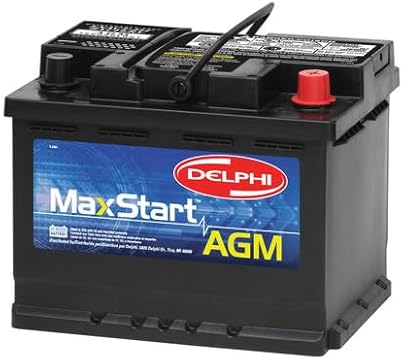
- Delphi BU9049 MaxStart AGM— Most Durable: 4-year free replacement warranty, hot-climate optimized
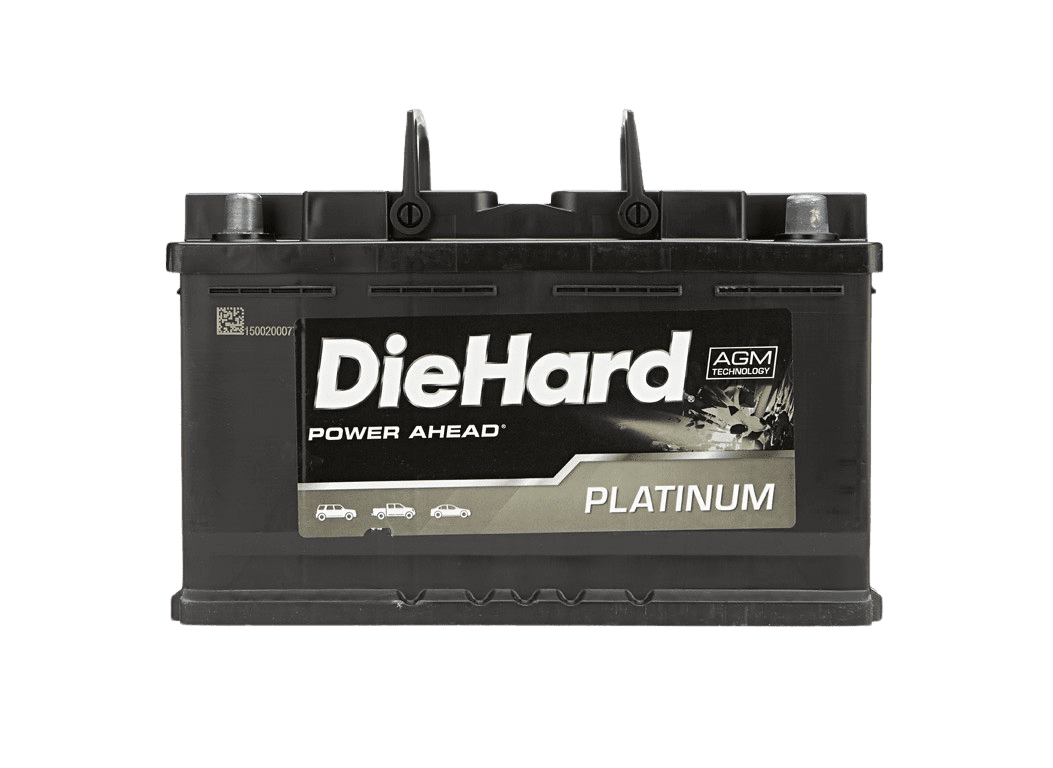
- DieHard Platinum AGM H8— Easiest Install: exact post alignment, sturdy handle, zero cable adjustment
Best BMW X5 Batteries — Compared
All five H8/Group 49 AGM picks side-by-side — CCA, chemistry, generation coverage, and overall score.
| # | Product | CCA | Type | Best For | Score | |
|---|---|---|---|---|---|---|
| 1 | ACDelco Gold 49AGM Editor’s Choice | 900 | AGM | Daily driving all gens | 4.6 | See Latest Price |
| 2 | Weize Platinum AGM H8 Budget Pick | 900 | AGM Pure Lead | Budget AGM compliance | 4.5 | See Latest Price |
| 3 | Odyssey AGM49 H8 (49-950) Top Pick | 950 | Pure Lead AGM | Cold climate & accessories | 4.7 | See Latest Price |
| 4 | Delphi BU9049 MaxStart AGM | 900 | AGM MaxStart | Hot climate longevity | 4.5 | See Latest Price |
| 5 | DieHard Platinum AGM H8 | 900 | AGM Stamped Grid | DIY installation | 4.6 | See Latest Price |
Detailed Reviews
Full breakdown of each battery — ratings, pros, cons, and our expert verdict.
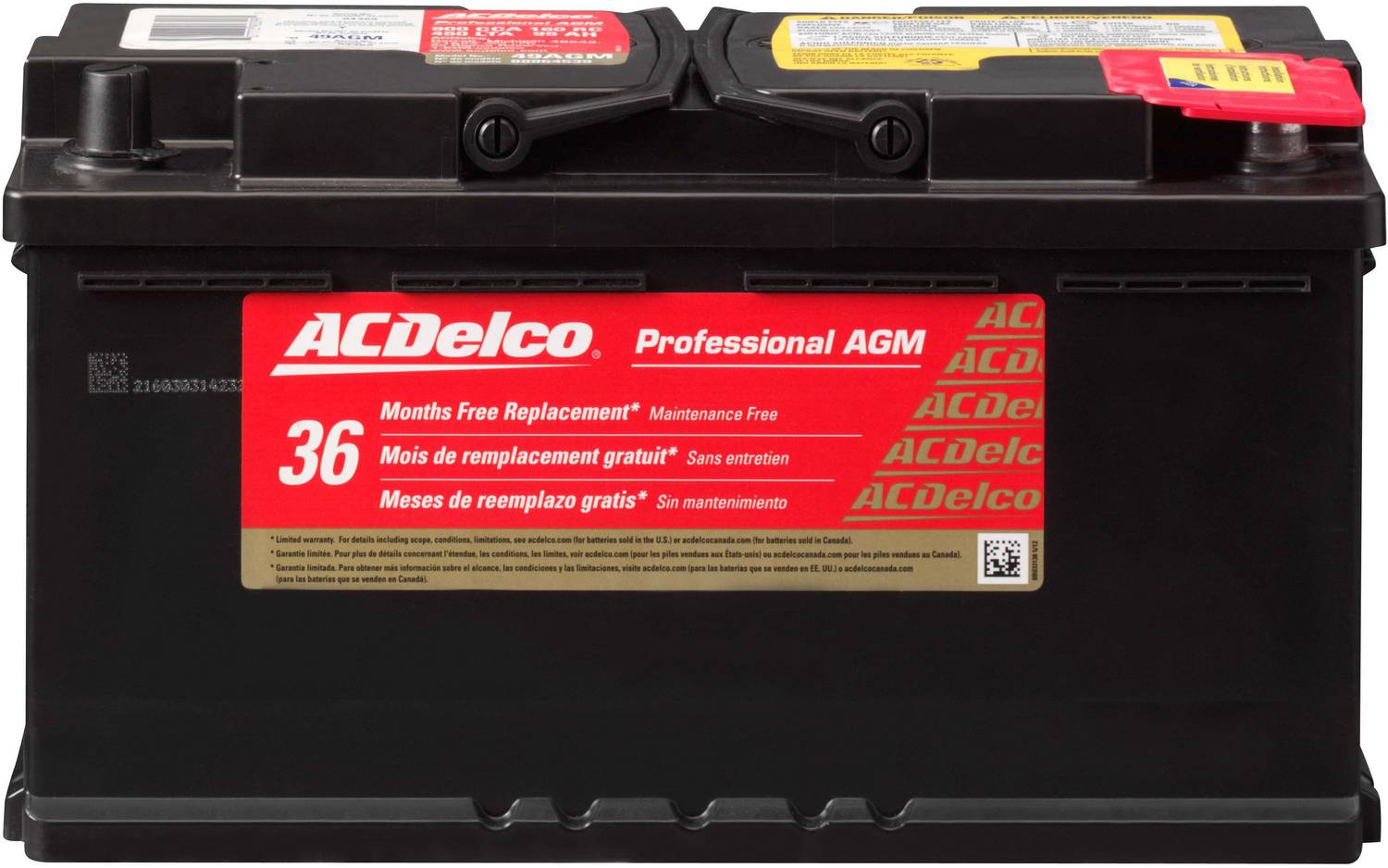
ACDelco Gold 49AGM (Group H8)
Pros
- 900 CCA starts turbocharged inline-six and V8 engines in sub-zero conditions
- OE-exact positive terminal orientation — the factory cable end reaches without stretching or bending
- 100-minute reserve capacity powers cabin electronics during engine-off stops
- Consistent performance with BMW’s auto start-stop system after proper IBS registration
Cons
- Some Amazon units ship with manufacture dates older than four months — verify before accepting
- Plastic carry strap feels undersized for the battery’s ~60 lb weight — use caution over hard floors
- Not the cheapest H8 AGM option — budget buyers save $80–100 with the Weize at equivalent CCA
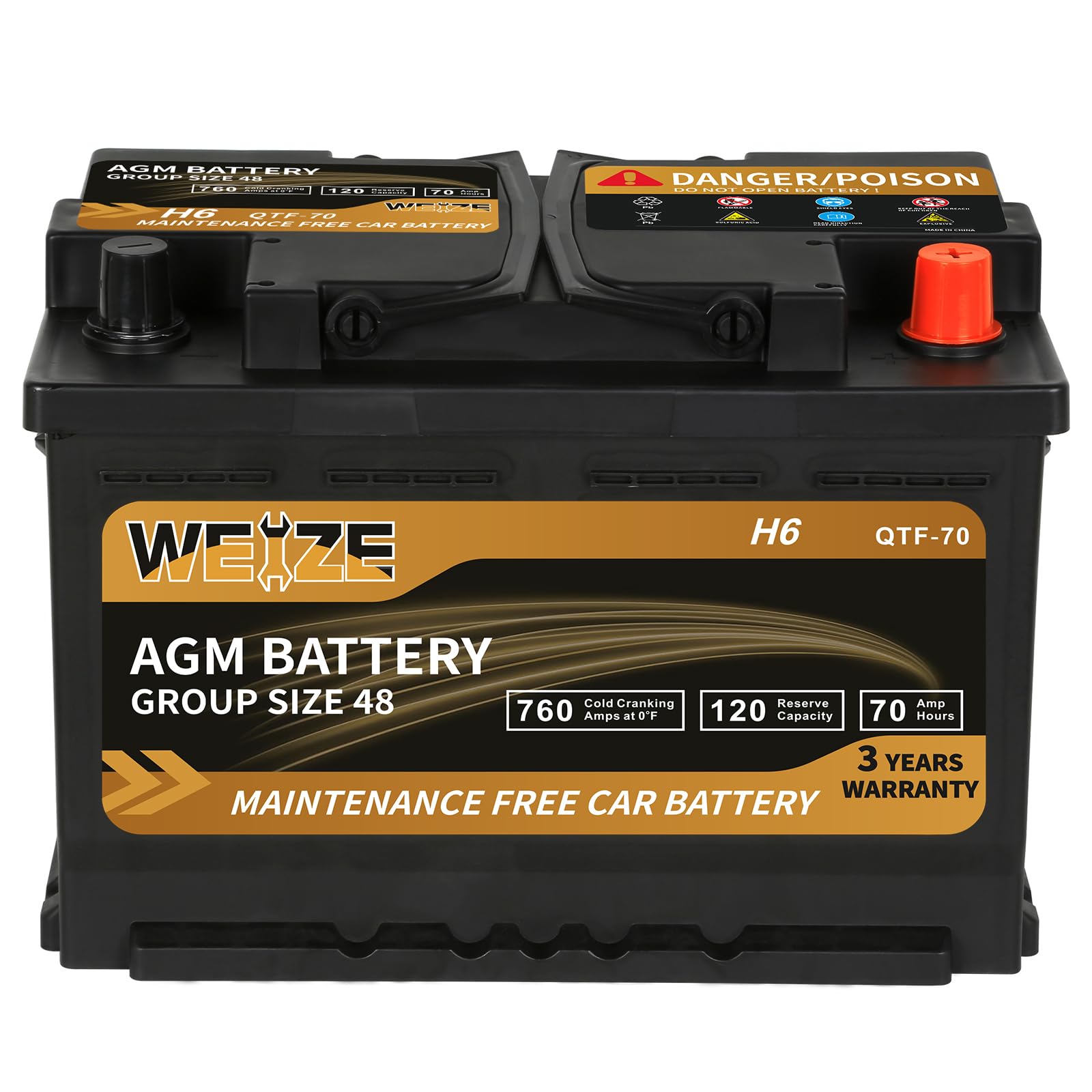
Weize Platinum AGM H8 (Group 49)
Pros
- Delivers rated 900 CCA in load tests — the spec is not inflated per owner forum testing
- Ships fully charged with a recent manufacturing date in most buyer reports
- Works with BMW start-stop after IBS registration — satisfies AGM chemistry requirements
- Pure lead plates resist sulfation better than calcium-lead flooded batteries
Cons
- External case construction feels noticeably less substantial than ACDelco or Odyssey in hand
- Long-term reliability data past four years is still building — the 7-year ownership horizon is unproven
- Warranty claims route through the Amazon seller system rather than a national retail network
Odyssey AGM49 H8 (49-950)
Pros
- 950 CCA — highest cold-start power in an H8 Group 49 battery, 50 amps ahead of competitors
- TPPL pure-lead AGM recharges noticeably faster from the alternator after a deep drain
- 3-to-10-year service life with proper AGM smart-charger maintenance discipline
- Holds charge reliably during two-week airport parking — owners report confident first starts on return
Cons
- Terminal posts sit ~5mm shorter than standard SAE — some X5 cable clamps may need post shims
- Requires an AGM-compatible smart charger for maintenance — standard trickle chargers degrade it
- Highest price on this list by a wide margin — overkill for a moderate-climate X5 with stock electronics
Delphi BU9049 MaxStart AGM
Pros
- 4-year free replacement — longest warranty on this list, especially valuable in high-MSRP vehicles
- High-density glass mat separator maintains charge acceptance after repeated summer heat cycling
- Terminal post layout aligns with factory X5 cable routing — confirmed across E70 and F15 owners
- Vibration-resistant plate design handles the X5’s air suspension road dynamics without internal damage
Cons
- Cold cranking performance dips noticeably below -5°F compared to the Odyssey — not for far-northern winters
- Amazon availability fluctuates — stock shortages appear more frequently than with ACDelco or DieHard
- Fewer total long-term reviews than the ACDelco, making five-year reliability harder to confirm independently
DieHard Platinum AGM H8 (Group 49)
Pros
- Sturdy central handle makes one-person installation practical over the X5’s trunk cargo area
- Post placement drops cables directly into position — zero stretching or repositioning of the positive lead
- Maintained full charge after two-week vacation with no trickle charger per owner reports
- Stamped-grid AGM resists the internal corrosion that shortens hot-climate flooded batteries
Cons
- Peak-season Amazon stock runs out in November–December when X5 owners scramble before winter
- Warranty claims route through Advance Auto Parts, not a direct manufacturer line
- Some units arrive with manufacture dates older than six months — verify on delivery
Can’t Decide?
Our Top 2 Picks — Head to Head
Both are strong H8 AGM choices for the BMW X5. Here’s exactly when to pick each one.
- 900 CCA handles the X5’s turbo engines in cold weather
- OE-exact terminal layout — no cable stretching on any X5 generation
- Broad compatibility confirmed across E70, F15, and G05
- Strong ACDelco retailer network for warranty support
- 950 CCA — 50 amps more than any other H8 on this list
- TPPL pure-lead recharges ~40% faster after a deep drain
- 3–10 year service life — lowest long-term cost if maintained correctly
- Handles deep discharge cycles without permanent plate damage
How to Choose the Right Battery for Your BMW X5
Six factors specific to the X5 platform — including the registration step that every other battery guide glosses over.
AGM Is Mandatory — Never Flooded
The X5 charging system applies voltage curves calibrated specifically for AGM battery chemistry. Installing a flooded lead-acid battery causes the alternator to apply the wrong charging voltage — typically too high — which heats and degrades the flooded battery within weeks while simultaneously triggering false “battery faulty” warnings. The IBS sensor also detects the mismatched internal resistance signature and can generate charging system faults. There is no workaround for any 2007+ X5.
Battery Registration — The Step Nobody Warns You About
The BMW Intelligent Battery Sensor (IBS) stores the installed battery’s age, type, and state-of-health data. When you install a new battery without registering it, the IBS continues managing the charging system as if the old, degraded battery is still installed — applying charge voltage patterns that overcharge and shorten the new battery’s life. Registration takes five minutes with Carly, BimmerLink, or ISTA and is mandatory regardless of which brand you choose. Many independent shops offer it for $25–$40.
CCA Requirements by Engine and Climate
The 3.0L turbocharged inline-six (B58, N55, N54) needs at minimum 800 CCA to crank reliably in sub-zero conditions. The 4.4L twin-turbo V8 (S63, N63) demands 850+ CCA at the same temperatures. A 900 CCA battery provides the appropriate safety margin for both engines in northern climates. The 950 CCA Odyssey specifically benefits twin-turbo V8 owners in climates where temperatures routinely drop below -15°F.
Stop-Start Cycling Depth vs Service Life
The X5’s auto start-stop system creates shallow charge-discharge cycles at every traffic light — as many as 40–80 per day in urban driving. Unlike the deep overnight discharges of a camping rig, these shallow cycles stress AGM separators through cumulative heat and micro-sulfation over tens of thousands of repetitions. The Odyssey’s TPPL plates and the Delphi’s high-density glass mat separator are specifically engineered for this use pattern; budget AGM options with thinner plates may reach 50% capacity three to four years earlier under heavy stop-start duty.
Auxiliary Battery Check on G05 Models
The 2019–2025 G05 X5 carries a small lithium-ion auxiliary battery (12V, typically located in the luggage area alongside the main AGM) that supports the stop-start system and mild hybrid functions on some trims. If the main AGM battery fails and electrical faults persist after replacement and registration, test the auxiliary unit before assuming the new main battery is defective. The aux battery has a separate charge circuit and a separate failure mode — replacing only the main battery while the aux unit has degraded below 70% capacity produces ongoing stop-start errors.
H8 vs H9 — When the Upgrade Makes Sense
The H9 (Group 95R) battery is physically larger than the H8 and provides more reserve capacity. Some X5 variants — particularly high-output M models and certain V8 configurations — left the factory with an H9 tray. If your existing battery label reads Group 95R or H9, do not order an H8 — it will fit loosely and the hold-down will not engage. If your tray holds an H8 and you want more reserve capacity, measure the tray dimensions carefully before buying an H9, as the physical swap is often possible but requires a different hold-down bracket.
Pro Tips
Quick Buying Checklist
Only buy AGM — never flooded. The X5’s charging system and IBS sensor are calibrated for AGM chemistry. A flooded battery triggers charging faults and fails within weeks, regardless of how well-reviewed the brand is.
Register the battery after installation. Without IBS registration, the alternator overcharges the new AGM using stale data from the old battery. Tools like Carly or BimmerLink handle this in five minutes — it is not optional.
Check for a G05 auxiliary lithium battery if stop-start faults persist after replacement. The 2019+ X5 has a separate aux battery that fails independently — ongoing errors after a new main battery usually point there.
Fully charge the new AGM before installation using a smart charger with an AGM mode. Most batteries ship at 70–80% — installing at partial charge forces the alternator into sustained bulk-charge mode for 45+ minutes.
Read the label on your existing battery to confirm H8 vs H9 before ordering. Some V8 and M variants use Group 95R (H9) — installing an H8 in an H9 tray leaves the battery unsecured and the hold-down dangling.
Apply dielectric grease to both terminal posts immediately after installation. The trunk battery location in F15 and G05 X5s traps humidity, and unprotected terminals on even a premium AGM corrode faster than underhood installations.
Related Guides
Other BMW X-Series Battery Guides
X5 often requires a higher CCA AGM battery — check your trim badge.
Also On CarAssists
More Guides for This Vehicle
- → BMW X5 Spark Plug Guide
- → Dashcams for the BMW X5
- → BMW X5 Seat Cover Guide
- → BMW X5 Oil Guide— varies by engine variant
- → Best Coolant for BMW X5— includes capacity by engine variant
- → Top-Rated Tires for BMW X5— all variants
Frequently Asked Questions
What battery size does a BMW X5 use?
Most 2007–2025 BMW X5 models use an H8 (Group 49) AGM battery. Some high-output V8 and M variants use an H9 (Group 95R). Always read the label on the battery you’re removing — the two sizes are not interchangeable, and the hold-down bracket in an H9 tray will not secure an H8 battery properly.
Why is battery registration mandatory after an X5 battery swap?
The BMW Intelligent Battery Sensor (IBS) tracks the installed battery’s age, capacity, and state of health to adjust alternator output dynamically. Without registering the new battery, the IBS continues applying a degraded charging profile calibrated to the worn-out old battery — overcharging the fresh AGM and shortening its life by an estimated 18–24 months. Registration using Carly, BimmerLink, or ISTA resets this profile to the new battery’s full capacity baseline.
What happens if I install a flooded battery in a BMW X5?
The X5 charging system applies voltage curves designed for AGM internal resistance. A flooded battery’s lower internal resistance causes the alternator to overcharge it at these voltages, generating excess heat that accelerates plate corrosion and electrolyte evaporation. Most flooded batteries installed in an X5 fail within 6–18 months while also triggering persistent “battery faulty” and charging system fault codes on the iDrive display.
Where is the battery located in a BMW X5?
The primary battery in E70 (2007–2013) and some F15 (2014–2018) X5s is located in the engine bay near the passenger firewall. The F15 and G05 (2019–present) X5s typically mount the main battery in the luggage compartment under the cargo floor. The trunk location means lifting a 60-lb battery over the cargo threshold — a sturdy carry handle, such as the DieHard’s, makes this a one-person job.
Can I use the Odyssey AGM49 H8 in an X5 without the shorter terminal posts causing issues?
The Odyssey’s terminal posts sit approximately 5mm shorter than standard SAE posts. Most X5 cable clamps have sufficient adjustment range to accommodate this without modification. If the clamp only contacts the top few millimeters of the post — particularly on E70 X5 models with older cable assemblies — a $2 terminal post shim resolves this in seconds and prevents arc-through-the-clamp failures that appear months later as intermittent electrical faults.
Does the G05 X5 have an auxiliary battery I need to worry about?
Yes. The 2019–2025 G05 X5 carries a small lithium-ion auxiliary 12V battery that manages the stop-start system and certain comfort electronics independently of the main AGM. If stop-start faults persist after replacing the main battery and completing IBS registration, test the auxiliary battery separately before assuming the new main battery is defective. The aux battery lives in the luggage area on most G05 trims and has its own charge circuit and failure mode.
Is the ACDelco Gold 49AGM compatible with the BMW X5’s IBS sensor?
Yes. The ACDelco Gold 49AGM’s AGM chemistry and internal resistance characteristics are fully compatible with the BMW IBS sensor. After physical installation, completing battery registration through a compatible scan tool (Carly, BimmerLink, or ISTA) is still required — that step is universal for all aftermarket batteries regardless of brand. Owners across E70, F15, and G05 X5 generations consistently report zero charging fault codes after correct registration.
Final Verdict
Our Top Recommendations for 2026
The BMW X5 is the most technically demanding vehicle in this battery series — not because it needs a rare battery size, but because the mandatory IBS registration step turns a 20-minute physical swap into a procedure that most generic battery guides don’t mention at all. Every battery on this list uses the correct H8 (Group 49) AGM chemistry, but the outcome depends entirely on completing that registration afterward. The ACDelco Gold 49AGM earns the top position for its proven IBS compatibility, OE-exact terminal layout, and consistent performance across all three X5 generations. Cold-climate and V8 owners get the strongest starting headroom from the Odyssey AGM49 H8, budget owners get full AGM compliance from the Weize Platinum H8, and southern-climate owners planning to keep their X5 past 150,000 miles benefit most from the Delphi BU9049’s 4-year free replacement warranty.