After analyzing real owner feedback across Hyundai-Forums, Reddit’s r/hyundai, and thousands of verified Amazon reviews, the Hyundai Elantra’s battery purchase breaks down along a fault line most buyers miss: the generation split between Group 121R (2011–2016), H5/Group 47 (2017–2024), and Group 35 (2007–2010) means buying the wrong size guarantees a failed installation before you even turn a wrench.
Unlike vehicles with a single battery size across decades, the Elantra has undergone three distinct battery platform changes — each with a different footprint, terminal position, and CCA minimum. Matching the correct group size to your model year is the single most important step, and it’s the mistake that drives the majority of negative reviews for otherwise solid batteries.
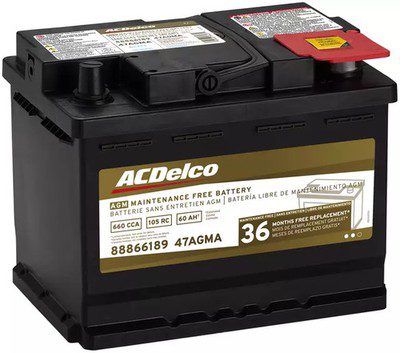
The ACDelco Gold 47AGM is the best battery for most 2017–2024 Hyundai Elantras — its 600 CCA AGM construction handles the stop-start system on newer trims, fits the H5 tray exactly, and carries a 36-month replacement warranty. Owners of the 2011–2016 generation get the cleanest install from the ACDelco Gold 121R, while drivers needing premium cold-weather performance should step up to the Odyssey 47-650 and its 650 CCA pure-lead output.
Our Top 5 Hyundai Elantra Battery Rankings
- ACDelco Gold 47AGM— Best Overall: 600 CCA AGM, exact H5 fit for 2017+ Elantra, stop-start compatible
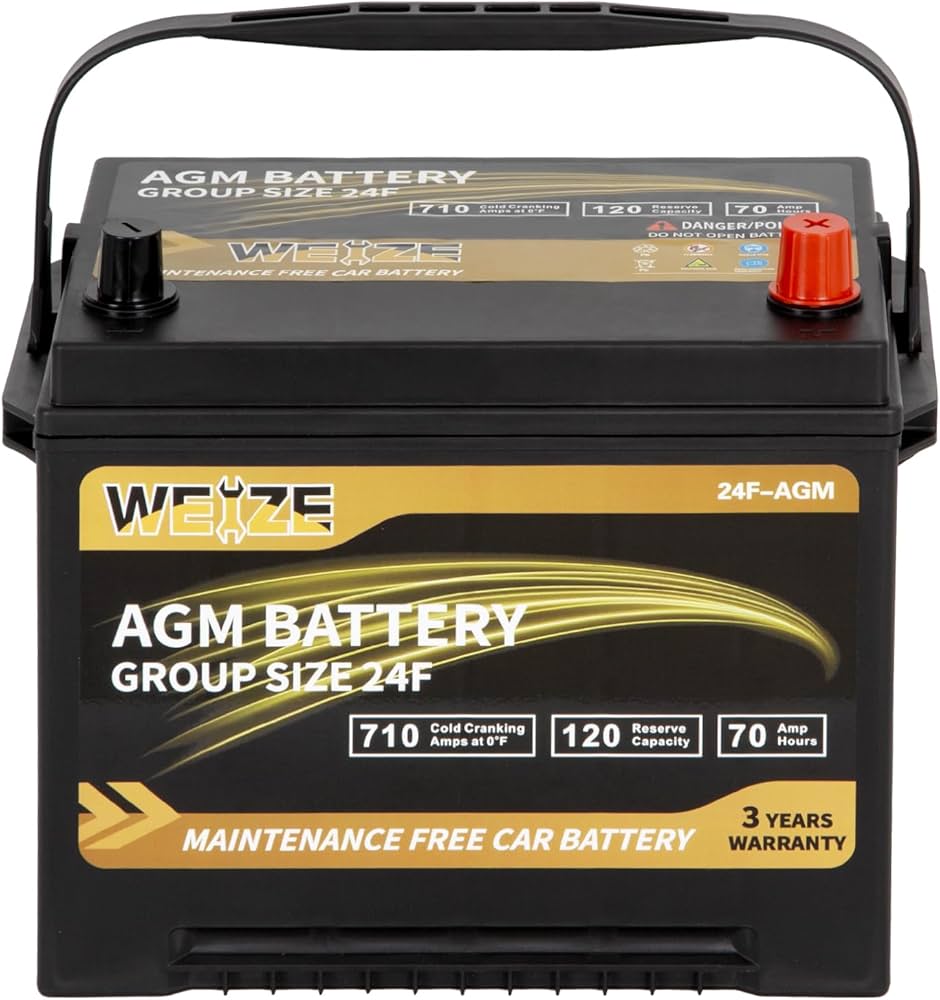
- Weize 121R— Best Budget: 450 CCA flooded at the lowest price for 2011–2016 models
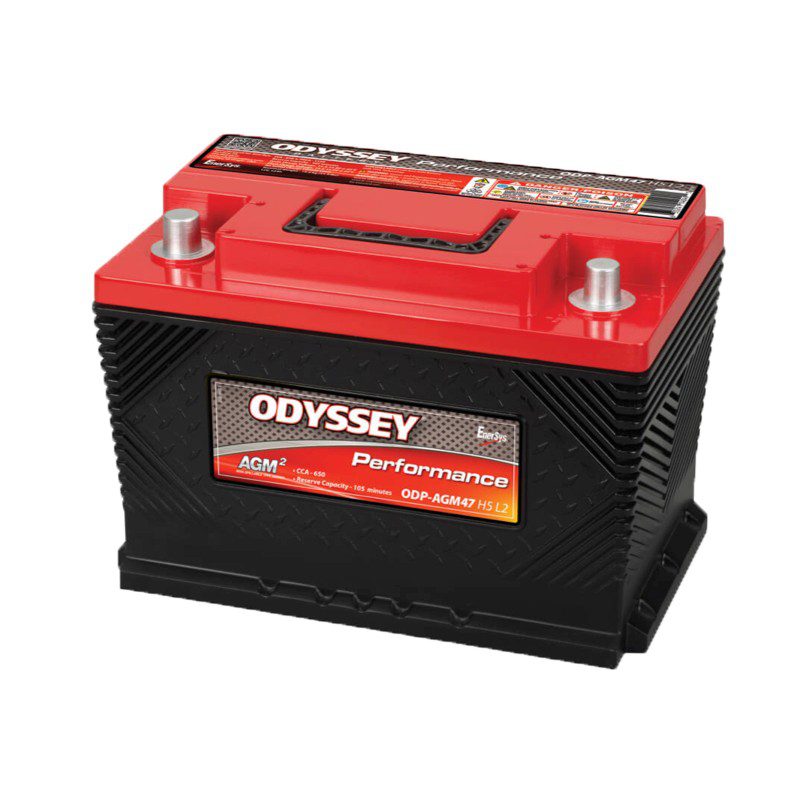
- Odyssey 47-650— Best Premium: 650 CCA pure-lead AGM, deep-cycle tolerance, longest service life
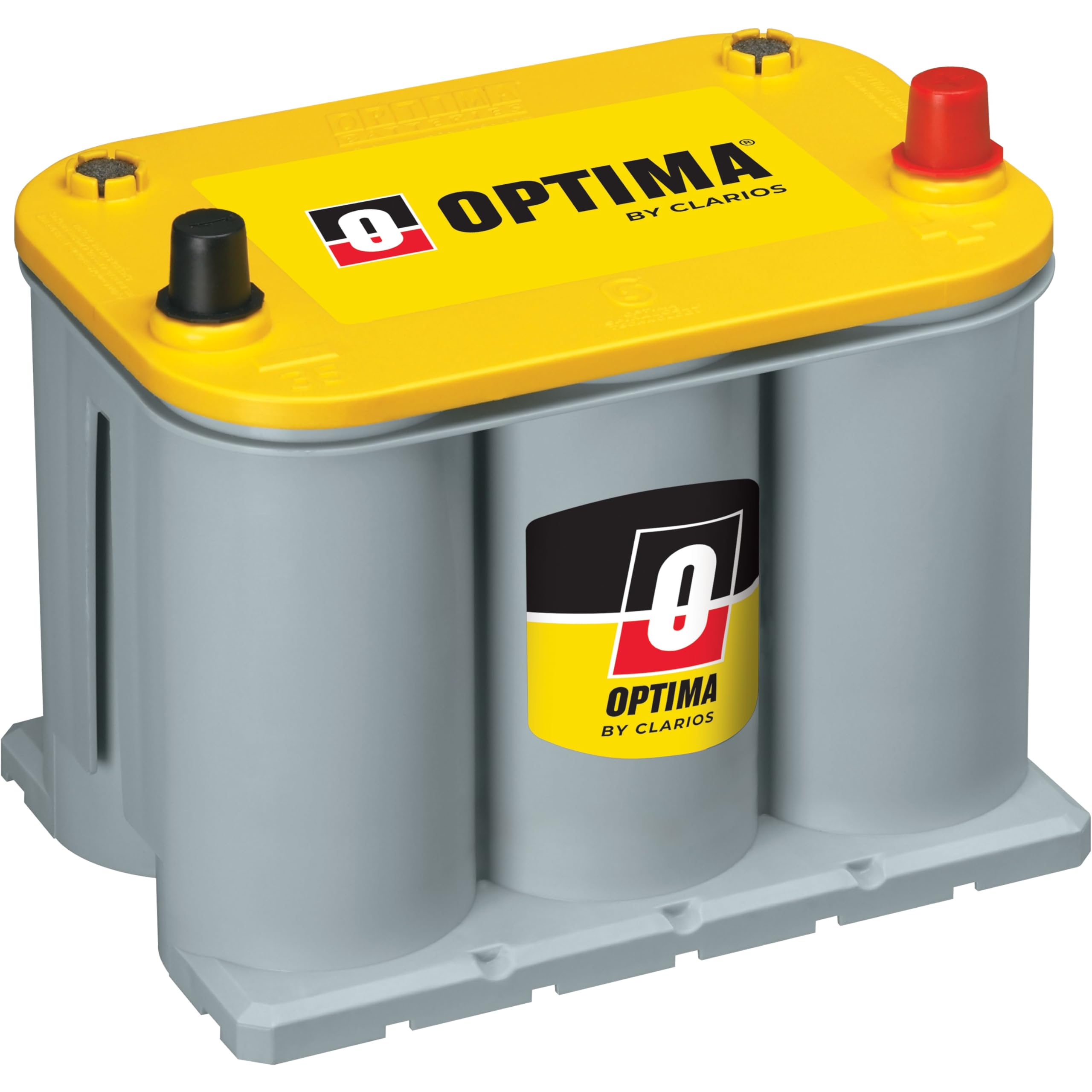
- Optima YellowTop D35— Most Durable: spiral-cell AGM for 2007–2010 Elantra models, deep-discharge recovery
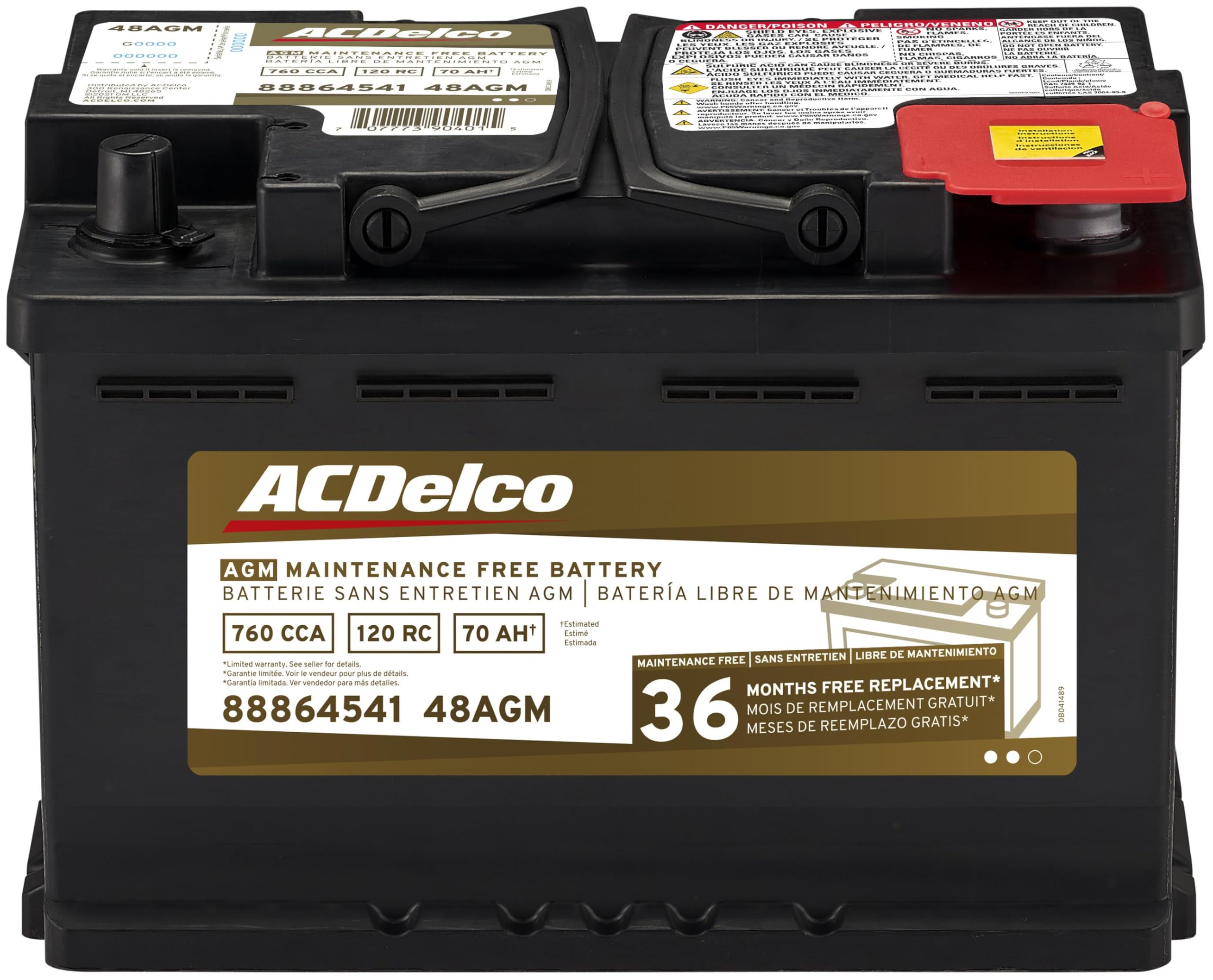
- ACDelco Gold 121R— Easiest Install: OEM-identical footprint for 2011–2016 Elantra, zero-modification swap
Best Hyundai Elantra Batteries — Compared
All five picks across all three Elantra generations — CCA, chemistry, group size, and overall score.
| # | Product | CCA | Type | Best For | Score | |
|---|---|---|---|---|---|---|
| 1 | ACDelco Gold 47AGM Editor’s Choice | 600 | AGM | 2017+ daily driving | 4.6 | See Latest Price |
| 2 | Weize 121R Budget Pick | 450 | Flooded | 2011–2016 budget | 4.5 | See Latest Price |
| 3 | Odyssey 47-650 Top Pick | 650 | Pure Lead AGM | Extreme cold & accessories | 4.7 | See Latest Price |
| 4 | Optima YellowTop D35 | 620 | AGM SpiralCell | 2007–2010 durability | 4.5 | See Latest Price |
| 5 | ACDelco Gold 121R | 500 | Flooded | 2011–2016 exact fit | 4.6 | See Latest Price |
Detailed Reviews
Full breakdown of each battery — ratings, pros, cons, and our expert verdict.
ACDelco Gold 47AGM (H5 AGM)
Pros
- 600 CCA starts the Elantra 1.6L and 2.0L engines reliably at -10°F per owner reports
- AGM construction handles the rapid charge-discharge cycling of Hyundai’s ISG stop-start system
- H5 terminal layout mirrors factory cable orientation — the positive lead reaches without stretching
- 36-month free replacement warranty through the ACDelco retailer network
Cons
- Terminal posts show accelerated corrosion in high-humidity coastal environments without dielectric grease
- Heavier than a comparable flooded H5 battery — a two-person lift helps lower it into the tight Elantra tray
- Price runs $60–80 more than a basic flooded 47 — hard to justify for a mild-climate commuter with no stop-start
Weize 121R Flooded Battery
Pros
- Lowest price for a Group 121R battery that actually fits the 2011–2016 Elantra tray correctly
- Calcium-lead alloy grid reduces internal gassing — holds a charge without frequent top-ups
- Ships mostly at full charge with a recent manufacture date per buyer reports
- Lightweight — roughly 25 lbs — makes the Elantra’s engine bay swap manageable solo
Cons
- 450 CCA becomes noticeably sluggish in its third year of use below 10°F in northern climates
- 2-year warranty period is shorter than ACDelco and AGM alternatives at this size
- Flooded cell design is susceptible to terminal corrosion buildup in humid environments without protective spray
Odyssey 47-650 (H5 AGM)
Pros
- 650 CCA — highest cold-start power in an H5 battery, 50 amps more than ACDelco and Weize
- TPPL pure-lead construction: 70% longer cycle life vs. standard AGM per Odyssey testing
- Owners in Canadian winters consistently report confident instant starts after overnight cold soaks
- 3-to-4 year full replacement warranty with documented 6–7 year real-world lifespan in owner reports
Cons
- Terminal posts sit slightly lower than stock — some 2017+ Elantra cable clamps need a minor stretch or post shim
- Slightly taller than some H5 competitors — confirm the hold-down J-bolt reaches; may need a longer replacement bolt
- Highest price on this list — unjustifiable for a mild-climate Elantra that sees summer temperatures only
Optima YellowTop D35 (8040-218)
Pros
- SpiralCell construction withstands gravel and rough road vibration that fractures flat-plate flooded batteries
- Recovers from deep discharge below 10.5V without permanent plate damage — 300+ cycle rating
- Sealed case mounts in any orientation — useful if the 2007–2010 Elantra tray is angled in a fender brace
- 5+ year real-world service life in owner forum reports with city stop-start driving patterns
Cons
- Positive post diameter may differ from the 2007–2010 Elantra clamp — a terminal shim adapter may be needed
- Requires an AGM-compatible smart charger — a standard float charger undersells it after a deep drain
- Premium price for an older generation vehicle where a less expensive AGM could serve equally well
ACDelco Gold 121R Flooded
Pros
- OEM-identical footprint — the hold-down bracket clamps to the exact same flange position as the factory battery
- 500 CCA — 50 amps higher than the Weize 121R for slightly better cold-weather headroom
- Built-in carry handle simplifies lowering the new battery into the Elantra tray one-handed
- Widely available at local retailers — warranty exchange doesn’t require shipping the battery back
Cons
- Flooded chemistry still shows capacity decline below -10°F after the third winter — not for Minnesota year-round
- 2-year free replacement warranty is shorter than the AGM alternatives at similar or lower price points
- Some units sold by third-party Amazon sellers arrive with manufacture dates older than five months
Can’t Decide?
Our Top 2 Picks — Head to Head
Both fit the 2017+ Elantra’s H5 tray. Here’s exactly when to choose each one.
- 600 CCA handles cold starts and ISG stop-start cycling
- OE-exact H5 terminal layout — no cable adjustment needed
- 36-month free replacement via ACDelco retailer network
- Best price-to-performance ratio for daily Elantra use
- 650 CCA — 50 amps more for extreme cold conditions
- TPPL pure-lead AGM: 70% more cycle life than standard AGM
- Real-world 6–7 year service life reported by Elantra owners
- Handles high-drain accessories without voltage sag
How to Choose the Right Battery for Your Hyundai Elantra
Six factors specific to the Elantra’s three-generation battery platform split — not generic car battery advice.
The Three-Generation Group Size Split
The Elantra has used three distinct battery group sizes across its generations, and this is the most common source of failed purchases. The 2007–2010 HD Elantra uses Group 35. The 2011–2016 MD Elantra uses Group 121R — a slim, elongated case unique to this generation. The 2017–2024 AD/CN7 Elantra uses H5 (Group 47), a shorter, wider European-format case. Buying a Group 47 for an MD tray leaves the hold-down clamp dangling; the shapes are incompatible.
Stop-Start ISG Compatibility on 2017+ Models
Hyundai began equipping certain 2017+ Elantra trims with an Idle Stop & Go (ISG) system that restarts the engine at every traffic stop. This system can perform 40–80 start cycles per hour in urban driving — a cycling load that standard flooded batteries are not engineered to handle. AGM batteries tolerate these shallow charge-discharge cycles without the plate degradation that causes a flooded battery to lose 30–40% of its rated capacity within 18 months of ISG use.
CCA Minimums for the 1.6L and 2.0L Engines
Hyundai’s 1.6L Nu and 2.0L MPI Theta II engines specify a minimum of 420–450 CCA at moderate temperatures. In climates that regularly see temperatures below 0°F, that minimum leaves almost no margin for a battery in its third or fourth year of service. Targeting 550–650 CCA provides a two-season aging buffer — the extra amperage costs nothing to the starter but keeps you from being stranded when capacity drops 20% over winter.
Terminal Post Diameter Differences Between Generations
The 2007–2010 Elantra uses SAE top posts with a standard diameter. The 2011–2016 121R tray uses slightly recessed top posts on some aftermarket batteries — verify that the cable clamp body can reach the base of the post rather than just touching the tip. Several owner reports specifically mention that the Optima D35’s post diameter differs from the OEM spec for this generation and requires a terminal shim adapter to make full contact.
Warranty Terms Across Three Price Tiers
Budget flooded batteries for the Elantra typically carry a 24-month free replacement warranty. Mid-tier AGM batteries like the ACDelco 47AGM extend that to 36 months. The Odyssey 47-650 offers a 3-to-4 year full free replacement. Given the Elantra’s relatively compact engine bay and mild installation difficulty, longer warranty periods represent meaningful value — a battery swap costs 30 minutes and a 10mm wrench, making a warranty claim accessible to any owner.
Hold-Down Bracket Fitment for Taller AGM Batteries
The Elantra uses a J-bolt hold-down bracket with a fixed length. Most flooded Group 47 and Group 121R batteries share the same height as the factory unit. Some premium AGM batteries — particularly the Odyssey 47-650 — sit 3–8mm taller. If the J-bolt cannot engage the bracket ledge, the battery sits unsecured and vibration gradually damages internal plates. Forum owners confirm the Odyssey sometimes needs a 10mm longer J-bolt available at any hardware store for under $3.
Pro Tips
Quick Buying Checklist
Read the label on your current battery before ordering. The Elantra has used Group 35, Group 121R, and H5/Group 47 across three generations — the online fitment tool can return the wrong result for transition model years.
If your Elantra has ISG stop-start, buy AGM. A flooded battery in a 2017+ Elantra with ISG loses 30–40% of its rated capacity within 18 months of city driving under the repeated restart load.
Target 550+ CCA if you park outside below 10°F. Hyundai’s 1.6L minimum of 420 CCA leaves no margin after two winters — a 600 CCA battery has headroom before age-related capacity loss reaches dangerous territory.
Check J-bolt reach before finalizing your Odyssey order. The 47-650 sits taller than factory — confirm the hold-down bolt threads at least 8mm onto the nut or source a $3 replacement bolt from the hardware store.
Verify terminal post diameter on 2007–2010 Group 35 installs. Several AGM options for this generation require a terminal shim adapter — an $8 fix that prevents arc-through failures that appear months after installation.
Apply dielectric grease to both posts immediately after connecting. The Elantra’s battery tray sits close to the firewall and traps road salt humidity — unprotected terminals on any battery chemistry corrode faster in this location than an open engine bay.
Also On CarAssists
More Guides for This Vehicle
Frequently Asked Questions
Which group size battery does a Hyundai Elantra use?
The Hyundai Elantra has used three different group sizes across its generations. The 2007–2010 HD Elantra takes Group 35. The 2011–2016 MD Elantra takes the narrow Group 121R. The 2017–2024 AD/CN7 Elantra takes H5 (Group 47). Read the label on your existing battery to confirm — the online fitment tools occasionally return incorrect results for transition years like 2010 and 2016.
Does the 2017+ Elantra’s stop-start system require an AGM battery?
Yes, for Elantra trims with the ISG (Idle Stop & Go) system. The ISG restarts the engine at every traffic stop — up to 80 times per hour in urban traffic. A flooded lead-acid battery cannot sustain this cycling rate without accelerated plate degradation. Most owners with ISG report their flooded replacement failed within 18 months; an AGM battery engineered for shallow cycling handles the same load for four or more years.
What is the Group 121R battery size, and why is it unusual?
The Group 121R is a narrow, elongated battery case unique to Korean-market vehicles like the 2011–2016 Elantra. It measures approximately 9.5 × 5.1 × 8.3 inches — substantially slimmer than the Group 35 or H5 cases used by most compact cars. This slim footprint means Group 35 or H5 batteries cannot physically fit in the 121R tray without cutting or bending the hold-down bracket, which compromises battery security.
Does the Hyundai Elantra need battery registration after a swap?
No. Unlike BMW or Mercedes vehicles with Intelligent Battery Sensor (IBS) systems, the Hyundai Elantra does not require a battery registration scan after installation. The ECM relearns idle and fuel trims automatically over a few drive cycles. Some owners notice a slightly rough idle for the first 5–10 minutes — this is normal and self-correcting. Radio presets and the clock will need manual resetting.
Can I use a higher CCA battery than the stock spec in an Elantra?
Yes, and there is no downside to doing so. The Elantra’s starter motor draws only the current it needs — a 650 CCA battery does not push more current into the starter than a 450 CCA battery. Higher CCA simply means more reserve capacity during cold starts and more headroom as the battery ages. The extra cost is worthwhile if you live in a cold climate or plan to keep the car past 100,000 miles.
Will the Odyssey 47-650 fit the 2017+ Elantra tray without modification?
In most cases, yes — but the Odyssey 47-650 sits 3–8mm taller than a standard H5 battery, and some 2017+ Elantra J-bolt hold-downs may not thread fully onto the retaining nut. A longer J-bolt from any hardware store resolves this for under $3 and takes two minutes. Elantra forum owners confirm the fitment is otherwise clean with no tray modification required.
How do I tell if my Elantra is a 2010 HD model that takes Group 35 or a 2010 MD that takes Group 121R?
The easiest method is to read the group size label on your existing battery — it is printed on the top case sticker. If the label is gone, measure the battery case length: a Group 35 is approximately 9.1 inches long while a Group 121R is approximately 9.5 inches long and significantly narrower. The chassis plate in the driver’s door jamb also shows the exact model year and trim that determines which generation you have.
Final Verdict
Our Top Recommendations for 2026
The Hyundai Elantra’s three-generation battery split makes the group size confirmation step more important here than in almost any other compact car purchase — and the 2017+ generation’s ISG stop-start system makes AGM chemistry a functional requirement rather than a premium upgrade for urban drivers. The ACDelco Gold 47AGM earns the top position for its exact H5 fitment, stop-start compatibility, and 36-month warranty at a mid-tier price. Extreme-climate owners and those running high-drain accessories should invest in the Odyssey 47-650 for its 650 CCA and documented 6–7 year real-world lifespan. Owners of the 2011–2016 generation get the simplest, most reliable experience from the ACDelco Gold 121R, while the tightest budgets in mild climates are served by the Weize 121R at a fraction of the cost.