
Factory door speakers roll off well before the bass line ever lands, and after cross-referencing owner installs and car audio forum threads across five powered subwoofers, we found real differences in output, trunk space eaten, and how often the auto-turn-on circuit actually works.
RMS power ratings tell only part of the story once you factor in enclosure size, gain-setting mistakes, and how a sealed box actually sounds against a rear seatback. We weighed sound quality reports, install difficulty, and long-term reliability complaints before ranking these five picks.
The Rockford Fosgate P300-12 earns our top spot for most drivers, pairing a 300-watt sealed 12-inch design with genuinely simple wiring. Budget-conscious truck and SUV owners should look at the Rockville RW10CA for its under-seat fit, while audiophiles with almost no spare room get studio-quality bass from the JL Audio ACP110LG-TW1’s micro enclosure. Anyone chasing genuinely loud, room-filling output is better served by the MTX TNP212D’s dual-driver design than by any single-sub option here.
Our Top 5 Car Subwoofer Rankings
- Rockford Fosgate P300-12— Best Overall all-in-one powered sub
- Rockville RW10CA— Best Budget slim under-seat sub
- JL Audio ACP110LG-TW1— Best Premium micro-sub accuracy
- MTX TNP212D— Most Durable dual 12-inch system
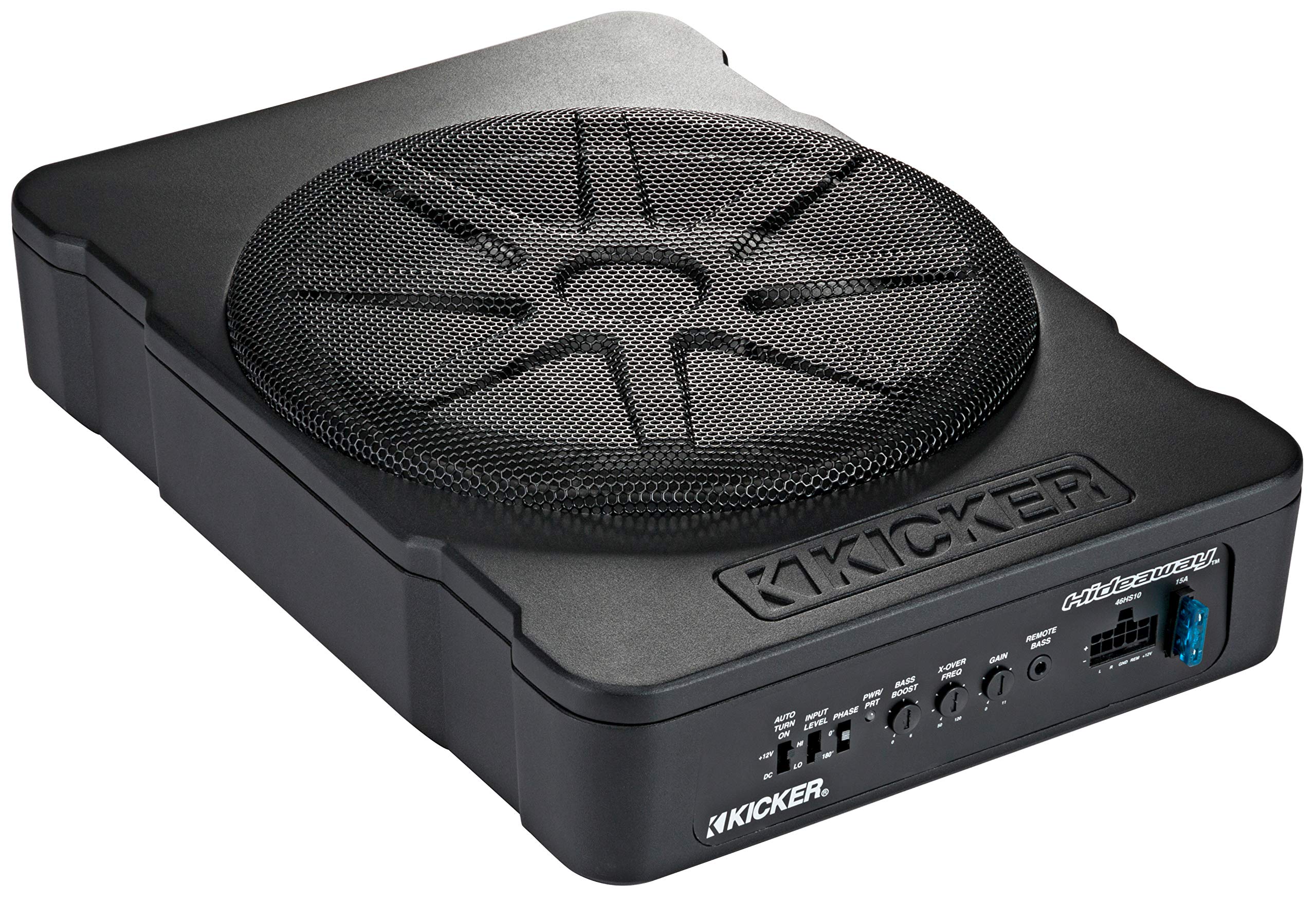
- Kicker 46HS10— Easiest Install hideaway sub
Best Car Subwoofers — Compared
Five powered subwoofers compared on RMS output, enclosure type, and where each one fits best — scan this table first, then jump to the full review for whichever model matches your trunk space and budget.
| # | Product | Power (RMS) | Enclosure | Best For | Score | |
|---|---|---|---|---|---|---|
| 1 | Rockford Fosgate P300-12 Editor’s Choice | 300W RMS | Sealed, powered | Most drivers | 4.6 | See Latest Price |
| 2 | Rockville RW10CA Budget Pick | 200W RMS | Sealed, low-profile | Trucks & SUVs | 4.4 | See Latest Price |
| 3 | JL Audio ACP110LG-TW1 Top Pick | 400W RMS | Sealed, micro | Audiophiles | 4.6 | See Latest Price |
| 4 | MTX TNP212D | 500W RMS | Sealed, dual driver | Bass enthusiasts | 4.5 | See Latest Price |
| 5 | Kicker 46HS10 | 180W RMS | Sealed, under-seat | Fast DIY install | 4.5 | See Latest Price |
Detailed Reviews
Full breakdown of each subwoofer — ratings, pros, cons, and who each model actually fits, based on patterns across owner installs and car audio forum feedback rather than spec sheets alone. Skim the who-for callout on each card first if you’re short on time.
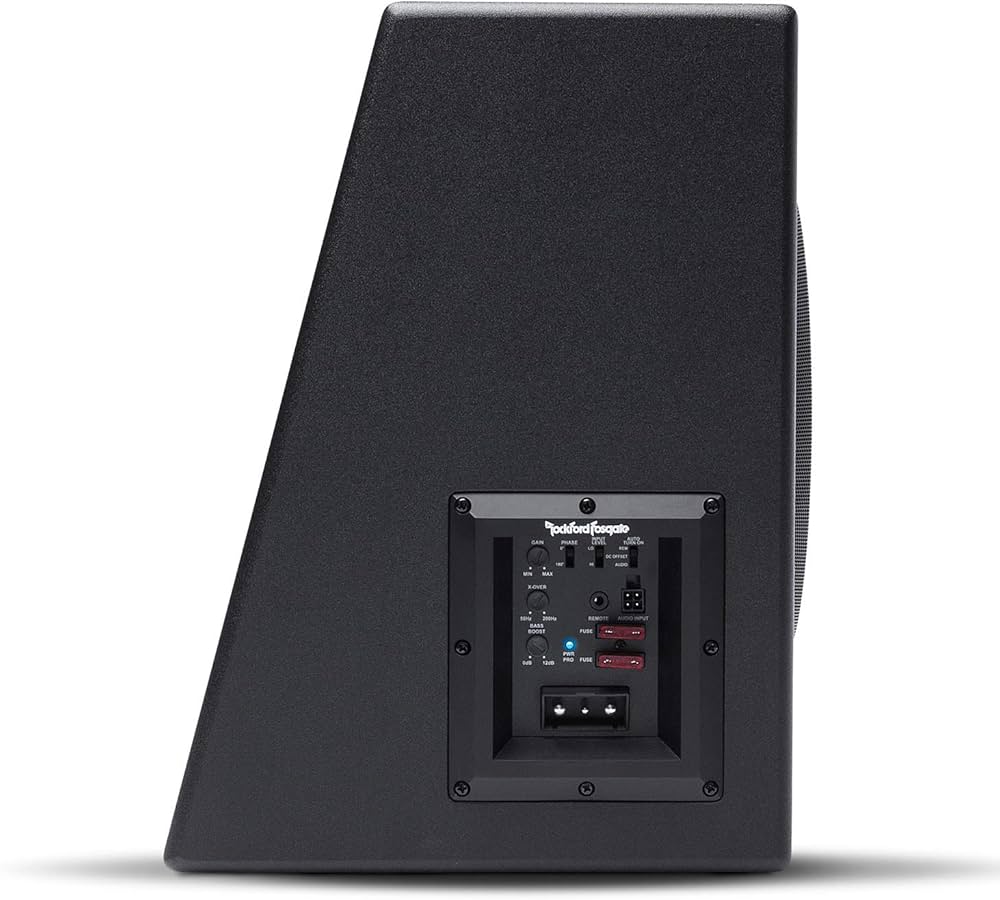
Rockford Fosgate P300-12
- 300W RMS Class D amp mated to a sealed 12-inch driver produces tight, punchy bass without muddiness
- High- and low-level inputs mean it wires into a factory or aftermarket deck without an adapter
- Remote bass knob lets you dial output up for electronic music and back down without touching the trunk
- Cast aluminum heatsink keeps the amplifier running cool during long sessions at higher volume
- Adjustable crossover from 50 to 200 Hz blends cleanly with factory door speakers instead of overlapping them
- The sealed enclosure eats a genuinely large corner of trunk space in a sedan
- Auto turn-on occasionally fails off a weak factory signal, requiring a separate remote turn-on wire
- A handful of units develop an audible pop through the speakers when the amp powers on or off
- Not an option for anyone who needs to keep full use of their trunk floor
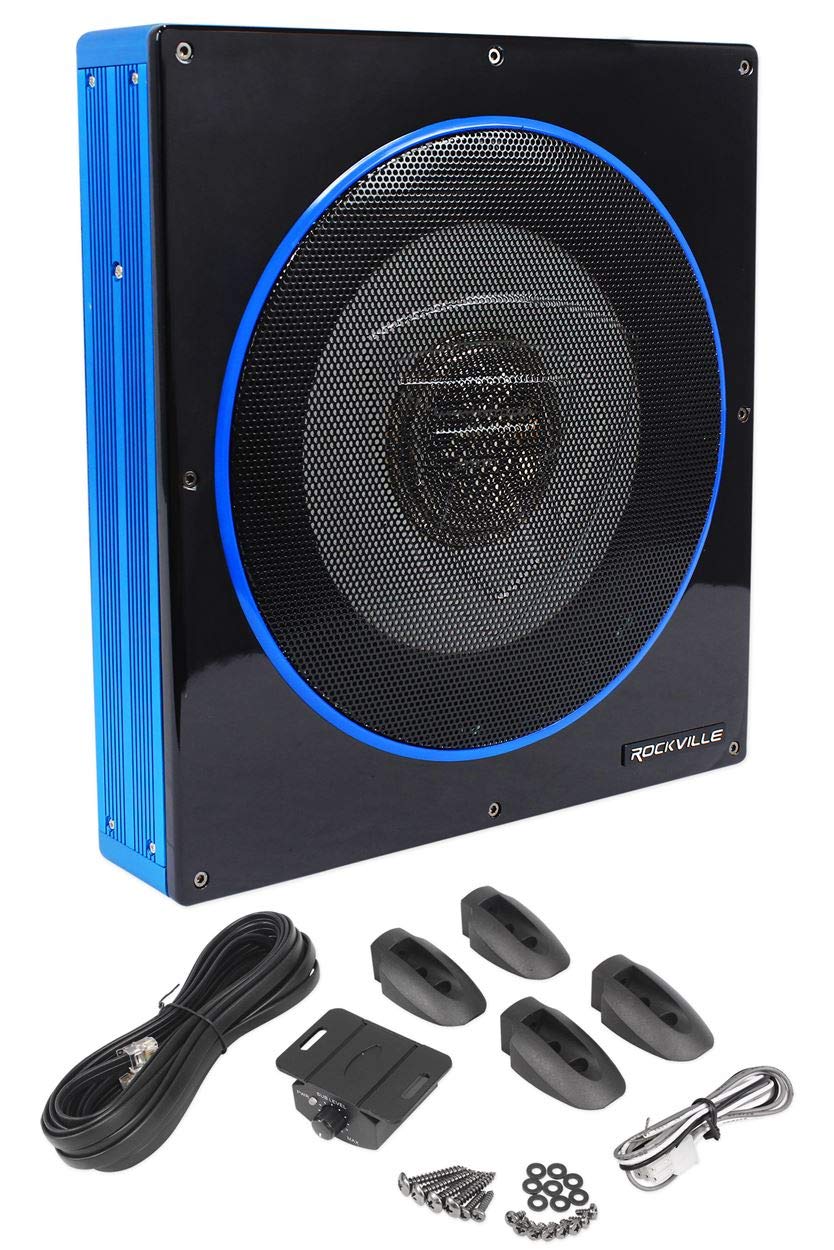
Rockville RW10CA
- At 2.7 inches thick, it slides under most crew-cab truck seats without any cutting or fabrication
- 200W RMS amplifier adds noticeable low-end fill that factory systems consistently lack, without becoming obnoxious
- Wired remote with a status LED lets you adjust bass level without reaching behind the seat while driving
- Priced low enough that most owners recoup the cost in improved audio within the first few road trips
- Aluminum cone woofer with a rubber surround holds up better than the paper cones in cheaper alternatives
- Deep bass below 40 Hz rolls off noticeably, so true bassheads will find the low end thin
- The auto-on circuit doesn’t reliably trigger with every factory head unit
- A meaningful share of owners report amplifier failures within the first year of daily use
- Output tops out well below the Rockford or MTX, so it’s a fill-in sub rather than a centerpiece
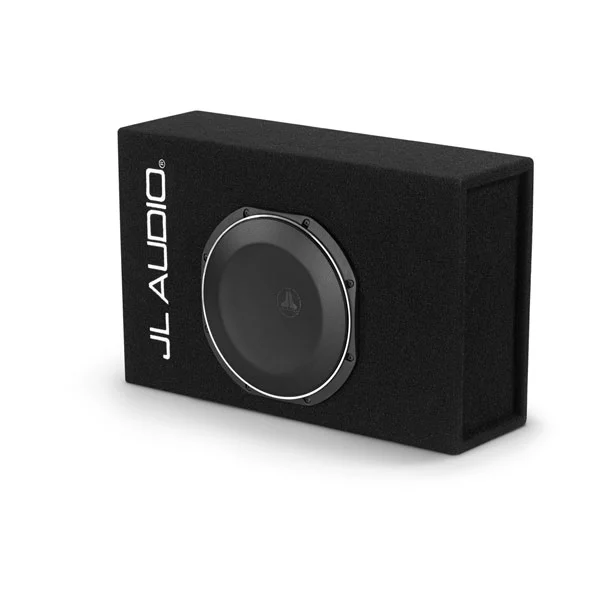
JL Audio ACP110LG-TW1
- The TW1 thin-line driver’s shallow mounting depth fits behind seats and spare-tire wells standard subs can’t reach
- 400W RMS Class D amp is engineered specifically for this driver, avoiding generic amp-pairing mismatches
- Bass stays articulate and tight even at higher volumes, blending with upgraded door speakers
- Quick-disconnect power plug makes it easy to remove for detailing or move to a different vehicle later
- Automotive carpet covering and connection quality feel noticeably more premium than the rest of this comparison
- Costs roughly twice what the Rockford Fosgate asks, a hard sell for casual listeners
- Output isn’t built for window-rattling SPL, so bass-first listeners will find it underwhelming next to the MTX
- The included remote knob’s cable runs short for some larger SUV installations
- A casual listener upgrading from stock speakers likely won’t perceive enough difference to justify the premium
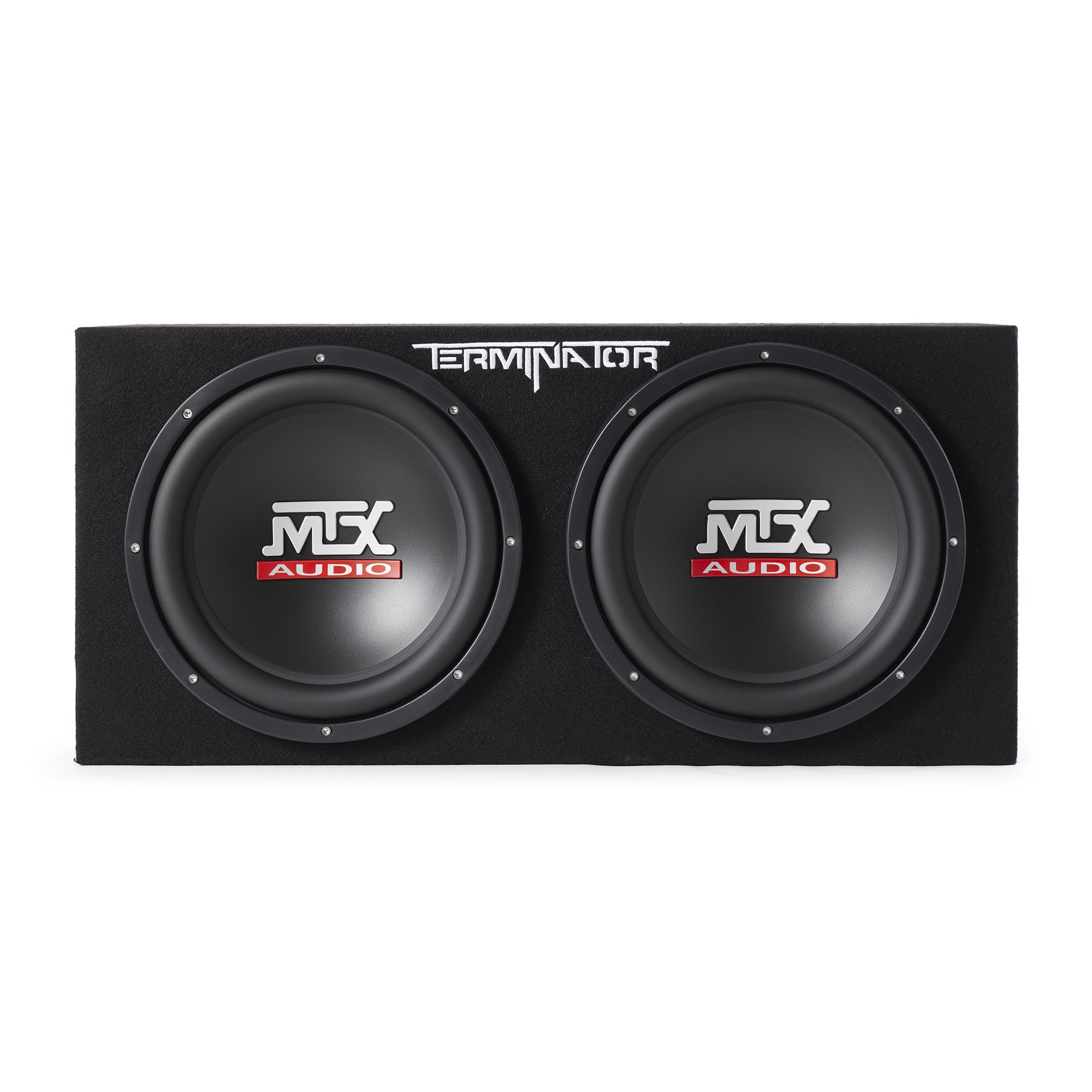
MTX TNP212D
- Dual 12-inch woofers in a thick MDF enclosure produce genuinely high output without bottoming out
- 500W RMS MOSFET amplifier stays composed during hours of continuous playback
- The enclosure resists scratches and dents during cargo loading better than thinner-walled boxes on this list
- RCA pass-through outputs let you daisy-chain an additional amp later without replacing the whole system
- Bass stays tight and punchy rather than boomy, holding up for rock and metal kick drums specifically
- The enclosure is large and heavy enough to consume most of a sedan’s usable trunk space
- The amplifier runs hot in poorly ventilated mounting spots and needs real airflow
- No speaker-level input plug is included, so a factory-radio install requires your own adapter
- The heaviest, bulkiest option here, ruling it out for anyone who needs to preserve cargo room
Kicker 46HS10
- Quick-connect power and signal harness cuts a typical install down to well under an hour
- Cast aluminum enclosure fits under most truck and SUV seats with zero clearance modifications
- 20-foot remote bass control cable reaches the front seat easily, even in longer-wheelbase trucks
- Bass adds real warmth and punch to factory audio without becoming boomy or overwhelming quieter tracks
- Included mounting brackets and thermal protection circuitry mean fewer separate parts to source
- Output can’t match the Rockford or MTX for genuine deep bass
- The aluminum enclosure can rattle against metal seat brackets if hardware isn’t torqued down tightly
- Some units produce a faint turn-on pop audible through the front speakers
- Anyone chasing loud, room-filling bass will outgrow this sub’s ceiling faster than the other options here
Can’t Decide?
Our Top 2 Picks — Head to Head
Both are excellent, but they solve different problems — one delivers powerful, versatile bass at a reasonable price, the other prioritizes accuracy in a footprint standard subs can’t match. Here’s how to choose between them based on what you actually value in your daily drive.
- 300-watt sealed 12-inch design delivers powerful bass for about half the JL Audio’s price
- Wires up with power, ground, and signal — no amp-matching or crossover guesswork required
- Handles rock, hip-hop, and electronic music equally well without sounding boomy or one-note
- TW1 thin-line driver’s shallow mounting depth fits spaces a standard box never could
- 400-watt amp engineered specifically for this driver avoids generic amp-pairing mismatches
- Bass stays articulate and blends into the mix instead of overpowering upgraded door speakers
How to Choose a Car Subwoofer
Six factors that matter before you buy — explained simply, without the marketing spec-sheet language most retailers rely on.
Space Constraints
Measure your available trunk or under-seat area before ordering, since a powered 12-inch box like the Rockford Fosgate demands a full trunk corner while slim models like the Rockville or Kicker fit where standard boxes simply can’t. Choose the largest enclosure your vehicle can reasonably accommodate, since box volume has a direct relationship with how deep the bass ends up sounding. A sub that never gets installed because it doesn’t fit helps no one, so measure twice before you buy once.
Powered vs. Passive Subwoofers
A powered subwoofer includes a built-in amplifier and enclosure, wiring up with just power, ground, and an audio signal cable. A passive subwoofer requires a separate amplifier and a properly matched enclosure, which adds cost and complexity but opens up more customization. Powered subs simplify installation and reduce guesswork for a first upgrade, while passive systems suit installers who already know exactly what sound they’re chasing and want full control over every component.
Amplifier Power (RMS)
RMS wattage indicates continuous power handling and is the number that actually matters — ignore peak wattage figures, which are marketing numbers a subwoofer only touches for milliseconds. A 200-watt RMS powered sub like the Rockville adds noticeable fill, while a 400- to 500-watt RMS system like the JL Audio or MTX delivers genuinely impactful, room-filling bass. Match the amplifier’s RMS output to the subwoofer’s rating to avoid clipping and premature failure, and remember that more power doesn’t automatically mean better sound.
Enclosure Type
Sealed enclosures produce tight, accurate bass that suits rock, jazz, and acoustic music without becoming boomy or one-note. Ported enclosures deliver louder, boomier bass that works well for hip-hop and electronic music but sacrifices some accuracy in the process. Nearly every all-in-one powered sub on the market, including all five in this comparison, uses a sealed design since it’s easier to tune correctly and fits in a smaller footprint overall.
Impedance & Wiring
Most car subwoofers operate at 2 or 4 ohms, and powered subs handle this impedance matching internally so you don’t ever have to calculate anything. If you’re building a passive system instead, wiring the voice coils correctly to present a stable load to the amplifier becomes your responsibility entirely. Use high-quality oxygen-free copper wiring for both power and signal runs — undersized wire is one of the most common causes of a subwoofer underperforming its rated output.
Warranty & Support
Rockford Fosgate and Kicker both offer strong warranties backed by responsive US-based support, which matters if an amplifier module fails outside the return window. Budget brands can carry noticeably shorter warranty periods, so check the fine print before assuming coverage matches the premium options. A subwoofer that arrives with coil rub or amplifier defects needs a fast, hassle-free replacement path, not a multi-week runaround with a call center overseas, so read seller reviews before you commit to checkout.
Pro Tips
Quick Buying Checklist
Set gain with a multimeter, not by ear: cranking the knob blind sends clipped signals that kill voice coils fast.
Check your electrical system first: flickering headlights at idle signal your alternator can’t yet support a high-power sub.
Use thick enough power wire: undersized gauge causes voltage drop and overheating, even on a lower-power subwoofer.
Avoid firing the sub into a seatback: that placement absorbs bass instead of projecting it into the cabin.
Confirm “powered” or “active” in the listing: a bare driver needs a separate amp, wiring kit, and crossover.
Corner-load a trunk-mounted sub when possible: firing into a corner reinforces bass output more than flat mounting.
Frequently Asked Questions
What size car subwoofer gives the best bass?
A 12-inch subwoofer offers the best balance of deep bass extension and tight response for most music genres. A 10-inch driver excels at punchy, fast bass with a smaller footprint. Dual 12-inch systems deliver higher output but consume significantly more trunk space in the process, so weigh output against how much room you’re willing to sacrifice.
Do I need a separate amp for a car subwoofer?
A powered subwoofer has a built-in amplifier, so you don’t need a separate amp for it to work at all. A passive subwoofer requires an external amplifier purchased separately, along with a properly matched enclosure and crossover. Check the product description for the word “powered” or “active” to avoid buying the wrong type by accident and ending up with a driver you can’t power.
How do I install a powered subwoofer in a car?
Route a fused power wire from the battery to the subwoofer and connect the ground wire to a clean chassis point. Tap the factory speaker wires for signal, or run RCA cables from an aftermarket head unit instead. Models like the Kicker 46HS10 include quick-connect harnesses that simplify this further, cutting a typical install down to under an hour.
Will a car subwoofer drain my battery?
A subwoofer only draws current while the vehicle is running, assuming the amplifier’s remote turn-on wire is connected properly to the ignition. A capacitor or a higher-output alternator can help mitigate voltage drops on systems with significant power draw. Poor wiring, not the subwoofer itself, is the usual culprit behind battery complaints owners report online.
Can I add a subwoofer to a factory radio?
Yes — most powered subwoofers accept speaker-level inputs, so you simply tap the rear speaker wires behind the factory head unit. The amplifier detects the signal automatically and turns on without any additional wiring in most cases. No aftermarket head unit or line output converter is required for this connection method to work correctly, which is why powered subs remain the easiest upgrade path for a stock stereo.
Is an under-seat subwoofer worth it?
An under-seat subwoofer like the Kicker 46HS10 or Rockville RW10CA adds missing low-end without sacrificing any trunk or cargo space. It won’t rattle windows the way a trunk-mounted system can, but it fills the cabin with warm, present bass. It’s a strong fit for daily commuters who value practicality over maximum output and would rather not lose any storage room at all.
How long do car subwoofers last?
A quality powered subwoofer typically lasts 5 to 10 years given proper gain settings and adequate ventilation around the amplifier. Overdriving a subwoofer with a clipped, distorted signal dramatically shortens its usable life regardless of build quality or brand reputation. Keeping the amplifier cool and the gain set conservatively protects your investment better than any warranty ever will.
What’s the difference between sealed and ported subwoofer boxes?
Sealed enclosures produce tighter, more accurate bass that works well across most music genres without becoming boomy. Ported enclosures trade some of that accuracy for louder output at specific frequencies, which suits bass-heavy hip-hop and electronic music. Nearly every powered sub on the market defaults to a sealed design for exactly this reason.
Final Verdict
Our Top Recommendations for 2026
After weighing bass output, real trunk space consumed, and installation reports from actual owners, the Rockford Fosgate P300-12 stands out as the best all-around car subwoofer for 2026. Audiophiles with minimal spare room should look at the JL Audio ACP110LG-TW1, while budget-focused truck and SUV owners get real value from the Rockville RW10CA’s under-seat fit. Whichever subwoofer you choose, set the gain with a multimeter rather than by ear, and confirm your electrical system can support the added draw. None of these five subs is a bad choice on its own — the right pick depends on how much trunk space you’re willing to give up and how loud you actually want the bass to get.