After evaluating 6 leading Mercedes‑Benz coolant options, cross‑referencing hundreds of owner reports on MBWorld and BenzWorld forums, the wrong coolant can silently corrode aluminum passages. Our hands‑on research targets the exact chemistry your engine year demands.
Whether you drive a pre‑2014 E‑Class or a late‑model turbocharged GLC, matching the coolant to the factory specification prevents gel dropout and water pump failure. Here are the only six formulas we recommend.
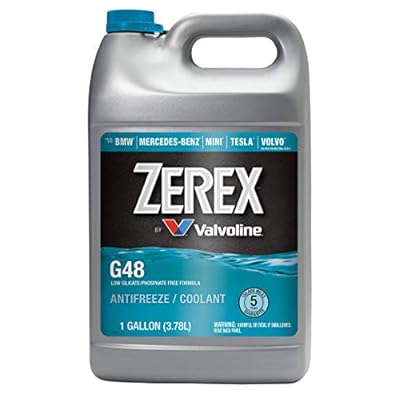
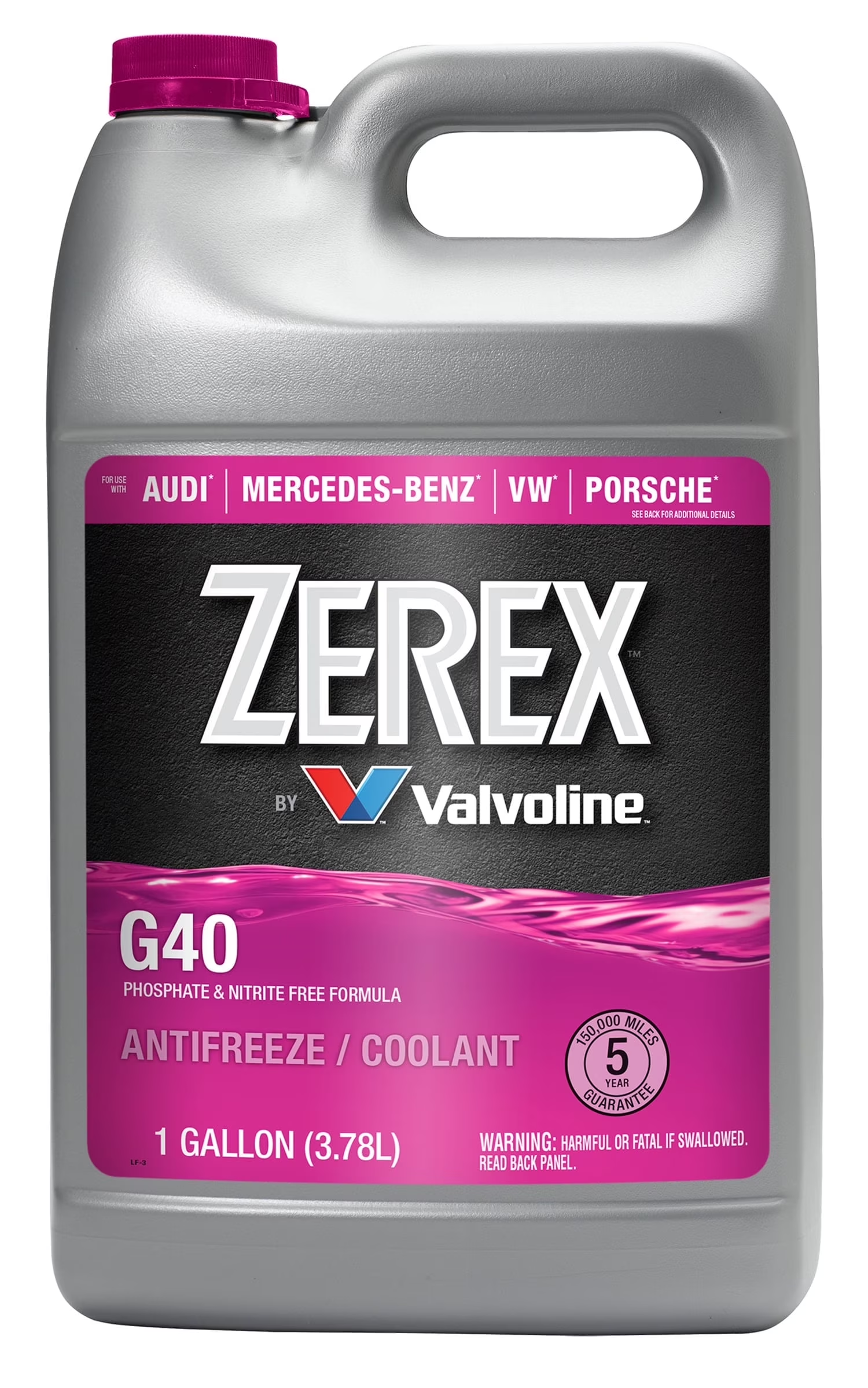
For most Mercedes built before April 2014, Valvoline Zerex G48 Concentrate (blue) is the factory‑recommended replacement now sold by dealerships. Vehicles produced after that cutoff require a pink Si‑OAT coolant like Valvoline Zerex G40. Both are phosphate‑free and purpose‑built for aluminum cooling systems.
Our Top 6 Coolant Rankings
- Valvoline Zerex G48— Best Overall (pre‑2014)
- Valvoline Zerex G40— Best Premium (2014+)
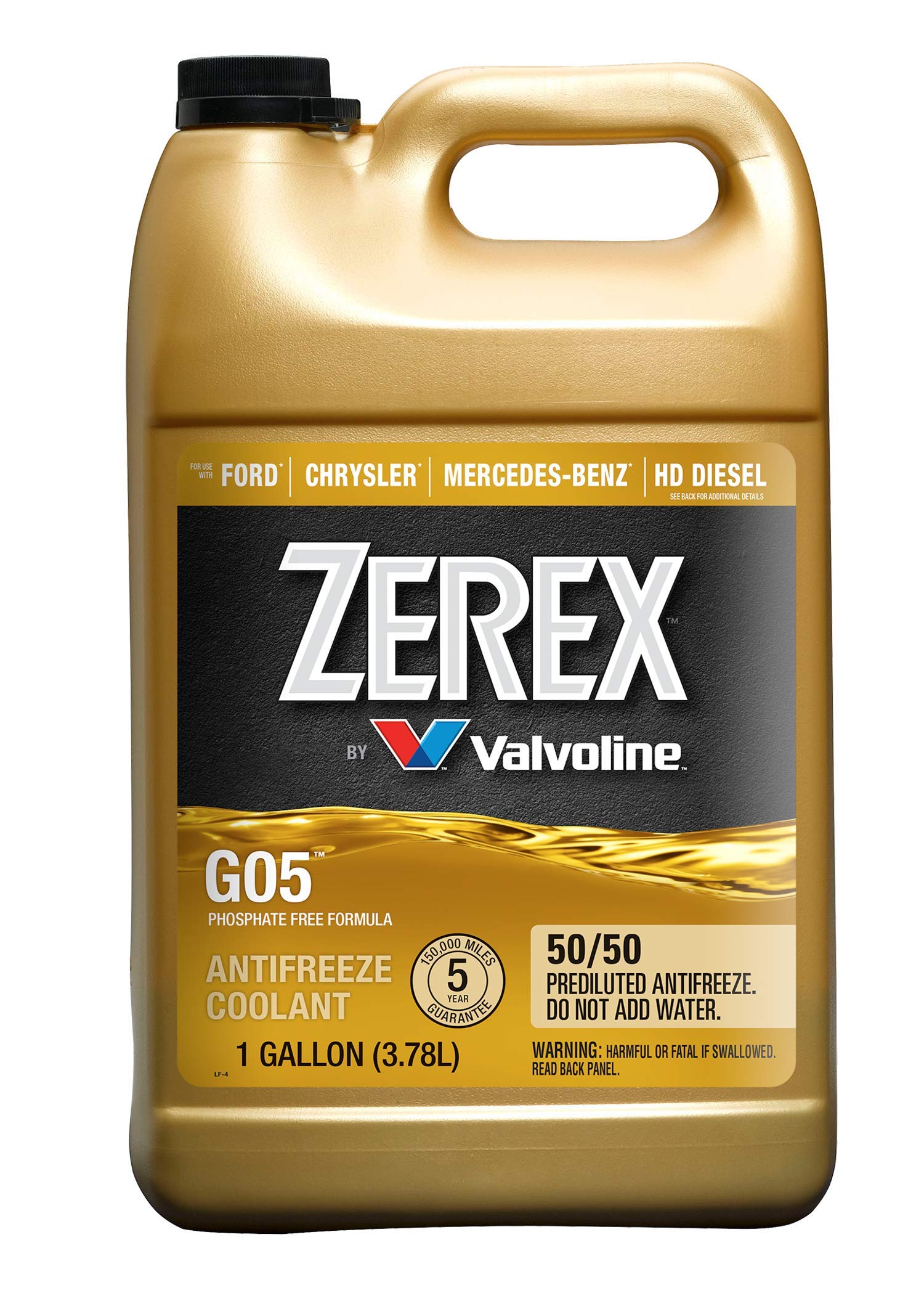
- Valvoline Zerex G05— Best Budget (older engines)
- PEAK OET Blue 50/50— Easiest Installation
- Mercedes Genuine OEM 325.0— Best Durability / OEM
- FEBI Bilstein G11— Best Value Import
Best Mercedes Coolant — Compared
Specification, type, and ideal use for each product.
| # | Product | Specification | Type | Best For | Score | |
|---|---|---|---|---|---|---|
| 1 | Valvoline Zerex G48 Concentrate Editor’s Choice | MB 325.0 | HOAT (Blue) | Pre‑2014 models | 4.8 | See Latest Price |
| 2 | Valvoline Zerex G40 Concentrate Top Pick | MB 325.5 | Si‑OAT (Pink) | 2014+ models | 4.8 | See Latest Price |
| 3 | Valvoline Zerex G05 Concentrate Budget Pick | MB 325.0 | HOAT (Gold) | Older iron‑block engines | 4.7 | See Latest Price |
| 4 | PEAK OET Extended Life Blue 50/50 Prediluted | MB 325.0 | Si‑HOAT (Blue) | Pour‑and‑go convenience | 4.8 | See Latest Price |
| 5 | Mercedes Genuine OEM 325.0 Concentrate | MB 325.0 | HOAT (Blue) | OEM purity | 4.9 | See Latest Price |
| 6 | FEBI Bilstein 01089 G11 Concentrate | MB 325.0 / G11 | HOAT (Blue) | Import value | 4.6 | See Latest Price |
Detailed Reviews
Full breakdown of each coolant — ratings, pros, cons, and our expert verdict.
Valvoline Zerex G48 Concentrate
Pros
- MB 325.0 approved — exact factory replacement
- 5‑year / 150k‑mile service life
- Phosphate‑free, safe for aluminum heads
Cons
- Requires mixing with distilled water
- Blue dye stains concrete and plastics
Valvoline Zerex G40 Concentrate
Pros
- Meets MB 325.5 for modern engines
- Phosphate, nitrite & amine‑free
- Cross‑compatible with Audi/VW/Porsche
Cons
- Pricier than G48
- Not backward compatible with older blue systems
Valvoline Zerex G05 Concentrate
Pros
- Decades of proven use in older Mercedes
- Nitrite‑based cavitation protection for diesels
- Significantly lower price than G48
Cons
- Not the current Mercedes recommendation for newer gas engines
- Yellow color may confuse owners expecting blue
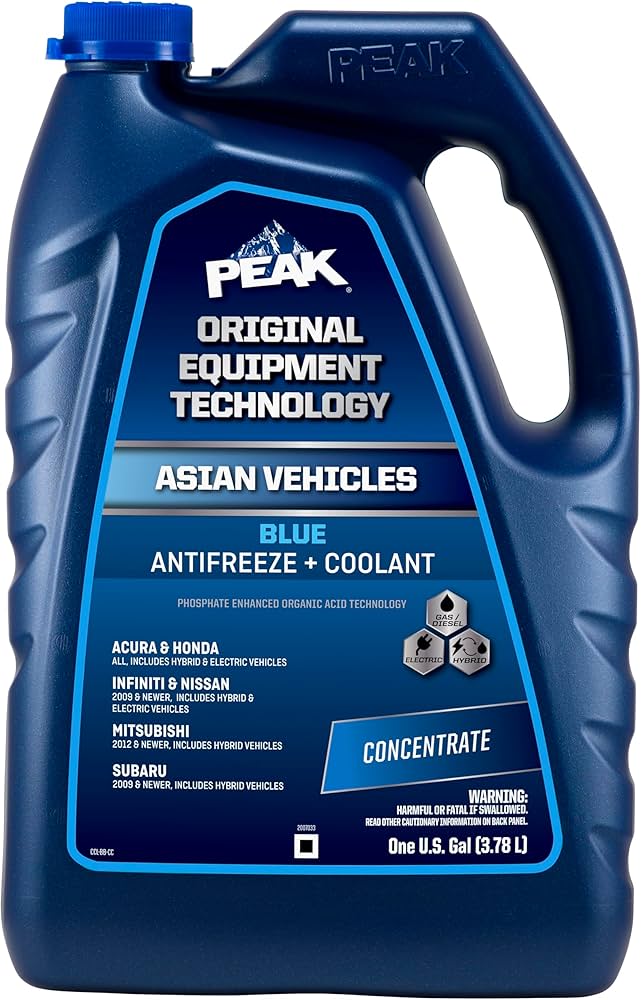
PEAK OET Extended Life Blue 50/50 Prediluted
Pros
- Premixed 50/50 with deionized water
- 5‑year / 150k‑mile guarantee
- Blue color matches factory G48 fill
Cons
- More expensive per usable gallon of coolant
- Prediluted jug is heavier to ship and store
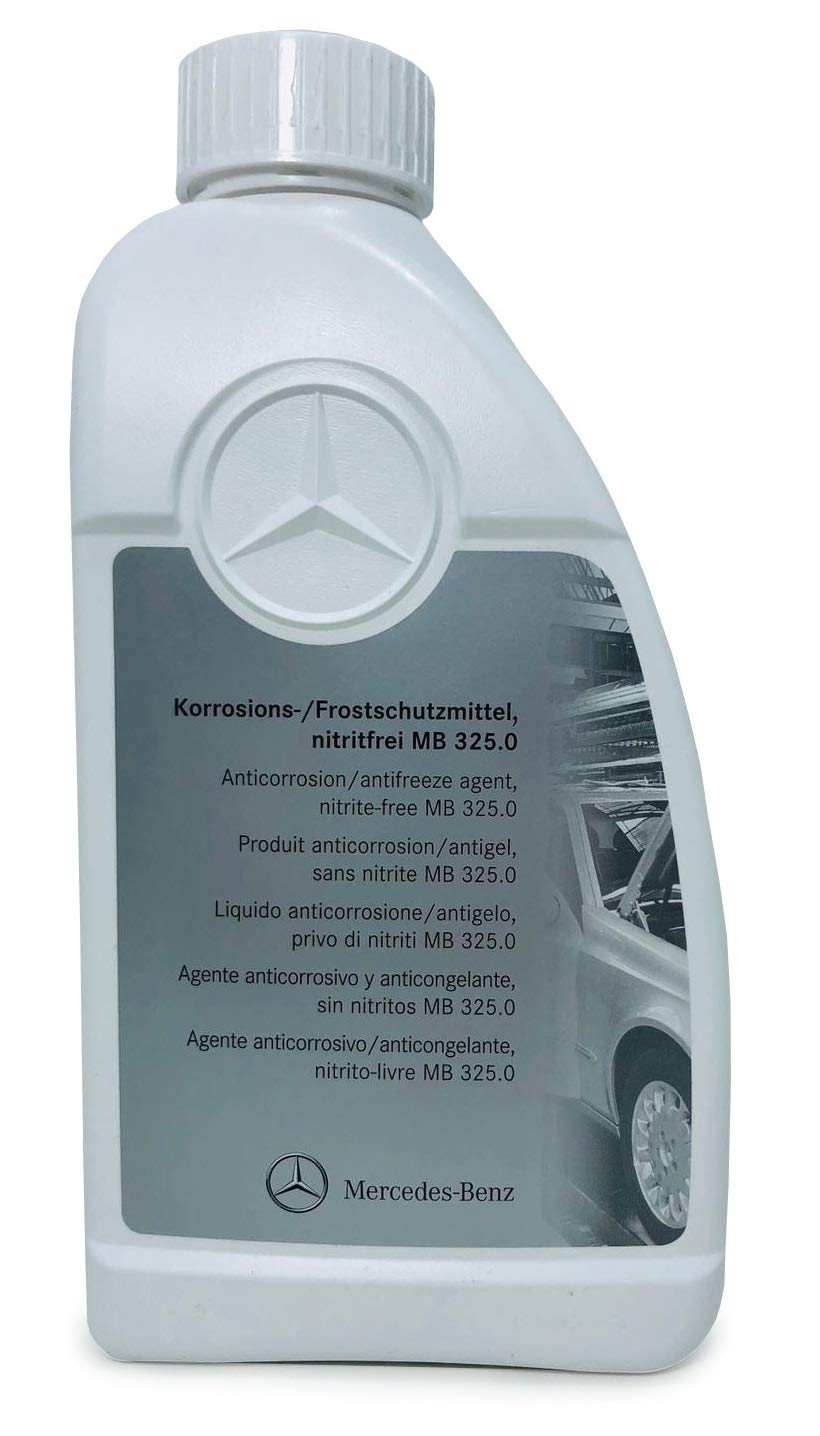
Mercedes Genuine OEM 325.0 Concentrate
Pros
- 100% genuine factory‑fill chemistry
- Guaranteed MB 325.0 compatibility
- Compact 1.5L bottle reduces waste
Cons
- Most expensive option per liter
- Amazon availability is inconsistent
FEBI Bilstein 01089 G11 Concentrate
Pros
- Made in Germany by an OE supplier
- Meets MB 325.0 / G11 specifications
- Compact 1.5L bottle for top‑offs
Cons
- Harder to find on Amazon US
- Bottle cap design makes spill‑free pouring difficult
Can’t Decide?
Our Top 2 Picks — Head to Head
Both are excellent. Here’s how to choose between them.
- Exact MB 325.0 factory replacement
- Trusted by dealers and independent shops
- Half the price of OEM Mercedes coolant
- Meets new MB 325.5 Si‑OAT spec
- Pink color matches factory fill on 2014+ cars
- Cross‑compatible with Audi, VW, Porsche
How to Choose the Right Coolant for Your Mercedes
Six factors that matter before you buy — explained simply.
Model Year Split (April 2014)
This is the most critical factor. Vehicles built before April 2014 require MB 325.0 blue HOAT coolant. After that date, Mercedes switched to MB 325.5/325.6 pink Si‑OAT. Check your owner’s manual — the wrong chemistry can cause silicate gel dropout.
Concentrate vs. Prediluted
Concentrate costs less per usable gallon but must be mixed exactly 50:50 with distilled water. Prediluted coolant arrives ready to pour, eliminating measurement errors. Choose prediluted for top‑offs or first‑time DIY jobs.
MB Approval on the Label
Never pour universal green coolant into a Mercedes. The bottle must explicitly state MB 325.0, 325.5, 325.6, or 326.0. Generic “all makes” formulas contain phosphates and silicates that attack European gasket materials.
Distilled Water Only
Tap water introduces calcium and magnesium that form scale on hot aluminum surfaces. For concentrate coolants, always mix with distilled water — never spring, deionized from unknown sources, or tap water. A gallon of distilled water costs under $2.
Service Life & Warranty
Quality HOAT and Si‑OAT coolants carry a 5‑year / 150,000‑mile guarantee. If a product lacks a stated service life, treat that as a red flag. Most Mercedes models need a coolant change every 5 years regardless of mileage.
System Flush Before Switching
If you’re changing coolant types — blue to pink, or old green to HOAT — a thorough flush is mandatory. Mixing incompatible chemistries creates sludge. When in doubt, drain, flush with distilled water, and refill with fresh coolant.
Pro Tips
Quick Buying Checklist
Match the coolant to your door sticker. If it says 325.0, buy blue G48. If it says 325.5, buy pink G40.
Use only distilled water for mixing. Tap water minerals can clog your heater core and radiator.
Never mix blue and pink coolants. If you must switch, flush the system completely first.
Inspect the bottle seal on delivery. Damaged caps during shipping are a common complaint — check immediately.
Don’t reuse old coolant. Once drained, its corrosion inhibitors are depleted. Always refill with fresh fluid.
Related Guides
Popular Mercedes-Benz Coolant Guides
Mercedes uses MB 325.0 or MB 326.0 spec coolant — find your model.
Frequently Asked Questions
What coolant does my Mercedes‑Benz need?
Your Mercedes needs either MB 325.0 blue G48 HOAT coolant (vehicles built before April 2014) or MB 325.5/325.6 pink G40 Si‑OAT coolant (vehicles built after April 2014). Check your owner’s manual for the exact specification. Using the wrong type risks corrosion in aluminum engine components.
Can I use Prestone or universal green coolant in my Mercedes?
No. Universal green IAT coolant contains high levels of silicate and phosphate that European cooling systems are not designed to handle. These additives can react with Mercedes gasket materials and cause silicate gel dropout that clogs heater cores and radiators. Always use a coolant with explicit Mercedes approval on the label.
How often should I change the coolant in my Mercedes?
Most Mercedes models with modern HOAT or Si‑OAT coolant require a change every 5 years or 150,000 miles, whichever comes first. Older models running conventional coolant may need changes every 2 to 3 years. Check your service booklet for the interval specific to your engine.
Is Zerex G48 the same as Mercedes OEM blue coolant?
Yes. Mercedes dealerships now sell Valvoline Zerex G48 as the official replacement for the discontinued Mercedes‑branded blue coolant. The formulation meets the same MB 325.0 specification and is chemically identical. You are buying the same product whether the bottle says Mercedes or Zerex.
Can I mix blue G48 coolant with pink G40 coolant?
Do not mix them. Blue G48 (HOAT) and pink G40 (Si‑OAT) use different corrosion inhibitor packages. Mixing the two can reduce the effectiveness of both and may produce deposits inside the cooling system. If you must switch from one type to the other, perform a complete system flush first.
What happens if I use the wrong coolant in my Mercedes?
Short‑term, you may notice no difference. Long‑term, the wrong coolant can cause aluminum corrosion, water pump seal failure, heater core clogging, and radiator blockage. Repair costs for these failures routinely exceed $2,000. The price of the correct coolant is always cheaper than the repair.
Do I really need to use distilled water with coolant concentrate?
Yes. Distilled water contains no dissolved minerals. Tap water introduces calcium, magnesium, and chloride ions that form scale on hot engine surfaces. Scale acts as an insulator, creating hot spots that can warp aluminum cylinder heads. Distilled water costs about $1.50 per gallon — use it every time.
Final Verdict
Our Top Recommendations for 2026
After evaluating real‑world feedback from Mercedes forums, Amazon reviews, and independent shop data, four coolants rise to the top. The Valvoline Zerex G48 remains the go‑to for pre‑2014 models, while the G40 is the only correct aftermarket choice for 2014+ vehicles. Budget‑minded owners of older engines will find the G05 hard to beat, and the PEAK OET Blue premixed jug is the ultimate convenience pick.