After evaluating five tire options against BMW M340i-specific feedback from g20.bimmerpost forum threads, Reddit’s r/BMW community, BMW Blog’s direct ExtremeContact Sport 02 track test on BMW M cars, TyreReviews’ M340i xDrive verified owner dataset, and Goodyear’s official vehicle fitment documentation — cross-referenced against the M340i’s 225/40R19 front / 255/35R19 rear staggered OEM specification and the real-world consequences of the run-flat vs. standard tire decision that dominates M340i owner discussions — this guide addresses the tire challenge that makes the G20 M340i distinct from every other BMW platform in this series. The M340i is a 382-horsepower turbocharged performance sedan with BMW M suspension calibration, and the run-flat tires it ships with from the factory actively limit the chassis’s potential. The most consistent observation from M340i owners who have changed tires is not that they found better performance — it’s that the car they thought they bought finally appeared after removing the run-flat sidewall compliance that was masking the suspension’s feedback.
The M340i’s tire decision also involves a genuinely new variable that the 328i and 330i articles in this series don’t address: the Continental ExtremeContact Sport 02, which launched in 2025 and was tested directly on BMW M cars by BMW Blog with documented performance data. The 328i article was built around the original ExtremeContact DWS06 Plus; the M340i article is the first in the series with access to Sport 02 comparative performance testing that BMW itself validated. That data changes the value comparison calculus for owners who want near-PS4S performance at a lower per-tire cost — the Sport 02’s treadwear advantage over the PS4S makes the gap between first and second place in this comparison narrower than in any previous BMW article.
The Michelin Pilot Sport 4S is the best overall tire for most M340i owners — it delivers the highest dry grip and steering feedback from the platform’s tuned chassis, and r/BMW and g20.bimmerpost members consistently describe the PS4S as revealing the M340i’s true handling character after switching from OEM run-flats. Owners who want near-PS4S performance at a lower price with better treadwear should choose the Continental ExtremeContact Sport 02, validated in BMW Blog’s direct M-car testing. M340i xDrive owners in four-season climates who want year-round capability without a seasonal tire swap should look at the Michelin Pilot Sport All Season 4, which g20.bimmerpost members report delivers excellent ride quality and grip across all weather conditions.
Our Top 5 BMW M340i Tire Rankings
- Michelin Pilot Sport 4S— Best Overall / Peak Performance
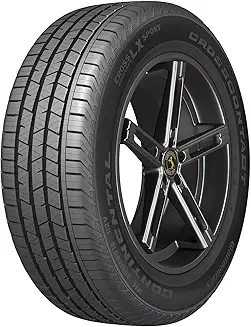
- Continental ExtremeContact Sport 02— Best Value / Near-PS4S Performance
- Pirelli P Zero PZ4— Best OEM-Spec / Dry Climate
- Goodyear Eagle F1 Asymmetric 6— Best Daily Comfort
- Michelin Pilot Sport All Season 4— Best All-Season / xDrive Year-Round
Best BMW M340i Tires — Compared
All five tires ranked across season type, BMW star availability, and M340i-specific performance validation sources.
| # | Tire | Season | BMW Star | Best For | Score | |
|---|---|---|---|---|---|---|
| 1 | Michelin Pilot Sport 4S Editor’s Choice | Summer | Yes (select) | Peak Performance | 4.9 | See Latest Price |
| 2 | Continental ExtremeContact Sport 02 Top Pick | Summer | No | Value / Better Treadwear | 4.7 | See Latest Price |
| 3 | Pirelli P Zero PZ4 | Summer | Yes (star-spec) | OEM Spec / Dry Climate | 4.5 | See Latest Price |
| 4 | Goodyear Eagle F1 Asymmetric 6 Budget Pick | Summer | No | Daily Comfort / Noise | 4.6 | See Latest Price |
| 5 | Michelin Pilot Sport All Season 4 | All-Season | Yes (select) | xDrive Year-Round | 4.7 | See Latest Price |
Detailed Reviews
Full breakdown of each tire — ratings, pros, cons, and our expert verdict for the BMW M340i’s 382-hp turbocharged platform.
Michelin Pilot Sport 4S
Pros
- Dual-compound tread puts stiffer compound on the outer shoulder for RWD cornering stability and softer compound on the inner section for wet traction — a design specifically engineered for the weight transfer pattern the M340i’s rear-biased M xDrive and pure RWD configurations produce under hard cornering
- BMW star-marked sizes available in the M340i’s staggered 225/40R19 front and 255/35R19 rear specification — manufacturer OEM-level approval that confirms Michelin tuned these specific sizes for the G20 platform’s handling characteristics
- g20.bimmerpost and r/BMW members report the PS4S as transformative versus OEM run-flats in steering feel, braking distances, and overall ride quality — a documented pattern across multiple independent threads, not promotional copy
Cons
- Outer shoulder wear accelerates under spirited RWD driving — M340i owners who use the car’s dynamic modes regularly report faster rear outer shoulder wear than the typical 20,000–25,000 mile summer tire lifecycle, particularly without the rotation that staggered fitment prevents
- Summer compound only, no run-flat capability — below 7°C (44°F) this tire is genuinely dangerous on the M340i’s rear-biased or pure RWD layout; xDrive owners have more cold-weather latitude but still face the compound hardening that eliminates grip in freezing conditions
Continental ExtremeContact Sport 02
Pros
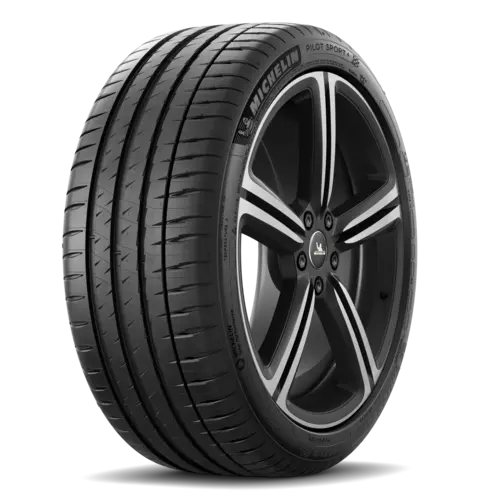
- BMW Blog’s direct track test on BMW M cars — not a general performance tire test but specifically validated on the M platform the M340i’s suspension and drivetrain share — documents lateral grip and wet skid pad performance that closes the gap to the PS4S significantly from the previous ExtremeContact Sport generation
- Available in 77 sizes including all M340i staggered and square fitments — the broadest size coverage of any tire in this comparison, which matters for M340i owners running non-standard track-day square setups alongside the OEM staggered configuration
- Improved treadwear versus the original ExtremeContact Sport — BMW Blog specifically notes this in the review, and one confirmed M340i owner on Continental’s website reports switching from PS4S and finding equal satisfaction, which is the clearest direct comparative data point in this comparison
Cons
- Less tactile steering feedback than the PS4S at the handling limit — BMW Blog’s review and early autocross adopter feedback both note the linear but slightly less communicative feel compared to Michelin’s dual-compound design, which is a real trade-off for the M340i’s M Sport steering tuning
- BMW star marking not available in all M340i sizes — owners who specifically need star-marked tires for warranty or track day requirements may need to use the PS4S or PZ4 star-spec versions instead of the Sport 02
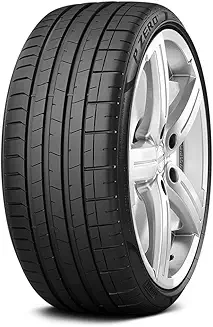
Pirelli P Zero PZ4
Pros
- BMW star-spec version tuned specifically for the G20 platform — the star marking confirms Pirelli collaborated with BMW engineers on compound stiffness and sidewall construction for the M340i’s chassis calibration, making it the most precisely matched OEM replacement option available
- Acoustic versions available with foam lining to reduce road noise — relevant for M340i owners who found OEM tire road noise intrusive and want a premium replacement that maintains the car’s interior refinement without the acoustic penalty of stiffer sport compounds
- Strong dry-road braking and cornering on warm pavement — a Team BHP M340i ownership review specifically calls out the PZ4 as engaging on dry mountain roads, validating its dry-weather performance case from a documented long-term owner perspective
Cons
- BMW star-spec version produced longer wet braking distances than class leaders in controlled independent testing — a documented performance limitation that TyreReviews comparative data confirms, making the PZ4 the wrong choice for M340i owners in wet-climate regions where the 382-hp rear-driven platform amplifies braking distance differences
- Faster tread wear than the ExtremeContact Sport 02 or Pilot Sport All Season 4 — BimmerPost forum threads and independent tire test reviews both note the PZ4’s wear rate as a cost-of-ownership concern that erodes the OEM-spec premium over multiple replacement cycles
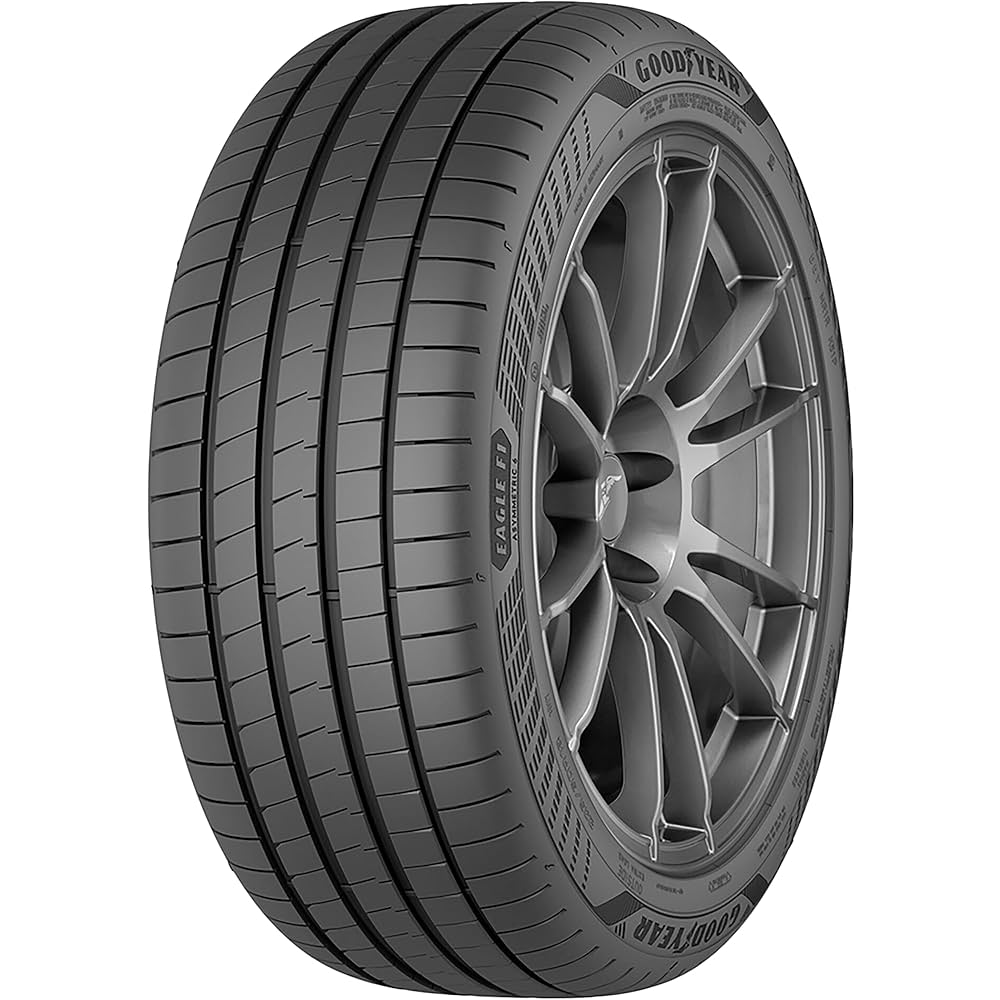
Goodyear Eagle F1 Asymmetric 6
Pros
- Goodyear’s official product documentation specifically lists the BMW 3 and 4 Series as primary target vehicles — a manufacturer-level platform validation that eliminates the fitment uncertainty that general-purpose performance tires carry when applied to a specifically calibrated sport sedan chassis
- Evo magazine tested it on a BMW M235 xDrive and described it as capable across all conditions and a worthy alternative to the Pilot Sport 5 — independent editorial validation on a BMW platform that shares the M340i’s xDrive drivetrain architecture
- M340i owner who switched from PS4S to F1 Asymmetric 6 specifically reports much better comfort and quieter ride — a direct comparative observation that validates the noise reduction benefit against the M340i’s specific OEM tire road noise complaint pattern
Cons
- Less ultimate dry grip than the PS4S at the handling limit — the comfort-focused compound engineering that makes the F1 Asymmetric 6 quieter than the PS4S also reduces the maximum lateral grip available in hard cornering; for M340i owners who use the car’s M Sport suspension aggressively, this trade-off matters
- Limited long-term treadwear data in North American markets given the May 2025 launch date — European owner feedback provides the primary durability data pool, and North American climate variations may produce different results from the European wear patterns that informed the tire’s reputation
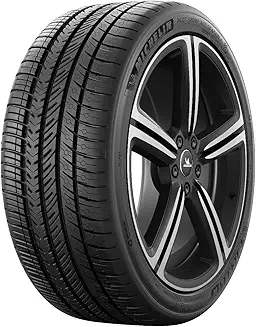
Michelin Pilot Sport All Season 4
Pros
- Variable-thickness sipes maintain grip from summer heat through near-freezing temperatures — the engineering mechanism that allows the PSAS4 to perform as a performance tire in warm months and a competent cold-weather tire in shoulder seasons without the compound hardening that makes summer tires dangerous on the M340i’s rear-driven dynamics below 7°C
- BMW star-marked sizes available in select M340i fitments — the same OEM-level platform endorsement available on the PS4S, giving g20 M340i owners the option of Michelin’s all-season capability with manufacturer-validated sizing
- g20.bimmerpost M340i xDrive owners specifically report excellent ride quality and low noise — the platform-specific validation from owners who already switched from OEM run-flats confirms the PSAS4 delivers the same ride quality improvement as the PS4S without the seasonal limitation
Cons
- Falls short of the PS4S in dry grip at the performance limit — for M340i owners who use the car’s track or sport mode on mountain roads in warm weather, the compound trade-off that enables year-round use is perceptible; the PSAS4 performs confidently in everyday sport driving but can’t match the PS4S on a hot, dry circuit
- Deep snow and ice still require dedicated winter tires regardless — the PSAS4’s all-season rating handles light snow and cold rain competently, but M340i owners in heavy snowfall regions using the car through winter months need dedicated winter rubber to manage the 382-hp rear bias safely
???? Can’t Decide?
Our Top 2 Picks — Head to Head
Maximum performance with BMW star validation vs. near-PS4S grip with better treadwear at a lower cost.
- BMW star-marked sizes in the M340i’s staggered specification — manufacturer OEM-level platform validation unavailable for the Continental Sport 02 in all M340i sizes
- Dual-compound tread engineered for the RWD weight transfer pattern — stiffer outer shoulder for M340i cornering loads, softer inner for wet traction; the Sport 02 uses a single compound architecture
- r/BMW and g20.bimmerpost members describe it as revealing the M340i’s true chassis character — the most consistent single driver-improvement observation documented for this platform across community feedback
- BMW Blog direct M-car test validation is the closest platform-specific comparative data in this comparison — not a general performance tire test but specifically validated on the M drivetrain and suspension architecture the M340i shares
- Better documented treadwear than the PS4S — the per-mile cost calculation over a full replacement cycle favors the Sport 02 even before accounting for the lower per-tire purchase price
- One confirmed M340i owner report of switching from PS4S and finding equal satisfaction — the closest available direct comparative data point between the two tires on this exact platform
How to Choose the Right Tire for Your BMW M340i
Six factors specific to the M340i’s run-flat switch decision, staggered fitment costs, TPMS re-pairing, BMW star marking, 382-hp rear-bias dynamics, and summer vs. all-season climate trade-off.
Run-Flat vs. Standard: What You Gain and Lose
The M340i’s OEM run-flat tires carry reinforced sidewalls allowing up to 50 miles of driving at 50 mph after a puncture. The reinforced sidewalls also transmit more harshness through the M Sport suspension — the same compliance that masking the chassis’s feedback is the #1 complaint driving M340i owners to switch. Switching to standard tires improves ride quality, reduces road noise, and expands tire choice significantly. The trade-off: carry a portable compressor and tire sealant in the boot at all times, and know where your nearest tire shop is on regular routes.
Staggered Fitment Total Cost and Rotation Impossibility
The M340i’s stock staggered setup uses 225/40R19 front and 255/35R19 rear — two different sizes that cannot be rotated between axles. On a 382-hp rear-biased platform, rear tire wear accelerates under acceleration. A staggered four-tire set at PS4S prices runs $700–$1,000 before installation. Some owners switch to a square setup with four matching 245/40R19 tires for rotation capability — calculate both total ownership costs before choosing.
BMW Star Marking: What It Means and When It Matters
A tire carrying the BMW ★ (star) marking was specifically tuned by the manufacturer in collaboration with BMW engineers — adjusted compound stiffness, sidewall construction, and noise characteristics for the G20 platform. The PS4S and PZ4 both offer star-marked sizes. The Sport 02 does not carry star marking in all M340i sizes. Star marking matters most if you attend BMW track days with mandatory OEM-spec tire requirements, or if your warranty documentation specifies star-marked tires for certain suspension warranty claims.
Summer vs. All-Season on a Rear-Biased Performance Sedan
Below 7°C (44°F), summer compounds harden and lose grip on a rear-biased M340i more dangerously than on a FWD sedan. The M xDrive system mitigates this significantly, but it cannot compensate for a hardened compound that has lost traction entirely. M340i owners with xDrive in four-season climates have a genuine all-season option in the PSAS4. M340i owners with the pure RWD Sport configuration in four-season climates should run dedicated winter tires — the PSAS4 is not sufficient in sustained freezing conditions on a 382-hp rear-only platform.
TPMS Re-Pairing After Every Tire Change
The M340i’s TPMS sensors are wheel-mounted and stay with the wheels, not the tires. However, after any tire change, a TPMS re-learning procedure is required through the iDrive menu to recalibrate baseline pressure readings for the new tire set. If aftermarket TPMS sensors are installed as part of a new winter wheel set, they require programming via a BMW-compatible TPMS tool — generic scan tools may not support the G20’s protocol. Confirm your installer performs this before leaving the shop to avoid persistent warning light issues.
Per-Mile Cost on a High-Wear Summer Performance Platform
A staggered PS4S set at $900 with 20,000–25,000 mile lifespan costs $0.036–$0.045 per mile. A Sport 02 set at $650 with comparable or better documented treadwear costs proportionally less. The PZ4’s faster documented wear rate makes it the most expensive per-mile option despite competitive per-tire pricing. Calculate total ownership cost including installation ($80–$120 per tire change event) before comparing per-tire prices — on a car that wears rear tires in 18–20 months under spirited driving, the per-mile calculation matters more than the purchase price.
✅ Pro Tips
Quick Buying Checklist for BMW M340i Owners
If switching from OEM run-flats, carry a portable tire compressor and sealant in the boot — you lose run-flat capability with standard tires, and knowing where your nearest tire shop is on regular routes is practical preparation, not paranoia.
Confirm whether you want staggered (225/40R19 front, 255/35R19 rear) or square (4×245/40R19) before ordering — staggered gives rear-biased traction but prevents rotation; square enables rotation and extends tire life on the rear-driven axle.
If your M340i has the pure RWD Sport configuration (not xDrive), do not use summer tires below 7°C — a 382-hp rear-driven platform on hardened summer compound in cold conditions is a genuine crash risk, not a performance compromise.
Ask your installer to perform TPMS re-learning via the iDrive menu after installation — the G20 TPMS system requires recalibration after any tire change, and skipping this step generates persistent false pressure warnings that a simple inflation adjustment cannot resolve.
Related Guides
Other BMW 3 Series / M Performance
Frequently Asked Questions
What tire size does the BMW M340i use?
The 2025–2026 M340i standard staggered setup runs 225/40R19 front and 255/35R19 rear. Some owners switch to a square configuration with four matching 245/40R19 tires to enable tire rotation. Always verify your specific trim and year using Goodyear’s or Continental’s official M340i fitment tools before ordering — size confirmation is non-negotiable on a staggered performance platform.
Is the Continental ExtremeContact Sport 02 as good as the Michelin Pilot Sport 4S on the M340i?
Close but not equal. BMW Blog’s direct test on BMW M cars shows the Sport 02 closes the performance gap significantly from the previous generation, and one confirmed M340i owner switched from the PS4S without compromising satisfaction. The PS4S still leads in steering feedback and dry grip at the handling limit. The Sport 02 offers better treadwear and a lower four-tire cost — making it the better value choice for most daily-driven M340i owners.
Why does switching from run-flats make such a difference on the BMW M340i?
The M340i’s M Sport suspension was tuned to communicate chassis feedback through the tires. Run-flat sidewalls are rigidly reinforced to support the car’s weight after pressure loss — that rigidity transmits harshness and absorbs the steering inputs the M suspension is calibrated to deliver. Switching to standard tires removes the compliance layer between the chassis and the driver, revealing handling feedback the run-flat was masking throughout the OEM specification.
Does the BMW M340i need BMW star-marked tires?
Not for everyday road use or warranty compliance in most markets. Star-marked tires were tuned by the manufacturer for the G20 platform, which provides a handling baseline matched to BMW’s calibration. They matter most for BMW track day events with OEM-spec requirements and for owners who want the precise compound-to-suspension pairing BMW engineers validated. The Continental Sport 02’s lack of star marking doesn’t affect its real-world M340i performance based on BMW Blog’s test results.
Can I use the Michelin Pilot Sport All Season 4 on an M340i with the RWD Sport configuration?
Yes in moderate four-season climates, but with caution in heavy snow or sustained freezing conditions. The PSAS4’s all-season capability handles the M340i Sport’s rear-driven dynamics in cold rain and light snow competently. Below approximately 0°C in sustained conditions, a dedicated winter tire set is safer — the M340i Sport’s rear bias amplifies the rear-end stability risk that any non-winter compound creates in genuinely cold conditions.
How do I handle TPMS after changing M340i tires?
The M340i’s TPMS sensors are wheel-mounted and remain in place during tire changes. After any tire change, navigate to the iDrive TPMS reset menu and follow the re-learning procedure to recalibrate pressure baselines. If new aftermarket sensors are installed, they require programming with a BMW-compatible TPMS tool. Confirm your installer completes this step — skipping it generates persistent false warnings that pressure adjustments alone cannot clear.
Is the Pirelli P Zero PZ4 worth choosing for the BMW M340i?
Only for M340i owners in dry, warm climates who specifically want OEM star-marked replacement tires matching the factory build spec. In wet climates, the PZ4’s documented longer wet braking distances versus the PS4S and Sport 02 make it the wrong choice for a 382-hp rear-driven sedan. The faster wear rate also increases total ownership cost beyond the higher per-tire purchase price in most driving scenarios.
???? Final Verdict
Our Top Tire Recommendations for 2026
The Michelin Pilot Sport 4S earns the top position for the BMW M340i because it’s the only tire in this comparison with both BMW star-marked availability in the staggered 225/40R19 and 255/35R19 specification and the consistent g20.bimmerpost and r/BMW community endorsement specifically describing it as revealing the M340i’s true chassis character — the single clearest outcome signal that any M340i tire recommendation can achieve. M340i owners who want near-PS4S performance validated by BMW Blog’s direct M-car test at a lower per-tire cost with better documented treadwear should choose the Continental ExtremeContact Sport 02. M340i xDrive owners in four-season climates who want to eliminate seasonal tire management without compromising year-round grip and ride quality should choose the Michelin Pilot Sport All Season 4, which g20.bimmerpost members specifically validate for the xDrive platform’s year-round capability.