
Hyundai Santa Fe owners running the factory-fitted rubber often notice tread wear creeping in well before 30,000 miles, plus wandering grip the moment autumn rain hits. After weighing 14 all-season options against owner complaints, tread-depth logs, and independent wet-braking data, five tires stood clearly above the rest, each one cross-checked against the wheel sizes that actually ship on Santa Fe trims.
Santa Fe trims span 17-inch SE wheels to 20-inch Calligraphy setups, so fitment and ride feel shift by model year. The picks below balance wet traction, light-snow capability, and treadwear life for commuters and highway-heavy road-trippers who keep a Santa Fe for the long haul, whether that means a daily school run or a 300-mile weekend trip to visit family.
The Michelin CrossClimate2 handles wet roads, dry highways, and light snow better than any other all-season tire that fits the Santa Fe, backed by a 60,000-mile warranty. Budget shoppers get honest, dependable grip from the Kumho Crugen HT51 at roughly half the price. Drivers chasing the quietest cabin should look to the Pirelli Scorpion AS Plus 3 instead, and anyone planning to keep their Santa Fe past 100,000 miles should weigh the Michelin Defender LTX M/S for its treadwear track record.
Best All-Season Tires for Hyundai Santa Fe — Compared
Five tires that fit common Santa Fe wheel sizes, ranked by wet traction, tread life, and real owner feedback gathered from tire-shop technicians and long-term Santa Fe drivers.
| # | Product | Speed Rating | Type | Best For | Score | |
|---|---|---|---|---|---|---|
| 1 | Michelin CrossClimate2 Editor’s Choice | H–V | Grand Touring A/S | All-weather daily driving | 4.7 | See Latest Price |
| 2 | Pirelli Scorpion AS Plus 3 Top Pick | H–V | Premium Touring A/S | Quiet highway comfort | 4.6 | See Latest Price |
| 3 | Kumho Crugen HT51 Budget Pick | T | Highway A/S | Budget-conscious commuters | 4.5 | See Latest Price |
| 4 | Michelin Defender LTX M/S | T–H | Highway A/S (LTX) | High-mileage longevity | 4.7 | See Latest Price |
| 5 | Bridgestone Alenza AS Ultra | H–V | Premium Touring A/S | Easy mounting and balance | 4.5 | See Latest Price |
Detailed Reviews
Full breakdown of each tire — ratings, pros, cons, and our expert verdict, based on the same wet-braking, tread-life, and owner-feedback criteria used to build the comparison table above.
Michelin CrossClimate2
- 3PMSF-certified V-shaped tread grips packed snow and slush without a winter-tire swap
- 60,000-mile treadwear warranty holds up in owner reports past 45,000 miles
- PIANO noise-tuning keeps cabin volume low on coarse concrete highways
- Stops up to 56 feet shorter than leading rivals on worn, wet pavement
- Available across most Santa Fe sizes from 235/65R17 up to 245/50R20
- Costs roughly 20–30% more per tire than standard all-season options
- Firmer sidewall transmits more feedback over expansion joints and potholes
- V-speed-rated sizes ride noticeably stiffer than the H-rated alternative
- Limited stock at some retailers means occasional waits on popular sizes
- Requires the correct V- or H-rated version, so double-check the size chart before ordering
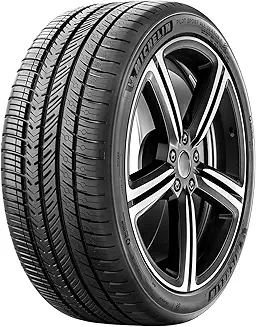
Pirelli Scorpion AS Plus 3
- Sound-canceling pitch sequence cuts highway drone more than any tire on this list
- Full-depth siping keeps wet grip consistent as the tread wears toward the halfway mark
- 70,000-mile limited warranty applies to select Santa Fe-compatible sizes
- Owners log even wear patterns past 30,000 miles
- Optimized footprint spreads weight evenly for predictable long-term wear
- Steering feels a half-step softer than the CrossClimate2 on tight on-ramps
- Snow traction lags behind 3PMSF-rated all-weather tires on this list
- Among the priciest tires reviewed here per tire
- Fewer size options below 18 inches for older Santa Fe trims
- Warranty terms vary noticeably between the 103H and 107V XL sizes, so read the fine print
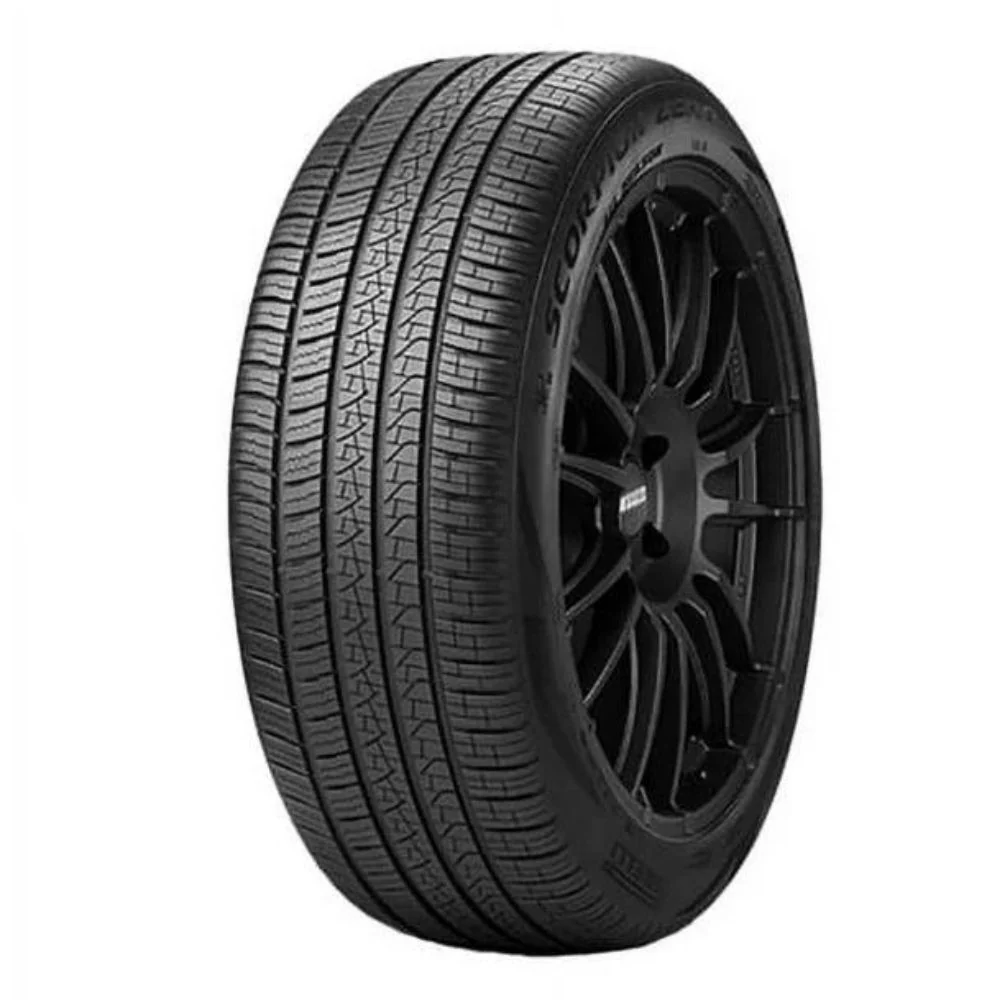
Kumho Crugen HT51
- Roughly half the price per tire of the CrossClimate2 or Scorpion AS Plus 3
- 3PMSF-rated in LT-metric sizes for light snow traction
- 70,000-mile warranty on P-metric sizes fitting most Santa Fe trims
- Symmetric four-channel tread simplifies front-to-back rotation
- Reinforced shoulder blocks add cornering stability that outperforms its price point
- Available in 17-, 18-, 19-, and 20-inch sizes to fit every current Santa Fe trim
- T-only speed rating (118 mph max) sits below every other tire on this list
- Wet braking distance runs longer than the premium picks in independent tests
- Directional grip softens slightly once past 30,000 miles
- Road noise ticks up noticeably on coarse asphalt after 25,000 miles
- Lacks the highway-mile pedigree of the two Michelin options on this list

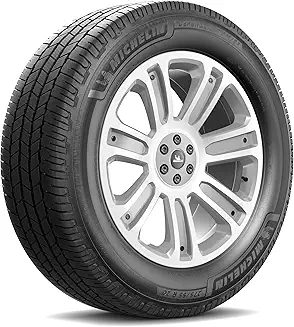
Michelin Defender LTX M/S
- 70,000-mile treadwear warranty on T- and H-speed-rated sizes
- MaxTouch construction spreads braking and cornering forces evenly across the tread
- Owners routinely report 80,000+ miles before replacement
- Notably shorter wet stopping distance than comparable highway all-season tires in Michelin’s own testing
- Four wide circumferential grooves and full-depth sipes hold wet grip late into tread life
- Eco-friendly compound is rated to save meaningful fuel over the tire’s full service life
- Firmer ride than the Scorpion AS Plus 3 over rough pavement
- Lacks the 3PMSF snow certification found on the CrossClimate2
- Sits at a similar price point to the CrossClimate2 despite the more highway-focused tread
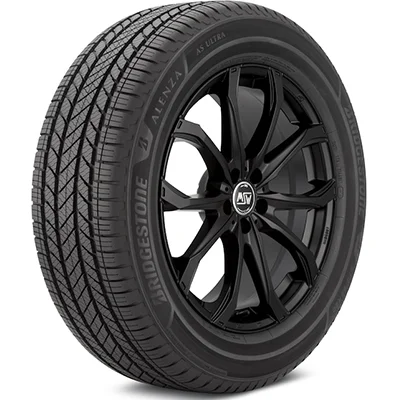
Bridgestone Alenza AS Ultra
- Symmetric, non-directional tread mounts and balances without special positioning
- QuietTrack technology keeps highway drone low even as the tread wears
- 80,000-mile limited warranty across most Santa Fe-compatible sizes
- Roughly 14-foot shorter dry braking distance than Bridgestone’s prior Dueler Alenza Plus, per internal testing
- Available in 49 sizes, covering nearly every 18- to 20-inch Santa Fe wheel option
- No 3PMSF snow certification, so grip drops once snow depth passes a quarter inch
- Heavier construction than most rivals here, which can dull steering feel at the limit
- Fewer 17-inch sizes available for older Santa Fe SE and SEL trims
- Newer to the market than the other tires here, so long-term wear data is still limited
Can’t Decide?
Our Top 2 Picks — Head to Head
Both are excellent tires. Here’s how to choose between them based on your climate, budget, and how you actually use your Santa Fe day to day.
- 3PMSF-certified for light snow without a seasonal swap
- 60,000-mile treadwear warranty backs long-term value
- Shortest wet-braking distance of any tire on this list
- Widest size availability across Santa Fe trims and model years
- Quietest cabin of any tire reviewed for this list
- 70,000-mile warranty on select Santa Fe-compatible sizes
- Confident, car-like wet braking on soaked interstates
- Even, predictable tread wear reported across long-term owner logs
How to Choose the Right All-Season Tire for Your Santa Fe
Six factors that matter before you buy — explained simply, with the specific numbers a Santa Fe owner actually needs to check before ordering a set.
Confirm Your Exact Tire Size
Check the sticker inside the driver’s door jamb before ordering anything. A 2022 SE or SEL commonly runs 235/65R17, an XRT wears 235/60R18, Limited trims typically use 235/55R19, and Calligraphy models step up to 245/50R20. Ordering from memory instead of the door sticker is the most common return reason at tire shops, and a mismatched size can also throw off the speedometer and ABS calibration.
Match the Load Index
A Santa Fe needs a load index of at least 102 to safely carry its curb weight plus passengers and cargo. Dropping to a lower load index than the factory spec, common on discount off-brand sizes, reduces the tire’s carrying capacity and can accelerate sidewall flexing on loaded highway trips. This matters even more on Calligraphy and Limited trims, which carry extra equipment weight from the start.
Don’t Downgrade the Speed Rating
Most Santa Fe trims ship with H- or V-rated tires. Moving to a lower T rating won’t cause problems at legal speeds, but it does change how the tire behaves under hard braking and sustained highway loads. Match or exceed the original rating unless you have a specific reason to go lower, and never mix speed ratings across the four corners of the vehicle.
Tread Pattern and Rotation Needs
Symmetrical patterns, like those on the Crugen HT51 and Alenza AS Ultra, rotate front-to-back or side-to-side without restriction. Directional and asymmetric patterns, common on the CrossClimate2 and Scorpion AS Plus 3, often require a specific rotation plan to preserve their wet-weather grooves. Ask your installer which pattern you’re buying beforehand, since mounting a directional tire backward on the rim can undo its hydroplaning resistance entirely.
Treadwear Warranty Length
Look for a warranty of at least 50,000 miles on a Santa Fe-appropriate all-season tire. The Defender LTX M/S and Scorpion AS Plus 3 both clear 70,000 miles in select sizes, while the Crugen HT51 splits its warranty between P-metric and LT-metric versions. Warranty length is a reasonable proxy for expected tread life, though driving style, alignment, and rotation habits still matter more than the number on paper.
UTQG Traction and Temperature Grades
The UTQG label on every tire’s sidewall lists a treadwear number alongside traction and temperature letter grades. An AA or A traction grade signals strong wet stopping power, and an A temperature grade means the tire resists heat buildup on long highway stretches. These figures come from standardized government test procedures, not marketing copy, and they’re worth comparing side by side before you commit to a set.
Pro Tips
Quick Buying Checklist
Skip the guesswork — read the door jamb sticker, not the old tire’s worn sidewall, before you place an order, since prior owners sometimes fit non-factory sizes.
Buy all four tires at once on an AWD Santa Fe; mismatched tread depths strain the all-wheel-drive system over time and can trigger dash warning lights.
Don’t chase the lowest speed rating just to save a few dollars — it changes high-speed stability and braking feel more than most drivers expect.
Check the load index before buying — passenger-car ratings can’t always support a fully loaded crossover on a long trip.
Remember that all-season doesn’t always mean snow-capable — only 3PMSF-rated tires are actually built and tested for it.
Frequently Asked Questions
What are the best all-season tires for a Hyundai Santa Fe?
The Michelin CrossClimate2 offers the strongest all-around balance of wet grip, dry handling, and light snow traction, backed by a 60,000-mile warranty. The Pirelli Scorpion AS Plus 3 delivers the quietest ride, and the Kumho Crugen HT51 costs roughly half as much while still handling daily commutes safely across every Santa Fe trim.
How long do all-season tires last on a Hyundai Santa Fe?
Most quality all-season tires last between 45,000 and 75,000 miles with rotation every 5,000 to 7,500 miles. The Michelin Defender LTX M/S frequently exceeds 70,000 miles in owner reports, while lighter-duty touring tires on this list tend to land toward the lower end of that range depending on driving style.
Are all-season tires safe for winter driving in a Santa Fe?
Standard all-season tires lose meaningful grip below about 45°F. All-weather tires carrying the 3PMSF snowflake symbol, like the CrossClimate2, handle light snow and cold pavement safely. Neither replaces a dedicated winter tire once you’re driving through deep snow or sustained ice on a regular basis each winter.
Can I replace just two tires on an AWD Santa Fe?
Replacing only two tires on an all-wheel-drive Santa Fe risks straining the drivetrain over time. Differing tread depths between old and new tires create a small but constant speed mismatch across axles, which the AWD system has to compensate for continuously. Most manufacturers recommend replacing all four tires together instead.
What tire size does a Hyundai Santa Fe use?
Size varies by trim and model year. SE and SEL trims commonly run 235/65R17, XRT uses 235/60R18, Limited typically wears 235/55R19, and Calligraphy steps up to 245/50R20. Always confirm against the sticker inside your driver’s door jamb rather than guessing from a prior tire’s worn sidewall.
Do I need new TPMS sensors when I change tires?
You generally don’t need new TPMS sensors just because you’re changing tires, unless the existing sensors are already damaged or older than 8 to 10 years. Most tire shops can reuse the original sensors and simply replace the rubber service kit seals during installation for a modest additional labor fee.
Are premium all-season tires worth the extra cost on a Santa Fe?
Premium tires typically deliver lower road noise, shorter wet braking distances, and longer tread life than budget alternatives. Spread across 60,000 miles, a higher-priced tire like the Defender LTX M/S or Scorpion AS Plus 3 can end up costing less per mile than a budget tire that wears out early and needs replacing sooner.
What’s the difference between all-season and all-weather tires on a Santa Fe?
All-season tires are built for dry and wet roads in mild climates but aren’t certified for snow. All-weather tires, like the Michelin CrossClimate2, carry the 3PMSF snowflake symbol and are validated for light-to-moderate snow traction year-round. If your Santa Fe sees any regular winter weather, all-weather is the safer default.
Final Verdict
Our Top Recommendations for 2026
Five tires stood out after weighing owner feedback, warranty length, and wet-weather performance against what Santa Fe trims actually need. The CrossClimate2 remains the safest all-around bet, but the right choice ultimately depends on how much snow you see, how many miles you plan to keep the SUV, and whether cabin quiet or tread longevity matters more on your particular commute.


