
After evaluating six tire options against Jeep Compass Trailhawk-specific data from jeepag.com ownership upgrade guides, BFGoodrich’s official 2025–2026 Trailhawk fitment documentation, tyrereviews.com independent tread life testing including the 77,000-mile Michelin CrossClimate 2 comparison, SimpleTire Compass fitment data, and Reddit automotive forum discussions — filtered for the Trailhawk’s specific Trail Rated badge use case and its 215/65R17 OEM tire size — this guide addresses the tire dilemma that makes the Compass Trailhawk genuinely different from every other Jeep article in this series. The Gladiator Rubicon and Grand Cherokee L articles dealt with vehicles that are either primarily trail trucks or heavy-duty family SUVs. The Trailhawk is neither — it’s a compact Trail Rated SUV that most owners drive 70–80% on paved roads and 20–30% on light gravel and trails, which means the optimal tire is categorically different from what either a Rubicon owner or a Wagoneer owner needs.
The Trailhawk’s tire dilemma is specific: the stock tires that come from Jeep’s factory are touring-biased for ride quality and fuel economy, which leaves most owners who actually use the Trail Rated badge feeling undersupported on gravel and wet trails. The obvious fix — dedicated mud-terrain tires — creates a highway drone and fuel economy penalty that makes daily driving unpleasant. This guide identifies the six options that thread that needle, from the all-weather CrossClimate 2 that eliminates seasonal swaps entirely to the KO2’s CoreGard sidewalls for owners who regularly push the Trailhawk on unpaved roads where sidewall punctures are the primary failure mode.
The Michelin CrossClimate 2 is the best overall tire for most Jeep Compass Trailhawk owners — it carries 3PMSF all-weather certification, estimated tread life above 77,000 miles in controlled testing, and covers the mixed pavement/trail use case the Trailhawk is designed for without the highway drone that makes all-terrain tires unpleasant for daily commuters. Trail-heavy Trailhawk owners who regularly drive unpaved roads should choose the BFGoodrich All-Terrain T/A KO2 for its CoreGard Technology sidewalls — the primary failure mode on rocky light trails is sidewall puncture, and no other tire in this comparison offers comparable sidewall protection. Budget-conscious Trailhawk owners who want all-terrain capability at a lower price should look at the Goodyear Wrangler TrailRunner AT.
Our Top 6 Jeep Compass Trailhawk Tire Rankings
- Michelin CrossClimate 2— Best Overall / All-Weather
- BFGoodrich All-Terrain T/A KO2— Best Trail Performance
- Goodyear Wrangler TrailRunner AT— Best Budget AT
- Yokohama Geolandar A/T G015— Best Balanced All-Terrain
- BFGoodrich Trail-Terrain T/A— Best Middle-Ground / 3PMSF AT
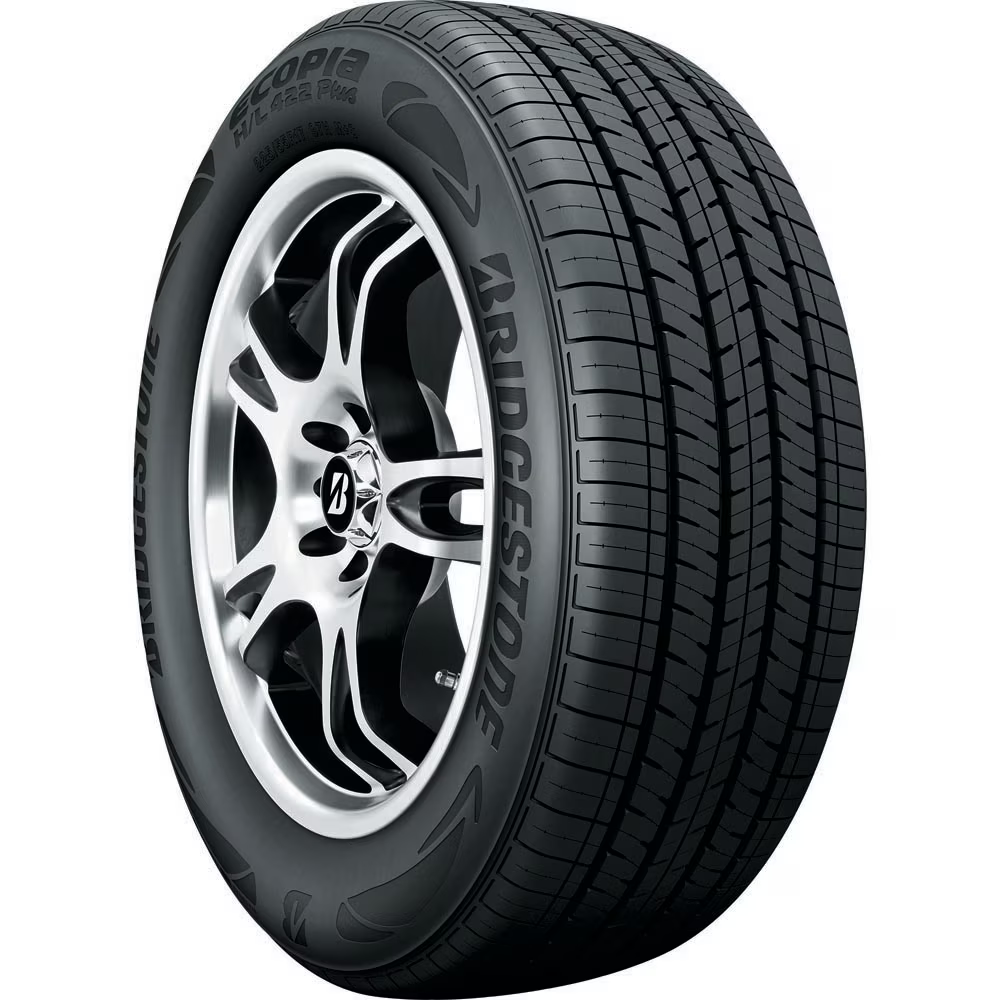
- Bridgestone Dueler H/L 422 Ecopia— Best Highway Commuter
Best Jeep Compass Trailhawk Tires — Compared
All six tires ranked across terrain type, 3PMSF certification, and Trailhawk use-case alignment for the 215/65R17 OEM size.
| # | Tire | Type | 3PMSF | Best For | Score | |
|---|---|---|---|---|---|---|
| 1 | Michelin CrossClimate 2 Editor’s Choice | All-Weather | Yes | Year-Round Mixed Use | 4.7 | See Latest Price |
| 2 | BFGoodrich All-Terrain T/A KO2 Top Pick | All-Terrain | No | Trail Performance / Sidewalls | 4.6 | See Latest Price |
| 3 | Goodyear Wrangler TrailRunner AT Budget Pick | All-Terrain | No | Budget Daily AT | 4.4 | See Latest Price |
| 4 | Yokohama Geolandar A/T G015 | All-Terrain | No | Balanced Mixed-Terrain | 4.5 | See Latest Price |
| 5 | BFGoodrich Trail-Terrain T/A | Rugged Terrain | Yes | 3PMSF Middle-Ground | 4.3 | See Latest Price |
| 6 | Bridgestone Dueler H/L 422 Ecopia | Highway | No | Quiet Daily Commuting | 4.4 | See Latest Price |
Detailed Reviews
Full breakdown of each tire — ratings, pros, cons, and our expert verdict for the Trail Rated Jeep Compass Trailhawk platform.
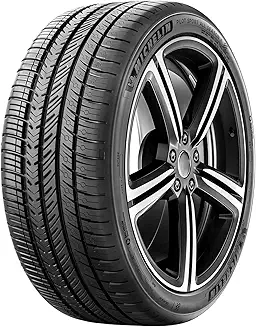
Michelin CrossClimate 2
Pros
- 3PMSF severe snow certification confirms the compound passes independent standardized winter traction testing — the same certification the BFGoodrich Trail-Terrain T/A carries, but in a tire that also delivers the 77,000-mile tread life that makes it the lowest per-mile cost option in this comparison
- V-shaped tread pattern with advanced silica compound delivers wet grip that tyrereviews.com community members across 130+ submissions consistently describe as the tire’s defining strength — not marketing language but a documented pattern from real-world Compass and compact SUV owners
- Quieter highway character than any all-terrain tire in this comparison — for a Trailhawk owner who spends 70–80% of their miles on pavement, the acoustic refinement difference between the CrossClimate 2 and the KO2 is noticeable and sustained across the tire’s entire lifespan
Cons
- Wet braking confidence decreases as the tire wears toward the end of its lifespan — a documented pattern in tyrereviews.com submissions rather than an early-life limitation; Trailhawk owners in consistently rainy climates should monitor tread depth more actively than the tread wear indicator alone suggests
- Light trail grip is adequate but not aggressive — the CrossClimate 2’s all-weather compound is not engineered for loose gravel, soft soil, or rocky terrain; Trailhawk owners who regularly take unpaved roads need the KO2’s sidewall protection and open shoulder design instead
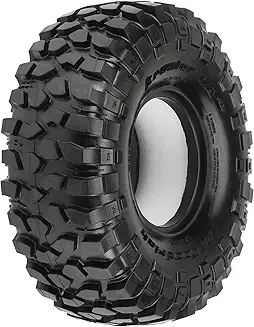
BFGoodrich All-Terrain T/A KO2
Pros
- CoreGard Technology provides 20% stronger sidewalls than the previous KO generation — a specific engineering improvement developed from BFGoodrich’s racing program that addresses the exact failure mode compact trail SUV owners face on rocky terrain when the Trailhawk’s 4×4 system puts the vehicle in positions where sidewall contact is unavoidable
- Interlocking tread blocks and open shoulder design for effective mud self-cleaning — third-party testing documents the KO2 lasting twice as long on gravel and 15% longer on paved roads versus its predecessor; the durability improvement is documented, not just a marketing claim
- jeepag.com Trailhawk owners specifically cite the KO2 as the go-to trail upgrade — platform-specific validation from owners who have used the Trailhawk’s 4×4 system in actual off-road conditions and found the KO2 the most reliable option among all-terrain alternatives
Cons
- Noticeable road noise at highway speeds above 65 mph — a consistent pattern in Compass Trailhawk owner feedback and all-terrain tire comparisons; this is the fundamental trade-off between the KO2’s aggressive tread block design and the acoustic refinement that touring and all-weather tires achieve
- Firmer ride than all-season or all-weather alternatives — the stiff tread compound and sidewall construction that provides trail durability also transmits more road surface harshness through the Trailhawk’s suspension on urban and highway pavement
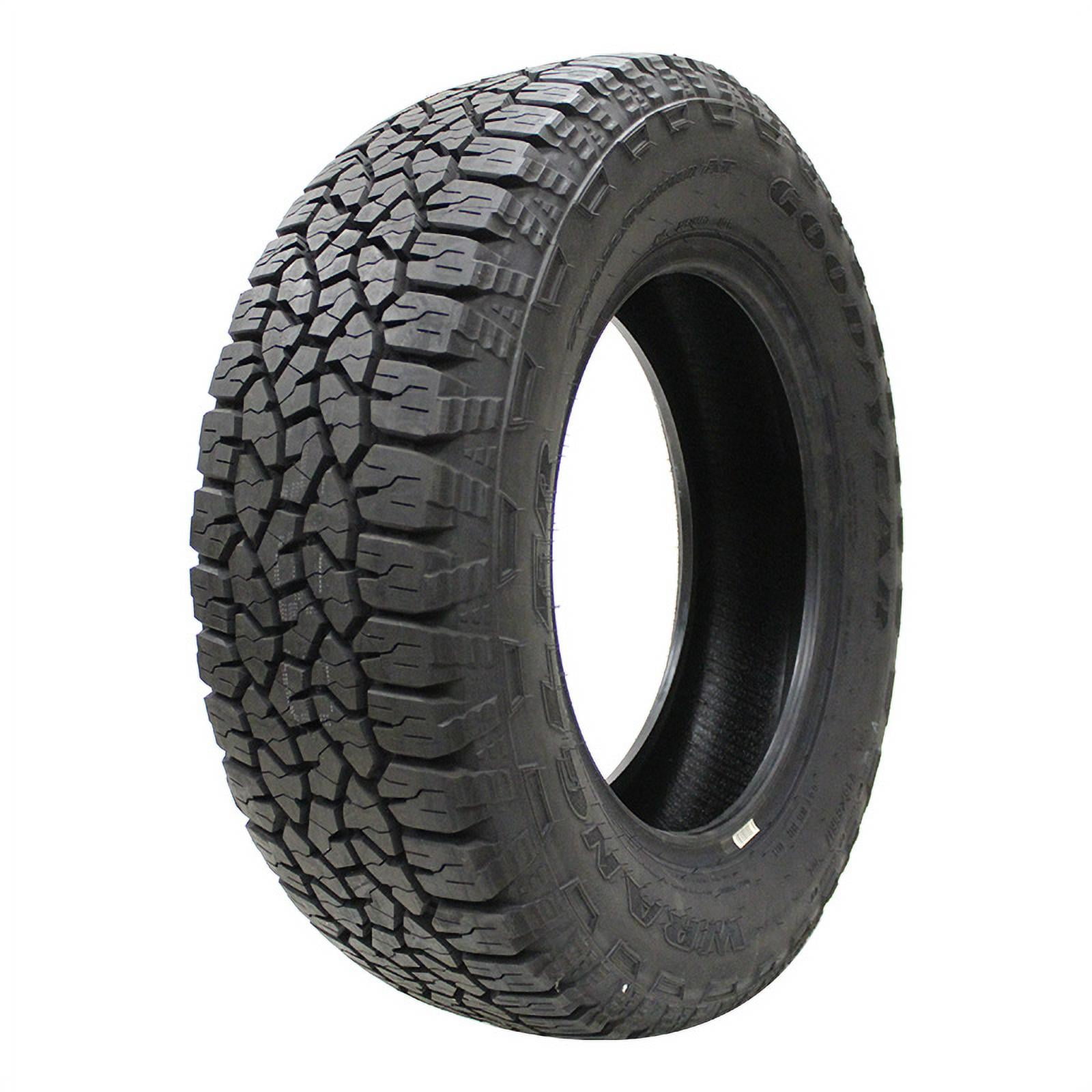
Goodyear Wrangler TrailRunner AT
Pros
- Quieter highway character than most all-terrain competitors — Goodyear specifically engineered the multi-angled shoulder blocks to reduce the single-frequency tread pattern drone that makes budget all-terrain tires unusable on daily commutes; SimpleTire Compass owner feedback confirms it as noticeably quieter than comparable price-point AT options
- Available in 215/65R17 matching the 2026 Trailhawk’s OEM size — no fitment uncertainty on the most common configuration, which matters when the Trailhawk’s load index requirement of 99H must be met or exceeded
- Competitively priced versus the KO2 and Yokohama G015 — for Trailhawk owners whose trails are unpaved roads and light gravel rather than rocky technical terrain, the TrailRunner AT’s capability is adequate without the premium sidewall engineering that only matters in more aggressive conditions
Cons
- Not suitable for deep mud or aggressive rocky terrain — the TrailRunner AT’s tread void ratio and sidewall construction are not engineered for the conditions where the KO2 justifies its premium price; Trailhawk owners who push beyond light gravel will find the limitations quickly
- No 3PMSF certification — unlike the CrossClimate 2 and Trail-Terrain T/A, the TrailRunner AT does not carry independent severe snow traction validation; Trailhawk owners in regions with meaningful winter snowfall should choose a 3PMSF-certified option instead
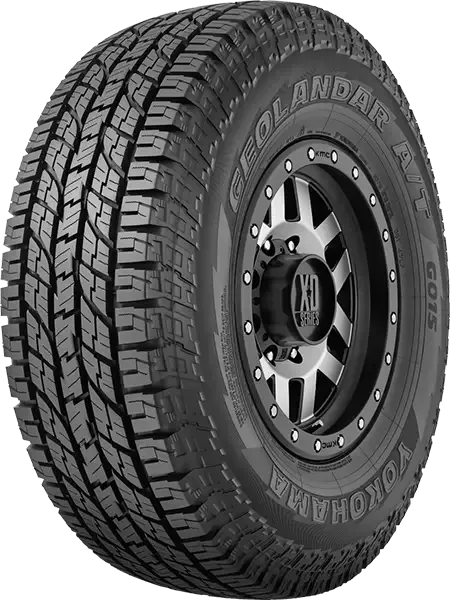
Yokohama Geolandar A/T G015
Pros
- Multi-angle siping for wet pavement and light snow traction — Yokohama engineered the G015 to maintain consistent grip performance across the mixed terrain surfaces that comprise the Trailhawk’s typical use case, including the wet pavement and damp gravel conditions that expose budget all-terrain compounds
- Circumferential grooves for effective water evacuation — relevant for Trailhawk owners in high-rainfall regions where hydroplaning resistance on wet two-lane roads leading to trails is as important as the grip on the trails themselves
- Quieter than more aggressive all-terrain designs while still delivering meaningful grip improvement over the Trailhawk’s stock touring tires — the transition from factory tires to the G015 is validated in automotive community feedback as a meaningful upgrade without the noise penalty that makes the KO2 difficult to live with daily
Cons
- Deep mud performance is limited — the Yokohama G015’s void ratio and shoulder block design are not engineered for the sustained self-cleaning required in deep mud; Trailhawk owners who regularly encounter mud trails will find it packs and loses grip faster than the KO2
- Sidewall protection less robust than BFGoodrich — the G015 doesn’t carry equivalent CoreGard-level reinforcement; on sharp rocky terrain where sidewall contact is possible, the G015’s standard sidewall construction is more vulnerable to bruising and splitting than the KO2
BFGoodrich Trail-Terrain T/A
Pros
- 3PMSF certification with all-weather rubber compound — one of only two tires in this comparison with independent severe snow traction validation; BFGoodrich’s official 2025 Jeep Compass Trailhawk fitment page lists it specifically, and 208+ verified reviews averaging 4.3/5 provide the platform-specific validation that distinguishes it from generic fitment recommendations
- Quieter and smoother highway ride than the KO2 — the Trail-Terrain T/A’s tread design specifically targets the middle ground between the KO2’s trail focus and highway touring tires; Trailhawk owners in BFGoodrich’s review platform specifically cite the ride improvement versus the KO2 as the primary reason they chose this tire
- Adventure-ready design without the KO2’s stiffness — for Trailhawk owners who occasionally use the vehicle for camping and light trail access but spend most of their miles on pavement, the Trail-Terrain T/A delivers BFGoodrich’s engineering quality at a more comfortable daily-driving character
Cons
- Less trail grip than the KO2 on rocky or deeply rutted terrain — the compound and void ratio that makes the Trail-Terrain T/A more comfortable on highways also limits its capability in the harder off-road conditions where the KO2’s CoreGard Technology and interlocking tread blocks are specifically relevant
- Mid-to-premium pricing without the KO2’s documented tread life advantage — the Trail-Terrain T/A is positioned between the budget TrailRunner AT and the premium KO2 in both price and capability, which means it is the most cost-effective choice only for the specific owner profile who needs 3PMSF certification but finds the KO2 too harsh
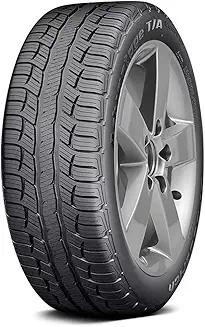
Bridgestone Dueler H/L 422 Ecopia
Pros
- Low rolling resistance for improved fuel economy — the Ecopia compound engineering is specifically designed to minimize energy loss during highway rotation, which measurably improves fuel economy on the Trailhawk’s highway-dominant driving profile compared to all-terrain compounds with higher rolling resistance
- Excellent wet-pavement grip and braking performance — the Dueler H/L 422 Ecopia consistently earns strong wet braking ratings from Compass and compact SUV owners who use their vehicles primarily on paved roads, delivering the stopping performance that matters most for the urban and highway environments where this tire belongs
- Quietest highway ride of any tire in this comparison — for Trailhawk owners whose driving is 95%+ on pavement, the acoustic refinement difference between the Dueler and any all-terrain option in this comparison is noticeable and sustained across the tire’s entire lifespan
Cons
- Zero off-road capability — the Dueler H/L 422 Ecopia is not designed for gravel, trails, mud, or any unpaved surface; using it on terrain the Trailhawk’s 4×4 system is designed for would expose the tire’s highway-only compound to conditions it cannot handle
- No 3PMSF certification — the highway compound does not pass severe snow traction testing; for Trailhawk owners in regions with real winter snowfall, the Dueler’s limitation in cold and snowy conditions is a meaningful safety gap that the CrossClimate 2 or Trail-Terrain T/A address
???? Can’t Decide?
Our Top 2 Picks — Head to Head
All-weather daily-driver comfort vs. trail-heavy sidewall protection. Your usage split decides it.
- 3PMSF all-weather certification with estimated 77,000-mile tread life — the combination that makes it the lowest per-mile cost option in this comparison for mixed daily and trail use
- Quieter highway character than any all-terrain tire — for the 70–80% of Trailhawk miles spent on pavement, the acoustic difference versus the KO2 is sustained and meaningful
- Eliminates seasonal tire swaps — covers the entire four-season Trailhawk use case without a second tire set or storage requirement
- CoreGard Technology with 20% stronger sidewalls — the only tire in this comparison specifically engineered to resist the sidewall splits and bruising that rocky trail terrain causes; documented in BFGoodrich’s third-party testing
- Interlocking tread blocks and open shoulder design for gravel and mud self-cleaning — the tread architecture that makes it the most capable trail tire on this list for actual off-road use
- jeepag.com Trailhawk owner validation as the most recommended trail upgrade — platform-specific community evidence from owners who have used the Trailhawk’s 4×4 system in real unpaved conditions
How to Choose the Right Tire for Your Jeep Compass Trailhawk
Six factors specific to the Trailhawk’s Trail Rated compact SUV platform, 215/65R17 OEM size, load index requirement, and 70/30 pavement-to-trail usage split.
215/65R17 OEM Size — Two Variant Sizes Exist
The 2026 Jeep Compass Trailhawk uses 215/65R17 tires as factory equipment. Older 2018–2023 variants in some markets used 225/60R17 or 225/55R18 depending on trim and region. Always verify from the door jamb sticker on your specific vehicle rather than searching by model year alone — ordering the wrong size affects speedometer accuracy, ride height calibration, and load rating compliance.
Load Index 99H Is Non-Negotiable
The Trailhawk’s door jamb specifies a minimum load index of 99 and speed rating of H (up to 130 mph) for the 215/65R17 size. Fitting a tire with a lower load index or speed rating creates safety risk under the vehicle’s rated payload and creates warranty complications if a related failure occurs. Every tire in this comparison meets or exceeds this specification — confirm before purchasing from any source outside this list.
Honest Terrain Assessment Before Choosing
The Trailhawk’s typical real-world use splits approximately 70–80% paved roads and 20–30% light trails. Mud-terrain tires are designed for the opposite split — 70–80% off-road use — and the highway drone, fuel economy penalty, and accelerated pavement wear they create on a primarily paved-road vehicle is disproportionate to the occasional trail benefit. All-terrain and all-weather tires match the Trailhawk’s actual usage better than mud-terrain options that serve trail-focused Gladiator Rubicon owners.
Sidewall Protection on Light Rocky Trails
On the Trailhawk’s terrain rating, the primary tire failure mode is sidewall puncture or bruising — not tread wear from mud or rock crawling. Sharp rocks, exposed root systems, and trail debris contact the sidewall when the Trailhawk navigates off-camber terrain. The KO2’s CoreGard Technology specifically addresses this failure mode; standard all-season and all-weather tires do not carry equivalent sidewall reinforcement. For trail-heavy owners, sidewall strength matters more than tread aggressiveness.
Cost Per Mile vs. Upfront Price
The Michelin CrossClimate 2’s 77,000-mile estimated tread life makes its cost per mile lower than budget alternatives despite the higher per-tire purchase price. A $130 budget tire lasting 35,000 miles costs more per mile than a $200 CrossClimate 2 lasting 77,000 miles. Calculate per-mile cost (total four-tire cost ÷ estimated tread life miles) before comparing prices — the calculation often reverses the intuitive price comparison.
Rotation Interval on a Trail-Rated 4×4
The Trailhawk’s 4×4 system varies torque distribution by terrain conditions, creating variable individual wheel loads that generate non-uniform wear patterns more quickly than pure 2WD vehicles. Rotate every 5,000–7,000 miles — not the 10,000-mile interval appropriate for standard FWD or RWD passenger cars. Extending rotation intervals on a 4×4 is the most common reason Trailhawk owners report premature uneven wear on all-terrain tires regardless of brand.
✅ Pro Tips
Quick Buying Checklist for Jeep Compass Trailhawk Owners
Verify your Trailhawk’s exact size from the door jamb sticker before ordering — 215/65R17 (2026) and 225/60R17 (older variants) are not interchangeable; the wrong size affects speedometer accuracy and load rating compliance.
Confirm the replacement tire meets minimum load index 99H — downgrading either the load index or speed rating below the door jamb specification creates safety risk under payload and may complicate warranty claims.
Honestly assess your trail vs. pavement split before buying all-terrain tires — if your Trailhawk is 90% on paved roads, the CrossClimate 2’s all-weather compound and 77,000-mile tread life outperform any all-terrain on a cost-per-mile basis.
Set a 5,000–7,000 mile rotation reminder — the Trailhawk’s 4×4 torque distribution varies by terrain, creating non-uniform wear patterns faster than standard 2WD vehicles; extended rotation intervals are the most common cause of premature uneven wear.
Related Guides
Other Jeep Compass / Off-Road Models
Frequently Asked Questions
What size tires does the Jeep Compass Trailhawk use?
The 2026 Jeep Compass Trailhawk uses 215/65R17 tires as factory equipment. Some older 2018–2023 Trailhawk variants in certain markets used 225/60R17 or 225/55R18 depending on trim. Always check the sticker inside your driver’s door jamb for the authoritative size, load index, and speed rating for your specific vehicle before purchasing.
Are all-terrain tires good for daily driving on a Jeep Compass Trailhawk?
Modern all-terrain tires like the Yokohama Geolandar A/T G015 and BFGoodrich Trail-Terrain T/A handle mixed daily and trail use well. They’re noticeably quieter and more fuel-efficient than all-terrain designs from a decade ago. The KO2 is the most trail-capable option but the loudest on highway — for primarily pavement driving, the CrossClimate 2’s all-weather compound is a better fit.
Why does the Trailhawk need sidewall protection more than the tread pattern?
The Trailhawk’s Trail Rated terrain typically involves rocky trails and unpaved roads where sharp rocks and debris contact the tire’s sidewall rather than the tread. Sidewall punctures and bruising are the primary failure mode for compact trail SUV tires — not tread wear from mud or rock crawling. This is why the KO2’s CoreGard Technology matters specifically for trail-heavy Trailhawk owners.
How long do tires typically last on a Jeep Compass Trailhawk?
Quality tires last 40,000–77,000 miles depending on the compound and driving patterns. The Michelin CrossClimate 2 showed an estimated life above 77,000 miles in controlled testing. Budget all-terrain tires typically reach 35,000–45,000 miles under mixed use. Rotating every 5,000–7,000 miles extends tread life meaningfully on the Trailhawk’s variable-torque 4×4 system.
Is the BFGoodrich KO2 worth the extra cost for a Compass Trailhawk?
Yes, if you regularly drive unpaved forest roads, gravel trails, or rocky terrain where CoreGard sidewall protection prevents the punctures and bruising that standard all-terrain tires fail at. For primarily on-road Trailhawk driving, the CrossClimate 2 or Trail-Terrain T/A deliver better value — the KO2’s premium is only justified when the sidewall protection it provides is actually needed.
Are 3PMSF-rated tires necessary for the Jeep Compass Trailhawk?
Recommended but not mandatory — the 3PMSF symbol confirms independent severe snow traction testing, which standard M+S all-season tires don’t carry. In regions with consistent winter snowfall, 3PMSF-certified tires like the CrossClimate 2 and BFGoodrich Trail-Terrain T/A provide meaningfully better cold-weather safety than non-certified alternatives, especially given the Trailhawk’s SUV weight in emergency braking scenarios.
Why is the Bridgestone Dueler H/L 422 ranked last if it has good ratings?
The Dueler H/L 422 Ecopia ranks last because it’s genuinely unsuitable for the Trailhawk’s Trail Rated use case — it has no off-road capability and no 3PMSF certification. Its strong ratings reflect highway and city driving, which is correct for that tire’s purpose. Choosing it for a Trail Rated vehicle wastes the platform’s capability and leaves the owner without the trail and winter performance the Trailhawk is designed to provide.
???? Final Verdict
Our Top Tire Recommendations for 2026
The Michelin CrossClimate 2 earns the top position for the Jeep Compass Trailhawk because it addresses the platform’s core tension — a Trail Rated vehicle used primarily on paved roads — with 3PMSF all-weather certification and an estimated 77,000-mile tread life that makes it the lowest per-mile cost option in this comparison while delivering year-round capability without the highway drone that makes all-terrain tires difficult to live with on daily commutes. Trail-heavy Trailhawk owners who regularly drive unpaved roads where sidewall contact with rocks and debris is a real risk should choose the BFGoodrich All-Terrain T/A KO2 — its CoreGard Technology sidewall reinforcement addresses the primary failure mode on exactly the terrain the Trailhawk is Trail Rated for. Budget-conscious owners who want genuine all-terrain capability at a lower price in mild climates should consider the Goodyear Wrangler TrailRunner AT.