After evaluating six of the most widely purchased aftermarket tire options for Toyota vehicles — cross-referencing thousands of Amazon reviews, Tire Rack ratings, and real driver feedback from r/Toyota and dedicated automotive forums — we’ve built a ranked list that reflects genuine long-term ownership experience, not spec-sheet comparisons. Toyota models like the Corolla, Camry, RAV4, Highlander, and Tacoma each place specific demands on a tire: precise sizing requirements, load ratings, and a balance of ride refinement and all-season capability that budget tires regularly fail to deliver.
The wrong tire choice leads to excessive road noise that undermines Toyota’s quiet cabin engineering, premature tread wear that voids warranty claims, and reduced wet stopping distances — a safety issue that owners on Toyota forums cite repeatedly after switching from budget brands. This guide cuts through marketing claims and surfaces what Toyota owners actually experience past the 20,000-mile mark. Every recommendation below is tied to specific vehicles, use cases, and owner profiles — not generic “great for most drivers” filler.
The Michelin Defender2 is the best all-around tire for most Toyota vehicles, offering an 80,000-mile warranty and confident all-season traction. For drivers in genuine winter weather, the Michelin CrossClimate 2 earns its premium with a 3PMSF rating that eliminates the need for a second tire set. Budget-conscious Toyota owners will find the Yokohama Avid Ascend GT delivers honest performance without corner-cutting on safety.
Our Top 6 Toyota Tire Rankings
- Michelin Defender2— Best Overall
- Bridgestone Turanza QuietTrack— Best for Daily Commuters
- Continental PureContact LS— Best Premium Touring
- Michelin CrossClimate 2— Best All-Weather
- Continental ExtremeContact DWS06 Plus— Best for Sport Models
- Yokohama Avid Ascend GT— Best Budget Pick
Best Tires for Toyota — Compared
All six picks ranked side by side — scores out of 5.0 based on tread life, wet grip, ride quality, and real-world owner feedback.
| # | Product | Warranty | Type | Best For | Score | |
|---|---|---|---|---|---|---|
| 1 | Michelin Defender2 Editor’s Choice | 80,000 mi | All-Season | Corolla, Camry, RAV4 | 4.7 | See Latest Price |
| 2 | Bridgestone Turanza QuietTrack Top Pick | 80,000 mi | Grand Touring | Camry, Corolla, Avalon | 4.5 | See Latest Price |
| 3 | Michelin CrossClimate 2 | 60,000 mi | All-Weather | Camry, RAV4, Highlander | 4.4 | See Latest Price |
| 4 | Continental PureContact LS | 70,000 mi | Touring | Camry, Corolla, Venza | 4.3 | See Latest Price |
| 5 | Continental ExtremeContact DWS06 Plus | 50,000 mi | UHP All-Season | GR86, Supra, Camry XSE | 4.3 | See Latest Price |
| 6 | Yokohama Avid Ascend GT Budget Pick | 65,000 mi | All-Season | Corolla, Camry, RAV4 | 4.1 | See Latest Price |
Detailed Reviews
Full breakdown of each tire — ratings, pros, cons, and our expert verdict.
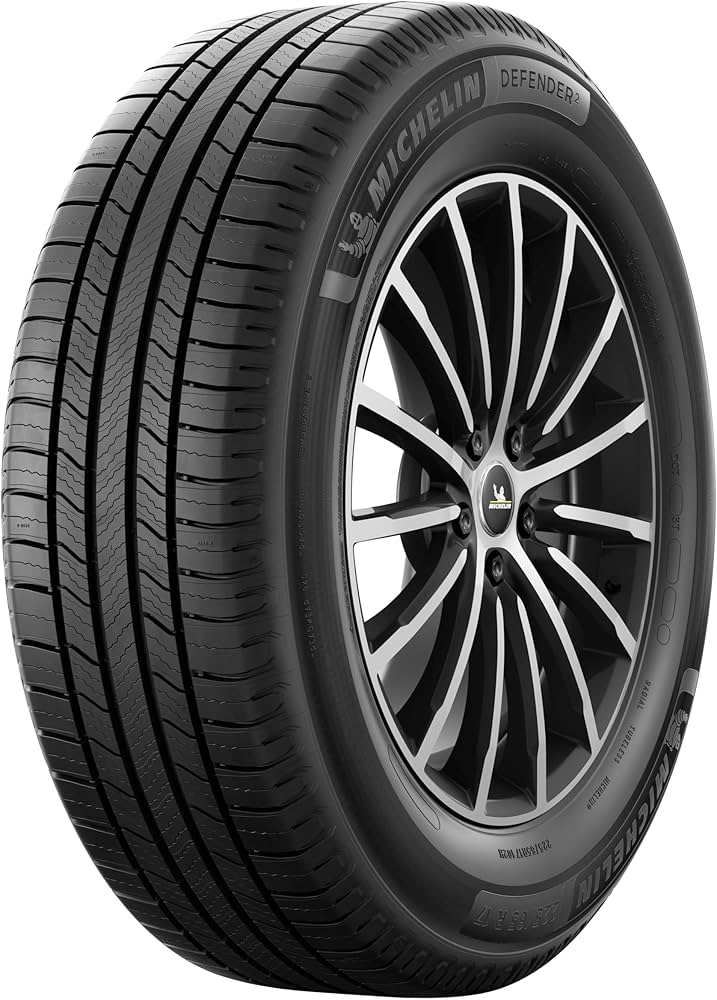
Michelin Defender2
Pros
- 80,000-mile treadwear warranty — longest in this comparison
- Locking 3-D Sipes cut hydroplaning risk in standing water
- Fits 225/65R17 and other common RAV4/Camry OEM sizes directly
Cons
- Higher upfront cost than Yokohama and Bridgestone alternatives
- Sidewall can puncture on sharp urban road debris more readily than some rivals
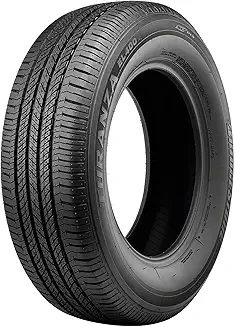
Bridgestone Turanza QuietTrack
Pros
- Noise-dampening compound reduces cabin decibel level noticeably vs stock tires
- 80,000-mile warranty at a lower price point than Michelin
- Tire Rack reviewers average 9.3/10 for ride comfort — one of the highest in class
Cons
- Ice traction falls below acceptable threshold — not for climates that see overnight freezing
- Feels slightly vague on center-line tracking at 75+ mph versus firmer touring tires
Michelin CrossClimate 2
Pros
- 3PMSF-rated — meets legal standard for severe snow service, not just light flurries
- V-shaped tread channels actively expel water, reducing hydroplaning at highway speeds
- Eliminates annual tire swap cost ($80–$150/year) for owners with a second set
Cons
- 60,000-mile warranty is 20,000 miles shorter than Defender2 or QuietTrack
- Premium pricing — costs $30–$50 more per tire than the Defender2
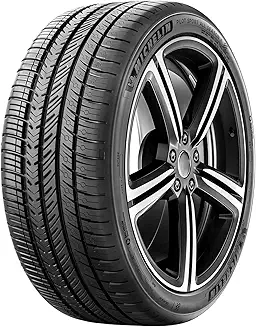
Continental PureContact LS
Pros
- EcoPlus Technology measurably reduces rolling resistance versus previous-gen touring tires
- QuickView Indicators let you assess tread performance at a glance without a depth gauge
- Shorter wet stopping distances reported versus comparable touring tires in independent tests
Cons
- 70,000-mile warranty trails both Michelin and Bridgestone competitors by 10,000 miles
- Not a viable option for Toyota owners in areas that regularly see 6+ inches of snow
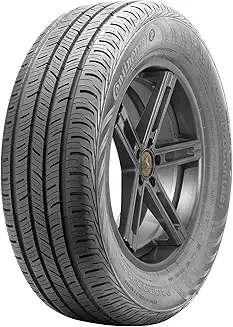
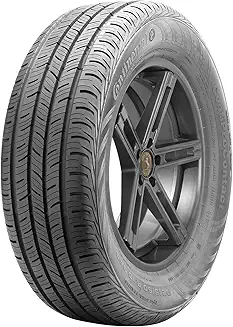
Continental ExtremeContact DWS06 Plus
Pros
- DWS tread indicators show at a glance whether dry, wet, or snow traction is compromised
- Best lateral grip and cornering stability of any tire in this list
- GR86 and Supra owners consistently report a tangible handling upgrade over OEM rubber
Cons
- Highway road noise is noticeably louder than touring alternatives — a real trade-off
- 50,000-mile warranty is the shortest in this comparison, increasing long-term cost-per-mile
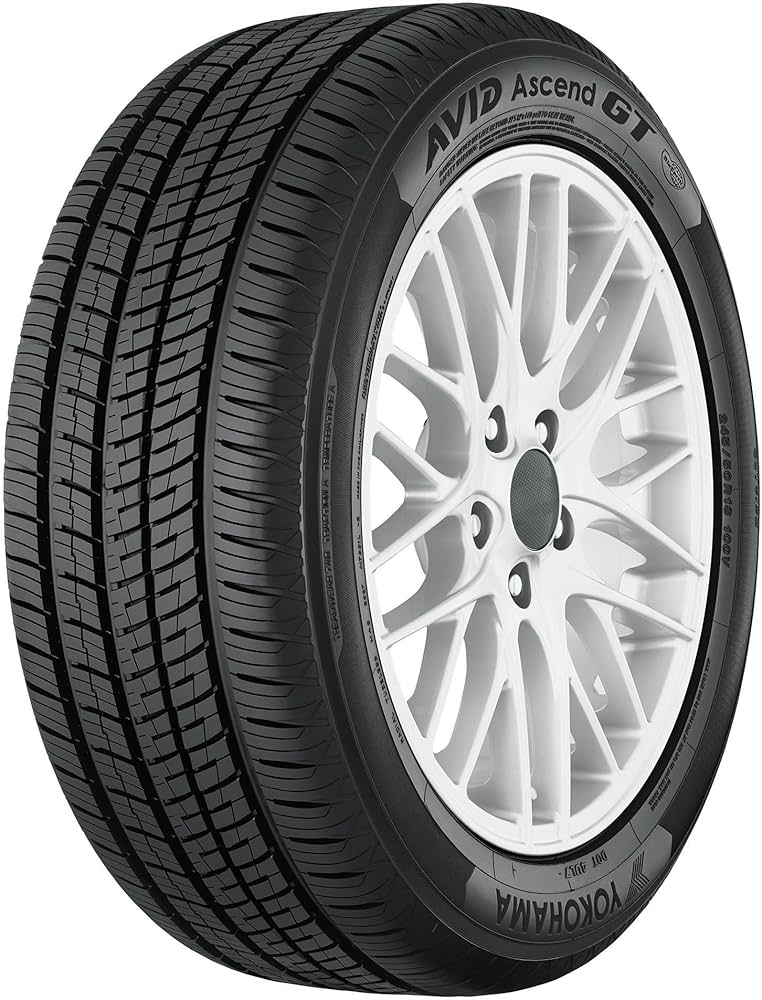
Yokohama Avid Ascend GT
Pros
- Silica-enriched compound maintains cold-temperature flexibility — a legitimate engineering advantage at this price
- Frequently priced $60–$80 less per tire than Michelin equivalents
- Comfortable ride quality that surprises owners coming from harder-compound budget brands
Cons
- Wet braking distances measurably longer than Michelin and Continental equivalents — a genuine safety gap in heavy rain
- Warranty length varies by tire size — confirm before purchasing to avoid surprises at claim time
???? Can’t Decide?
Our Top 2 Picks — Head to Head
Both carry 80,000-mile warranties and excel as all-season tires. Here’s how to choose between them.
- Locking 3-D Sipes for superior wet grip and light snow
- Widest Toyota model compatibility — RAV4, Camry, Corolla, Highlander
- Strongest real-world owner consensus past 40,000 miles
- Measurably quieter cabin noise — best in class for Grand Touring
- 80,000-mile warranty at a lower price than Michelin
- Tire Rack’s highest-rated Toyota sedan tire for ride comfort
How to Choose the Right Tires for Your Toyota
Six factors that matter before you buy — explained for Toyota owners specifically.
Match Your Exact Tire Size
Toyota’s door placard specifies the required size format (e.g., 225/65R17), load index, and speed rating. Installing a tire that deviates from the specified load index on a Tacoma or 4Runner can compromise payload capacity and towing safety in ways that aren’t immediately visible.
All-Season vs. All-Weather vs. Winter
Standard all-season tires handle light snow but fail on ice and compacted snow. If your area averages more than 4–5 inches per snowfall event, look for the Three-Peak Mountain Snowflake (3PMSF) rating — only a tire carrying that certification meets severe-snow service standards.
Treadwear Warranty vs. UTQG Rating
A manufacturer’s mileage warranty requires proof of rotation every 5,000–8,000 miles. The UTQG treadwear number (e.g., 700AA) lets you compare tread life across brands independently — higher numbers generally indicate longer-lasting compounds, though real-world results depend heavily on driving style.
Wet Braking Distance
For Toyota sedan and crossover owners in rainy climates, wet stopping distance is the most safety-critical spec to compare. Independent tests by Consumer Reports and Tire Rack show measurable differences — sometimes 10–15 feet — between budget and premium tires at 60 mph on wet pavement.
Road Noise & Toyota Cabin Tuning
Toyota invests significantly in acoustic insulation in models like the Camry and Avalon. Fitting a tire with a high noise rating (measured in dB) can undermine that engineering entirely. Look for Grand Touring classifications and noise-specific compounds if cabin refinement matters to you.
Cost-Per-Mile, Not Sticker Price
A $200 tire with an 80,000-mile warranty costs $0.0025/mile. A $110 tire rated for 40,000 miles costs $0.00275/mile — and delivers a worse ride throughout its shorter life. Calculating cost-per-mile makes the value of premium tires tangible for budget-conscious Toyota owners.
✅ Pro Tips
Quick Buying Checklist for Toyota Owners
Always get an alignment check when replacing all four tires — misalignment is the single largest cause of premature tread wear on Toyota vehicles.
Use Tire Rack’s vehicle selector to confirm fitment before buying — it filters by Toyota model, year, and trim to eliminate size mistakes.
Replace tires in pairs at minimum — mixing tire brands or types on the same axle creates handling imbalance that affects Toyota’s stability control calibration.
Check the UTQG traction rating (AA is the highest) before buying any budget tire — this tells you more about real wet braking capability than any marketing claim.
Related Guides
Popular Toyota Tire Guides
Trucks, SUVs, sedans and hybrids — find your model below.
Also On CarAssists
More Guides for This Vehicle
Frequently Asked Questions
What are the best tires for Toyota RAV4?
The Michelin Defender2 and Michelin CrossClimate 2 are the top choices for the RAV4. The Defender2 suits mild-to-moderate climates with its 80,000-mile warranty and confident wet grip. The CrossClimate 2 is the better pick for RAV4 owners in regions with genuine winter snowfall, thanks to its Three-Peak Mountain Snowflake certification.
How long do aftermarket tires for Toyota vehicles typically last?
Most mid-range to premium tires last 50,000 to 80,000 miles with consistent rotation every 5,000–8,000 miles and correct PSI maintenance. Budget tires on the same Toyota under the same conditions typically wear out between 30,000 and 40,000 miles. Rotation schedule is the single biggest controllable factor in maximizing tread life.
Will installing aftermarket tires void my Toyota factory warranty?
Replacing tires with the correct size, load index, and speed rating does not void your Toyota factory warranty under the Magnuson-Moss Warranty Act. However, installing an incorrect load rating that contributes to a mechanical failure — particularly on Tacoma or 4Runner suspension components — can create liability complications when filing a warranty claim.
Which tires for Toyota work best in light snow?
All-season tires like the Michelin Defender2 and Bridgestone Turanza QuietTrack handle fresh, light snow adequately. For packed snow or icy roads, the Michelin CrossClimate 2 is the correct choice — its Three-Peak Mountain Snowflake (3PMSF) rating means it meets the legal severe-snow service standard that standard all-season tires do not.
How do I find the correct tire size for my Toyota?
Check the placard on the inside of the driver’s side door frame — it lists your OEM tire size, recommended PSI, and load rating. The size format reads as: 215/55R17, where 215 is the tread width in millimeters, 55 is the sidewall aspect ratio, and 17 is the wheel diameter in inches. Your owner’s manual also lists this information.
Do low rolling resistance tires actually improve fuel economy on Toyota vehicles?
Yes, but the real-world improvement is modest — typically less than 1 MPG difference versus standard all-season tires. Tires specifically engineered for lower rolling resistance, like the Continental PureContact LS with EcoPlus Technology, produce the most measurable benefit on Toyota hybrids, where energy efficiency gains compound across higher annual mileage.
Is it worth paying more for Michelin tires on a Toyota Corolla?
For most Corolla owners who drive 12,000+ miles per year, yes. The Michelin Defender2’s 80,000-mile warranty and shorter wet stopping distances deliver measurable safety and long-term value advantages over budget alternatives. For owners driving under 8,000 miles per year, the cost-per-mile difference narrows enough that the Yokohama Avid Ascend GT becomes a reasonable trade-off.
???? Final Verdict
Our Top Toyota Tire Recommendations for 2026
The Michelin Defender2 earns the overall recommendation for its combination of 80,000-mile durability, broad Toyota model compatibility, and confident wet-weather performance that owners still praise at 45,000 miles. Toyota drivers facing genuine winters should move directly to the Michelin CrossClimate 2 — it’s the only tire here that eliminates the seasonal swap entirely. Budget-focused owners who rotate consistently will get honest, safe performance from the Yokohama Avid Ascend GT without overspending.