After evaluating six hypersport and sport-touring tire options against documented S1000RR owner feedback, independent track test data, and specialist forum consensus, one thing becomes consistently clear: fitting the wrong rubber on a 210 hp superbike is not a minor inconvenience — it fundamentally changes how the bike corners, communicates through the chassis, and how much warning you get before grip runs out. The BMW S1000RR places extraordinary demands on its tires, and not every ZR17-rated tire is equipped to handle them.
The S1000RR takes a 120/70 ZR17 front and a 190/55 ZR17 or 200/55 ZR17 rear depending on model year — and getting that rear size wrong affects steering geometry and speedometer accuracy before you’ve even left the driveway. This guide covers six specific options evaluated across real-world feedback, including data from riders who’ve covered thousands of miles on each tire and track testers who’ve pushed them at the limit. Generic sport-tire rankings don’t account for the S1000RR’s specific demands; this one does.
For most S1000RR riders mixing street miles with occasional track days, the Michelin Power GP2 is the most complete choice — 2CT+ dual-compound grip with documented 3,700-mile street durability. Dedicated track-day riders should step up to the Pirelli Diablo Supercorsa SP V3, which delivers WSBK-derived grip in a DOT-legal package. For year-round street riders in variable weather, the Bridgestone Battlax Hypersport S22 was specifically tested on a BMW S1000RR and delivers the best all-weather longevity in its class.
Our Top 6 BMW S1000RR Tire Rankings
- Michelin Power GP2— Best Overall: Street + Track Balance
- Pirelli Diablo Supercorsa SP V3— Best Premium: Track Days
- Bridgestone Battlax Hypersport S22— Best for Durability + Wet Roads
- Metzeler Racetec RR K3— Best OEM-Quality Replacement
- Dunlop Sportmax Q4— Best Budget Street Option
- Michelin Power 6— Best Sport Touring / All-Weather
Best BMW S1000RR Tires — Compared
All six options ranked side by side — rear size, type, best use case, and expert score at a glance.
| # | Tire | Rear Size | Type | Best For | Score | |
|---|---|---|---|---|---|---|
| 1 | Michelin Power GP2 Editor’s Choice | 190/55 ZR17 | Hypersport | Street + Track | 4.8 | See Latest Price |
| 2 | Pirelli Diablo Supercorsa SP V3 Top Pick | 200/55 ZR17 | Track / Sport | Dedicated Track Days | 4.7 | See Latest Price |
| 3 | Bridgestone Battlax Hypersport S22 | 190/55 ZR17 | Hypersport | Durability + Wet Roads | 4.6 | See Latest Price |
| 4 | Metzeler Racetec RR K3 | 190/55 ZR17 | Hypersport | OEM Replacement | 4.6 | See Latest Price |
| 5 | Dunlop Sportmax Q4 Budget Pick | 190/55 ZR17 | Sport | Budget Street Riding | 4.5 | See Latest Price |
| 6 | Michelin Power 6 | 190/55 ZR17 | Sport Touring | All-Weather / Daily | 4.5 | See Latest Price |
Detailed Reviews
Full breakdown of each tire — ratings, pros, cons, size compatibility, and our expert verdict.
Michelin Power GP2
Pros
- 2CT+ dual-compound rear pairs a harder silica-based center with a carbon-black shoulder compound drawn directly from Michelin’s race tire development program
- Documented 20% wet grip improvement and 10% dry grip improvement over the outgoing Power GP — a meaningful measurable step, not marketing language
- One touring rider covered 3,700 miles Scotland–Montenegro on a single set with tread remaining — remarkable for a track-capable compound
Cons
- Aggressive front profile creates an oversteering tendency at corner entry — first-time track-day users must adjust their entry points before it feels natural
- Premium pricing makes it poor value for riders whose S1000RR never leaves the city
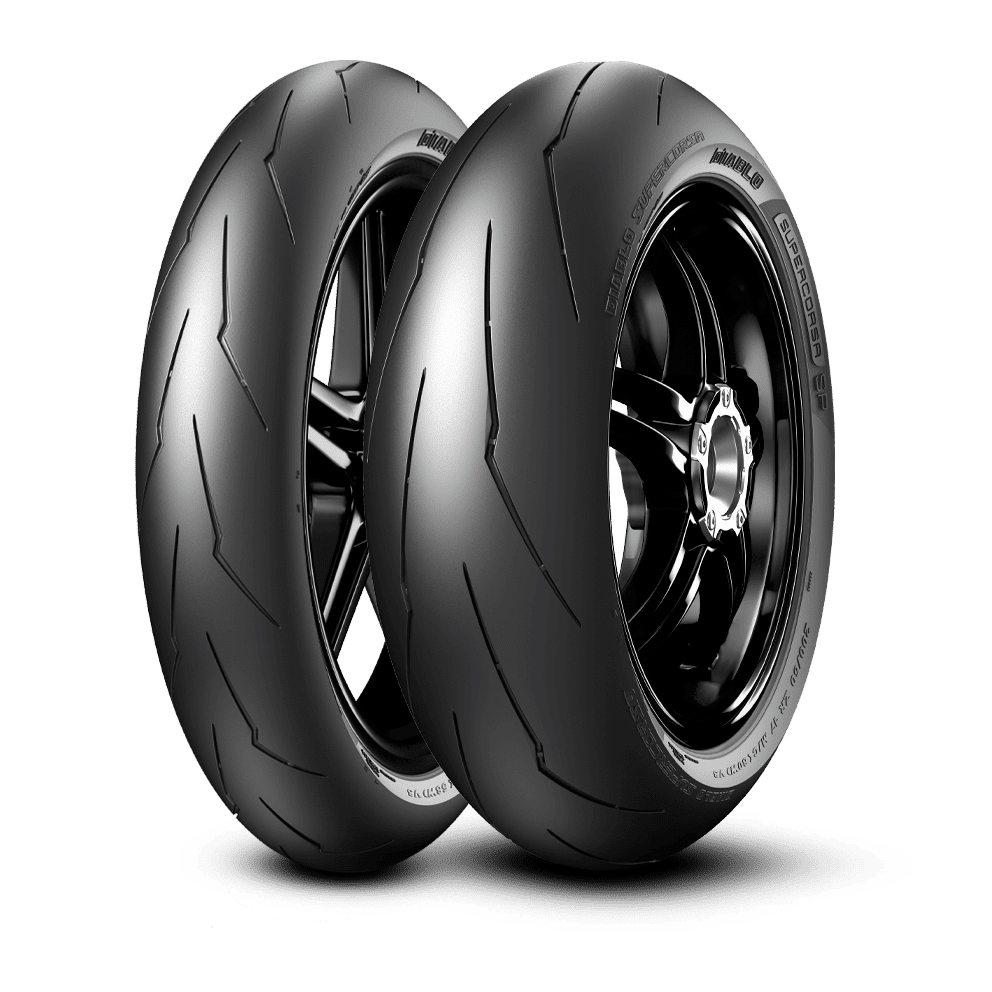
Pirelli Diablo Supercorsa SP V3
Pros
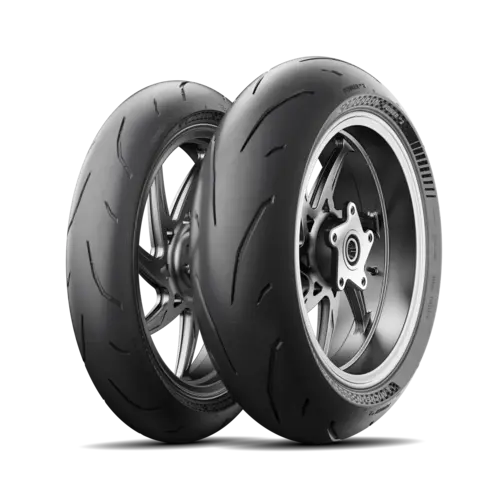
- Rear compound derived from the Pirelli Supercorsa SC racing slick — part of the same family used in WSBK competition, available with DOT approval
- WSBK-style rear profile increases the contact patch at full lean angles compared to standard hypersport profiles — more rubber on the road when you need it most
- Available in 200/55 ZR17 rear for the S1000RR k67 — correct OEM fitment size for the 2021+ generation
Cons
- Averages only 2,000–3,000 miles before significant wear appears — noticeably shorter than the Michelin Power GP2 at comparable price
- Requires a full warm-up lap before delivering grip; cold performance is dangerously limited — a genuine risk on street use
Bridgestone Battlax Hypersport S22
Pros
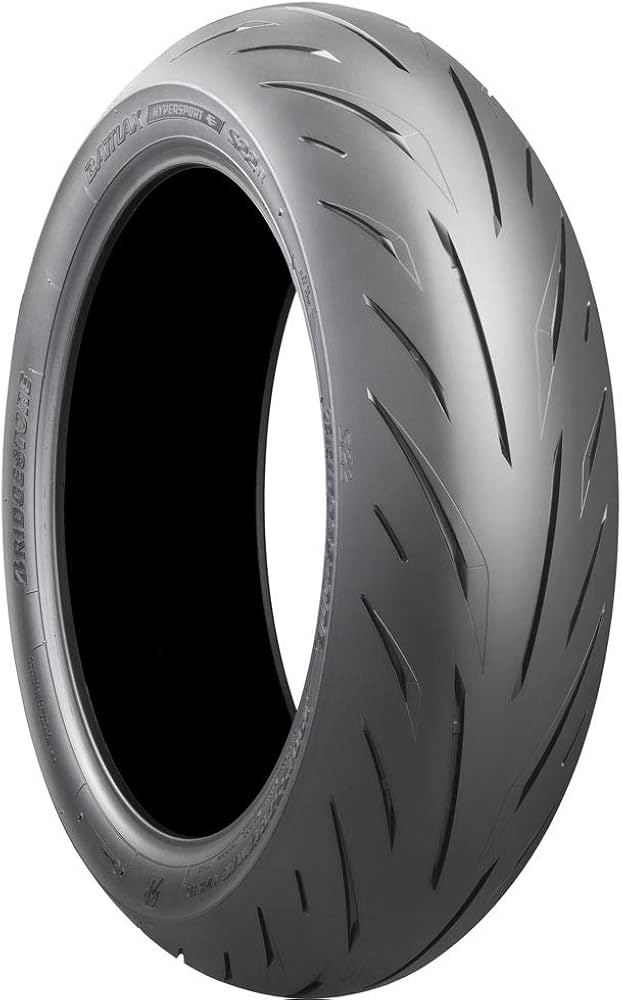
- Bridgestone conducted development testing on a BMW S1000RR at Autopolis circuit — measured 5% better wet lap time and 15% improved dry cornering speed over the outgoing S21
- Hard center compound uses silica particles 25% smaller than the previous generation, improving wear resistance without sacrificing wet-road bite
- Redesigned groove pattern evacuates water faster than the S21 — the strongest wet-road margin of any hypersport tire in this roundup
Cons
- Direction changes feel slightly heavier than the Michelin Power GP2 — the S22 prioritizes planted stability over reactive agility at corner entry
- Fractionally less sharp at extreme lean angles in dry conditions versus the Pirelli Supercorsa SP V3 — a gap that only shows at circuit pace
Metzeler Racetec RR K3
Pros
- Factory-specified on the BMW S1000RR k67 — BMW’s engineers validated its geometry and handling behavior during production sign-off testing
- K3 compound sits on the softer end of the Racetec RR lineup, delivering edge bite without the extreme temperature sensitivity of full track-compound alternatives
- Rain-capable in light wet conditions — more forgiving at low ambient temperatures than the Pirelli Supercorsa SP V3
Cons
- 200/55 ZR17 rear reported as discontinued in some markets — confirm stock availability before ordering to avoid size mismatch
- Outright dry-grip at track speeds falls behind the Pirelli Supercorsa SP V3 — not the right choice for dedicated circuit use
Dunlop Sportmax Q4
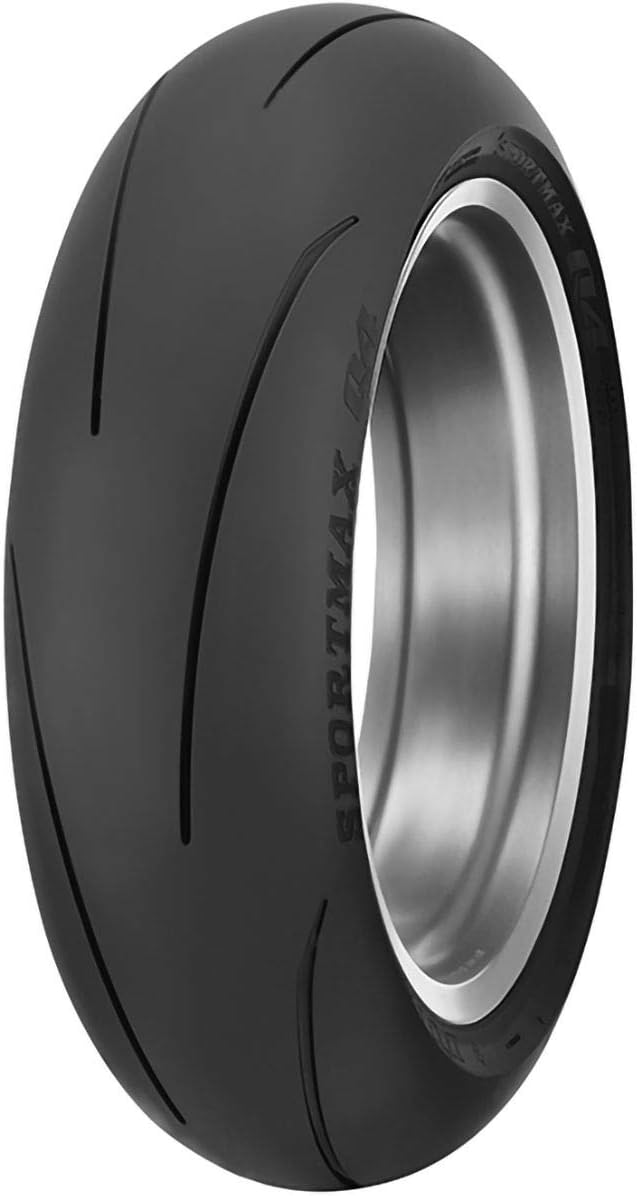
Pros
- Produces reliable grip at low temperatures without a warm-up lap — a meaningful safety advantage on cold morning departures on a 210 hp superbike
- Wear pattern is unusually consistent and visually readable — you can gauge remaining life well in advance and plan replacement before the tire surprises you
- Progressive, communicative feedback as grip approaches its limit — gives the rider time to respond rather than breaking away suddenly
Cons
- Less precise edge-grip feedback at extreme lean angles compared to the Michelin Power GP2 — a gap that becomes obvious at track-day pace
- Not competitive with premium compound tires in circuit sessions — the compound deforms under sustained high-speed cornering loads
Michelin Power 6
Pros
- All-weather silica compound delivers consistent grip across a wide temperature range — one of the widest operating windows of any tire tested in this category
- Strong longevity for a sport-touring application — riders report significantly longer lifespan than hypersport alternatives at comparable price points
- Priced competitively below the Power GP2 while delivering meaningfully broader daily-use versatility across seasons
Cons
- Dry cornering grip lags behind the Power GP2 at aggressive lean angles — the sport-touring compound trades peak grip ceiling for broader weather adaptability
- Understeer becomes noticeable at high lean angles on circuit — not a substitute for a proper hypersport compound on track days
???? Can’t Decide?
Our Top 2 Picks — Head to Head
Both are excellent. Here’s how to choose between them based on how you actually ride.
- 2CT+ dual compound documented at 3,700+ street miles with tread remaining — exceptional for a track-capable tire
- 20% better wet grip over the Power GP makes it genuinely safer in variable weather conditions
- Works at both street speeds and track sessions without compound deformation or overheating
- Rear compound from the same family as Pirelli’s Supercorsa SC race slick — maximum DOT-legal grip available
- WSBK-derived rear profile puts more rubber on the road at full lean than any other road-legal tire tested here
- Factory tire on the Ducati Panigale V4 — a production superbike with comparable power and lean angles to the S1000RR
How to Choose the Right Tire for Your BMW S1000RR
Six factors specific to the S1000RR that matter before you buy — not generic tire-shopping advice.
Confirm Your Rear Size First
The S1000RR uses 190/55 ZR17 or 200/55 ZR17 rear, depending on year. The k67 (2021+) ran 200-series OEM. Fitting the wrong rear size shifts the steering geometry, changes lean angle behavior, and throws off the speedometer — sometimes by more than 5%.
Warm-Up Temperature Requirements
Track-compound tires like the Supercorsa SP V3 need a full warm-up lap before delivering grip. On a 210 hp bike, cold tires on race-oriented rubber give almost no grip warning. If your rides include cold mornings or city starts, choose a lower activation temperature compound for genuine daily safety.
Match Compound to Your Use Case
Manufacturers classify compounds by primary use for a reason. Hypersport (Power GP2, S22) suits mixed street and track. Sport (Q4) suits daily riding. Track-derived (Supercorsa SP V3) is optimized for circuit use only. Mismatching produces short life and degraded safety margins.
Always Run Matched Sets
Tire manufacturers engineer front and rear compounds together to work as a system. Pairing a Michelin front with a Bridgestone rear changes the combined handling balance in ways neither manufacturer intended — and this becomes dangerous under the combined braking and cornering loads the S1000RR generates.
Calculate Cost Per Mile, Not Unit Price
The Pirelli Supercorsa SP V3 averages 2,000–3,000 miles. The Michelin Power GP2 can reach 4,000+ miles. At similar sticker prices, the GP2 delivers substantially lower cost per mile. Run the math over a full riding season before deciding the premium option is “more expensive.”
Professional Fitting Is Non-Negotiable
Hypersport tires on 17-inch wheels require a motorcycle-specific tire machine and dynamic wheel balancing. An out-of-balance rear wheel on the S1000RR produces speed-dependent vibration often misdiagnosed as a suspension fault. Factor the fitting cost into your price comparison — it’s not optional on this bike.
✅ Pro Tips
Quick Buying Checklist — BMW S1000RR Tires
Always verify exact rear size (190/55 vs 200/55) for your specific model year before ordering — the wrong size alters handling geometry and may complicate warranty claims.
New tires require 50–100 miles of careful bedding before full lean angles. The S1000RR’s power makes this easy to rush — and easy to crash on a fresh, unscuffed compound.
Always request dynamic wheel balancing at fitment — a static balance is insufficient for ZR-rated tires at motorway speeds on a superbike chassis.
Check the DOT date code on any tire before purchase — the last four digits show week and year of manufacture. Avoid tires older than 3 years regardless of tread depth.
Frequently Asked Questions
What are the correct tire sizes for the BMW S1000RR?
The BMW S1000RR takes a 120/70 ZR17 front and either a 190/55 ZR17 or 200/55 ZR17 rear depending on model year — the k67 (2021+) used a 200-series rear in OEM specification. Always confirm your specific year before ordering, as fitting the wrong rear size alters steering geometry and speedometer accuracy.
How long do hypersport tires typically last on the S1000RR?
Lifespan varies widely by compound and riding style. Track-oriented tires like the Pirelli Diablo Supercorsa SP V3 average 2,000–3,000 miles under mixed use. Street-optimized hypersport options like the Michelin Power GP2 and Bridgestone Battlax S22 can reach 4,000+ miles in predominantly road conditions — riding aggressively has more impact on life than brand choice.
Are track-compound tires safe for everyday street use on the S1000RR?
They are road-legal but carry real risks in street conditions. Track-compound tires require heat before delivering full grip — on cold morning starts or during sudden rain, traction can be dangerously limited with minimal warning. For any mixed street and track use, the Michelin Power GP2 or Bridgestone Battlax S22 are substantially safer and more practical choices.
Will fitting non-OEM tires affect my BMW S1000RR warranty?
In most markets, fitting a different brand from OEM does not void the manufacturer warranty for unrelated components. However, fitting tires outside the approved size range could complicate chassis or suspension warranty claims if handling is a factor. Consult your BMW dealer before deviating from the approved rear size specification for your year.
Which tire is best for S1000RR riders who do both track days and street riding?
The Michelin Power GP2 is the best single tire for dual street and track use on the S1000RR. It delivers track-day grip without sacrificing street manners or longevity. The Metzeler Racetec RR in K2 compound is worth considering if you want slightly sharper track feedback and can accept more frequent replacement intervals.
Do premium motorcycle tires make a noticeable difference on the S1000RR?
More so than on most bikes. The S1000RR’s power and extreme lean angles push tires toward their limits quickly, and premium tires communicate significantly more chassis information before grip fails. Budget tires give less warning — on a bike at this performance level, that is a genuine safety concern rather than a preference for sharper lap times.
How difficult is it to fit motorcycle tires at home?
Fitting motorcycle tires without the correct equipment risks damaging the ZR-rated carcass or distorting the wheel rim. A professional shop fitting includes dynamic balancing and takes under an hour. For a bike at the S1000RR’s price and performance level, professional installation is the only sensible approach — the fitting cost is negligible against the risks involved.
???? Final Verdict
Our Top S1000RR Tire Recommendations for 2026
The Michelin Power GP2 remains the most complete option for the majority of S1000RR riders — combining genuine track-day capability with documented long-distance street durability and meaningful wet-grip improvements over its predecessor. For track-dedicated riders, the Pirelli Diablo Supercorsa SP V3 is the sharpest road-legal tool available, while daily riders in wet climates will find the Bridgestone Battlax Hypersport S22 the most practically reliable long-term choice.