After cross-referencing thousands of Amazon reviews, r/JeepCompass subreddit threads, and Jeep forum discussions from 2017 and newer Compass owners, we identified six Group 48 batteries that reliably support the 2.4L Tigershark engine, the ESS start-stop system, and the Compass’s growing list of always-on electronics.
The modern Compass is not the basic crossover its footprint might suggest — the ESS system cycles the starter motor dozens of times during a single urban commute, the infotainment system draws current even when parked, and USB ports, heated seats, and rear cameras compound the demand on a battery that the factory flooded unit was never truly designed to handle long-term.
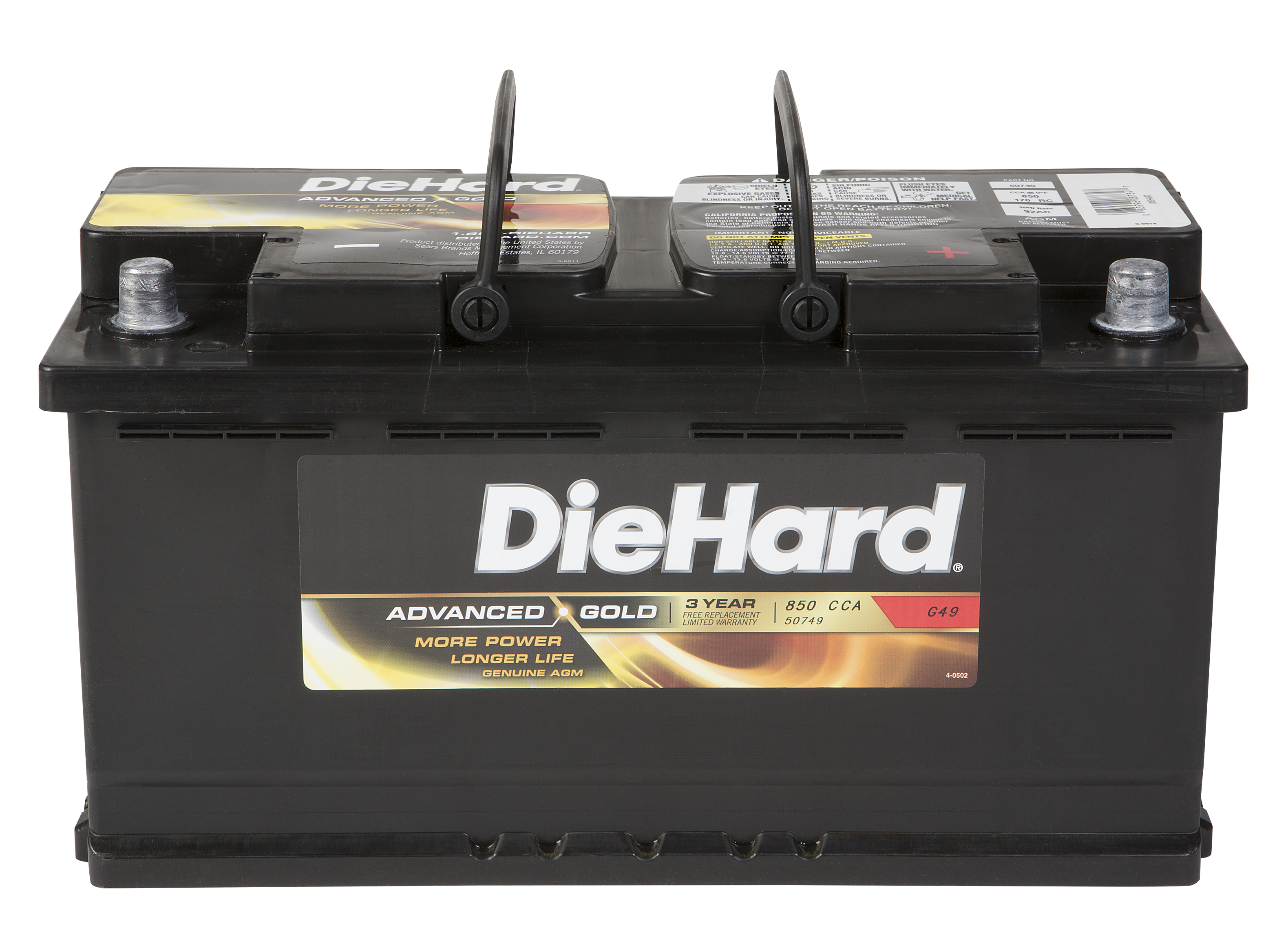
For most Compass owners with the 2017-and-newer ESS start-stop system, the DieHard Advanced Gold AGM in Group 48 provides the right balance of 730 CCA cranking power, 70Ah capacity, and a 3-year free replacement warranty that covers the period when most factory-spec batteries begin failing. Drivers with a pre-2017 Compass without start-stop can save substantially with the ACDelco Professional 48S flooded battery. The IBS sensor reset is non-negotiable after any battery swap on newer generation Compass models — skipping it causes the charging system to undercharge the new battery from the first drive.
Our Top 6 Jeep Compass Battery Rankings
- DieHard Advanced Gold AGM H6— Best Overall: 730 CCA, 70Ah, 3-year warranty, direct-fit Group 48 for 2017+ Compass
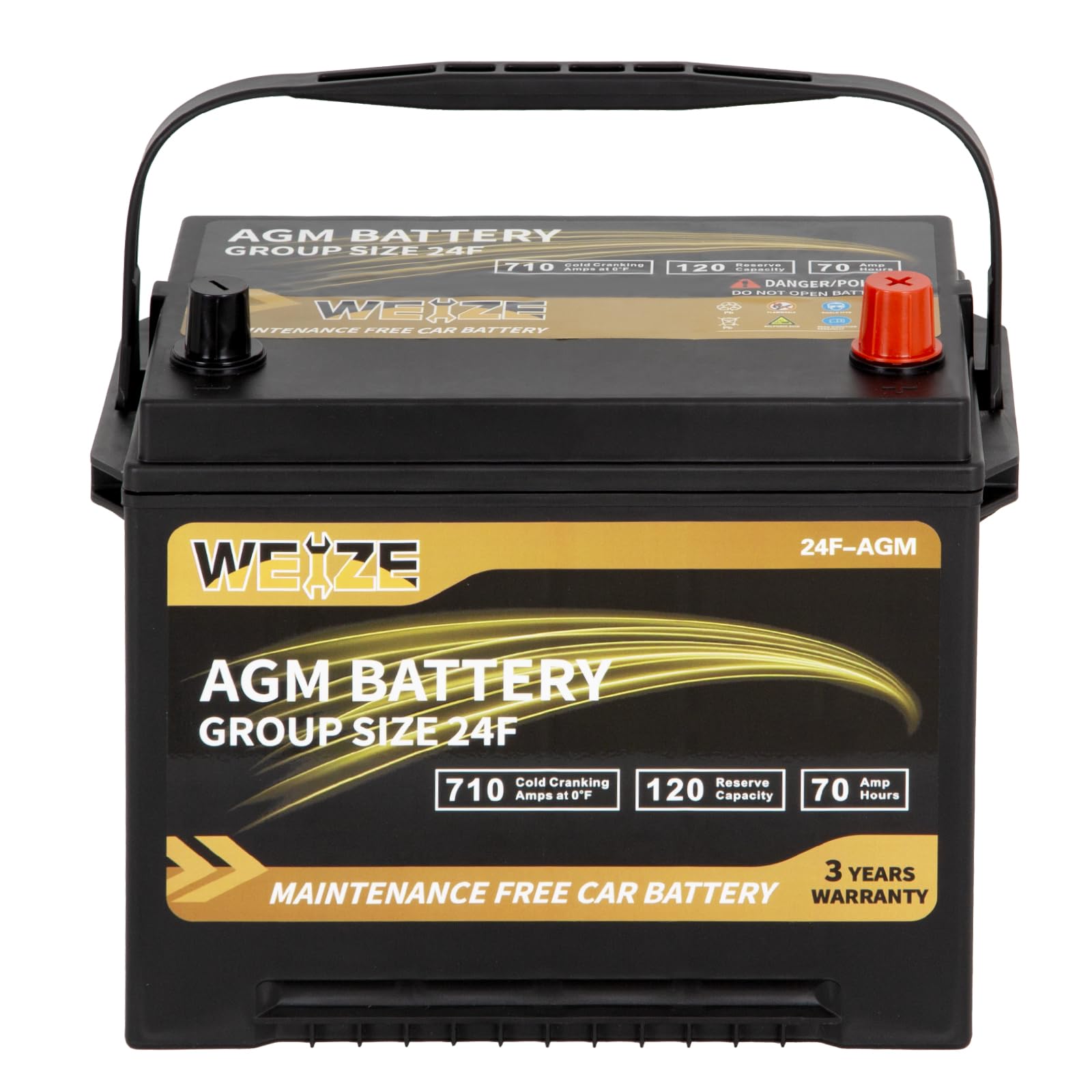
- Weize Platinum AGM BCI Group 48— Best Budget: true AGM performance for $50–$80 less than big-brand equivalents
- ACDelco Gold 48AGM— Easiest Install: exact OEM tray fit, terminal position, and vent tube alignment
- Optima YellowTop DH6— Most Durable: spiral-cell AGM, 300+ cycles, extreme vibration resistance
- Odyssey AGM48 H6 L2— Best Premium: 760 CCA, 74Ah, 400 cycles, 4-year warranty for accessory-heavy builds
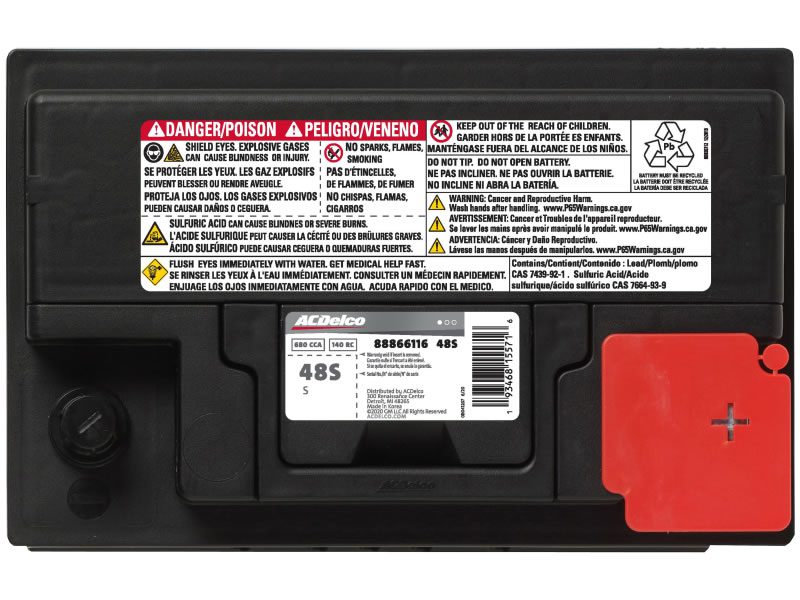
- ACDelco Professional 48S Flooded— Best for Pre-2017 (Non-ESS): lowest cost, reliable cranking for older non-start-stop models
Best Jeep Compass Batteries — Compared
Six Group 48 batteries benchmarked against the 2.4L Tigershark engine, the ESS start-stop system, and daily commuter electrical demands.
| # | Product | CCA | Type | Best For | Score | |
|---|---|---|---|---|---|---|
| 1 | DieHard Advanced Gold AGM H6 Editor’s Choice | 730 CCA | Sealed AGM | Best all-round ESS battery | 4.6 | See Latest Price |
| 2 | Weize Platinum AGM Group 48 Budget Pick | 760 CCA | Sealed AGM | Budget ESS upgrade | 4.4 | See Latest Price |
| 3 | ACDelco Gold 48AGM Top Pick | 700 CCA | Sealed AGM | Easiest zero-fuss install | 4.5 | See Latest Price |
| 4 | Optima YellowTop DH6 | 720 CCA | Spiral-Cell AGM | Vibration & deep-cycle durability | 4.3 | See Latest Price |
| 5 | Odyssey AGM48 H6 L2 | 760 CCA | Pure Lead AGM | Heavy accessory loads, max endurance | 4.5 | See Latest Price |
| 6 | ACDelco Professional 48S Flooded | 615 CCA | Flooded Lead-Acid | Pre-2017 non-ESS models only | 4.4 | See Latest Price |
Detailed Reviews
Full breakdown of each battery — ratings, pros, cons, and our expert verdict for the Jeep Compass.
DieHard Advanced Gold AGM H6
Pros
- 70Ah at 730 CCA — sustains the ESS system through up to 12 stop-start cycles per commute without voltage sag below 12.0V
- 3-year full free replacement warranty accessible through Advance Auto Parts and Amazon without requiring additional proof beyond a receipt
- Group 48 case dimensions match the 2017-and-newer Compass factory tray without shims, spacers, or hold-down clamp adjustment
- Reserve capacity rated above 120 minutes — sustains infotainment, climate fan, and USB charging during extended parked stops engine-off
Cons
- Integrated top handles add approximately 15mm of height; some Compass hold-down clamps require repositioning to the lower bracket slot before the hood will fully close
- Units occasionally ship with manufacturing dates older than 8 months — inspect the date code on arrival before installation to ensure freshness
Weize Platinum AGM BCI Group 48
Pros
- 760 CCA at 70Ah capacity — the minimum specification the Compass ESS charging system needs to avoid triggering battery management fault codes
- Available for $130–$160, approximately $50–$80 below equivalent DieHard and ACDelco AGMs for the same Group 48 case size
- Ships at 12.8V or higher in most documented purchases — install immediately without pre-charging or voltmeter verification in the majority of cases
Cons
- Multi-year durability data thinner than legacy brands; a 2 to 3-year replacement interval is more realistic than the 4 to 5 years premium AGMs achieve
- Warranty claims route through Amazon or the manufacturer directly rather than store exchange, adding 5 to 10 business days to the resolution timeline
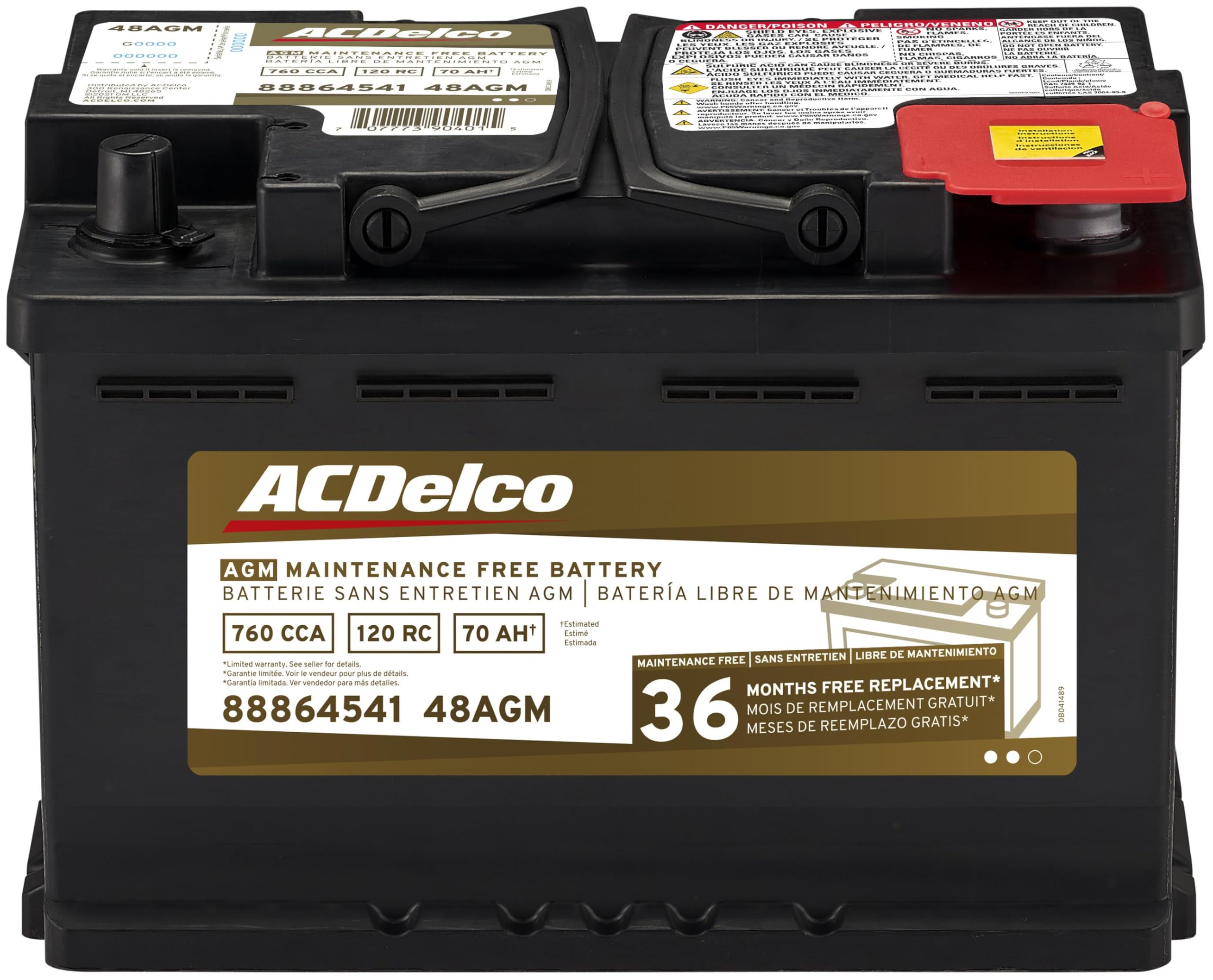
ACDelco Gold 48AGM Battery
Pros
- Case dimensions, terminal height, and vent tube port position replicate the OEM Compass battery specification — hold-down clamp seats without adjustment on 2017+ and select older Compass trims
- High-density negative paste formulation extends AGM cycle life during repeated ESS cycling, which reaches 8,000 to 12,000 restarts per year in highway commuting patterns
- 700 CCA provides reliable starts in temperatures down to approximately -22°F based on the 0°F 30-second sustained cranking test specification
- Widely available at AutoZone, Walmart, and Amazon — minimizing wait time if a warranty replacement is needed in a non-major market location
Cons
- 700 CCA is the lowest cranking spec among the AGM options on this list — the safety margin narrows in climates where temperatures regularly drop below -15°C
- 36-month free replacement period trails the Odyssey’s 48-month coverage at a comparable price investment
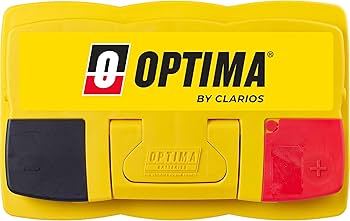
Optima YellowTop DH6 Dual Purpose
Pros
- SpiralCell pure lead construction provides vibration resistance 15× greater than flat-plate AGM competitors per SAEJ537 published test data — relevant for unpaved road and mountain terrain use
- Rated for over 300 complete discharge-recharge cycles — supports sustained accessory use from camping gear, dashcams, and 12V power inverters without permanent capacity loss
- Fully sealed recombinant design allows mounting at any angle and produces no gas under normal charging — compatible with any Compass battery compartment orientation
Cons
- Group 48 case sits slightly taller than the factory Compass battery on some trim lines; measure the existing battery’s standing height before ordering to confirm hood clearance
- Priced at $290–$330 — 60 to 80% more than the ACDelco Gold for a vehicle that rarely encounters the extreme vibration conditions the spiral-cell construction is engineered to handle
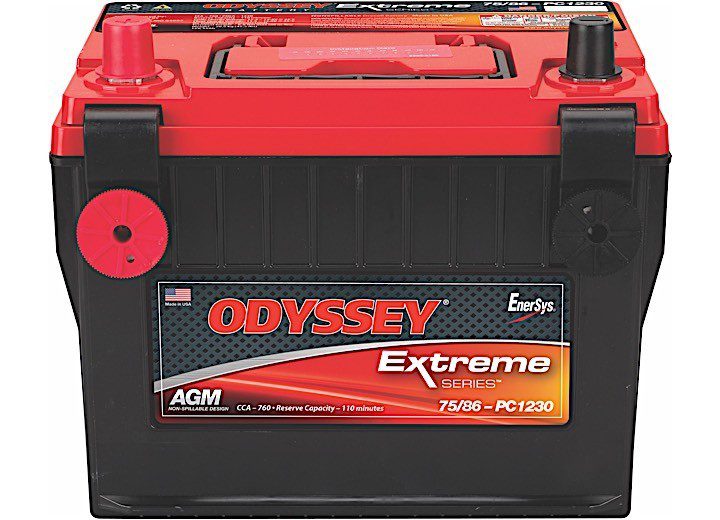
Odyssey AGM48 H6 L2 Battery
Pros
- Thin plate pure lead delivers 760 CCA and 74Ah in the Group 48 case — the highest combined cranking and reserve specification of any battery in this comparison
- Rated for 400 complete cycles at 80% depth of discharge — absorbs the most aggressive dashcam, heated seat, and wireless charger parasitic draw patterns without degrading
- 4-year full replacement warranty — the longest coverage in this comparison, spanning the full expected service life for most Compass ownership patterns
- Ultra-low internal resistance accepts charge from the Compass alternator at maximum efficiency, recovering full capacity from a depleted state faster than standard AGMs
Cons
- Priced at $310–$360 — the highest in this comparison and difficult to justify for a Compass owner without significant persistent accessory draws to recover the premium
- Weighs over 50 lbs; positioning it correctly in the Compass engine bay without a helper or battery strap is noticeably more difficult than lighter AGM options
ACDelco Professional 48S Flooded Battery
Pros
- Available for $110–$140 — the lowest purchase cost in this comparison, appropriate for pre-2017 Compass models without the ESS system demanding AGM chemistry
- Exact Group 48 case dimensions and factory-style top terminals match the original tray without any modification or adapter hardware on older non-ESS Compass trims
- Straightforward installation requires no IBS registration or battery management system reset on non-ESS Compass variants built before the ESS system introduction
Cons
- 615 CCA is the lowest cranking rating in this comparison — inadequate for reliable cold starts below -10°C on the 2.4L Tigershark engine without hesitation
- Cannot be used in any Compass model with the ESS start-stop system; the charging profile mismatch causes overcharging of flooded cells and failure in under 12 months
Can’t Decide?
Our Top 2 Picks — Head to Head
Best everyday value AGM vs. maximum endurance premium AGM: here is the real decision for Compass owners who want more than basic.
- Direct Group 48 tray fit — no spacers, no clamp adjustment, no guesswork
- 70Ah and 120+ minute RC sustains ESS cycling across an entire commute week
- 3-year free replacement warranty through major retail chains and Amazon
- 760 CCA and 74Ah — highest combined cranking and reserve rating in this comparison
- 400-cycle deep-discharge tolerance absorbs persistent parasitic draws from always-on accessories
- 4-year full replacement warranty — the longest coverage period in this comparison
How to Choose the Right Battery for Your Jeep Compass
Six Compass-specific factors that determine which battery keeps the ESS system working and the engine starting reliably.
Group 48 vs Group 94R Case Sizes
Most 2017-and-newer Compass models take a Group 48 (H6) battery, measuring approximately 12.4 × 6.9 × 7.5 inches. A subset of pre-2017 Compass models with the 2.0L engine may use Group 94R (H7), which is longer at approximately 15 inches. The wrong group will not fit the hold-down clamp securely and may prevent the hood from closing. Always check the label on your current battery or measure the tray before ordering — never assume based on the vehicle model alone.
ESS Compatibility: AGM Is Non-Negotiable for 2017+
The Compass ESS system can cycle the starter motor 8,000 to 12,000 times per year in typical urban commuting. A standard flooded battery tolerates only 30 to 50 deep partial cycles before plate degradation begins; an AGM tolerates 200 to 400. Installing a flooded battery in an ESS Compass triggers charging system fault codes, disables the fuel-saving feature, and typically produces a dead battery within 10 to 12 months — regardless of the brand or starting price.
IBS Reset After Battery Replacement
The 2017-and-newer Compass uses an Intelligent Battery Sensor (IBS) on the negative terminal that tracks state of charge, temperature, and current flow. Installing a new battery without resetting the IBS causes the charging system to treat the fresh AGM as partially degraded, resulting in chronic undercharging from the first drive. Some Compass models reset automatically after a key cycle; others require an OBD-II scan tool. Always confirm your specific model year’s reset procedure in the owner’s manual before driving away.
Cold Cranking Amps for the Tigershark Engine
The Compass 2.4L Tigershark four-cylinder starts reliably with 650 CCA in moderate climates. In northern regions where temperatures fall below -15°C, the minimum effective CCA rises to 700 or above. Lower CCA batteries crank more slowly under cold-soak conditions, placing additional strain on the starter motor over time. Batteries with 730 to 760 CCA — the DieHard, Weize, and Odyssey — provide a meaningful safety margin beyond the factory specification.
Reserve Capacity for Always-On Electronics
Modern Compass vehicles run dashcams, OBD-II monitoring dongles, heated mirrors, and cargo outlets that draw current when parked. Reserve capacity (RC), rated in minutes at a 25-amp load, determines how long these loads can draw before the battery drops below safe cranking voltage. A rating above 120 minutes protects against a no-start after a 2-hour parking session with accessories active. The Odyssey (74Ah), DieHard (70Ah), and Weize (70Ah) provide the strongest protection in this category.
Warranty Terms and What They Actually Cover
Free replacement warranties replace the battery at no cost if it fails within the stated period — typically 3 years for mid-range AGMs and 4 years for Odyssey. After the free replacement window closes, prorated warranties provide a discount on a new unit. A 4-year full replacement from Odyssey is objectively superior to a 3-year warranty at the same price point. Retain your purchase receipt and note the installation date on the battery case; most manufacturers require both for claims, and some require online registration within 30 days.
Pro Tips
Quick Buying Checklist for Jeep Compass Battery Replacement
Check the Group 48 or Group 94R label on your existing battery before ordering — the two case sizes are not interchangeable and the Compass tray will not properly secure the wrong group.
Reset the IBS sensor after installation on 2017+ models — even a brief ignition sequence satisfies some Compass variants; verify your specific year’s procedure in the owner’s manual before driving.
Clean the battery tray with baking soda and water before installing — the Compass engine bay traps heat, and acid residue from the old flooded battery corrodes the new AGM case from the first week.
Apply dielectric grease to terminal connections after tightening — the Compass engine bay’s humidity cycling causes bare lead posts to oxidize faster than sealed or greased connections.
Soak the hold-down clamp bolt with penetrating oil before removal — the Compass hold-down corrodes in place on higher-mileage vehicles and strips easily if forced without lubrication first.
Run the engine for at least 20 minutes after installation to allow the alternator to bring the new AGM to full charge before the IBS begins its adaptation cycle for the new battery.
Related Guides
Other Jeep Battery Guides
Frequently Asked Questions
What size battery does a Jeep Compass take?
Most 2017-and-newer Compass models take a BCI Group 48 (H6) battery measuring approximately 12.4 × 6.9 × 7.5 inches. Older pre-2017 models with the 2.0L engine may use Group 94R (H7), which is approximately 2.5 inches longer. Check the label on your current battery or the specifications in your owner’s manual — never assume based on the vehicle name alone, as the two sizes are not interchangeable in the battery tray.
Do I need an AGM battery for my Jeep Compass?
Yes, if your Compass has the ESS (engine start-stop) system. AGM batteries tolerate the 8,000 to 12,000 partial discharge-recharge cycles per year that the ESS system creates. A standard flooded battery in an ESS Compass will trigger charging system fault codes and typically fail in under 12 months regardless of brand. For pre-2017 Compass models without ESS, a quality flooded battery is an acceptable and significantly cheaper option.
How long does a Jeep Compass battery last?
The original flooded battery on pre-2017 Compass models typically lasts 3 to 4 years. ESS-equipped 2017-and-newer models typically need a replacement between 3 and 5 years depending on climate, driving pattern, and whether the IBS was reset after initial battery installation. Premium AGMs like the Odyssey can exceed 6 years when maintained with periodic smart tender charging during storage periods longer than 2 weeks.
Can I install a Compass battery myself?
Yes — the Compass battery tray sits in the engine bay near the driver’s side. You need a 10mm wrench for the terminals and hold-down bracket, and the job takes 10 to 15 minutes. On 2017-and-newer models, you should reset the battery sensor after installation using the owner’s manual procedure or an OBD-II scan tool. Skipping the reset is a common cause of premature new battery failure on this generation.
Which battery has the best warranty for a Jeep Compass?
The Odyssey AGM48 H6 L2 offers a 4-year full replacement warranty — the longest among the batteries in this comparison. The DieHard Advanced Gold AGM provides 3-year free replacement through major retail chains with no additional documentation beyond a receipt. A longer full replacement window typically reflects greater manufacturer confidence in the battery’s construction quality and cycle life.
Are Optima YellowTop batteries worth the extra cost for a Jeep Compass?
For city-only Compass drivers, a standard AGM like the DieHard or ACDelco Gold offers better value at $100 to $150 less. The Optima YellowTop earns its premium specifically when the Compass regularly travels on unpaved roads, forest service roads, or mountain passes where sustained vibration would crack the flat plates in a standard AGM. The spiral-cell construction’s vibration tolerance, rated at 15× that of flat-plate competitors, is the key differentiator.
How do I reset the battery monitoring system after a Compass battery replacement?
On many Compass models you can initiate a partial IBS reset by turning the ignition to ON without starting, then pressing the rear defroster button three times, or by leaving the vehicle locked and in sleep mode for several hours. Some model years require a dedicated OBD-II scan tool to fully register the new battery. Always verify the correct procedure for your specific year in the owner’s manual — the method varies across production runs from 2017 onward.
Final Verdict
Our Top Recommendations for 2026
The DieHard Advanced Gold AGM earns the top position for most Compass owners because it addresses the three critical ESS requirements — adequate CCA for cold starts, sufficient Ah capacity for sustained partial cycling, and a 3-year warranty window that covers the period when most factory batteries fail — without requiring premium spending or accessory mods to justify the cost. The Odyssey AGM48 H6 L2 is the smarter long-term investment for Compass owners running persistent parasitic draws from dashcams, wireless chargers, and cargo outlets, where the 4-year warranty and 400-cycle deep-discharge rating prevent the capacity degradation that shortens budget AGMs. Pre-2017 Compass owners without the ESS system should use the ACDelco Professional 48S flooded battery and save the AGM premium for their next vehicle purchase.