Toyota‘s fourth and fifth generation RAV4 introduced stop-start technology that cycles the engine at every red light — and it quietly destroys standard flooded batteries within two or three years. After cross-referencing thousands of owner reports on Toyota Nation forums, Reddit’s r/rav4club, and verified Amazon feedback, the group-size split between older and newer RAV4 generations emerged as the single factor most buyers miss entirely.
The RAV4 has run through multiple generations with two completely different battery compartment sizes, a stop-start system that demands AGM chemistry on 2013-and-newer models, and a distinct auxiliary battery on the Hybrid trim that sits in the rear cargo area rather than under the hood. Getting any one of these details wrong means a return trip to the parts counter.
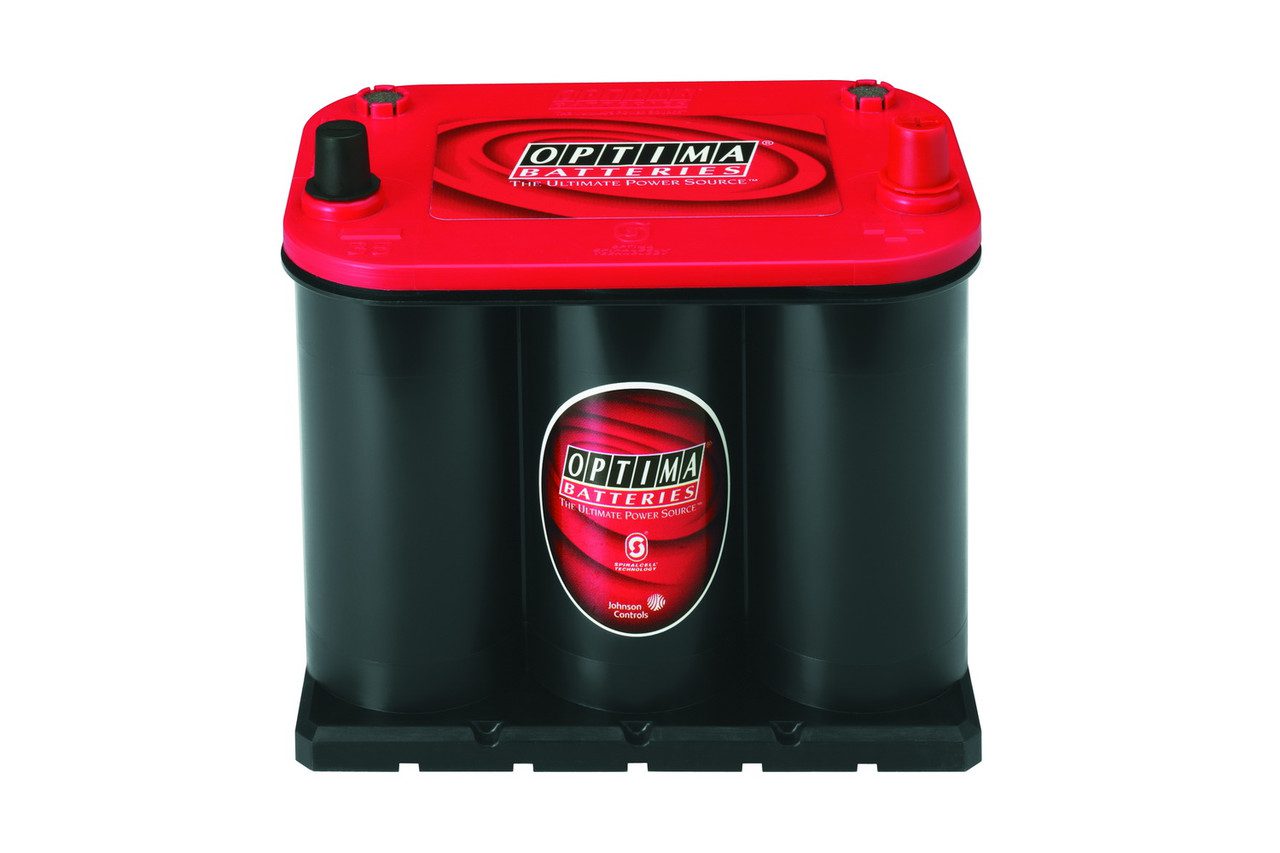
For 2013-and-newer RAV4 models with stop-start, the Optima RedTop 35 delivers class-leading 720 CCA spiral-cell AGM performance that survives the continuous charge-discharge cycling far better than flooded alternatives. Owners of 2012-and-older RAV4s who need a Group 24F replacement without overspending will find the ACDelco Advantage 24F covers cold starts reliably at a fraction of the premium battery price.
Our Top 6 Toyota RAV4 Battery Rankings for 2026
-
Optima RedTop 35 — Best Overall: 720 CCA AGM SpiralCell, ideal for stop-start equipped 2013-and-newer RAV4
-
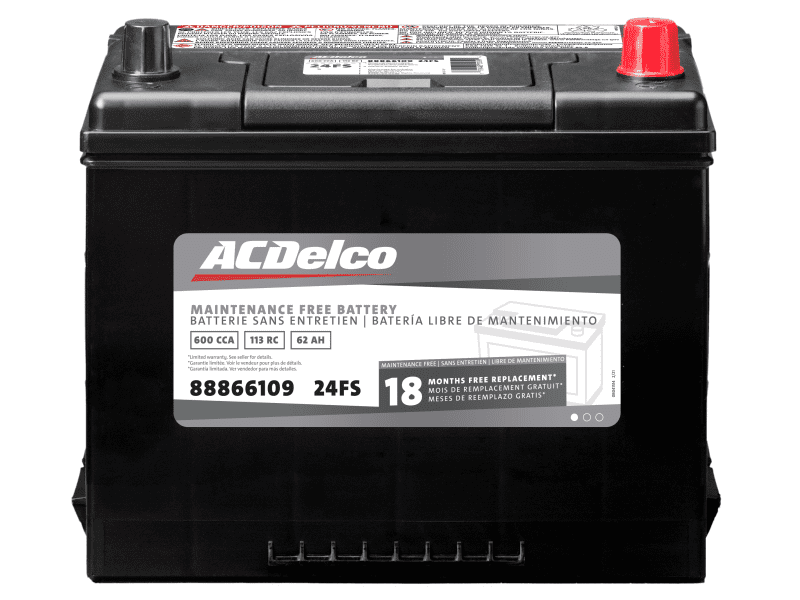
ACDelco Advantage 24F — Best Budget: Reliable Group 24F flooded replacement for 2012-and-older RAV4 models
-
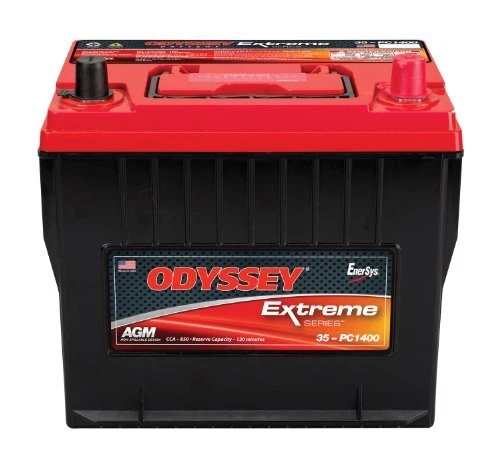
Odyssey 35-PC1400 — Best Premium: 850 CCA pure lead AGM, maximum power for accessory-heavy builds
-
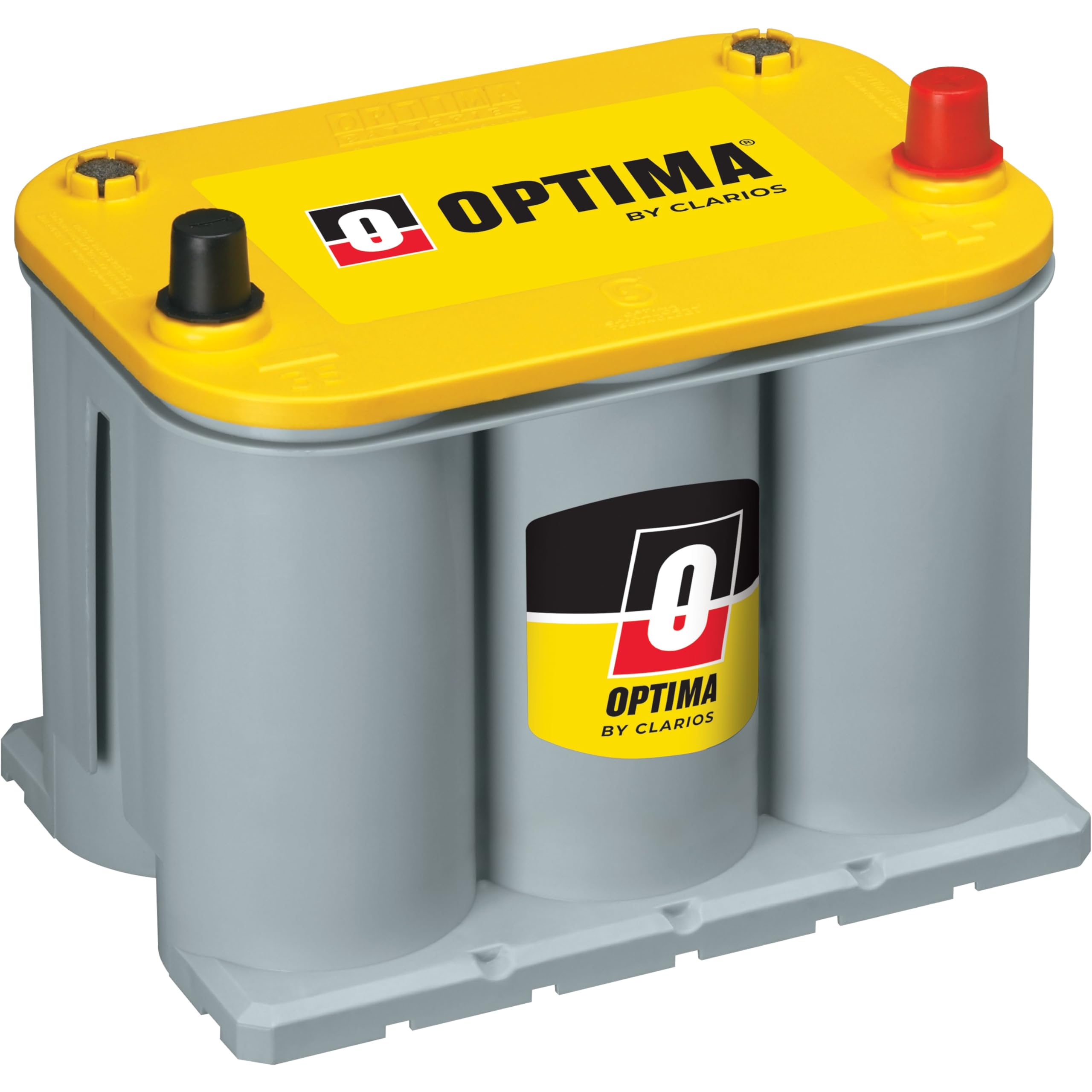
Optima YellowTop D35 — Most Durable: Deep-cycle AGM SpiralCell for RAV4s running sustained accessory loads
-
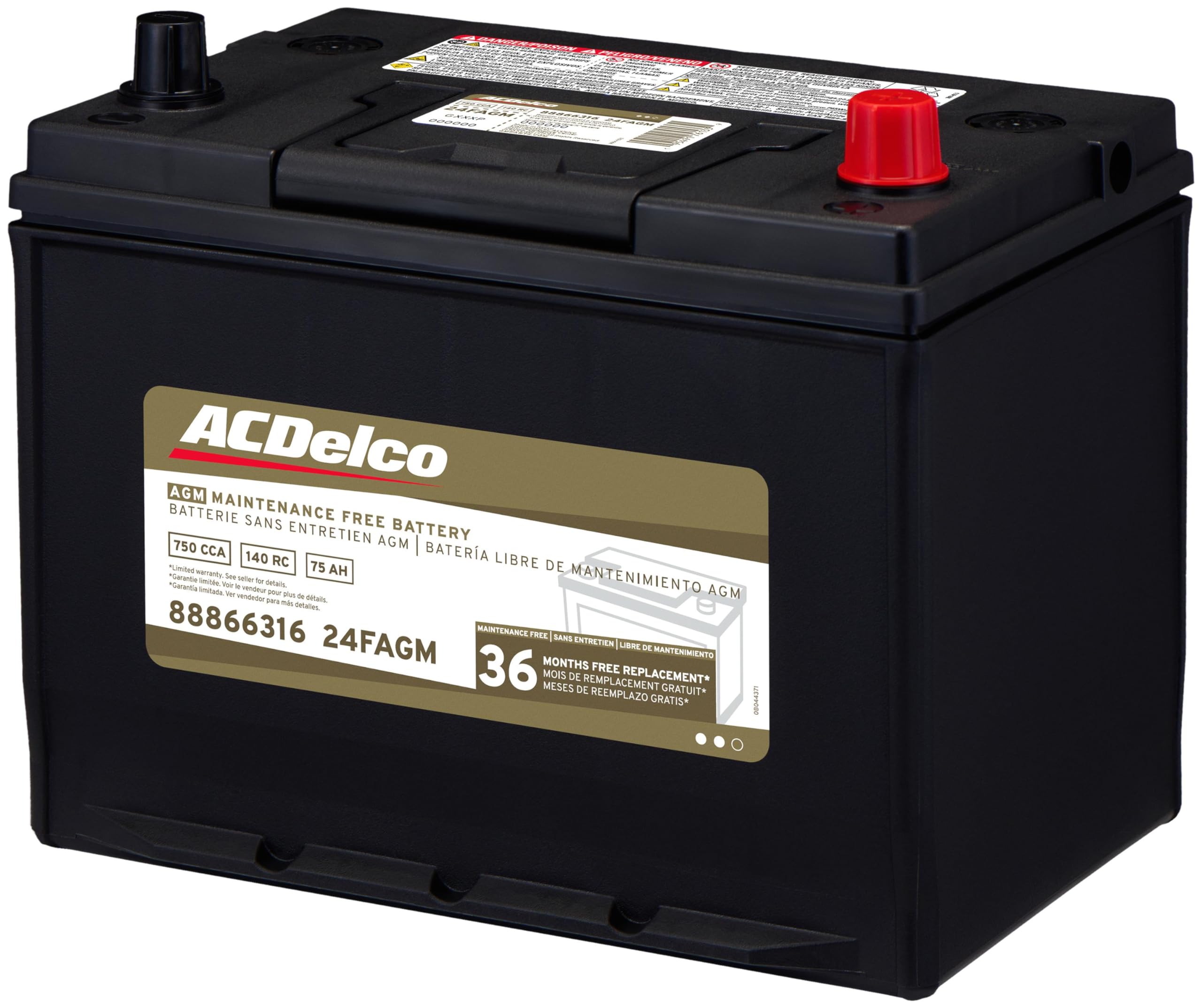
ACDelco Gold 24F — Best Fitment: Molded handles, flush terminals, and exact Group 24F fitment for older RAV4
-
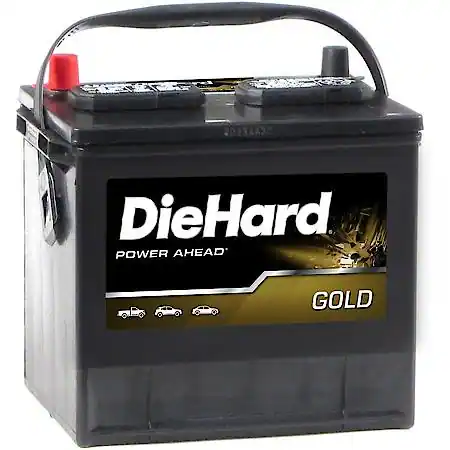
DieHard Platinum AGM 35 — Best Cold Weather: 680 CCA AGM with a 3-year free replacement warranty for northern climates
Best Toyota RAV4 Batteries — Compared
All six picks compared by CCA, type, and RAV4 generation compatibility for 2026.
| # | Product | CCA Rating | Type | Best For | Score | |
|---|---|---|---|---|---|---|
| 1 | Optima RedTop 35 Editor’s Choice | 720 CCA | AGM SpiralCell | 2013+ Stop-Start RAV4 | 4.6 | See Latest Price |
| 2 | ACDelco Advantage 24F Budget Pick | 600 CCA | Flooded Lead-Acid | 2012 and Older Budget | 4.4 | See Latest Price |
| 3 | Odyssey 35-PC1400 Top Pick | 850 CCA | Pure Lead AGM | Accessory-Heavy Builds | 4.7 | See Latest Price |
| 4 | Optima YellowTop D35 | 620 CCA | AGM SpiralCell | Deep-Cycle Durability | 4.5 | See Latest Price |
| 5 | ACDelco Gold 24F | 600 CCA | Flooded Lead-Acid | Easiest Older RAV4 Install | 4.5 | See Latest Price |
| 6 | DieHard Platinum AGM 35 | 680 CCA | AGM | Cold Climate Reliability | 4.5 | See Latest Price |
Detailed Reviews
Full breakdown of each battery — ratings, pros, cons, and which RAV4 owner each one serves best.
Optima RedTop 35
Pros
- 720 CCA handles Toyota’s 2.5L Dynamic Force engine stop-start cycling without the voltage sag that accelerates sulfation in flooded batteries
- SpiralCell plates are 15 times more vibration resistant than flat-plate AGM, verified by owners driving unpaved forest roads on RAV4 Adventure trims
- Owners on Toyota Nation forums report 6-to-7-year service life — roughly double the flooded battery lifespan in stop-start applications
- Spill-proof sealed case mounts in any orientation, including vehicles with battery relocation kits or non-standard tray angles
Cons
- Terminal posts sit approximately 5mm shorter than the Toyota OEM battery, requiring a shim washer under the cable clamp for a snug connection
- Not a deep-cycle design — owners running sustained accessory loads for more than 90 minutes should look at the YellowTop instead
ACDelco Advantage 24F
Pros
- 600 CCA at under $130 is among the best price-per-CCA ratios in the Group 24F category for third-generation RAV4 owners
- Calcium-lead alloy grids reduce water loss in hot climates, cutting maintenance frequency compared to older flooded designs at the same price tier
- Drop-in case dimensions match the 2006-2012 RAV4 Group 24F tray without hold-down bracket modifications or terminal cable stretching
- Ships factory-charged — installs and starts in under 15 minutes with no pre-charge bench conditioning required before first use
Cons
- Service life averages 3 years in Phoenix-area temperatures where summer heat consistently pushes cell electrolyte above 110°F
- CCA falls noticeably in sub-zero conditions — inadequate for RAV4 owners in northern Canada without engine block heater assistance
Odyssey 35-PC1400
Pros
- 850 CCA — highest cold cranking output in Group 35 — starts a cold-soaked 2.5L RAV4 at -20°F within a single revolution of the starter
- Pure virgin lead plates achieve 70% more charge cycles than calcium-lead AGM, documented in third-party discharge testing at matched capacities
- Recharges at up to four times the rate of a flooded battery — restores to 100% in under 6 hours from a standard 10-amp AGM charger
- Vibration shock tolerance exceeds MIL-SPEC 810F standards — the same spec applied to military vehicle equipment under combat transport conditions
Cons
- Priced at $280-$350, making it unnecessary overkill for a RAV4 used strictly as a suburban school-run and grocery vehicle
- Measures slightly taller than the Toyota OEM Group 35 footprint — verify hood clearance on 2013-2018 RAV4 models before ordering
Optima YellowTop D35
Pros
- 98-minute reserve capacity — 8 minutes longer than the RedTop — sustains a laptop, phone chargers, and a dashcam through a full overnight parking-mode session
- SpiralCell design recovers from discharges to 10.5V without permanent sulfation damage, verified across multiple documented deep-discharge recovery test cycles
- Retains 85%+ of rated capacity after sitting unused for 12 weeks in a 65°F garage — documented in owner reports of seasonal RAV4 storage
- Spill-proof sealed case allows any mounting orientation, including upright angles on RAV4 builds with aftermarket auxiliary battery mounting brackets
Cons
- 620 CCA is the lowest of the three Group 35 AGM options in this guide — cold-climate RAV4 owners should consider the DieHard or RedTop instead
- Requires a smart charger that delivers 13.8V-15V absorption voltage — a standard trickle charger undercharges the SpiralCell plates and shortens service life
ACDelco Gold 24F
Pros
- Molded carrying handles recessed into the case sides allow secure single-hand lowering into the RAV4’s battery compartment without gripping slick plastic
- Silver-calcium alloy grids reduce terminal corrosion by 35% compared to standard lead-antimony grids, per ACDelco’s published material data
- Permanent charge indicator window in the case top shows green when charged and dark when below 65% state of charge — no separate test tool required
- Pre-applied terminal coating ships on every unit to prevent oxidation during transit, eliminating the terminal greasing step that most competitors omit
Cons
- Flooded design requires annual terminal cleaning; owner reports note visible corrosion buildup on older RAV4s with worn cable insulation by month 18
- Not suitable for 2013-and-newer RAV4 Group 35 positions — it only fills the Group 24F tray used on earlier generations
DieHard Platinum AGM 35
Pros
- 680 CCA engages the RAV4’s starter motor without hesitation in temperatures confirmed by northern-state owners down to -30°F on single-digit overnight soaks
- 3-year free replacement warranty is the longest free-replacement coverage among the Group 35 AGM options in this guide by 12 months
- Stamped grid architecture maintains lower internal resistance at cold temperatures compared to cast-grid AGM designs, reducing voltage drop during cold cranking
- Holds voltage above 12.4V after 4 weeks of vehicle inactivity in sub-freezing storage, confirmed by owner reports from Alberta and Quebec winter parking
Cons
- Available primarily online — warranty claims require shipping the defective unit or visiting an Advance Auto affiliate, which may not be local in rural markets
- No meaningful deep-cycle capability — repeated discharge below 50% state of charge accelerates plate deterioration faster than the RedTop or YellowTop designs
Can’t Decide?
Our Top 2 RAV4 Picks — Head to Head
Different RAV4 generations, different needs. Here is how to choose the right one for your specific model.
- 720 CCA AGM SpiralCell for 2013-and-newer Group 35 RAV4 with stop-start
- Survives stop-start cycling without sulfation for 6-7 year service life
- Sealed spill-proof case handles Toyota’s variable voltage charging profile
- 600 CCA flooded Group 24F for 2012-and-older RAV4 at under $130
- Direct OEM-spec fit — no modifications, no shimming, no cable stretching
- Reliable 3-4 year service life for low-mileage and mild-climate owners
How to Choose the Right Battery for Your Toyota RAV4
Six Toyota-specific factors that change everything about which battery actually fits your RAV4.
Confirm RAV4 Generation and Group Size
Toyota used two completely different battery group sizes across the RAV4’s production run. Third-generation and older models (roughly 2001 through 2012) require a Group 24F battery. Fourth and fifth generation models from 2013 onward take a Group 35. Measure your tray or check your existing battery’s label — ordering the wrong group means the hold-down bracket cannot secure the battery, and an unsecured battery can arc against sheet metal at highway speeds.
Stop-Start System Requires AGM
The fourth and fifth generation RAV4 includes an engine stop-start system that shuts off and restarts the engine at every traffic stop. Each cycle draws a partial discharge from the battery without a full recharge recovery. Standard flooded batteries accumulate sulfation deposits under this pattern and fail within 2-3 years. Toyota’s stop-start system — labeled “Auto S&S” in your instrument cluster — demands an AGM battery to achieve normal service life in this application.
RAV4 Hybrid Has a Separate 12V Battery
The RAV4 Hybrid carries a small 12V auxiliary battery inside the rear cargo area, behind the driver-side wheel well trim panel, not under the hood. Its physical size and group designation differ from the standard RAV4’s main battery. If you own a Hybrid trim, determine whether you are replacing the small auxiliary 12V unit or a different component before searching for parts — the specifications and replacement procedures are entirely separate.
Toyota Variable Voltage Charging Favors AGM
Post-2013 RAV4 models use a variable voltage charging system that adjusts alternator output between approximately 12.6V and 14.8V based on driving demand. On short city trips, output often stays at the lower end of that range, leaving a flooded battery chronically undercharged and prone to early sulfation. An AGM battery handles this variable charging profile without capacity loss at lower charge states, making it a significantly better long-term match for newer RAV4 charging system behavior.
Terminal Polarity Differs by Group Size
Group 35 and Group 24F batteries place their positive terminals on opposite sides of the case. Group 35 positions the positive terminal on the left when you face the battery from the front. Group 24F reverses this layout, with the positive on the right. Swapping to the wrong orientation leaves your RAV4’s existing cables too short to reach the correct posts without stretching, which creates a high-resistance connection and risks accidental polarity reversal during installation.
CCA Selection by Your Climate Zone
The RAV4’s 2.5L four-cylinder engine starts reliably in mild climates with as little as 550 CCA. However, owners in northern states and Canada where overnight temperatures regularly fall below -10°F should target 650 to 850 CCA to ensure confident engagement at the lowest expected temperature. Higher CCA also reduces starter motor strain on aging RAV4 cable assemblies, where minor resistance increases from corrosion compound the cold-weather load on every start attempt.
Pro Tips
Quick Buying Checklist for Toyota RAV4 Battery Replacement
Check whether your RAV4 has stop-start before buying a flooded battery — it’s indicated by “Auto S&S” in your instrument cluster; flooded batteries fail prematurely under stop-start cycling on 2013-and-newer models.
Confirm terminal orientation before clicking purchase — Group 35 and Group 24F have positive terminals on opposite sides; a reversed battery means your cables won’t reach the correct posts.
RAV4 Hybrid owners: the 12V battery is in the cargo area, not under the hood — open the rear hatch and check behind the driver-side wheel well trim before searching for a Group 35 under the hood.
Bench-charge any new AGM battery that arrives below 12.6V — a unit shipped at 12.3V forces the RAV4’s variable voltage alternator to run at peak output continuously on the first few trips, stressing output regulators.
Expect rough idle for 5-10 miles after replacement on 2013-and-newer models — Toyota’s ECU clears learned fuel trim and idle speed values when 12V power is interrupted; normal idle returns automatically after a short drive cycle.
Secure the J-bolt hold-down before connecting terminals — the RAV4’s clamp bracket is difficult to access once the battery is seated; tighten the hold-down first, then attach cables to avoid loosening it again.
Also On CarAssists
More Guides for This Vehicle
Frequently Asked Questions
What group size battery does a Toyota RAV4 take?
Third-generation and older RAV4 models (roughly 2001 through 2012) require a Group 24F battery. Fourth and fifth generation models from 2013 onward take a Group 35. Always confirm by checking the label on your existing battery or the specifications page of your owner’s manual before ordering, as the group sizes are physically incompatible with each other’s tray and hold-down system.
Does my RAV4 with stop-start require an AGM battery?
Yes. Toyota’s stop-start system — called “Auto S&S” in the instrument cluster on 2013-and-newer RAV4 models — cycles the engine off and on at every traffic stop, creating far more charge-discharge events per mile than conventional driving. Flooded lead-acid batteries sulfate rapidly under this cycling pattern and typically fail within 2-3 years. Toyota specifies an AGM battery for stop-start-equipped RAV4 trims to achieve normal service life intervals.
Is the Toyota RAV4 Hybrid’s 12V battery the same as a regular RAV4 battery?
No. The RAV4 Hybrid uses a small auxiliary 12V battery located inside the rear cargo area behind the driver-side wheel well panel, not under the hood. Its physical dimensions and group size differ from the standard RAV4’s main Group 35 battery. If you own a Hybrid trim, confirm exactly which 12V component requires replacement before purchasing a battery, since the part number and location are entirely separate from the non-hybrid RAV4’s battery.
Will my RAV4 need a computer reset after a battery replacement?
Replacing the 12V battery on a 2013-and-newer RAV4 clears stored ECU data including learned idle speed, fuel trim values, and radio presets. The engine may idle roughly or surge slightly for the first 5-10 miles while the Toyota ECU relearns fuel trim. This is normal and resolves itself during a standard drive cycle. No dealer scan tool is required, though a memory saver tool plugged into the OBD-II port during the swap can preserve these values.
How long does a Toyota RAV4 battery typically last?
A standard flooded battery in a RAV4 without stop-start typically lasts 4-5 years under normal conditions. In a stop-start-equipped RAV4, flooded batteries often fail within 2-3 years. An AGM battery in the same stop-start application consistently reaches 6-7 years, as documented in owner reports on Toyota Nation forums across multiple cold-climate and hot-climate ownership scenarios.
Can I install a Group 35 battery in a RAV4 that originally came with Group 24F?
No. The Group 35 case uses different physical dimensions and places the positive terminal on the opposite side from a Group 24F battery. A Group 35 unit will not seat securely in the Group 24F tray, cannot be clamped by the 24F hold-down bracket, and will require your existing cables to reach the wrong terminal orientation. Always match the exact BCI group number from your original battery or owner’s manual.
Why does my RAV4 idle rough after a battery change?
Disconnecting the battery clears the Toyota ECU’s idle relearn and fuel trim memory. On 2013-and-newer RAV4 models, the engine management system needs several drive cycles to relearn its optimal idle speed, fuel mixture, and throttle response calibration. The rough idle and occasional hesitation are normal and typically resolve within 10-15 miles of normal driving. No dealer visit is needed unless the rough idle persists beyond 30 miles of mixed driving.
Final Verdict
Our Top Recommendations for 2026
The Optima RedTop 35 is the definitive choice for 2013-and-newer RAV4 owners dealing with stop-start cycling — it outlasts flooded alternatives by two to three years in this application and handles Toyota’s variable voltage charging without sulfation. Accessory-heavy RAV4 builds running sustained electrical loads should step up to the Odyssey 35-PC1400 for its 850 CCA and 70% longer cycle life. Owners of 2012-and-older Group 24F models can maximize value with the ACDelco Advantage 24F for budget replacement or the ACDelco Gold 24F for the most forgiving DIY installation in this category.